Strike violence causes traffic chaos near Johannesburg airport

Three people were injured in protests by striking truck drivers in Ekurhuleni, east of Johannesburg, on Thursday morning, metro police said.

“Up to now we can say three people [have] sustained injuries following truck protests around 7am,” said Inspector Kobeli Mokheseng.

“There were calls coming in on Thursday morning that on the R21 to Pretoria, one light delivery vehicle was burned, and truckers stoned two trucks.”

He said the R21 north to Pretoria, opposite OR Tambo International Airport, was closed.

“The R24 is affected going east and, if you are on the R21 going towards Pretoria, it is affected up to Griffiths Road offramp,” said Mokheseng.

“We are diverting traffic from East Rand Mall heading to Pretoria and… directing it on to the Griffiths Road offramp.”

Traffic on the R24 was also being redirected from Barbara Road.

“No arrests have been made. Police are dealing with the situation as it is happening,” he said.

Meanwhile, wage negotiations between the Road Freight Employers’ Association (RFEA) and unions remained deadlocked.

RFEA spokeswoman Magretia Brown-Engelbrecht said the situation had not changed since Wednesday.

“We have committed ourselves to being available for further talks. Nothing has been forthcoming thus far and we shall see where we go,” she said.

“We are hopeful that between today [Thursday] and tomorrow [Friday] we can get the process going again.”

The unions involved are the SA Transport and Allied Workers’ Union (Satawu), the Professional Transport and Allied Workers’ Union SA (PTAWUSA), the Transport and Allied Workers’ Union of SA (TAWU) and the Motor Transport Workers’ Union (MTWU).

[ad 1]

PTAWUSA road freight co-ordinator Puncho Ndevu confirmed that the situation remained unchanged on Thursday, with unions in discussions among themselves regarding the next step forward.

About 20,000 workers in the road freight transport sector have been on strike over wages since Monday.

Unions have reverted to a 12 percent pay demand after rejecting a lower offer tabled by employers on Tuesday.

The RFEA had proposed a staggered increase of 8.5 percent effective from March, and a further 0.5 percent from September next year. – Sapa

DA backs Malema

Zille charms the Eastern Cape

Cape Town – The official opposition in Parliament, the DA, has backed Julius Malema’s demand that President Jacob Zuma stand trial for the multiple criminal charges he has faced.

On Wednesday, Malema demanded that Zuma should still face the charges in open court, instead of “running away” from the courts.

“Zuma has 700 charges against him. I only have one,” Malema said.

The axed ANC Youth League leader was granted R10 000 bail in the Polokwane Regional Court on Wednesday where he was charged with money laundering in connection with a R52 million tender in Limpopo.Malema claimed the charge was politically motivated.

DA federal chairman and correctional services spokesman James Selfe said on Wednesday: “We’re in entire agreement. That’s why we’ve gone to court on numerous occasions to have the decision to drop the charges against Mr Zuma reviewed.

“It was meant to have been the best-prepared case in history, considering all the millions of rand that had been spent in preparation. It was clear that there were members of the NPA

[National Prosecuting Authority] who believed they had a solid case against Mr Zuma. And the place to disprove that case was in open court, not by cutting deals,” Selfe charged.

“So as much the DA would disagree with much of what Mr Malema says on other matters, on this, at least, he is entirely correct. Or, more correctly, he agrees with us.”

In December 2007, Zuma was charged with various counts of racketeering, money-laundering, corruption and fraud. But in 2009, the NPA said while the merits of the case remained intact, alleged political interference and abuse of process rendered the continuation of the trial “unconscionable”.

The DA had earlier won a court case giving it access to the so-called spy tapes which formed the basis for charges to be dropped against Zuma. – Cape Argus

‘God help us’ if Juju becomes president

Jackson Mthembu

ANC spokesman Jackson Mthembu said during a television interview that it would be a dark day for the country if the expelled ANC Youth League president Julius Malema ever came to power, Beeld newspaper reported on Thursday

“Can you imagine Julius Malema becoming president of the country? Oh, dear God, may that day never dawn in our lifetime, or that of our children,” Mthembu said in an interview with television channel eNCA on Wednesday.

According to the report he also said Malema should never have been an ANC member because he was a bad person.

Malema should stop lobbying opinion on whether president Jacob Zuma should be nominated as ANC leader, Mthembu said.

“He’s not even a member of the ANC. He can’t nominate anybody. People join the ANC voluntarily, but then they’re required to maintain certain values, and Julius couldn’t do it.”

Mthembu also warned any ANC leaders who might be contemplating support of Malema, who faces charges of money-laundering.

“He’s too factious… he thinks he’s everything. He might support a leader now, but he’ll do a complete about-face within three years,” he said. – Sapa

Land grab statement: Afrikanerbond reports chief to SA Human Rights Commission

T

Jan Bosman

he SA Human Rights Commission has been asked to investigate Chief Phatekile Holomisa for calling on South Africans to reclaim land from whites by next year, said the Afrikanerbond on Wednesday.

Afrikanerbond chief secretary Jan Bosman said the comments by the chief, reported by the SABC, were an incitement to violence and because he made reference to race, his comments were seen as an advocacy of hatred.

According to the SABC, Holomisa said land was not bought from blacks if it was forcibly taken by whites. He was speaking at McGregor Mgolombana memorial lecture in the Eastern Cape on August 15.

“We need to prepare ourselves next year for a struggle for the restoration of land so that we no longer have situations where 87 percent of land is in white hands and the 13 percent is occupied by blacks,” Holomisa reportedly said.

Bosman said freedom of expression in the SA Bill of Rights excluded, among other things, the propaganda for war, incitement of imminent violence and advocating hatred that was based on race.

“Pronouncements such as these have all the potential to be misconstrued by unsophisticated people,” said Cupido.

Holomisa said there was nothing that incited violence in his statement.

“There is absolutely nothing [in the statement] that violates the constitution,” Holomisa told Sapa.

“As traditional leaders, we are the custodians of land and that land is a basic human right which you can’t …”

Holomisa said the state did not have money to buy back land from white people and then distribute it amongst the blacks.

“Hence there are informal settlements mushrooming all over South Africa because we have abandoned the African people.”

Holomisa said every African was entitled to a piece of land, so individuals could build homes and produce food for their families.

The chief said he had not been informed that the SAHRC had received a complaint about his comments.

SAHRC spokesman Isaac Mangena could not immediately confirm whether the complaint from the Afrikanerbond would be investigated. – Sapa

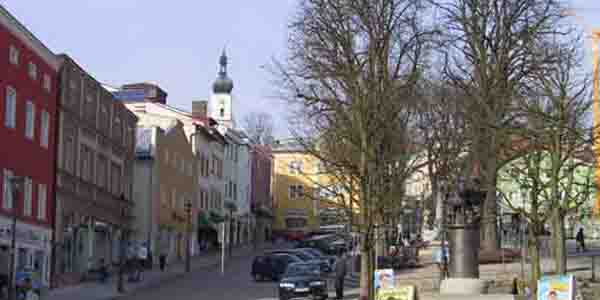
Bavarian town promotes good manners

Idyllic Grafenau in the Bavarian Alps. Now they want to have perfect manners too

It seems like a vision of a better world: bus drivers have a friendly greeting for their passengers, salespeople serve customers with a smile, husbands surprise their wives with flowers, children offer their seats to the elderly on public transportation and behave well at school and at the dinner table.

This idea could soon become everyday reality in a town in Bavaria. The German Knigge Association, a society that promotes good manners and which is named after Baron Knigge who wrote a treatise on etiquette and behaviour in 1788, is starting a pilot project in the small town of Grafenau.

“For four days the residents of Grafenau will be introduced to etiquette,” says the head of the Association, Hans-Michael Klein. The local mayor is supporting the arrival of etiquette experts from all over Germany in Grafenau from October 18th to the 21st. They aim to turn the town into an epicentre of great manners.

“Good demeanour and politeness are the solution to many everyday problems,” says Klein. He believes that living together could be many times more pleasant if people met each other with respect and friendliness. Klein says adults should keep in mind that they are role models for children.

Over four days people of all ages will receive extra tuition in etiquette. Trainers will introduce “respect” in schools and kindergartens and the primary school’s drama group will stage a play about Baron Knigge. Adults will be able to enjoy wine tasting and a seminar about proper behaviour. Local hairdressers will help their customers find the right hairstyle and the dancing school will offer a course in Viennese waltz. A fashion show will teach the Do’s and Don’ts of dressing.

“Grafenau was not chosen because we need to catch up on manners,” says Grafenau’s mayor, Max Niedermeyer. But as the town lives from tourism there is always space for improvement. “Children in particular should have the same standard of behaviour towards parents, teachers, co-pupils and elderly people,” stresses Niedermeier. He doesn’t consider himself perfectly versed in etiquette either and hopes the weekend will have a lasting effect on locals.

Etiquette-expert Klein is hoping to spread his message even further. “Several cities have inquired already about our etiquette coaching.” He doesn’t want to reveal which ones but the etiquette instructors are not planning to visit big cities like Berlin, Hamburg, Munich, Frankfurt or Cologne for now.

“We Lower Bavarians work hard, are reliable and helpful, but we constantly want to improve ourselves,” says Ludwig Lankl. The district’s chief administrator believes society often lacks friendliness and respect. He thinks the weekend will help reintroduce a more “Christian” way of behaviour in the region.

Lankl does not make an exception for himself. “I have to make a mental note as well to surprise my wife with a bouquet of flowers.” – DPA

SA truckers’ strike turning violent

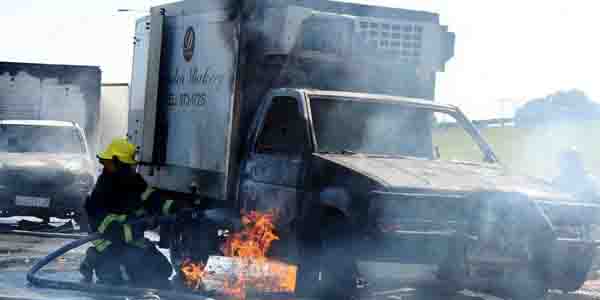
This delivery van was attacked yesterday by striking truck drivers near Isando station on the East Rand

Ekurhuleni emergency services were on high alert on Thursday after violent protests by striking truck drivers resulted in the people being injured and vehicles damaged.

“We, together with Ekurhuleni metro police department, are on high alert for any incidents of violence during the truck drivers strike,” said spokesman William Ntladi.

He said a truck was stoned by protesters in Kempton Park on Wednesday, but no injuries were reported.

In Germiston, on the M2 and Refinery road, protesters stopped a truck with three occupants.

“The two assistants in the truck driver were hospitalised after being assaulted by the protesters, but the driver managed to escape and opened a case…[with the] police,” Ntladi said.

The truck was set alight.

About 20,000 workers in the freight transport sector are on strike over wages. Their unions have reverted to a 12 percent pay demand after rejecting a lower offer tabled by employers on Tuesday.

The Road Freight Employers’ Association (RFEA) had proposed a staggered increase of 8.5 percent effective from March, and a further 0.5 percent from September next year.

Workers embarked on a protected strike on Monday after wage negotiations deadlocked.

The four unions involved are the SA Transport and Allied Workers’ Union (Satawu), the Professional Transport and Allied Workers’ Union SA (PTAWUSA), the Transport and Allied Workers’ Union of SA (TAWU) and the Motor Transport Workers’ Union (MTWU).

Striking truck drivers also set alight vehicles and intimidated a driver in Cape Town and Durban, police said.

A driver and his two assistants were hospitalised after being injured while trying to escape angry protesters.

[ad 1]

The driver collided with a car, then hit a tree.

He sustained serious head wounds. His two assistants were lightly injured.

In Cape Town, striking truck drivers set alight two trucks in Nyanga.

Investment Solutions economist Chris Hart told the New Age newspaper on Thursday that South Africa might slip into a second recession if the transport strike was protracted. – Sapa

JK Rowling surprises with sleaze in new novel

JK Rowling, author of the Harry Potter series

First reviews of Harry Potter author JK Rowling’s novel for adults on Thursday praised its Dickensian scope and social message, but warned the gritty, even obscene tale was a far cry from Hogwarts.

Shortly before the release of the hotly awaited “The Casual Vacancy”, several reviewers said they were taken aback to read grimy scenes of sex and drugs, but added the author’s most vivid writing was on the familiar ground of adolescence.

“I had just read a passage written by the world’s favourite children’s author in which a teenager is raped by her mother’s heroin dealer, a man who may well be the father of the girl’s own three-year-old stepbrother, although it’s hard to know for sure when the mum concerned is a prostitute,” wrote Allison Pearson in the Daily Telegraph.

She added that the novel, a story of poverty and politics in an English village — of which a million copies have been pre-ordered — was “sometimes funny, often startlingly well observed, and full of cruelty and despair”.

But the Mirror tabloid labelled it “Harry Potter and the Goblet of Filth”, warning the author famed for her stories of young wizards was “sure to face stern criticism for featuring the C-word and F-word hundreds of times”.

Set in the picturesque fictional village of Pagford in southwest England, the black comedy deals with the fight to fill a slot on the parish council after the incumbent’s sudden death, and hinges on the fate of a squalid housing estate.

Kept closely under wraps until publication, it hits bookshops on Thursday and is expected to be Britain’s top-selling fiction title this year.

In the Independent, Boyd Tonkin called it a “song of freedom” after Rowling’s seven children’s books, which made her the world’s first billionaire author.

While decrying the novel’s “clunkily satirical set-pieces”, he said it “picks up passion, verve and even magic” when dealing with its teenage characters.

“All the social and hormonal turbulence that the later Potter volumes had to veil in the euphemisms of fantasy appear in plain sight here,” he wrote. “The novel builds into a vividly melodramatic climax with these kids at its heart.”

But the Guardian’s reviewer Theo Tait labelled the edgier scenes “superficial excitements”, saying the novel created a sense of “slight anti-climax” despite its “richly peopled, densely imagined world”.

And writing in The Times, Erica Wagner said the book was founded on “the idea of the novel as a force for social good” but could be “a tiny bit dull”.

For the Telegraph’s reviewer, however, a top concern was the risk of the book falling into the wrong hands.

“In the coming days, along with thousands of parents around the world,” she wrote, “I will have to do something that offends our best instincts: I will try to stop my children reading a book.” – AFP

Black area has highest crime rate in Western Cape

Nyanga, one of the famous black townships in Cape Town

The most likely place to be murdered in the Western Cape is the black township of Nyanga, especially over a weekend and after dark, provincial community safety MEC Dan Plato said on Wednesday.

The township, situated near the Cape Town International Airport, recorded the highest number of reported murders last year, based on forensic pathology data, he said.

Plato was speaking at the release of the first “Shadow Crime Report”, which used mortuary statistics — from 2008 to 2012 — to give detailed information on provincial crime, in addition to the police’s annual crime statistics.

The report revealed that 10 police stations, all in Cape Town, contributed to just under half of the province’s 2290 reported murders.

These were Nyanga, Khayelitsha, Harare, Gugulethu, Kraaifontein, Delft, Mitchell’s Plain, Philippi East, Bishop Lavis and Mfuleni.

A typical murder victim was most likely to have been stabbed; to have drank alcohol beforehand; and to be a black man aged between 18 and 35.

The report revealed that 87 percent of murder victims were men. Half of those murdered were stabbed, a quarter were shot, and about 17 percent died of severe assault or blunt trauma.

Seventy percent of those killed tested positive for alcohol.

In areas known for gang violence, the number of people killed by gunshots was significantly higher than the provincial norm of 26 percent.

About 85 percent of murders reported to the Belhar police station were gunshot-related.

Steenberg, Bishop Lavis and Elsie’s River were the next highest.

Plato said the purpose of the report was not to criticise police, but to move away from a “one-size-fits-all” approach to crime.

The department planned to release a report every six months, and use the information to create “localised responses” to specific community crime trends. – Sapa

Zuma’s speech on Somalia at UN mini-summit

I wish at the outset to congratulate my dear brother, H.E. Hassan Sheik Mohamoud on being elected President of Somalia.

I look forward to working with you President Hassan, in both bilateral and in multilateral settings as we strengthen the South Africa-Somalia relationship and collaborate within the multilateral fora on matters of mutual interest.

I commend the people of Somalia on this historical step of starting a post transition government that shall chart a path towards governance, reconciliation, stability and development.

The Mini-Summit Summit on Somalia comes at an opportune time.

The resolve and desire for peace shown by Somalis from all walks of life must be supported by the international community.

The lessons we have learnt from all governments that emerge from instability is that the population must see benefit in democratic governance lest they be swayed by those who thrive in chaos.

The new Somali government has a challenging task of delivering the fruits of governance in a still violently contested atmosphere.

The crucial support that the international community continues to provide to Somalia, through maintaining AMISOM, supporting social and economic projects will determine the success of this new government.

However, no amount of support can replace the important role of Somali leadership in building their country.

The Somali leadership is expected to play a very critical role in developing a vision that will serve to rally Somali stakeholders and international partners in our efforts at post-transition development.

If we agree on the importance of these foundational elements, it would then be imperative for us all to collaborate in extricating Somalia out of the ashes of desolation to a developmental path.

As we celebrate the dawn of this new beginning for Somalia we remain conscious that there remain those in Somalia, who although they are sons and daughters of Somalia, remain violently opposed to this new government.

To brandish them as terrorists and respond to them consistent with the brand we attach to them, has had persistent costs.

If Somalia is to move forward, its people cannot continue to be at war.

There is therefore a need to consider increasing our effort to encourage and provide incentives to those that remain outside the political spectrum for them to consider peaceful co-existence with the new Somalia government.

In this regard, a strategy for dialogue between all Somali stakeholders is imperative.

This, if managed properly, could help lead to reconciliation and tolerance in Somalia.

South Africa is committed to availing its expertise on the area of national reconciliation.

We had already agreed with the previous Transitional Federal Government that my country would work closely with Somalis in their reconciliation strategy and we renew our commitment to the new Somali government.

Sustainable peace is possible in Somalia.

The adoption of the provisional Constitution has set in place the foundation for building the pillars on which peace will thrive.

We need to direct our focus on providing support as Somalis implement the political and social compact reached by adopting their constitution.

Important work has already been done by Somalis and international partners in this regard.

South Africa believes that it is imperative that Somalia has adequate institutions of governance that will be able to focus on the immediate and long term priorities of the new government.

It is however also necessary that Somali institutions be strengthened to enable them to play their role also in the prevention and prosecution of piracy.

South Africa shall work with Somalia in rendering assistance in capacity building for Somalis to be able to manage the piracy situation.

South Africa will also work closely with local and international partners to ensure that Somalis are equipped to govern themselves.

I commend the Secretary-General of the United Nations, H.E. Ban Ki- Moon for convening this Mini-Summit on Somalia.

We applaud the tireless efforts of the UN Special Envoy for Somalia, His Excellency Augustine Mahiga.

This is a new dawn for Somalia. May it usher in peace, development and reconciliation for the benefit of the people of Somalia.

I Thank You.

Zuma blames apartheid

Jacob Zuma

South Africa’s president says the mining unrest that captured international attention following the police killing of 34 striking miners will be resolved through negotiation.

President Jacob Zuma told the Associated Press that the Aug. 16 killings at the Lonmin PLC platinum mine in Marikana should not be viewed as “the kind of incident that will be a common occurrence” or “that things have gone out of control in South Africa.”

He said the strikes which spread to other, mostly gold, mines were a direct consequence of the strike at Marikana and that they too would be resolved through negotiation.

Zuma denied that the strikes revealed startling inequalities in post-apartheid South Africa, saying it was not a problem that has “arisen now,” blaming the problem on the legacy of apartheid. – AP

‘1202 police firearms missing’ – South African minister

A total of 1202 police firearms have gone missing since the beginning of last year, Police Minister Nathi Mthethwa revealed on Wednesday.

Mthethwa said in a written Parliamentary response that 885 firearms were lost or stolen last year and 317 this year. Of those 170 had been recovered.

The Democratic Alliance said the large number of lost police firearms was fuelling an illicit trade in weapons.

“This means that the majority of these dangerous weapons are still out there on the street, most likely being used to commit crime,” said DA spokeswoman Dianne Kohler-Barnard.

“The reality is that the SAPS is fuelling the illegal firearms trade in this country.” – Sapa

‘Don’t apologise for nationalisation’, says Fikile Mbalula

Fikile Mbalula

The ANC Youth League must not apologise for calling for economic freedom and the nationalisation of mines, ANC national executive member Fikile Mbalula said on Wednesday.

“You are the only ones [ANCYL] who have opened the debate,” Mbalula told students at Wits University in Johannesburg. He was speaking at the ANCYL’s 68th anniversary lecture.

“Some of us in the movement are even afraid to utter the words economic freedom in our lifetime. What you must do comrades is to deepen your understanding of economic freedom.

“It’s the song everyone must sing about. Even the left in this country, the Communist Party, Cosatu, [and] some of your comrades are afraid to say economic freedom.”

This was because it was associated with individuals, Mbalula said -referring to expelled ANCYL leader Julius Malema.

He told the youth league that freedom was about them.

“It is about total liberation and if you are not going to talk about it who else will? Why shouldn’t the youth be obsessed with economic power?”

Mbalula said ANCYL must be careful because when the “second revolution” came it could be hijacked by opportunists.

“They will take it and tear us apart and run with the economic struggle.”

ANCYL has been critical of the second transition which was proposed and debated at the African National Congress’ policy conference in June.

Mbalula said the second transition could not be reduced to freedom songs and leadership.

“If you start singing you’ll never understand the debate,” he said.

“A transition is not an event, it’s a process and a journey.” He was referring to songs in support of ANC leaders.

Members of the party supporting President Jacob Zuma would show two fingers indicating a second term, while others would show the soccer sign for a change over.

These songs and signs were killing the debate, said Mbalula.

Mbalula said the voice of reason was being suppressed by who could sing the loudest.

“The politics of today is reduced to the politics of freedom songs. That is why we don’t know what our future and vision is,” said Mbalula.

[ad 1]

He told the ANCYL not to allow the organisation to be suppressed.

“Think comrades… then you will find allies [in the ANC].”

The ANCYL must not be scared to say that they were unhappy with the leadership elected at the ANC’s elective conference in Polokwane in 2007.

Mbalula said Mangaung was going to be different to Polokwane.

In Polokwane the youth league was fighting for political change not economic freedom.

“Elect people [at Mangaung] and give them a programme of action… Tie them to that,” he said.

Mbalula received a rousing welcome from the ANCYL members at Wits University.

The students sang songs in support of him, deputy president Kgalema Motlanthe and Malema.

The ANCYL is calling for Mbalula to be elected the ruling party’s secretary-general at the elective conference in December. It is also calling for President Jacob Zuma to be replaced by Motlanthe.

Nominations for the ANC leadership was expected to open next month. – Sapa

Is South Africa the next Liberia?

by Dan Roodt

I ended off my last column with a reference to “the dark eye of Africa”, a term used by Laurens van der Post in his eponymous lecture in 1954. Following in the footsteps of Van der Post, how are we supposed to make sense of the sadistic violence, murders and rapes taking place in South Africa every day?

Just yesterday on this website I read of a case where a 38-year old black man raped and murdered his own 92-year old grandmother. Over the last two weeks we have had at least three very high-profile murders, on 13-year old Alyssa Botha, 50-year old André Jordaan and only a few days ago, on the world-famous boxer Corrie Sanders.

According to at least one expert who has analysed our crime statistics released last week, every white person in this country will be exposed to a so-called “contact crime” – an armed robbery or violent attack on his person – over the next three and a half years. More than fifty people are murdered every day, as many as are murdered in some European countries in a whole year!

The worst is, much of the “xenophobic killings” of foreign Africans do not even get reported by the police. Some of them are in the country illegally and the local black policemen turn a blind eye when they are murdered, except where it gets video-ed. Then you might get an account published in the New York Times as happened last year when Barry Bearak described such a murder in Watching the Murder of an Innocent Man.

Many people still pretend that South Africa is a normal society, even a liberal democracy. But they are simply dishonest or blind to the reality that we have become a kind of Barbary Coast, albeit inland, where the rules of pirates prevail. Also the events and controversies surrounding Julius Malema are to be seen in this light, as manifestations of pirates quarrelling over stolen loot.

Malema is rumoured to have ties with organised gangs and black mercenaries from Zimbabwe. Against the backdrop of a sadistic society with atrocities being committed almost as part of a daily ritual like shaving or brushing one’s teeth, the internecine power struggle between Malema and the establishment ANC portend still more conflict ahead.

Both the American Stephen Ellis and the French journalist Stephen Smith characterised the civil war or anarchy in Liberia as a defining moment in Africa after the Cold War. The “paradise of cruelty” created by Charles Taylor in Liberia and Sierra Leone with child soldiers committing atrocities, resonates profoundly with present-day South Africa.

Ironically, South Africa has attained barbarism at the very moment when many international observers – let’s call them naïve do-gooders – saw the country elevating itself to Wesern-style democracy. Even the mayor of Ekurhuleni, the sprawling conglomeration of municipalities cobbled together by the ANC on the East Rand, described the murderers of Corrie Sanders as “barbarians”. And he is both black and an ANC politician, therefore an incumbent of “democracy”; which makes his use of the word so much more significant, even poignant.

Those same “angels of virtue”, the international do-gooders – but who naturally have their own interests at heart too – are fond of explaining our problems by way of institutional failure, socio-economic conditions, “inequality”, or even the ubiquitous scapegoat, “apartheid”. Yet the barbarian urge at the heart of the New South Africa goes far deeper than that. It is more a problem of consciousness. A society can only sustain so much violence. After that it becomes self-perpetuating, a conditioned reflex, a way of life.

Zuma’s little war chant, “Bring me my machine gun”, acquires a whole new meaning, as the motto not only of ANC rule, but of a whole epoch.

[ad 1]

The mine workers at Marikana seem to have opted for violence and intimidation as a far better way of negotiating with mine owners than our byzantine labour laws and regulations. Given the success of their strategy so far, they appear to have been vindicated.

South Africa has become so phantasmagorical, so far removed from any semblance of normality that one has to look to fiction, especially science fiction or a futuristic horror world to gain any understanding of what is going on here. Mad Max comes to mind. But at least Max was driven by rage at the killing of his wife, baby and best friend. Our killers are actuated by pure sadism, by the mystical pleasure of killing, raping and hurting.

 South Africa seems to be doomed to a kind of reverse narcissism. The more it stares into the mirror, especially that mirror held up to it by the mass media, the more it sees an image that is the opposite of itself. During the previous dispensation, which was mostly orderly and without the gratuitous viciousness of the present order, many people saw us as a profoundly evil society. Nowadays, with things falling apart completely and anarchy upon us, those same people and newspaper pundits discern in this utterly sick society a pristine exemplar of liberal democracy and human rights.

 Malema is already the Big Man of South African politics. He just needs a militia to take us, as they say, to the next level.

SA mining trapped in the 19th century – Ramphele

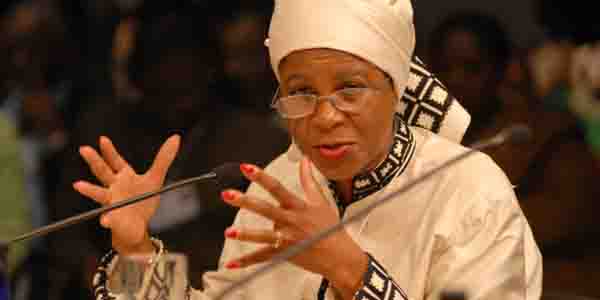
Mamphela Ramphele

South Africa needs to dig itself out of a 19th-century mining business model, academic Mamphela Ramphele said on Wednesday.

Speaking at a media briefing ahead of an international leadership education conference in Cape Town, she said a failure to change the nature of the industry was having devastating repercussions.

“We’ve just had this tragic Marikana debacle, and what was in evidence there is the consequence of South Africa failing to transform the mining industry from a 19th century business model, which relies on cheap migrant labour, very archaic mining technology and a… low-skilled, labour-intensive industrial base.”

She said change could come from leaders of business schools, leaders in the private mining sector and citizens putting their heads together.

“I want to make sure my three-year old grandson, in 30 years’ time, is in a country he can be proud of; and that will not happen, unless we deal with the legacy issues which are holding us back.”

Ramphele, who also chairs the Gold Fields board, said her recent visit to the mining house’s Australian operations showed the industries in the two countries were like chalk and cheese.

“Of course, they were established in different periods, but that doesn’t stop us, because one of the things South Africa is underplaying is technological innovation capacity,” Ramphele said.

She referred to the London Underground rail system, and said tunnelling technology developed in South Africa had contributed towards this.

Ramphele said the ability to innovate and change to a new mining model was not lacking in South Africa.

“We just have not applied our minds because there isn’t the political leadership and will to create a framework for a mining industry of the 21st century.”

She also took aim at industry bosses.

“The private sector, in the form of the mining industry, has also not exercised its mind about how do you leverage the huge endowment… in the form of mineral resources; leveraging that as a way of positioning South Africa as a globally competitive economy… .”

[ad 1]

Ramphele said South Africa had missed the benefits of the last mining boom, while other countries flourished.

“The other thing we do in South Africa — which is really inexplicable, that’s the polite way of putting it — is that we are exporting value to China, to India, to everywhere.

“We mined the riches the dear Lord gave us, gave it to others to process, which means we are exporting jobs, then we re-import (processed minerals) at huge costs for our own purposes, which is why we are de-industrialising.”

She said re-industrialisation in mining would depend on a rethink of the whole value chain.

Ramphele is also a businesswoman and medical doctor, and was an anti-apartheid activist. – Sapa