The Springboks led Argentina 26-6 at the half-time break in their opening Rugby Championship match at FNB Stadium on Saturday.
Referee Chris Pollock awarded a penalty try 10 minutes before the break after Argentine hooker Eusebio Guinazo deliberately knocked an Adriaan Strauss pass down metres from the tryline. Guinazo also received a yellow card for his indiscretion.
Three minutes later JJ Engelbrecht went over for the second try of the match, with flyhalf Morne Steyn converting.
Steyn converted four penalties, while Argentina flyhalf Felipe Contepomi converted two of his attempts at goal. – Sapa
Southern African leaders opened an annual summit Saturday endorsing disputed elections in Zimbabwe that extended President Robert Mugabe’s 33-year rule by another five years.
“Congratulations to comrade Robert Mugabe for conducting peaceful elections,” said the incoming head of the Southern African Development Community (SADC), President Joyce Banda of Malawi.
“We wish to offer you continued support as a member of the family,” Banda said, to wild cheers from the audience at the start of the 15-nation summit.
A smiling Mugabe acknowledged the endorsement with his traditional clenched-fist salute.
Zimbabwean opposition leader Morgan Tsvangirai’s MDC party said Friday he had withdrawn a legal challenge to the elections, claiming the courts would not be fair.
This removed the last hurdle to 89-year-old leader Mugabe’s inauguration for a seventh term.
The SADC’s observer mission for the July 31 elections judged the vote was free, but have not yet commented on its fairness.
The SADC will publish its report on Zimbabwe’s polls during this weekend’s summit, according to South African President Jacob Zuma.
Banda took over the rotational one-year chairmanship of the SADC from Mozambican leader Armando Guebuza, becoming the first woman to head the bloc since its inception 33 years ago.
The two-day summit is expected to be dominated by the political stand-off in Madagascar and the conflict in eastern Democratic Republic of Congo, according to a Malawian official.
Madagascar has been suspended from the regional grouping since strongman Andry Rajoelina toppled Marc Ravalomanana in 2009.
The SADC has been pushing the rivals to follow through on a roadmap meant to steer the island nation toward elections, which Banda hinted could be due this year.
The vote has repeatedly been put on hold amid controversy over the candidacies of the three front-runners, including Rajoelina.
Regional mediators have called for Rajoelina, Ravalomanana’s wife Lalao and former leader Didier Ratsiraka to stand aside, but all three have refused.
In the DR Congo, a quarter-million people have fled their homes since last year when a rebel group calling itself the M23 took up arms against government troops in the mineral-rich but chronically unstable east. – AFP
South Africa’s national team will have an outline image of Nelson Mandela on a sleeve of their shirts when they tackle Argentina Saturday in the Rugby Championship.
A Springboks spokesman said a logo that included the image would be worn by each player, and captain Jean de Villiers vowed his team would triumph to “make Madiba smile”.
Most South Africans call Mandela, a long-time political prisoner who in 1994 became the first democratically elected president of the republic, by his clan name Madiba.
“We are ready to play for Madiba and to bring a smile to his face by defeating Argentina,” centre De Villiers, 32, said after a warm-up session at the match venue.
“Every game you play for the Springboks is special and if you add to that playing for Madiba as well, then suddenly the occasion just becomes massive.
“This is an occasion to celebrate the life of a fantastic man and of a person who has given so much to rugby, to sport, and to the country,” said 87-cap De Villiers.
It is the first time an outline image of a person will appear on the green and gold shirt, which traditionally carries a sponsor logo, the national sport emblem, and a leaping Springbok.
The match is part of a historic day of sport at the 94,000-seat Soccer City stadium in Soweto that also features a friendly match between the national soccer team and Burkina Faso.
Branded the ‘Nelson Mandela Sport and Culture Day’, the event includes a football match between former South African and Italian stars and a music concert.
International icon Mandela turned 95 during July in a Pretoria hospital, where he has spent more than two months after being admitted for a recurring lung infection.
The latest official bulletin on his condition said Mandela remained “critically ill”, but doctors added that the former president “is making a slow but steady improvement”.
While president, Mandela had a huge influence on rugby and football, inspiring the Springboks to win the 1995 World Cup and Bafana Bafana (The Boys) to win the Africa Cup of Nations a year later.
A government brainchild, the Sport Day stages two football matches before the pitch markings are changed and the goals give way to posts during a 90-minute pre-Test break.
“We have practiced the changes several times and are confident they will be done quickly,” said a Soccer City management spokesman.
The organisers, who say they sold 50,000 tickets by Friday, believe it is the first time national football and rugby teams have played in the same stadium on the same day.
Tickets range between $22 (16.50 euros) and $50 and with the cheapest $18 more expensive than for local football fixtures, there is concern that more affluent rugby supporters may dominate the crowd.
While the Springboks lost two previous Tests at the Soweto ground — to the New Zealand All Blacks in 2010 and 2012 — they are favoured to make it 15 wins in 16 outings against the Pumas.
But there is less optimism about Bafana Bafana, who were outplayed by African champions Nigeria two days ago and lucky to lose only 2-0 in Durban. – AFP
What happens to exist is the cause of its use. (Lucretius)
Equal-outcome egalitarianism (henceforth, EOE) is the scourge of our time. It is the doksa of our Zeitgeist – the fons et origo of the Prismon of Equality.
To, for example, believe that race and gender are “social constructs”, gay and heterosexual marriage (are) commensurate and culture(s) “relative” – in order to make all (appear) equal in outcome – is unreason at its purest. For all actions aimed at its fulfillment are fated to fail because its telos is extrinsic in finality… meaning that if that external thing – in this case a-historical and universal equality in outcome – had never existed, all action undertaken to bring it to fruition will, inexorably, fail.
Fortunately this anthropic attribution underpinning the “divine” purpose of secular-humanism is petrifying. Its “truth” – its “mobile army of metaphors, metonyms, and anthropomorphisms …” (Nietzsche) is becoming increasingly immobile … in the face of Reason.
Freedom-loving people in the West are becoming increasingly aware of EOE’s inherent, and inevitable, totalitarian aspirations. They are getting sick and tired of, for example, words being banned, wanton social-engineering (e.g. AA, BEE, bussing and “gender-free” toilets for kids), state-sponsored punishment via forced “rehabilitation” courses like sensitivity and cultural-awareness training – as if (the) Soviet gulags weren’t bad enough already, etc.
Be that as it may; the rise of libertarianism as embodied by, for example, the Tea Party in America and UKIP in England, is the clearest sign that the overtly coercive policies of (yet another) state-driven ideology have reached their sell-by date.
And this disaffection has nothing to do with being “left” or “right” on the political spectrum… because the aforementioned positions are but dichotomous expressions of allegiance to, or contra, (a) specific ideology.
For example, anti-communists like Lech Walesa and AlexanderSolzhenitsyn were actually “left-wing” because they fought against those who wanted to conserve Communism. Yet (the) support of Communism is (usually) regarded as being “leftist”. Ergo, to conserve (as in “right-wing”) or to explore/demand liberty (as in “left-wing”) is completely relative – purely a factor of allegiance as expressed dichotomously.
Meaning that the growing dissatisfaction with (yet another prismon) – this time, EOE – transcends all traditional notions of conservatism and liberalism. Hence, new political constellations are arising in the West… under the guiding light of libertarianism. For libertarianism seems to be the only viable solution left to guarantee the freedom of Whites in the future.
And this is especially true for the Afrikaner in South Africa. The road to the “right” (e.g. the AWB) and the road to the “left” (e.g. the DA) have brought them nowhere. Even worse; it has made enemies of potential friends.
There are many non-Christian Afrikaners (especially the youth) and there are many white English-speaking South Africans who are fiercely loyal to the Afrikaner’s quest for freedom. Yet they and “traditional” Afrikaners are always at each other’s throats… simply because they are still caught within the “left-wing versus right-wing” political constellation… now discredited!
Maybe the path to Afrikaner Freedom is via libertarianism… the antithesis of (the) authoritarianism shackling him to ANC/DA-driven equal-outcome egalitarianism. Because it, libertarianism, – as defined by the philosopher Roderick Long – furthers “any political position that advocates a radical redistribution of power from the coercive state to voluntary associations of free individuals”.
Maybe (a) federalism fed by libertarianism will, one day, be the only political guarantee of voluntary associations (of whites in South Africa) within a clearly defined geographical (and ideological) locale, like Orania. But alas, only time will tell.
What is a given though is the fact that libertarianism will be the Alamo of the Pale Male once its own artillery, democracy, has finally turned against him… on the eternal battlefield where demography is fate (August Comte).
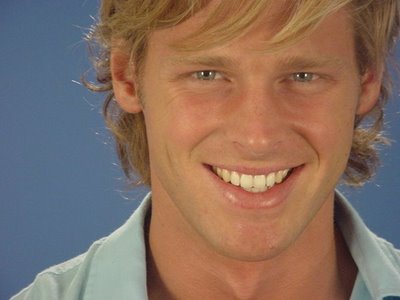
Another pale male: Argentine model and presenter Mario Guerci
by TAU Bulletin
The state of the nation is no more ludicrously evident than Gauteng premier Nomvula Mokonyane’s recent “warning” that “pale males” would return to government in Gauteng if SA’s opposition Democratic Alliance party wins next year’s provincial election.
“It can’t happen, it will not happen” she declared. “Reversals in transformation are unacceptable, and the Gauteng public must be spared the “white gevaar” (danger).
Where in the world are efficiency, skills, creativity and diligence seen as a danger? Only in South Africa, where so-called liberation credentials, party membership and loyalty trump the need to maintain the first world country and its infrastructure which was handed to the ANC on a plate after the 1994 election.
Ms. Mokonyane’s racial invective and resentment has been received with a muted tolerance. Despite the non-racial assurances in the Founding Provisions of South Africa’s constitution, the governing party’s racial diatribes against, mostly, whites continue apace. Indeed, they seem to have increased. The State President’s YouTube clip where he urges his supporters to “kill the boers” and that his cabinet would “kill with a machine gun” is still running, without any apparent move by YouTube to take it out of circulation. (Yet a YouTube clip made by two white South Africans saying they refuse to apologize for being who they are was taken off within a few days of its appearance on the internet.)
South Africa has two parallel universes – the ANC’s self-delusion and the reality. The fact that the country has dramatically slipped down the world’s various achievement indexes over the past nineteen years has either escaped Ms. Mokonyane’s notice, or she is disingenuous in the extreme. Does the rather corpulent Ms. Mokonyane not realize that 90% of the food she and her countrymen consume is produced by pale males? That virtually everything she takes for granted in this country was created by pale males?
From where did the railways, roads, commercial farms, schools, hospitals, potable water and electricity transmission emanate? The very language she uses in a legislature which is not part of her cultural heritage is a language of the pale male. The news print that distributes her humbug is not of her culture either. But she is selective in her vitriol. When this lady shops, she hurries to the pale males’ luxury shopping centers: she was recently seen at up market Hyde Park “posing proudly with her R10 000 LK Bennet shoes and matching handbag”. (Tony Leon, Business Day 30.7.13). Pale males are excoriated but they are good enough to produce and supply the luxuries which she and her fellow anti-white friends cannot live without.
There is no empirical evidence to show that without the intervention of others in Africa (including pale males), Ms. Mokonyane’s culture would have evolved any further than that of those “lost” tribes one finds in the Amazon and Papua New Guinea. She should be grateful that that particular ship sailed around the Cape of Good Hope many years ago and that it decided to stop for victuals. Non-pale male groups who could have manned that ship may not have been so conciliatory to the locals, then and now.
Who created the Sasols, the Iscors, the Eskoms and the country’s nuclear capacity? Who rid the country of the tste tste fly and malaria? Who developed Africa’s premier agricultural and veterinary service, used by the whole continent? Who produces maize and other grain surpluses year after year on the continent that cannot feed itself?
And, conversely, who is busy destroying what used to be the African continent’s pin-up country?
Certainly not pale males. Ms. Mokonyane and her compatriots should look in the mirror. But if one’s modus vivendi is self delusion, then blame is the name of the game. The world has taken note of the Africa of today. It is not a pretty picture. Zimbabwe went from the continent’s bread basket to a basket case. Few if any of the continent’s governments can feed their people. Corruption, nepotism, inefficiency and venality are the order of the day. South Africa is no exception. Who is to blame for Liberia’s status as an African cesspool, or for Ethiopia’s failed state ranking? Colonialism? Apartheid? Pale males? Neither of these countries was subjected to colonialism or apartheid. They are travesties because the people who live there are who they are.
South Africa today could certainly do with some pale males to put things right. But this is not the ANC’s priority: a deep racial inferiority complex trumps practicality.
The facts
Pale males around the world are denounced by the non-achievers with relentless regularity. Whites in the United States complain about this as well. We quote Fred Reed from the US’s Nationalist Times:
“I am weary of the endless denunciation of ‘white privilege’; the calls to abolish all tests in which whites excel, and the need to make universities and police forces and advanced placement classes ‘look like American demographics’. It might be well to note the utter dependence of the US on white men who have contributed virtually everything that keeps the affirmative action classes from living in mud huts.”
Reed continues with examples of this contribution: “Euclidean geometry, parabolic geometry, hyperbolic geometry and projective geometry. Physical chemistry, organic chemistry, biochemistry. Classical mechanics. The indeterminacy principle. The wave equation. The Parthenon. Air conditioning. Number theory. Romanesque architecture. Gothic architecture. Information theory. Entropy. Enthalpy. Almost every symphony ever written. Pierre August Renoir. The diatonic scale. The mathematics behind the twelfth root of two and all that. The Bohr-Sommerfeld atom. The purine pyrimidine structure of the DNA ladder. Single sideband radio. All other radio. Dentistry. The internal combustion engine. Turbojets, turbofans, Doppler beam-sharpening. Penicillin. Airplanes. Surgery. The mammogram. The Pill. The condom. Polio vaccine. The integrated circuit.
“The computer, computational fluid dynamics. Euripides, Sophocles, Aristophanes, Homer. Glass. Rubber. Nylon. Roads. Buildings. Acetyl-cholinesterase inhibitors. Silicone. The automobile. Bug spray. Public cryptography.”
“Like it or not white men can do these things, have done them, and continue to do them. The evidence shows that all groups receiving affirmative action have not done them, and cannot do them, which is why they need affirmative action.
“The pattern of white men doing difficult things continues. Consider the founders of companies in information technologies. Not quite all white, but all men. Anyone who watched the landing of Curiosity on Mars will have noticed that Mission Control consisted overwhelmingly of white men. If I were rude, I would say to those who criticize: invent your own things.”
Reed cites South Africa as an example of a tragedy in the making. “A constantly dwindling number of whites are at the mercy of a predatory welfare class and it’s possible they can’t and won’t carry the rest of the population. If things get worse for them, they will simply flee the country.”
Whether this scenario plays itself out in South Africa is up to the whites. But Ms. Mokonyane mustn’t take too much for granted. Her dislike of pale males borders on the obsessive, to the point where common sense and practical considerations for the benefit of all South Africans are cast aside in an all-consuming and embittered realization that her ANC cannot feed its people, cannot govern, and are no better than what the world has seen emanate from the rest of the continent over the past fifty years. She knows this, the ANC knows this, and the world knows it. Keeping out the pale males won’t improve the ANC. This racial animosity is inimical not only to whites but, eventually, to the future of all South Africans.
The pale male acrimony is however selective. Ex president Nelson Mandela was not interned in an ANC-run hospital. The new ANC elite have quietly bought houses in so-called white areas. They send their children to white schools. They want the pale male’s education system. (Every university in South Africa is a white creation). What is the yardstick against which anything of worth in South Africa is judged if not against a pale male-created yardstick? Are the elite’s suits bought from Nigeria or Italy? Is there such a thing as a Ghanian IPod? Do they fly Air Kenya or British Airways? Do they go to Mali for their holidays or to Paris?
A South African business journalist refers to “the African No” – “a jumbled melee of endless meetings, unreturned phone calls and ignored e-mails”. Compare this approach with the white world. The United States for example accounts for 4,5% of the world’s population but 25% of the world’s GDP. When people flee their terrible countries they try for Europe, Australia and other pale male bastions. They don’t want to emigrate to Zambia or the Sudan.
A cursory trawl through South Africa’s productive sector sees pale males as police divers, as rescue helicopter pilots, as paramedics, as the donors to charities, as the bedrock of the taxpayer base, as the underpinners of the medical profession, the service industry, the banking and the mining sector. The country is divided into the producers and the consumers, and we know on which side of the divide the pale male sits.
Virtually all of the productive farms that were handed over to ANC supporters under the government’s land redistribution policy failed: a pithy example of pale male producers and ANC-created destruction.
It is a pity that more media space is not given to a frank analysis of who are the drivers of the South African economy, instead of to those who talk about nationalization, about transformation, about white racism and so-called privilege. South Africans might get a clearer picture of who is really important in the grand scheme of things, as opposed to those who can talk the leg off an iron pot, hold press conferences, fly all over the world first class, endlessly discuss turnaround strategies and blame everyone but themselves for their shortcomings. Within ten years, South Africa’s social spending (including huge government employee wage bills) will exceed government revenue. Employee compensation as a share of government income went from 31,7% in 2008 to 44,3% in 2012. South Africa’s pale males are a finite group – even they cannot hope to foot the bill for this parasite profligacy forever.
Maybe then South Africa will value its pale males, but it may be too late.
(Extract from Nationalist Times courtesy of Impact magazine)
Scene from New Zealand after its previous earthquake in 2011
Strong earthquakes shook central New Zealand on Friday, damaging homes, destroying a bridge and sending office workers scrambling for cover in the capital. No serious injuries have been reported.
A magnitude-6.5 temblor struck just after 2:30 p.m. near the small South Island town of Seddon, and at least six aftershocks were 5.0 magnitude or stronger.
Several homes near the epicenter were severely damaged, with chimneys collapsing and roofs caving in, said police spokeswoman Barbara Dunn. She said a bridge was severely damaged on the main highway near Seddon, and that rocks and debris had fallen onto the road. Police closed a section of the highway.
Some buildings in Wellington, the capital, were evacuated, and items were knocked off shelves in places.
Police said a number of people were freed from Wellington elevators that stopped working. The initial temblor also forced the nation’s stock exchange to close for more than an hour.
Wellington Mayor Celia Wade-Brown said there was no major damage to the city’s infrastructure or office buildings. She said highways had become clogged as people left the city.
“We think this is business as usual,” she said, “but it is going to take a little while for people to get home tonight.”
The U.S. Geological Survey said the epicenter of the initial temblor was 94 kilometers (58 miles) west of Wellington at a depth of 10 kilometers (6 miles).
A quake of similar strength in the same area three weeks ago broke water mains, smashed windows and downed power lines.
Caroline Little, a seismologist with New Zealand quake monitoring agency GeoNet, said the series of quakes since July had followed an unusual pattern.
“Normally you get a big quake and then the aftershocks get smaller in magnitude,” she said.
Little said the July quake was on a fault line near Seddon that had not previously been mapped. She said it was too early to determine if Friday’s quakes were on that same fault.
A different fault line runs through Wellington, and many in the city fear a major disaster if it were to become active.
New Zealand is part of the so-called Pacific “Ring of Fire” that has regular seismic activity. A severe earthquake in the city of Christchurch in 2011 killed 185 people and destroyed much of the city’s downtown.
Local authorities issued no tsunami warnings after Friday’s quakes. – AP
South African double-amputee Olympian Oscar Pistorius will return to court Monday, when he is expected to be indicted for murdering lover Reeva Steenkamp and receive a date for trial.
The 26-year-old sprinter will appear in the Pretoria Magistrate’s Court six months after shooting dead girlfriend Steenkamp in the toilet of his upscale home.
The platinum blonde cover girl and law graduate died on Valentine’s Day after being shot in the head, elbow and hip.
She would have turned 30 on Monday, when prosecutors are expected to unveil a five-page indictment against Pistorius for premeditated murder, according to sources close to the investigation.
The hearing is expected to be brief, and according to Pistorius family spokeswoman Anneliese Burgess the “chances are very high that a trial date will be set.”
Pistorius, who is out on bail and faces a life sentence if found guilty, has denied murder, saying he shot Steenkamp through a locked bathroom door because he believed she was an intruder.
The trial is not expected to start until 2014, given the backlog in South Africa’s regional high courts.
A single senior judge will hear the case. South Africa does not have a jury system.
The indictment could detail key aspects of the police investigation into Steenkamp’s death that came under scrutiny during a lengthy bail hearing.
These may include ballistics information from the bathroom door suggesting Pistorius’s height at the time of the shooting.
Prosecutors assert he donned his two prosthetic legs before firing four shots through the bathroom door, a delay they say proves the murder was premeditated.
The athlete, who was born without calf bones and had both legs amputated below the knee when he was 11 months old, claims he was on his stumps.
The indictment could also shed light on phone records from four cell phones found outside the room where Steenkamp had locked herself in.
Investigators had to contact mobile manufacturer Apple in the United States as well as Interpol to access one of the phones, Pistorius’s iPhone 5.
The athlete apparently could not remember the four-digit pass code to unlock the phone, according to media reports.
South Africa’s much-maligned police force is under immense pressure to help secure a conviction, after the bail hearing showed up shoddy police work that led to the whole investigation team being replaced.
Police failed to find all the bullets fired, potentially contaminated the crime scene and misjudged the distance to the spot from which a witness claimed to have heard shouting earlier in the night.
Pistorius, who runs on two fibre-glass prosthetic legs, catapulted to fame as the first double-amputee to compete against able-bodied athletes at last year’s London Olympics.
But since the February shooting his reckless past of fast cars, beautiful women and fascination with guns has emerged.
He was released on bail of one million rand ($101,000, 76,000 euros) a week after killing Steenkamp.
After withdrawing from international athletic events, Pistorius restarted light training for “mental and emotional equilibrium”, his family said in June.
After an initial silence, Steenkamp’s parents lashed out at him, speaking of quarrels their daughter had with the athlete in their five-month relationship.
He broke down several times in court during the February bail hearing and family members have spoken openly about his trauma.
The killing sent shock waves around the world and halted his stellar career, ending lucrative endorsement deals with US sportswear giant Nike and French cosmetic firm Clarins.
Pistorius also reportedly was fined one million rand for undeclared taxes.
In the months following his release the sprinter has kept a low profile.
But he has been spotted in public a few times, most recently while kayaking last Sunday in harbour town Hermanus east of Cape Town.
“He had to get out of this jail,” his uncle Arnold Pistorius told Afrikaans-language Beeld newspaper, referring to the athlete’s seclusion. – Sapa-AFP
Egypt’s Christians are living in fear after a string of attacks against churches, businesses and homes they say were carried out by angry supporters of ousted Islamist president Mohamed Morsi.
As police dispersed Morsi supporters from two Cairo squares on Wednesday, attackers torched churches across the country in an apparent response.
“People are terrified; no one dares leave home,” Marco, a 27-year-old engineer, told AFP by phone from the central city of Sohag.
The city has become a ghost town, he said, describing an atmosphere of terror where attackers “know where the Copts live” and torched several churches before turning to homes.
The Maspero Youth Union, a Coptic Christian youth movement, denounced what it called a “retaliation war” against the religious minority, which makes up around 10 percent of Egypt’s population.
The group accused Morsi supporters of targeting them in response to Coptic Pope Tawadros II’s support for the July 3 coup that ousted the Islamist leader.
The Egyptian Initiative for Personal Rights (EIPR), a local NGO, says at least 25 churches were torched on Wednesday and Thursday, and that attackers also targeted Christian schools, shops and homes across all 27 provinces.
Iraq’s Chaldean Christian archbishop Louis Sako told AFP that one of his community’s churches was among those targeted on Wednesday.
“This is a real disaster,” he said, saying the region is a “dangerous volcano.”
For Marco, the attacks against the churches were not a surprise –Christian religious buildings have been targeted before.
It was the torching of Coptic Christian homes and the looting of their businesses that shocked him.
The attackers were “people chanting pro-Morsi slogans and wearing headbands with the phrase ‘Muslim Brotherhood’ written on them,” he said.
The Maspero Youth Union, which documented abuses against Christians during Morsi’s one year in office, also laid blame for the attacks on supporters of the ousted leader.
“Maspero Youth Union condemns the terrorism Copts are facing now in Egypt after supporters of ousted president Mohamed Morsi waged a retaliation war against Copts and their churches, homes and businesses,” the group said.
“Copts were attacked in nine governorates, causing panic, losses and destruction for no reason and no crimes they committed except being Christians.”
Morsi’s supporters have often accused Christians of supporting president Hosni Mubarak, who was ousted in Egypt’s 2011 uprising. Ironically, Christians were also targeted when Mubarak was in power.
On Thursday, the country’s interim army-installed government described attacks on Egypt’s Christians as a “red line” and pledged that authorities would “respond forcefully” to any new attack.
Shortly afterwards, the defence minister General Abdel Fattah al-Sisi, the army chief who led the coup, pledged that the army would pay for the rebuilding of the churches attacked on Wednesday.
On Thursday morning, interim prime minister Hazem Beblawi also announced he had met with Coptic Pope Tawadros II to express solidarity in the wake of the attacks.
And state news agency MENA reported that 80 Morsi loyalists had been arrested and turned over to military courts for their alleged involvement in torching churches in Suez province on Wednesday.
The Muslim Brotherhood had little to say on the issue, with spokesman Gehad el-Haddad suggesting the authorities were behind the violence.
“Military coup regime is resorting to instigating sectarian violence exactly as they did when Mubarak was about to fall,” he tweeted.
The government’s promises have so far failed to convince Christians and activists that authorities would prevent future attacks.
“The state must intervene to protect the population. Concrete action is needed after all the big speeches,” said Ishak Ibrahim, an EIPR researcher on religious issues.
He described a “discourse of hatred” against Christians throughout the country, more from the Salafists, the most conservative of Islamists, rather than members of the Muslim Brotherhood.
And he pointed out that most of the attacks had taken place outside the major cities, in areas where security presence is often minimal.
“Families who are too scared to go out to get supplies are waiting for something concrete,” added Karem, another resident of Sohag.
“Right now as we speak, attacks against Christians are continuing,” he said.
African cleansing ceremony at the site of the Marikana killings
The first anniversary of the shooting at Lonmin’s Marikana mine, near Rustenburg in the North West, will be marked during a commemorative rally on Friday.
On August 10 last year, Lonmin rockdrillers embarked on an unprotected strike for a monthly salary of R12,500.
More workers joined the strike and the protesters gathered at a hill near Nkaneng informal settlement carrying weapons, such as pangas, spears, knobkerries, and iron rods.
On August 16 last year, police trying to disperse and disarm them opened fire on the mineworkers, killing 34 of them.
Ten people, including two policemen and two security guards, were killed in strike-related violence the preceding week.
Several violent deaths in the area following the Lonmin strike have been blamed on rivalry between the Association of Mineworkers and Construction Union (Amcu) and the National Union of Mineworkers (NUM).
The Congress of SA Trade Unions, to which NUM is affiliated, said that there had been “overwhelming concern” in the wake of the Marikana shooting that such killings should never again happen in democratic South Africa.
“Tragically however, one year later, we cannot say that there have been no further deaths,” spokesman Patrick Craven said in a statement on Thursday.
Social problems, poverty and lack of transformation still affected the lives of mining communities.
A framework agreement for a sustainable mining industry, signed by government, employers and most unions, needed to be fulfilled in order to prevent a repetition of the Marikana tragedy, Craven said.
He said the union federation was “bitterly disappointed” at the procedural arguments stalling the work of the Farlam Commission.
President Jacob Zuma appointed the commission to probe circumstances around the August 16 shooting.
On Friday, the Constitutional Court is expected to rule whether the State should pay the legal costs for the miners arrested and injured at Marikana.
In June Dali Mpofu, for the miners, told the commission that due to financial constraints his team could be forced to withdraw from the inquiry.
He previously brought an urgent court application in the High Court in Pretoria several weeks ago seeking funding, but this was dismissed.
The commission has been postponed several times while solutions to the funding problems were sought.
Amnesty International’s Africa spokesman Noel Kututwa said on Thursday that the organisation was concerned that the Farlam Commission was in crisis.
“The long-term consequences for the respect and protection of human rights in South Africa will be severe should the South African authorities fail in taking all necessary steps to achieve accountability for what happened in Marikana on 16 August 2012.”
The SA Communist Party called for the speedy conclusion of the Farlam Commission’s work.
“The SACP hopes that the commission will also attend to the broader systemic, underlying issues around the mining areas and the mining industry.”
The SA Human Rights Commission (SAHRC) said it was concerned about continuing violence and killings in the Marikana area.
“The SAHRC recognises the urgent need for an understanding of all of the causes and reasons for these deaths, and what can be done to improve the material conditions of the people of Marikana, and hold those responsible accountable.”
Agang SA leader Mamphela Ramphele said: “As we honour all those who died at Marikana, we must encourage a spirit of reconciliation backed by practical steps so that all concerned parties can work together to finally bring peace to Marikana”.
The CCMA said its offices would observe a minute of silence at noon on Friday as a mark of respect for those killed at Marikana.
The CCMA committed itself to working tirelessly in efforts to prevent a repetition of the events of August 16 last year. It also acknowledged the work of its members in relation to the Marikana labour disputes.
Council for the Advancement of the SA Constitution chairman Sipho Pityana said police needed to heed lessons learnt from the Marikana shooting.
“The continued brutality of the police, and their inadequacies in policing protests, shows how urgent it is that reforms are introduced to protect the human rights of everyone who lives in South Africa.”
National police commissioner Riah Phiyega called for peace at Friday’s commemorative events.
“We wish to appeal to everyone who will be in attendance to conduct themselves appropriately and to co-operate with the event organisers, marshals and the police,” she said on Thursday.
“Most importantly, we plead with them to not carry dangerous weapons including knives, knobkerries, firearms or any other dangerous weapons.”
NUM and the African National Congress in the North West signalled on Thursday that they would not be attending the commemorations.
NUM spokesman Lesiba Seshoka said the decision was based on the fact that the events were organised by the Marikana Support Group, rather than deputy president Kgalema Motlanthe’s office.
NUM initially welcomed Amcu’s invitation to its president Senzeni Zokwana to attend the commemoration. Zokwana had been asked to share the stage with Amcu president Joseph Mathunjwa in an attempt to ease tensions in the platinum belt.
Lonmin signed an agreement with Amcu this week, recognising it as the company’s majority trade union. The agreement set a threshold of a 30 percent membership for any trade union to be recognised by the company.
Membership of the NUM, which used to be the majority union, has dropped to 20 percent of Lonmin’s workforce.
ANC provincial spokesman Kenny Morolong said: “The commemoration is organised by an illegitimate team called ‘Marikana support group’ — a group which the ANC does not recognise”.
The ANC would only participate in a commemoration organised by government, as agreed with families, Lonmin Platinum and labour unions, he said. – Sapa
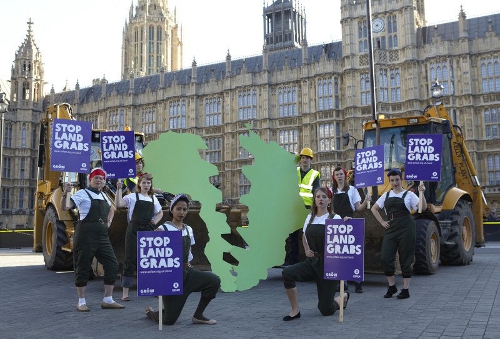
TAU SA called on the Minister of Agriculture, Tina Joemat-Pettersen, to express her opinion on her colleague of Rural Development and Land Reform’s ideological process which will deprive white landowners of their rightful property.
TAU SA`s president, Mr. Louis Meintjes calls minister Nkwinti plans “constructive deprivation of white landowners, if not plain legalized land grabbing”.
In a letter to Minister Joemat-Petterson Mr Meintjes asked her if her colleague’s policy also is government policy, and whether she, who is also in essence the minister who has a direct interest in food security, can condone the ideological approach which has the potential of “totally destroying commercial agriculture”.
Meanwhile, Minister Nkwinti was informed in a separate letter that until he and his department display the common decency to respond to correspondence, TAU SA was not prepared to participate in the NAREG process or any of his ministerial work sessions, and that TAU SA did not regard those actions as meeting the requirements applicable to a public consultation process as it does not comply with administrative requirements.
Mr. Meintjes called on Minister Joemat-Petterson to ensure that the plans and proposals for Land Reform would not give such rights to farm workers that it would jeopardise food security, because in terms of the proposals farmers would eventually have no authority to make any decisions on their own farms without the consent of their employees.
“Those proposals effectively puts Government in charge of all agricultural properties. This is a communist approach and TAU SA will have no choice but to encourage farmers to put measures in place within the shortest time possible to ensure that they will be able to continue with their operations without labour,” said Mr Meintjes.
“Should these proposals be contained in legislation it will influence the total economy negatively, and we foresee famine in South Africa,” Meintjies concluded
The bail applications of three men accused of killing an ANC branch leader are expected to resume in the Durban Magistrate’s Court on Tuesday.
Bongukwanda Excellent Gasa, Sipho Innocent Sikhakhane, and Skhulu Phiwayinkosi Gasa were meant to apply for bail on August 2, but their attorney, Laurens de Klerk, asked for a postponement. This was because the State was not satisfied with their residential addresses.
“We were given addresses in the Nkandla area, but those addresses are not appropriate for the State. We still need to verify addresses the defence will give to us,” prosecutor Blackie Swart said at the time.
De Klerk proposed an address for a safe house which could be easily monitored and was near a police station, should the men be granted bail.
The three, who were arrested on July 2, are accused of killing Sithembiso Ngidi, an executive member of the African National Congress Ward 75, Jacobs area branch. Ngidi was shot dead on June 23 after taking part in a door-to-door election campaign in Lamontville, south of Durban. – Sapa
A South African immigrant from Italy, Vivien Ponté, has fallen victim to the psychopathic murders of whites by blacks in the country. The resident of Oranjeville, a small Free State town, was killed after probably being tied up, raped and strangled, after which she was set alight on her own double bed.
The Johannesburg daily Beeld published a photograph of the 57-year old Ponté’s charred bed in the house where she lived. Her equally burnt body was discovered on Monday morning around 10.00 a.m. by police after being alerted by her gardener who became alarmed at not seeing her up early as was her habit. Burn marks were also visible on the outside of the house above the windows.
Vivien Ponté
According to Beeld, the murdered woman was a pharmacist by training but her neighbours did not know exactly where she worked. They expressed their shock at the vicious killing in their midst. Oranjeville is a peaceful hamlet village next the Vaal Dam where nothing much happens.
The Italian-born woman, who came to South Africa with her parents at the age of six, was unmarried and childless, living alone in the spacious house on the edge of the Vaal Dam.
Robbery seems to have been the motive as the house was looted, with Ponté’s neatly filed documents strewn all over the floor. However, only the main bedroom was torched.
A neighbour went inside with the police to investigate. Upon discovering the corpse, however, the police told her not to go inside as the scene was one of macabre and indescribable cruelty. Despite the black soot disfiguring Ponté’s tastefully decorated bedroom, blood stains could still be discerned here and there.
A spokesman for the police, Constable Peter Kareli, described it as a “horrible murder”.
The community of Oranjeville was shocked by the grisly incident and speculation was rife as to how it could have happened as neighbours normally look out for one another and any black strangers in town are normally closely monitored.
However, Ponté was a known philanthropist who regularly visited the black squatter camp outside Oranjeville where she handed out food parcels, gave art lessons and contributed financially, leading a resident to remark: “Never a good deed shall go unpunished. That is the story of South Africa. Our kind-heartedness is rewarded with sadism.”
Another resident said: “Oranjeville is a peaceful, safe town. That something like this could happen within a country town like ours, is just terrible.”
Neighbours suspect that she was attacked on Sunday night but could not recall seeing any blacks in the area. The neighbourhood dogs were normally very alert and there had not been any barking either.
As a teenager radicalised by China’s Cultural Revolution, Zhang Hongbing denounced his mother to the authorities. Two months later a firing squad shot her dead.
Now after more than 40 years of mounting guilt, Zhang has ruffled the silence that cloaks China’s decade of turmoil with a public confession.
Such rare apologies have been welcomed as a potential gateway to the collective soul-searching that could bring healing — but is blocked by a ruling Communist Party whose critics say is unwilling to confront its own responsibility.
“Back then everyone was swept up and you couldn’t escape even if you wanted to. Any kindness or beauty in me was thoroughly, irretrievably ‘formatted’,” Zhang told the Beijing News last week.
“I hope that from my self-reflection other people can understand what the situation was like at that time.”
The 1966-76 Cultural Revolution, unleashed by then-leader Mao Zedong to reassert power after the famines caused by his disastrous Great Leap Forward, inflicted myriad personal tragedies and threw society into chaos.
“Red Guard” youths abused their elders — officials, intellectuals, neighbours, relatives — dragging them into “struggle sessions”, ransacking their homes and driving some to suicide.
Many targets were jailed or killed, and while no official figure has been issued, one Western historian estimated half a million people died in 1967 alone.
Zhang reported his mother in 1970 for criticising Mao, and military officials came to their home, assaulted her and took her away.
But as the political winds changed — a few years after the Cultural Revolution ended, a court in his native central Anhui province recanted his mother’s sentence — Zhang began to rethink as well.
“I will never forgive myself,” he said.
Only a handful of public confessions have appeared, mostly in recent years as the Revolution’s once-heady teenagers enter their 60s.
Wen Qingfu from the central province of Hunan cited age as a spur for admitting in an essay in June that, following orders, he once led a mob to storm the home of a teacher whose son he often played with.
“When people get old they look back and reflect,” he told a provincial newspaper. “If I didn’t apologise now we would both get too old.”
Wen acted in time to see his victim’s daughter reply in a public letter on behalf of her frail mother: “You can let go of your guilt.”
Many Chinese have embraced these apologies, even though wide airing of past wrongs might invite a spate of legal action, said Ding Xueliang, a Cultural Revolution expert at Hong Kong University of Science and Technology.
In a rare trial stemming from the era, a court in Zhejiang province in April sentenced a man in his 80s to 42 months in prison for a 1967 murder.
Still, Ding said, “the positive consequences would go far beyond the negative ones… to collective soul-searching, to build a more law-based society”.
But China’s ruling party prohibits such discussion, which would inevitably broach the question of its own ugly role. Any trial or apology tends to skirt around this central issue, say academics.
“Individual responsibility is one part of this,” said Xu Youyu, a researcher at the Chinese Academy of Social Sciences.
“Some things are basic, for example, you can’t hit people or humiliate or persecute them.”
But the confessions “have not touched on the more important or fundamental issues,” he said, and if they did, “there might be a question of whether the discussion could continue”.
Shortly after Mao died in 1976 the campaign was ended, and the authorities hung blame on the controversial Gang of Four leaders headed by Mao’s wife Jiang Qing, jailing them in 1980.
The following year the official party line declared that the Cultural Revolution had dealt China “the most severe setback and the heaviest losses” since the founding of the People’s Republic in 1949.
Mao was deemed to have been 70 percent right and 30 percent wrong, having made “gross mistakes” but far greater contributions.
And with that a curtain over the matter was drawn.
Former premier Wen Jiabao briefly referenced the period last year, warning that China should never retread such “historical tragedies”.
The remark — seen as a rebuke to the recently disgraced leader Bo Xilai who had championed “red revival” — heartened those who support freer discussion of the decade, but the impact of Wen’s words ended there.
Virtually no museums, memorials or films in China explore the Revolution, except for little-known private efforts such as one museum in southwestern Sichuan province that refers discreetly to a “Red era”.
In a public apology published in June, Liu Boqin of Shandong province in the east detailed his crimes and listed his victims, but only vaguely referenced the political directives that drove him.
Instead he cited “youth and ignorance, being incited, wicked, not distinguishing right and wrong” for having hounded teachers and vandalised homes.
“Although being swept up in the environment of the Cultural Revolution was one reason,” he wrote, “I as an individual bear responsibility for my evil actions.” – AFP
It’s one of those questions that everybody has been asked at least once in their life – what would you do if you won the lottery? For most, it is a mere pipe-dream – something to fantasise about but nothing more than that, but for a few very lucky people, this fantasy becomes a reality.
For some the sudden vast swathe of wealth rushing into their pockets brings with it a tide of happiness – all they have ever wanted, but for others, it can get a little overwhelming. Becoming millions richer in an instant makes it very difficult to keep one’s life the same, and it is no surprise that there are some lotto winners with some incredible stories – here are a few of the best straight out of South Africa.
First, a true rags to riches story – earlier in 2013 a 54-year-old man won R6.5m after taking a chance on a R20 ticket in the January 19th draw. Used to living off just R750 per month, the man suddenly found astronomical wealth right at his feet, literally, as he hid the winning ticket in his shoe to keep it safe before handing it in.
Those feet, admirably, have stayed firmly on the ground since his big win. He had made his money through odd jobs prior to his win and said he wanted to keep the same lifestyle, devoting the money to his children by relocating them to live with him in Johannesburg so they could attend better schools.
The same, sadly, cannot be said of Jason Canterbury, who won R6.7m in 2003 at the age of just 18. Jason’s tragic story saw him lose all his money before he was sentenced to 28 years in jail for murder in 2008, having turned to drugs and crime as a way of supporting the lifestyle he had briefly enjoyed after his win.
Perhaps the most incredible of all the South African lottery tales though, is that of a 38-year-old man who defied odds of 336,000,000-1 to win the top prize not once, but twice.
The man picked up R30m in November 2009, less than 10 years after an R11m win, stunning lottery chiefs. “I have no idea what his secret is. He’s just a lucky bloke,” said Thembi Tulwana, spokesman for South Africa’s Lottery operator Gidani.
Like our first case, this man planned to invest the majority of his winning in the futures of his children, so perhaps it is they, not he himself, who are truly lucky ones.
With so many new ways to win big at the lotto popping up each day, and the ever-increasing prevalence of online lotteries, there are now more chances than ever to win big like these people did. Go online and find lotto results here at the click of a button to see if you could be joining them – you never know – you might even win twice.
This website uses cookies to improve your experience. We'll assume you're ok with this, but you can opt-out if you wish. Cookie settingsACCEPT
Privacy & Cookies Policy
Privacy Overview
This website uses cookies to improve your experience while you navigate through the website. Out of these cookies, the cookies that are categorized as necessary are stored on your browser as they are essential for the working of basic functionalities of the website. We also use third-party cookies that help us analyze and understand how you use this website. These cookies will be stored in your browser only with your consent. You also have the option to opt-out of these cookies. But opting out of some of these cookies may have an effect on your browsing experience.
Necessary cookies are absolutely essential for the website to function properly. This category only includes cookies that ensures basic functionalities and security features of the website. These cookies do not store any personal information.
Any cookies that may not be particularly necessary for the website to function and is used specifically to collect user personal data via analytics, ads, other embedded contents are termed as non-necessary cookies. It is mandatory to procure user consent prior to running these cookies on your website.