Profiling racial profiling

At Toronto police headquarters, the response to evidence of racial profiling has changed dramatically. The angry denials of eight years ago have evolved into a clear recognition of the problem and a firm determination to fix it.

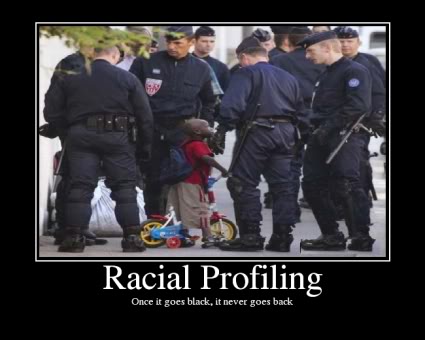
Unfortunately, that attitude hasn’t always percolated down to the street level, where visible minorities – especially blacks – are still being disproportionately singled out for special attention by police.

That’s the upshot of a recent investigative series done by a team of Star journalists led by reporter Jim Rankin. And it is a finding that should trouble anyone wanting more fair and effective policing in Canada’s largest city.

Through a freedom of information request that took almost seven years to yield results, the Star obtained data from 1.7 million “contact cards” filled out by Toronto police officers from 2003 to 2008. Kept for information purposes, these index cards, known as 208s, document the identity, age, gender, race, physical features and address of an individual, as well as known friends and associates.

It isn’t the same as a criminal record. But the filing of a 208 signals that the individual in question has, for one reason or another, caught the attention of police.

The Star’s investigation found that blacks were three times more likely to be stopped and documented in this way than whites. That holds true for all age levels and neighbourhoods. A higher rate of “carding” blacks was especially noticeable in more affluent, predominantly white sections of the city.

Reporters also updated statistics on arrests and charges that had formed the basis of the Star’s landmark 2002 series on race and policing. They found that blacks facing drug charges were still being detained for bail hearings more often than whites, and black motorists remained more likely to be ticketed than white drivers in the same circumstances.

When presented with these findings, and results from examining 208s, Chief Bill Blair didn’t dispute the analysis and accepted that racial bias is a likely factor in these patterns. That’s a major departure from eight years ago when the chief of the day (Julian Fantino) erupted with rage and denial of any systemic problem. The police force is now acting on a variety of fronts, including dramatically increased minority hiring. But more needs to be done.

Civil libertarians object to the entire contact card approach on grounds that tracking innocent people represents excessive monitoring by the state. That is a reasonable concern, and this practice needs re-evaluation.

As long as it continues, however, results from 208s and other police data should be analyzed for racial bias.

The police force isn’t allowed to do that now, under a 1989 policy that bans the department from crunching its numbers on the basis of race. That is outdated. A wide range of authorities, including the Ontario Human Rights Commission, have called for official analysis of such data with an eye toward tracing evidence of racial profiling.

Mail your toenails… to the Chinese

A Grahamstown man has posted his toenails to the Chinese embassy in Pretoria because he is upset with the escalating number of rhino killed by poachers, according to a report on Wednesday.

The Star newspaper reported that Mark Wilby clipped off his toenails, put it in an envelope and posted it.

In a YouTube video, he called on other South Africans to do the same.

Rhino horn is made of keratin, the same protein in hair, fingernails and toenails, but some Asian countries believe it has medicinal qualities.

“It’s not enough to say rhino horn is useless,” Wilby told the publication.

“We need to find out more about the market, to understand this thing so we can address the demand.”

The embassy told the newspaper it had not yet received the mail by Tuesday afternoon.- Sapa

March turns violent as thousands protest service delivery

Over 7 000 protesters, carrying sticks and knobkerries, arrived at the Benoni Customer Care Centre, at the corner of Elston Avenue and Tom Jones Street, in separate groups on October 17, to hand over a memorandum.

The town was brought to a standstill for two hours, from 8am, and almost all the shops were closed for safety reasons.

The protesters, some as young as 10, vandalised a number of shops, stoned passing motorists, stole goods belonging to hawkers and upturned rubbish bins.

The door of the Department of Education was also broken in the process. No one has been arrested, despite all of this.

The situation calmed as both the SAPS and Metro Police started to arrive in numbers. A police helicopter was also hovering in the sky, to try to keep order.

The protesters were residents of the Actonville hostel and the informal settlements in Actonville and Wattville.

Residents said they wanted houses.

“We have been living in shacks for many years and we are tired of this,” said a woman who wanted to remain anonymous.

An Actonville Hostel resident said they have sewage running all over the hostel and that they were promised proper housing, but that nothing has naterialised.

After handing over their memorandum, the protesters tried to break down the Customer Care Centre fence, in order gain access to the premises, but police used stun grenades to disperse the crowed.

The protesters were then escorted out of town by a police officers. Benoni resident Stephen Frances (19) was beaten with sticks and robbed of his money and cellphone by unruly protesters.

He was walking along Elston Avenue when a mob of protesters pounced on him for no particular reason.

“I did nothing to these people, but they decided to beat me up and take my money and cellphone,” said Frances, who emerged from the crowd running for his life.

He showed the City Times the marks sticks left on his body. –  The Citizen

US: Violent crime rises sharply, reversing trend

The violent crime rate went up 17% last year, ending a general decline in violence that began nearly 20 years ago, according to a new federal survey of crime victims in the United States.

The Justice Department’s National Crime Victimization Survey also found an 11% increase in the rate of property crimes, including household burglaries and car theft.

The survey represents a sharp departure from recent years and a preliminary report produced earlier this year by the FBI, which found that violent crime had declined by 4% during the first six months of 2011.

The final FBI Uniform Crime Report, which collects data from police departments across the country, is expected out later this month.

The victimization survey attributed the entire increase in 2011 to a 22% jump in the number of serious and simple assaults, according to the review.

Criminal justice analysts, while noting a substantial increase in assaults, said it was too early to determine whether the 2011 jump represented an anomaly or signaled a turnaround in the sustained decline in violent crime.

“I wouldn’t make much out of it,” said University of Maryland criminologist Charles Wellford. “One year does not make a trend, and these institutional measures (the Justice survey and the FBI crime report) are best at measuring trends.”

Wellford said the methodological differences between the Justice survey and the FBI reports may have some bearing on the recent survey’s findings.

Specifically, the survey does not track the crimes of homicide and arson, while the FBI report does not track simple assaults (those not involving weapons or serious injury) in its annual reviews of major crimes.

Carnegie Mellon University criminologist Alfred Blumstein suggested that because there was little or no change in other violent crimes in the survey, the surge in assaults could be due to deeper probing by survey interviewers.

He said robbery, which is one of the most likely crimes to be reported by victims, declined by 2%, according to the survey.

“I think it is too early to say what is going on exactly,” Blumstein said. “I think we should wait for the results of the (FBI report later this month). If that tracks what the survey is showing, then I would it would represent a flag that we need to investigate.”

The Justice Department said in a statement that there was “no evidence to suggest” that changes in victim interviewing tactics prompted the sudden increase in assault reports.

“The data collection process and questionnaire has been generally the same since 1993, and no substantive changes occurred during the 2010-2011 period,” the Justice statement said. – USA Today

Post Racial? Hollywood didn’t get the memo

The movie industry really has me, Roschelle, second guessing this post racial era we’ve been living in since the last presidential election. Hollywood. The industry is viewed by many as the most progressively liberal set of folks (producers, directors, movie stars, etc.) you ever want to meet. But they are not post-racial enough.

What do Robert DeNiro, Ron Perlman, Tyne Daly, Cuba Gooding, Jr., Justin Chambers, George Lucas, Halle Berry, Sidney Poitier, James Earl Jones, and Alfre Woodard all have in common? All these Hollywood heavy hitters have husbands/wives/significant others to someone of a different race than their own.

I’ll use the black white dichotomy for this argument. Although, the same applies regarding other races and ethnic groups.

You see the thing is out of every actor or actress I mentioned with the exception of Halle Berry none of these stars have been in a role that would have their love interest, mate or spouse someone of another race.

Sure Sidney Poitier ruffled a few feathers in Guess Who’s Coming to Dinner. It was too much for many people to take in. Taboo. Unthinkable. And I guess that still applies today.

I certainly consider myself a movie buff. So, if my knowledge of movies is too limited and I’ve overlooked a blockbuster that depicted an interracial relationship worthy of mention please let me know. I hardly think Billy Bob banging Halle or Denzel with his part time lover in Training Day (oh, how I hated that movie) make the grade.

I’m not asking to be subjected to another typical racially charged plot. The interracial couple and all the challenges they face in a society that’s, for the most part, completely unaccepting of their relationship and spend the next 120 minutes of the movie making their lives miserable. That’s just more of the same. And with all due respect, we’re past all that stuff anyway. This is post racial America!

It’s as if Hollywood frowns on this reality as much as some of us. Harrison Ford, Brad Pitt, Anthony Hopkins could never come home to a woman of color and sit around the dinner table with their biracial children, get a good night’s sleep and wake the next morning to begin a family vacation that ends in disaster…or a wholesome made for TV movie about family life in the Midwest…or be the parents of the next guy who battles the Decepticons along with the Transformers.

Gabrielle Union, Lynn Whitfield, Thandie Newton, and Cicely Tyson would never be viewed as authentic as they kissed their white mate good bye as he went off to foil some terrorist plot, pull off a big jewelry heist, coach a bunch of misfits into the winniest team in high school football history or save the planet from aliens!

I understand that movies have to be seen and gross mega bucks to be considered blockbusters or worthy of the little gold statue by the Academy. Is that the problem? Are the execs fearful that releasing these types of movies might land them in the soup line?

Life isn’t cookie cutter. Love isn’t monochromatic nor are those we choose to love. Black people love white people and brown people love yellow people and yellow people love red people.

The entertainment industry owe it to us to be true to the ideology of mixing. Maybe even help make the idea of interracial relationships less foreign by changing the humdrum family dynamics found in just about every movie I’ve ever seen. Or am I being unrealistic?

Poisonous gas accident at Kraft

After the accident at Kraft Foods in Bad Fallingbostel, Germany

About 1,400 people have been evacuated from their homes in Germany, authorities said on Tuesday, after a chemical accident at a factory run by US food giant Kraft caused a cloud of poisonous gas.

The accident, at the small town of Bad Fallingbostel, near Hanover in northern Germany, happened on Monday when employees accidentally poured acid into a tank containing sodium hydroxide solution, causing a chemical reaction.

About 700 firefighters were still trying to cool the container on Tuesday amid rising temperatures and fears of a possible explosion. Technical experts were trying to pump out the acid.

Local authorities have imposed emergency measures, including closing local schools and nurseries as well as parts of a major motorway running nearby. An exclusion zone of 500 metres has been set up.

A spokeswoman for the company said that no one had been injured so far.

“There has at no time been any danger for the population because we decided, along with the authorities, to evacuate as a precautionary measure,” Heike Hauerken told rolling news channel N24.

Production was halted as soon as the accident took place, she added. – Sapa/AFP

Strikers attack truck and driver

Torched truck on the East Rand, N12 motorway

A truck driver and two other people were in hospital on Thursday after their truck was torched on the N12, Ekurhuleni metro police said.

“The driver and his two co-drivers were seriously injured…. The three were battered by angry mob of striking truck drivers,” said spokesman Superintendent Vusi Mabanga.

The attackers ran away and no arrests were made.

Striking truck drivers have been accused of violence and intimidation since the strike began.

On Wednesday, two trucks were set alight and another was stoned in Cape Town.

Talks to end the strike collapsed on Thursday when unions rejected a third offer.

Drivers wanted a 12 percent salary increase, while employers offered 8.5 percent for next year, and another 0.5 percent the following year. – Sapa

Is South Africa the next Liberia?

by Dan Roodt

I ended off my last column with a reference to “the dark eye of Africa”, a term used by Laurens van der Post in his eponymous lecture in 1954. Following in the footsteps of Van der Post, how are we supposed to make sense of the sadistic violence, murders and rapes taking place in South Africa every day?

Just yesterday on this website I read of a case where a 38-year old black man raped and murdered his own 92-year old grandmother. Over the last two weeks we have had at least three very high-profile murders, on 13-year old Alyssa Botha, 50-year old André Jordaan and only a few days ago, on the world-famous boxer Corrie Sanders.

According to at least one expert who has analysed our crime statistics released last week, every white person in this country will be exposed to a so-called “contact crime” – an armed robbery or violent attack on his person – over the next three and a half years. More than fifty people are murdered every day, as many as are murdered in some European countries in a whole year!

The worst is, much of the “xenophobic killings” of foreign Africans do not even get reported by the police. Some of them are in the country illegally and the local black policemen turn a blind eye when they are murdered, except where it gets video-ed. Then you might get an account published in the New York Times as happened last year when Barry Bearak described such a murder in Watching the Murder of an Innocent Man.

Many people still pretend that South Africa is a normal society, even a liberal democracy. But they are simply dishonest or blind to the reality that we have become a kind of Barbary Coast, albeit inland, where the rules of pirates prevail. Also the events and controversies surrounding Julius Malema are to be seen in this light, as manifestations of pirates quarrelling over stolen loot.

Malema is rumoured to have ties with organised gangs and black mercenaries from Zimbabwe. Against the backdrop of a sadistic society with atrocities being committed almost as part of a daily ritual like shaving or brushing one’s teeth, the internecine power struggle between Malema and the establishment ANC portend still more conflict ahead.

Both the American Stephen Ellis and the French journalist Stephen Smith characterised the civil war or anarchy in Liberia as a defining moment in Africa after the Cold War. The “paradise of cruelty” created by Charles Taylor in Liberia and Sierra Leone with child soldiers committing atrocities, resonates profoundly with present-day South Africa.

Ironically, South Africa has attained barbarism at the very moment when many international observers – let’s call them naïve do-gooders – saw the country elevating itself to Wesern-style democracy. Even the mayor of Ekurhuleni, the sprawling conglomeration of municipalities cobbled together by the ANC on the East Rand, described the murderers of Corrie Sanders as “barbarians”. And he is both black and an ANC politician, therefore an incumbent of “democracy”; which makes his use of the word so much more significant, even poignant.

Those same “angels of virtue”, the international do-gooders – but who naturally have their own interests at heart too – are fond of explaining our problems by way of institutional failure, socio-economic conditions, “inequality”, or even the ubiquitous scapegoat, “apartheid”. Yet the barbarian urge at the heart of the New South Africa goes far deeper than that. It is more a problem of consciousness. A society can only sustain so much violence. After that it becomes self-perpetuating, a conditioned reflex, a way of life.

Zuma’s little war chant, “Bring me my machine gun”, acquires a whole new meaning, as the motto not only of ANC rule, but of a whole epoch.

[ad 1]

The mine workers at Marikana seem to have opted for violence and intimidation as a far better way of negotiating with mine owners than our byzantine labour laws and regulations. Given the success of their strategy so far, they appear to have been vindicated.

South Africa has become so phantasmagorical, so far removed from any semblance of normality that one has to look to fiction, especially science fiction or a futuristic horror world to gain any understanding of what is going on here. Mad Max comes to mind. But at least Max was driven by rage at the killing of his wife, baby and best friend. Our killers are actuated by pure sadism, by the mystical pleasure of killing, raping and hurting.

 South Africa seems to be doomed to a kind of reverse narcissism. The more it stares into the mirror, especially that mirror held up to it by the mass media, the more it sees an image that is the opposite of itself. During the previous dispensation, which was mostly orderly and without the gratuitous viciousness of the present order, many people saw us as a profoundly evil society. Nowadays, with things falling apart completely and anarchy upon us, those same people and newspaper pundits discern in this utterly sick society a pristine exemplar of liberal democracy and human rights.

 Malema is already the Big Man of South African politics. He just needs a militia to take us, as they say, to the next level.

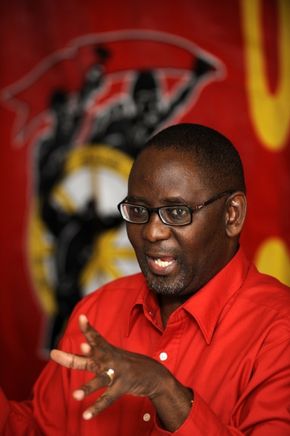
Marikana is a dangerous precedent, says Vavi

Zwelinzima Vavi

by Genevieve Quintal and Gillian Jones

The Marikana wage deal set a dangerous precedent, the Congress of SA Trade Unions (Cosatu) general secretary Zwelinzima Vavi said on Wednesday.

“If those workers forced the hand of the company in that fashion through an unprotected strike, what stops Driefontein in doing the same,” Vavi asked delegates at Cosatu’s national congress in Midrand, Johannesburg.

Earlier on Wednesday Vavi had to leave the congress to deal with a strike at Gold Fields Driefontein mine in Carletonville where 15,000 workers have been on an illegal strike for the past 10 days.

Leaders of the National Union of Mineworkers (NUM) accompanied him.

On his return from the mine Vavi said the mineworkers were demanding a salary of R12,500. This was the same demand made by workers at Lonmin’s Platinum mine in Marikana, North West.

On Tuesday Lonmin workers accepted a final offer of a 22 percent increase giving some workers R11,000 a month.

Vavi warned that other workers would think that they too could get substantial increases by going on illegal strikes.

“We are not saying that workers do not deserve their money, but if we are not careful this may mean an end of the central bargaining system in the country.

“Workers will just embark on wildcat strikes and steam ahead and force us to follow them.”

He called for the congress to come up with a radical commitment to putting workers interests first.

He said the Driefontein workers were having problems with their NUM branch leaders. “[However] they all remain loyal members of NUM.”

The workers said they would not abandon the union just because of their problems with the branch leaders.

Vavi said the workers were demanding that the leaders be dismissed and would not listen to argument that according to Cosatu’s constitution there were processes to follow.

The NUM would hold a special national executive committee meeting on Wednesday night to discuss the issue. – Sapa

French writer says Anders Breivik was ‘what Norway deserves’

Richard Millet, 59, author of 50 books and editor at the famous Gallimard publishing house

Richard Millet, a respected French writer and editor, has sparked controversy for his comments on Anders Breivik, the Norwegian mass killer, whom he described as “without doubt what Norway deserves”.

Breivik was last week sentenced to 21 years in prison for killing 77 people in a bomb attack and deadly shooting rampage that shook Norway.

Mr Millet, who says he has read all 1,500 pages of Breivik’s online manifesto, insists that he does not approve of the Norwegian gunman’s crimes.

However, he praised Breivik’s writing and cry of hatred for social democracy, immigration and multiculturalism.

“Breivik is without doubt what Norway deserves,” wrote Millet in an 18-page pamphlet.

He is “as much a child of a broken family as of an ideological and racial fracture caused by immigration from outside Europe over the last 20 years,” added Mr Millet, who has edited several award-winning books in France.

His writing about Breivik has sparked consternation in the literary circles, with one author Annie Ernaux calling the text “a politically dangerous act”.

Another author Tahar Ben Jelloun said: “He has lost his head.”

Others were less critical.

“He is still my editor,” said Alexis Jenni. “I don’t want to take any public position on the subject. Millet believes only in literature.

“He is someone who writes marvellously well. His questionable ideas do not reduce his literary qualities,” he argued.

Breivik was last week sentenced to 21 years in prison for killing 77 people in a bomb attack and deadly shooting rampage that shook Norway.

Source: AFP

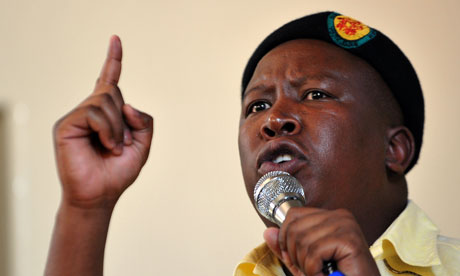
Blacks worse off now than under apartheid – Julius Malema

Julius Malema

Black people are worse off than they were during the apartheid years, expelled ANC Youth League leader Julius Malema said on Thursday.

“We are worse [off] than during the times of apartheid. We are being killed by our own people. We are being oppressed by our own government,” he told mineworkers at the Aurora mine in Grootvlei, Springs.

More than 1000 mineworkers from the liquidated Aurora Empowerment Systems and the neighbouring Gold One arrived to hear Malema speak.

He said politicians could not help the workers because they benefited from the mines and had shares in them.

“Every mine has a politician inside. They give them money every month, they call it shares. But it is protection fee to protect whites against the workers.”

He said the fact the Aurora crisis had lasted for four years showed there was no leadership in the country. Aurora Empowerment Systems bought the mines when the previous owner, Pamodzi Gold, went into liquidation. Since then workers have not been paid and the mines have been stripped of assets.

“If there was leadership in this country it can’t take four years. Four years shows that there is not leadership. When they (politicians) arrive to represent you, they give them money and they forget you.”

Malema told the workers they should form a committee to speak to the lawyers and present their complaints to the liquidators of Aurora.

He announced what he labelled the start of a revolution in the mining sector.

“We are going to lead a mining revolution in this country. We are going to each mine. We will run these mines ungovernable until the boers come to the table,” he said.

“We want them to give you a minimum wage of R12,500. These people can afford R12,500. Mining in South Africa amounts to trillions of rands.”

About 5000 people had been left jobless at Aurora. It was currently under liquidation.

The prospective buyers of Aurora mines, Gold One, have allegedly fired over 1500 workers who went on strike demanding a minimum wage of R6500.

The miners claimed management then replaced them with contract workers. – Sapa

American farm manager attacked with machete in South Africa

LADYBRAND. – An American farm manager has been attacked with a machete by blacks in South Africa. Allen Rodgers was attacked on the farem Geluk, owned by the American company SBH Farms.

The 61-year old was rushed to the Mediclinic private hospital in Bloemfontein with slashes and cuts after having been attacke by three black men. They waited for him in the farmhouse after they had ambushed his girlfriend, Mandy, and tied her up.

According to a farmer in the area, he was ” attacked with machetes and wounded badly”. However, a spokeswoman for the Mediclinic, Amanda Appelgryn said that he was “stable”.

Mr. Bernard Maree of the Free State Agricultural Union, said that the attackers had stolen about R10 000 and some cellphones.

Police were still looking for the criminals on the farm while soldiers were despatched to the Lesotho border. Lesotho, a landlocked country in the centre of South Africa, was given independence by Britain in the nineteenth century to frustrate Afrikaners during a war with the Basotho and today the country is notorious for its cross-border criminal raids into South Africa.

In the ongoing ethnic conflict in rural South Africa, other whites and Afrikaners have been killed over the last few days. At Hartbeesfontein in the Northwest province Ronél van Eyk (46) was killed after taking her 9-year old son Freddie to school.

She was about to leave when three black men attacked her, Brigadier Thulani Ngubane said.

“She was shot in the cheek, arm, and breast before the men fled with her white Toyota Venture.”

Her neighbour, Jurie Fourie, said that he was eating breakfast when his cellphone rang. “It was Ronél. She could only breathe with difficulty. I phoned back when the cellphone went dead. Ronél again picked up and I could only hear her heavy breathing.”

Shortly before she died, Van Eyk indicated that there were three black robbers.

In other casualties over the last 48 hours, Owen Charles of the farm Armadale near Jansenville was murdered by farm attackers. His wife Janet, whose 7oth birthday had been celebrated on Saturday, was attacked with a knife and was hit over the head with a blunt object. She was in a critical condition and taken to the Life St. George hospital in Port Elizabeth.


Finally the blinkers are coming off in South Africa

Dear PRAAG supporter overseas,

Hillary Clinton has just visited South Africa. Her message was: Just follow Nelson Mandela. If that were even possible, for the 94-year old is reputed to be hardly functional anymore and living in a remote rural hamlet called Qunu in the old tribal homeland of the Transkei. It also happens to be the most backward and corrupt part of South Africa, so one hopes Hillary did not mean we should start acting like Mandela’s Xhosa people.

Just today, we published an amazing article by Claudia Meades on our website in which she gives Three reasons South Africa will fail. The gist of her article is that South African whites who have created by far the most successful economy on the African continent, pay most of the taxes but have no say in government. The black ruling class has arrogated unto itself a life of conspicuous consumption and jet-set splendour that is simply unsustainable. Seventy percent of municipal managers have been officially declared unfit to do their jobs, for lack of qualifications, yet they continue in their posts!

She draws on a lot of material from my friend Ilana Mercer’s book, Into the Cannibal’s Pot – Lessons for America from Post-Apartheid South Africa. That is a fine exposé of current conditions in South Africa, with a lot of well-researched historical material as well. I can freely recommend it.

We have such a strong national and international movement going now that I am getting optimistic that the current South African system of black domination will not last another five years. If you read the article by Claudia Meades too, you will notice the impatient tone and exasperation, which is how most SA whites feel at the moment. I am also heartened by the fact that many of the English-speaking whites are rallying to our cause now. For years, starting in the late 1990’s, we Afrikaners have been publishing and speaking out against this insupportable regime, yet it was easily dismissed as a stereotypical “right-wing Afrikaner” response. Increasingly, however, all whites feel the same and will surely come together to address the challenge we face, to restore our rights and some sanity to this country.

I am proud to say that about a week ago we spread the story about the vicious massacre of the Viana family in Walkerville, south of Johannesburg, via Twitter and Facebook. It gained such momentum that within a day it had spilled over to the two biggest news sites in the world, Mailonline.com and Huffingtonpost.com, with a combined readership of 140 million users. No doubt many of you, our overseas supporters, participated in this campaign and I want to thank you all. Very soon the ghastly conditions of violence and unjust anti-white laws in South Africa will stand globally exposed, with change or even regime change becoming an option here.

As you will also read on praag.org, the bizarre Boeremag trial is nearing its end and so far 10 members of that group have been found guilty of high treason. They will face life-long prison sentences soon. An interesting article about the Boeremag was published on the website of the Russian State Radio, by Avigdor Eskin:  Boeremag defendants, leftovers of apartheid or freedom fighters? I urge you to read and disseminate it too, as the more popular it becomes the greater the chances that the Russian state media will publish more information about South Africa and Afrikaners. Our story needs to be told in every country in the world, especially in those countries or parts of countries where political correctness is not yet the norm.

Please also sign the petition on the front page of praag.org for the release of Clive-Derby Lewis who has already spent 18 years in jail for participating in the assassination of Chris Hani, the Communist Party leader, in 1973. He is an ex-Member of Parliament, a decent and patriotic man of English descent but who had embraced the Afrikaner cause, together with his Australian wife, Gaye, a long time ago. They both speak excellent Afrikaans, tinged with a slight English accent. He is now 76 years old and suffering from prostate cancer. I visited him in Pretoria Central Prison a few months ago and, despite his difficulties, he was in good spirits. He is much respected by the prison authorities and his fellow inmates, including the black ones who have elected him to all sorts of committees within the prison. A man like him does not deserve to spend his last months or years in captivity.

I firmly believe that our struggle will do a lot to free the whole world of the disastrous policies imposed in the West from the 1950’s onwards and which have so heavily impacted people of European descent, their identity, sense of justice and self-worth. South Africa is but a microcosm of the planet.

Until next time, with kind regards,

Dan Roodt