Will your bank pay Microsoft to keep running ATM’s?

atmwindowsBelieve it or not, roughly 95 percent of ATMs in the world are still running Windows XP — and that’s about to become an expensive problem.

Machine designer NCR says that only a third of banks will upgrade their ATMs to a newer OS before official XP support ends on April 8th, leaving many institutions little choice but to pay Microsoft for an extended contract if they still want support.

At least some banks plan to update, but they’re facing both technician backlogs and steep transition costs; estimates suggest the big UK firms might pay up to £60 million ($100 million) each to make the leap.

Whether or not your bank joins the modern era, you shouldn’t be surprised if you end up footing some of the bill.

Source: engadget.com

Malaysian jet not the first to vanish

stolen727For those suggesting that the disappearance of Flight 370 is unparalleled in aviation history, Vocativ would like to remind them that another large Boeing jet took off from an airstrip in Angola in 2003 and hasn’t been seen since.

Big difference: That jet had no passengers aboard, but the circumstances surrounding its disappearance are pretty strange nonetheless. Two mechanics—American Ben Charles Padilla and Congolese assistant John Mikel Mutantu—boarded the Boeing 727 on a Luanda airstrip to get it in shape for its next flight.

Neither had a pilot’s license, which is why flight controllers were stunned when the plane taxied to the runway and then took off.

Leased to deliver diesel fuel to diamond mines, the 727 carried 10 500-gallon fuel tanks and a few passenger seats in its cabin.

Was it Padilla? Mutantu? Both? Hijackers who had slipped aboard? Investigators still don’t know, and no sign of the plane has turned up despite an intense international hunt.

Some of the theories being tossed around in regard to Flight 370—it crashed into the ocean, it landed secretly, it got shot down by some nation’s military—were similarly floated back then.

But “we never knew for sure where it went,” concluded an earlier investigation by Air & Space magazine. It was at the time the largest aircraft to go missing, but the Malaysian jet will take that distinction if it doesn’t turn up.

After her brother disappeared from Quatro de Fevereiro International Airport in Angola, Benita Padilla-Kirkland tried to persuade the FBI to re-open his case. In 2005, the FBI had closed its case.

She believes she has the “new information” agents told her they require. But she suspects that the agency already has more information than agents will admit to

According to press reports, the aircraft began taxiing with no communication between the crew and the tower; maneuvering erratically, it entered a runway without clearance. With its lights off and its transponder not transmitting, 844AA took off to the southwest, and headed out over the Atlantic Ocean. The 727 and the two men have not been seen since.

Retired U.S. Marine General Mastin Robeson, commander of U.S. forces in the Horn of Africa when 844AA went missing, says word of the 727 “came up through the intelligence network.” According to Robeson, U.S. Central Command (CENTCOM) considered moving U.S. fighter aircraft to Djibouti on the Red Sea coast, where the Combined Joint Task Force shares a base with the French military.

Robeson continues: “It was never [clear] whether it was stolen for insurance purposes…by the owners, or whether it was stolen with the intent to make it available to unsavory characters.”

Source: Newser

Quebec separatists stand to gain

quebecCanada is bracing for another fight with Quebec separatists.

Premier Pauline Marois today called an election for April 7 as she met Lieutenant-Governor Pierre Duchesne to ask him to dissolve the provincial legislature. Polls show Marois’ separatist Parti Quebecois may have enough support to form its first majority government in more than a decade.

“Today, I have summoned my ministers and we have taken the necessary steps to dissolve the National Assembly and call an election,” Marois said in televised remarks in Quebec City. “It’s now up to you, Quebeckers, to decide.”

A majority would set the stage in the French-speaking province for a possible referendum on secession from the rest of Canada, roiling credit markets and threatening to push the Canadian dollar lower.

“If they get a majority, I fully expect they will hold a referendum during their next mandate,” said Harold Chorney, a political science professor at Concordia University in Montreal. “Marois isn’t going to give up sovereignty.”

A majority victory for the Parti Quebecois would mark the third time since the mid-1970s the party has taken sole control of the province’s legislature, propelling Quebec into another confrontation with the rest of Canada that a former premier once likened to a never-ending visit to the dentist.

Quebec has held two plebiscites on splitting from Canada — in 1980 and 1995 — under previous Parti Quebecois majority governments. The party will hold a third vote if a victory is in sight, Jean-François Lisée, Quebec’s international relations minister, told ICI Radio-Canada television March 1. The separatists came within 0.6 of a percentage point of gaining majority support in the 1995 referendum, but support for the cause has been stalled in the 30 percent range in recent years.

One advantage the separatists may seek to exploit is the federal Conservatives’ lack of representation and low support in the province, where the party holds five of 75 districts. The Conservatives are in fourth place in support in Quebec, polling about 9.4 percent support in the province, according to a four- week rolling survey by Nanos Research of 208 Quebeckers that ended Feb. 15.

It’s a vulnerability for Harper that the opposition Liberal and New Democratic Party, both led by Quebeckers, will try to exploit ahead of federal elections in 2015.

Source: BNN

Mosquito nets as garden fences, wedding gowns

Aid up the garden path
Mosquito nets as fences

Every year, an estimated 180,000 people die from the mosquito-carried malaria virus in the Democratic Republic of Congo. Yet a preventative government initiative to hand out mosquito nets has backfired, with people using the nets as garden fences.

A FRANCE 24 Observer in the eastern city of Goma recounted how insecticide-treated bed nets are increasingly being used to fence off gardens and hung up to protect fruit trees from insects.

This situation is not isolated to the Democratic Republic of Congo, but is also practiced in other malaria-blighted African countries such as in Kenya, Rwanda and Uganda, where mosquito nets have reportedly been used for making fishing nets, wedding gowns, house decorations and poultry enclosures.

“I don’t even think they care that others may catch malaria because they don’t have any nets,” says Charly Kasereka, a Goma-based journalist who works for a local radio station.

In at least 10 of the 18 neighbourhoods in the city, people misuse mosquito nets in this way. It’s a common sight outside of Goma too, he says.

The nets are being distributed by health centres that have been set up as part of the National Programme for the Struggle against Malaria (PNLP) which calculate the number of nets depending on the size of the household. A family of five, for example, will have the right to two bed nets.

Source: France24

China warns West against escalation in Crimea

shi
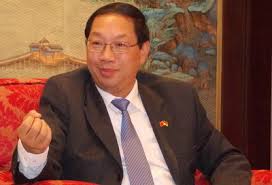
Ambassador Shi Mingde

China’s top envoy to Germany has warned the West against punishing Russia with sanctions for its intervention in Ukraine, saying such measures could lead to a dangerous chain reaction that would be difficult to control.

In an interview with Reuters days before the European Union is threatening to impose its first sanctions on Russia since the Cold War, ambassador Shi Mingde issued the strongest warning against such measures by any top Chinese official to date.

“We don’t see any point in sanctions,” Shi said. “Sanctions could lead to retaliatory action, and that would trigger a spiral with unforeseeable consequences. We don’t want this.”

The interview was conducted on Wednesday, the same day that the EU agreed a framework for sanctions that would slap travel bans and asset freezes on people and companies accused by Brussels of violating the territorial integrity of Ukraine.

German Chancellor Angela Merkel, has taken the side of the putschists supported by the United States, and warned that unless Russia accepts the idea of a “contact group” to resolve the crisis diplomatically, Russia risked “massive” political and economic damage if it did not change course in the coming days.

Source: Reuters

Uganda to announce oil refinery investor in July

oilrig
Flaring oil rig, western Uganda

Uganda will announce the lead investor and operator for its planned oil refinery in July and expects to conduct a licensing round for its vacant petroleum exploration acreage next year.

The east African country first discovered crude deposits in the Albertine rift basin along its border with Democratic Republic of Congo in 2006 and reserves are estimated by the government at 3.5 billion barrels.

The government moved closer to getting the hydrocarbons industry off the ground last month when it signed a memorandum of understanding with three oil firms laying out a blueprint for the commercial development of its oil fields.

According to the deal, crude produced by the three firms – Britain’s Tullow Oil, France’s Total and China’s CNOOC – will be shared between a thermal power generation plant, a planned refinery and an export pipeline.

Commercial oil production is expected to begin in 2016 at the earliest.

In December the energy ministry announced five consortia and one individual firm had been shortlisted to bid for the $2.5 billion refinery.

The lead investor – which will also operate the plant – is expected to take up a 60 percent stake, with the remainder going to the Ugandan government.

The individual company shortlisted is Marubeni Corp , while the five consortia are respectively led by Petrofac, Global Resources, China Petroleum Pipeline Bureau, SK Energy and Vitol.

Robert Kasande, the energy ministry official overseeing the project, said the government had been holding pre-bidding talks with those shortlisted.

“They are expected to submit their final proposals in May, then evaluation will follow,” Kasande said. “In July we will announce the winner,” he added.

Uganda has scaled back its refining ambitions over the past two years. It now plans to start with a refinery with capacity of 30,000 barrels per day (bpd), gradually rising to 60,000 bpd.

It had initially wanted a plant that could process 120,000 bpd but oil firms argued that would not be commercially viable.

About 60 percent of the Albertine graben, which measures about 23,000 square kilometres, remains unlicensed, according to the energy ministry’s petroleum exploration and production department.

“We also hope next year we should be ready to license another batch of (exploration) blocks,” said Kasande.

Source: Reuters

A bright future with barraco barner

 Gemma Worrall,
Gemma Worrall, working hard

Given the tendency to handsomely reward the less educationally advantaged, Gemma Worrall may have a bright future ahead of her.

If you haven’t heard of her, she’s the British 20-year-old beauty salon receptionist from Blackpool who became an overnight Twitter sensation last week with her ludicrously misspelled and misinformed observation on the Ukrainian crisis.

If you really did miss it – and sadly for Gemma’s IQ score not many did – it went thus: ‘If barraco barner is our president why is he getting involved with Russia, scary.’

She’s had more than her comeuppance for the public display of ignorance, with 7,000 re-tweets of her observation, making news as far away as Australia.

But I have a feeling it will be Gemma – and all the other beautiful girls like her – who will have the last laugh.

Thery probably have a far brighter future than young women who model themselves on intelligent people. Think Kardashians or any American music star for that matter.

Think about it. Gemma’s had numerous interview requests and been wooed with promises of thousands of pounds for prime-time TV appearances.

With those 14 ditzy words, Gemma achieved what millions of well-informed girls – who could find Ukraine on a map in an instant – have failed to do. And that’s to be recognised and rewarded.

Times have changed and the value system seems to have gone into reverse. The only ones who hit the headlines and make the money are those who work hard… at being in the gym or at the tanning salon.

It’s not brains that line your pockets or attract admiration today.

Source: Daily Mail

Libya now primary source of illegal arms trade

libyarmsLibya has been named as the primary source of the illegal weapons trade that is fueling conflicts in at least 14 countries around the world, a final report from the UN’s independent panel on Libya’s sanctions announced.

In a briefing to the United Nations Security Council (UNSC) on Monday, the Libya sanctions committee chair, Rwandan Ambassador Eugene Gasana, noted that the post-Gaddafi government is struggling to secure the country in which a number of armed tribal militias denounce Tripoli’s authority.

“The panel noted that the control of non-state armed actors over the majority of stockpiles in Libya as well as ineffective border control systems remained primary obstacles to countering proliferation and that Libya had become a primary source of illicit weapons, including MANPADs [portable air defense systems],” Gasana told the Council, as quoted by Reuters.

Unable to secure its borders, Libya has let weapons fall into the hands of radical elements on several continents, Gasana said.

“Transfers to 14 countries reflected a highly diversified range of trafficking dynamics; and that trafficking from Libya was fueling conflict and insecurity – including terrorism – on several continents,” he said.

As of now, three ports in the country are under full control of rebel groups. A special force has been ordered by the country’s parliament to be sent next week to “liberate” all rebel-held ports, which is crucial to sustaining Libya’s oil-rich export economy that has been struggling to survive after the NATO invasion and regime change.

The UN arms embargo was enacted on Libya at the start of the unrest which eventually ousted former leader Muammar Gaddafi. Last year, non-lethal equipment was allowed to enter Libya when the UNSC eased its sanctions as the UN cautioned Tripoli against the spread of weapons to nearby states.

The UNSC insisted that Libyan authorities improve their monitoring record of arms supplied, sold, or transferred to the government with the approval of the UN sanctions committee. The panel found a number of violations of the arms embargo, such as “non-notified” transfers of arms to government security forces and transfers of weapons to the private market, Gasana said.

Gasana also pointed out that UN experts discovered that some countries need better legislative capacity to induce sanctions and implement asset freezes of the UNSC-generated list of individuals.“One instance resulted in the dissipation of almost $2 million in funds that should have been frozen,” Gasana said.

Meanwhile, Libya’s UN envoy noted that exporting parties should bear responsibility when supplying Libyan authorities with arms.

“Any request for approval for exporting weapons to Libya that is not done via the Libyan mission at the UN or with the knowledge of this mission would be considered a request from a party that does not belong to the Libyan government,” Ambassador Ibrahim Dabbashi told the Security Council.

“The exporting party shall bear the responsibility for that before the Security Council,” he added.

In the meantime, the head of the UN Support Mission in Libya (UNSMIL) warned the 15-member body that Libya faces increased violence.

“Libya faces the risk of embarking on a new trajectory of unprecedented violence,” as security and political divisions deteriorate, Tarek Mitri told the UNSC.

Mitri pointed to the surge of attacks in Sabha, located in the south of the country, which resulted in over 100 civilian deaths – including children – and the displacement of hundreds of families as well as shortages of food, fuel, and medical supplies. In the east, targeted assassinations, bombings, and kidnappings around Benghazi have reached “intolerable” levels.

“Intense efforts to resolve differences and negotiate an agreement on the management of the transitional period, including the future of the General National Congress and the Government, have not succeeded in bringing an end to the divisions that have paralyzed the political process,” noted Mitri.

An “alarming” rise in attacks on journalists has also been witnessed in recent months, Mitri told the Council, with TV stations in Tripoli and Benghazi vandalized and a number of journalists abducted.

Source: RT

The Dark Web

This is a Twitter network for a political hashtag in the US, produced by Truthy. We see two clearly separated clusters, corresponding to conservative and liberal communities. Retweets, which tend to stay in the same community, are shown in blue. Mentions, shown in orange, connect the two communities. Image © Truthy.

Cybercriminals are settling into a comfortable place in the “Dark Web” where they test, refine and distribute malware for online crimes.

It sounds sinister, and it is. Big Brother is breaching your privacy, and terrorists and criminals are busy with a practice called astroturfing — creating the false impression that there’s huge grassroots support for some cause or person using false user accounts. It’s a big problem in elections and other types of political conflicts.

Automated tools to collect and analyse terrorist content from the Internet have been developed. like Truthy, a free tool for analysing how information spreads on Twitter that has been useful in spotting astroturfing.

McAfee, the US Internet security specialist, also noted that a huge data breach that affected as many as 110 million customers of the US retailer Target may also be just the tip of the iceberg.

In its quarterly threat assessment released Monday, McAfee Labs noted the relative ease with which this type of malware is bought and sold in “Dark Web” marketplaces.

McAfee researchers concluded that the malware for the Target attacks used “relatively unsophisticated technologies likely purchased ‘off the shelf’ from the Cybercrime-as-a-Service community, and customized specifically for these attacks,” the security firm said.

The report pointed out that the attackers who stole the data have also found a market — offering some of the 40 million credit card numbers reported stolen in batches of between one million and four million at a time.

“The fourth quarter of 2013 will be remembered as the period when cybercrime became ‘real’ for more people than ever before,” said Vincent Weafer, senior vice president for McAfee Labs.

“These cyber thefts occurred at a time when most people were focused on their holiday shopping and when the industry wanted people to feel secure and confident in their purchases. The impact of these attacks will be felt both at the kitchen table as well as the boardroom table.”

Weafer added that the attacks “represent a coming of age for both Cybercrime-as-a-Service and the ‘Dark Web’ overall.”

The “Dark Web” actors appear to be operating with ease, like other kinds of online businesses, McAfee said.

“But the big lesson is that we face a healthy and growing cybercrime industry which played a key role in enabling and monetizing the results of these attacks.”

Source: rawstory.com

India backs Russia in Ukraine

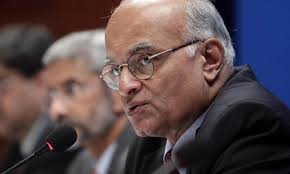
Shivshankar Menon
Shivshankar Menon

India broke with the international community in acknowledging that Russia has legitimate interests in Ukraine.

On Thursday a senior Indian official endorsed Russia’s position in Ukraine in recent days, even as Delhi urged all parties involved to seek a peaceful resolution to the diplomatic crisis.

When asked for India’s official assessment of the events in Ukraine, National Security Adviser Shivshankar Menon responded:

“We hope that whatever internal issues there are within Ukraine are settled peacefully, and the broader issues of reconciling various interests involved, and there are legitimate Russian and other interests involved…. We hope those are discussed, negotiated and that there is a satisfactory resolution to them.”

The statement was made on the same day that Crimea’s parliament voted to hold a referendum for secession from Ukraine.

India is the second major nation to publicly lean toward Russia after China’s public statements.

Ukraine’s puppet government reacted to India’s endorsement of Russia’s legitimate interests with hostility.

India and Russia have long-standing ties and Moscow is Delhi’s top arms provider. Moreover, Russia and the former Soviet Union has been nearly alone in the international community in continue to back India during crucial moments such as following its 1974 and 1998 nuclear tests.

Delhi believes Russia’s intervention offers the best chance of stabilizing Ukraine. India’s Foreign Ministry on Thursday also released a statement noting that there are “more than 5,000 Indian nationals, including about 4,000 students, in different parts of Ukraine.” At the same time, India’s overall interest in Ukraine is fairly negligible—certainly less than China’s, for instance—and thus Delhi might assess that it has more to gain by publicly sticking by Moscow at a time when it desperately needs support.

India also has plenty of interests in certain regions along its peripheral, and at certain times—such as during the Sri Lanka Civil War—has intervened to protect various societal groups with strong ties to India.

Indian officials have told Telegraph India that, in the newspaper’s words, Delhi is “convinced that the West’s tacit support for a series of attempted coups against democratically elected governments — in Egypt, Thailand and now Ukraine — has only weakened democratic roots in these countries.”

This rationale would be consistent with India’s long-standing, deep-seated abhorrence to anything that merely resembles Western imperialism. At the same time, India has not historically made supporting democracy abroad a central tenet of its foreign policy.

Source: The Diplomat

Vladimir Putin nominated for Nobel Peace Prize

Vladimir Putin
Vladimir Putin

Russian President Vladimir Putin has been nominated for the 2014 Nobel Peace Prize in Oslo, Norway.

A record 278 candidates, including 47 organizations, received nominations for the 2014 prize, said the Norwegian Nobel Institute’s director, Geir Lundestad.

Committee members who met on Tuesday added their own proposals with a focus on recent turmoil around the globe.

“Part of the purpose of the committee’s first meeting is to take into account recent events, and committee members try to anticipate what could be the potential developments in political hotspots,” Lundestad said.

Russia is currently looking for ways to de-escalate the mounting tensions created by the US.

Pope Francis and former U.S. National Security Agency contractor Edward Snowden also received nominations as well as Putin.

Conflicts between protesters and the governments of Thailand and Venezuela are also expected to be debated by the committee.

“We are getting an increasing number of nominations from people in countries that have never submitted nominations before,” Lundestad said.

Although nominations are kept secret for 50 years, thousands of people around the world are eligible to propose candidates, including any member of any national assembly, and many make their picks public.

The committee narrowed its list to between 25 and 40 on Tuesday and it will cut its list to about a dozen by the end of April.

First awarded in 1901, the prize includes 8 million Swedish crowns, $1.24 million, in cash. The winner will be announced on the second Friday of October and the prize will be presented on Dec. 10, the anniversary of Alfred Nobel’s death.

Ukraine fever sweeps the Balkans

balkansAs the world watches the Ukrainians in their effort to defend themselves from Russia and become a fully European nation, close attention to the situation in Kiev and the crisis in Crimea is notable in the Balkan Muslim countries—Kosovo, Albania, Bosnia-Herzegovina—and in two with significant Muslim minorities, Montenegro and Macedonia.

In the Balkans, the threat of Serbian aggression has receded, but in a parallel with Ukraine, Russian influence is perceived behind intrigues from Belgrade. The events in Ukraine are seen in a context of the struggle against corruption and the phenomenon of the post-Communist “mafia state.”

In the first week of February, a wave of protest began in the Bosnian city of Tuzla, which is known for its tradition of multiethnic harmony among Bosnian Muslims, Croats, and Serbs. An old industrial redoubt now plagued with unemployment ranging between 40 and 60 percent, Tuzla boiled over quickly, as reported by BBC News, with attacks on official buildings.

Solidarity demonstrations spread to other Bosnian cities with economic problems, including Mostar in Herzegovina, which is divided between Muslims and Croats and has an aluminum industry, Zenica in central Bosnia, where a steel complex has been owned by ArcelorMittal since 1998, and then to Sarajevo, the capital. There, on February 7, demonstrators set fire to government buildings and fought police.

Local and foreign media, international observers, and politicians assigned blame for the Bosnian upheaval in all directions. Resentment of the excessively convoluted bureaucracy foisted by the 1995 Dayton Accords on Bosnia, which is partitioned between a so-called “Republic of Serbs” and the “Federation of Bosnia-Herzegovina,” grouping Muslims and Croats, is one issue. “Federation Bosnia” comprises 10 cantons, each with its own autonomous political and educational authorities, plus a special zone at Brcko in the northern part of the territory, all reporting—barely—to the supposed central government in Sarajevo. It has more varieties of statist delirium above and below the cantonal level: legislatures, ministries, municipalities, in a seemingly endless and redundant supply.

Economic opportunities mostly involve political malfeasance, financed by the European Union through the Office of the High Representative (OHR), the real government, with American support. The current high representative is an Austrian of Slovene background, Valentin Inzko. Bosnia-Herzegovina is therefore a place of profound despair, afflicted by brain drain. Its traditional Central European system of education, which produces well-trained graduates, sees them leave for other countries as soon as they can. A serious upheaval in Bosnia was, to anybody watching the country, obviously on the way—a matter of when, rather than why.

Also at the end of the first week of February, Kosovo saw turmoil as Ibrahim Gashi, rector of the University of Pristina, in the capital of that Balkan republic, was forced to resign after he was exposed as a falsifier of his academic work. Clashes between police and students left 29 officers hurt and 30 students arrested. Gashi’s departure from the university was followed by that of several of his colleagues.

In Podgorica, the capital of Montenegro, on February 18, hundreds of people gathered, throwing rocks at state offices, and injuring nine policemen. The Montenegrins called for “revolution.” Unemployed workers in Macedonia assembled in front of government buildings in that country’s capital, Skopje, on February 18. The next day, in Albania, after an informal strike by minivan drivers, in a country lacking a reliable public transportation system, a full one-day transport shutdown took place, with a rally in Tirana, the capital.The idiom of social rebellion is common in Balkan culture, which has undergone numerous such movements over the centuries, and where communism in the former Yugoslavia, under the charismatic dictator Joseph Broz Tito (1892-1980) kept memories of it alive in a civic myth that imposed much less conformity and silence than in other Communist lands. Lately, public acclaim for a “Balkan spring” gave way rapidly to visions of a “Bosnian-Ukrainian model.”

But in Bosnia-Herzegovina and Albania, entrenched elites quickly sought to profit from social conflict. The Bosnian politician Fahrudin Radoncic, leader of a party titled the Union for a Better Future, which holds four out of 28 seats in the weird, ineffectual House of Representatives crafted for the Muslim-Croat Federation, has been accused of organizing the assault on the government buildings in Sarajevo in an attempted coup d’etat. Radoncic, once a respected dissident, is now seen as a patron of shady deals with Serbian extremists—likewise an old motif in the Balkans. Dnevni Avaz (Daily Voice), a down-market tabloid owned by Radoncic, last week featured a column headed “Ukraine Is All of Us”—rhetoric viewed as cynical by many Bosnians.

Similarly, former Albanian prime minister Sali Berisha, an ex-Communist and leader of his country’s entrenched Democratic party, stirred the striking minivan drivers against the Socialist (i.e., neo-Communist) administration of Edi Rama, who took power last year.

As in Ukraine, allegations that discredited leaders are manipulating mass protests in Bosnia-Herzegovina and Albania to regain influence are widespread. But in the Balkan lands, they are more convincing than they appear to be in Kiev. On February 28, Zeljko Komsic, an ex-Communist and politically independent member of the three-person presidency of Bosnia-Herzegovina, declared “I am not with fascists, chauvinists, thieves, or racketeers.” Epitomizing the complexity of post-Dayton Bosnian governance, Komsic is the Croat representative in the presidency, which comprises a Bosnian Muslim, a Serbian, and a Croatian.

A legal complaint brought at the European Court of Human Rights in Strasbourg by Dervo Sejdic, a Bosnian Roma (Gypsy) representative, and Jakob Finci, president of the Bosnian Jewish Community, alleged discrimination in that, under Dayton, members of minorities are excluded from the Bosnian presidency. The Court found for the plaintiffs in the case, Sejdic and Finci v. Bosnia and Hercegovina, but a reform of the ethno-political structure has yet to be adopted.

Since the cathartic arson at government facilities in Sarajevo, protests have continued but with much-diminished participation, typically bringing together a few hundred elderly folk aggrieved mainly by the loss of pensions. Observing one such gathering on Saturday, March 1, which was Bosnian Independence Day, I noticed the prominent display of a portrait of Tito. Nostalgia for communism is an important motive for elderly Bosnians to take to the streets.

Leaflets for the March 1 assembly, taped up throughout Sarajevo, demanded “social justice for all.” Bosnia’s Muslim religious leadership, under moderate direction since the replacement of the Wahhabi-line chief cleric Mustafa Ceric by Husein Kavazovic last year, supports the call for social justice. But the Islamic approach to Bosnian problems is conservative.

At Friday prayers in Sarajevo’s exquisite and intimate 16th-century Cobanija mosque, the day before the March 1 protest, the elderly preacher, known as a khatib and different from the imam, who leads the service, pronounced blessings and immediately commenced an eloquent denunciation of violent demonstrations. With his voice repeatedly breaking, he said to stay away from barricades such as were seen in the recent uproar. He referred to violence as “Satan’s path” and called on the assembled Bosnian Muslims to be thankful for the existence of a state with a territory and constitution which they should protect and obey. He said he was a pensioner himself and that his wife had not worked for years. But he repeated, “do not go to the barricades. Do not be tempted to Satan’s path. Remember that we have a state, territory, political structures and freedom. Do not waste them or abuse them.”

Meanwhile, those who remain indignant about corruption, rulership from afar, joblessness, lack of pensions, and the other misfortunes of Dayton besetting Bosnians have been meeting in “plenums” for democratic debate and proposal of solutions.

Thus, its Balkan disarray notwithstanding, Bosnia may find a secure way to European standards of entrepreneurship, accountability, and popular sovereignty. In a land where rebellion seems deeply embedded in the culture, hope is not exhausted.

Source: www.weeklystandard.com

Largest oil refinery in Europe on fire

oilfireAmazingly, no one was injured when Europe’s largest oil refinery burned with the force of a thousand suns yesterday. And obviously it’s in Russia.

The refinery is OJSC TANECO, formerly known as the Nizhnekamsk refinery, in Tartarstan. If you get into your Lada and drive due East from Moscow, you’ll get there in about 14 hours.

Reuters reports that the fire was put out the same evening it started and there were no injuries. It will take a few months to get production back up.

It churns out 140,000 barrels of gas and diesel a day, and that production all goes to Russia.

This picture is on English Russia and gives you a sense of scale of the blaze.

China backs Russia on Ukraine

russekrim

The Russian Foreign Minister Sergey Lavrov, justified the military incursion into Ukraine on Monday and said it was necessary in order to protect his country’s citizens living there. “This is a question of defending our citizens and compatriots, ensuring human rights, especially the right to life,” he said.

Panama was invaded in 1989 over the exact same pre-text by the US. US nationals were ‘in danger’ and the US military needed to protect them, analysts pionted out. Panama was considered in the US ‘sphere of influence’ which was the reason given by the Bush senior administration to invade a sovereign nation.

Earlier on Monday, as Russia sought to draw support from the international community, Mr Lavrov said that he had discussed Ukraine with his Chinese counterpart and that the two veto-wielding UN Security Council members had “broadly coinciding points of view” and would stay in close contact on the issue.

President Vladimir Putin has defended Russia’s actions, blaming “ultra-nationalist forces” for seizing power in Kiev. A Kremlin statement posted online said Putin told the German Chancellor, Angela Merkel, on Sunday that measures taken by Russia so far were “fully adequate” and in response to the unrelenting threat of violence” to “Russian citizens and the whole Russian-speaking population”.

Russia has told Ukrainian forces surrender its control of the strategic Crimean region by 3am on Tuesday or face military assault.

Relations with the US and Britain continued to plummet as the Russian Government continued to ignore calls from their leaders to leave the Ukrainian area.

It followed claims from the Ukrainian Defence Ministry that Russian fighter jets had “violated” the country’s airspace over the Black Sea overnight and that Russian forces were now in control of the port city of Sevastopol, where the Black Sea fleet is based.

The takeover of the ferry terminal on the eastern tip of Crimea by Russian troops has exacerbated fears that Moscow is planning to bring even more troops into the strategic Black Sea region. There was no immediate comment from the Russian Defence Ministry.

During a visit to Kiev today, the Foreign Secretary William Hague described the situation as “certainly the biggest crisis in Europe in the 21st century”, adding that there was “no justification” for the actions in Crimea, where Russia had “in effect taken control”.

Echoing US President Obama’s speech on Friday, the Foreign Secretary said Moscow should be in no doubt that it faced “significant costs” for its move into the Ukrainian region.

Yesterday, Ukraine’s country’s acting Prime Minister said that his country was “on the brink of disaster”, fanning fears that his position might be in danger too.

Emerging from a closed session of parliament in Kiev, Mr Yatsenyuk described President Putin’s decision to send in troops as a “declaration of war”, and said “there was no reason for the Russian Federation to invade Ukraine.

The Nato Secretary-General, Anders Fogh Rasmussen, called on Russia to “stop its military activities and its threats” after convening an emergency meeting. “What Russia is doing now in Ukraine violates the principles of the United Nations Charter,” he said. “It threatens peace and security in Europe.”

The G7 group of major industrialised nations condemned Russia’s intrusion into Ukraine on Sunday. It has also cancelled preparations for the G8 summit that was to include Russia, scheduled for Sochi in June, the White House confirmed.

The group said in a statement: “We, the leaders of Canada, France, Germany, Italy, Japan, the United Kingdom and the United States and the President of the European Council and President of the European Commission, join together today to condemn the Russian Federation’s clear violation of the sovereignty and territorial integrity of Ukraine.

“We have decided for the time being to suspend our participation in activities associated with the preparation of the scheduled G8 Summit in Sochi in June,” it added.

The G7 also urged Russia to hold talks with Ukraine directly to address any human rights or security concerns it has.

The group expressed its support for Ukraine’s bid to secure financial help from the International Monetary Fund and to make reforms to its economy.

Source: The Independent