New BRICS cable a network free of US eavesdropping

bricscableBRICS countries are close to completing a brand new Internet backbone that would bypass the United States entirely and thereby protect both governments and citizens from NSA spying.

In light of revelations that the National Security Agency hacked German Chancellor Angela Merkel’s phone, in addition to recording information about 124 billion phone calls during a 30-day period earlier this year, the fallout against the NSA has accelerated.

Brazil is set to finalize a 34,000-kilometre undersea fiber-optic cable by 2015 that will run from Vladivostok, Russia to Fortaleza, Brazil, via Shantou, China, Chennai, India and Cape Town, South Africa.

According to the Hindu, the project will create, “a network free of US eavesdropping,” which via legislative mandates will also force the likes of Google, Facebook and Yahoo to store all data generated by BRICS nations locally, shielding it from NSA snooping.

“The BRICS countries have the muscle to pull this off,” notes Washington’s Blog. “Each of the BRICS countries are in the top 25 largest economies in the world. China has the world’s second largest economy, India is 3rd, Russia 6th, Brazil 7th, and South Africa 25th.”

However, some privacy experts fear that this will do little to stop the NSA, given that it has tapped undersea cables since the Cold War era. Others are more positive.

“Any alternative would be a positive thing, writes Michael Dorfman. “The more choice you have, the better. Yet no-one can say for sure whether this new Internet will be safer than its US counterpart and will be able to protect the rights of regular users, including the privacy of personal data and free access to resources, more effectively.”

The BRICS cable was already in development months before the revelations of whistleblower Edward Snowden first became public in June.

In September it emerged that the NSA had been spying on Brazilian government communications as well as Brazilian oil company Petrobras. Spooks hacked into the firm’s computer network to eavesdrop on conversations between CEOs.

The current Internet architecture is dominated by ICANN (the Internet Corporation for Assigned Names and Numbers), which is largely controlled by the United States.

Other entrepreneurs are also fighting back against NSA surveillance. Tech maverick John McAfee recently announced that he was to fund a $100 gadget named Decentral that would sync up with a modem to thwart NSA spying and provide total anonymity.

Asked what he would do if the US government banned the product, McAfee responded, “I’ll sell it in England, Japan, the Third World. This is coming and cannot be stopped.” – prisonplanet.com

EU parliament votes to suspend US from SWIFT to avoid spying

euparliamentThe European Parliament voted Wednesday for US access to the global financial database held by a Belgian company to be suspended because of concerns that the US is snooping on the database for financial gain rather than just to combat terrorism.

The Strasbourg based parliament voted 280 in favor, with 254 against, with 30 abstentions, and called for a suspension of US access until a full enquiry clarifies the situation.

“We need full transparency, especially with all the NSA revelations. Europe cannot accept that the data of private citizens is being accessed without anyone knowing about it”, Guy Verhofstadt, the leader of the Liberals in the European Parliament, told Reuters.

EU lawmakers are concerned that the US is covertly using information from the SWIFT database following leaked US documents aired by Brazil’s biggest television network Globo, which indicated that the US has secretly tapped into SWIFT.

Under current agreements the US has limited access to the SWIFT database. The deal is part of transatlantic cooperation following the September 2001 attacks, and allows certain data from SWIFT to be shared with the US treasury.

The idea was that by sharing on a limited basis the millions of financial messages that take place across the world every day, it would help combat terrorism.

However, the parliament’s vote is symbolic, not binding, and rather reflects EU wide public anger at the NSA spying allegations. The European Commission and the various EU governments will still need to approve a suspension of US access to SWIFT.

The European Commission has said in a statement that it had no immediate plans to propose a suspension of SWIFT to its member states and that it was “still waiting for additional written assurances”that the US was respecting its prior written agreement with the EU.

For its part the US has denied it is doing anything wrong. According to the EU Home Affairs Commissioner Cecilia Malmstrom, the US Treasury undersecretary for terrorism, David Cohen, has told her that the US government has respected the 2010 agreement on SWIFT.

But there is undoubtedly a firm belief within certain sections of the EU parliament that the EU should be more careful about what it shares with the US.

“The EU cannot continue to remain silent in the face of these ongoing revelations: It gives the impression we are little more than a lapdog of the United States,” said Jan Albrecht, a German Green in the EU parliament.

The vote comes on the back of allegations by the Le Monde newspaper that the NSA has spied on the agency records of millions of phone calls of top French politicians and business people.

The claims were taken seriously by the French government and on Monday morning the US ambassador to France Charles Rivkin was summoned to the French Foreign Ministry to give an explanation.

It was also reported earlier this week that years of spying on Mexico by the NSA had helped Americans get the upper hand in business talks and get investment opportunities that were more favorable to them. – RT


Press Ombudsman dismisses complaint from ‘private army’

unsomali
Allegations of torture in Somalia

The Press Ombudsman has dismissed a security company owners’ complaint against Independent Newspapers, regarding two stories published in the Weekend Argus, he said in a finding released on Wednesday.

According to the finding, the first story was published on September 1 last year under the headline: “UN slams SA ‘private army’ Security firm accused of breaking sanctions, torture SA failing in its obligation to clamp down on mercenaries, says report”.

The second story was a follow-up published on page 11 on September 29, headlined “SA-linked military firm loses anti-piracy contract”.

Ombudsman Johan Retief and an adjudication panel said Sterling Corporate Services’ (SCS) owner Lafras Luitingh complained that the first story omitted important facts, that the headline was misleading, and that the newspaper did not try to verify the allegations against him and his company.

He complained that the reporter failed to correct the mistakes in the second story, even though he was provided with information, and that the references to “private army” in both stories wrongly suggested that he was involved in illegal activities.

In the first story, Ivor Powell and Bianca Capazorio reportedly wrote that a United Nations report had “slammed” SCS for mustering a “private army” in defiance of international agreements.

The UN report, authored by the its Monitoring Group on Somalia and Eritrea (SEMG), reportedly condemned SCS for “brazen, large-scale and protracted violation of the Somalia sanctions regime”, and for allegedly torturing local recruits.

The reporters wrote that it accused the South African government of failing to fulfil its international obligations “which include clamping down on mercenary activities”.

They wrote that the SCS operated as the private army of President Abdirahman Mohamud Faroole of the semi-autonomous region of Puntland (a region in northeastern Somalia).

They also reported that SCS had been involved in operations against Faroole’s enemies, “though officially contracted only to train and provide military advice to the Puntland administration”.

The story reportedly added that although SCS was mainly contracted to train an anti-piracy force, the bulk of its operations was directed against villages in the hinterland with little connection to Somali pirates holding shipping routes to ransom.

The story mentioned examples of alleged torture and “murderous corporal punishment”.

The follow-up story, written by Powell, reported that SCS had lost a contract to train a paramilitary Puntland Maritime Police Force against piracy in the Horn of Africa. It elaborated on the first story.

Retief and the panel concluded that the newspaper was justified in calling the SEMG’s Report a “UN report”, as a document “adopted” by the Security Council became an official document of the UN.

It also found that Luitingh had not brought any relevant UN document to the panel’s attention to substantiate his claim that the UN permitted his actions in Somalia.

“The panel finds that the newspaper did contact Luitingh and ask for his comment and that, in addition, they had published comment from a number of other involved parties. Luitingh had it within his power to provide comment and had chosen not to do so.”

While the panel accepted that Luitingh and his counsel were convinced that the second story should have reflected their views, which for them meant a correction, the panel did not believe this would have been appropriate.

It found the newspaper was justified in using the phrase “private army” as the phrase was used in the SEMG’s report.

Both parties have seven working days to appeal the decision. – Sapa

British drop vans with ‘racist’ signs telling immigrants to leave

A plan to use vans as mobile billboards telling illegal immigrants to leave is being dropped, British Home Secretary Teresa May said Tuesday.

The signs advising illegal immigrants to go home were criticized by both the Labor Party and the Liberal Democrats, the Conservatives’ partner in the coalition, The Independent reported. May conceded a 10,000 pound ($16,000) pilot project was disappointing, although she disputed the Labor Party’s charge that only one person decided to leave as a result of the campaign.

“Politicians should be willing to step up to the plate and say when they think something actually hasn’t been as good an idea, and I think they were too blunt an instrument,” May said.

Complaints were made to the Advertising Standards Authority that the signs were both inaccurate and racist. The authority did not find racism but said the arrest statistics on the signs were inaccurate. – Breitbart

Saudi Arabia severs diplomatic ties with US

The kissing is over
The kissing is over

Upset at President Barack Obama’s policies on Iran and Syria, members of Saudi Arabia’s ruling family are threatening a rift with the United States that could take the alliance between Washington and the kingdom to its lowest point in years.

Saudi Arabia’s intelligence chief is vowing that the kingdom will make a ‘major shift’ in relations with the United States to protest perceived American inaction over Syria’s civil war as well as recent U.S. overtures to Iran, a source close to Saudi policy said on Tuesday.

Prince Bandar bin Sultan told European diplomats that the United States had failed to act effectively against Syrian President Bashar al-Assad and the Israeli-Palestinian conflict, was growing closer to Tehran, and had failed to back Saudi support for Bahrain when it crushed an anti-government revolt in 2011, the source said.

The growing breach between the United States and Saudi Arabia was also on display in Washington, where another senior Saudi prince criticized Obama’s Middle East policies, accusing him of ‘dithering’ on Syria and Israeli-Palestinian peace.

In unusually blunt public remarks, Prince Turki al-Faisal called Obama’s policies in Syria ‘lamentable’ and ridiculed a U.S.-Russian deal to eliminate Assad’s chemical weapons. He suggested it was a ruse to let Obama avoid military action in Syria.

‘The current charade of international control over Bashar’s chemical arsenal would be funny if it were not so blatantly perfidious. And designed not only to give Mr. Obama an opportunity to back down (from military strikes), but also to help Assad to butcher his people,’ said Prince Turki, a member of the Saudi royal family and former director of Saudi intelligence.

The United States and Saudi Arabia have been allies since the kingdom was declared in 1932, giving Riyadh a powerful military protector and Washington secure oil supplies.

The Saudi criticism came days after the 40th anniversary of the October 1973 Arab oil embargo imposed to punish the West for supporting Israel in the Yom Kippur war.

That was one of the low points in U.S.-Saudi ties, which were also badly shaken by the September 11, 2001, attacks on the United States. Most of the 9/11 hijackers were Saudi nationals.

Saudi Arabia gave a clear sign of its displeasure over Obama’s foreign policy last week when it rejected a coveted two-year term on the U.N. Security Council in a display of anger over the failure of the international community to end the war in Syria and act on other Middle East issues.

In Bahrain, home of the U.S. Fifth Fleet, a simmering pro-democracy revolt by its Shi’ite majority has prompted calls by some in Washington for U.S. ships to be based elsewhere.

The source declined to provide more details of Bandar’s talks with the diplomats, which took place in the past few days.

But he suggested that the planned change in ties between the energy superpower and the United States would have wide-ranging consequences, including on arms purchases and oil sales.

Saudi Arabia, the world’s biggest oil exporter, ploughs much of its earnings back into U.S. assets. Most of the Saudi central bank’s net foreign assets of $690 billion are thought to be denominated in dollars, much of them in U.S. Treasury bonds.

‘All options are on the table now, and for sure there will be some impact,’ the Saudi source said.

‘Prince Bandar told diplomats that he plans to limit interaction with the U.S.,’ the source close to Saudi policy said. – Daily Mail

Interpol Chiefs says arm citizens globally against terror

Ronald Noble
Ronald Noble

Interpol Secretary General Ronald Noble told ABC News that one of the only ways to prevent terrorists from hitting soft targets was to arm citizens globally, noting that the Westgate mall siege would have been averted far quicker if it had taken place in gun-friendly areas like Denver or Texas.

Noble’s statements are a powerful rebuttal to the anti-gun lobby, especially given his background. The Interpol chief was formerly the head of all law enforcement for the U.S. Treasury Department.

Stressing that an “armed citizenry” was the only option besides turning soft targets like shopping malls into enclaves surrounded by “extraordinary security” perimeters, Noble suggested that the siege in Kenya, which dragged on for days and ended in the slaughter of 60 civilians, represented a huge public relations blow for gun control advocates.

“Ask yourself: If that was Denver, Col., if that was Texas, would those guys have been able to spend hours, days, shooting people randomly?” Noble said, referring to states with pro-gun traditions. “What I’m saying is it makes police around the world question their views on gun control. It makes citizens question their views on gun control. You have to ask yourself, ‘Is an armed citizenry more necessary now than it was in the past with an evolving threat of terrorism?’ This is something that has to be discussed.”

“For me it’s a profound question,” he continued. “People are quick to say ‘gun control, people shouldn’t be armed,’ etc., etc. I think they have to ask themselves: ‘Where would you have wanted to be? In a city where there was gun control and no citizens armed if you’re in a Westgate mall, or in a place like Denver or Texas?’”

As we reported last month, an off-duty SAS soldier armed with a handgun helped save at least 100 lives during the Westgate siege, returning to the building a dozen times to rescue hostages.

Noble’s argument that guns in the hands of responsible citizens can prevent bloodshed is backed by hard statistics.

According to a 1993 National Self- Defense Survey conducted by Gary Kleck, Ph.D., a professor in the School of Criminology and Criminal Justice at Florida State University in Tallahassee, Americans use guns to defend themselves against a confrontation with a criminal up to 2.5 million times a year. This means that every day in America some 6,800 people use guns to protect themselves.

Scholars Clayton E. Cramer and David Burnett have documented how “a great number of tragedies — murders, rapes, assaults, robberies — have been thwarted by self-defense gun uses.” – prisonplanet.com

US spying causes new anger in France, Mexico

LogoLeMondeby Marianne Barriaux and Michael Mainville BARRIAUX, Michael MAINVILLE

The United States has become embroiled in a new row over its controversial spying programme as allies France and Mexico condemned revelations Washington tapped millions of phonecalls and hacked into leaders’ emails.

French President Francois Hollande on Monday expressed his “deep disapproval” of reports of US spying in a phone call with President Barack Obama.

France’s Le Monde newspaper reported that the US National Security Agency had secretly monitored 70.3 million phone communications in France over 30 days from December 10, 2012, to January 8 this year.

The allegations, the latest from leaks by former NSA contractor Edward Snowden, also marred a visit to Paris by US Secretary of State John Kerry, where he discussed moves to try to end the war in Syria.

At the same time, German weekly Der Spiegel reported the NSA had also hacked into former Mexican president Felipe Calderon’s email account.

Calderon, on Twitter, described the revelations as an “affront to the institutions of the country, given that it took place when I was president”.

Hollande told Obama that the alleged practices were “unacceptable between friends and allies because they infringe on the privacy of French citizens”, the French leader’s office said in a statement.

The allegations come on top of previous revelations by Snowden — who has sought safety in Russia as US authorities pursue him for leaking classified information — that the United States had a vast, secret programme called PRISM to monitor Internet users.

French prosecutors are already investigating the programme, and French Prime Minister Jean-Marc Ayrault said he was “deeply shocked” by the new revelations.

“It’s incredible that an allied country like the United States at this point goes as far as spying on private communications that have no strategic justification, no justification on the basis of national defence,” he told journalists.

French Foreign Minister Laurent Fabius, on a visit to Luxembourg, said US ambassador Charles Rivkin was summoned to his ministry early Monday.

“These kinds of practices between partners that harm privacy are totally unacceptable,” he told reporters, adding France needed assurances that the United States was no longer monitoring its communications.

His comments were relayed to the US ambassador during the meeting, a ministry spokesman said — the second time in less than four months that America’s top representative in France has been hauled in over revelations about US snooping.

Kerry refused to comment on the specific accusations, but noted that Washington was reviewing its intelligence gathering operations following protests from allied governments.

He also sought to defend the US position.

“Protecting the security of our citizens in today’s world is a very complicated, very challenging task… because there are lots of people out there seeking to do harm to other people,” Kerry said at a press conference after meeting Arab League officials.

“Lots of countries are engaged in the activity of trying to protect their citizens in the world,” he said. “Our goal is always to try to find the right balance between protecting the privacy and security of our citizens.”

According to Le Monde, the spy agency automatically picked up communications from certain phone numbers in France and recorded certain text messages under a programme code-named “US-985D”.

The French daily said the documents gave grounds to believe that the NSA targeted not only people suspected of being involved in terrorism but also high-profile individuals in business and politics.

Hollande’s office said the French president and Obama had agreed “to work together to determine the facts and the exact scope of surveillance activities” revealed by Le Monde.

Der Spiegel also revealed that US agents had hacked into the Mexican presidency’s network, gaining access to Calderon’s account.

According to the report, the NSA said this contained “diplomatic, economic and leadership communications which continue to provide insight into Mexico’s political system and internal stability”.

The agency reportedly said the president’s office was now “a lucrative source”.

Mexican authorities said they would be seeking answers from US officials “as soon as possible”.

“This practice is unacceptable, illegitimate and contrary to Mexican law and international law,” the foreign ministry said.

Glenn Greenwald, an American journalist now living in Brazil who has broken many of the recent stories about secret US surveillance programmes, says Washington has spied on all Latin American countries.

Speaking to a press association in Miami, Greenwald said he would report about each case in the region and warned that more spying within the United States would also be revealed.

He also said the disclosures published by Le Monde Monday had been in the hands of the French daily for some time.

This is not the first time there have been reports that France and Mexico have been targeted in relation to NSA spying allegations since information leaked by Snowden first emerged in June.

Mexico’s current President Enrique Pena Nieto has already complained to Obama over reports US spies have gone through his emails.

And Der Spiegel reported last month that in 2010 the NSA monitored the internal computer network of France’s diplomats and that of the foreign ministry.

But France itself has also been accused of spying. Le Monde reported in recent months that intelligence services intercepted all communications in the country, stocking telephone and computer data for years –accusations denied by the government. – AFP

Ban Ki Moon hints UN may halt ICC cases

Ban Ki-moon
Ban Ki-moon

The United Nations has sent a signal of giving in to pressure by the African Union to stop the cases Kenyan leaders are facing at the International Criminal Court (ICC), The People has reliably learnt. This came about as it emerged that UN Secretary General Ban Ki Moon personally called all the African Heads of State attending the AU extra-ordinally summit in Addis Ababa on Saturday, to prevail upon them not to pass a resolution to withdraw from the Rome Statute, promising each that he would push for dialogue at the Security Council over their demand. The mood at the AU African hall in Addis on Friday and Saturday had been for en masse withdrawal of African member states from the Rome Statute.

However, high ranking diplomats and AU officials told The People in Addis Ababa yesterday that the tone changed to giving the Security Council and ICC until November 12, 2013 to make a ruling on the Kenyan cases, after Moon made his high level lobbying. Withdrawal by Africa which has 34 member states in the Rome Statute could deal a fatal blow to the ICC. One AU official said Moon made a promise that he would raise the African grievances with United Nations Security Council. The Security Council meeting is scheduled to be held in November with the main agenda being the threat posed by the African states to pull out. Previously the Security Council has largely brushed off the call to cause the ICC to halt the Kenyan cases, but AU sources said the tone is highly bound to change, following the ultimatum.

“Moon called each of the attending Heads of State pleading with each not to endorse the resolution to pull out of the Rome Statute and promising to have their grievances addressed,” said a top source who did not wish to be named as he is not authorisied to speak for AU. The Heads of States and government appeared to have heeded Moon’s plea as the agenda to pull out was put on hold until after another summit scheduled to be held in late November, that will assess the response to the ultimatum. The summit, to be held in Addis Ababa, will have the sole agenda of discussing the next course of action should the Security Council fail to address the issues raised during the weekend. Reports from Addis claimed the UN Secretary General did not call the Sudanese President Omar El Bashir, who has an ICC arrest warrant issued in 2009. Yesterday, Sudan expressed its frustration with the failure by the African Union Summit to withdraw from the Rome Statute.

The summit meeting which ended on Saturday agreed on a resolution stating that no sitting African Head of State should appear before an international court until they leave office. Members states made it clear that should their concerns be ignored, total withdrawal will not be negotiated. Sudan formally complained over the stand taken at the AU summit with her Foreign Minister Ali Karti stating, “The AU summit decision did not meet our aspirations of withdrawing from this neo-colonialism tool, but it’s a positive step in the right direction.” “The summit has delegated to demand the ICC to freeze the arrest warrant against President Omar Bashir, but we have nothing to do with this appeal to the ICC by the African leaders, because our declared stance is not to cooperate with the ICC and not to deal with it,” the minister said. “The absence of the signatories from the meetings has weakened the movement towards the withdrawal,” he added. Sources said there were three proposals on the table for the Heads of State Summit, namely; Withdrawal from the Rome Statute; deferral or stoppage of the Kenyan cases; a push to reform the ICC.

There has been a hue and cry among the AU leaders that the court has not been fair to the African continent. Indeed, no person less than the President of the Assembly of State Parties to the Rome Statute, Ambassador Tiina Intelmann, acknowledged that the ICC should constantly review its engagements. While calling for a regular session of the 122 state parties to be held next month at The Hague, Ms Intelmann admitted the court has faced several challenges discharging its duties of rooting out impunity. She said several state parties had expressed their wish to address issues of concern with fellow member states. The Rome Statute was created to avert any mass slaughter of human beings by any regime. Its overall aim is to rid the world of atrocious massacre of people like the Nazi Holocaust, the Rwanda genocide, the killings in Sierra Leone, the DR Congo, Liberia, Sudan and lately in Kenya after the disputed 2007 presidential election.

The ICC is also a court of last resort, that takes up cases when local mechanisms fail to provide justice for victims of mass killings and other atrocities. The pullout debate is expected to take a new dimension after a member of Parliament yesterday vowed to introduce a motion seeking a local resolution to postpone the trial until Uhuru and Ruto serve their term. Kasarani MP John Njoroge opposed the prosecution of the two leaders in a foreign country, saying it ridicules Kenyans who elected them in a competitive and democratic election. The legislator pointed out the requirement to have them physically present at The Hague could distract the Jubilee from their effective management of national affairs.

“They must be allowed to lead the country in the consolidation of peace, reconciliation, reconstruction, democracy and development as per the will of the Kenyan people, expressed in elections in March this year,” said the MP.  “The passage of the motion that I intend to file in Parliament this week will make it official that no sitting president or vice president should ever be charged or tried at The Hague based court,” he said The MP who spoke after attending a fund-raiser to complete the construction of St Francis Catholic Church in Kasarani called on leaders from Cord to support his cause to maintain the dignity of the country. – The People

Snowden reporter Greenwald quits Guardian

Greenwald facing the press

Glenn Greenwald, the journalist who broke so many of the stories about government surveillance leaked by former National Security Agency contractor Edward Snowden, has been a nightmare for the Obama administration.

Now he’s leaving the Guardian, the British newspaper where he published those articles, to pursue what he calls a “once-in-a-career dream journalistic opportunity.”

News of Greenwald’s departure was broken by the website BuzzFeed. The journalist, who is also a lawyer, says he’s not ready to provide specifics. “Because this news leaked before we were prepared to announce it, I’m not yet able to provide any details of this momentous new venture, but it will be unveiled very shortly,” he said in a statement.

But whatever the particulars, it’s probably safe to anticipate that his new news operation will specialize in hard-edged, investigative reporting fueled by a liberal agenda.

In an interview with BuzzFeed, Greenwald indicated he didn’t plan to be playing small ball. He said his new organization would be “a very well-funded… very substantial new media outlet.” He won’t say where the money is coming from until the official announcement.

And he will clearly be the man, building the operation from scratch. “My role, aside from reporting and writing for it, is to create the entire journalism unit from the ground up by recruiting the journalists and editors who share the same journalistic ethos and shaping the whole thing — but especially the political journalism part — in the image of the journalism I respect most,” he said.

Greenwald, who lives in Rio de Janeiro, says he’ll continue to do so. But while some of the staff will be based there as well, he says the news outlet’s main outposts would be in New York City, Washington, D.C. and San Francisco.

The Snowden correspondent’s new gig will be funded by eBay founder Pierre Omidyar, Reuters reported, citing “people familiar with the matter.”

Greenwald, known for his crusading liberal approach, had nothing but good things to say about the Guardian. The two seemed a perfect fit, since the British news outlet is also known for its activist, left-leaning approach.

“My partnership with the Guardian has been extremely fruitful and fulfilling: I have high regard for the editors and journalists with whom I worked and am incredibly proud of what we achieved,” Greenwald said.

Right back atya, the Guardian responded. “Glenn Greenwald is a remarkable journalist and it has been fantastic working with him,” spokeswoman Jennifer Lindenauer said. “Our work together over the last year has demonstrated the crucial role that responsible investigative journalism can play in holding those in power to account. We are of course disappointed by Glenn’s decision to move on, but can appreciate the attraction of the new role he has been offered. We wish him all the best.”

Greenwald, who began his journalism career with the pioneering online magazine Salon, has had an enormous impact on the political climate in the United States. His stunning disclosures of massive government collection of email and phone data of ordinary Americans with absolutely no connection to terrorism shook lawmakers and ordinary citizens alike.

At first the conventional wisdom in Washington was that this was no huge deal. Much of the initial outrage focused on leaker Snowden rather than the stunning information he had leaked.

But that soon changed as new details continued to emerge. In July, the House came close to passing a measure to block the NSA’s wholesale collection of telephone records. Before Snowden and Greenwald, such a close vote, or even a vote at all, would have been unimaginable.

In September, four senators introduced legislation to rein in the NSA. And even staunch defenders of the snooping like Sen. Dianne Feinstein, D-Calif., chairman of the Senate Intelligence Committee, say that reforms are in order.

Greenwald is aggressive, passionate and fearless. It will be fascinating to watch his new venture take shape. – USAToday

The new Silk Route

arabicChina’s likely sale of sophisticated missiles to Turkey over the objections of its NATO allies might have angered Washington and other capitals, but it should not have been a surprise.

Even as the U.S. has spent billions of dollars and lost hundreds of lives in Iraq and Afghanistan, Beijing has been quietly upping its presence in the Middle East.

Militarily, the U.S. – which maintains a permanent aircraft carrier presence near the Gulf as well as dozens of other warships and major bases in Turkey, Qatar and the United Arab Emirates – is by far the dominant regional power.

China has tended to follow Russia’s lead on the Middle East, sometimes appearing sidelined on issues such as Syria.

Beijing’s economic, political and diplomatic clout, however, is growing fast. China’s Ministry of Commerce said last month China-Arab nation trade now reaches $222 billion a year, 12 times its 2002 level. That would outstrip U.S.-Mideast trade, valued at $193 billion in 2011.

Militarily too, China’s footprint is rising. As well as maintaining a three-ship antipiracy task force in the Indian Ocean and occasionally sending ships to the Mediterranean, Beijing has deployed UN peacekeepers to Lebanon.

Turkey’s choice of a $3.4 billion deal to acquire the Chinese FD-2000 missile defence system rather than rival U.S. or European systems may be a sign of things to come.

“It is a wake-up call,” said Christina Lin, a former U.S. official and now fellow at the School for Advanced International Studies who last year briefed the Pentagon’s Joint Chiefs on the issue. “China is looking to get a lot more involved in the Middle East and is being increasingly accepted there.”

China’s interests in the region, she said, ranged from energy and investment to countering the spread of jihadist militancy, a major worry for Beijing in its Muslim provinces.

The firm that makes the missile system, China Precision Machinery Import and Export Corp (CPMIEC) is under US sanctions for violations of the Iran, North Korea and Syria Nonproliferation Act. While Turkish officials said the deal was not yet officially finalised, it was likely to go through.

U.S. and other NATO officials complain it may not be compatible with other NATO systems and may increase the risk of cyber attack or other interference across the alliance. The Chinese Foreign Ministry said Western states were overeacting to what was essentially simply a commercial decision.

Mixing commerce and geopolitics, experts say, is at the heart of Beijing’s approach. Chinese officials have become regular visitors to most Mideast states while a range of regional leaders including Turkey’s Tayyip Erdogan, Israel’s Benjamin Netanyahu, Palestinian leader Mahmoud Abbas and Jordan’s King Abdullah have all visited China.

The aftermath of the “Arab Spring” and Washington’s abandonment of longtime proxies such as Egypt’s Hosni Mubarak, some analysts say, has left some governments keen to find alternative allies. Even longtime U.S. partners feel the draw.

“I personally have close friendly relations with various Chinese leaders, current and former,” Jordan’s Abdullah told Chinese media last month. “We are interested in building on this relationship… because China plays a vital role in promoting world peace and stability and has an influential role in regional issues.”

Beijing has long been a major supplier of small arms to the region – the Stockholm International Peace Research Institute this month reported 2006-10 sales to Egypt, Jordan, Lebanon and Qatar. Still, the Turkish deal is seen as a major breakthrough for its advanced weapon sales.

China’s soaring energy needs are seen as a major motivator, coming just as the U.S. gets closer to energy independence and budget constraints and public reluctance hit its military presence.

The International Energy Agency expects China’s Mideast oil imports to grow from 2.9 million barrels per day in 2011 to 6.7 million in 2035, a projected 54 percent of total Chinese oil imports.

Already, Chinese national oil companies are amongst the biggest players in Iraq and Iran and Beijing is both Saudi Arabia’s largest trading partner and the biggest single purchaser of Iran’s crude.

That purchasing power has effectively allowed China and other Asian powers to determine how successful U.S. and European sanctions on Iran over its nuclear program can be.

In the long run, some analysts suggest Beijing’s oil needs could actually bring it closer to the West, particularly on Iran. The Stockholm International Peace Research Institute says Chinese defence sales to Tehran have already notably fallen.

“If Washington (were to) substantially reduce its military presence in the region, oil security concerns might compel Beijing to play a larger role in defusing the primary threat to the free flow of oil – the closure of the Strait of Hormuz,” former CIA energy analyst Erica Downs told a congressional probe into Chinese trade practices earlier this year.

“NEW SILK ROUTE”

China’s regional ambitions, however, go well beyond defence deals and oil. While some 75 percent of U.S.-Mideast trade remains energy-related, China has deliberately diversified and says more than half its regional trade is now non-energy.

Last month, China hosted a five-day China-Arab States Expo in Its north-west Ningxia Hui Autonomous region.

“Though the trade growth is fast, there is still room for improvement,” Zhu Weilie, director for the Centre for China-Arab States Co-Operation Forum Studies told Xinhua. “The two sides should enhance mutual trust to improve communications in political, economic and cultural fields.”

Infrastructure projects have been a major focus. Port operator Cosco owns part of Egypt’s Port Said container terminal. Rail ventures include Medina to Mecca in Saudi Arabia, Mediterranean to Red Sea in Israel and Ankara to Istanbul in Turkey.

In the longer term, there is also talk of linking Turkey and Central Asia to China by rail, providing Chinese goods access to Europe through what some analysts call “a new Silk Route”.

Ultimately, Chinese investment may prompt the kind of backlash already seen in Africa. Its attempts to befriend everybody may also prove unsustainable – its stance on Syria has already irritated some Gulf states and prompted an angry protest at its embassy in Libya.

For now, however, it remains broadly welcomed. In July, a Pew Centre survey showed China viewed more positively than the U.S. in every Mideast state except Israel.

“If you talk to diplomats in the Gulf, they are very impressed,” former U.S. official Lin said. “Chinese ambassadors in the region tend to speak very good, classical Arabic while the Americans still expect everyone to talk in English.” – Reuters

Anti-immigrant mass riot rocks Moscow

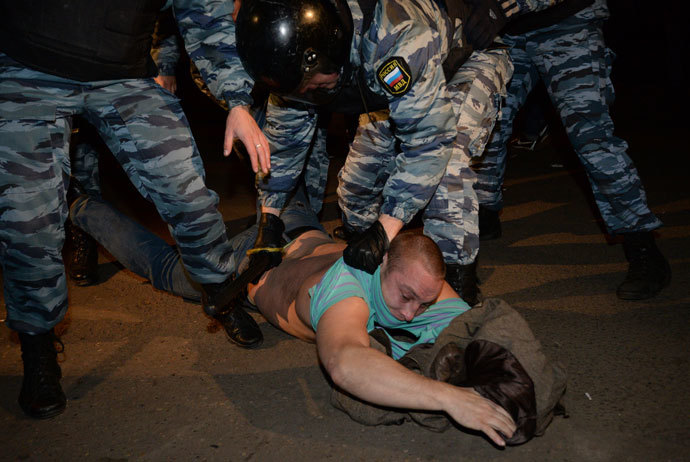
moscowriotMoscow police detained some 380 people during the mass rioting in a southern district of the city. A mixed crowd of nationalists and locals attacked a warehouse run by natives of the Caucasus, blaming a migrant for the fatal stabbing of a local.

Authorities lifted the emergency plan codenamed “Volcano” after midnight, several hours after public order had been restored. The plan, put into effect in the afternoon, involved sending scores of riot police to the scene of the clashes, and placing police officers across the city on high alert.

By midnight the streets were practically deserted, except for police officers and a couple of bystanders discussing the day’s events. Meanwhile the 380 detained during the unrest were being interrogated in a criminal case over hooliganism – thus far as witnesses, police said.

Residents of the Biryulyovo district in southern Moscow took to the streets following the fatal stabbing of Egor Shcherbakov, a Muscovite, earlier in the week. Late on Thursday evening, when Shcherbakov and his girlfriend were on their way home, the young couple were attacked by an unidentified man who stabbed Shcherbakov with a knife.

Shcherbakov’s girlfriend described the attacker as a male native of the Caucasus and said that he had assaulted her boyfriend after trying to harass her.

On Saturday a group of about 40 people gathered for a protest in the area, urging the police to find and punish the attacker. They demanded that the district’s police chief resign, and that a local vegetable warehouse, where many migrants work, be closed.

The locals also lashed at the the authorities, accusing them of covering the wave of migrant crime and the illegal immigration in the area. The protest was followed by an unsanctioned rally on Sunday, which turned violent as hundreds of angry protesters attacked a shopping mall – attempting to set it on fire and breaking windows. A group of people among the crowd reportedly broke into stores, ransacking them and looting goods.

Ethnic tensions in Moscow have been high on politicians’ agenda in recent months, with the issue of illegal migration a key theme in the city’s mayoral election last month. Some 3 million migrants from former Soviet republics in Central Asia and the Caucasus are estimated to live in the city, many working in low-paid jobs in food markets without legal residency permits.

The city’s ethnic dividing lines are also overlaid with religious ones, as the Russian Orthodox majority is challenged in many neighborhoods by a growing Muslim population – both from Russia’s North Caucasus and from outside Russia’s borders.

Meanwhile, authorities in Moscow’s Southern Administrative district have decided to set up an operation headquarters to counter illegal migration. The body – comprised of police, federal migration service representatives and voluntary people’s guard – will gather daily.  The new foundation will focus on identifying flats rented to illegal migrants, patrolling streets and organizing sweeps on reports from citizens, the prefecture’s press service told Interfax.

Egor’s girlfriend said she was against such protests, since she did not want “interethnic conflicts” to be inflamed. “I know this crime won’t remain unpunished,” she told Moskva 24 TV channel.

According to statistics announced in spring by the Federal Migration Service, there are over 3 million illegal immigrants in Russia and 11 million legal visitors. However, unofficial estimates put the number of illegal immigrants at 10-12 million.  – RT

Polonium on Arafat clothing confirmed

Arafat
Arafat

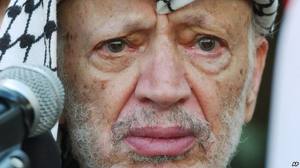
Swiss radiation experts have confirmed they found traces of polonium on clothing used by Yasser Arafat which “support the possibility” the veteran Palestinian leader was poisoned.

In a report published by The Lancet at the weekend, the team provide scientific details to media statements made in 2012 that they had found polonium on Arafat’s belongings.

Arafat died in France on November 11 2004 at the age of 75, but doctors were unable to specify the cause of death. No autopsy was carried out at the time, in line with his widow’s request.

His remains were exhumed in November 2012 and samples taken, partly to investigate whether he had been poisoned — a suspicion that grew after the assassination of Russian ex-spy and Kremlin critic Alexander Litvinenko in 2006.

That investigation is ongoing, conducted separately by teams in France, Switzerland and Russia.

In the Lancet report, eight scientists working at the Institute of Radiation Physics and University Centre of Legal Medicine in Lausanne said they had carried out radiological tests on 75 samples.

Thirty-eight samples came from Arafat’s belongings, including underwear, a shapka hat, toothbrush, a hospital cap and sportswear, that were provided by the Palestinian leader’s widow Suha Arafat.

These were checked against 37 “reference” samples of cotton clothing that had been kept in an attic for 10 years and protected from dust.

“Several samples containing body fluid stains (blood and urine) contained higher unexplained polonium 210 activities than the reference samples,” says the case report.

“These findings support the possibility of Arafat’s poisoning with polonium 210.”

The polonium samples were measured at “several mBq,” or millibecquerels, a unit of radioactivity.

Computer modelling, which calculates polonium’s very fast decay, found that these levels “are compatible with a lethal ingestion of several GBq,” or several billion becquerels, in 2004, they said.

In addition, says the report, Arafat’s clinical symptoms “could not rule out” polonium poisoning.

These include nausea, vomiting, fatigue and abdominal pain.

“Since ingested polonium 210 is eliminated partly through faeces, the gastro-intestinal syndrome, associated with multiple organ failure, could be a predominant cause of death,” the authors suggest.

They acknowledge, though, that Arafat showed no hair loss or decline in bone marrow activity — symptoms that typically occur in radiation poisoning.

The team regret that no post-mortem investigation was carried out after Arafat’s death.

“An autopsy would have been useful in this case because although potential polonium poisoning might not have been identified during that procedure, body samples could have been kept and tested afterwards.”

On July 3 2012, one of the authors, Francois Bochud, who is head of the Institute of Radiation Physics, told Al-Jazeera that the team “did find some significant polonium” in Arafat’s belongings.

“If (Suha Arafat) really wants to know what happened to her husband (we need) to find a sample — I mean an exhumation — should provide with a sample that should have a very high quantity of polonium if he was poisoned,” he told the Mideast TV news channel.

Beatrice Schaad, head of communications at the Vaudois University Hospital Centre (CHUV) which is in charge of the institute, said the case report was the “scientific version” of what was given to the media.

“There is nothing new compared with what was said” in 2012, she told AFP. “There is still no conclusion that he was poisoned.” – AFP

Father murders daughter, eats flesh

png2A Papua New Guinea man described as a vampire has been arrested after allegedly murdering his young daughter by biting her neck, eating her flesh and drinking her blood, a report said on Friday.

Police called the grisly incident that occurred on Wednesday at a settlement near Lae “an act of cannibalism”.

The PNG Post Courier cited local councillor John Kenny, who was one of the first on the scene, as saying the three-year-old child and her mother were visiting the father when he grabbed the girl and ran off into nearby bushes.

Kenny said the man allegedly held the toddler close to him, bit deep into her neck, ate the flesh and sucked her blood.

Two boys who were climbing a coconut tree nearby saw him and ran quickly to raise the alarm.

“He was just laughing at the boys and continued eating the flesh and sucking the blood,” Kenny told the newspaper.

“The boys were scared and ran quickly to alert the people.”

When people arrived to investigate the man reportedly dumped the body in the bushes and ran away before being caught and turned over to police.

PNG is a sprawling nation where black magic, sorcery and cannibalism sometimes occur.

Last year police arrested dozens of people linked to an alleged cannibal cult accused of killing at least seven people, eating their brains raw and making soup from their penises.

There have been several other recent cases linked to cults, witchcraft and cannibalism, with a man in 2011 reportedly found eating his screaming, newborn son during a sorcery initiation ceremony. – Sapa/AFP


Argentinian farmland fetch high prices

Argentine agri exports looking good

Twenty percent of GDP in Argentina is agriculture-related, making it an important country for agriculture production due its high yields.

Argentina is the world’s largest exporter of sunflower oil, a leading exporter of soybean oil and among the top five exporters of soybeans and corn. More than a third of Argentina’s exports are in agri products, which earned them $25 billion in 2010/2011.

Export oportunities is a key driver for agricultural production for 1014/2015, particulary for grains, rice and sugar. However a key risk is the county’s rising food inflation, which could force the government to try and stem exports as has been done to beef exports in the past.

The government is taking positive steps to change grain seed laws to increase the biofuel blending limit, which could increase production in the medium term.

It could help foster a good relationship with the farmers and capitalize on its strong production potential.

Beef consumption is expected to decline as consumers switch to poultry. It has unintended consequences.

Farmers will build stocks on the back of high prices and Argentina could return to being one of the world’s largest beef exporters over the medium term.

The long-term soybean forecasts should be revised as the government passes new seed laws to encourage farmers to use genetically modified GM seeds.

Only 35% use it now and that could change to 80% shortly. It would cut production costs while allowing farmers to earn more revenue from their output.

It could mean that Argentina could surpass Brazil and become the world’s second largest soybean exporter. At the moment they are in third place.

A continued rebound in corn is expected as Buenos Aires Grains Exchange already saw a 4% area increase in corn planted for the 2011 season. Argentina is the world’s second largest corn exporter.