China warns US as Republicans vow to stand and fight

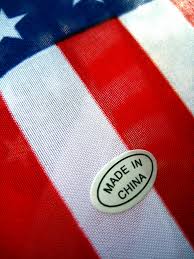
China, the biggest foreign creditor of the United States, has waded into the American budget crisis, warning Congress that it must resolve the political impasse over the debt ceiling without further delay.

The Chinese Vice Foreign Minister, Zhu Guangyao, told America’s deadlocked politicians on Monday that “the clock is ticking” and called on them to approve an extension of the national borrowing limit before the federal government is projected to run out of cash on 17 October.
uschina“We ask that the United States earnestly takes steps to resolve in a timely way the political issues around the debt ceiling and prevent a US debt default to ensure the safety of Chinese investments in the United States,”  Mr Zhu told reporters in Beijing. “This is the United States’ responsibility,” he added.

The American government entered its seventh day of shutdown on Monday, following the failure of Congress to approve the national budget a week ago. And there was little sign of progress on the still more crucial issue of the fast-approaching “debt ceiling”  deadline. Yet rather than indicating  a willingness to negotiate, the Republican Speaker of the House of Representatives, John Boehner, stated on Sunday that it was “time for us to stand and fight” over the budget. He added that a default was “the path we’re on”. American stock markets opened down in response to the belligerent comments yesterday, with the S&P 500 Index of leading shares shedding 0.5 per cent.

In September 2008 China eclipsed Japan to become the biggest single foreign creditor of the US federal government. The US administration estimates that the China government holds at least $1.3 trillion of its bonds. The total could be higher because Beijing is known to hold American debt through intermediaries. And, in total, the Beijing authorities have $3.5trn of dollar-denominated assets, which would also be hit hard in the event of a default.

These vast foreign exchange holdings are a by-product of China’s closed financial system and persistent current account surplus, which means that most foreign currency that enters the country accumulates with the central bank. The central bank then invests the money in normally “safe” dollar assets. The vast dollar reserves are also a legacy of China’s policy in recent decades of artificially holding down the value of its currency, the renminbi, in order to boost the overseas sales of its politically influential export industry.

However, economists have criticised the popular idea that China could exert political or economic leverage over Washington by threatening to sell its dollar investments, since such a drastic shift would ultimately serve to undermine the paper value of Beijing’s own vast investment portfolio. Nevertheless, China’s creditor position and its status as the world’s second largest economy gives its voice some authority in Washington and Mr Zhu made it clear that private representations had already been made. “The US is clearly aware of China’s concerns about the financial stalemate and China’s request for the US to ensure the safety of Chinese investments,” he said yesterday.

Since the global financial crisis, which led to a sharp depreciation in the value of the dollar against the renminbi, the authorities in Beijing have been concerned about the fact that so much of their national reserves are held in the form of the American currency. China has been promoting the idea of a new reserve currency to replace the greenback, with some analysts suggesting that the renminbi could one day take its place.

Mr Zhu stressed that it was vital, not only for China but the wider global economy, for America to resolve its budget impasse. “Safeguarding the debt is of vital importance to the economy of the US and the world,” he said. Referring to a similar deadlock in 2011, which led to a downgrade of the US AAA credit rating by the Standard & Poor’s agency, Mr Zhu said: “We hope the United States fully understands the lessons of history.”

The concerns over the stability of the dollar come at a time of geo-political flux. Barack Obama has sought to “pivot” his foreign policy to Asia to counter China’s growing military influence. But the shutdown has forced the US President to cancel his visit to Asia this week to attend a summit. – The Independent

Gulf states to introduce medical testing to detect gays

arabgaysBahrain, Kuwait, Qatar, Oman, Saudi Arabia and the UAE already outlaw homosexuality, but are toughening their stance.

A medical test being developed by Kuwait will be used to detect homosexuals and prevent them from entering the country – or any of the Gulf Cooperation Countries (GCC), according to a Kuwaiti government official.

GCC member countries – Bahrain, Kuwait, Qatar, Oman, Saudi Arabia and the United Arab Emirates – already deem homosexual acts unlawful.

This stance is being toughened, according to Yousouf Mindkar, the director of public health at the Kuwaiti health ministry.

He told Kuwait newspaper Al Rai: ‘Health centres conduct the routine medical check to assess the health of the expatriates when they come into the GCC countries. However, we will take stricter measures that will help us detect gays who will be then barred from entering Kuwait or any of the GCC member states.’

Those taking part in homosexual acts in Kuwait, if they’re under 21, can receive a jail sentence of up to 10 years.

Earlier this month Oman newspaper The Week was suspended over an article that was deemed to be sympathetic to homosexuals, according to the BBC.

It’s illegal to be gay in 78 countries, with lesbianism banned in 49. Five countries mete out the death penalty to gay people – Iran, Saudi Arabia, Sudan, Yemen and Mauritania.

Iran: Since 1979, the government has executed more than 4,000 people charged with homosexual acts. A non-adult who engages in consensual sodomy is subject to a punishment of 74 lashes.

Saudi Arabia: Although the maximum punishment for homosexuality is execution, the government tends to use other punishments – such as fines, prison sentences, and whipping – unless it feels that homosexuals have challenged state authority by engaging in social movements.

Sudan: For homosexual men, lashes are given for the first offence, with the death penalty following the third offence. 100 lashes are given to unmarried women who engage in homosexual acts.For lesbian women, stoning and thousands of lashes are the penalty for the first offence. Today, the issue has divided some religious communities. In 2006, Abraham Mayom Athiaan, a bishop in South Sudan, led a split from the Episcopal Church of Sudan for what he regarded as a failure by the church leadership to condemn homosexuality sufficiently strongly.

Yemen: Homosexuality is still illegal in Yemen in accordance to the country’s Shari’ah legal system. Punishment ranges from flogging to death.

Mauritania: The Shari’a law applies in Mauritania. The penal code states that, since 1983,any adult Muslim caught engaging in an ‘unnatural act’ with a member of the same sex is punishable with the death sentence by public stoning.

Bob Geldof: World will end in 2030

bobtony
Blair and Geldof

Sir Bob Geldof has declared we ALL have less than 17 years to live.The musician-turned-activist reckons the world will end in 2030 – leading to the extinction of humankind.

Sir Bob, 61, based his miserable prediction on the effects of climate change.

“The world can decide in a fit of madness to kill itself,” he told a group of youngsters at a summit in Johannesburg, South Africa.

“We may not get to 2030. We need to address the problem of climate change urgently”

The former Boomtown Rats singer also warned “the next war will not be a World War One or a World War Two, it will be the end.”

He added: “We may not get to 2030. We need to address the problem of climate change urgently.”

Sir Bob is best-known for his attempts in helping to fight famine in Africa, staging Live Aid at Wembley Stadium in 1985.

He finished his speech by apologising for being “bloody miserable”, but added: “just get on with it”.

Despite the dire warnings on climate change, it emerged last month that a million square miles of Arctic seas have frozen in the past year as a new environmental trend takes hold, dubbed “global cooling”.

The extraordinary “reverse” of global warming has led to a 60 per cent rise in ice-covered ocean. Just six years ago, some scientists were predicting that all of this ice would have melted away by 2013.

The big chill has persuaded some experts that temperatures will keep falling for decades and throws fresh doubts on claims that global warming will devastate the planet.

Bob Geldof claims man-made climate change has wrecked the planet

Details of the latest twist in the debate emerged in a secret memo to the United Nations Intergovernmental Panel on Climate Change.

It says that a chillier-than-usual summer has left a thick ice layer stretching from the Canadian islands to the northern coast of Russia.

The ice prevented dozens of yachts and a cruiser getting through America’s North-West Passage.

The shock memo surfaced just days before the Arctic freeze is about to begin and six years after warnings that global warming would melt the ice by this winter.

An ice-free Arctic was boldly predicted in a 2007 by Professor Wieslaw Maslowski, of the Naval Postgraduate School in Monterey, California.

He said his grim but conservative estimate was provided by the most realistic computer models. Cambridge University expert Professor Peter Wadhams added: “This is not a cycle, not just a fluctuation. In the end, it will all just melt away quite suddenly.”

On the back of the dire warnings, billions of pounds were invested in green measures to combat agents of climate change such as greenhouse gas emissions.

But the secret UN memo revealed that the ice has spread quickly following the smallest ever frozen surface area, this time last year.

It also shows how governments who fund the panel are terrified at the implications of the new predictions. – dailystar.co.uk

Saudi black ops behind Syrian chem attack

blackopsThe August chemical weapons attack in the Syrian capital’s suburbs was done by a Saudi Arabian black operations team, Russian diplomatic sources have told a Russian news agency.

“Based on data from a number of sources a picture can be pieced together. The criminal provocation in Eastern Ghouta was done by a black op team that the Saudi’s sent through Jordan and which acted with support of the Liwa Al-Islam group,” a source in the diplomatic circles told Interfax.

The attack and its consequences had a huge impact on the Syrian situation, another source said.

“Syrians of various political views, including some opposition fighters, are seeking to inform diplomats and members of international organizations working in Syria what they know about the crime and the forces which inspired it,” he told the agency.

Liwa Al-Islam is an Islamist armed group operating near Damascus headed by the son of a Saudi-based Salafi cleric. The group claimed responsibility for the bombing of a secret governmental meeting in Damascus in July 2012 that killed a number of top Syrian officials, including Defense Minister Dawoud Rajiha, his deputy Asef Shawkat, and Assistant Vice President Hassan Turkmani.

The allegations mirror a number of earlier reports, which pointed to Saudi Arabia as the mastermind behind the sarin gas attack, which almost led to US military action against Syrian government. Proponents of this scenario say intelligence services in Riyadh needed a false flag operation to provoke an American attack in Syria, which would tip the balance in favor of the armed opposition supported by Saudi Arabia.

While the majority of Western countries say they are certain that the Syrian government carries the blame for the attack, Damascus maintains that the rebel forces must be behind it. Russia shares this conviction too, calling the incident a provocation.

Back in March US President Barack Obama said the use of chemical weapons would be a ‘red line’ for the Syrian government, crossing which would prompt America’s intervention into the bloody Syrian conflict. After the August attack, which the US believes has claimed some 1,400 lives, the president was called on his words by many supporters of the Syrian opposition both at home and outside of the US.

The plan for military action was put on pause after a Russia-brokered deal with Damascus, which agreed to join the Organization for the Prohibition of Chemical Weapons (OPCW) and destroy its stockpile of chemical weapons. Experts from OPCW are currently in Syria preparing for the disarmament. – RT

Kenya pushing for AU-split from ICC

iccAfrican leaders will debate the continent’s “relationship” with the International Criminal Court at a special summit on October 11, officials said Friday, amid growing opposition to the tribunal.

The 54-member African Union has accused The Hague-based ICC of singling out Africans for prosecution and has previously called for the court to drop crimes against humanity trials of Kenya’s leadership.

“They will discuss African relationship with ICC,” the deputy head of the AU’s executive branch, Erastus Mwencha, himself a Kenyan, told AFP.

Diplomats say member states of the court, which was founded primarily to try genocide, war crimes and crimes against humanity, are expected to discuss a possible united pullout from the ICC.

African countries account for 34 of the 122 parties to have ratified the Rome Statute, the court’s founding treaty, which took effect on July 1, 2002.

Mwencha said the cases of Kenyan President Uhuru Kenyatta and his deputy William Ruto were not specifically earmarked for discussion, saying only that the “agenda is very broad.”

Kenyatta and Ruto, as well as former radio boss Joshua Arap Sang, face crimes against humanity charges for their alleged roles in orchestrating ethnic violence after disputed 2007 elections. The violence left at least 1 100 dead and more than 600 000 homeless.

Last month, Kenyan lawmakers voted on a motion to withdraw recognition of the court’s jurisdiction.

Any move by the AU to leave the ICC’s Rome Statute will have no effect on the current trials, and pulling out is a lengthy process that must be done by nations on an individual basis.

The pan-African bloc in May accused the ICC of “hunting” Africans, and has requested that the cases against Kenyatta and Ruto be transferred to Kenya.

The trial of Ruto and Sang is already under way, and Kenyatta’s trial is set to begin in November. The three have pledged their cooperation with the court and maintain their innocence.

The ICC maintains that it is not targeting Africa as a continent, pointing out that many of the cases under investigation in Africa were referred to the court by the countries themselves.

It could lead to a breakdown in relations between the court and African leaders. Tensions between the African Union (AU) and the court (ICC) are nothing new, but the meeting in Addis Ababa, the Ethiopean capital, has the potential to irretrievably damage relations between them.


“The Kenyans were criss-crossing Africa in search of support for their cause even before their parliament voted to withdraw from the ICC,” said one AU diplomat. “A complete walkout by signatories is certainly a possibility – but other requests are also possible.”

Ruto and Kenyatta have been seen as stalwarts in the fight against Islamic extremism and have argued that their absence for months on end, particularly in the case of Mr Kenyatta, is not just dangerous but also untenable.

It is not just Kenya that is promoting the anti-ICC agenda and pointing out that all eight cases it is investigating are in Africa.

Sudanese president Omar al-Bashir, wanted for genocide and crimes against humanity in Darfur, visited Kenya last month but was not arrested, despite an ICC request. He says the charges are “exaggerated” and describes the ICC as part of a “western plot” against him.

Last week, Ivory Coast’s government decided not to transfer former first lady Simone Gbagbo to join her husband in The Hague on charges of crimes against humanity in connection with the 2010 presidential election, and said it would try her at home.

Rwanda’s ambassador to the African Union, Joseph Nsengimana, observed: “It is not only the case of Kenya. We have seen international justice become more and more a political matter.”

President Jacob Zuma said it was the impression that the ICC was being “unreasonable” – that led directly to the Addis Ababa summit on October 13th.

Countries that support the court and its work, notably Botswana, are likely to do so again. Those who oppose it are hoping it will be “a game-changer”, most immediately perhaps in the case against Mr Kenyatta. – Sapa/AFP/Irish Times

Project to create BRICS university rankings

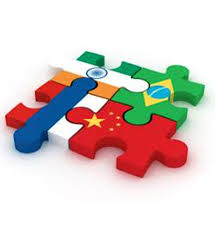
brics2The Interfax Information Services Group and the Quacquarelli Symonds (QS) company, a renowned leader in the sphere of academic rankings, have launched a project to create the BRICS University Rankings (Brazil, Russia, India, China and South Africa).

Interfax faces a rather ambitious task which is to create a ranking system that would comply not only with the Berlin principles, the key rules for any international academic rankings, but also be recognized all over the world. The ranking system is based on criteria recommended to the Russian Education and Science Ministry in autumn of 2012 by Russia‘s leading universities. These criteria are divided into three groups: educational activity, research activity and international activity, and then the categories are expanded for a more accurate collection of data from all universities in the BRICS countries.

The methodology of forming the rankings is similar to the existing methodology of assessing the world‘s largest universities developed by QS that has been making global (QS World Universities Rankings, www.topuniversities.com) and regional (QS University Rankings: Asia, QS University Rankings: Latin America) university rankings for many years.

The methodology of assessing universities in the future may be updated and extended on the basis of recommendations of the Russian academic community and Interfax, which has extensive expertise in creating national ranking systems for universities (www.univer-rating.ru).

“We hope that the participation of Russian universities in the new international rankings will help increase the competiveness of Russian universities in the global educational and research areas and their transparency to external assessments,” Interfax Deputy Director General Alexei Gorshkov said.

“Russian universities are still not well represented in international rankings although achievements of many of them look quite decent on a global level. The creation of the BRICS University Rankings will help to compare comparable educational systems and increase the recognition of universities of these countries both in the academic community and among students and employers all over the world,” QS Regional Director for Eastern Europe Zoya Zaitseva said.

“Our main goal is to reflect the situation in the sphere of higher education in the BRICS countries as accurately and fully as possible, and I hope that jointly we will achieve with this,” she said.

It is expected that results of the BRICS University Rankings will be publicized at an international conference in Moscow in 2013.

The methodology of the BRICS University Rankings is based on three indicators: educational activity, research activity and international activity.

The educational activity includes reputational assessments by a panel of international academic experts, reputational assessments by a panel of international employers and recruiters, the ratio of students per one professor, and the share of professors with an advanced academic degree.

The research activity brings together the publication productivity of researchers and professors of a university (the number of scientific articles per one researcher or professor over the past five years), and the quality of scientific publications of a university (the number of citations of one scientific article over the past five years) according to the Scopus bibliographic database.

The international activity comprises the share of foreign professors and researchers at a university and the share of foreign students at a university.

Moreover, it is expected that additional information indices of a university activity will be collected in order to assess it. It is also expected to improve qualitative and quantitative characteristics of international expert panels.

The Interfax Information Services Group is the largest diversified information group in the CIS. Since the early 1990s Interfax has been a key source of information on Russia and the former Soviet Union for the international community. Today Interfax provides political and economic news, fundamental and exchange information, professional solutions for risk management, marketing, investor relations and PR.

Quacquarelli Symonds (QS) founded in 1990 has become one of the world‘s leading providers of information for students and young professionals who choose to pursue further educational programs including bachelor, master, post-graduate and business schools. The company created world‘s best QS World University Rankings and offers new forms of interaction between university colleagues and enrollees from all over the world through online portals, research projects, events and guides.

The QS World University Ranking has become a key guide for many people since it was first introduced in 2004. The rankings developed in close cooperation between the QS research center and the QS academic council is well known to large number of current and future students, university staff, companies, and governments throughout the world. The goal of the rankings is to present the university as a multilateral organization that meets the career needs of its students. The rankings are based on four core parameters: research and educational activity, opinion of employers on graduates and the level of internationalization.

The QS rankings uses the Scopus bibliographic database by Elsevier, which is the world‘s largest bibliographic database of excerpts and citations from scientific literature and electronic sources. The database has excerpts and citations from more than 18,000 articles from more than 5,000 international editions, thus providing the broadest interdisciplinary coverage. Scopus is a trusted source of bibliographic data and is widely used by many organizations, including the Organization for Economic Cooperation and Development (OECD), Australian Research Council (ARC), Institute for Research Information and Quality Assurance (iFQ, Germany), and others. – Interfax

Radical Muslim cleric and 3 others gunned down in Kenyan port city

mombasa_mapGunmen opened fire on a car in the Kenyan port city of Mombasa, killing four people, including a radical Muslim cleric, a media report said Friday.

The cleric, Sheikh Ibrahim Ismail, was seen as the successor to Aboud Rogo Mohammed, a radical preacher who was gunned down in August last year, sparking unrest in Mombasa, including attacks on churches.

Rogo was on US and UN sanctions lists for his alleged links to the Somali militant group al-Shabaab and al-Qaeda.

The Nation newspaper quoted police as saying Ismail and four others were traveling in a car from mosque on Thursday evening when the incident took place. Only one passenger survived the attack.

Al-Shabaab claimed last month’s attack on the Westgate shopping centre, which left at least 72 people dead, including 61 civilians, six soldiers and five assailants.

Investigations into the attack are ongoing. – dpa

Obama okays military aid to countries with child soldiers

childsoldierAmid the hoopla of the government shutdown, the White House quietly passed a bill Monday that overrides a law banning military aid to countries that use child soldiers.

The Child Soldiers Prevention Act of 2008 prohibits the U.S. government from providing military assistance to countries that directly use, or support the use of, child soldiers. Built into the law is an option allowing the U.S. president to override the ban if he/she deems it necessary.

On Monday, President Obama issued complete waivers to Yemen, Chad, and South Sudan, opening up those countries to U.S. military aid despite their known use of child soldiers, declaring in a written memorandum it is “in the national interest of the United States” to override the ban.

Obama also granted partial waivers to the Democratic Republic of the Congo and Somalia to allow “International Military Education and Training” and “nonlethal” defense for both countries and “provision of assistance under the Peacekeeping Operations authority for logistical support and troop stipends” in Somalia. According to Think Progress writer Hayes Brown, these waivers open the door for military aid for ongoing “peacekeeping” operations in both these countries.

“Obama is becoming an expert at waiving human rights laws,” writes Ken Hanly in Digital Journal. “He waived part of a law last month that banned the US from supplying lethal aid to terrorist groups so he could send aid to Syrian rebels. In the case of Egypt, Obama has refused to call the coup by the armed forces a coup and by doing so does not run afoul of a law that would ban aid to a country where there had been a military coup.”

“Human rights are to be promoted but only insofar as they do not conflict with US national interest as understood by the president,” he added.

Meanwhile, the U.S. government has come under criticism for filling its own military ranks with hundreds of thousands of teenagers, including 17-year-olds who can enlist with parental consent. – wakeupfromyourslumber.com

The two missiles that ended a confrontation in Syria

TridentA well informed diplomatic source told a Lebanese newspaper that “the US war on Syria had started and ended the moment those two ballistic missiles were fired, leaving inconsistent information, as Israel denied and Russia confirmed, until an Israeli statement was issued indicating they were fired in the context of an Israeli-US joint drill and fell in the sea, and that they were not related to the Syrian crisis.”

The source further told the Lebanese daily As-Safir that “the US forces fired these two rockets from a NATO base in Spain, and were instantly detected by the Russian radars and confronted by the Russian defense systems, so one of them exploded in the airspace and the second one diverted towards the sea.”

In this context, the source pointed out that “the statement issued by the Russian Defense Ministry, which stated the detection of two ballistic missiles fired towards the Middle East, intended to neglect two points: the first was the location from which the two rockets were fired, and the second was their downing. Why? Because the moment the full military operation was launched, Head of the Russian Intelligence Service contacted the US intelligence and informed it that “hitting Damascus means hitting Moscow, and we have removed the term “downed the two missiles” from the statement to preserve the bilateral relations and to avoid escalation. Therefore, you must immediately reconsider your policies, approaches and intentions on the Syrian crisis, as you must be certain that you cannot eliminate our presence in the Mediterranean.”

“This unannounced direct confrontation between Moscow and Washington increased the Obama Administration’s confusion and certainty that the Russian side was ready to move until the end with the Syrian cause, and that the US did not have a way out of its impasse except through a Russian initiative which would save America’s face…” he added.

From this point, the diplomatic source clarified that “in order to avoid further US confusion, and after Israel denied knowing anything about the rocket firing in its first statement, which is the truth, Washington demanded Tel Aviv to adopt the rocket firing to save its face in front of the International Community, especially since these two rockets were the beginning of the US aggression on Syria and the announcement of the beginning of military operations, after which US President Barack Obama was supposed to go to the G20 Summit in Russia to negotiate the destiny of Syrian President Bashr Al-Assad. However, he went to find a way out of the impasse he’s in.”

The source further indicated that “after the US-Russia rocket confrontation, Moscow intended to increase its number of military experts in Russia, and added to its military units and destroyers to enhance its military presence in the Mediterranean. It also set a time for announcing about its initiative on stopping the aggression on Syria after the G20 Summit, after drawing a side scene on the sidelines of the summit which was followed by two successive visits for Iranian Foreign Minister, Hussein Amir Abdul Lahyan, and Syrian Foreign Minister, Walid Al-Moallem, in which a way out was agreed on with the Russian side, and it included a Syrian announcement on approving the Russian initiative regarding putting Syrian chemical weapons under international supervision and preparing Syria for joining the non-proliferation treaty.

Finally, the source pointed out that “One of the first results of the US-Russian military confrontation was the British House of Commons’ rejection to participate in a war on Syria. This was followed by European stances, most significantly, the German stance announced by Chancellor Angela Merkel.” – almanar.com

Desperate MSM culling comment sections

msmDesperate to cling onto their ability to dictate reality, the crumbling mainstream media is beginning to kill off article comment sections in a cynical bid to silence dissenting voices.

Studies confirm that article comment sections – for better or worse – are heavily swaying public opinion. How many times have you read a mainstream news article about NSA spying, drones, gun control or any other other hot button issue where the author sides with the establishment, only to have their argument completely eviscerated by a deluge of irate respondents in the comment section?

Recent polls show that trust in mainstream media is hovering at record lows. After largely failing to influence the court of public opinion via paid trolls, the establishment is starting to panic and is responding by moving to cull comment sections altogether.

Popular Science and BoingBoing.net recently announced their decision to kill comment sections on their website. The New York Times also recently indicated that it is scaling back comments and removing them from some articles altogether.

As an excellent Daily Tech piece highlights, Popular Science admitted that its decision to pull the comment section was in order to preach a “scientific doctrine” on global warming without being challenged.

The origin of the word “doctrine” is to indoctrinate. Therefore, Popular Science is taking the most unscientific approach possible – by censoring debate and stifling alternative ideas – in order to indoctrinate its readers.

The decision to kill comment sections on news websites will only result in the mainstream media losing traffic to alternative sites which allow free expression and do not resort to censorship. – infowars.com

Obama talks to Rouhani

Pres. Rouhani
Pres. Rouhani

President Obama announced today that he talked on the phone with Iranian president Rouhani: “Just now I spoke on the phone with President Rouhani of the Islamic Republic of Iran,” he said. “The two of us discussed our ongoing efforts to reach an agreement over Iran’s nuclear program.”

This is the first time leaders from America and Iran have spoken since 1979.

“I reiterated to President Rouhani what I said in New York. While there will surely be important obstacles to moving forward and success is by no means guaranteed, I believe we can reach a comprehensive solution.

“I’ve directed Secretary Kerry to continue pursuing this diplomatic effort with the Iranian government. We had constructive discussions yesterday in New York with our partners, the European Union, the United Kingdom, France, Germany, Russia, and China, together with the Iranian foreign minister, and going forward, President Rouhani and I have directed our teams to continue working expeditiously in corporation with the P-5 plus one to pursue an agreement. And throughout this process we will stay in close touch with our friends and allies in the region, including Israel.

“Now we are mindful of all the challenges ahead. The very fact that this was the first communication between an American and Iranian president since 1979 underscores the deep mistrust between our countries.”

Obama said that “Iran’s supreme leader has issued a fatwa against the development of nuclear weapons, President Rouhani has indicated that Iran will never develop nuclear weapons.”

“I have made clear that we respect the right of the Iranian people to access peaceful nuclear energy in the context of Iran meeting its obligations. So the test will be meaningful, transparent, and verifiable actions,” said Obama, which could lead to a relaxation of sanctions.

Obama talked of a new relationship between the U.S. and Iran, if his diplomatic efforts succeed. – TWS

Nairobi might have known about attack

mallcollapseKenyan authorities are facing questions over whether they had any knowledge on the attack on the Westgate Mall in Nairobi.

A Somali al-Shabaab chief said was the attack was a “message to Westerners” who had “backed Kenya’s invasion [of Somalia],” a reference to Kenya’s incursion into Somalia in 2011.

Kenya’s National Intelligence Agency (NIS), widely accused by politicians of failing to pick up chatter about the attack, has insisted it did warn the police and officials inside the President’s office before the Westgate siege, but its warnings went unheeded, The Star reported.

According to the same report, a pregnant policewoman avoided Westgate after her brother, who works for Kenyan intelligence, warned her of a terror attack. “She has told police that her brother who is a NIS officer warned her not to visit Westgate that Saturday because she would not be able to run,” a senior officer was quoted as saying.

The attack was carried out by the African branch of Al-Qaeda, and is ideologically aligned with the same jihadists that the US and NATO backed in Libya and are currently supporting in Syria.

The 2011 invasion of Libya greatly expanded Al-Qaeda’s operational capacity in both Africa and the Middle East. The death of an American ambassador in Libya, Chris Stevens, put the spotlight on the transfer of arms by American security agencies to jihadists they hold responsible for 9/11.

Kenya’s military says it was responsible for the massive collapse of three floors of the Mall after at least 67 people died in the siege, a top-ranking government official told The Associated Press.

When asked Friday if military action against the hostage-takers caused the collapse, the official answered: “Yes.”

The official also confirmed that Kenyan troops fired rocket-propelled grenades inside the mall, but would not say what was used to cause the collapse. The official insisted on anonymity because he was sharing sensitive intelligence information that has not been publicly released.

The top official’s confirmation backs up information given to AP by another official on Wednesday, who said soldiers were responsible for the collapse which created a gaping hole in the mall’s roof. That official said fired RPGs caused the collapse.

Four huge explosions rocked the mall Monday followed by dark smoke pouring from the shopping center, the likely time that the floors collapsed. The government has not publicly explained what caused the floors to collapse. One official earlier suggested it was caused by a mattress fire inside the Nakumatt department store.

It is believed the collapse of the floors helped to bring an end to the four-day siege at the mall, but it may have killed hostages still inside.

FBI agents —along with investigators from Britain, Canada and Germany —have been dispatched to investigate the crime scene. There have been no details on what the international team has found so far in the bullet-scarred, scorched mall. – AP

Charles Taylor’s victims hail war crimes verdict

Charles Taylor in 1990

Victims of the bloody regime of Liberian warlord Charles Taylor spoke of their relief after his 50-year jail term for war crimes and crimes against humanity in Sierra Leone was upheld by an international court on Thursday.

The final verdict handed down by the UN-backed Special Court for Sierra Leone (SCSL) draws a line under a seven-year trial of the 65-year-old former Liberian president, sentenced in May last year for “some of the most heinous crimes in human history”.

“As a government, we believe that justice has been done and impunity is over,” Sierra Leone government spokesman Abdulai Bayraytay told AFP.

“The message for sitting heads of state not only in Africa but beyond is that when you are in power you must exercise it judiciously, have respect for the rule of law and human rights and uphold the dignity of others.”

Around 100 people, including human rights activists and survivors of the Sierra Leone civil war, watched a live broadcast of the ruling in the capital Freetown.

For Sullay Turay, who lost a hand and a foot to Taylor-backed rebels, the outcome “showed that no matter what you do, justice will finally catch up with you and this is what has happened in Taylor’s case.”

The former warlord, who was jailed initially for 50 years for arming rebels during Sierra Leone’s brutal 1990s civil war, is likely to spend the rest of his life behind bars, possibly in a British jail.

He sparked a 13-year civil war in his own country when he led a rebellion in 1989 to oust President Samuel Doe which deteriorated into one of Africa’s bloodiest conflicts.

His National Patriotic Front of Liberia (NPFL) earned a reputation for extreme violence, conscripting child soldiers and terrorising citizens of certain ethnic groups.

After taking Monrovia, Taylor was elected president in 1997, but violence again erupted in 1999 when another rebellion started and he lost control of much of the country, fleeing in 2003 to Nigeria.

The conflicts resulted in 270,000 deaths, with many civilians displaced and several thousand becoming victims of atrocities, according to the United Nations.

As Liberia’s president from 1997 to 2003, Taylor supported Revolutionary United Front rebels in neighbouring Sierra Leone by supplying them with guns and ammunition as they waged a campaign of terror during a civil war that claimed 120,000 lives between 1991 and 2002.

He was finally arrested and transferred to The Hague in 2006, where he was convicted in 2012 of aiding and abetting the rebels during the conflict, known for its mutilations, drugged child soldiers and sex slaves, trial judges found.

“Full justice has now been done and the victims should move on with their lives. The violations they suffered have been addressed through the judicial process,” said Ibrahim Tommy, chairman of the Centre for Accountability and the Rule of Law campaign group.

“The government now should work to strengthen the justice system and work for the socio-economic prosperity of the victims.”

Some victims of the conflict remain bitter and voiced frustration that Taylor had not received the 80-year sentence requested by the prosecution.

“Let Taylor rot in jail. I only wish he would have served his sentence in an African prison to suffer the more,” said Freetown taxi driver Andrew Lebbie.

But there was also a note of reconciliation among the crowd gathered for the ruling in Freetown.

“Forgiveness is all I would ask for. The court should have tempered justice with mercy,” said vicar Sam Fergusson.

But Taylor has never been charged for his role in Liberia’s bloody history, only that in neighbouring Sierra Leone. – AFP

Arrests for world’s biggest cyberattack

In a surprise development, it has been reported that several months ago Britain’s National Cyber Crime Unit “secretly” arrested a 16-year-old London schoolboy on suspicion of being involved in the “biggest cyberattack in the history of the Internet.”

The arrest of the teenager, whose name is not being disclosed, is a part of the investigation into the distributed-denial-of-service (DDoS) attack on Spamhaus on March 20 this year. That day, servers of the Dutch anti-spam organization, which tracks e-mail spammers and spam activity, were at one point being inundated with 300 billion bits per second (300Gbps) of data, three times larger than the previous record attack of 100 Gbps.

The teenager fell under suspicion after “significant sums of money” were found to be “flowing through his bank account,” the London Evening Standard reported Thursday.

“The suspect was found with his computer systems open and logged on to various virtual systems and forums,” the daily cited a briefing note by the National Cyber Crime Unit.

According to the Evening Standard, the arrest was made in April at the boy’s home in southwest London, but details of it were just recently disclosed to the newspaper “ahead of the formation of the government’s new National Crime Agency.”

The newspaper did not say whether criminal charges had been brought against the boy, if he was being held in custody and whether he was providing police with information about possible associates.

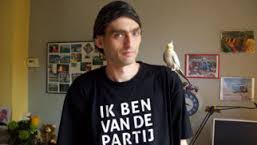
Sven Kamphuis
Sven Kamphuis

The teenager’s arrest came during a series of coordinated raids in an investigation codenamed Operation Rashlike.

Another arrest was also made in April in Spain. A 35-year-old Dutchman was detained and his computers, data carriers and mobile phones were seized.

The man’s name was not made public, but media speculated that the man was Sven Olaf Kamphuis, the spokesman for Internet service provider CyberBunker.

In a statement, the Dutch government referred to the arrested suspect merely as “SK.”

In a statement Sunday, the Spanish Interior Ministry revealed in a statement that its police force had arrested the man responsible for the attacks in response to a European arrest warrant, which stemmed from an investigation initiated by Dutch authorities.

The March 20 attack on Spamhaus was described as the biggest in history, causing a global Internet slowdown. Spamhaus’s chief executive, Steve Linford, said at the time that the scale of the attack could knock out governments’ Internet infrastructure.

However, despite being dubbed by many as the biggest DDoS attack in history, Kaspersky Labs Global Research & Analysis Team told RT that the majority of Internet users worldwide most likely did not notice any disruption.

The DDoS attack was believed to have been sparked when non-profit group Spamhaus placed CyberBunker on its blacklist of sites to be blocked for spreading spam.

However, in a March interview with RT, Kamphuis denied that CyberBunker was behind the attack and instead pointed the finger at Stophaus.com, a large collective of Internet providers around the globe.

He also called Spamhaus “the largest threat to the freedom of the Internet at the moment” and accused the company of falsely labeling people spammers when they were not. – RT