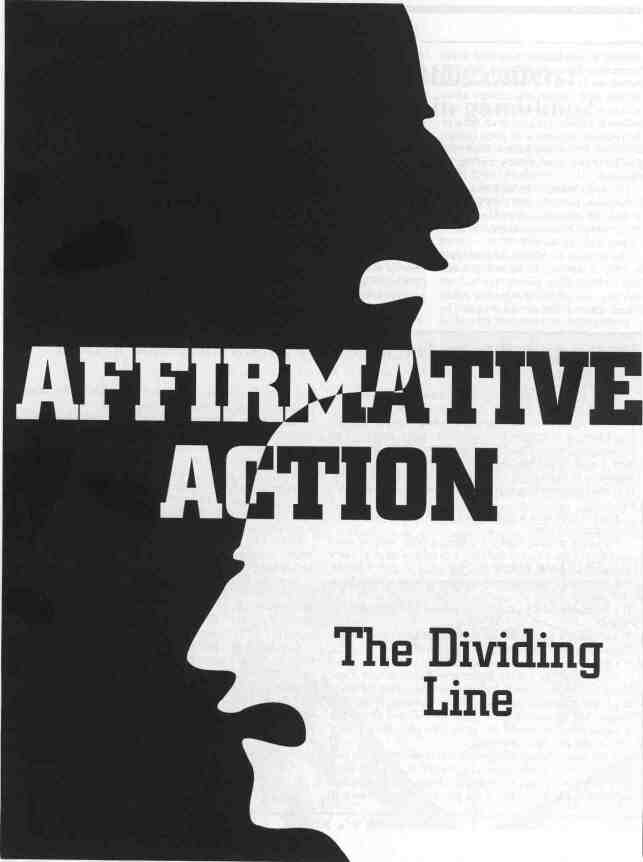
Racism ‘everywhere’

Racism

by Dan Roodt

With violence and anti-white racism rising in South Africa, Afrikaners need international support to survive. Our unique testimony of how a Western nation is being dominated by non-Westerners may just save the whole of our civilization!

Donate or subscribe to praag!

– See more at: http://praag.org/?p=11549#sthash.rD0j1X7w.dpuf

by Dan Roodt

Donate or subscribe to praag!

Sipho Hlongwane had to reach all the way to Slovenia (a little volkstaat that violently revolted against the nation-building of the old Yugoslavia) to discover the term “postmodern racism” in a tract by Slavoj Zizek (Living in postmodern racism, www.bdlive.co.za, November 11). I remember more than 10 years ago Claudia Braude introduced us to “subliminal racism”, which let her label all media in South Africa racist.

No doubt South Africa harbours a large variety of “racisms”: postmodern, subliminal, imagined, symbolic, public, private, and so on. Like the patient on Sigmund Freud’s couch, the country is in search of a “cure”, which could be either a rugby quota or another huge dose of black economic empowerment. Like a manic depressive, the Democratic Alliance seems to be vacillating on how racist South Africa really is, hence its recent volte face on more draconian affirmative action.

If racism had to end tomorrow, most of our academics would find themselves without jobs, not to mention politicians! So South Africa is married to metaphysical racism forever. Even in those “end times” referred to by Zizek, there will always be racism. Even if the dollar is replaced by Bitcoin and peak oil takes us back to ploughing with oxen, racism will survive as both an explanation of the modern world’s origins and its remaining inequalities.

American Craig Bodeker made a beautiful, minimalistic, black-and-white (in the cinematographic sense) documentary called A Conversation About Race. He interviewed people of all races on the streets of Denver, Colorado, asking them whether they thought “racism” was still a big problem in the U S. Of course, everybody thought so. Many of the subjects stated: “Racism is everywhere.”

Few people had any direct experience of racism, but they discerned it in other people’s body language, in their use of euphemisms or being patronised by others. One black man “who dates interracially”, as he described it, was complimented on being “a good dancer” in a club by a white man. He thought it was a racist comment as the man would not have complimented a white man in the same way. So the compliment, like the insult, may be construed as racism.

It seems that racism is the real motor of history, as opposed to Karl Marx’s class struggle or Friedrich Nietzsche’s will to power.

It follows that, like sin, metaphysical racism is insurmountable. It permeates our lives and contaminates our discourse. The radioactive cloud recently released from Pelindaba was much less of a danger than racism, which must explain why almost no one took any notice of it, while every day we agonise about racism.

Also published as letter in Business Day.

Donate or subscribe to praag!

Quintessential liberal failures: Affirmative Action

Affirmative actionby Deon van Rensburg

In this series of opinion pieces I will attempt, and more often than not, succeed, in highlighting liberal failures. In the process I hope to shine a very bright light on the inherent hypocrisy associated with every liberal preconception, ideological turnip and bias ever uttered in the public or private sphere

In my opinion piece Liberalism – True Political Ideology or a Mental Disease I contended that there are two types of liberalism:

  • Classical liberalism as defined by those that espouse freedom for everybody – freedom from invasive government, freedom of association, freedom of religion, freedom from oppression, freedom to trade and be relieved of the master and serf condition, freedom to own property, freedom to till the earth, freedom, freedom and more freedom…All whilst keeping to the confines of what is considered civilised, moral and ethical;
  • Modern liberalism or “progressive” liberalism yearns for the Nanny State, where a god-like government will be the saviour and mater of the individual, collectively looking after all from cradle to the grave, where equality is the pinnacle of achievement and inequality is deemed to be a deadly sin, where man and woman are the same despite glaring biological and psychological differences, where cultural differences have been wiped from the face of the earth despite thousands of years of poles-apart development, where abnormal is the new normal by undermining morals, ethics and values, where people who do not think like you are abhorrent.

There seems to be a definite correlation between “progressive” liberalism and Sociopathic Personality Disorder – immediate gratification of the self, a feel good ideology, damn the consequences. There are also elements of Hyper-vigilant Narcissistic Personality Disorder as diagnosed by psychiatrist Dr. Glen Goddard of the Mayo Institute.

Indiscriminateness of thought does not lead to indiscriminateness of policy. It leads the modern liberal to invariably side with evil over good, wrong over right and the behaviours that lead to failure over those that lead to success. Why? Very simply if nothing is to be recognized as better or worse than anything else then success is de facto unjust.

There is no explanation for success if nothing is better than anything else and the greater the success the greater the injustice. Conversely and for the same reason, failure is de facto proof of victimization and the greater the failure, the greater the proof of the victim is, or the greater the victimization. Evan Sayet

I often refer to the obvious infusion of Socialism on the modern version of liberalism termed by these liberals themselves as “Progressive Liberalism”.  The palpable similarity between “progressive” liberalism and the Socialist ideology seems to be a bridge too far for “progressive” liberals to understand. I contend that “progressive” liberalism is a grouping of churlish individuals too indolent to think for themselves and will repeat, verbatim and in parrot-like fashion,quasi-intellectual “socio-political” discussions of excrement – disguised as opinion pieces in the Lame Stream Media – after bourgeois gatherings in comfortable homes situated in upmarket gated estates. Logic, reason and fact will immediately take a week-long vacation on some South Sea Island just to get away from the pure absurdity of circular reasoning.

Vladimir Lenin quite rightly referred to them as “useful idiots” who will champion the Marxist cause throughout the world. If only he knew how right he was.

“If you always do what you’ve always done, you’ll always get what you’ve always got.” Henry Ford (1863-1947), American founder of the Ford Motor Company

“Progressive” liberals are not averse to implement ideological dogma that has been proven as a failure over and over again. Collectivism, equality, atheism, feminism and a great favourite of the slavering white-guilt-ridden useful idiots – Affirmative Action.

In South Africa it goes by many names – Employment Equity, Affirmative Action, Broad Based Black Economic Empowerment, Quotas. It remains in essence Affirmative Action

Affirmative Action has its natal origins in the United States of America where President John F. Kennedy issued Executive Order 10925 on the 6th of March 1961 in a misguided and naïve attempt to stem racial discord in the US. A monster was created which pleased Socialists to no end as racial discord has been amplified by this bestial attempt at social engineering. It is invasive in schools, universities, sports, business and government – in fact, all spheres of society like a cancerous growth on the body of a mangy dog.

“Progressive” liberals will repeat ad infinitum that Affirmative Action is necessary to “right the wrongs of the past”, how “selective discrimination” is fair, how “previously disadvantaged” people must get an equal opportunity at success and how it is aimed at rectifying “white privilege”. Except that there is nothing fair about any type of discrimination – the whole notion is a contradictio in terminis. Nature has an immutable law that only the strong survive, which “progressive” liberals wishes to subvert but that cannot be subverted. White privilege is a Socialist myth, which could as well have been the brainchild of Saul Alinsky himself – which it probably was in its modern form although credit for this academic excrement must go to W.E.B du Bois. I will discuss the subject of “white privilege” in later articles.

 White liberals are the most racist people there are, because they put blacks in a box and insist that they think one way – and if they don’t, they attack them as illegitimate, all the while denying their policies destroy blacks. – Dr Ben Carson

I have to agree with Dr. Carson here – who just happens to be a very successful paediatric neurosurgeon and who also happens to be a person of colour. “Progressives”, through Affirmative Action, are telling people of colour that they cannot succeed without the social engineering and the help of Socialist policies on their own. What is more racist than that? To be told that you are incapable of any success on your own, that no achievement can be reached by one’s own effort but whitey liberals will help you along by crying “racist” at everybody that dares stand in your way.

But even more damning is that Affirmative Action is a failure – everywhere it was instituted

When cornered with the glaring failure of AA and BEE in South Africa the vitriolic retort would be that it is being wrongly applied – as if there is a right way of applying any piece of doctrine that has at its heart social engineering? “Progressives” will invariably mention Malaysia as a success story, America is a beacon of success in Education, and the caste order in India is all but destroyed, yet they are not. Here is why.

Affirmative Action had its inception in Malaysia in 1971 and initially was a success by uplifting poor rural people to middle-class entrepreneurs. However, in 2001 the New York Times – a mouthpiece for liberal propaganda and a target for the social group Rage Against the Media due to various biased articles aimed at the Republicans, the Tea Party and hiding the true nature of Obamacare – published an article entitled ”Criticism of 30-Year-Old Affirmative-Action Policy Grows in Malaysia”:

But as the country prepares to mark three decades under what is called the New Economic Policy, the program’s failures are becoming increasingly apparent. Affirmative action, critics say, has morphed into cronyism. The government transferred wealth to a small pool of politically well-connected businessmen.

Sounds familiar?

But as the Television ad goes – but that’s not all. Ten years later, in 2011, a study by The Centre for Independent Studies titled “ Malaysia still held back by Affirmative Action” found that Malaysia’s Affirmative Action social engineering project had been a total failure with many businesses on the brink of bankruptcy looking towards the government to bail them out. Air Malaysia is just one small example(). This does not tell a success story but rather one of abject failure. Why then deploy it anywhere else?

In America the Cato Institute published an article titled “The Affirmative Action Myth” and focuses on Affirmative Action in Education specifically Universities. It concludes that Affirmative Action policies do not help the AA candidate one iota and that it too is a miserable failure. This is then followed up by a piece in the LA Times in August 2013 about the miserable failure of Affirmative Action (courtesy of NationalReview as I am not a subscriber to the LA Times ) of a particular student at Berkeley that was admitted not because of his academic excellence but because of Affirmative Action.

Enter my favourite author on all matters economic and political – Dr. Thomas Sowell who is the Rose and Milton Friedman Senior Fellow in Public Policy at the Hoover Institution, Stanford University and also a person of colour. In his book entitled “Affirmative Action around the World: An Empirical Study” he disproves the ideology, the practice and the expected consequences of Affirmative Action in the United States, India, Malaysia, Sri Lanka, and Nigeria. He delivers a stinging indictment against Affirmative Action. In his book he states:

…this discussion has been informed by theories, rationales, and debates over semantics but has been insufficiently attentive–if at all–to the actual consequences.

He finds in every country examined, the negative consequences far outweighed any positives that may have been generated.

The same consequences that we see in South Africa today. Cronyism, a ruling oligarchy, corruption, jobs for pals, a shrinkage in economic activity, a bloated civil service filled with incompetents, lowered education levels …ad infinitum.

In the minds of their original architects, affirmative action policies were temporary arrangements, which would be phased out when real gains in education and employment among the minority were made. But, in the absence of those gains, affirmative action has often become a permanent policy of “preference” and has unfortunately incited animosity and hatred among the “non-preferred,” leading to ethnic conflict and violence.

So if Affirmative Action is such a failure – everywhere – why do “progressive” liberals (and their affiliated political parties) champion and defend such a lost cause? Because reason and rationale does not form part of the thought process, because “progressive” liberalism is a socialist construct and modern liberalism is a “feel good” ideology – as I indicated, some marked similarities with sociopaths.

Affirmative Action has been proven on numerous occasions to be a failure, pandering to the wishes of a small elite – the recipients who garner an income they are unqualified for and who for all intents and purposes are completely incompetent to add anything productive or constructive to their work environment, the ruling oligarchy who receive riches and power beyond their wildest dreams and the white bourgeoisie who do not want their little Utopias disturbed and who are still able to live in their comfortable environments with their tenured and management positions earning obscene amounts of money every month.

Here comes the hypocrisy part. With Affirmative Action being a proven failure, the “progressive” liberals mounted a concerted campaign of vitriol-filled idiocy against a small group of people of non-colour who held a peaceful non-violent protest march to object to the discrimination and social engineering that is at the heart of Affirmative Action – amongst other issues, I will add. I would bet my house that these same “progressive” liberals would not bat an eyelid if people of colour mounted protest marches about any issues they consider important – such as service delivery. Oh wait, that happens on a daily basis, yet there are no articles in the Lame Stream Media decrying such events as “racist” but rather a heart-felt compassionate sympathy decrying the plight of the poor. Once the article is written and the opinion given – they leave for their pubs, clubs and houses in comfortable neighbourhoods. Once more to have quasi-intellectual discussions with like-minded sociopaths over a glass of good malt whisky or maybe Johnny Burger’s best wine.

Master and slave

mandeladeklerk

by Albert Brenner

It is always so amusing to witness the blatant hypocrisy on display when (the) Slave becomes Master. The Enlightenment philosopher Friedrich Hegel`s masterful little piece, the Master-Slave dialectic, has been the fons et origo of all the various discourses by the Other to claim/gain power.

From Simone de Beauvoir`s First Wave Feminism, Frantz Fanon’s Black Consciousness Movement to the modern Gay and Lesbian Movement, all call on Hegel. It was even the inspiration behind Francis Fukuyama’s rather dull neo-liberal utopianism in his international best-seller The End of History and the Last Man. It is rather trite, but it needs elucidation… especially if one wants to understand the pseudo-intellectual madness underpinning Mandelatopia.

According to Hegel, the Slave first becomes just like the (hated) Master s/he has overthrown. I.e. the former institutes the exact same regime that supported the latter. In subsequent stages, the consciousness of these two antagonists are suppose to fuse – bringing about a “higher plane of Reality” through the synthesis of the thesis (i.e. The Master) and the antithesis (i.e. The Slave).

It suffices to say that this synthesis has never happened. Hegel was a typical German idealist… always dreaming of Utopia. Yet, his dialectic, in itself, exists – and is evident in many spheres of reality, e.g. Anthony Giddens’s Third Way (socialism), as a synthesis between capitalism and communism. As to Hegel’s overt utopianism; Sir Karl Popper dealt it the death-blow with his fantastic book The Poverty of Historicism.

Be that as it may; we can clearly see that the new Master of South Africa, the ANC/SACP/COSATU alliance, has instituted the exact same discriminatory regime as the old NP Apartheid government. Affirmative action, Black Economic Empowerment, race quotas in sport teams, race quotas at universities, et cetera, are the hallmarks of the new Master’s claim to the moral high ground. Like Master, like Slave.

In order to legitimise his/her overt discriminatory regime – the exact same overt discriminatory regime the (hitherto Slave) fought against – s/he must couch it in terms and concepts that deny his/her blatant inherent hypocrisy.

Sigmund Freud sees the above need as a form of guilt assuagement; in terms of the Oedipus recriminations experienced by the Brother Clan once they have killed the Great Patriarch (nudge nudge, Groot Krokodil PW Botha). I mean seriously, one ought to feel guilty, especially as an academic, when one (morally) justifies a regime that is exactly the same as the one that was overthrown… in the name of freeing the oppressed from the oppressor!

The above guilt assuagement in Mandelatopia comes in three forms. Firstly; “re-dressing the wrongs of the past”. The silliness of such an endeavour is obvious. How can one, for example, accurately weigh what needs to be “re-dressed” when the scales were not even to start off with. Blacks in South Africa do have a “default burden”, to borrow a term from artist and activist Steve Hofmeyer. It is a fact that they were pretty much pre-Neolithic in culture till recently. Add to this a (black) population that doubles in size every 30 years then it is physically impossible to “re-dress” anything, even in a remotely fair and just manner.

The second form of guilt assuagement is “healing the wounds of the past”. This nonsense even outshines Scientology… for one can only heal something that was healed in the first place. Never in the history of South Africa has there ever been a “healed” body (politic). The Boers fought the Brits, the Brits fought the Zulus, the Zulus the Shangaans, the Brits the Zulus, et cetera, et cetera. Meaning that endeavouring to “heal” something that was not “whole/healed” in the first place is physically impossible and intellectually dishonest, to say the least.

The third form of guilt assuagement is (the) propagation of, and adherence to, “Whiteness Studies” theory. This has become the intellectual instrument of choice of anti-Afrikaner Afrikaner academics like Piet Croucamp, Anton van Niekerk, Christi van der Westhuizen, Amanda Gouws, et cetera.

It suffices to say that this pseudo-intellectual guano is just a feel-good academic disguise for stripping the (heterosexual) Pale Male of his power… as called for by the father of this nonsense, Noel Ignatiev. His call to “abolish the white race” is nothing but a call for the Master (the heterosexual Pale Male) to be killed by the Slave (the Other), globally.

Okay, enough theory; let us examine how Hegel and Freud’s theories work in practice. Enter the half-wit, Dr Piet Croucamp. Peester Piet (henceforth, PP) first rose to prominence when he threw his lot in with the (hitherto) Slave during a speech by Mandela at the University of Stellenbosch in 1991. According to an article (see picture, click to enlarge) in the Vrye Weekblad of Max du Preez (a useful idiot of George Soros), PP had brawled with some “right-wing” students because they were being “intolerant”.

piet1_vryeweekbl

Find below a translation of the most important parts of this article, titled “I cannot tolerate intolerance”:
  1. “But I get seriously pissed off when people are intolerant…when people don`t want to listen and just pay attention to their own boring rhetoric.”
  2. “I do not have specific political views and beliefs. It is just that I cannot tolerate intolerance. Here it concerns the nice old classic Socratic idea of (an) open-ended debate.”
  3. “I would have hit lefties as well if they had screamed down speakers and displayed such intolerance. It is, at the end of the day, (the) participation that counts – whether somebody is a fascist, a racist or a liberal, is irrelevant.”

Now, what tolerance, in terms of his much-professed “open-ended Socratic style of debate”, did PP display towards Dr Louise Mabille when she published her article, Die vreemde veraad van feministe teenoor die Weste, on Praag? What “participation” did he allow her… given the fact that he said even “racists” must be allowed to “say their say” without hindrance? Why did he not hit himself, seeing that he had said he would hit “lefties” as well if they displayed such intolerance?

The answer to all these questions can be summed up in one sentence. PP is the Master now… and the Master, by his/her very nature, is always intolerant! Like, for example, the previous regime’s use of state coercion to silence Steve Biko, so PP used the power of state instruments (in this case, the UP senate and SAHRC) to silence Dr Mabille… even before she had the opportunity to “say her say”!

That PP, is too dumb to understand that he has become that hated Master he so loathed as (champion of the) Slave way back then, must be due to the fact that he did his doctorate in minbus-taxi berths, or something equally academically frivolous.

piet 2And not only is PP intellectually under-endowed, he is also a lying sack of guano. He lied in public when he said that Dr Mabille wrote that blacks had a genetic “inclination” to commit baby rape. She said no such thing! She said it was a cultural phenomenon among black ethnic groups. This is an empirical fact confirmed by leading medical professionals, top ANC leaders, black social workers, et cetera.

Now why didn’t PP lodge a complaint against the above-mentioned persons and institutions as well? And why hasn’t the SAHRC laid “hate speech” charges against all the above-mentioned international news agencies and their reporters? Well, they, like PP, are all (still) part and parcel of the same thuggish being, the Master.

But one day, soon, some Slave, like my recalcitrant self, will rise up and hit Master PP full in the face, for it is foreordained by Hegel’s Master-Slave dialectic. How exciting, how boring…

PS. Hey Peester Piet, jammer, Meester Piet… wat het van jou Simsonhare geword?!

Pik Botha: ANC broke AA deal

Rian Malan and Pik Botha

The African National Congress has broken the affirmative action deal it reached with the National Party in 1994, apartheid era foreign minister Pik Botha reportedly said.

According to a Fin24 report Botha said that Affirmative Action in its current guise was not what the two parties agreed upon.

The former minister said that the intention during the negotiations was to rectify the injustices of the apartheid era. Botha though said that had the ANC insisted on including the current Employment Equity Act in the Constitution at the time, then having a new constitutional dispensation would have been impossible.

“Discrimination against white young people, who had nothing to do with apartheid, was definitely not part of the agreement between the NP and the ANC. Neither, generally, was discrimination against whites, coloureds or Indians,” Botha was quoted as saying by Fin24.

“The boomerang effect of the Employment Equity Act is that masses of black people are still untrained and unemployed and that the country’s economic progress is severely hampered by a shortage of skills. This affects millions more blacks than whites,” Botha added.

Botha opined that fundamental talks between leaders of all races was needed to “agree on the road ahead”. – iAfrica.com

Pieter Mulder asks for parliamentary debate on affirmative action

pieter_mulderDr. Pieter Mulder, leader of the Freedom Front Plus, yesterday asked for an urgent parliamentary debate on affirmative action to be held in Parliament.

According to Dr. Mulder, affirmative action is the basis of the South African government’s policy initiatives to correct inequalities in the country’s community.

Dissatisfaction regarding the controversial policy has however spread to such an extent that it is at present the subject of intense discussions and even court cases.

“I have for these reasons requested that a parliamentary debate on affirmative action, and in particular about the manner in which the department of correctional services enforces it, is held as soon as possible as a matter of national importance,” Dr. Mulder says

Most Americans support affirmative action

affirmativeactionPRINCETON, N.J. — Two-thirds of Americans think college applicants should be admitted based solely on merit, yet most approve of affirmative action, a Gallup poll indicates.

Twenty-eight percent of Americans think a college applicant’s race and ethnic background should be a factor when granting admission to promote diversity on college campuses.

Seventy-five percent of whites and 59 percent of Hispanics believe applicants should be evaluated based on merit alone, while black people are more evenly divided on the topic, the poll said.

In a separate question, Americans largely support the idea of affirmative action programs more generally. Fifty-eight percent of Americans support affirmative action, including 51 percent of whites, 76 percent of blacks and 69 percent of Hispanics.

Democrats are twice as likely as Republicans to favor such programs, the poll found.

“Americans are not averse to having the government take steps to help improve the conditions of minority groups in the United States, and in a broad sense express support for affirmative action programs,” Gallup said. “One of the clearest examples of affirmative action in practice is colleges’ taking into account a person’s racial or ethnic background when deciding which applicants will be admitted.

“Americans seem reluctant to endorse such a practice, and even blacks, who have historically been helped by such programs, are divided on the matter.”

Gallup interviewed 4,373 adults by telephone for the survey between June 13 and July 5. There was a 2 percentage point margin of error. – UPI

A challenge to advocates of Affirmative Action

Kevin_King

by Kevin King

A few months ago I read an article entitled “Some perspective for racist whites in SA” by Hanjo. If you haven’t yet read it please do so. In his letter, Hanjo basically says the following things:

a) He advocates AA/BEE (Affirmative Action/Black Economic Empowerment) – provides the reason that it is to “undo the past” and to “level the playing field”

b) He says that most whites are racist – basically states that whites “reach for their racist agenda” when dealing or debating this topic. Considering that the majority of whites do not support AA/BEE, he is implying that most whites are racist.

Besides his negative stereotyping of one specific race, which by definition is racist, I also find it disturbing that he directs his argument solely at whites, not Indians, Coloureds, Asians, and yes Hanjo, even Blacks that also do not support AA/BEE. I’d question your motives for ignoring these groups when discussing a topic that affects an entire country which you call “a democracy”.

What are you advocating?

Those that support the current AA/BEE system usually provide the same argument that Hanjo has in order to advocate AA/BEE. But what are you really supporting:

a) You are backing a system which takes jobs and wealth from one racial group and gives it to another racial group. This is racist and unconstitutional. In a country with huge unemployment figures, you promote the transfer jobs and wealth rather than the creation thereof.

b) You support a system that uses time and money which could rather be used on issues such as “crime, poor governance, poverty, unemployment, over population, education, etc”. It is as evident as night and day that government puts more emphasis on transformation than it does on issues which you say are important. It makes sense however, as taking from the whites and giving to the blacks is far easier and cheaper than dealing with these important issues.

c) You advocate a system that seeks to replace the skilled candidates with weaker candidates based solely on race, thus weakening the entire team, in which case everyone loses.

d) You vote for a system that at present is enriching only a select few, and was designed by a select few, who steal hundreds of billions of rands each year from the citizens of this country.

e) You endorse a system which is a paradox to nation building and racial harmony. A system which mimics Apartheid.

I challenge you

Come with me to one of the thousands of white Afrikaner squatter camps around the country which hold almost a million white Afrikaners and do the following:

a) Justify to these peace loving, law abiding people why they had their jobs taken away and why they are now unemployable, thus left unable to support their children because they are white.

b) Justify to them why they are refused jobs even when there are vacancies which have been open for months, even years. And why in some cases government will even import foreigners above qualified locals because they are white.

c) Justify to them why they are refused government aid such as grants and food aid because they are white, and are even told by government officials that “it is racist to feed poor whites”.

d) Justify to them why government is even refusing to support those charities (non-profit organisations) which provide care and support to whites.

This is the system which you support and openly advocate, a system which has all the characteristics of genocide.

Unusual delay in Supreme Court’s decision on Abigail Fisher and race-based admissions

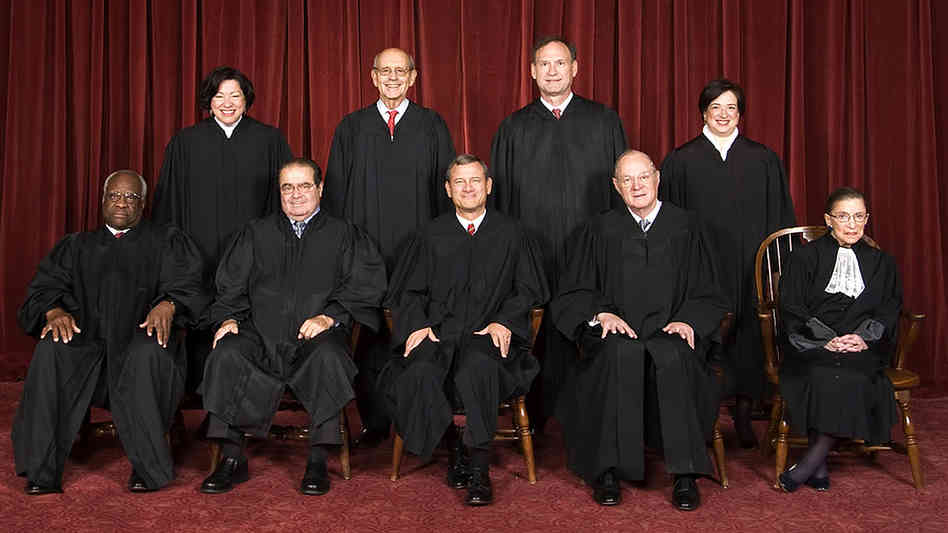
Justices of the Supreme Court

Eight months after attorneys for Abigail Fisher argued in front of the Supreme Court that the University of Texas’ affirmative action admissions policy discriminates against white students, the justices still have not handed down their decision in the potentially paradigm-shifting case.

The unusual delay has many court-watchers stumped, though as with everything Supreme Court-related, all explanations for the wait are, at best, educated guesswork.

Lyle Denniston, who has covered the Supreme Court for more than 50 years and now works for the legal website SCOTUSblog, said he couldn’t remember another case that had been argued in the fall yet still undecided by mid-June.

“I have absolutely no idea what is holding it up,” Denniston said.

One reason why the delay is so surprising: During oral arguments in October, it seemed fairly clear that the four conservative justices would band together with swing vote Justice Anthony Kennedy in striking down the use of race as a factor in undergraduate admissions. Kennedy has voted against affirmative action policies in the past and showed no willingness during questioning to reconsider his past position.

Additionally, the four liberal-leaning justices are short Elena Kagan, who had to recuse herself in this case due to her work on it while a part of the Obama administration. That seemed to clear the way for an easy 5-3 decision in favor of Fisher.

“It’s really surprising that it’s taken this long for the court to issue an opinion,” said Adam Winkler, a constitutional law professor at UCLA School of Law. “It’s almost unheard of for the court to take the entire term to decide what really is a straightforward case.”

Winkler said he believes the court will rule broadly against the University of Texas in a way that will outlaw affirmative action programs nationwide. He thinks that instead of ruling narrowly against this particular school, the court will overturn its own 2003 Grutter v. Bollinger decision that said affirmative action is allowable as long as it’s not a quota system as a way to ensure schools have a diverse student body. In that decision, the court ruled that eventually, in 25 years, the use of race would again becoming legally suspect, but that until then it’s needed to correct societal discrimination.

Winkler guesses the decision is taking so long because the liberal justices are writing lengthy dissents to the conservative judges’ sweeping decision.

“The dissenting justices are very upset about something,” Winkler predicted. “A narrow ruling only striking down Texas’ policy without significantly reshaping the law of affirmative action should be an easy opinion to write and shouldn’t inspire unusually long dissents.”

Long-time court reporter Linda Greenhouse, however, wrote in The New York Times that it’s possible Kennedy’s decision is considered “frustratingly narrow” by his conservative colleagues, since the court has already agreed to hear another affirmative action case in the fall. That suggests they may want another crack at the issue next year.

Another theory floating around legal circles is that the court may be waiting to release the Fisher case at the same time as it hands down Shelby County v. Holder, another landmark case this term (heard in February) that has the potential to significantly diminish the reach of the Voting Rights Act. Alabama sued the federal government, arguing that Southern and other states covered under the act are unfairly monitored by the federal government for discrimination in voting.

One theory is that the court will release the decisions together to make a broader statement about race in society today and how far government institutions may consider race as a way to correct past institutionalized discrimination. The justices could strike down the use of race in admissions as unconstitutional while upholding the Voting Rights Act, as a way to split the issue down the middle and avoid charges of overreach.

But other court watchers said it’s routine for the court to save its most controversial opinions for the last minute, and that it’s impossible to know why the supremes are dawdling.

“This means nothing,” Geoffrey Stone, the former dean of the University of Chicago Law School, said. “The court generally holds its most important decision for the end of the term. We can’t read anything at all into the fact that it hasn’t handed down Fisher yet.”

“I think the more likely explanation is simply that dealing with tough issues requires a lot of thought and care,” said Gail Heriot, a law professor at the University of San Diego. – Yahoo News

Key affirmative action case to be decided this month

The controversial issue of affirmative action will be decided this month by the US Supreme Court and will set a precedent in how colleges and universities accept students. It is not expected to have significant impact on the current admissions policies of Utah’s colleges and universities, however.

The case, Fisher v. University of Texas, which has been on a legal track toward the top court since 2008, centers on a woman who claims she was denied admission to the University of Texas at Austin despite being equally or more qualified than minority students who were admitted under the university’s policy of considering family circumstance and race in its application process.

University officials claim Abigail Fisher, a white student from the Houston area with a 3.59 grade-point average, the plaintiff in the case, was not qualified to attend the school and said her race was not the reason she was not accepted into the school. Officials at the school also argued that schools have the right to assemble a diverse student body, a position upheld by the court in a 2003 case (Grutter v. Bollinger) focused on affirmative action admissions decisions at the University of Michigan.

Prior to reaching the U.S. Supreme Court, a district court in 2009 ruled in favor of the University of Texas at Austin. The case was then appealed to a three-judge panel from the 5th Circuit Court of Appeals, which also ruled in favor of the university.

Supreme Court Justice Elena Kagan has recused herself from hearing the case. Five of the remaining eight judges would need to rule against the university’s policy, as a tie would uphold the lower courts’ decisions. A decision is expected by the end of June, possibly as early as Monday.

A ruling in favor of Fisher would give legal precedent to individuals challenging affirmative action admission policies, which are sometimes cited as perpetuating racial divisions, and the dispute has been among the key cases the court is ruling on this month.

Utah’s standards

Pamela Silberman, spokeswoman for the Utah System of Higher Education, said the court’s decision, while impactful nationally and precedent-setting, will have little immediate impact either way on Utah’s public colleges and universities. It could certainly impact Utah students seeking education out of state, particularly in hard-to-get-into programs making use of affirmative action policies.

Of the eight schools in the Utah public system, five are open enrollment, meaning all applicants are accepted based on a basic entrance requirement. The remaining three schools — the University of Utah, Utah State University and Southern Utah University — determine enrollment by a minimum index score combining high school grade-point averages and ACT or SAT exam scores.

“There’s really not any sort of consideration of race or ethnicity or other demographic standards there,” Silberman said. “It’s going to have almost no impact in the state of Utah because there hasn’t been a strong history of those kinds of policies anyway.”

Because Utah’s schools determine admission based on academic criteria, it is not likely that a decision against the University of Texas would lead to Utah students challenging their denied admission applications, she said.

“I think that if the criteria for entrance are really clear, then you’re going to avoid that,” Silberman said. “We want all students to be prepared so they can meet those criteria, and I think that’s the focus we have.”

The U. recently transitioned to a holistic application process, which considers extracurricular factors like creative endeavors and community service in addition to GPA and test scores.

Octavio Villalpando, associate vice president for equity and diversity at the U., said the policy is still being fine-tuned, but because it does not give special consideration to race or demographics, he does not foresee it running into conflict with the court’s decision on Fisher.

Villalpando said U. officials have studied the effects of anti-affirmative action laws in other states to avoid conflict.

“We don’t anticipate any significant changes here at the campus,” he said. “Looking across the country in states where a version of this law passed, the flagship campuses didn’t have to change much of their admissions process.”

Of the 33,291 students enrolled at the University of Utah in the fall of 2012, about 70 percent were white, 7 percent were Hispanic and 4 percent were Asian, according to data from the Utah System of Higher Education. Statewide, 14 percent of public college and university students in Utah were minority students in 2012.

Villalpando said the University of Utah, as well as other institutions in the Utah System of Higher Education, have focused on collaborating with K-12 education to prepare students for college, rather than implementing admissions policies to address perceived racial imbalances.

He also said the relatively recent diversification of Utah’s student body has allowed educators to observe the best practices of areas in the country with larger minority populations.

“I think the fact that Utah is just now beginning to see this large demographic change is really helping higher ed in many ways,” Villalpando said. “It’s allowing us to learn from other strategies states have adopted.”

Political action

But the controversy surrounding affirmative action is not unknown to the state. In 2010, Utah lawmakers considered a resolution calling for a constitutional amendment prohibiting affirmative action in state agencies and higher education.

The pre-emptive resolution, sponsored by Rep. Curt Oda, R-Clearfied, stated that public entities could not “grant preferential treatment to any individual or group on the basis of race, sex, color, ethnicity or national origin.”

The resolution received a favorable recommendation during its House committee hearing but was moved by the House Rules Committee, where it languished until the session expired without coming up for a vote.

David Jones, education division chief for the Utah Attorney General’s Office, said affirmative action is not a pervasive issue in Utah’s courts. Historically, the number of cases on the issue has been minimal, Jones said, and he does not expect the Supreme Court’s decision on Fisher v. University of Texas to change that.

He also agreed with Silberman and Villalpando’s assessment that the index score admission process of Utah’s schools would be largely unaffected by the outcome of the case.

“The ACT scores and the grade-point averages aren’t going to be affected by the Supreme Court decision,” Jones said. – Salt Lake City, Deseret News

Do South African whites really ‘have it so good’?

by Dan Roodt

In today’s City Press newspaper, Frans Cronjé of the South African Institute of Race Relations claim that whites live in some kind of paradise.

He cites statistics claiming the following:

“Between 1994 and 2012, the rate of unemployment among white people increased from 3% to 5.7%…

The white unemployment rate was low, even when compared to a host of international benchmarks. In the US, for example, the rate in 2012 was 7.6%, in Britain 7.9% and in Canada 7.2%.”

Apparently praising South African white entrepreneurship, he goes on to say that “while a black university graduate is more likely than a white graduate to find a job within 12 months of graduation (due to strict affirmative-action laws-DR), white graduates are four times more likely to start and operate businesses”.

I would treat these statistics about low white unemployment with a great deal of caution. Many whites are not on the unemployment statistics as they do not claim benefits from the government. Driving around many white areas, you notice their old, decrepit cars, lack of maintenance to their properties and other signs of economic distress.

Go to any five-star hotel now and you will find blacks sitting around in designer clothes. The only whites there are foreign tourists. Most cars costing R1 million (about $100 000) and more that I see every day in Johannesburg are owned by blacks, not whites. Blacks get all the lucrative corporate directorships and make easy money as “tenderpreneurs” to the state and municipalities.

I know of thousands of whites who literally had to leave the country to find jobs, in the Middle and Far East where they do dismal work as part-time English teachers or pack groceries in Australian supermarkets.

Many small businesses started by whites have failed, not least because of the racial laws and regulations imposed by government and the corporate sector. The corporate sector – banks and large companies – are now arguably more anti-white than government. They do not trade with white-owned businesses and generally sue or harass small businesses at the drop of a hat. Many whites have lost their homes which the banks require them to pledge as collateral for a simple overdraft for their small businesses.

More whites now live in so-called “informal housing” than at any time since the Great Depression. Solidarity estimates that up to 800 000 whites – educated, literate and previously taxpayers – now live in squatter camps and other “informal areas” such as this one:

Poor South African whites living in cabins normally used as garden sheds

We are witnessing the greatest social-engineering programme whereby one race is economically subjugated to another that this country and perhaps the world has ever seen.

The very notion that whites could be “liberated” by such an unfair and racist system is so fundamentally cynical that it has an Orwellian ring to it. But that is why the mainstream media no longer has any credibility among middle-class whites.

The South African media are loyal to foreign and corporate interests who see South African whites as an unwanted presence in the country, preventing them from bribing their way into looting most of the remaining assets in South Africa. That is why the SA mass media are constantly attacking whites, accusing them of racism, “apartheid privilege”, and the like. White males even get blamed for the intense crime and lawlessness in the country! Every white person knows that 99% of the violence is committed by other races, yet we are blamed for everything. If all else fails, there is always ever-increasing “the legacy of apartheid” to blame.

What I find amazing is that Frans Cronjé published two contradictory articles today, one in Rapport and this one in City Press. The one in Rapport, written in Afrikaans and therefore intended for a mainly white audience, shows how 500 000 middle-class taxpayers essentially contribute 50% of all personal taxes in South Africa. White readers of that article would be understandably outraged that, while still contributing a large share of the country’s taxes, they are treated as second-class citizens.

English in South Africa is increasingly the language of blacks and the internationalist whites who are hostile to Afrikaners and the white middle class, for reasons explained in the paragraph above, namely that their ownership of land and role in the judiciary and the accounting profession prevents the wholesale looting of our country. Even though looting is already taking place, there is still some semblance of legality left. Clearly, this has to go.

This article in English about whites is therefore intended for a black and foreign audience, to convince them that South African whites “have never had it so good”. Understandably the very real hostility felt for those dastardly Nazis and perpetrators of a “crime against humanity” will only rise upon reading this article. It will undermine any inchoate sympathy whites enjoy with their less brainwashed brethren in the West and Europe.

The most absurd sentence of all is the following: “(Whites) were liberated, first, from the guilt and pariah status that had been attached to their support and enforcement of apartheid.”

On the contrary, South African whites are now more hated and stigmatised than ever! Over the past twenty years the SABC and the mainstream media have played their quasi-communist propaganda about white evil and viciousness over and over in South Africa. Most of the time this propaganda is literally the work of unreconstructed communists who occupy powerful positions in South Africa, being the “white face” of the ANC government, the SABC and other state agencies. The British media, including the BBC, see us whites as free game now that we are utterly without any political power and lack any form of state support. More
unfair and one-sided news stories have been published and broadcast about us since 1994 than ever before, barring perhaps the 1890s when the Uitlander press and the London newspapers were publishing war propaganda about the Boer republics.

As for white guilt, there is a whole industry meant to inculcate it into us, almost from birth. At school our children are exposed to compulsory subjects such as “Life Orientation” containing political propaganda of the worst kind, meant to persuade them that their parents were all war criminals killing thousands, if not millions, of blacks. In reality, of course, only 500 blacks died at the hands of the SA police from 1948 to 1994, fewer than die every year as a result of police brutality under black rule! However, the foreign whites and media do not write about police brutality anymore because it is now committed by blacks and therefore of no interest.

More than 80 000 whites have been murdered since 1994 and up to a million white women have been raped. Four thousand farmers, their wives and children have been killed, many of them spending their last hours under dehumanising torture.

While all this is going on in the ghoulish present, not a week goes by without newspapers and radio programmes calling for whites to “repent about apartheid”, surrender the meagre assets that they still control or simply leave the country as they “have outstayed their welcome”. People are constantly telling me to “go back to Europe” or “get lost”, even though my forebears came here in the early 1700s.

Apart from racial quotas in education that prevent whites from obtaining a tertiary education, especially in medicine and other fields, an aging white population now endures a third-world system of medical care. Prior to 1994, whites had one of the best healthcare systems in the world, with both a private and a well-managed public hospital system.

Corruption and mismanagement have reduced the public system to a shambles while the costs of private healthcare have gone through the roof. Only the corporate elite can now afford private healthcare. Whites are almost banned from studying medicine by the universities so that their parents and grandparents may just die from neglect in the state hospital system.

Despite being well-educated and hard-working, affirmative action and so-called BEE (black-economic empowerment) have reduced most South African whites to poverty. Their mean income per capita is far less than the minimum wage in many European countries.The following table shows annual per capita income growth from 2001 to 2011 for all racial groups in South Africa:

Source: Moneyweb/SA census

If the R365 134 earned by the average SA white is translated into dollar terms at $40 970, this is way below minimum wage levels in most European countries. However, this very modest white income gets taxed at 40% to fund the megalomaniac dreams of this make-believe government whose only interest is in seeking international prestige while it cannot even mend our roads, nor deliver school books on time. In a real sense, white poverty is caused by government, either through its high taxes or its racially interventionist policies.

This is Frans Cronjé’s “white paradise”!

Affirmative action about to be redefined?

The case for racial preferences in awarding places at US universities is no longer  about minorities held back by centuries of discrimination, says Simon Barber.

Rather, it is all about letting educators decide what will be best to prepare the youth for racial diversity. That, at any rate, is how proponents of affirmative action are framing the discussion as the matter is about to be heard by the US Supreme Court.

Solicitor-general Donald Verrilli, the Obama administration’s chief litigator, told the court last week: “The core of our interest is in ensuring that the nation’s universities produce graduates who are going to be effective citizens and effective leaders in an increasingly diverse society and effective competitors in diverse global markets.”

Just over half the Fortune 100 chimed in with an amicus brief. “The only means of obtaining a properly qualified group of employees,” they argued, “is through diversity in institutions of higher education which are allowed to recruit and instruct the best qualified minority candidates and create an environment in which all students can meaningfully expand their horizons.”

The case pits Abigail Fisher against the University of Texas. Ms Fisher, who is white, says her rights under the constitution’s 14th Amendment were violated when she failed to get in. The university says that while it does indeed take race into account in selecting candidates, it does so as part of a “holistic” review fully consistent with the court’s precedents, in particular Justice Sandra Day O’Connor’s opinion in the landmark 2003 case, Grutter v Bollinger. Writing for a slim 5-4 majority Justice O’Connor held that the University of Michigan Law School’s admissions strategy passed muster: it was adopted in “good faith”, did not rely on demographically-based quotas and was “narrowly tailored to a compelling interest in attaining a diverse student body (with a) critical mass” of minority students.

Opponents of affirmative action would like to believe that, with Justice O’Connor’s replacement by the far more conservative Justice Samuel Alito, there is now a critical mass on the court for banning race-based preferences altogether. They hope Ms Fisher will persuade a majority if not to reverse Grutter v Bollinger, then at least, in the words of Justice Sonia Sotomayor (who will not be part of that majority), “gut it”.

There is a school of progressive thought which would not mind seeing Ms Fisher prevail. In a new study for The Century Foundation, Richard Kahlenberg looks at how universities have been handling diversity in the seven states, including California, where racial preferences have already been banned by referenda, state legislatures or gubernatorial executive order. The news is good.

Responses include partnerships with disadvantaged schools, new race-neutral preferences for students from all difficult environments, no more automatic slots for offspring of alumni, and guaranteed places, regardless of test scores, for a fixed percentage of top students from all in-state public schools. Many of these are terrible, de facto segregated and disproportionately starved of resources.

“For people who care about social equality, all these new measures are intrinsically desirable,” Mr Kahlenberg writes. But they do not come naturally to university administrators because they are harder and more expensive to implement.

“While higher education’s vigorous defence of affirmative action on one level represents a sincere desire for greater racial equality, it has another less virtuous side to it, as racial preferences avoid the hard work of addressing deeply rooted inequalities and instead provide what (one critic) has called ‘racial justice on the cheap’ … recruiting fairly privileged students of colour is far less expensive than including low-income and working class kids of all races.”

Research by Derek Bok, a former Harvard president, found that 86% of African Americans at universities with selective admissions standards were either middle or upper class. At Ivy League schools, 41% of black students were not even African American, but immigrants from relatively advantaged backgrounds.

While it is invidious to invoke the voices of revered figures who can no longer speak for themselves in support of one’s favoured positions, it is interesting to conjecture what Dr Martin Luther King might have said of class, as opposed to race-based affirmative action. He did say, in calling for a Bill of Rights for the Disadvantaged in 1967, “it is a simple matter of justice that America, in dealing creatively with the task of raising the Negro from backwardness should also be rescuing a large strata of the forgotten white poor”. Simon Barber, bdaylive.com

Racism worse for whites, study shows

American Freedom Fighters

The study polled roughly 200 white people and 200 black people drawn at random from a national census and asked them to rate racist attitudes against blacks and whites in each decade from 1950 to 2000.

Both groups felt racism against black people was substantial in the 1950s and both groups agreed the situation had markedly improved.

However, white respondents to the survey indicated that racism is now on the rise against white people. Eleven per cent of people responding to the survey even gave anti-white racism a maximum rating of ten points.

The authors said the research showed America has not yet reached a “post-racial” era, despite the election of Barack Obama as the country’s first black president.

Instead, they said there are still “several legal and social controversies” highlighting “reverse racism” against white people, and that the white respondents to the survey felt that racism is now a “zero-sum game” – the less racism that is directed against black Americans has been accompanied by a rise in perceived biases against white Americans.

“Whites believe the pendulum has now swung way beyond equality in the direction of discrimination,” it added.

“It is a pretty surprising finding when you think of the wide range of disparities that still exist in society, most of which show black Americans with worse outcomes than whites in areas such as income, home ownership, health and employment,” said Samuel Somers, an associate professor of psychology at Tufts who co-authored the study.

David E. Berstein, a professor of law at George Mason university, told the New York Times that the US policy of affirmative action, which sees universities and employers overtly favour black candidates over whites, had led many whites to complain about the unfairness of the system.

“It is not terribly surprising that whites subjectively perceive discrimination against members of their own group as an especially significant and growing problem, even though, objectively speaking, bias against blacks is far more pervasive, problematic and ill-intentioned,” he said. – The Telegraph


Affirmative action challenge in US Supreme Court

Abigail Fisher in the Supreme Court building

The US Supreme Court is hearing arguments Wednesday on a case that could affect how universities across the United States consider race in their admissions.

The case, one of the most high-profile of the court’s agenda this year, pits Abigail Fisher, a white woman, against the University of Texas at Austin, which denied her admission.

Fisher accuses the university of discriminating against her because of her skin color, violating her constitutional rights.

“I was taught from the time I was a little girl that any kind of discrimination was wrong,” she proclaimed in an interview posted on YouTube.

Fisher was not among the top 10 percent of Texas high school graduates — who are all guaranteed spots at the state university and who make up the majority of students there.

But she argues she was denied admission in favor of other applicants with lower test scores and grades, who were accepted on the basis of racial preference for under-represented minorities.

The plaintiff claimed in her court filing she “suffered an injury that falls squarely within the language and spirit of the Constitution’s guarantee of equal protection.”

She believes that the university’s admission program “favors two groups, African-Americans and Hispanics, in one of the most ethnically diverse states in the United States.”

Fisher, who ultimately earned her financial analysis degree in neighboring Louisiana, is appealing her case to the nation’s highest court after failing in the lower courts.

The Supreme Court last took up this controversial issue in 2003, reaffirming a 1978 decision that affirmative action’s race-based quotas did not violate the constitution.

The policy, aimed at correcting historic imbalances in education by favoring US minorities in public university admissions and other circumstances, has come under increasing scrutiny in the wake of a growing minority population.

Now — more than 60 years after the high court forced the University of Texas to enroll the first African-American ever in its law school — the school is urging the court to reconfirm that “racial diversity is a legitimate goal” in higher education, according to law professor David Cole.

The university is backed by more than 70 motions from universities, human rights groups and businesses — as well as by the US government — all attesting the court’s decision will have a far-reaching impact.

“There’s a lot at stake and plenty of reasons to be concerned,” stressed Alan Morrison of The George Washington University Law School. He called the affirmative action decision “crucial,” saying it would be felt at all US universities, both public and private.

But it is not clear the court will rule as it did nearly a decade ago.

Since the last ruling on affirmative action, the makeup of the high court has changed, turning it into “the most conservative in a lifetime,” noted Georgetown Law professor Louis Seidman.

What’s more, Elena Kagan, generally considered one of the court’s more liberal judges, has recused herself, after having come down in favor of affirmative action while serving in her previous post as Solicitor General under Obama.

The Supreme Court will give its decision in 2013, after the presidential election. President Obama’s challenger, Republican Mitt Romney, has said he is opposed to the quotas in public institutions.-AFP

‘We don’t need a race box’

Abigail Fisher

Abigail Fisher is a slight young woman with strawberry blond hair, a smile that needs little prompting, a determined manner and a good academic record. She played soccer in high school, and she is an accomplished cellist.

But the university she had her heart set on, the one her father and sister had attended, rejected her. “I was devastated,” she said, in her first news interview since she was turned down by the University of Texas at Austin four years ago.

Ms. Fisher, 22, who is white and recently graduated from Louisiana State University, says that her race was held against her, and the Supreme Court is to hear her case on Wednesday, bringing new attention to the combustible issue of the constitutionality of racial preferences in admissions decisions by public universities.

“I’m hoping,” she said, “that they’ll completely take race out of the issue in terms of admissions and that everyone will be able to get into any school that they want no matter what race they are but solely based on their merit and if they work hard for it.”

The university said Ms. Fisher would not have been admitted even if race had played no role in the process, and it questioned whether she has suffered the sort of injury that gives her standing to sue. But the university’s larger defense is that it must be free to assemble a varied student body as part of its academic and societal mission. The Supreme Court endorsed that view by a 5-to-4 vote in 2003 in Grutter v. Bollinger.

University officials said that the school’s affirmative action program was needed to build a student body diverse enough to include minority students with a broad range of backgrounds and for the campus to have a “critical mass” of minority students in most classrooms. Interaction among students in class and around campus, said Kedra Ishop, the university’s director of admissions, helps students overcome biases and make contributions to a diverse society. “The role of U.T. Austin,” Dr. Ishop said, “is to provide leadership to the state.”

The majority opinion in the Grutter case, written by Justice Sandra Day O’Connor, rejected the use of racial quotas in admissions decisions but said that race could be used as one factor among many, as part of a “holistic review.” Justice O’Connor retired in 2006, and her replacement by Justice Samuel A. Alito Jr. may open the way for a ruling cutting back on such race-conscious admissions policies, or eliminating them.

The Constitution does not permit the government to sort people by race, no matter how worthy its goal. “While racial diversity on college campuses is beneficial, it cannot be attained by racial discrimination,” said Edward Blum, an adviser to Ms. Fisher and a driving force behind the Fisher case.

Three-quarters of applicants from Texas are admitted under a program that guarantees admission to the top students in every high school in the state. The remaining Texas students and those from elsewhere are considered under standards that take account of academic achievement and other factors, including race and ethnicity.

In the fall of last year, freshmen who enrolled under the program were 26 percent Hispanic and 6 percent black. Texas is 38 percent Hispanic and 12 percent black.

The university said the Top Ten program was a blunt instrument and that classes in many subjects have few or no minority students. It adds that the diversity generated by the Top Ten program is “mostly a product of the fact that Texas high schools remain highly segregated in regions of the state,” which “limits the diversity that can be achieved within racial groups.”

Among the kind of student excluded by the Top Ten program, the university said is “the African-American or Hispanic child of successful professionals in Dallas who has strong SAT scores and has demonstrated leadership ability in extracurricular activities but falls in the second decile of his or her high school class (or attends an elite private school that does not rank).”

Ms. Fisher’s lawyers called that “a newly minted interest in elitism dressed up as ‘intra-racial’ diversity.” They added that the university is making the unseemly pitch for “its preferred kind of minorities” at the expense of white students like Ms. Fisher with similar qualifications.

Talking in the hallway after the seminar, Joao Eloy, who was admitted outside the Top Ten program, said he had mixed feelings about the university’s approach. “My only concern is if diversity becomes a priority above merit,” he said, adding that he was wary of any system that “punishes Asians and poor whites, to name a few.”

Nosa Aimuyo, whose parents are Nigerian immigrants and who was also admitted outside the Top Ten program, said race-conscious admissions were needed to address “disparities in opportunity between high schools, which disproportionately affect minorities.”

In an interview in his office in Austin, William C. Powers Jr, the university’s president, said the attributes that the university seeks have many dimensions. “We want diversity in terms of economic background, first generation, geography, inner city, suburban middle class,” he said.

Asked what he would say to Ms. Fisher, whose own background is middle class, about her disappointment at being rejected, Mr. Powers paused for a moment.

“We look at everyone’s holistic characteristics,” he said.

Last month, Ms. Fisher spent a morning chatting with a reporter at a private club in Washington and then took an impromptu tour of the Supreme Court, where the grandeur of the surroundings seemed to bring home to her the gravity of the question she had presented to the justices.

She is working in Austin, where she had wanted to be in the first place, as a financial analyst. She said her college years at Louisiana State had been fine and that she had enjoyed the camaraderie of the bowling team.

But she added that she had lost a benefit that her state’s government had decided to distribute on a basis other than merit.

“The only thing I missed out on was my post-graduation years,” she said. “Just being in a network of U.T. graduates would have been a really nice thing to be in. And I probably would have gotten a better job offer had I gone to U.T.” She said she was trying to come to terms with her role in a case that could reshape American higher education. Asked if she found it interesting or exciting or scary, she said, “All of the above.”

But she did not hesitate to say how she would run an admission system. “I don’t think,” she said, “that we even need to have a race box on the application.”