US Delta Force covertly operating in Southern Libya

US-TroopsUS special forces are involved on the ground in the South of Libya against tribes and the US presence worries France.

“Since the end of last year, Delta units disguised as nomads, frame members of the Libyan special forces in their hunt against al-Qaida in the south,” says Le Figaro a French military source. “The United States believes that the threat of disintegration South Libya is such that they can no longer be satisfied with a single aerial application of this threat.” These mixed teams are supported by drones and other means of recognition air, which locate convoys considered suspects. “Then aboard their 4 × 4, the commandos are approaching the target, and most of the time, the Americans leave Libyans treat the goal,” says the source.

Prime Minister Ali Zeidan and his defense minister gave the green light to these operations

These operations involve the use of a disused base in the south. Problem, the Libyan Ministry of Defence has always denied the allegations.

On the French and British participation, the French General Staff has already started to prepare the minds (Figaro: “France evokes an operation in Libya”: “An international operation to put an end to the instability prevailing in the southern Libya would be an ideal scenario, today said the Chief of Staff of the French armed forces, Admiral Edouard Guillaud “)

Note that the threat of disintegration South Libyan operations came from 2011 for which we should all congratulate ourselves. The Director of National Intelligence has made a bleak description at a recent hearing in the U.S. Senate (“incubator” for terrorists, weapons of mass flow, porous borders, jihadists biased against supporting countries in the region to French intervention in Mali …). I would add that the state of emergency was declared in the south on January 19.

The situation has changed since October 2013 when a controversy had arisen because the Americans had conducted a raid on Libyan soil to stop an alleged leader of Al Qaeda. Libyan Prime Minister had sought clarification from the U.S. who responded that they were aware.

We can see the grotesque situation in which we are now, gravely infringing on questions of international law.

Libya has seen intense fighting in several cities; the most intense was in the city of Sebha in the south.

Government has deployed air force and used heavy weapons to quell the uprising of the southern tribes.

Armed militias from different regions including Misrata and Zintan were also supporting government troops in their fight to regain control over the Mehint air base and the city of Sebha. Sources has estimated the number of dead at least 186 people including women and children.

Source: Le Figaro


French lawmaker walks 6000 km, finds ‘unashamed racism’ everywhere

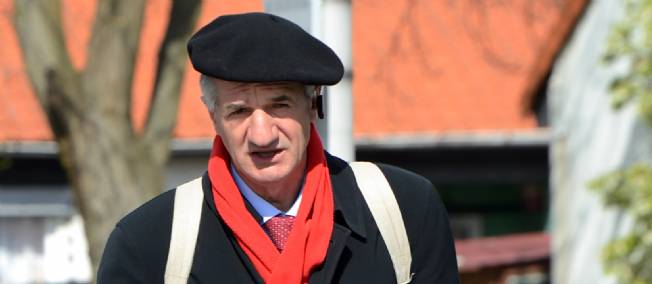
Jean Lassalle, photographed during his walk

A French lawmaker who spent eight months walking a 6,000km “Tour de France” takes his last symbolic steps in Paris on Sunday. He returns to the capital to report on a country that has “little hope for the future”.

“Everywhere I went I witnessed a crisis in the standard of living, a loss of identity and the loss of a sense of a common destiny,” Jean Lassalle, National Assembly member for the Pyrénées-Atlantiques region in southwest France, told Europe 1 radio.

“People would tell me: ‘look at the state you have left our country in’,” he added. “There is no more industry, farming is in crisis, just one in ten children of farmers grudgingly says they want to carry on in agriculture.

“The countryside has lost its perspective, and it isn’t any better in the cities. We all know the state of France’s suburbs, even those that have been rebuilt.”

Lassalle, 58, set out in April and walked an almost uninterrupted route clockwise around France, flying only from Marseille in the south to northern Corsica, and again from Bordeaux in the southwest to Nantes in the northwest.

He said he “needed to get a feeling” for the country, and wrote on his personal blog that he was impressed by peoples’ willingness to speak frankly with him.

“Once they knew what I was doing, I felt a strong sense that they were expressing themselves as a civic duty, choosing their words carefully,” he wrote. “There was a solemnity and a dignity about it, despite everything they had to say.”

Confusion and racism

And what he found was a France confused about its position in a shrinking world, an uncertainty as to the long-term effects of globalisation and a distrust for politicians who, people told him, “do not listen to us at all”.

“We live in a world that is changing out of all recognition,” he told Europe 1. “We [the government] have failed to find ways of explaining to the citizens of this country exactly what this change means.”

Worryingly, he also encountered “latent racism” almost everywhere, “even in the smallest villages”.

“This is racism that seems totally unashamed,” he told Le Monde on Friday. “It is a wholescale rejection of ‘the other’ and often expressed with excessive aggression.”

Lassalle told Le Monde that he was particularly worried about a return of “anti-Semitic rhetoric” that was particularly “linked to wealth”.

On Saturday, Lassalle will walk his final steps, from Place de la Concorde over the River Seine to the National Assembly building in central Paris.

Hundreds of people he met on his walk are expected to accompany him, and to enter the assembly to start a two-day debate on France’s future.

“I will then prepare a parliamentary report on what I learned on my walk, which I will submit to the president at the end of February,” he wrote in his blog. “Meeting people around the country was a deliberate act as an elected member of France’s parliament, as a resistant [to changes that have eclipsed the lives of ordinary people], and a bid to raise awareness of the issues faced by our citizens.

“Things cannot stay the way they are now.” – France24.com

The unity of European culture – a response to Alain de Benoist

roodt_dan_wiki

by Dan Roodt

Last month a very interesting interview appeared with French thinker Alain de Benoist in American Renaissance. One of its main ideas is that we are living in an increasingly fragmented world. As Benoist puts it:

To see solutions we must conceive of globalization as a dialectic. The more the world is homogenized, the more there is rebellion. Thus, the impulse that homogenizes the planet creates new kinds of fragmentation, new kinds of divisions. Sometimes this resistance can be excessive—it can take the form of terrorism, for example.

Benoist’s solution to this is “localism”, that we should think and work locally to create “liberated spaces”. He is also skeptical of politics as such, especially the party-political system and what he calls the “new class” of politicians, financiers and media. The Swiss system of direct democracy exercised at a local level is the best example of localism at work.

In essence, one has to agree with Benoist’s ideas and that peoples all over the world could benefit from a cantonal system whereby power is devolved down to the lowest level where each town or suburb, arondissement and so on, looks after its own education, health, security and economy. Of course, the globalist and centralist powers will resist such change. As we know so well here in South Africa, globalism and centralism are both forms of parasitism extracting wealth and power from citizens.

Donate or subscribe to praag!

Recently I read about an American initiative in Baton Rouge, Louisiana, where a group of people wish to secede and form a new municipality called St. George. Within multicultural societies where people chafe under disparate, conflicting norms and standards, everyone wants to secede from something. Apparently underlying the desire of mostly suburban St. George to become independent from inner-city Baton Rouge, are squabbles over the schooling system, educational standards and the power relations between different racial/ethnic groups.

According to the black mayor of Baton Rouge, “Kip” Holden, the movement for the secession of St. George will fail. He is a member of the “new class” that Benoist speaks of, the global nomenklatura that is to be found in all countries and that sees us all as “the same”, to be mixed together so that ultimately there will only be one global consumer left, consuming the same global brands and having one universal, syncretic religion that will go under different names.

The question is: how do we advance the interests of locals against the powerful centralist bureaucrats, financiers and media moguls? For this struggle is not taking place in a vacuum, but amid the reality of geopolitical and financial power relations.

I daresay Benoist takes a somewhat acerbic view of the USA, referring to naive and contradictory statements by Ronald Reagan and Nelson Rockefeller. Similarly, he is justifiably critical of the absurdities of American feminism, exemplified by Judy Butler. He also questions another myth of American academe, that race and sex “don’t exist because they are social constructs; they are only what your mind says they are”.

Of course, South Africa has been so thoroughly Americanized when it comes to race and what is called “gender” that we know all about the absurd slogan: “Race and sex do not exist, but we must fight racism and sexism”. Even that modish, albeit tragic document known as the new South African constitution, expectorates these clichés in its eleven official languages.

However, if our struggle is to succeed, I believe that we must rise above our mutual gripes with one another. I do not know which is worse: America seen from France or France seen from America. An even worse case of mutual stereotyping and historical hostility is that between the USA and Russia, maintained by the continued existence of enough ICBMs to destroy the planet and most of the population in the northern hemisphere.

I feel so much in agreement with Benoist’s thinking – including his exaltation of smaller identities, tribes, etc. – that I can hardly be critical. But if I do have a critique of sorts it is that there is something very French – “hexagonal” as they say in France – about his view of America. This is no mere chauvinism, but like the rest of us, he is a prisoner of history. I get the sense that the relics of the cold war still influence our view of the world, this very new world with its “multicultural” populations and dependence upon technology and the internet.

In summary, both the internet and the end of the cold war have changed us radically and we should try and look at our problems in a new way, unlike George Soros and the American generals who are still fighting Russia.

Whence the title of this piece: “The unity of European culture.” I specifically omitted any reference to “Western” culture. When I grew up, we were taught at school that South Africa was part of the West, just like Britain, France, the USA or West Germany. Toynbee wrote about that West in his little book The world and the West, but we can safely say that that West is dead now. Increasingly, Europe and America are at loggerheads as the USA, being the sole remaining superpower, feels no need for Western European allies anymore. Instead of an alliance, NATO has become more of a colonial army with local recruits, lording it over Europeans and even extending its reach further and further eastwards, threatening to overwhelm Russia.

I really love America. Its culture of resilience, gun ownership and vestiges of race realism are very attractive, as attractive as European refinement and intellectualism. Benoist too, commends Americans for their honesty in at least keeping racial statistics, saying:

You can go to the government and find race statistics on everything, including crime and social patterns. The collection of these kinds of statistics is forbidden in Europe — certainly in France.

Benoist criticises us for not listening to each other’s music or watching each other’s films. Instead, the whole world just consumes American cultural products, in English or some translated form. But last night I watched a horrible French film that had come out earlier this year, a comedy called Les profs (The teachers).

Fortunately I fell asleep halfway as it was French in name only. It contained the same images of multicultural utopia encountered in Hollywood films, dished up with insipid humour.

The point is valid that, as a friend once put it: “I do not have to visit the USA, because I already have it in my living room.” However, that is not our main problem; being a vociferous critic of anglicisation in South Africa I will be forgiven for saying this.

Our main problem is that the global nomenklatura, the people that Alex Jones from Texas calls “the New World Order”, are applying a policy of “divide and rule” against us. If they have a project, it is one of world domination, a one-world government that will impose multiculturalism and sameness on all of us, whether we like it or not. They will probably have some kind of Spanish Inquisition or Guantanamo Bay torture squad hunting down people who do not accept that race is “social construct” or who cling to local identities and languages, if they do not have that already.

The one thing that I like about American movies is that there is usually one man (or woman, as feminism obliges) fighting the whole of the CIA, US government and system. Naturally, this is entirely unrealistic and fantastical, but at least US individualism still keeps open the possibility of resistance to the anonymous leviathan.

Perhaps the CIA and George Soros’s Open Society Foundation are using Toynbee’s views on Russia to steer their assault on that country. According to Toynbee, despite being Christian, Russia has never been part of the West. Interestingly, Toynbee saw communism in that country as “a Western weapon for waging an anti-Western spiritual warfare”. Despite the vast political changes since, most establishment American observers, both liberal and conservative, will agree with Toynbee’s statement from 60 years ago:

The Russian attitude of resignation towards an autocratic régime that has become traditional in Russia is, of course, one of the main difficulties, as we Westerners see it, in the relations between Russia and the West today. (The World and the West, p. 6)

On the other hand, if ever the CIA and American liberal NGOs had to engineer an orange revolution in Moscow and appoint some or other puppet pro-American leader there as they have done in so many East European countries, it will probably be the final nail in the coffin for all of us. Like no other so-called “Western”leader on the world stage, Vladimir Putin has come out in favour of nationality and sovereignty. So his demise will be a major triumph for the globalists and one-world people.

Over the next decade or three, the population of the African continent will double again while that of Europe will decline, and we may even include in that decline the 200 million white Americans. Already, Europeans make up less than ten percent of the world population, with five percent looming on the horizon.

The challenge for us is to overcome the ideological, military, cultural and linguistic divisions of the past in attempting to conceive of a unified European culture and worldview. Linguists are aware of just how close our languages are to one another. Notwithstanding all the universalist ideology of the European enlightenment, each one of us speaks a Germanic or Latin dialect, sometimes (as in the case of English) a mixture of the two.

I am always struck by the way in which philoligists such as Georges Dumézil, for example, could see European and even Indo-European civilisation as a coherent religious, mythological and cultural whole, stretching far back into history. In this respect, I do not agree with Benoist’s characterisation of America as being somehow “non-European”. And if Calvinism played a role in the USA, did it not influence Switzerland too, the country cited by Benoist as a model for us to look up to?

The juxtaposition between “old Europe” and “new America” does not hold either. Europeans went to the USA, not bereft of a tradition, but very much driven and sustained by one. The republicanism of America’s founding fathers was invented in Europe, notably in France, as we know. Much of American modernism consisted of the application of European avant-garde ideas over there, especially in architecture. For Mies van der Rohe and many others, America was simply a playground for experimenting with European modernity. Unfortunately, many decadent, postmodern ideas first dreamed up in Europe, such as cultural relativism, have also made their way to the USA, where they have informed US-style political correctness. Simone de Beauvoir is probably cited even more than Judy Butler or Andrea Dworkin when it comes to the notion that “patriarchy” must be abolished.

Regarding information technology, we have to recognise the sea change that has taken place and which has contributed to the current “deterritorialization”, to use another French term from Gilles Deleuze which has become globally fashionable. It would be a mistake to think of “Europe” simply as a continent. It is more of a civilisation, a Kultur, an idea, which has unfortunately been bureaucratized and given a bad name by Brussels.

To my mind, it has become high time to conceive of a non-territorial Europe which would include Russia, Serbia, Greece and the rest of the Orthodox world rejected by Toynbee and the classical “Western” theorists. It should include those non-mestizo Spanish-speaking nations of Latin America, as well as Australia and the pockets of European settlement in South Africa and elsewhere.

After all, Pan-Africanism includes everyone of African descent, whether they reside in the USA, the Caribbean, the UK, France or Africa itself. Whereas the anarchic competition between nation states has been a threat to many smaller European cultures, not to mention the cause of many catastrophic wars, Pan-Europeanism might be that ultimate “empire” that would ensure our survival and prosperity, being compatible with localism as Benoist astutely observes.

The tripartite rivalry between America, Europe and Russia is not conducive to European survival in the face of the demographic cataclysm already in motion.

We should support any form of a Eurocentric canton, be it in: Baton Rouge, Louisiana; Pretoria, South Africa; or Marseilles, France.

Donate or subscribe to praag!

South African, French, African foreign ministers to meet today

Paris-0792International Relations and Cooperation Minister Maite Nkoana-Mashabane arrived in Paris, France, yesterday morning, 04 December 2013, where she is leading a South African Government delegation to the France-Africa Summit taking place from 06-07 December 2013.

The summit will be preceded on 05 December 2013 by a meeting of Ministers of Foreign Affairs.

It is expected that the summit will focus on three identified themes; namely (i) Peace and Security, (ii) Economic Partnership and Development and (iii) the Environment.

It is further expected that the summit will examine policies for preventing conflicts, trafficking and piracy, how to deter the formation of armed movements and terrorist groups, and the strengthening of African security mechanisms.

South Africa’s participation at the summit will be informed by its foreign policy, which champions, amongst other things, peace, security and development as well as the African Agenda.

The South African Government delegation to the summit includes Defence Minister Nosiviwe Mapisa-Nqakula and senior officials. – DIRCO press release

France provides maps of Africa’s real borders

africamapsFrance has provided maps from its archives on African borders to the African Union.

France was one of the top colonisers of Africa and was involved in creating borders of most of the countries.

The AU’s Director for Peace and Security, Wane El-Ghassim, says knowing this kind of information will help curb some of the conflicts we still see today.

He says when borders are not clearly defined there is a huge risk of tensions resulting in conflict.

El-Ghassim says borders were defined by treaties signed by colonisers as a result these countries have a lot of information on Africa.

This is why the AU is trying to generate as much information as possible from the colonisers.

Africa has 80 000km of borders, but only 30% are precisely demarcated and this has been a source of disagreements among many countries in the continent.

Meanwhile, Analyst and Senior lecturer at Wits University, Koffi Kouakou, says Africa should not be relying on outsiders to give them information. He says it is important for Africans to have their own information.

France adamant about separating state and Islam

Islamic women protest in France

Riots over a full-face Islamic veil, a woman losing her unborn baby in another similar confrontation and tensions flaring over a supermarket chain’s ad for the end-of-day feast for the Muslim holy month of Ramadan, are almost a daily staple for France.

France’s enforcement of its prized secularism is inscribed in law, most recently in a ban on wearing full-face veils in public. The policy instead may be fueling a rising tide of Islamophobia and driving a wedge between some Muslims and the rest of the population.

Yet ardent defenders of secularism, the product of France’s separation of church and state, say the country hasn’t gone far enough, AP reported.

They want to continue the cause of Voltaire helped and Victor Hugo, with a law targeting headscarves in the work place. Political pressure from a resurgent far-right has increased the tension.

A new generation of French Muslims — which at some 5 million, or about eight percent of the population, is the largest in Western Europe —  are defending mosques, halal food and Muslim religious dress.

Women who wear Muslim apparel “are no longer safe,” said a 26-year-old mother of three living in Trappes, a town south of Paris known for its large immigrant population.

Women wearing Muslim headscarves, suffered three attacks in Reims and three more in Orleans. Investigations and court cases are underway.

Police clashed last week with crowds protesting the arrest of a man who allegedly attacked an officer after his wife was ticketed for veiling her face in public. Dozens of cars were set afire in two nights of unrest in Trappes and an adjoining town. A 14-year-old boy suffered an eye injury.

Weeks earlier, a man allegedly assaulted a pregnant woman and ripped off her veil— one of two separately accosted in the Paris suburb of Argenteuil. She lost her baby days later, although the link with the incident remains unclear.

Interior Minister Manuel Valls insisted that Islam and the French Republic are compatible and denounced “a rise of violence against the Muslims of France.” At a dinner celebrating the end of Ramadan at the Grand Mosque of Paris, he denounced “those who want to make France a land of conquest.”

People told a veiled woman who is of Algerian origin, “If you’re not happy, leave, go home,” she said. But, she pointed out, she was born in France.

Most French people are Catholic, but church attendance has been in decline for decades and secular ideals run deep. With the growth of France’s Muslim population, lawmakers have increasingly turned to legislation to try to stifle public displays of Islamic faith.

In 2004, a law banned “ostentatious” religious symbols in public schools, a measure clearly directed at Islamic headscarves. It has been enforced without resistance.

A two-year-old law banning burqa-style veils from the streets of France has met with more outcry, even though only some 2,000 Muslim women cover their faces. Most Muslim women in France wear neither, as Islam does not Islam does not require face veils or covered head

A report by the Observatory of Secularism, created in 2013 by President Francois Hollande, revealed that a handful of the 705 women stopped by police for covering their faces in public chalked up more than 10 tickets each – two of them more than 25 – suggesting that some are provoking authorities intentionally.

A local official in Nimes, posted on his Facebook account an ad by the Carrefour supermarket chain publicizing “oriental” dishes for the nightly breaking of the fast during Ramadan with the comment, “Our Republic, is it still secular? Everything is on the way out.” The post was hastily removed after an outcry from Muslims.

While several European countries embrace secular values, France has been at the forefront of enforcing them, with the separation of church and state enshrined in law since 1905.

“Laicite,” is the French word for secularism. Associations throughout France work to uphold it. Far-right groups use it as a mantra, and leftists embrace it as well. There is even a secularism prize.

Hicham Benaissa of the National Center for Scientific Research said today’s secularism “appears to be a sort of (protection) against the religious influence of Islam” when “its spirit is to protect the faiths.”

A pre-school has just fired a woman who refused to remove her headscarf. An appeals court ruling in March calling the firing illegal spurred a demand for laws protecting secularism in private companies that would govern, for instance, dress and schedule requirements for prayer time or religious holidays.

A resulting bill to regulate religion in companies, sponsored by the opposition conservatives, failed.

Another report, released in June by the Observatory, tried to tone down the controversy, suggesting that slights to secularism have been exaggerated and dialogue, not a new law, may solve problems.

Some Muslims believe they are being driven away from the mainstream, leading to the growth of private Muslim schools and propelling Muslims to open their own businesses.

The law and the media “with their constant finger-pointing at Muslims are the reason the French population has become aggressive,” one woman said. Because of her robes, she sells cosmetics from her home. “I myself couldn’t apply for a job in an office.”

Sprinboks invincible except for All Blacks

Jean de Villiers in the Springbok jersey

by Barnaby Chesterman

South Africa ended a long, hard season with a bruising victory over France in Paris on Saturday and in so doing reaffirmed the difference between the top two in the world and the rest.

Only one team have beaten the Springboks in 2013 and, barring an unlikely upset in Dublin later on Sunday, New Zealand will record the first ever 100 percent calendar year in the professional era.

While there is no doubt that the world champions, beaten only once in the last two years — a stunning 38-21 defeat to England at Twickenham last November — are the best team in the world, South Africa underlined at the Stade de France that they are clearly the best of the rest.

Although the 19-10 scoreline in Paris was relatively close, it did not tell the full story of a masterful display from South Africa.

Twice they were denied adding to JP Pietersen’s second-minute try by the video review system and, although the French did score through Yoann Huget right at the end of the first period, it came from a rare turnover offered up by the Boks deep in their own 22.

Otherwise they largely controlled territory, if not as much possession, and put such a huge amount of pressure on France deep down in the Les Bleus half that fly-half Remi Tales’s kicking appeared ineffectual.

By contrast Boks fly-half Morne Steyn, and particularly the excellent full-back Willie Le Roux, showed measured tactical nous in keeping France pinned down in their own half with a range of deep, long clearances, perfectly weighted up-and-unders and even a few cunning dinks over the fast approaching backline.

One excellent grubber from Le Roux deserved more than to see Francois Louw beaten to the end zone touch-down by a sliding, scrambling Huget.

In truth, France were really holding on to such a close result rather than knocking on the door and threatening to snatch a victory.

It means that this year South Africa have beaten Australia, Argentina and Scotland at home and away, turned over Six Nations champions Wales, earnt victory against France and defeated Samoa and Italy to boot.

If it wasn’t for the mighty All Blacks, this would possibly be hailed as one of the best South African teams of all time.

Captain Jean de Villiers alluded as much to that when he pointed out just how impressive their recent form has been.

Including last year’s November tests — when they beat Ireland and England, as well as Scotland — South Africa have beaten all of the rest of the top 11 teams in the world at least once in the last year — except New Zealand of course.

“We’re very happy with the last 12 months, if you take the end of the last year as well, that’s 13 (wins) from 15,” said De Villiers.

“It makes it results-wise one of the best years South African rugby’s had in a very long time.”

While the All Blacks’ dazzling brilliance is there for all to admire, it is easy to overlook just how talented the Boks are.

As well as their traditional strengths of power and commitment, and an impenetrable wall of defence, they also have creativity brimming through the side, with pace to spare on the flanks in Pietersen and former world player of the year Bryan Habana.

It was in the rucks and at the breakdown that France found them most effective, though.

“They were more solid than us in the rucks where they managed quite a few turnovers,” said France captain Thierry Dusautoir.

The question now for South Africa, is how to take that next step up and challenge New Zealand for the number one spot.

And that’s a conundrum that De Villiers says they are working on.

“For us (beating France) is not the end of the year, it’s just another step in our journey towards where we want to be and where we’re going.” he said. – AFP

Is France racist? Monkeys, bananas and a black minister

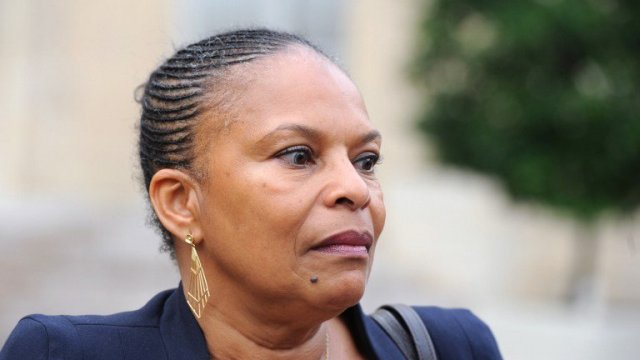
Christiane Taubira
Christiane Taubira

 “Is France Racist?” That was the recent headline in a leading French newspaper, after a far-right magazine compared the country’s black justice minister to a monkey. The incident has triggered self-reflection in France, where the far-right National Front party is ahead is some polls, and figures show a 23-percent rise in reported racist incidents last year.

The front cover of the far-right magazine Minute earlier this month depicted Justice Minister Christiane Taubira with a caption that read: “Clever as a monkey, Taubira gets her banana back” – a play on the French slang for smile.

A Paris court has opened an inquiry into the publication.

Deputy Education Minister George Pau-Langevin described it as an attack on French values. She said she thinks all French people care about the republic because it was built on the rejection of discrimination and racism, and on the equality of all people. That’s why everything that goes against those fundamental principles of the republic harms the republic itself.

Christiane Taubira – who is from French Guiana, an overseas department of France – has been subjected to a series of racial slurs, including being compared to a chimpanzee by a candidate for the right-wing National Front. Taubira said she fears a threat to France’s social cohesion.

There has been a recent change of tone in public debate, said Rainbow Murray, an expert in right-wing French politics at Queen Mary University of London. “There’s always been an underlying racism in France shown by the difficulty in ethnic minority people finding employment. But there’s been perhaps more willingness to express that racism openly in recent months.”

Some observers trace France’s current racial tension back to 2005, when riots occurred in the suburbs of Paris and other cities. Former president Nicolas Sarkozy, then France’s interior minister, described the rioters as “racaille” or scum – crossing a rhetorical line in describing the primarily immigrant communities.

Murray said France has never properly integrated its large immigrant communities. “One thing that’s unique about France compared to the UK and the U.S. and similar examples, is that they’re not multiculturalist. They’re integrationalist. So they deny the existence of difference even when it’s really there. And because of that they don’t have explicit policies capable of coping with race. They don’t even acknowledge race in census data.”

Author and blogger Priscilla Lalisse-Jespersen, an American from Alabama who moved to Paris with her French husband, traces the rise in racism to France’s economic woes. She spoke to VOA via Skype. “Unemployment is rising. The president’s approval is dropping steadily; he’s right now the most unpopular president in French history. France is also afraid of globalization, and they also have a national identity crisis.”

President Francois Hollande has condemned the attacks on Taubira. Rights groups accuse him of a lukewarm reaction – and warn that taboos over public displays of racism are collapsing. – Voice of America

France names suspect in Paris newspaper shooting

Abdelhakim Dekhar
Abdelhakim Dekhar

by Nicolas Gaudichet, Pauline Talagrand

France said Thursday the suspect arrested over this week’s shootings in Paris is a man previously jailed for his role in a “Bonnie-and-Clyde” style multiple murder that gripped the country 20 years ago.

Abdelhakim Dekhar was arrested on Wednesday after a major manhunt following a shooting at the left-wing newspaper Liberation that left an assistant photographer seriously hurt and another at the headquarters of the Societe Generale bank.

His DNA matched samples from the scenes of the attacks, officials said.

“All the evidence today points to his involvement in the events that he has been charged with,” Interior Minister Manuel Valls said.

Dekhar, who is in his late 40s, was convicted in 1998 of buying a gun used in an October 1994 shooting attack by student Florence Rey and her lover Audry Maupin. Three policemen, a taxi driver and Maupin himself were killed in a case that shook France.

He served four years in jail for his role in the killings, and his former lawyers have described him as “enigmatic” and “strange”.

Dekhar was arrested Wednesday evening in a vehicle in an underground parking lot in the northwestern Paris suburb of Bois-Colombes, after apparently trying to commit suicide.

Valls said that “everything appears to point to a suicide attempt”, and sources told AFP Dekhar was semi-conscious when he was found.

The head of the Paris criminal police department, Christian Flaesch, said he was in custody in a “medical environment” and was not in a fit state to speak to investigators.

Valls said investigators would need more information to be able to “understand his motivation”, adding that “one or two letters” had been found.

Investigators said the letters were “confused” and sought to “explain this act.”

In a press conference, Paris prosecutor Francois Molins said the letters spoke of a “fascist plot,” touched on “how suburbs are run” and accused the media of participating in the “manipulation of the masses”.

Molins said Dekhar was in detention for attempted murder and kidnapping.

The arrest came after a witness statement to police, who had on Tuesday released a new photograph of the suspect and received hundreds of calls from potential witnesses.

One of them was a man who had housed the suspect, said a source connected with the investigation.

The witness quoted the suspect as saying “I’ve made a stupid mistake.”

The shooter opened fire with a 12-gauge shotgun at the offices of Liberation early on Monday, hitting a 23-year-old photographer’s assistant as he hauled gear in the lobby, then firing another blast that hit the roof before leaving within seconds.

He then crossed the city to the La Defense business district on its western edge, where he fired several shots outside the main office of the Societe Generale bank, hitting no one.

He hijacked a car and forced the driver to drop him off near the Champs Elysees in the centre of the French capital, before disappearing.

Police say he was the same man who last Friday stormed into the Paris headquarters of a 24-hour TV news channel, BFMTV, briefly threatening staff with a gun before hurrying out.

Dekhar was suspected of being the third man in the so-called Rey-Maupin affair in 1994, which shocked France.

Investigators at the time compared the young couple to the infamous American outlaws Bonnie and Clyde.

Witnesses at the trial in 1998 described him as a mentor to the couple and accused him of exploiting their youth to manipulate them.

He argued that he had been a secret agent in the pay of Algerian security services, charged with infiltrating the radical left in France in search of those acting in coordination with Islamists in Algeria.

In the early 1990s Dekhar was known to hang out at squats used by left-wing radicals and which were often under police surveillance.

Maupin died of injuries sustained during a shootout with police and Rey, a middle-class student hitherto unknown to the police, was tried and sentenced to 20 years in jail. She was released in 2009.

Dekhar was acquitted of armed assault but found guilty of procuring the weapon and sentenced to four years. He was released soon afterwards, having already served his time in pre-trial detention.

This week’s attacks set off a major manhunt and raised concerns about violence against media outlets.

The photographer, who suffered wounds to the chest and stomach, appeared to be in better condition on Wednesday.

Hospital officials said he had regained consciousness and was no longer on an artificial respirator. – AFP

Central African Republic ‘on brink of genocide’

The United States is calling for deeper international involvement to halt violence in Central African Republic, amid growing alarm that the impoverished nation is on the brink of a possible genocide.

US Secretary of State John Kerry on Wednesday unveiled $40 million in new funding to help the country, with the bulk of the aid going to support the African Union-led peacekeeping mission known as MISCA.

“It’s a very, very serious situation right now,” a top State Department official told AFP, asking not to be named.

“It will require extensive, continued and deepened international commitment working with the CAR government to address the humanitarian crisis, to strength MISCA so that it can carry out its security mission, civil protection mission and lay the ground work for” elections set to take place in February 2015, the official added.

In the latest in a long line of rebellions and coups, the Seleka rebel coalition ousted president Francois Bozize in March and put the CAR’s first Muslim leader, President Michel Djotodia, in power.

But the move has unleashed unprecedented sectarian bloodshed, with fighting between the mainly Muslim former rebels who seized power in March and militia groups set up to protect Christian communities, which make up about 80 percent of the population.

The unrest has displaced almost 400,000 of the country’s estimated 4.6 million people, left 2.3 million in need of assistance and some 1.1 million scrambling to find food, according to the latest UN figures.

central-african-republicFrance’s Foreign Minister Laurent Fabius said Thursday that the country was “on the verge of genocide,” while a Kerry deputy told US lawmakers this week that it was in a “pre-genocidal” phase.

“The needs are so extensive, it’s really hard to say one is greater than the others,” the US official said in an interview.

“One area there’s going to be a serious need in over the coming year is in food aid, and that’s because the population has been so terrorized and traumatized by what’s happening in the country, that it’s had a serious impact on the planting season and necessarily that’s going to cause greater food insecurity in the months ahead.”

The US is supporting moves at the United Nations to boost an AU-led force to some 3,652 troops made up of soldiers from Chad, Cameroon, Gabon, Congo-Brazzaville and Equatorial Guinea with a contribution also expected from Burundi.

“The mandate is excessively broad given the very extensive challenge in front of them,” the official said, stressing that it was felt the AU force would be better placed to restore order and stability than a UN peacekeeping mission.

Apart from being quicker to set up and equip, “often the UN missions are more peacekeeping and this is not a peacekeeping situation, this is more enforcement,” he said.

The UN Security Council plans to vote in early December on a resolution to allow CAR’s neighbors, the African Union and France to intervene in the sprawling nation.

French President Francois Hollande said Paris was planning to “significantly increase” its contingent in the country, where it already has 400 soldiers in place to help protect the airport in Bangui and French nationals. – AFP

Soccer: France beats Ukraine 3-0 to qualify for World Cup

France's Karim Benzema (right) shoots and scores the second goal for the team during their 2014 World Cup qualifying second leg playoff football match against Ukraine at the Stade de France in Saint-Denis near Paris Nov 19, 2013.
France’s Karim Benzema (right) shoots and scores the second goal for the team during their 2014 World Cup qualifying second leg playoff football match against Ukraine at the Stade de France in Saint-Denis near Paris Nov 19, 2013.

by Andy Scott

France produced a stunning performance to overturn a two-goal first-leg deficit and qualify for the World Cup finals on Tuesday, beating Ukraine 3-0 in Paris.

In front of a raucous crowd at the Stade de France, Les Bleus took the lead on the night midway through the first half through Mamadou Sakho and levelled the tie on aggregate when Karim Benzema netted from an offside position on 34 minutes.

That strike came shortly after the Real Madrid man had seen a perfectly good goal disallowed, and the controversy continued as Ukraine defender Yevhen Kacheridi was sent off early in the second period.

France made their one-man advantage count as an Oleg Gusev own-goal put them ahead in the tie for the first time in the 72nd minute and Didier Deschamps’ side saw out the rest of the game to win 3-2 on aggregate.

As expected, Deschamps rang the changes, making five in all to his starting line-up from Friday’s 2-0 loss in Kiev, with Raphael Varane, Sakho, Yohan Cabaye, Mathieu Valbuena and Benzema coming in.

For Ukraine, there were three changes, notably in defence, where the banned Oleksandr Kucher and Artem Fedetskiy were replaced by Yaroslav Rakitskiy and Vitaliy Mandziuk respectively.

The visitors must have been braced for a backs-to-the-wall job, but they could scarcely have expected France to play with such a high level of intensity in the first half.

Ukraine were pinned back from kick-off, and goalkeeper Andriy Pyatov turned a Valbuena shot around the post inside three minutes before Paul Pogba headed a Valbuena corner over the bar.

And just as the away side thought they had taken some of the early sting out of the contest, their defence – which had gone eight successive matches without conceding before this game – was finally undone in the 22nd minute.

When a Valbuena set-piece delivery from the right fell to Franck Ribery on the edge of the box, the Bayern Munich man’s shot was blocked by Pyatov, but Sakho was on hand to convert the rebound from a tight angle, the Liverpool defender netting his first goal at international level.

France’s hope turned to genuine belief, and the home fans rose to their feet as a glorious shooting opportunity fell to Pogba on the edge of the box. However, the young midfielder could only blaze his effort over the bar.

Controversy was just around the corner, as Benzema bundled a low Ribery cross from the left into the net at the back post, only for the offside flag to cut short his joy.

It was the wrong decision by the Slovenian officials but remarkably another error on their part allowed France to level the tie on aggregate.

A scramble in the Ukrainian box saw the ball come off Valbuena and fall to Benzema barely six yards out. This time, he was offside but the assistant’s flag stayed down as he gleefully fired home.

Ukraine knew that an away goal would swing the tie right back in their favour, but they scarcely produced an attempt on target in the opening half and their hopes were dealt another massive blow just after the restart as Khacheridi, who had already been cautioned late in the first half, was booked again for a late challenge on Ribery.

Down to 10 men, Ukraine remained a threat and Roman Bezus just missed the target from long range, but France continued to press relentlessly in search of a third goal and they got their reward with under 20 minutes remaining.

When a Patrice Evra shot was pushed out by Pyatov, Ribery returned the ball across the face of goal and unfortunate substitute Gusev turned it into his own net under pressure from Sakho.

Pyatov saved from substitute Olivier Giroud’s header as France sought to put the final outcome beyond doubt, but they held on to secure their ticket to Brazil. – AFP

Soccer: France, Portugal nervous ahead of World Cup match

france_soccerFrance and Portugal, two of Europe’s footballing heavyweights, face a fraught test of nerves on Tuesday with their places at the 2014 World Cup finals at stake.

France, the 1998 world champions, are 2-0 down to Ukraine after the first leg of their play-off ahead of the return in Paris while Portugal, semi-finalists in 2006, take a slender 1-0 advantage to Sweden.

Elsewhere, Greece look well set to make the finals in Brazil next year as they enjoy a 3-1 lead over Romania while Iceland, bidding to become the smallest country to reach the World Cup, are 0-0 with Croatia ahead of their trip to Zagreb.

France are clearly most at risk of failing to qualify for a major championships for the first time since they missed the boat for the 1994 World Cup.

And although Ukraine have lost their previous three play-offs — against Croatia (1998), Germany (2002) and Greece (2010) — they arrive in Paris with a two-goal cushion from the first leg, a psychological advantage and facing a home team smarting from a pasting in the press.

The manner of their defeat in Kiev on Friday prompted the sports daily L’Equipe to write off their chances.

“In terms of what we saw on Friday night … the French would do well just to draw the second leg,” offered the newspaper.

And if they are to overcome the Ukrainians, they will have to do so without Laurent Kolchensky at the heart of their defence after the Arsenal defender was sent off late on following a clash with Oleksandr Kucher as tension spilled over.

France coach Didier Deschamps, who admitted his side were undone by Ukraine’s sheer physicality in the first leg, said: “We’ve got to put them under pressure, to go at them. On Tuesday, we’ve got to be in the battle. We have the ability to turn it round and that’s what we have to do.”

In Solna, near Stockholm, things are more finely poised, with Sweden taking on Portugal in the second leg a goal down from Lisbon, predictably scored late in the game by Cristiano Ronaldo.

Swedish hopes rest even more squarely than ever on the broad shoulders of Zlatan Ibrahimovic, especially with his phenomenal goalscoring record at the Friends Arena, where he has found the net 10 times since the stadium was inaugurated a year ago.

Elsewhere, Greece should complete the formality of qualifying in Bucharest, having racked up a surprising 3-1 advantage from the first leg in Piraeus.

But little Iceland travel to Zagreb with their improbable World Cup dream still just about alive after a desperate draw in the goalless first leg in Reykjavik.

That match saw them fight a constant rearguard action against relentless waves of Croatian attacks after being reduced to 10 men for the last 40 minutes after defender Olafur Skulason was sent off.

Yet they still have everything left to play for and should they achieve the unthinkable and win in Zagreb they would become the fist nation with a population of under a million ever to reach the final stages of the competition.

Will Canada extradite terror accused to France 33 years after the act?

Hassan Diab
Hassan Diab

Canadian Crown attorneys on Tuesday defended key handwriting evidence that led to a decision to extradite a Canadian university professor accused of a deadly 1980 bombing of a Paris synagogue.

Hassan Diab is appealing the 2011 court decision and the Canadian government’s order to extradite the former University of Ottawa sociologist to France, despite the court’s concerns that the case was “weak.”

Diab denies any involvement in the first fatal attack against the French Jewish community since the Nazi occupation in World War II, which left four dead and many wounded.

A dozen or so Diab supporters returned for the second day of the hearing, where the Crown defended Justice Robert Maranger’s decision to allow the handwriting analysis report by Anne Bisotti in the original extradition hearing.

On Monday, defense lawyers worked to discredit Bisotti’s findings — that Diab likely signed a Paris hotel slip under a false identity (Alexander Panadriyu), which was also used to purchase a motorcycle used in the bombing — by saying she failed to use the proper methodology.

But Crown lawyer Janet Henchey said that it is not the job of the extradition judge to establish reliability of the evidence, and that French courts should be relied upon to do the due diligence on the report at a formal trial.

“It may not feel right at first, but that’s because you’re looking at it from the perspective of a Canadian trial. This is not a Canadian trial,” she said.

“There may be safeguards that do not look like ours, but… it’s arrogant for us as a country to think that only our trial process can provide safeguards that are required for due process.”

Henchey also said that the defense never questioned the samples of writing themselves, but rather focused only on whether the methodology was applied correctly, and added that in part, “expense and convenience” are considerations in an extradition case.

Crown attorney Jeffrey Johnston also defended then-justice minister’s Rob Nicholson’s decision not to seek assurances with regards to the origins of the unsourced foreign intelligence that helped link Diab to the bombing.

Johnston said that second-guessing the foreign intelligence would make it appear that Canada was defying the “reciprocity upon which extradition depends.”

Johnston compared Diab’s case to other much-publicized extradition cases, including that of Julian Assange, the founder of WikiLeaks, on allegations of sexual assault in Sweden.

Assange, who was living in Britain at the time, had to make a first appearance in court before any charges could be laid or a trial could be set, but Britain eventually ordered his extradition, deciding it was “consistent with the commencement of criminal prosecution,” said Johnston.

The Crown also targeted the defense’s suggestion that the unsourced intelligence was attained through torture and information-sharing deals with Syria. Johnston referred to it as “speculation” and said there were no “reasonable grounds” to suspect it.

At the close of the hearing, Diab lawyer Marlys Edwardh reiterated that there were inconsistencies with witness descriptions of the suspect –hair colour and height among them. She also reinforced the view that Nicholson had shirked his duty in not seeking out more information about the source of France’s intelligence.

“When the minister realizes that… (Diab) is going to be sent to stand trial on evidence from foreign intelligence agencies that will remain untouchable, and its sources will remain unknowable, we know that violates the principles of justice.” – AFP

French in 17th-century red bonnets destroy ecotax radars

French farmers in Brittany, wearing red bonnets, protest against the Ecotax

The French government scrambled Tuesday to contain anger over a proposed environmental tax as protesters continued to destroy radars set up to help collect the levy, in a revolt that shows no sign of abating.

Protests over the new “ecotax” on trucks, which aims to encourage environmentally friendly commercial transport, kicked off in earnest last month in the northwestern region of Brittany and eventually forced the government to backtrack and suspend the levy.

Wearing red bonnets, the symbol of a 17th-century anti-tax campaign in Brittany, the protesters — small business owners, fishermen and food industry workers — marched in big, sometimes violent, rallies in the region, which has already been crushed by job cuts and would be hard hit by the new tax.

Some destroyed radars set up in advance along roads to screen passing vehicles and determine whether they need to pay the tax, which would apply to French and foreign vehicles carrying goods weighing over 3.5 tonnes.

Under pressure to rein in its state deficit, France’s Socialist government has announced about 3 billion euros ($4.1 billion) in tax increases for next year, and protests in Brittany come on top of wider opposition to tax hikes.

The ecotax was actually adopted by the previous right-wing UMP government in 2009 but its implementation had repeatedly been put off.

And while the Socialist government suspended the levy last week over the unrest, protesters asking for the tax to be completely abandoned have continued to destroy radars, mostly in Brittany but in other parts of the country too.

On Tuesday, the transport ministry said 11 such radars had been vandalised since the beginning of the protest movement, as had four big overhead road structures equipped with cameras and radio receptors.

This equipment would identify trucks liable for the tax thanks to a GPS box installed inside the vehicles.

Controversy has also started to swirl around Ecomouv’, the firm contracted by the previous government to collect the tax, amid “questions” over how the company was awarded the contract.

Finance Minister Pierre Moscovici on Tuesday said the contract signed with the firm — which is majority owned by Italian company Autostrade per l’Italia — would have to be renegotiated.

“We can question the fact that the collection of a national tax was handed over to a supplier with foreign origins,” he said.

And while protests have so far been concentrated in Brittany, there is concern that the unrest may spread to other parts of France.

Last week, market gardeners staged a rally in a region near Brittany to demand an end to the levy, and several ecotax radars have been destroyed in other parts of France. – AFP