Violence explodes in black US cities

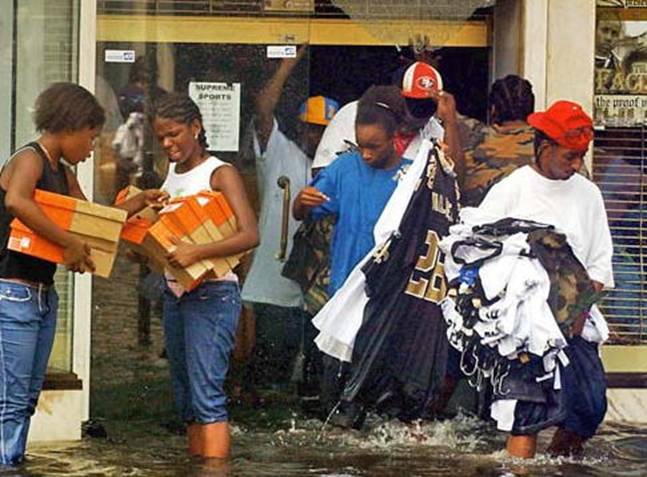
Black Mobs on a Rampage

As more and more Americans across the country become impoverished by rising costs for essential goods, falling wages, job losses, and an unraveling social safety net, those with nothing left to lose are becoming more daring, more aggressive and more ruthless.

Nowhere is this as apparent than in the cities of Chicago, where police have compared the explosion in violence to a tribal warfare akin to what we’ve seen in Iraq or Afghanistan, and Detroit, Michigan, where acres upon acres of dilapidated homes have been razed and police have simply stopped responding to emergency calls in certain areas.

The rule of law is steadily collapsing, and in due time you may see it in your city:

Even the old-timers in Detroit never have seen anything like this… A mob of 40 black people moved into a convenience store and will not leave.

They say they now own it. They eat. Smoke. Cuss.Threaten. Spit. Rob. Sell drugs. All on video.

Police, ministers, neighbors, the store owner and just about everyone else seems powerless to stop them.

“It’s a Bad Crew gas station,” said one of the mob to the local Fox affiliate. “If you don’t know what that is, I can’t even tell you.”

The owner calls police, but nothing happens. The police “come here and then they leave. Two minutes later they (the mob) are back.”

Source: WND

Also: Mob Beats Detroit shopkeeper:

“I am shocked he is still alive,” said the store owner. “They came into the gas station and said ‘we own this. This is our hood. This is our gas station. We are going to take whatever we want.’ It’s a war zone.”

We are living in a society where legislation and law enforcement have been aimed squarely at law abiding Americans while criminals are allowed to do as they please. As criminals realize they can indiscriminately pillage and attack innocents without being held to account under existing laws, we can fully expect this trend to spread to currently peaceful neighborhoods. At some point the violence will simply overwhelm local police departments.

At that point, it’ll be up to each individual American to look out for themselves and their families. Or, things will get so bad that the government will announce ‘temporary’ local, state or national emergencies, declare martial law and deploy military personnel on the streets of America in response to the disturbances and rampant crime waves.

Whatever the outcome, those who play by the rules, follow the laws, and respect the individual rights of others will be the losers.

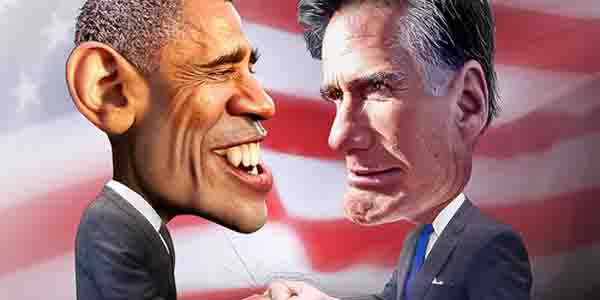
Romney-Obama debate aggressive

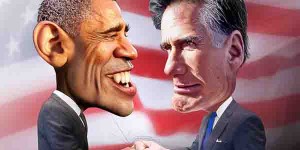
DENVER (AP) — In a showdown at close quarters, an aggressive Mitt Romney sparred with President Barack Obama in their first campaign debate Wednesday night over taxes, deficits and strong steps needed to create jobs in a sputtering national economy. “The status quo is not going to cut it,” declared the Republican challenger.

Democrat Obama in turn accused his rival of seeking to “double down” on economic policies that actually led to the devastating national downturn four years ago — and of evasiveness when it came to prescriptions for tax changes, health care, Wall Street regulation and more.

With early voting already under way in dozens of states, Romney was particularly assertive in the 90-minute event that drew a television audience likely to be counted in the tens of millions — like a man intent on shaking up the campaign with a little less than five weeks to run.

He seemed at ease in debate with the man who has been in the White House for four years. “It’s fun, isn’t it?” Romney said. In a rare post-debate concession, some Democratic strategists not involved in the campaign conceded the president was not at his best and missed opportunities to challenge his rival.

The former Massachusetts governor virtually lectured Obama at one point after the president accused him of seeking to cut education funds. “Mr. President, you’re entitled to your own airplane and your own house, but not your own facts,” he said.

The economy dominated the evening, as it has the race for the White House all year. Pre-debate opinion polls showed Obama with a slight advantage in key battleground states and nationally.

Romney said he had plans to fix the economy, overhaul the tax code, repeal Obama’s health care plan and replace with a better alternative, remake Medicare, pass a substitute for the legislation designed to prevent another financial crash and reduce deficits — but he provided no new specifics despite Obama’s prodding.

Said Obama: “At some point the American people have to ask themselves: Is the reason Governor Romney is keeping all these plans secret, is it because they’re going to be too good? Because middle class families benefit too much? No.”

The two men debate twice more this month, but they were first going their separate ways on Thursday. Obama had campaign stops in Colorado and then Madison, Wis., while Romney was booked into Virginia. All three states are among the nine battlegrounds likely to settle the race.

At times the debate turned into rapid-fire charges and retorts that drew on dense facts and figures that were difficult to follow. The men argued over oil industry subsidies, federal spending as a percentage of the GDP, Medicare cuts, taxes and small businesses and the size of the federal deficit and how it grew.

Obama sometimes seemed somewhat professorial. Romney was more assertive and didn’t hesitate to interrupt the president or moderator Jim Lehrer, who seemed to struggle to maintain control.

The wonky tone of the debate was a stark contrast to the harsh, broad-brush and sometimes personal attacks the two men make in person and in multimillion-dollar television advertising.

At the same time, Romney managed to make some points by personalizing his comments with recollections of people he said he had met on the campaign trail. In another folksy reference, Romney told Lehrer, a veteran of the Public Broadcasting Service, that he would stop the federal subsidy to PBS even though “I love Big Bird.”

Generally polite but pointed, the two men agreed about little if anything.

Obama said his opponent’s plan to reduce all tax rates by 20 percent would cost $5 trillion and benefit the wealthy at the expense of middle income taxpayers.

Shot back Romney: “Virtually everything he just said about my tax plan is inaccurate.”

The former Massachusetts governor and businessman added that Obama’s proposal to allow the expiration of tax cuts on upper-level income would mean tax increases on small businesses that create jobs by the hundreds of thousands.

The two campaign rivals clasped hands and smiled as they strode onto the debate stage at the University of Denver, then waved to the audience before taking their places behind identical lecterns.

There was a quick moment of laughter, when Obama referred to first lady Michelle Obama as “sweetie” and noted it was their 20th anniversary.

Romney added best wishes, and said to the first couple, “I’m sure this is the most romantic place you could imagine, here with me.”

Both candidates’ wives were in the audience.

Without saying so, the two rivals quickly got to the crux of their race — Romney’s eagerness to turn the contest into a referendum on the past four years while the incumbent desires for voters to choose between his plan for the next four years and the one his rival backs.

Romney ticked off the dreary economic facts of life — a sharp spike in food stamps, economic growth “lower this year than last” and “23 million people out of work or stropped looking for work.”

But Obama criticized Romney’s prescriptions and his refusal to raise taxes and said, “if you take such an unbalanced approach then that means you are going to be gutting our investment in schools and education … health care for seniors in nursing homes (and) for kids with disabilities.”

Not surprisingly, the two men disagreed over Medicare, a flash point since Romney placed Wisconsin Rep. Paul Ryan on his ticket.

The president repeatedly described Romney’s plan as a “voucher program” that would raise out-of-pocket costs on seniors.

He continued, directly addressing the voters at home: “If you’re 54 or 55 you might want to listen because this will affect you.”

Romney said he doesn’t support any changes for current retirees or those close to retirement.

“If you’re 60 or 60 and older you don’t need to listen further,” he said, but he contended that fundamental changes are needed to prevent the system from becoming insolvent as millions of baby boom generation Americans become eligible.

Romney also made a detailed case for repealing Obamacare, the name attached to the health care plan that Obama pushed through Congress in 2010. “It has killed jobs,” he said, and argued that the best approach is to “do what we did in my state.”

Though he didn’t say so, when he was governor Massachusetts passed legislation that required residents to purchase coverage — the so-called individual mandate that conservatives and he oppose on a national level.

Romney also said that Obamacare would cut $716 billion from Medicare over the next decade.

The president said the changes were part of a plan to lengthen the program’s life, and he added that AARP, the seniors lobby, supports it.

With a two-minute closing statement, Obama said he had spent his first four years in office fighting for those in the middle class and those seeking to make it there. “If you’ll vote for me, I’ll fight just as hard in my second term,” he said.

Romney was as critical of Obama’s tenure as he was the moment the two men walked onto the stage.

If the president is re-elected, he predicted continued economic trouble for the middle class, chronic unemployment, higher costs for health insurance and “dramatic cuts to the military.”

Obama took office in the shadow of an economic crisis but promised a turnaround that hasn’t materialized. Economic growth has been sluggish throughout his term, with unemployment above 8 percent since before he took office.

The two presidential rivals also are scheduled to debate on Oct. 16 in Hempstead, N.Y., and Oct. 22 in Boca Raton, Fla.

Vice President Joe Biden and Republican Rep. Paul Ryan of Wisconsin have one debate, Oct. 11 in Danville, Ky. Both men have already begun holding practice sessions.

Hanekom becomes Minister of Science and Technology

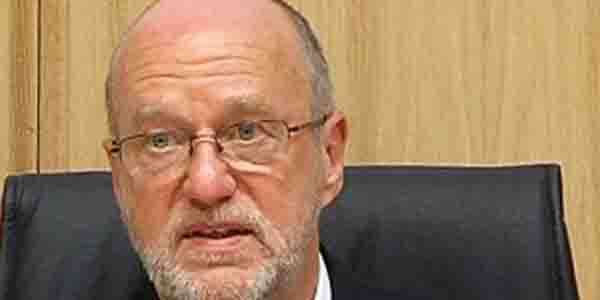
Derek Hanekom

Newly-appointed Science and Technology Minister Derek Hanekom will continue to steer South Africa towards a knowledge economy, his department said on Wednesday.

“Hanekom is familiar with the portfolio of science and technology and he will continue with the drive to steer the country towards a knowledge economy,” director general Phil Mjwara said in a statement.

Hanekom’s appointment and that of his predecessor Naledi Pandor as minister of home affairs were announced earlier in the day.

President Jacob Zumka said in a statement: “They have distinguished themselves in their current portfolios and I am confident that they will do exceptionally well in their new responsibilities as well. I wish them all the best.”

The department thanked Pandor for her leadership, her enthusiasm for science and technology and the role she played in South Africa’s successful bid for the Square Kilometre Array.

Hanekom said it had been a privilege working with Pandor.

“I will build on the foundation laid by my predecessors, including the former minister of science and technology, Mosibudi Mangena,” he said in a statement.

Nkosazana Dlamini-Zuma resigned as home affairs minister last month to chair the African Union Commission in Addis Ababa, Ethiopia.

Hanekom will be sworn in as minister at the Union Buildings, in Pretoria. at 10am on Thursday. – Sapa

Five trucks burning in Kempton alone

Two more trucks were set alight in Kempton Park in the ongoing truck driver strike, bringing the total to five.

The two latest incidents took place on Tuesday afternoon and early on Wednesday morning.

A burning eight-ton truck caused peak hour chaos at the intersection of André Greyvensteyn and Pretoria roads in Isando on Tuesday afternoon at around 4pm.

This incident caused truck drivers on the R24, which runs parallel to André Greyvensteyn, to make U-turns on the highway, travelling in the yellow lane against oncoming traffic.

“About 11 trucks either stopped next to the road or made U-turns and travelled against oncoming traffic to avoid contact with strikers. We escorted the trucks safely to their destinations,” Insp Kobeli Mokheseng, metro police spokesman, said.

“No strikers were arrested on the scene but the police are investigating the incident with the help of CCTV cameras in the area,” Mokheseng said.

Mr Kobus du Toit, a Van Riebeeck Park resident, witnessed about 15 strikers stoning a truck at the bridge on the P91 near Pretoria Road on Wednesday morning at 7.15am.

They then poured petrol onto it and set it alight. He said the strikers ran away immediately afterwards.

According to Mokheseng the truck was deserted when the metro police arrived. Both the driver and the strikers were gone.

The road remained closed until about 9am.

In the meantime, Mpact Recycling, formerly Mondi Recycling, said, as a result of a number of violent incidents and intimidation involving trucks in and around Johannesburg, a disruption in its paper collection may occur.

“While thankfully no one has been injured, the safety of our drivers is of paramount importance. As a result we are treating the current areas identified, which include the industrial areas of Boksburg, Kempton Park and Jet Park, with caution,” a spokesman said.

“We intend to continue with paper collections in all residential areas but efforts may be somewhat disrupted due to on-going violence.”
A burning eight-ton truck caused peak hour chaos at the intersection of André Greyvensteyn and Pretoria roads in Isando on Tuesday afternoon at around 4pm.

This incident caused truck drivers on the R24, which runs parallel to André Greyvensteyn, to make U-turns on the highway, travelling in the yellow lane against oncoming traffic.

“About 11 trucks either stopped next to the road or made U-turns and travelled against oncoming traffic to avoid contact with strikers. We escorted the trucks safely to their destinations,” Insp Kobeli Mokheseng, metro police spokesman, said.

“No strikers were arrested on the scene but the police are investigating the incident with the help of CCTV cameras in the area,” Mokheseng said.

Mr Kobus du Toit, a Van Riebeeck Park resident, witnessed about 15 strikers stoning a truck at the bridge on the P91 near Pretoria Road on Wednesday morning at 7.15am.

They then poured petrol onto it and set it alight. He said the strikers ran away immediately afterwards.

According to Mokheseng the truck was deserted when the metro police arrived. Both the driver and the strikers were gone.

The road remained closed until about 9am.

In the meantime, Mpact Recycling, formerly Mondi Recycling, said, as a result of a number of violent incidents and intimidation involving trucks in and around Johannesburg, a disruption in its paper collection may occur.

“While thankfully no one has been injured, the safety of our drivers is of paramount importance. As a result we are treating the current areas identified, which include the industrial areas of Boksburg, Kempton Park and Jet Park, with caution,” a spokesman said.

“We intend to continue with paper collections in all residential areas but efforts may be somewhat disrupted due to on-going violence.” – looklocal Kempton Park

Living in sewage

A daily sight in Gauteng

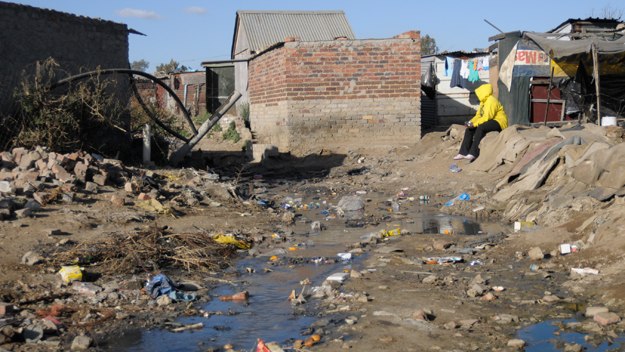
Extension 20 residents of Lebohang in Leandra are up in arms over a blocked sewerage pipe in their yard that has been making their lives miserable for the past four years.

The stench has forced them to cover their noses with a cloth and scarves daily.

Ms Leya Mahlangu (55) said the pipe has burst so often that officials now react negatively every time she complains.

She said the pipe used to burst at least twice a week in the beginning.

“This has now turned into a nightmare.

“The pipe bursts almost daily.”

Ms Mahlangu is used to seeing human waste in her yard daily.

She cannot hang her laundry outside because she has to walk in the sewage.

Ms Mahlangu complained that even her neighbours cannot come near her house.

“I do not know what I did to live like this.

“I am tired of complaining because it seems I am going to live in these conditions until I die,” said Ms Mahlangu.

Her neighbour, Ms Betty Skosana, said her house is surrounded by human waste and other waste coming from the burst pipe running into her yard.

“I have complained to the municipality about this, without any success.”

Ms Skosana said when it rains, the yard becomes more flooded.

“I cannot open windows and doors because of the terrible stench.

“We need help because we cannot take it anymore.

“We are always sick.

“We sometimes cannot go outside or cook.”

Mr Themba Motlhankana, Head of Marketing and Communications of the municipality, said this matter has been referred to their Department of Water and Sewer.

“We assure the affected residents that it is receiving the necessary attention.” – looklocal Eastern Highveld

ANCYL wants Motlanthe

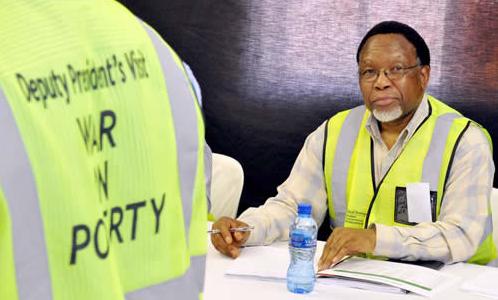
Kgalema Motlanthe

Deputy President Kgalema Motlanthe is the ANC Youth League’s choice for the position of ANC president, it said on Wednesday.

It would nominate him for this post at the African National Congress’s elective conference in Mangaung in December, ANCYL spokeswoman Khusela Sangoni-Khawe said in a statement.

“We are calling on all our structures and ANC branches… to ensure that our generational (sic) mission is fulfilled and that… tried, tested and competent comrades are elected.”

The ANCYL’s candidate for ANC secretary general was former ANCYL leader Fikile Mbalula, and for deputy president ANC treasurer Mathews Phosa or Human Settlements Minister Tokyo Sexwale. Sexwale could also be nominated as treasurer general.

The names of North West Premier Thandi Modise, Arts and Culture Minister Paul Mashatile, and former ANC deputy secretary general Thenjiwe Mtitso were also put forward.

Sangoni-Khawe said: “Primarily, the kind of political leadership that we need is leadership that adheres to our political programme for economic freedom in our lifetime.”

The next leadership needed to take a firm stand on economic policy to realise the Freedom Charter.

“What scares any investor is not nationalisation of mines or expropriation of land without compensation, but an endless discussion on the aforementioned.”

A leader needed the ability to inspire people and reinforce confidence in the ANC and transformation.

In the run-up to the elective conference in December, the party needed to take a stand against political violence and intimidation, she said.

“The ANC must act decisively to ensure that all comrades are afforded an opportunity to voice, without fear or favour, their preferences on leadership without the spectre of victimisation and even death hanging over them.” – Sapa

Dutch show courage in Zim

Zanu-PF thugs threaten white mother

Dutch farmers want Zimbabwe to pay them compensation. White farmers were forced off their land during from 2000 to 2002 when the land grabbing started in all earnest.

Radio Netherlands reported on Wednesday that the farmers took their case to the International Centre for the Settlement of Investment Disputes (ICSID), a Washington-based court which operates under the aegis of the World Bank.

Earlier this year, Zimbabwe finance minister Tendai Biti promised payment but has not held his promise, despite a letter from the Dutch foreign minister in August asking him to honour his word.

The ICSID already ruled in favour of the Dutch in 2009 and ordered Zimbabwe to pay up €8.8m in compensation, to be increased by 10% for each year since the illegal anti-white “reforms”.

According to the report, the group is now entitled to a sum of more than €23m and the Dutch government has been pressuring Zimbabwe over the past two years to fulfil its international obligations. A special envoy has been appointed to negotiate with Zimbabwean officials.

“We wanted to take action earlier, but decided to wait for Biti’s proposal,” the group’s chairperson Lion Benjamins was quoted as saying. “But now we’re sick of waiting, so we have decided to take steps to show Zimbabwe we’re serious.”

The group lobbying European parliamentarians in an attempt to ensure the EU refuses to lift its sanctions on Zimbabwe until the compensation is paid. They are also lobbying the British government to release frozen assets of the Robert Mugabe regime in order to foot the land grab bill.

Africans first in penis size

The scientific journal Personality and Individual Differences has recently published research on the average erect penis lengths of men around the world, and according to the study, the men of the Republic of Congo are the biggest at an average penis length of 18 cm.

The study ranked 113 nationalities.

British men were ranked 78th with an average length of 13.9 cm, and Americans were behind the Brits (and the Canadians, Spaniards, French, Australians and Russians,) at 12.9 cm.

By continent, African men were found to have the largest penises, while north-east Asians are the smallest.

Among European countries, the men of Iceland were deemed the biggest.

North Korean men fell short, with the average being 9.6 cm.

The research was carried out by Dr Richard Lynn, Emeritus Professor of Psychology at Ulster University.

Though the study may have peaked people’s interest, it’s raised many eyebrows too with critics claiming that the study is flawed, as he used some data from websites.

Although the recent survey plays directly into ethnic stereotypes, sexuality researchers Masters and Johnson explained that penis size really has no effect on female satisfaction, according to The Inquisitor.

The Telegraph reported that Professor of methodology at Holland’s Tilburg University Jelte Wicherts said: “This is a brave paper in a controversial area but the data has no methodology.”

Medical Daily says penis size seems to be a bit of a preoccupation for men, causing a healthy industry that claims to have various methods of enlarging the male organ. There is a significant number of men who claim to have small penises but are in fact quite normally endowed, the report says.

It says penile enhancements can come with a host of complications and side effects.

Here are a few of the average penis sizes by country in centimetres:

Republic of Congo, 18
Ecuador, 17.7
Ghana, 17.2
Colombia 17
Iceland 16.5
Italy 15.7
South Africa 15.2
Sweden 14.9
Greece 14.7
Germany 14.4
New Zealand 13.9
UK 13.9
Canada 13.9
Spain 13.9
France 13.4
Australia 13.2
Russia 13.2
USA 12.9
Ireland 12.7
Romania 12.7
China 10.9
India 10
Thailand 10
South Korea 9.6
North Korea 9.6

Were Afrikaners ‘dirty African peasants’?

by Dan Roodt

Pauline Morris in Boer women and children died ‘due to backwardness wants to “open up a critical debate on the realities of the Boer War concentration camps”, as part of the wider “de-mythologising” of South African history.

I can only say: “Bring it on!” Let us open the archives and reread the tens of thousands of letters and other evidence that have been gathering dust for over a hundred years. In fact, I recently visited the archives in Pretoria and was the first person ever to peruse some of the files related to the barbaric destruction inflicted by Britain on each and every farm and household in the Transvaal and especially the Free State. Some, but not all, victims received derisory compensation for their losses after the war.

To some extent, dr. Elma Ross has already revealed the true nature of the camps by describing her own family history, characterising the British as “terrorists”. Britain was a signatory to the Hague Convention of 1899, a forerunner of the Geneva Conventions prohibiting war and atrocities upon civilians. The Hague Convention entered into force on September 4, 1900, just in time to apply to the form of “total war” that Kitchener and Roberts waged upon the entire Boer population during the second, non-conventional phase of the war.

There can be no doubt that, were it not for the policy of “reconciliation between the two white races” followed after the war, culminating in Union in 1910, Britain would have been prosecuted for war crimes under the Hague Convention, just like Germany was after World War II. Some Afrikaner groups believe that Britain could still be prosecuted even today. At the very least Britain should be made to acknowledge its war crimes at the European level, similar to demands by former French President Chirac that Turkey should “recognise its past” and the Armenian genocide (1915-23) before being able to join the EU.

Whatever the sophistries thought up these days by British historians and their colleagues at jingoist institutions like the University of Cape Town where Elizabeth van Heyningen is apparently a professor of history, it cannot be denied that the camps formed part of a military operation. That they were partly successful in breaking Boer resolve to defend their sovereignty, is also widely acknowledged.

The jingoist case for Afrikaner women and children “dying due to ignorance and lack of hygiene” seems to rest upon the wider English belief (or myth?) that pioneer Afrikaners in the nineteenth century were not, as Prof. Elizabeth van Heyningen puts it in one of her journal articles, “civilised Europeans” but “dirty African peasants”.

That these “dirty African peasants” were literate enough to write letters and diaries about their war and concentration camp experiences and that their “civilised” British captors found it necessary to destroy their pianos and other musical instruments while burning down their homes, seem to contradict many a confident English stereotype.

Perhaps we should also enquire about the hygienic habits of Johannesburg’s much-admired uitlander population in the 1890s when the outbreak of syphilis relating to widespread prostitution presented a major public health problem to Paul Kruger’s Republican government.

The British were terrorists

British Terrorism Against Boer Civilians, cover of Dr. Elma Ross's book

by Dr Elma Ross, Wynberg, Cape Town

The letter by Pauline Morris, Anglo-Boer war myth, refers.

It is indeed necessary to debate issues concerning the concentration camps of the Anglo-Boer War.

My grandparents were in the Bethulie and Aliwal North camps as children, and they could never shake off the horror that they experienced. They went from healthy homes with everything they needed to situations of starvation and extreme thirst (children were sometimes deprived of water for a full day).

Their suffering motivated me to translate the stories of some of the survivors of those camps. I also point out how the children experienced the symptoms due to lack of food when they would slowly starve to death. I called the book British Terrorism against Boer Civilians, because the actions of the British soldiers meet the criteria for terrorism.

[ad 1]

The symptoms of fear and starvation are discussed, as well as the psyche of the soldiers that would, for example, force children to sleep in the mud or deny women the use of toilets. Years spent in the Middle East enabled me to show the difference between the actions of the US in building up Middle East societies after the discovery of oil, versus the ways in which Britain destroyed the Boer republics by means of the concentration camps.

The movie, Die Wonderwerker, points out that some people “were never the same again”; that some parents were too traumatised to look after their children, and had to farm them out to strangers. With more research in epigenetics, possible damage to future generations should also be considered. I would suggest descendants of survivors of those camps be consulted, before it is too late.

It is indeed time to discuss the damage the camps did to the psyche of the Boer people. But, I would urge Ms Morris to visit the camps, and to talk to us — not to strangers who had no family in those camps.

Don’t poke fun at a black man!

The Pot Smokers

Credit R. Wallace “Wally” Hudson, chairman of the Mecklenburg County (Va.) Republican Committee, with demonstrating how new social media platforms can broadcast ancient hates.

The Post reported this week that the county GOP’s Facebook page had displayed for months photos portraying President Obama as a witch doctor, a caveman and a drug dealer.

Virginia’s Republican Party chairman, Pat Mullins, ordered the offensive photos be taken down. But Hudson, who acknowledged posting most of the images, stood his ground, saying he didn’t see what all the fuss was about. “We know our regular readers, who are good conservatives,” he told The Post on Tuesday. “They’re gonna get a kick out of it.”

Sadly, the Mecklenburg GOP’s disgusting images—which have since been removed—are not an isolated case of ugliness.

Baylor University assistant professor Mia Moody did a study of social media stereotyping of Barack and Michelle Obama; her findings appeared in the journal New Media & Culture.

Moody researched hundreds of Facebook groups and pages. She found numerous examples of the president and the first lady being targeted with racist and sexist rhetoric that, not surprisingly, also indirectly spread hatred toward women and blacks.

Moody found that some Facebook pages build on ideas that black people are different from members of the dominant group. Several photos showing Michelle Obama dancing drew comments about her “always jigging.”

One group called “Obama Sucks” primarily served as an outlet to post fake photos of the president. One picture featured him wearing a bandanna and gold teeth. The caption: “OBAMA Going For The African American Vote.”

Moody found that many Facebook hate pages also focused on cultural narratives. Some photos depict Obama or his family as animals, particularly apes. One picture showed male and female apes holding an infant ape with Obama’s face superimposed on it.

Tasteless. Disrespectful. – Colbert King, Washington Post

Chasing non-white votes

Trying very hard

Republican presidential candidate Mitt Romney says he would honor temporary work permits for young illegal immigrants who were allowed to stay in the U.S. because of a decision by President Barack Obama.

Romney told The Denver Post, in an interview appearing in Tuesday’s edition, that people who are able to earn the two-year visas to stay and work wouldn’t see them revoked under a Romney administration.

“The people who have received the special visa that the president has put in place, which is a two-year visa, should expect that the visa would continue to be valid. I’m not going to take something that they’ve purchased,” Romney told the Post, promising to put a comprehensive immigration reform plan into place before those visas expire.

In June, Obama issued a new policy that allows some young illegal immigrants who were brought to the U.S. as children to avoid deportation. Romney criticized Obama for circumventing Congress to make the change a few months before the presidential election.

During the Republican presidential primary, Romney said he would veto legislation to provide a path to citizenship for some of the young people who benefited from Obama’s new policy.

The Denver Post interview comes as Romney and Obama are fighting a heated battle for Colorado, whose significant Hispanic population could determine which candidate receives the state’s nine electoral votes.

Obama’s other race speech

The Entitlement Crowd

In a video obtained exclusively by The Daily Caller, then-presidential candidate Barack Obama tells an audience of black ministers, including the Rev. Jeremiah Wright, that the U.S. government shortchanged Hurricane Katrina victims because of racism.

“The people down in New Orleans they don’t care about as much!” Obama shouts in the video, which was shot in June of 2007 at Hampton University in Virginia. By contrast, survivors of Sept. 11 and Hurricane Andrew received generous amounts of aid, Obama explains. The reason? Unlike residents of majority-black New Orleans, the federal government considers those victims “part of the American family.”

The racially charged and at times angry speech undermines Obama’s carefully-crafted image as a leader eager to build bridges between ethnic groups. For nearly 40 minutes, using an accent he almost never adopts in public, Obama describes a racist, zero-sum society, in which the white majority profits by exploiting black America. The mostly black audience shouts in agreement. The effect is closer to an Al Sharpton rally than a conventional campaign event.

Obama gave the speech in the middle of a hotly-contested presidential primary season, but his remarks escaped scrutiny. Reporters in the room seem to have missed or ignored his most controversial statements. The liberal blogger Andrew Sullivan linked to what he described as a “transcript” of the speech, which turned out not to be a transcript at all, but instead the prepared remarks provided by the campaign. In fact, Obama, who was not using a teleprompter, deviated from his script repeatedly and at length, ad libbing lines that he does not appear to have used before any other audience during his presidential run. A local newspaper posted a series of video clips of the speech, but left out key portions. No complete video of the Hampton speech was widely released.

Obama begins his address with “a special shout out” to Jeremiah Wright, the Chicago pastor who nearly derailed Obama’s campaign months later when his sermons attacking Israel and America and accusing the U.S. government of “inventing the HIV virus as a means of genocide against people of color” became public. To the audience at Hampton, Obama describes Wright as, “my pastor, the guy who puts up with me, counsels me, listens to my wife complain about me. He’s a friend and a great leader. Not just in Chicago, but all across the country.”

By the time Obama appeared at Hampton, Jeremiah Wright had become a political problem. Wright told The New York Times earlier that year that he would no longer be speaking on the campaign’s behalf because his rhetoric was considered too militant. And yet later in the Hampton speech Obama explicitly defends Wright from unnamed critics, a group he describes as “they”: “They had stories about Trinity United Church of Christ, because we talked about black people in church: ‘Oh, that might be a separatist church,’” Obama said mockingly.

There was an article in the US World Report regarding the orderly behavior of the Japanese citizens and the absence of looting after the earthquake, tsunami and nuclear nightmare.

Social scientists were baffled by the total non-existence of looting and savage behavior in Japan considering the magnitude of this catastrophe. They conferred with human study organizations as well as sociology experts throughout the United States. Japan lacks diversity, was the conclusion.

Race dominates US election debate

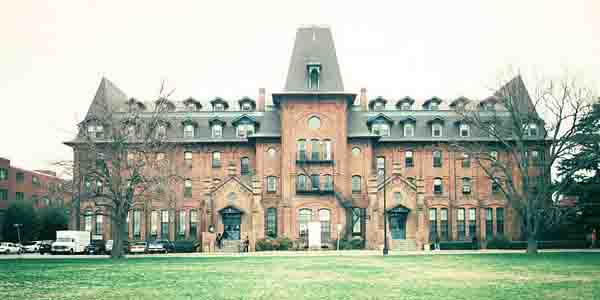
Hampton University, a historically black institution

WASHINGTON (AP) — Conservatives on Tuesday used a speech President Barack Obama delivered as a candidate in 2007 to accuse him of using racially charged rhetoric.

“There’s no way you can listen to this speech and not hear it as a deliberately divisive speech that pits Americans against each other and does so largely with racial innuendoes that are very, very clear when you hear the speech,” former Republican presidential candidate Newt Gingrich said on Fox News, which aired segments of the videotaped speech.

At issue Tuesday, one day before the first presidential debate and as Republican presidential candidate Mitt Romney trails in polls, was a speech then-candidate Obama made to black clergy at Hampton University, a historically black institution in Virginia. Media outlets including The Associated Press and Fox News covered the remarks at the time.

Obama – now the nation’s first black president – said in the speech that the Bush administration did nothing to defuse a “quiet riot” among blacks that threatened to erupt in the aftermath of Hurricane Katrina. Then a U.S. senator from Illinois, Obama also said the Bush administration “was colorblind in its incompetence.”

Fox News host Sean Hannity said the speech “contains some of the most divisive class warfare and racially charged rhetoric ever used by Barack Obama.”

Conservative pundit Tucker Carlson of The Daily Caller, which posted video of the speech online, argued that the speech features “racial rhetoric designed to make people fearful.” And The Drudge Report, a regular Obama critic, predicted the video would “ignite accusations of racism – in both directions!”

Obama campaign spokesman Ben LaBolt quickly dismissed the criticism, accusing “Mitt Romney’s allies” of recirculating video of a widely covered speech in “a transparent attempt to change the subject” from Romney’s comments about 47 percent of Americans who don’t pay federal income taxes.

Romney’s campaign did not immediately respond to a request seeking comment. The Republican previously distanced himself from a conservative group considering an advertising campaign featuring Obama’s former spiritual adviser, the Rev. Jeremiah A. Wright Jr., whose race-related sermons stirred controversy in Obama’s first campaign.