Child sacrifices to increase black wealth

‘Hundreds’ of Ugandan children are being sacrificed every year by witch doctors who have convinced the country’s superstitious elite that mutilating them will make them even richer.

Shockingly, these ‘gruesome crimes against children’ are ‘expected to rise’ with the 2016 Ugandan elections fast approaching.

Wealthy businessmen are paying traditional healers ‘thousands of pounds’ to hunt down impoverished children and harvest their body parts, which they believe can cure impotence and boost their fertility, a children’s charity told MailOnline.

These witch doctors sever limbs and remove their genitals after snatching them on the way home from school or as they go to fetch water for their family. Their dismembered remains are later discovered in forests and building sites. Cruel witch doctors do not use their severed body parts to craft a magic potion, but claim to ‘offer them’ to the spirits who commanded them to carry out the brutal attacks.

In February, Uganda’s government created a National Action Plan to stop the murders and approved a bill to regulate healers – some of whom were practising as real doctors.

But the businessmen who pay thousands of pounds for the sick rituals are rarely prosecuted because witch doctors refuse to give up their clients.

The boys they castrate suffer the crippling after-effects of blood clots, a dangerous decrease of bone density and spinal fractures their entire lives.

Binoga warned child sacrifice will be difficult to stamp out because ‘as long as people have such a belief, that practice will continue’.

But furious activists say the senseless killings will continue because they are fueled by greed, not tradition.

‘It is a gruesome crime against children driven by superstition, religious beliefs, witch craft and extreme poverty,’ according to the founder of the Jubilee Campaign who documented these crimes.

Danny Smith told MailOnline: ‘Ugandans will tell you this is widespread – everyone knows about it – and children are being murdered under the umbrella of superstition.

‘Witch doctors and traditional healers do very well because they convince them they have to go through different levels of spells – and the most powerful one is the blood of a human child.’

Source: Daily Mail
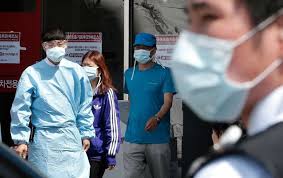
South Korea fails to contain MERS

Hong Kong issued a red alert and advised against traveling to South Korea, where an epidemic of Middle East Respiratory Syndrome (MERS) is gaining pace. The virus is spreading despite attempts to contain the outbreak.

In Korea, the number of infected people passed 100 this week, reaching 122 on Thursday. Tenth patient died from the disease, health officials said on Thursday. Most of the victims are elderly patients with other health problems unrelated to the virus. Over 3,250 people remain in quarantine.

Two people in Hong Kong who traveled to South Korea recently are being tested for possible MERS contagion, the authorities said on Thursday. Previously 31 people were tested negative in Hong Kong.

Earlier a man tested positive for the disease in China after coming from S. Korea, and a man in Taiwan was taken to hospital with symptoms consistent with MERS.

South Korean authorities are trying to stop the spread of the virus by closing schools and canceling public events. Neighbors in the region are scaling down tourist travel to South Korea, with Hong Kong alone scrapping 600 tours to the MERS-hit country.

Macau issued an advisory against traveling to South Korea.

MERS most likely spread to South Korea from Saudi Arabia, where the virus was first identified in 2012. At least 448 deaths are attributed to it, most of them in the Middle East, according to the World Health Organization numbers. The Korean outbreak is the largest so far outside the Middle East.

The virus is of the same coronavirus family that caused a massive epidemic in China in 2003 from severe acute respiratory syndrome (SARS). So far there is no vaccine for MERS.

Australia on a manhunt for white woman who punched Asian girl on a train

Australian police are looking for a woman who allegedly punched a 15-year-old girl in the face during what they say was a racial attack on a Sydney train. A description of the assailant, who is described as “a Caucasian with tanned skin” has been communicated to all the media and national manhunt or womanhunt is on to find her.

The teenager, who was of Asian appearance, was sitting on a train with two friends when a couple boarded at Parramatta about 2:00pm yesterday.

Police said the woman in the couple started verbally abusing the 15-year-old girl before physically attacking her as the train approached Lidcombe.

Inspector Sean Gabin from the Flemington Local Area Command said it was an unprovoked attack.

“Approaching Lidcombe, the female and the male have got up from their seats and the female has grabbed the 15-year-old girl by the hair and has started to punch her several times to the face,” he said.

“She’s also proceeded to knee her to the body and continue to assault her to the face.”

Inspector Gabin said fortunately the girl was not seriously hurt and she and her friends had given statements to police.

[She] is described as Caucasian with tanned skin, she’s aged in her late 30s to early 40s, and she’s described as having a black front tooth and missing teeth.

“There were other people in the carriage who were also of Asian appearance and we’d like to speak to anyone who was on that train or who may have recorded the incident,” he said.

“We’re also making enquiries in relation to CCTV on the train and on the platform at Lidcombe and Parramatta rail stations.”

The woman also allegedly kicked the window of the train when she got off at Lidcombe.

“[She] is described as Caucasian with tanned skin, she’s aged in her late 30s to early 40s, and she’s described as having a black front tooth and missing teeth,” Inspector Gabin said.

“She was wearing a blue shiny top and black pants.”

Inspector Gabin said the man she was with is not alleged to have taken part in the attack.

“He’s described as Mediterranean or Middle Eastern in appearance, with a slim to medium build, and he has a tattoo on the left side of his face which looked like a smiley face,” he said.

‘It sends a horrible message overseas’

Anti-Discrimination Board president Stepan Kerkysharian said the nature of the attack is distressing.

If we’re having this kind of attack it’s going to hurt us as a nation as well as hurting individuals and it’s going to create an environment of insecurity.

“Attacks of this nature make people feel insecure, particularly when it’s a young student,” he said.

He said it could also have far-reaching ramifications that could deter international students.

“It sends a horrible message also overseas because Australia is an education destination for many people particularly from China and from other parts of the world,” Mr Kerkysharian.

“If we’re having this kind of attack it’s going to hurt us as a nation as well as hurting individuals and it’s going to create an environment of insecurity.”

Mr Kerkysharian said if found, the person responsible should face the full force of the law.

“To me when it comes to racism, there can be no leeway,” he said.

“We cannot go soft on racism because the ultimate objective of anyone who is a racist is the destruction of people who belong to that race.”

Ghana death toll rises to 90

An explosion at a petrol station in Ghana’s capital killed around 90 people sheltering from a storm early on Thursday, emergency services said, in the worst disaster to strike the West African state in more than a decade.

The force of the blast gave few a chance to escape. People were burned beyond recognition where they stood under the station’s awning, or trapped in the charred wreckage of cars and minivans parked on its forecourt.

The accident was caused by a fire at a nearby lorry terminal. Flames spread to the state-run GOIL petrol station via spilt fuel floating on flood water, fire brigade spokesman Prince Billy Anaglate said.

“It was an explosive fire and so the people sheltering at the filling station did not have an opportunity to escape,” Anaglate said.

It was Ghana’s worst disaster since more than 120 people died in May 2001 in a stampede at the national stadium during a football match, a police spokesman said.

The incident exposed Accra’s vulnerability to storms, given poor drainage and weak infrastructure that has failed to keep pace with population growth after years of rapid economic expansion.

Ghana’s meteorological service forecast more rain on Thursday.

Source: AFP

Mauritius appoints first female president

Mauritius appointed Ameenah Firdaus Gurib-Fakim as its first woman president on Thursday after her predecessor stepped down from the the ceremonial position last week.

“It is the first time in the history of Mauritius that a woman has acceded to this post,” parliament speaker Santi Bai Hanoomanjee said after lawmakers approved Prime Minister Anerood Jugnauth’s motion proposing Gurib-Fakim.

Jugnauth’s ruling coalition said during last December’s electoral campaign it would nominate Gurib-Fakim (55) a chemistry professor.

“I take it with humility. I feel there is a consensus among members of parliament and also among the population,” she was quoted as saying in L’Express, the leading daily on the Indian Ocean island.

Rajkeswar Purryag stepped down on May 29, saying he had agreed with Jugnauth to resign in May.

Source: Reuters

Spain a new link in AFRICOM

The US’ decision to beef up its military presence in southern Spain indicates that a new strategy towards Africa is well underway says Andrew Korybko.

Washington just clinched a deal with Madrid that will see it boosting its military footprint in the south of the country. According to the agreement, up to 2,200 Marines and possibly 40 military aircraft will be deployed within striking distance of all of West Africa, and this massive amount of firepower proves that the US is preparing its forces for engagement all across the continent in the years to come.

Its deployment along the African periphery in Spain complements the existing presence it has in Italy and Djibouti, to say nothing of its mobile naval capabilities, and this arrangement may actually be the most ‘efficient’ of AFRICOM’s speculated formations.

In the short term, it’s predicted that the US’ latest moves are in anticipation of an inevitable leadership transition that may soon take place in Algeria, while the constant, long-term interest is in controlling the transit of significant non-Russian gas supplies to the EU.

Spain’s leaders want US support against the Catalonian independence movement too. They fear that the independence of Catalonia could lead to a chain reaction of similar movements in Spain’s other regions.

AFRICOM is technically only a command and control center for US military operations in Africa, and due to advances in communication and transport technology, it doesn’t even have to be based in the continent itself. It’s currently headquartered in Germany.

US forces are predicted to operate as the storm troopers of unipolarity in Africa, but for prolonged occupation, the French are expected to shoulder the burden, which they’re already doing via their ground deployments in 10 African countries already (nearly a fifth of the continent’s total).

The US’ latest moves in Spain are likely aimed at ‘managing’ a forthcoming leadership transition in Algeria.

Aging President Abdelaziz Bouteflika suffered a stroke two years ago, and it’s not known who will succeed him if he dies in office. Bouteflika’s 15-year-long presidency has been a stabilizing factor in rebuilding Algeria since the decade-long Islamist-inspired civil war ended in 2002, and his death might make the country vulnerable to a Color Revolution, a jihadist uprising, and/or a destabilizing struggle between state security forces.

The chaos in Libya showed signs of seeping through to Algeria in January 2013 during the In Amenas hostage crisis. Terrorists took over a gas processing facility and killed 39 foreign hostages before being defeated by decisive government action.

Most important for the US is Algeria’s contribution to the EU’s gas supply, being the third-largest supplier to the bloc after Russia and Norway.

There’s also discussion of creating a Trans-Saharan Pipeline from gas-rich and under-processed Nigeria through Niger and Algeria to Europe, which would make the North African state the geo-energy ‘Ukraine’ of the Western EU. Because of this, the US must make sure that Algeria stays under Western influence and the pipeline routes are secured, hence the upcoming deployment of 2,200 Marines and 40 military aircraft within striking distance to ensure this.

Blast kills dozens in Nigeria

A bomb blast hit a busy meat market in Nigeria’s northeastern city of Maiduguri on Tuesday, killing as many as 50 people, an eyewitness and a hospital source told Reuters.

The bomb which was concealed under a butcher’s table in the market went off at around 1pm local time, killing shoppers and travellers, a military source said.

Nobody has claimed responsibility for the latest explosion, which follows two bomb attacks over the weekend that killed at least 30 people and bore the hallmarks of militant Islamist group Boko Haram.

The group, which new President Muhammadu Buhari has vowed to crush, has killed thousands of people and displaced around 1.5 million in its bid to establish an Islamic caliphate in the northeast of Africa’s biggest economy and top oil exporter.

Lawal Kawu, a paramedic, said 31 charred bodies had been evacuated to the teaching hospital in Maiduguri, and several other people were brought in with severe injuries.

Witnesses said they heard a loud explosion.

Source: Reuters

FIFA’s Blatter resigns

Sepp Blatter has announced he is stepping down as president of FIFA, football’s governing body, and has called on a special congress to elect a successor. The news comes less than a week after Blatter was reelected as FIFA chief amid a bribery scandal.

Switzerland’s office of attorney general (OAG) said that it is not investigating Blatter in connection with the FIFA corruption probe.

“Joseph S. Blatter is not under investigation by the OAG. His announced resignation will have no influence on the ongoing criminal proceedings,” the attorney general is cited as saying by Reuters.

Jordan’s Prince Ali bin al-Hussein, who gave in to Blatter during the vote last Friday, will run in the new FIFA election for president, AFP reported.

Sepp Blatter has taken this step to save the organization, Russian Sports Minister Vitaly Mutko has told the Tass news agency.

The new congress will take place between December 2015 and March 2016, the chairman of FIFA’s audit and compliance committee, Domenico Scala, has said. He has taken the floor after Blatter.

Former Daily Show host, the very unfunny John Oliver made Sepp Blatter his personal White Whale, repeatedly calling out the FIFA President on his show with lengthy items detailing the FIFA corruption scandals.

On last Sunday’s show, Oliver begged FIFA sponsors – which include McDonalds, Adidas and Budweiser, to pull their support.

The Guardian as well as the Financial Times singled out South Africa. From The Guardian:

Blatter’s announcement comes after Fifa had admitted it paid $10million destined for the South Africa World Cup to an account controlled by the disgraced former vice-president Jack Warner. The payment followed a letter from the South African FA to Fifa secretary general Jérôme Valcke.

From the FT:

His resignation came at the end of another bruising day for Fifa, after one of his most senior lieutenants, Jérôme Valcke, was alleged to have had personal knowledge of a $10m payment at the heart of a US corruption probe.

Mr Valcke was the recipient of a letter from the South African football association on March 4, 2008, asking him to withhold $10m from the funding of the World Cup “operational budget” and for the money to be “advanced” to a fund controlled by the then “President of Concacaf”, Jack Warner.

The letter, which was shown on South African television, was confirmed by its South African signatory, Molefi Oliphant. “The copy is official,” he said. “That is the copy, you have it, so you can draw any opinion you want to. That is the correct letter,” he said.

Expert warns Syria about to fall into ISIS hands

According to Doctor Natasha Underhill, an expert on terrorism in the Middle East from Nottingham Trent University in the UK, the Islamic State could be on the verge of a breakthrough in Syria.

The lecturer at Nottingham Trent University told Express.co.uk that ISIS militants seized huge phosphate mines depriving the Syrian regime of a desperately-needed revenue source. She added that the latest development puts Syria on the verge of disintegration.

It’s really a power play for Islamic State. The mines are one of the last things Syria could make money from. It will push the state closer towards failure which is now almost inevitable. Syria is at crisis point. It’s already seen as a crisis state. We are just one or two more key events away from failure as we know it. With the situation as it is we could wake up tomorrow and the whole state would have changed.

But Syria will only be the beginning. Dr Underhill said if Syria falls into hands of ISIS it will give the terrorists more legitimacy in the eyes of those in the region and encourage similar Islamic extremist groups to pledge their support, much as Boko Haram has in Africa.

Islamic State has a political strand to their organisation and when it moves into an area sets up local government-type institutions. […] Once ISIS takes over a significant piece of land – and we’ve seen this in Afghanistan where the Taliban took over 90 per cent of the country – then that gives them legitimacy – not in the wider world but in the direct area, which is their target audience. […] While ISIS has shown it is willing to focus on a core area rather than seek to expand at a vast rate, neighbouring Jordan should still be aware of the likelihood of an invasion.

Underhill has unwittingly also highlighted the complete failure of the Clean Break strategy.

Commonly known as the “Clean Break” report [A Clean Break: A New Strategy for Securing the Realm], is a policy document that was prepared in 1996 by a study group led by Richard Perle for Benjamin Netanyahu, Israeli premier.

The report explained a new approach to solving Israel’s security problems in the Middle East, advocating an aggressive new policy including the removal of Saddam Hussein from power in Iraq and the containment of Syria by engaging in proxy warfare and highlighting its possession of “weapons of mass destruction”.

Interpol warns that ISIS is gaining ground

A growing number of extremist groups from Africa to southeast Asia are shifting their allegiance to the Islamic State group, leading to greater risks for “cross-pollination” among conflicts beyond Syria and Iraq, the head of Interpol said Friday.

Juergen Stock cited this shift as an emerging trend at a UN Security Council meeting along with changing travel methods being used by foreign fighters seeking to join groups like the Islamic State and al-Qaeda.

Stock was a keynote speaker at a meeting attended by half a dozen ministers including US Secretary of Homeland Security Jeh Johnson to assess progress in implementing a US-sponsored resolution adopted last September requiring all countries to prevent the recruitment and transport of would-be foreign fighters preparing to join extremist groups.

On Friday, the Security Council adopted a presidential statement calling for a significant increase in border controls, improved cooperation at all levels “including preventing terrorists from exploiting technology, communications and resources.”

Johnson said the United States will be developing a new passenger data-screening and analysis system within the next 12 months which will be made available to the international community at no cost for both commercial and government organizations to use.

In a report obtained by The Associated Press on April 1, the panel of experts monitoring UN sanctions against al-Qaeda said the number of fighters leaving home to join al-Qaeda and the Islamic State group in Iraq, Syria and other countries has spiked to more than 25,000 from over 100 nations. The panel said its analysis indicated the number of “foreign terrorist fighters” worldwide increased by 71 percent between mid-2014 and March 2015.

Source: AP

Radioatcive leak at New Delhi airport

A radioactive material leak was detected at New Delhi’s international airport on a shipment of nuclear medicine from Turkey before being plugged by emergency teams, officials said.

The incident happened near the cargo area of Turkish Airlines where four cartons containing nuclear medicine material were found to be damaged, an official in the National Disaster Response Force told AFP.

“The situation is under control, our teams are at the spot. There is no need to panic,” the official added on condition of anonymity.

“Atomic energy experts are on their way to assess and analyse the situation. The consignment has been isolated.”

India’s Home Minister Rajnath Singh confirmed the incident at the Indira Gandhi International Airport, adding that the “leakage has been plugged”.

The NDTV network reported that two cargo workers who were exposed to the leakage had been taken to hospital for precautionary checks.

The material was meant to be delivered to a private hospital in the Indian capital.

In 2010, a scrapyard worker in Delhi died from radiation poisoning and seven others were injured, raising concerns over the handling of radioactive material in India.

Source: AFP

Bill Gates fears epidemic worse than Ebola

You would think that Bill Gates, the ever-so-friendly richest man in the world, wouldn’t be afraid of much.

But as he recently told Ezra Klein at Vox, he does have some major fears for humanity.

“I rate the chance of a nuclear war within my lifetime as being fairly low,” says Gates. “I rate the chance of a widespread epidemic, far worse than Ebola, in my lifetime, as well over 50%.”

Gates is 59 years old.

So that means an outbreak of sorts is possibly coming in the next few decades.

It’s especially terrifying, Gates says, given the way we reacted to the last epidemic: The Ebola outbreak of last year showed how unready the world is for dealing with infectious disease.

The last widespread killer epidemic was the Spanish Flu. Between 1918 and 1919, it killed between 20 million and 40 million people worldwide — more than World War I.

What’s even more frightening, Gates says, is that we don’t even know where the Spanish Flu came from — it was just called the “Spanish Flu” because the press in Spain were the first to report on it.

In many ways, we’re even more vulnerable to an infectious catastrophe today. Gates tells Vox that according to his modeling, 50 times more people cross borders today than they did back in 1918.

Because of that and other factors, Gates estimates that the next Spanish flu-like epidemic could kill 33 million humans in 250 days. That number of people would be about equal to the population of Canada.

“We’ve created, in terms of spread, the most dangerous environment that we’ve ever had in the history of mankind,” Gates tells Vox.

Source: Business Insider

Russia to Deliver S-300 Missiles to Iran

Russia lifted a ban on sending Iran its sophisticated S-300 surface-to-air missile system, officials said Monday. The weapons could be shipped shortly, giving Tehran a new way to defend itself against any future bombing campaign.

The decision was made as Iran continues to negotiate with the United States and five other world powers about its nuclear program in return for an easing of sanctions.

The S-300 missile system is able to hit multiple targets at once, and is typically launched from the back of a truck. The missiles can target aircraft and missiles flying more than 16 miles high, according to specifications published by the American Federation of Scientists, a nonprofit organization that provides analysis on national security issues.

Russia signed an $800 million deal to deliver S-300s to Iran in 2007, but decided to halt the weapons delivery after the United States and Israel protested that Tehran could use them to protect its nuclear facilities. Russian officials said Monday that sending the missile system to Iran wouldn’t jeopardize security in the region.

The Kremlin wanted to sell the system to Syria in 2013, but came under pressure. Secretary of State John F. Kerry warned Russia at the time.

Israeli officials also warned that if Russia completed the S-300 deal with Syria, they would use military force to ensure the system didn’t become operational.

Source: Washington Post

BRICS face huge security issues says Putin

Security issues are an important sphere in the activity of BRICS member states (Brazil, Russia, India, China and South Africa) and they are related to the challenges the world community is currently facing, Russian President Vladimir Putin said on Tuesday at a meeting with the Security Council secretaries of the BRICS countries.

“Obviously, for our organization, for BRICS, it’s an important sphere of activity, considering the challenges the entire international community and our countries have to face at present. It’s obvious that the fight against organized crime, terrorism, financial crime is certainly on the agenda of the international community,” Putin said.

According to the president, it is also obvious that BRICS member countries are facing major threats. “It is also clear that our countries are facing considerable threats in connection with violation of international law norms, in connection with violation of sovereignty of different states, their activity spheres,” Putin said.

Source: Itar-TASS