Are Mrs. Thatcher’s cuckoos coming home to roost?

Mrs. Margaret Thatcher famously stated in the nineteen-eighties that “Anyone who thinks the ANC will form the government of South Africa is living in cloud cuckoo-land.”

For this, she was ridiculed by the British radicals, with Bishop Trevor Huddleston of the Anti-Apartheid Movement in the forefront. Since that time, all the anti-apartheid secrets have been revealed, including the active role played by British radicals, especially within the Anglican Church, in undermining what was then still the sovereign government of South Africa.

Whereas the ANC and SACP also enjoyed Soviet and East German support, the financial and organisational muscle for the South African revolution was provided by Sweden and the Anglican Church. Another radical priest, Canon John Collins of St. Paul’s in London, oversaw a vast network of agents who channelled funds in the name of the Defence and Aid Fund into South Africa for political trials and to support the relatives of imprisoned revolutionaries. Under today’s banking laws, money may no longer be laundered in such a fashion.

On the website of the Canon Collins Trust, a document boasts that one hundred million pounds were distributed in support of attempts to overthrow the much-vilified reformist government of PW Botha. Revolution, and not reform, was what everyone had preached back then.

However, as South Africa pursues its dream of an egalitarian society at all costs, there is a certain revolutionary fatigue setting in, even among the most ardent supporters of the ANC. And the second phase of the revolution, or “second transition” as it has been euphemistically called, still lies ahead of us. During that phase, most white farmers will lose their land and large swathes of private industry, including the mines, may be nationalised. Mayhem and ethnic conflict will probably result.

Increasingly, to paraphrase a line from Joyce’s Ulysses, the New South Africa is a nightmare from which we are trying to awake.

Over the past thirteen days, there have been seventeen victims of farm attacks in South Africa. Not all have died, but the death rate is high. Some were horribly tortured. Another ten people were killed at the Lonmin platinum mine at Marikana amid strife between the mine and two competing trade unions.

The American NGO, Genocide Watch, has already classified South Africa as a category 5 (out of a possible 8) genocide risk, with polarisation between groups taking place. On his recent visit to South Africa, Dr. Gregory Stanton of Genocide Watch stated that the atrocities committed against Afrikaner farmers “were signs of genocide and that there is enough suspicion that it is being organised”.

Stanton also asserted an intrinsic connection between communist ideology and genocide. In this, he is supported by the post-Maoist philosophers of France, the so-called nouveaux philosophes, who broke with Marxism in the nineteen-seventies and also saw the germ of crimes against humanity in the concepts of Marx and Lenin.

In the minds of the ANC “comrades”, transformation is both necessary and inevitable, echoing classical Marxist-Leninism. Ordinary human lives or cultures will not stand in the way of their grand strategy to effect a radical change in South Africa. In almost every public appearance, ANC leaders use the Marxist cliché “moving forward”, indicating the country’s march towards a millenarian goal.

Afrikaner children at high school listen to the iconoclastic band Fokofpolisiekar, voicing their frustrations with violence, affirmative action and social decay in songs such as “Brand Suid-Afrika”. And certainly the impression that South Africa is burning, sometimes literally, is not amiss. If only the BBC, NBC and other major TV networks overseas had been filming all of this as they did during the seventies and eighties, already there would have been an impression that South Africa was experiencing a crisis.

After almost two decades of ANC rule, it appears that Mrs. Thatcher’s cuckoos are coming home to roost. Like ZANU PF in Zimbabwe, the ANC has not been able to make the transition from a crypto-communist liberation movement waving AK-47s to a political party managing Africa’s only industrial state. In its rhetoric and its thinking, it is stuck in a time warp, sometime before Ché Guevara got shot in Bolivia.

The ANC’s British supporters, as well as Sweden, saw fit to launch the ANC in its successful bid for power in South Africa. In fact, on 27 April 2004, the Swedish ambassador in Pretoria stated on Radiosondergrense, but speaking English, that “without the help of Sweden, the ANC would never have ruled South Africa”.

To many outside South Africa, the ANC still represents the party of Nelson Mandela. To them he personifies the romantic hero, a kind of black Ché Guevara who went to prison to liberate the South African masses. However, to the racial and ethnic minorities who suffer under ANC rule, with its accompanying threats of “kill a Boer, kill a farmer”, the movement is a Frankenstein let loose. The modern ANC was made in Britain, but it has grafted itself onto the South African state, blurring the boundaries between itself and the republic.

Through its culture of tenderpreneurs and high-spending officials, it has arguably become one of the richest political parties in the world, unassailable in the polls. In a vast country where electioneering is prohibitively expensive, oppositon parties face a permanent financial and propaganda disadvantage. The SANDF has been transformed, precisely, into nothing more than an ANC militia, an extension of Umkhonto we Sizwe. So even if the ANC is outvoted in 2019 or 2024 or when Jesus returns, as Zuma has stated, it will probably cling onto power, just like ZANU PF or the Angolan MPLA has done.

Of course, that paragon of human rights and democracy, Robert Mugabe, was also enthusiastically backed by British diplomats at Lancaster House and fêted by Fleet Street as a great African leader. The British penchant for radical chic has found a ready outlet in Southern Africa, to devastating effect.

However, like all radical movements, the ANC will overplay its hand. The question is not if but when. The further issue is how much damage it will do to South Africa and how many more massacres of Afrikaner families will take place before a realignment occurs.

Dan Roodt: Britain’s hatred of Afrikaners

Following on the Marikana massacre where 36 black miners were killed yesterday, shot by the ANC’s police service, the usual nauseating comments about apartheid and Afrikaner racism are being made by the BBC and other British media. As if we have any control over the behaviour of mine workers at, in this instance, a British-owned corporation Lonmin. Not to mention the ANC regime’s corrupt and often incompetent police force.

A few years ago, the BBC broke into a hysterical fit when an Afrikaner rugby player, Geo Cronjé, moved to share a hotel room with a friend rather than with another player who happened to be “of colour”. The bearded Cronjé was immediately accused of being an odious “racist”. That prompted me to tweet today: “Wonder whether British Lonmin management will share a hotel room with a black miner? BBC please investigate.”

However, on Facebook I was immediately accused of  “dividing South African whites”. I do believe that South Africa’s increasingly oppressed and marginalised white population, who even get blamed when the mostly black police fire upon some very violent and aggressive miners, should find some common ground. But not at the expense of the truth that Britain has always posed a real threat to us. Once again her media are exploiting a tragic incident to cast us in a bad light.

Historically, all the poison against South Africa and Afrikaners was spread by the BBC, The Observer, The Guardian, as well as of course the local English newspapers who, according to Communst Party leader Bram Fischer, “were doing a splendid job”. The caricature of us as khaki-clad Nazis who were barely literate was broadcast all over the world.

Then the English are always going on about anti-Semitism and Nazi propaganda, but their propaganda has actually played a big role in reducing us to a threatened minority in our own country. If blacks today feel justified in torturing and killing us, it is due to the venom and hate pouring out of London, as well as the pens and minds of London’s local sycophants. No wonder Napoleon spoke of “perfidious Albion”.

The problem is, our people have been so damaged by anglicisation that they see the world through Anglo-Saxon eyes and prefer emigraton to other Commonwealth countries where they try to asimilate, ashamed of themselves, hiding from John Bull’s hate. Many Afrikaners disdain the French, the Germans, the Russians, the “dumb Dutch” (Holland actually has the highest average IQ of any white country) and even the Americans as if they were part of the infernal Empire themselves.

In Afrikaans literature, especially in the Cape, there is a nauseating obession with British literature, as if no books had ever been written in other great European languages. There are some exceptions, such as Jan Rabie who married a Scotswoman in Paris, but refused to speak English to her. To her death she spoke Afrikaans with a kind of Scottish drawl.

The blacks around us are Englishmen gone wrong. Only an Englishman can be so megalomaniac as to think he could completely anglicise an African and make him into something which he is not. The English churces in South Africa, especially the Anglican Church, have been in the forefront of inciting South African blacks against the indigenous whites, bearing a large share of the responsibility for the black-on-white  atrocities currently taking place in South Africa.

Our only hope is that Germany might colonise the European Union to such an extent that Britain becomes finally marginalised. There is a rumour that the US wants to “move the City” to New York and so take away 25% of British GDP. We can only hope.

In a recent edition of Die Afrikaner newspaper there was an article on how the infiltrated SA Foreign Ministry prevented immigrants from the Netherlands from coming to SA in the 1960’s but threw open our doors to Britons, fleeing Harold Wilson’s socialist Britain. The author argues that those British immigrants, many of whom still have dual passports, tilted South African politics in favour of the British view of capitulation to the ANC. Although conservative, their children were often radicalised by the local English universities with their neo-Marxist leanings and so became converts to South Africa’s left-wing, anti-Western revolution.

They also voted overwhelmingly “yes” for black rule in the fateful 1992 referendum.

But the tide is turning against the island of hate, in France, in Germany, Russia, South America and even parts of the USA. Once our story gets out into the world, we will again enjoy the sympathy of the whole world, with people volunteering to come and join us in our struggle for liberation here.

While I was indulging in these thoughts of casting off the British yoke – the ANC is largely a creation of the British Left and the Anglican Church – my wife reminded me of how the English had messed up our indigenous Cape Dutch archicture when they first started buying up such properties in the nineteenth century.

The English have always been ranting against us for having owned slaves during the early Cape period. Of course, they forget that Britain was heavily involved in the transatlantic slave trade. A recent book by Marthinus van Bart shows that they even traded slaves in Cape Town.

Not all Afrikaners at the Cape owned slaves in the seventeenth and eighteenth centuries, however. But the Dutch East India Company’s representatives in the Cape normally did.

My wife comes from a family that owned one of the magnificent Cape Dutch houses, Rhone, which is today a tourist attraction. It had no slave bell, indicating that there were probably no slaves.

However, the English were keen to pass themselves off as “landed gentry” and therefore preferred the official residences of former Company officials, having slave bells, such as Vergelegen.

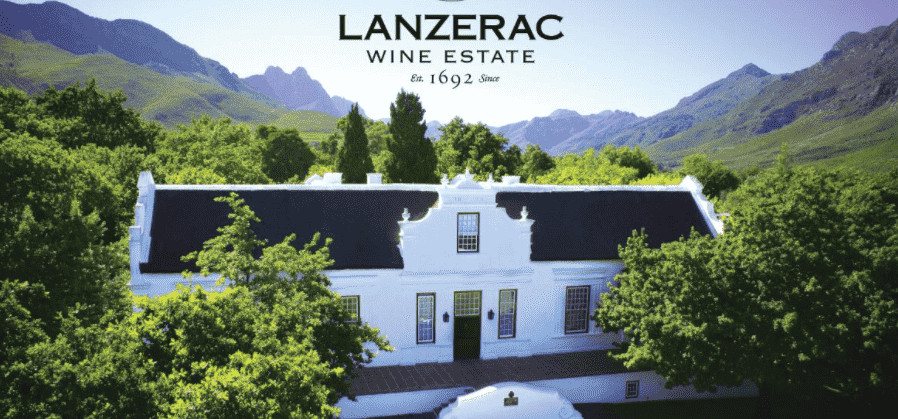
Lacking our sober, Germanic taste, they erected horrible kitsch copies of Cape Dutch houses such as Groote Schuur or destroyed the original architecture as at Lanzerac to add servants quarters. Otherwise, they removed those stately gables.

Today the ANC regime is continuing the proud tradition of name changes, first brought by the British. They invented “classy” French-sounding names like Lanzerac, replacing the poetic Schoongezicht, meaning “fair countenance”.

The Arts and Crafts movement in Britain further added to the aesthetic degeneration of the Cape in the nineteenth century. Since the ANC came to power and with Afrikaner influence on the wane, we have had a similar explosion of ugly, Tuscan-style buildings on the Transvaal Highveld as another British fashion got imported to South Africa.

A black man in an ugly, quasi-Italian house, speaking English and watching soccer on TV; that is about the contempory definition of British civilisation, as can be seen in South Africa.

‘Sondag’ newspaper must publish front-page apology to Dan Roodt

The Press Ombudsman has ordered weekly newspaper Sondag to publish a front page apology to Dan Roodt for publishing a defamatory article linking the Afrikaans writer and activist to an internet sex site.

Deputy ombudsman Johann Retief found that the March 3 article created “considerable and unnecessary” damage to Roodt’s public image.

The article told of a website encouraging Afrikaners to procreate to ensure the survival of the minority group.

It said the site was managed by “a sidekick” of Roodt and a contributor to Praag, Roodt’s Afrikaans language activism group and website.

Roodt complained that the article wrongly suggested that he and his organisation ran a pornographic site. He denied any involvement with the site. – Sapa

Anti-Afrikaner human rights violations in the spotlight

Human rights violations against Afrikaners are increasingly under the spotlight, as the Commonwealth Human Rights Unit has started to monitor the issue and an American expert on genocide, Dr. Gregory Stanton, has arrived in South Africa.

Speaking on the nation-wide radio station RadioSonderGrense yesterday morning, Dr.  Dan Roodt of PRAAG said that there were “systemic human rights violations being committed against Afrikaners under the ANC government”. PRAAG has laid a charge at the Commonwealth against South Africa for what it calls “the systemic violation of human rights” suffered by Afrikaners and white South Africans generally.

He also referred to previous complaints laid by PRAAG at the International Criminal Court at The Hague, the UN Human Rights Committee in Geneva and the South African Human Rights Commission. However, the South African Human Rights Commission seemed reluctant to investigate any human rights abuses against people of European descent.

“On my last visit to the SA Human Rights Commission in Parktown, Johannesburg, I got the distinct impression that they were only concerned about white-on-black racism, ” said Dr. Dan Roodt. “The commissioner, a black woman, displayed a book on her desk entitled ‘White Power: The Rise and Fall of the National Party’ by feminist Marxist author Christi van der Westhuizen. She told me that I was mentioned in the book (even though I never had anything to do with the National Party) and that therefore she could not listen to my complaint about human rights violations against Afrikaners. How is one to take the SAHRC seriously? Nevertheless, for the record,we will also renew our appeal to the SAHRC to intervene in the rapes, murders and massacres of so many white and Afrikaner families under ANC rule.”

PRAAG found that until now the Commonwealth and the NGO Genocide Watch had been the only two international organisations that have responded to the human rights crisis in South Africa.

Dr. Gregory Stanton of Genocide Watch has just arrived in South Africa. He will be giving a press conference on 26 July at 11h00 in Silverton, Pretoria, at the TAU SA head office during which Dr Stanton will share his impressions and conclusions.

Dr Gregory Stanton is Research Professor in Genocide Studies and Prevention, School for Conflict Analysis and Resolution, George Mason University in Arlington, Virginia, and has been concerned about the extreme levels of black violence against Afrikaners for some time now. On its website, Genocide Watch classifies South Africa as  a “level 5” genocide country. At level 7 full-scale genocide breaks out. On its website Genocide Watch stated on  4 July 2012:

“Genocide Watch considers land redistribution to be a ticking time bomb in South Africa.  If the wealthy countries of the world do not assist South Africa in resolving it by financing compensation of land-sellers, the ‘rainbow nation’ could descend into violence and go the way of Zimbabwe.

“Genocide Watch rates South Africa at Stage Five: Polarization, just at the edge of Stage Six, Preparation (for genocide).”

In a statement, Mr. Louis Mentjes, President of the Transvaal Agricultural Union of South Africa said: “TAU SA will endeavour to compare its’ own views regarding violent crimes on farms and the untenable situation within which farm dwellers find themselves, with Dr Stanton’s insight and studies elsewhere. He is internationally recognized and his concern regarding the situation in the RSA, demands discussion and consideration.”

Over and above from having individual discussions with several leading figures, Dr Stanton will also have the opportunity to attend a district agricultural union meeting as well as being the guest of the FW de Klerk Foundation during a conference where “National Policy at the Cross Roads” will be the topic under discussion.

A media conference is scheduled for 11h00 on 26 July 2012 at the TAU SA head office in Silverton during which Dr Stanton will share his impressions and conclusions. The media is invited to attend.

Apartheid revisionism needed

About two weeks ago, Hermann Giliomee, the well-known liberal Afrikaner historian, wrote a scandalous piece in the Afrikaans Sunday newspaper, Rapport. The title was, “Apartheid: was it only evil?” (Afrikaans link)

I have since responded with two articles of my own to his, and we are more or less in agreement that there has been a colossal misrepresentation of what the apartheid system of racial segregation in South Africa was. However, at least one academic from the University of Stellenbosch, Anton van Niekerk, has already attacked Giliomee, describing his piece as “immoral” and “unjustifiable”.

But for decades white South Africans have spent an ever-increasing portion of their taxes on black education, health and welfare, something which the rest of the world has characterised as a “crime against humanity”.

The other day I was speaking to a friend and she told me that Afrikaans was such a nice language because one could still express how one felt, whereas “everything in English had to be so politically correct”. At least that is the way it is in South Africa. Probably in the USA and other countries, it is different. Although I have been astounded to see how intolerant American liberals can get about views on race that differ from their own.

To appreciate what a major step Giliomee took in coming out with the view that some alternatives to apartheid would have been worse, one has to live in South Africa where every day we are inundated with propaganda about our “evil past”. I grew up in the 1960’s and 1970’s, rode a bicycle in our crime-free streets, saw happily dancing black mineworkers and generally was completely unaware that anybody in South Africa was desperately unhappy. As opposed to today when acrimonious exchanges fly almost continuously between black, white, coloured and Indian, race relations in those days were cordial and uncomplicated. We each lived in our own compartments and did not feel threatened by others. That too, in juxtaposition with contemporary South Africa where whites constantly worry whether they are going to be attacked en masse, chased into the sea by angry, frustrated blacks or fall victim to the daily criminal incidents such as rape, murder, robbery and theft. Whereas South African whites go out of their way to be civil to blacks, even calling them “sir”, which would have been unheard of in the old South Africa, blacks do not seem to return the compliment. Instead they behave absolutely abominably, whether in the extreme form of violent crime or in the imperious arrogance of their politics.

However, that almost idyllic South African past before we adopted the American model of affirmative action, white guilt and forced integration, is nowadays equated with Nazism. In 1939 large numbers of white South African men volunteered to fight Germany together with Britain and the rest of the Commonwealth, yet at some point we became the Nazis. Even Germans look upon us as Nazis. Not only do the Germans feel morally superior to us, but they would rather sell their sleek Mercedes-Benzes and BMW’s to corrupt black politicians than to us. These days, being impoverished, lower middle-class victims of affirmative action, “black economic empowerment” and all the other race-preference measures, we cannot afford German cars anymore and are driving second-hand Korean cars.

After all, the Germans only gassed a few million Jews. We Afrikaners or white South Africans oppressed blacks, which is far worse. We provided them with separate toilets. The fact that they did not have toilets at all before and somehow did it behind bushes or even in full view (as many still do next to our decaying roads), is besides the point, but next to whites-only toilets, Auschwitz and Dachau pale into insignificance.

Many South African liberals have already told me that denying that “apartheid was a crime against humanity” was tantamount to holocaust denial. In fact, two billionaire Jews, the twin brothers Krok, have given us their version of a South African holocaust museum, the so-called Apartheid Museum. That part of the deal was getting a casino licence from the new black government so they could make even more money, is never mentioned. Suffice it to say that we now have a tourist attraction where people can come and participate in the re-imagining of the South African past as a quasi-Nazi nightmare, replete with our own holocaust museum.

Except six million did not die. At least not in South Africa. It was more a case of: six million were born, grew up and proliferated and out of that population explosion and “youth bulge” all the chaotic urbanisation and familiar riots ensued.

Today there are as many, if not more, black riots in South Africa, than ever before. Yet the BBC, ABC, France 2, Reuters and whoever are not filming it. It seems that for blacks to riot under a black government is considered normal whereas every stone thrown or building set alight “under apartheid” was seen as pregnant with meaning, the expression of an entire political philosophy, a deep yearning for democracy. Just today I read in a report from the SA Institute of Race Relations that the most signifcant shift in the South African voting pattern is not that a lower percentage of people want to vote for this well-nigh useless and incompetent ANC government, but that fewer blacks express the desire to vote at all.

But I digress. The fact is that for Hermann Giliomee to have set off his apartheid revisionism, took a lot of courage. In a private letter, he told me that to his great relief he had severed all ties with universities. No-one wishing to keep his post at a university or even get published in academic circles would dare write a piece with such a heretical title: “Apartheid: was it only evil?”

To most sane people, his is a rhetorical question. One only needs to drive around South Africa and see all the overweight, contented blacks walking around in brand-name clothes, driving cars and chatting away on expensive cellphones to appreciate that, contrary to popular belief, our “evil past” had not affected them in any negative way.

Whenever I hear the litany of complaints by blacks about how they have been “disadvantaged” by apartheid – that is another shibboleth of the new South Africa, the “previously disadvantaged” – I feel like asking them: But what would South Africa have looked like without apartheid? Would our GDP have rivalled America’s? Would you have sent rockets to the moon from Soweto? If, despite affirmative action, only a thousand blacks could so far manage to pass the board examination to become a chartered accountant, how on earth would this economy ever have performed better than it actually has under mostly white management and entrepreneurship?

However, the issue goes further. Again, contradicting received wisdom, apartheid, at least the kind of policy espoused by the successive Afrikaner governments after 1948, was not only about providing separate amenities to black and white, so-called “petty apartheid”. It was also a colossal attempt at kick-starting black development. In today’s money, billions were poured into black education, healthcare, training, agricultural development, social services and so on. That was so-called “grand apartheid”, something which few of the hysterical liberals screaming “boycott South Africa” at the time wanted to talk about.

If we are to be heretics, after Hermann Giliomee’s example, we might as well start talking about grand apartheid  now.

By the way, I firmly believe that what a few of us “dissident Afrikaner intellectuals” are doing at present, questioning the racial orthodoxies of South Africa, is of great significance to us, to this country and perhaps even to the wider world that is grappling with similar problems.  For a long time now, we have been labouring under a type of censorhip. Whenever we dared to question our abject guilt, the Luciferian malevolence of our forebears, we would immediately be silenced, ostracised or vilified, so as to suppress those facts or aspects of our past that do not fit in with the “Nazi model”.

What we are really dealing with, and that was the starting point of my recent piece in Afrikaans, published on www.praag.co.za on Sunday, is yet another confrontation between dogma and reason. To Van Niekerk, Leop0ld Scholtz and many of the Media24 or Naspers commentators, it is about maintaining the apartheid dogma as it was established by the foreigners and by the South African Marxists.

Anton van Niekerk feels that it is “immoral” to question the apartheid dogma by simply referring to the facts of National Party policy between 1948 and 1994. At the very least it represents an argumentum ad populum or appeal to the “accepted wisdom” created in the past by left-wing historians and British newspapers.

Therefore, to be an apartheid rationalist today, requires a great deal of courage! A year or two ago at the offices of the South African Human Rights Commission, when I questioned the assertion by an Indian academic from Wits University that “apartheid had killed millions of people”, I was seen as some sort of lunatic. The Wits professor concerned promptly burst into tears and in general I was deemed a heretic.

The point about apartheid is that just about any lie or misrepresentation of if is acceptable today, simply because so many Afrikaners no longer have the courage to speak the truth about our past. Many of the National Party cabinet members are still alive and would easily be able to rectify the falsifications and half-truths by means of a few statistics and statements to the media, but they are simply too lily-livered for that.

Mr. Flip Buys too, of the mighty Soliforum group, says in almost every one of his radio interviews: “I am fighting for a better future, not a better past.” Buys knows very well on which side his bread is buttered and that the questioning of the apartheid dogma would quickly cost him the support of Media24.

But like George Orwell said: ” He who controls the present, controls the past. He who controls the past, controls the future.”

Actually, it is quite ironic that someone like Hermann Giliomee, who has a reputation as a liberal thinker and who spent some time at the University of Cape Town, should defend the current reputation of mostly conservative Afrikaners from the past. But I think part of Giliomee’s feeling that he has to do it, stems precisely from the classic nineteenth-century liberal idea that “there is more than one truth” or that every issue has at least two sides. Of course, that is also a principle of our Roman-Dutch law in South Africa, that every party to a suit has at least the right to put his case.

After my first response to Giliomee on Sunday a week ago, a reader sent me a clipping from The Citizen newspaper. It was made up of a letter that Jaap Marais wrote sometime in the nineties to the newspaper in which he pointed out a few interesting facts and figures, for the benefit of one W.J. Sachs who wrote that “the apartheid government withheld basic education from the black majority”. Naturally, it has become a generally accepted part of the apartheid dogma that blacks had received no education before the ANC took over in 1994. The fact that members of the ANC government are able to read and write at all, will no doubt soon by declared an official miracle by the Pope.

Among other things, Marais shows how only 20% of black children went to school under the United Party government prior to 1948. However, by 1967 the historian C.J. Scheepers Strydom wrote: “one of the changes with most far-reaching effect is undoubtedly the advancement of Bantu in education. Today 85% of the Republic’s Bantu of school-going age are literate – an increase of 600% since 1925. 32 000 teachers are employed in 8 500 schools with 2 million pupils”.

Jaap Marais adds: “In 1948 there were 8 000 Bantu teachers and 336 437 pupils in 3 310 schools. So it is evident that the so-called ‘apartheid regime’ did more for black education than its predecessor.”

While white taxes today are being spent largely on blacks, this was already the case during South Africa’s previous political system. Jaap Marais shows in his letter that the contribution per individual taxpayer according to race in 1970 was the following:

Whites R126

Indians R10

Coloureds R3

Blacks R0,85

In other words, blacks paid only 1/130th of the taxes paid by whites, but received far more from the state treasury!

Marais points out further that the total contributions of the different race groups in the 1980/81 fiscal year were still the following:

Whites R2 053 million

Indians R43 million

Coloureds R39 million

Blacks R100 million

In fiscal 1982/83 whites continued to pay 92,5% of all personal income tax.

After giving these figures, Marais emphasises the stupendous fact denied by today’s dogmatists, namely that in the same decade from 1973 to 1983 we again saw a tremendous rise in expenditure on black education: from R27 million per annum to R475 million per annum. From 1981 to 1985 the increase was equally rapid and shot up from R225 million per annum to R950 million per annum.

Referring to fiscal 1983/84, Marais says: “The government took from the 1,5 million taxpayers a total of R1 733 million for non-white education, averaging R1 107 per white taxpayer. This is how the former government practised affirmative action.”

In 1971 blacks had received 16 percent of the total education budget, but by 1991 it was already 58%, which indicates to what extent the apartheid dogma that “whites withheld education from blacks” rests on a myth.

But Anton van Niekerk and other dogmatists will respond to this by saying that they are not interested in the numbers and hard reality, but in the “moral” aspects of apartheid and segregation to which they refer as “an assault on human dignity” and “dehumanising”.

Van Niekerk writes in Rapport:

“We can therefore not judge apartheid in terms of a sinical, semi-Machiavellian estimation, merely what would have happened to the economy if there were no apartheid. Apartheid is gnawing at our conscience as whites because we have wounded the basic humanity of our fellow South Africans in its essence.”

The question is: why is apartheid “gnawing at our conscience as whites” when all the leaders and inhabitants of the formerly independent black homelands, as well as the Indians and Coloureds who also enjoyed certain privileges above blacks, may walk around with “clean consciences”?

And one wonders why Anton van Niekerk’s version of white guilt only applies to white South Africans or whether he also subscribes to Susan Sontag’s slogan: “The white race is the cancer of history.” Are all whites guilty? At any rate, most Western countries practised some or other form of colonialism or segregation. Until the seventies some of the southern states of the USA, as well as Britain, still applied forms of apartheid or segregation. Why should we be singled out as the scapegoats of the Western world?

Evidently, Afrikaners and SA whites do not need to take moral lessons from Americans, Britons or former National Party supporters like Anton van Niekerk. Today we have the opposite problem: in South Africa and to a lesser extent in the USA and other countries, there exists a system of reverse discrimination and permanent affirmative action by which we are reduced to permanently second-class citizens. Blacks also commit violence against us on a scale which may, at the very least, be called a violation of our human rights and at worst may be seen as a form of genocide.

In the recent past, the silence on black-on-white violence by the media in the USA has been coming under the magnifying glass. It is a disconcerting tendency that black violence, also in our country, is not being examined with the same “moral” spectacles as those used to stare at the South African past. During the conflict between the ANC and the National Party, newspapers regularly published statistics about deaths in police detention, but these days it is not being done anymore. In his book Trou tot die dood toe, gen. Johan van der Merwe mentions that nowadays approximately 700 deaths in police detention occur per annum, which is far higher than at any time during so-called “apartheid”. When are Prof. Anton van Niekerk and other politically correct academics going to start looking at that?

Those who prefer to make use of “moral criteria” should apply the same criteria to the methods used by the ANC to come to power. That is another issue raised by Van der Merwe: The ANC simply ignored the Geneva Convention and committed terror against civilians, both black and white. How are we supposed to feel guilty about the apartheid past when we are being governed by a group of monsters that exploded the Church Street Bomb on 20 May 1983 and committed over 400 necklace murders. (The method of execution by which a tyre is place around someone’s neck, filled with petrol and set alight, the person literally burnt alive.)

It will also be an interesting exercise to compare the human rights record of “Apartheid South Africa” with those of the group of countries that declared apartheid a “crime against humanity” at the United Nations.

Two years ago I visited Sweden. At times I had to stop myself from feeling morally superior to the Swedes, those supporters of the ANC and the anti-apartheid movement. Because our people have done so much more for blacks than Swedes or Norwegians – with all their development programmes in Africa. We only have to look at the extraordinary affluence of South African blacks, against the abject poverty pertaining elsewhere in Africa.

Where apartheid was wrong in my view, was in the burden and responsibility we took upon ourselves to look after other nations and racial groups, administer them, train them and in general assume responsibility for their well-being. In this way, the economic and political failure of the black homelands also became our failure. To this day, the dogmatists are trying to place the blame for deficient black performance on us.

While paternalism in many Western countries is still fashionable and aid money is being handed out in Africa by the billions, we Afrikaners must never again assume Kipling’s “white man’s burden”. The paradox of apartheid is: We are today damned, not so much because we oppressed blacks, but because we demonstrated compassion for blacks, as well as their education, health and welfare.

At present many people want to continue with this, in the name of so-called “reconciliation between the races”. It would be a grave mistake and would only lead to further misery and recriminations. Currently the black man prefers to stand on his own two feet and certainly does not need our help, assistance or even taxes anymore.

The ANC’s second revolution (okay, ‘transition’) against whites

by Dan Roodt

South Africa, like Cuba, is the last outpost of communism. Elsewhere in the world, experiments in collective farming and nationalisation have been abandoned as the grim mistakes of nineteenth-century radicalism, issuing forth from the bearded Karl Marx, scribbling away in the British Library.

However, behind Karl Marx there was a capitalist, Friedrich Engels, who bankrolled him and actually paid him to pour forth his books and pamphlets that would sow discord and resentment for more than a century.

The ANC, like many of the “tenured radicals” at South African universities, loves Karl Marx. The class struggle is their favourite nursery tale. And if you could add that the capitalists are actually white, then it’s no longer Little Red Ridinghood; it’s Little Red Soldiers marching from one conference to the next.

Unlike most journalists and newspaper pundits, I have actually read the ANC’s document on “the second transition”. Not so long ago, the ruling party – maybe we should capitalise “Party” as is communist practice – entertained us on the notion that South Africa was going through a two-stage revolution. Classical marxist theory holds that all of human history advances through a succession of “epochs”, culminating in “the most advanced stage, the classless society, or communism”. That is when people start queuing for bread, potatoes, shoes or waiting ten years to buy a two-stroke-engined car with nineteen-fifties technology.

At one point Cuba was going back to the bicycle. Not that I have anything against bicycles; on the contrary. Quite a few of our BEE moguls and traffic cops taking bribes alongside the roads, bulging out of their blue uniforms, could do with some exercise.

But to go back to stone age economic principles – “sharing” things around the camp fire – is a great leap backwards, if you will pardon the pun. In fact, Mao’s “great leap forward” was another communist cliché floating around the ANC’s Midrand conference yesterday.

According to Marx and Engels, there is first a political revolution, alternately called a “bourgeois revolution”, before the real transformation, the social revolution, begins. In the case of Russia, the “capitalist epoch” lasted only a few months, from February to October 1917, but we need not detain ourselves with such finer details. In ANC parlance, the transition of 1994 when De Klerk fired all his generals and handsupped before the Party’s militia, Umkhonto we Sizwe, was the political or “National Democratic Revolution”.

Until now, the second or social revolution has been chomping at the bit within the Luthuli House stables, ready to propel its bright-eyed, sushi-chomping jockeys into the apocalyptic dawn.

According to Jacob Zuma yesterday, the enemy, the class enemy, to put it more politically correctly, seems to be so-called white males. South African marxists have always confounded race and class. Mbeki, the great black marxist – or should I use the fashionable euphemism, “progressive” – intellectual, used to rave quite frequently about the white ruling class while he was still president. Or maybe Mbeki was just too habitually drunk to realise that putting yourself forward as a victim while you are wearing the crown represents a colossal contradiction.

However, not so long ago I read that 75% of white males over 50 were self-employed. That is only logical as BEE and affirmative action have already swept South African corporate life, not to mention the civil service and municipalities. Most municipalities are now all-black, with whites actually doing the cleaning. Our municipalities must have the most highly educated cleaning staff in the world; apparently some of the people wielding brooms and mops have postgraduate qualifications. But they happen to be white, which is a fatal handicap in the Republic of South Africa.

Younger white males are hanging on in the SME’s where racial headcounts are pursued with lesser fervour. In fact, a survey that I found on the internet yesterday showed that one in four white males of all ages was actually self-employed in 2006. By now the figure must be far higher.

So maybe the ANC, in its racial-marxist zeal, pursuing the Second Coming – wasn’t Mbeki also fond of quoting his favourite Xhosa poet, William Butler Yeats? – is barking up the wrong tree, “full of passionate intensity”.

One of the few people I mostly agree with in South Africa, is liberal historian Hermann Giliomee. I think that is because we both look at the current situation from the vantage point of history. Not… fantasy. He recently told me that he was just glad to have severed all ties with universities. In fact, the universities have become little ANC kindergartens, producing the type of pompous, quasi-marxist “papers” of which the ANC’s latest policy document is but a carbon copy.

We have to acknowledge that race, not class, is what the South African revolution is all about. That is why the white male bogeyman will be brandished, even if most of us white males eke out a measly living doing odd jobs on our computers in SOHOs. For those less familiar with American acronyms, that is “small office home office”. While the BMW-driving, black bourgeoisie are feasting out there, living it up in five-star hotels and bleeding this country dry.

To understand black identity, we have to look at America and a book such as Jared Taylor’s recent White Identity – racial consciousness in the 21st century.

In a nutshell: whites, with the exception of a few so-called “right-wing Afrikaners”, no longer have an identity. Blacks, on the other hand, are completely lacking in any European class consciousness. Their only consciousness is one of race. Not being very culturally assertive and preferring English as their means of communication, their only identity is being black, which may be further enhanced by hating whites.

Ultimately, the second revolution is not about poverty, equality, redressing past wrongs or any of the usual clichés offered by the ANC. It is about the black elite affirming its own identity.

Like Narcissus, they are looking at themselves in the mirror, whispering: “I am black, so black.” All other consequences flow from that existential premise and experience.

When I was a student, some of the campus radicals used to call it “black-being-in-the-world”. It had a kind of Heideggerian ring to it.

South Africa is going to pay a very high price for that singular mode of being.

Beaten Afrikaners becoming an international symbol

by Dan Roodt

Last week ANC leaders had another braai or luncheon with representatives of Afrikaans organisations. A few vacuous statements were made afterwards but as usual nothing really happened.

Why on earth does the ANC still talk to Afrikaners and Afrikaans organisations when they have absolutely zero political influence? one wonders. King Mswati III of Swaziland has much more clout as he heads up an independent nation with a seat at the UN, even if he has to beg South Africa for a few billion rand to pay his civil servants.

The fact is that Afrikaners were thoroughly beaten during the 1980’s by what I call the Afro-Saxon alliance of the exiled ANC and the English-speaking intellectuals, as well as the Anglican Church and some very influential British people. In the nineteen-eighties, that alliance mounted a superbly orchestrated propaganda campaign against the National Party that toppled it from power and condemned Afrikaners to becoming more or less internal immigrants.

Today most Afrikaners feel alienated, wondering about their role in a country that is increasingly leaving them behind in language, culture and mentality. Even the DA is changing Afrikaner names in Cape Town to more acceptable Afro-Saxon equivalents.

Yet the National Party refuses to die, apparently. Despite being merged with the ANC under Marthinus van Schalkwyk, the many Afrikaner groups and institutions that used to be under its wing are still fighting for standing room on the Titanic.

Just think of the mighty Naspers, South Africa’s biggest media group. Once upon a time strategic decisions at Naspers were made by the cabinet and not the company itself. Despite being commercially successful, Naspers is still having a political identity crisis, unsure whether it should support the moderate faction of the ANC or the DA. Its newspapers like Beeld, Die Burger and Rapport, have abolished the word “Afrikaner” and replaced it with “Afrikaanse”, a term denoting a person of uncertain identity who might sometimes speak a few words of Afrikaans.

You have already grasped that everybody in South Africa is in some sense an “Afrikaanse”. Whenever you say “boerewors” or “lekker”, you are promoted – or perhaps demoted – to this rather lowly species of humanity.

There is also the publicity-hungry Solidarity trade union, run by some ex-Conservative Party Youth members. However, the Solidarity and Afriforum boys now despise their former right-wing ideas and are more or less in line with Naspers’s flight from identity. They are short on ideas and long on complaints about corruption, farm murders, service delivery and the other seemingly insoluble ills that plague postapartheid South Africa.

Mr. FW de Klerk, who is no longer popular with Afrikaners, still attempts to keep a hand on the tiller by means of his eponymous foundation that sometimes issues strongly-worded reprimands whenever the ANC threatens to change the constitution.

Like a vampire leaving his coffin after dark, the National Party and its brand of compromising, opportunistic politics still haunt the disparate and squabbling Afrikaner groups that hold incessant meetings and issue statements that the media routinely ignore.

But while South Africa has lurched to the left since 1994, fraternising with and subsidising Cuba, odd things are happening in the rest of the world. When I lived in France two decades ago, only two percent of Frenchmen voted for the right-wing National Front of Jean-Marie Le Pen. In last Sunday’s presidential elections, his daughter Marine Le Pen polled a whopping twenty percent. Clearly, nationalist politics has suddenly become mainstream in France, as it has in many other European countries. Russia, too, has become a hot-bed of nationalism and young Russians engage in some form of “white pride”.

Like Marie-Antoinette’s death under the guillotine, the Afrikaners’ abject fall from grace – with radical land reform still to come – has become a kind of symbol. The news is out in the USA, in Holland, Italy, Russia and other countries, that this is what happens when whites become a minority in their own country. You have violence and permanent affirmative action.

Farm murders are probably not a white genocide, but certainly many people internationally already believe that, which is enough. Afrikaners have now become the victims of ANC rule and many books are being written about their plight.

One such volume is Ilana Mercer’s Into the Cannibal’s Pot – Lessons for America from Postapartheid South Africa. Ms. Mercer, a resident of Idaho but having grown up in SA, is highly intelligent and writes in a brilliant polemical style. She is worth ten or twenty FW de Klerk Foundations.

Another American who has taken up the Afrikaner cause is Jared Taylor of the American Renaissance group. His book White identity – racial consciousness in the 21st century will shortly be published in SA too. It deals with American racial identities, but resonates deeply with South Africa where 94% of black people vote en bloc for the ruling ANC. This is according to a recent Ipsos-Markinor poll.

As ever, South Africa finds itself at the heart of the world’s problems when it comes to racial and ethnic coexistence. In the past it was to the detriment of Afrikaners and white South Africans generally. Perhaps this time we could take solace from that inescapable fact.

South Africa, a bigger version of Zimbabwe

The multicultural dream that the US and Britain foresaw in South Africa is simply not going to happen. In fact, it is not even being realised in their own countries, backed up by huge globalised economies.

If things continue like now, South Africa will become a bigger version of Zimbabwe. Most whites will leave, the infrastructure will collapse and a few expats will keep the mines going. Probably incoming Chinese and Indians will acquire some remaining assets on the cheap and still squeeze the last few rands out of what used to be the greatest republic ever on the African continent.

However, every dark cloud has a silver lining, as they say. The way I see it, we are in this mess as a result of outside intervention, Soviet for sure, but to a far greater extent from Britain and the US. If it were not for Father Trevor Huddleston, Anthony Sampson, the American Black Caucus, Ted Kennedy and a few others, this country by now would have been a world power. We had the technology, the know-how and the drive to create something extraordinary in Southern Africa, but we had leaders that went from mediocre to bad to treasonous. De Klerk had no right to turn the army over to the ANC and abolish Afrikaner sovereignty for which our women and children had died in the camps and for which the women of the Great Trek had been prepared to “walk barefoot over the Drakensberg”.

Therefore the economic crisis in the Anglo-Saxon countries is to our benefit. It lessens the chances of further and even more catastrophic intervention in SA. Many Afrikaners fear Britain and America more than they fear the ANC, because ultimately the Anglo-Saxon powers might intervene to prop up an ANC government if ever conditions had to become so intolerable that an Afrikaner revolt or rebellion would be a matter of survival.

The other positive aspect is the revolution in technology and communications. We may not have a volkstaat or own republic yet, but we have the internet. While American ideas such as affirmative action and the moral superiority of blacks led to our downfall a short while ago, Facebook, Google and YouTube are rearming us. Even if we lose our last schools and churches, as well as the remaining suburbs or farming areas that are recognisably Afrikaans, we will still be able to associate on Facebook and Twitter, on Skype and so on.

The Afrikaner identity has been a subject of much debate. Often academics and journalists have been hostile to us, claiming that we simply “do not exist” or otherwise have been legislated out of the way by the ANC government. I am vaguely contemplating a short book on Afrikaner history in English for our potential friends in America and elsewhere that are curious about us. The title I am toying with is: “The orphans of the West”. We were more or less abandoned by the West even though we fought on the Allied side in two world wars and in Korea.

Like every orphan, we will have to reconcile ourselves with the reality of that abandonment and forge a new future for ourselves on some part of South African soil.

Some of the idiots who devised the current system have said: “South Africa’s identity is our constitution.” As if a flawed document like that could ever represent an identity. Frenchman Jean Raspail, author of the dystopian novel on immigration, The Camp of the Saints, coined a very useful simile. He spoke of the newcomers inhabiting a Western shell like the hermit crab. The ANC and its hangers-on, including the white Left in this country, are but hermit crabs enjoying their new home, made in our government buildings – but which they did not create.

There is a very interesting – and moving – short story by Hennie Aucamp called “Die uitsettingsbevel” – The eviction order. In it he also refers to language, of being at home in one’s own language. We have been served our eviction order, that we are no longer welcome here, but ultimately we carry that home with us in the form of our language, culture and tradition.

Many people claim that the Afrikaans tradition is almost dead, like a plant starved of water and nutrients. However, our identity is not defined by one document such as the SA constitution, but by many. It is the narrative of especially the twentieth century, culminating in the 1960s where Afrikaners for a brief few years had a sense of a “republic found again”. In French it sounds even better, slightly Proustian, as “la république retrouvée”. It was an almost utopian time before the calumny, the hypocritical boycotts, the posturing and barely disguised local ethnic hatred of Afrikaners started. Communism, the classless society or liberalism never mobilised any black South Africans, but the phrase “kill a Boer” sung by Mandela, Malema and others sure did.

Possibly there no longer exists an Afrikaner nation, given the intense social engineering of the last decade or two. I am not so pessimistic, however. And then an Afrikaner archive is still extant. That archive represents the sum total of 350 years of Herculean effort and pioneering struggle, of tragic deaths at the hand of black tribes or British soldiers, as well as our enormous literary, legal, theological, philosophical and musical output of the twentieth century.

It is inevitable that that archive, unless the ANC manages to destroy it beforehand, which is a distinct possibility, will be digitized and will ultimately end up on the internet: searchable, overwhelming and alive. When that happens, the Afrikaner nation will be reborn and the phoenix will rise from the ashes as it did after the murder of Retief and his men in early 1838, or after 1902 when Kitchener and Roberts had burnt the Transvaal and the Free State to the ground (including the churches). Even the anglicised children of the diaspora Afrikaners will be affected by it. At first they will read about their forebears in English, but perhaps the generation after them will be curious enough to start relearning Afrikaans, like the Jews relearned Hebrew, which will only be a mouse click away.

Defeat is a terrible thing and, like the American Southerners, we have been defeated twice, firstly militarily by Britain and secondly by that alliance of post-war leftism and black nationalism that cast us as villains and racists, the morally and physically expendable members of humanity about whom no one sheds any tears. Orphans.

On the other hand, the defeated have a way of reasserting themselves. Germany and Japan lost the Second World War, but prospered economically. Today Germany controls the pursestrings of Europe.

And make no mistake: South Africa is still us. The hermit crab never really belongs in his shell, and knows it.

One day the kingdom will be ours again, or at least part of it. The ANC and the rest of our ruling circus are just as strong as their backers. Yesterday it was the Soviet Union, Sweden, British Labour and the Anglican Church. Today it might be China, India and the Arab world. Tomorrow it might be Obama or Hillary Clinton’s America, with political correctness gone haywire.

My wife always maintains that we Afrikaners can go back to the land tomorrow. My grandmother lived alone on a farm in the Rustenburg district, completely self-sufficient. She never had black servants or workers and she only bought sugar and powdered milk from the shop. The rest she grew or reared with her bare hands, without electricity.

So we have this vast country all around us that will sustain us, no matter what. Social and economic collapse in South Africa poses no threat to us. It would only be a matter of concern for the UN, for the Anglo-American empire, for the EU, possibly China and India. To us such a collapse would represent one vast opportunity, like the country we found here when we had dragged our oxwagons over the Drakensberg: a wide and temperate realm, empty of people except for a few emaciated tribes here and there, no tropical diseases and teeming with wildlife.

However, the hermit crab people ensconced in our buildings, our barracks, our police stations and consuming our taxes do not have the inner strength to maintain their supposed hegemony. They depend on outside support and even the threat of exterior force to cow us into submission, to keep us subjugated by affirmative action, racial quotas and other measures. Their incessant propaganda broadcast night after night on the public television has an Orwellian air, that of mind control exercised by a paranoid ruling clique.

As someone said: “Nowhere else in the world has a majority ever sought refuge in an arsenal of legislation to protect itself from the competitive threat of a minority.” We are so few, and yet they are so afraid of us.


PRAAG deeply concerned about SA press preedom

MEDIA RELEASE BY PRAAG (PRO-AFRIKAANS ACTION GROUP) ON 3 MAY 2010

On the occasion of World Press Freedom Day being celebrated today, PRAAG has expressed its “deep concern about South African press freedom”. Speaking in Johannesburg, the leader of the Pro-Afrikaans Action Group, Dr. Dan Roodt, stated: “Free debate and expressing dissident opinions are increasingly being curtailed in South Africa. The ruling party controls the South African Broadcasting Corporation whereas the increasing monopoly of Naspers over especially the Afrikaans-language media has led to a decline in quality and a rise in intolerance.”

Artists, writers and columnists are either stifled or defamed, often by muck-raking articles about their private lives or spurious accusations of being “racists”. “Ranging from columnist David Bullard to singer Steve Hofmeyr, large sections of the media have tried to vilify those who are not part of the cabal manufacturing consent in our country,” said Roodt. “The totalitarian spirit is alive and well in South Africa and being promoted by both unreconstructed communists in the ruling ANC/SACP and the former sycophants of apartheid, such as Naspers. Paradoxically, it is far more difficult for critical voices to get published or heard today than it was under the former National Party government. If it were not for the internet, there would hardly have been media diversity in South Africa.”

Roodt called upon “authors, singers, journalists and columnists to take a strong stand in favour of freedom of speech. We should use the South African Constitution and all legal means to fight the encroachment of a one-party state and monopolistic, exclusionary tactics from the private sector. Lawyers should also make a contribution to defending press freedom in the Constitional Court and to lay charges against the media monopoly at the Competition Board.”

The leader of PRAAG also paid tribute to poet and philosopher N.P. van Wyk Louw who was in many respects the father of “open discussion” in South Africa. “Already in the 1940s, Van Wyk Louw understood how fragile freedom of speech in this country was, given its ethnic and racial diversity. His notion of ‘open discussion’ laid the ground rules for tolerance and intellectual enquiry in South Africa. It is an absolute scandal that the annual Van Wyk Louw memorial lecture should also have been hijacked by government ideologues at the University of Johannesburg, making a mockery of his heritage.”

PRAAG welcomes UN investigation into Afrikaner genocide

After many letters and three overseas visits to bring violent attacks on Afrikaner farmers to the attention of the international community, PRAAG welcomes the imminent visit of a UN delegation to investigate the possibility of genocide in South Africa.

The Pro-Afrikaans Action Group’s leader, Dr. Dan Roodt, said: “The announcement (video link to E-TV news bulletin underneath) by Mr. Castro Wesamba that the United Nations is sending an expert delegation to investigate farm murders and other forms of ethnic violence in our country shows that the international community has not forgotten us. But it had also been necessary for PRAAG and an anonymous farmer from Rustenburg to wage an international campaign around the issue before we got the necessary response.”

Within the context of the Malema trial currently taking place in the Johannesburg High Court, South Africa finds itself already, according to Roodt, “in the midst of what the United Nations has been calling in their most recent terminology an identity conflict. For considerable time now, we have been maitaining that the level of violence, dehumanisation, hate speech and open incitement to ethnic conflict and even genocide is not normal, not at all. However, the South African public and Afrikaners in particular have been conditioned to accept these extreme conditions as normal with some attempting to protect themselves against these by means of ad hoc and individual measures.”

PRAAG is planning to step up its communication with the UN, as well as the American and other foreign governments in the run-up to the UN visit. “We feel that there should be a national and international debate and concern about the identity conflict in South Africa. We blame the South African media and academics for not addressing the issue with greater insight and seriousness. Thousands of murders and tens of thousands of attacks could have been prevented.”

Roodt was also of the opinion that “the duty of every government to protect its citizens, which is also a principle of international law, is not being applied in our country. We should demand the right to protection. Otherwise, there should be tax incentives and funding for more private security, if the state and the police cannot perform its duties.”