73% of charter schools in New York are ‘segregated’

Not too many white faces here...
Not too many white faces here…

by Jason L. Riley, The Wall Street Journal

A new report on New York City public charter schools faults them for being too segregated. But what’s more important, the racial composition of a school’s student body or whether children in the school are learning?

According to UCLA’s Civil Rights Project, which produced the study, just 8 percent of New York City charter schools are considered multiracial, versus a New York City average of 14.5 percent. The authors, John Kucsera and Gary Orfield, conclude that some 73 percent of the city’s charters are “apartheid schools” where fewer than 1 percent of students are white. “Charter schools take the metro’s segregation to an extreme,” they write.

Charter critics pretend that something invidious is going on, but the reality is that charter operators consciously locate in slums and ghettoes to offer poor minorities better school choices. The racial makeup reflects the neighborhood, not some racist conspiracy. Moreover, public charter schools in New York City (and elsewhere) typically outperform the surrounding traditional public schools, and some are among the highest-performing schools in the state. This belies the notion that black children must be sitting next to white children in order to learn.

The political left has a longstanding obsession with the racial makeup of schools. The Supreme Court’s 1954 Brown decision introduced the notion that “separate” was inherently “unequal.” Ever since, and despite the fact that high-quality all-black schools have proliferated, the liberals have placed racial parity above all other concerns. The Obama Justice Department is currently trying to shut down a voucher program in Louisiana by arguing that it will harm desegregation efforts.

In other words, liberal policy makers would relegate disadvantaged black kids to inferior schools for esthetic reasons. Of course, polls over the decades have consistently shown that black parents care most about having access to a quality school in their neighborhood. The racial composition of that school is a secondary concern at best.

Waterkloof 4 – Exploring the trial

Kevin_Kingby Kevin King

[followbutton username=’djkevking’ count=’true’ lang=’en’ theme=’light’]

Most of us are aware of the ongoing saga of the Waterkloof 4 (Tiedt, van Schalkwyk, Becker & Du Preez), four underage white boys convicted of having assaulted and killed a homeless black man. Apart from the Oscar Pistorius murder, the trial has elicited more publicity than any other in recent South African history and has led to endless denunciations of “white racism” and psycho-babble about “Afrikaner brutality”.

I have been lucky enough to read through the witness and accuseds’ testimonies, crime-scene photos and specialist statements and found all of the evidence to be extremely interesting.  Unlike the Oscar Pistorius case, where many details were disclosed in the media, journalists never gave much away when reporting on the Waterkloof 4 case.  Maybe it was because it appeared to be open and shut, especially judging by the public and the mainstream media who presumed them guilty before proven innocent.  Nevertheless, a guilty verdict was handed down to four of the boys.  I’ve decided to lay out the facts about this case by sharing my findings, which come directly from court evidence.

The so-called 'Waterkloof 4 from L to R: Gert van Schalkwyk, Christoff Becker Reinach Tiedt and Frikkie du Preez
The so-called ‘Waterkloof 4’, from L to R: Gert van Schalkwyk, Christoff Becker, Reinach Tiedt and Frikkie du Preez

Background

  • August 2003: three boys who had knowledge of the crime decided to come clean regarding the incidents which took place in December 2001.  These three identify the “Waterkloof 4”, aged 15 and 16 at the time of the crime, who are subsequently arrested.
  • July 2004:  they plead not guilty
  • June 2005:  they are found guilty
  • January 2007:  they are sentenced to 12 years imprisonment each
  • April 2008:  they appeal to the High Court
  • May 2008:  their appeal is denied
  • June 2008:  they take their case to the Supreme Court of Appeal
  • August 2008:  their application to the Supreme Court of Appeal is turned down and they start their 12 year sentences
  • December 2011:  two of the four have their sentences converted to correctional supervision after a successful parole hearing
  • June 2013:  the two return to jail after their parole is appealed by Correctional Services
  • February 2014:  the four are released on parole but two are rearrested days later after a video shows them violating prison regulations a day before their release.

The trial

In summary, the State’s case was based mostly on witness testimony that the Waterkloof 4 had assaulted an unknown black man in Constantia Park and later that night brutally assaulted and killed another unknown black man in Moreleta Park.  The Waterkloof 4 denied the first assault but admitted to the second assault, with exception that they killed the man or intended to kill him.  The only evidence other than witness testimony was the second victim’s body.

Constantia Park assault (alleged first assault according to witness testimony)

The accused vehemently denied this assault took place and thus the State had to prove this event occurred.  As mentioned, the only evidence was that of the State’s witnesses as there was no case of assault reported to police and the unknown man was never seen or heard from again.

The Defence accused the witnesses of fabricating the story and this accusation is given some credibility when the State’s witnesses left gaps in their testimony.  The judge dismissed these gaps and other anomalies due to “traumatic memory issues on behalf of the witnesses” and accepted their testimony as fact.  The defence also brought up the possibility of collusion which the judge dismissed, even though the State’s witnesses had more than a year to collude.

Nevertheless, the Defence had to counter the State’s witnesses’ testimony and did so by looking at phone calls which were used to identify a time line and locations of individuals, with the help of cellular phone towers.  Although the calls placed the accused in the vicinity of the second assault (Moreleta Park), they placed significant doubt on whether the Constantia Park assault was possible as it gave the accused (and witnesses which drove with the accused) a maximum of 14 minutes to drive in a fully loaded small Toyota Tazz from Hatfield, look for a shop to buy milk, assault the unknown man in Constantia, wait “5 minutes” for the other accused to meet up with them and then get to Moreleta Park.  To make the State’s case worse, the State’s witnesses testified that they were not speeding but the judge corrected this and stated that they were probably speeding, overriding State’s witness testimony and again raising doubts over the credibility of their testimony.  The Defence also questioned why the accused had driven through Constantia Park, as this was a longer route to where they were heading.

Although the accuseds’ testimony represented a more reasonable and logical explanation of events as it more reasonably fits the timing of the calls and the logical route to their destination, their testimony was dismissed as lies as it contradicted the testimony of the State’s witnesses.  In the end there was no reliable evidence to put the accused at this crime scene other than the State’s witnesses’ testimony which was accepted as reliable.

Near the end of the examination of the Constantia Park assault, the State prosecutor went on to say that the witnesses might have mistaken this event with something that happened on another day:

“Edelagbare, oor hulle getuienis daar op kan hulle verwar het met ‘n ander dag.  Dit is hoekom ek nie hard wil betoog oor hierdie klagte nie”

This was ignored by the judge.

Moreleta Park assault

The accused admitted to brutally assaulting an unknown man in Moreleta Park, who they claim was a burglar who had just robbed a residence.  This was backed up by the State’s main witness.  The Defence however questioned whether the man found in the park was actually the man they assaulted, an outrageous claim, but appears to be supported by the physical evidence (see below).  Again the State relied heavily on the State’s witness testimony that the man found in the park was the man the accused assaulted as the man was found in “exactly” the same place the next day after the assault.  It must be noted that the main State’s witness, who is not one of the Waterkloof 4, was also involved in the assault but was given immunity for turning State’s witness.

One of the State’s witnesses had disclosed to a teacher that the motive for the attack was purely racial while the accused say that they had gone after a man who had run across the road with a television.  They suspected the man of being involved in a burglary.  On the day of discovering the victim in the park, a car radio was found next to the victim and this was later found to be stolen as a case of robbery had been reported to the SAPS.  The victim was also found with a wallet (money inside), watch, and a ring and was well dressed with new shoes, smart cap and had four tattoos, which appears contrary to the claims that this man was homeless.  The State’s witness confession to the teacher prior to the arrests was that the accused never knew of the stolen goods during the attack and only used this as an excuse to do commit their foul deed.  Contradicting stories meant that it was up to the State to prove murder.

Besides the State’s witness testimony, the State had very little evidence:

  • No physical evidence linking the accused to the victim (no DNA, no trace evidence)
  • No murder weapon (no knives, no hammer)
  • No time of death (due to “refrigeration”)

By all accounts the assault was described as brutal.  Besides the melee of punching and kicking, one of the accused had demonstrated his “Naas Botha” kicks on the victim.  A State’s witness testified that this accused had kicked the victim twice in the face with steel tipped shoes, one of which was later found to be dented in.  This was confirmed by the aforementioned accused.  The entire group had jumped with full weight on the victim like in a “loose rugby scrum”.  Another of the accused had hit the victim twice on the crane of the head with a hammer, the first blow bringing the victim to his knees while the second blow floored the victim completely.  All of this was admitted by the accused and agrees with State witness testimony.  The State’s witness also testified that the accused had made stabbing motions towards the victim (admitted by the accused) but cannot confirm whether the accused had stabbed the victim.

The post mortem indicated that the unknown man had died of severe blood loss cause by one deep cut in his thigh.  Besides this cut, the medical experts made the following findings:

  • There were no bruises or fractures to the skull
  • There was minor subdural hematoma but no swelling on the brain or any other change to structure of the brain.  The fact of whether the hematoma was caused by the assault could not be determined.
  • Three small scars on the head, two of which had scabbed before the assault, the other one showed no signs of significant bleeding
  • Face, nose, tongue, throat showed no bruising, discolouration, bleeding, lacerations or scarring
  • There were no broken teeth
  • There was no bruising or trauma to the neck
  • There was no bruising or trauma to the chest and diaphragm
  • There was no bruising or trauma to the abdomen
  • Internal organs showed no trauma but some were bleak due to blood loss
  • No bruises or fracturing on the back
  • No noticeable bruising, fractures or trauma to the rest of the body

With regards to the cut in the thigh (cause of death), the medical experts made the following conclusions:

  • The victim had lost between 4 – 5 litres of blood, which meant he would have bled to death over a 24 – 48 hour period as no major arteries were penetrated.
  • With regards to the object that made the stab wound, the medical specialist found that: “Hierdie gat kon nie veroorsaak gewees het deur ‘n mes, of selfs ‘n dun yesterstaaf nie” or in English, this could not have been made by a knife or even a thin iron rod.  The object appeared similar to a spike on a palisade fence which backs up the Defence’s claims that the victim had cut himself on a palisade fence while fleeing from a residence he had burgled.

As you can see this posed serious questions against the State’s argument that the victim found in the park was the man that the accused claim they assaulted.  Some of these questions raised by the Defence were:

  • Physical evidence on the victim shows no correlation to the assault as described by the accused and the witnesses.  There is no evidence that suggests a knife or hammer was used in the attack even though a State’s witness had testified that he had seen blood on the hammer after the attack.  There was also no evidence that the boys had jumped on the victim or kicked the victim in the face.  When the pathologist was asked by the Defence whether it was obvious that the body brought before her was not the body of the man as described in the assault, she answered: “Yes that is correct.”  A second pathologist replied with the same answer.
  • The crime scene inspector found no evidence of blood on the ground near or beneath the victim, or anywhere else in the park for that matter.  Where did 4 – 5 litres of blood go?  The State contested that the light rain that night may have washed away any evidence of blood or that the victim’s clothing had absorbed all of the blood but this was disputed by the Defence.
  • The flow of blood on the victim suggests the possibility the body was moved after death and moved to the spot where the body was eventually found.
  • If the only injury the victim sustained was the cut to the thigh and the victim took between 24 and 48 hours to bleed to death, why did the man remain in the same spot for this lengthy period of time?  Why didn’t he seek medical treatment or at least crawl/limp away from the scene?
  • The victim’s shoes were removed while there had been no mention of this by the accused or State’s witnesses.

In the end however the judge ruled, after quoting a previous case “the State vs. Bernardus 1965”, that the body is full of anomalies and that sometimes death can be caused by the slightest of assaults.  Although this judgement contradicts all witness accounts and the physical evidence, this ultimately leads to the guilty verdict for the Waterkloof 4.

Sentencing

The Waterkloof 4 were sentenced to 12 years imprisonment each, five years after the crime was committed (13 years ago).  Because of the extreme brutality of the assault, there was much public and media outcry for a harsh sentence.  However the law differentiates between adults and minors for sentencing purposes.  Taking into account that the perpetrators were juvenile (also first-time offenders), different sentencing laws had to be followed.

Quoting an article by Zita Hansungule, who works at UP’s Centre for Child Law:  “In 2009 the Centre for Child Law had challenged the constitutionality of the Criminal Law (Sentencing) Amendment Act which provided that minimum sentences should apply to 16 and 17 year-old offenders.

The High Court found that applying minimum sentences to these offenders was not in line with the Constitution which provides that children have the right not to be detained except as a measure of last resort, and then, if detention is unavoidable, only for the shortest appropriate period of time. The High Court held that in cases pertaining to minors, the courts must consider all available sentencing options, especially non-custodial sentences, before considering detention. 

The Constitutional Court was approached to confirm the decision of the High Court. It confirmed the decision and held that the Constitution envisages that detention of young offenders may be possible, but it mitigates the circumstances of detention. It confirmed that for minors, detention is not a first or intermediate resort but a last resort. The Court held that each individual case needs to be examined on an individualised basis so that an appropriate sentence can be found. It stated that ‘legislation cannot take away the right of 16 and 17–year olds to be detained only as a last resort, and for the shortest appropriate period of time, without reasons being provided that specifically relate to this group and explain the need to change the constitutional disposition applying to them’. 

These judgements confirmed that children should be treated differently to adults in sentencing, no matter how old they are. Both courts were of the view that children are less physically and psychologically mature than adults, more susceptible to pressure from others and more receptive to rehabilitation than adults.”

Taking this into account the Waterkloof 4 appeared to be sentenced fairly as this is about the maximum that a juvenile will face for a single murder charge.

Parole

As with the case of sentencing, parole is also a thorny issue.  In accordance with the law, the Waterkloof 4 were released on parole last week.  The law allows for this if the offenders have served 50% of their sentences and have completed internal correctional programmes and have been well-behaved.  According to parole documents the four were all but exemplary during their stay.  I’ve looked through parole documents and found that they interacted well with other inmates and also took part in social activities.  Study courses were also completed during this time.  It is thus reasonable to concede that their release on parole is in accordance with the law.  Subsequently however, two members of the Waterkloof 4 have been ordered to return to prison after a video showed them “living it up” in their cell a day before release.

Conclusion

It has been more than 10 years of trials, appeals, paroles and controversy, a kind of soap opera that will be remembered by most of us for many decades to come.  As I’ve described, there are many questions left unanswered regarding the crimes committed in 2001, those which surfaced during trial.  There are also questions we need to ask regarding our criminal justice system.  I’d like others’ thoughts on this matter…

Kevin King is a professional DJ and freelance columnist

End of the road for affirmative action on US campuses?

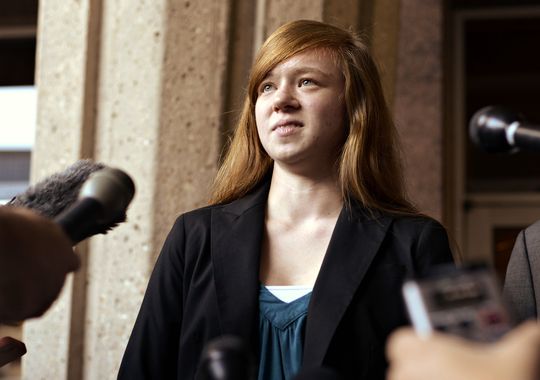
Abigail Fisher outside the Supreme Court

After more than 60 years, is the end of the road near for affirmative action in college admissions?

The idea of using race to help determine who gets a seat in public colleges has been under fire for decades. Eight states have essentially banned the practice, and a Michigan case pending before the U.S. Supreme Court could prompt others to do the same.

College officials nationwide got a wake-up call last June from the high court, which set a high bar for using race as part of a complex admissions program in Texas. Many observers say the combined weight of the two cases could finally push state universities to find another way to promote diversity.

“All the trends are pointing against the continued use of race in admissions,” says Richard Kahlenberg of the Washington, D.C.-based Century Foundation, a liberal think tank. Kahlenberg has for years advocated using family income,not race, as a way to ensure that public K-12 schools and colleges have a diverse student body.

A year after hearing Fisher, the justices last October heard arguments in a case from Michigan, where a 2006 state constitutional amendment banned racial preferences in public university admissions. Seven other states — California, Florida, Washington, Arizona, Nebraska, Oklahoma and New Hampshire — do the same, and about 29% of students live in states where affirmative action is banned, Kahlenberg estimates.

Michigan Attorney General Bill Schuette says the state’s position was summed up well by Chief Justice John Roberts, who said the best way to stop racial discrimination “is to stop discriminating on the basis of race.”

“Our constitution requires equal treatment in college admissions, which is an expression by 58% of Michigan voters in 2006 that says it is fundamentally wrong to treat people differently based on race or the color of their skin,” Schuette says. “It’s just wrong.”

A July 2013 study by Georgetown University scholars Anthony Carnevale and Jeff Strohl found that in 2009, white students were more “over-represented” among the USA’s 468 most selective colleges than they had been in 1995. From 1995 to 2009, the nationwide share of young people ages 18-24 who were white dropped 6 percentage points, from 68% to 62%. But whites’ share of freshman slots at the USA’s most elite colleges dropped just 2 points during that same period, from 77% to 75%.

Another study, by Orfield’s Civil Rights Project, found that 15 years after California’s ban on racial preferences went into effect, increased competition has dropped the share of black in-state high school graduates admitted to UCLA from 47.6% of applicants to 13.7%; the percentage of Latino students admitted dropped from 54.9% of applicants to 14.8%. The percentage of white students admitted also dropped, but not as sharply.

Kahlenberg says the string of affirmative action cases has pushed universities to find alternative ways to create diverse freshman classes. He notes that Texas’ 10% rule has resulted in higher levels of black and Latino representation. Other state systems have gotten similar results by eliminating preferences for children of alumni and bolstering financial aid, among other measures. These strategies have led to more racially and economically diverse classes “in a way the Supreme Court can’t touch,” he says. “I think that’s the future of affirmative action.”

Recent surveys have found that Americans don’t like using race in admissions, Kahlenberg says, “but on the other hand, Americans don’t want to see universities and American higher education re-segregated.”

A decision in the Michigan case, Schuette v. Coalition to Defend Affirmative Action, is expected this spring. If a majority of eight justices rule in Michigan’s favor (Elena Kagan, a former solicitor general, recused herself), it could prompt opponents of affirmative action in other states to push for similar bans.

But if the ban is overturned, states such as California again could weigh race in college admissions — and not a moment too soon, Orfield says. Admissions pressures there have become “very intense.” He notes that UCLA alone last year received nearly 100,000 applications. “It’s a big state, it’s growing … and we haven’t been growing the higher education system.” – USA Today

Contributing: Richard Wolf

‘White people are seriously fanatical… psychopaths’ – Daily Maverick columnist

hating_whiteySouth Africa is the rape capital of the world, but also the capital of anti-white hatred, stoked by unreconstructed (white and Indian) communists, ultraliberals, pan-Africanists and black nationalists of all kinds. Writing in the tradition of Marxist intellectuals Ruth First and Joe Slovo who endorsed the Soviet invastion of Czecho-Slovakia, the left-wing e-rag The Daily Maverick has now published yet another diatribe against the white race under the title Help me understand the white psyche.

We reproduce it here in its entirety as a document of our times, inviting comments and reactions from our readers.

Help me understand the white psyche

by Mlilo Mpondo

What do slavery, colonialism, the Jim Crow laws and Apartheid (to mention but a few), tell us about white folk? They are a) afflicted and b) have serious control issues. Much attention is paid to black history; unfortunately our only marketable history begins in the early 1800s, when we (black folk) were officially introduced to white folk. Anything prior to this epoch doesn’t seem to get the sales going.

Black kingdoms, science and academia are never mentioned. I guess the black narrative without the stroke of struggle isn’t as romantic, doesn’t quite pull at heartstrings the way anguish seems to.

But that isn’t my point today. My point, in case I have been too vague in making it, is this: much mind is paid gazing at the black condition, but not enough of that mind is lent to its white counterpart.

I am yet to stumble upon any documentary or film that engages the psyche of white people. We know much about the effects of civil rights violations on black masses, not only do examples of it impose on our daily lives, it’s also a Hollywood favourite. But what I would like to know is this: what are the effects of civil rights violations on its architects and beneficiaries?

Mlilo Mpondo
Mlilo Mpondo

I don’t know much about white people but I have noted some tendencies. They are either one of four things, firstly: apologetic or empathetic (the latter being a lost cause). Second: not guilty, because “it wasn’t their fault”.  Third: very eager to hold hands and sing Khumbaya around campfires with black chommies in a rainbow nation they are proud to be a part of. (This group is the keenest to forget, and don’t quite understand why people continue to lament about the past, especially now that blacks can shop at Woolworths). Lastly: indifferent, those who are of the notion that they saved us from ourselves. This category has a superiority complex; although they may not be hanging niggers from trees or raping maids in maize fields, they condescend with ease. They are the ones who keep a pocket book of nicknames in case a vernacular name should be too “difficult” to pronounce, are incensed when they meet a black person who cannot speak Afrikaans, and reprimand their staff for being too sensitive when said staff fails to laugh at racial jokes.

Recently I watched the cinematic genius of Steven McQueen’s, 12 Years A Slave, an extraordinary film which I implore anyone reading this to watch. Do not misunderstand me; there was nothing revealing about this film, at least nothing that Amistad, Sarafina, Mississippi Burning and a host of other films of this genre, alongside my brief module on slavery, had not already taught me. While watching the expectantly redundant, but ghastly condition, of slavery, I was not moved by the brutality exerted upon entire generations of black people; I was instead compelled to consider the psyche of white people. I could not for the life of me help but think that white people are seriously fanatical, bollocks, psychopaths, crazy, JUST PURE NUTS.

I kept wondering, what on God’s green earth had happened to these people to make them so insatiable, brutal, malevolent and just downright hateful? Again, do not misunderstand me, no race is without faults or atrocity. But none in history compares to the mayhem caused by white folk across the equator, most sorely felt in Africa.

Granted, colonialism is an experience familiar to all races, an undertaking assumed mostly by Europeans (again white folk). However, when it comes to Africa, no continent has suffered comparably. Whereas in other nations colonialism was mostly concerned with economics by way of appropriating resources to sustain a continent that had fucked up its own, when it came to Africa the mission had more depth. The colonisation of Africa was concerned with more than land conquests. Its ethos was “take the mind but keep the body”, a theory advocated by a pronounced slave owner named Willy Lynch. It emphasised the appropriating of the mind and identity.

Exhibit A: The institutionalisation of the Christian religion, followed by the disappearance of African names, then African pride and its encompassed identity. Exhibit B: Hut and Poll taxes, forcibly removing black men from their homes and placing them in mines, thereby disintegrating a family unit which to this day has been a struggle to rebuild.

Now you (white folk) may assert that this history 411 is a stifling rhetoric which serves only to continuously divide us. My response to this would be that you (white folk) continue to exist in a condition of nonchalance. For some reason unbeknown to me, you (white folk) assume that just because your daughter’s best friend is Naledi, all is well. You may be the type that has a handful of black friends, you may have even felt sorrow at the passing of Mandela, or might sponsor an NGO for black babies with HIV and may have even adopted a few, you may even pay for the school fees of your maid’s children. Yet still, perhaps unknowingly, you contribute to the dehumanised condition in which black people exist.  Poverty of every dimension (mostly of the psyche) is still a black condition.

What you don’t understand is that it is perpetuated by you who remain apathetic. It is made constant by white folk who, although liberal, can casually blame the depreciation of the rand on ignorant miners, farmers, and all labourers alike that strike for better wages. Obscene bonuses of mining CEOs don’t perplex you as much as they frustrate the rest of us.  You, who complain that higher wages would affect profit and dismiss Malema’s calls for nationalisation and land redistribution as foolish, ignoring the fact that a majority of black folk continue to live in squalor in shacks or derelict RDP houses. You, who complain that higher wages would affect profit and ultimately GDP. Instead you are more concerned with the negative image caused by all the toyi-toying and how blacks just don’t understand economics. Is it that you are delusional or just divorced from reality? Either way, we are asking questions.

These disregards for black people could possibly explain why in the past decade students at the University of the Free State made cleaners drink urine; why two black men on their way home from work were tied up to the back of a bakkie and had the life dragged out of them by two white men, or why that white farmer threw his black worker into a lion enclosure. It could even shed light on why two young white boys, barely out of puberty, found themselves beating the life out of a homeless black man.

How do you, on the one hand, through your passivity and continued comfort, annihilate black masses, whilst, on the other, insist that we all just get along? I just want to know what it’s like to be, in history and at present, the greatest violators of human rights, what made you this way?  Unknowingly or otherwise, how are you this afflicted and so darn crazy?

I know plenty about being all kinds of black, literature has favoured us kindly. But today I would like to know what it means to be white.

Original here.

SA Police to defend anti-white policy in Constitutional Court

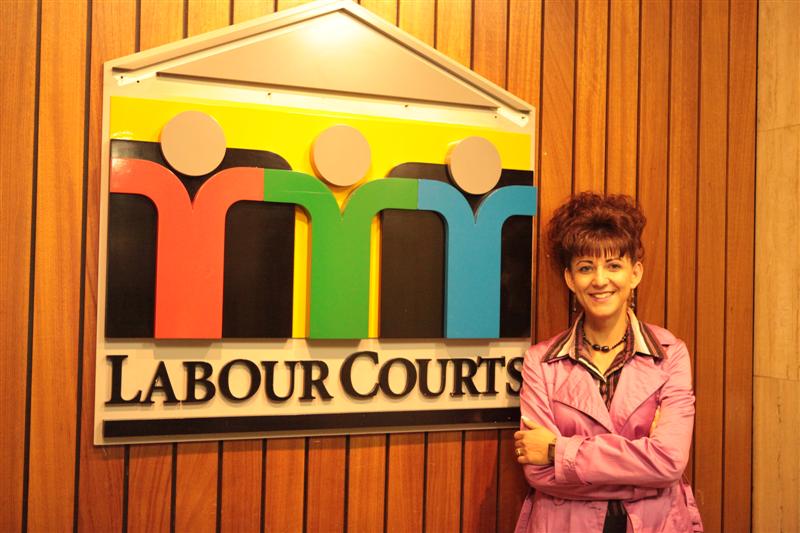
Renate Barnard... too white for promotion
Renate Barnard… too white for promotion

The South African Police Service (SAPS) now wants to refer the Renate Barnard affirmative action case to the Constitutional Court. Yesterday, court papers were served on Solidarity which is representing Barnard. Solidarity will oppose the SAPS’s application for leave to appeal.

‘Solidarity is shocked by the SAPS’s decision to defend its unlawful race practices all the way to the Constitutional Court,’ Dirk Hermann, Solidarity’s Executive Officer said in a statement. According to Hermann, the Supreme Court of Appeal in Bloemfontein passed an excellent judgment that balances the rights of all. ‘We get the impression that the SAPS believes that affirmative action annuls the constitutional rights to equality and dignity of white employees like Barnard. Should that be the case, then affirmative action would have a higher authority than the Constitution itself. This would imply that South Africa is an affirmative action state and not a constitutional state. We are of the opinion that an appeal to the Constitutional Court is inappropriate. The SAPS should abide by the Supreme Court of Appeal’s judgment.’

Hermann says the greatest injustice brought about by this is the time it is taking to get justice for Barnard. ‘She has been fighting for justice for the past 8 years, and a constitutional court application will simply delay this process even more. She exudes passion to serve the South African public, and surely something is patently wrong if the colour of her skin is the only stumbling block preventing her to live out her calling.’

Hermann added that although Solidarity believes that, for Barnard’s sake, it is inappropriate to refer this matter to the Constitutional Court, it will be advantageous for South Africa to obtain legal certainty about these burning issues in the highest court.

In November, the Supreme Court of Appeal in Bloemfontein ruled in favour of Solidarity and Barnard. The SAPS was ordered to pay the costs associated with the litigation in the Labour, Labour Appeal Courts as well as in the Supreme Court of Appeal, as well as Barnard’s backdated remuneration.

Barnard’s affirmative action struggle began as far back as 2005. Twice, she had applied for the same position. In both instances she was found to be the best candidate and the interviewing panel recommended her appointment. The position was, however, left vacant. The position was advertised a third time, but was scrapped after she had again applied for it.

Fliers threaten violence against blacks in California city

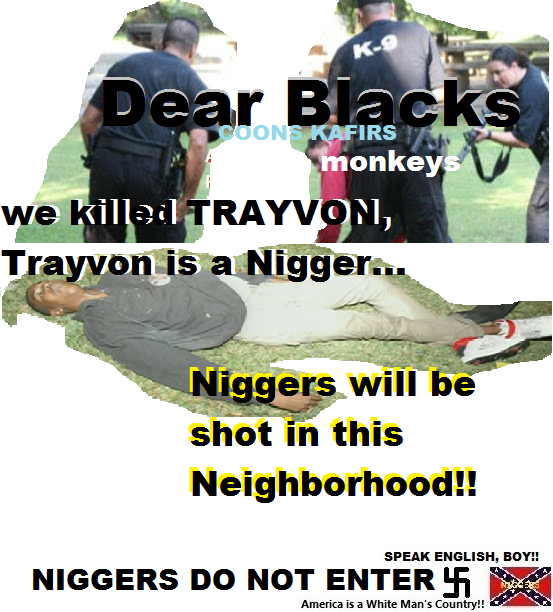
Alleged flier found on the scene threatening violence against blacks, from the pro-black site "Race Lies"
Alleged flier found on the scene threatening violence against blacks, from the pro-black site “Race Lies”

Fliers with racial slurs have been found scattered throughout the city of Lancaster for the past few weeks, reports KABC. Now the search is on for the person who made them. They include hateful and threatening messages aimed at minorities.

A racist flier, too graphic to show, is circulating in Lancaster. It uses a racial slur and makes serious threats. L.A. County sheriff’s detectives say the flier started showing up in various Lancaster neighborhoods about two weeks ago.

“At this point we are investigating it as a hate incident,” said sheriff’s deputy Miguel Ruiz. “Fliers have been posted throughout the city specifically targeting African-Americans with derogatory terms and racial slurs.”

Some of the threats include warning people of color that if they show up around certain addresses in Lancaster they will be shot.

“We’ve investigated those specific locations. One of them specifically is a vacant home, so there is no one there at that residence. So don’t feel incited that those specific addresses are the people involved with these fliers,” said Ruiz.

“In these days, in this city, it’s atrocious and has the city concerned,” said Darren Parker, Antelope Valley Human Relations Commission.

Detectives say the flier could have initially been put out as part of some neighborhood dispute before it spread throughout Lancaster. They hope to close in on a suspect soon.

Lancaster Mayor R. Rex Parris says the city and sheriff’s department will not tolerate racist, hate-filled threats of any kind.

“What people have to understand: The moment you elevate it to a hate crime we put more resources into that than if it’s a murder, and right now we have more deputies working on this than we do some unsolved murders,” said Parris.

South Africa’s war of perspectives and the whites’ dwindling fortunes

roodt_dan_wiki

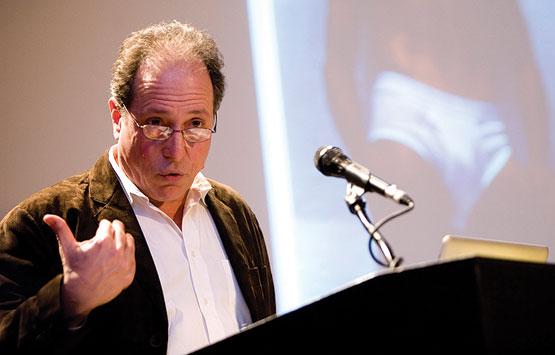
by Dan Roodt dan[at]praag.org

Ever since Britain started getting seriously interested in South Africa after the discovery of diamonds at Kimberley in 1866, there have been at least two conflicting views of the country. Throughout the twentieth century too, South Africa has borne the brunt of the Western ideological revolutions, all the way from colonialism and so-called “white supremacy” to contemporary political correctness. In fact, in the aftermath of the Mandela funeral, one could almost speak of the West’s religious devotion to black Africans who are being endowed with all the capricious amoral innocence of Greek gods.

More precisely, South Africa has been the theatre of an “epistemic war” if I could be excused such a French-sounding term. Apart from the very palpable shifts in demographic, political, economic and military power towards South African blacks, locals are also acutely aware of how the Western world view is no longer the dominant one in South Africa.

A few years ago I spoke to a liberal, anglophone, Jewish woman who lived in Johannesburg but who had some connection to the huge Baragwanath hospital in Soweto, one of the proud achievements of the former Afrikaner-led government. Within the Afrikaner mind, blacks had wanted not real political power but hospitals, schools, universities and jobs which is why they put so much effort into constructing such public institutions. Those institutions are currently being derided as having been entirely useless and a sop, or an insult to blacks, especically to the divine black leaders such as Mandela.

The point is, however, that since the black takeover in the country “they have changed the frame of reference” as my liberal Jewish friend put it. But she wasn’t really speaking in general terms, referring to the broad sweep of history and politics. First and foremost, she was speaking in medical terms. What she was saying, was that with the new order had come a new way of looking at healthcare, at patients and the function of a hospital. In short, the age-old belief systems of Africans have been reasserting themselves and “success” is no longer measured in white or European terms. That is why, when whites decry the deterioration of the state hospital system, as well as standards of professionalism and hygiene there, blacks are quick to retort with the ubiquitous cry of “racism”. After all, blacks are now in charge and they make the rules and set the standards against which a hospital, a school, a university or even a government will be measured.

It is really hard to understand the hullabaloo over President Zuma’s expenditure on what amounts to a private Zulu homestead or kraal at Nkandla. Compared to the billions being frittered away in corruption and unauthorised expenditure, the R240 million (about $20 million) involved seems almost paltry.

It is a truism of historians and philosophers alike, that one’s assessment of a situation – any situation – depends on one’s perspective. Not so long ago I read a paragraph by French political philosopher Alain de Benoist wherein he said:

… I am not fighting for the white race. I am not fighting for France. I am fighting for a world view. I am a philosopher, a theoretician, and I fight to explain my world view. And in this world view, Europe, race, culture, and identity all have roles. They are not excluded. But mainly I am working in defense of a world view. Of course, I am very interested in the future and destiny of my own nation, race, and culture, but I am also interested in the future of every other group.

That all sounds very interesting, but somewhat abstract. To the Afrikaner farmer who is being attacked in his or her home by a group of blacks who had imbibed some form of “medicine” or muti to make them invincible, the quesion is one, not of philosophy but of survival.

At a more mundane or political level, the clash is one of perspectives, even a traditional fight between the left and the right. In South Africa, any statement expressing concern over the future of whites or their well-being is almost always characterised as “right-wing”. Blacks are simply too good-natured and inherently moral ever to commit evil on a significant scale against whites.

This is also the foreign perspective. A Marxist theologian in Germany or a pro-white militant in America would concur that whites “have no place in South Africa, at the southern tip of a black continent”. On the other hand, the Afrikaner perspective is quite the opposite. They feel deeply rooted in South Africa and reject the “black supremacism” of both the foreign whites and the anglicised, superficially Westernised blacks who see them as being “not indigenous” to the country or the continent.

For most of the twentieth century, there has been a perspectival war around the notion of whether Afrikaners or whites really “belong” in South Africa or not. Once, I was shocked to see the former leader of the opposition, Tony Leon, being bluntly told by a BBC announcer on the programme Hard Talk that he was a “white politician” and that South Africa had always been “their country” – meaning that of the blacks – even in former centuries when their numbers were limited to about a million, nomadically drifting through parts of a mostly unpopulated territory twice the size of France.

Buy Dan Roodt's book through Amazon.com
Buy Dan Roodt’s book through Amazon.com

History, as the ruling ANC politicians usually put it in their quasi-communist way, is “a terrain of ideological struggle”. Needless to say, whites have lost that ideological struggle – or the perspectival war over the past – hands down. It is now better to kiss the feet of Mandela’s bronze colosssus than to voice your own opinions or interpretation of history.

Faulkner, that strange author from the American South who uses the “N word” in his novels but depicts his own Southern whites with relentless cynicism, once wrote: “The past is never dead. It’s not even past.” So there will always be a feud over history, everyone’s history.

But looking at the future of South Africa, or even our present safety in a physical sense, it also depends on one’s perspective. To foreigners and overseas correspondents in South Africa, this is Mandelatopia, a liberal democracy with same-sex marriages and universal suffrage – although cannabis is not yet quite legal. According to this view, which is based on a very superficial “multicultural” reading, “South Africa belongs to all who live in it, united in our diversity”, as it is stated in our incongruous constitution, replete with rancour and affirmative-action clauses.

Many whites, especially women, have a sense of impending doom. The crime, corruption and general sense of lawlessness portend worse to come. Usually, they are not arguing against the dominant ideology with its illusions of democratic bliss. Rather, they intuit some kind of typically African implosion or civil war during which whites will be punished for all the evil they have wrought in their zeal to “uplift” and “civlise” blacks, admittedly ridiculous notions within the present context.

To the pessimist or the more intuitive analyst, South Africa’s future represents the “chronicle of a death foretold”, or many deaths, if you will pardon my paraphrasing the fetching title of Gabriel Márquez’s little novel. It will be Zimbabwe on a much vaster scale, and much bloodier. It is already much bloodier, and ultimately the country will be ethnically cleansed of its Caucasian undesirables, probably to universal acclaim.

Depending on one’s point of view, South Africa is either a “problem that has been happily solved” or a disaster in the making. Looking at the past, especially the nineteenth century when indigenous whites were as weak as they are now and were regularly massacred by blacks, as well as the history of postcolonial Africa, I am not macho enough to cast all caution to the winds and believe in the foreign male fantasy of a South Africa that is some kind of Switzerland or Singapore, clean, tolerant and law-abiding.

There being no common ground in this war of perspectives, no rational debate will take place either. I am inclined to trust those “womanly” truths that are as unspeakable as they are likely to come to pass.

Donate or subscribe to praag!

Letter from Zimbabwe: Generations yet to be born

Cathy Buckle

by Cathy Buckle

Christmas has arrived with a bombshell to Zimbabwe this year. A seven page photocopied form has flooded what’s left of privately owned, legally operating businesses. It’s called the ‘Notification of Extent of Indigenisation and Indigenisation Implementation Plan.’ All ‘foreign’ owned businesses have been instructed to outline their plans to hand over 51% of their companies to ‘indigenous’ Zimbabweans.

At first glance you assume that ‘foreign’ refers to non Zimbabweans but that assumption isn’t the case. According to the Form, an ‘indigenous’ Zimbabwean is defined as “any person who, before the 18th April 1980 was disadvantaged by unfair discrimination on the grounds of his or her race, and any descendant of such person and includes any company, association, syndicate or partnership of which indigenous Zimbabweans form the majority of the members or hold the controlling interest.”

This phrase, and those that follow, leave you with more questions than answers, no matter how many times you read them. It seems that by including the word ‘descendants’, the term ‘indigenous’ also refers to generations yet to be born, conceived or even dreamed of. Then there’s the question about just exactly who is indigenous. If you are a Zimbabwean born Indian, or mixed race or white Zimbabwean, can you be called indigenous? If you are a black Zimbabwean whose parents, grandparents or great grandparents were not born in Zimbabwe – are you indigenous? If your skin is not black but you have a Zimbabwean ID card, a residence permit or a work permit can you be called indigenous? If you were born after 1980, regardless of your skin colour , are you therefore not regarded as indigenous? Or have we all been condemned because of the colour of our skins, regardless of our beliefs, values and actions both before and after 1980?

The most worrying question of all is: Are non-black Zimbabweans, born and resident here, working, employing and paying taxes, to be punished for eternity for something that other non-black people did?

All companies have been told they must submit the Indigenisation Form by the 1st of January 2014. A list of over 50 categories of businesses are itemized on the Form and with each line your heart sinks. All the things that everyone has been doing to survive since farms were seized and the economy went into freefall, are on the indigenisation schedule.

The Indigenisation Form stipulates that every business must ‘cede a controlling interest of not less than 51%’ of its shareholdings to ‘indigenous’ Zimbabweans with effect from the 1st of March 2010 or within five years from the commencement of business. According to the Permanent Secretary for Indigenisation, non compliance with the Indigenisation law will lead to arrest. Lawyers say they are waiting for people to come forward and challenge the legislation but they aren’t offering pro bono services and for companies struggling to stay open, lawyer’s fees aren’t in the budget, nor is the ability to swallow the outrage that you must give away a 51% controlling interest of your company because of the colour of your skin.

While this ugly plan is unfolding in Zimbabwe, we tried to follow the events in South Africa but it wasn’t easy. ZBC gave almost no coverage to the death of Nelson Mandela or the week of international memorials and tributes. ZBC TV waited until the day after the Johannesburg memorial service and then screened just a few minutes of the service, not providing the audio of any of the speeches of world leaders. They didn’t give Zimbabweans the chance to hear US President Obama say words that we so wish were also true for Zimbabwe. President Obama said that because Nelson Mandela was not only a leader of a movement but also a skilled politician, South Africa now had a Constitution that was: “true to his vision of laws that protect minority as well as majority rights, and the precious freedoms of every South African.”

This is my last letter of 2013 and I wish all Zimbabweans, and people who follow our trials and turmoil, a happy, peaceful and safe Christmas. Thank you for reading this letter and supporting my books for so long, without you I wouldn’t have had to courage to keep going. Until next time, love Cathy.

Read Cathy Buckle’s blog where she posts regular letters from Zimbabwe.

White suburbs want to secede from majority-black US city

The capital city of the state of Louisiana in the USA, Baton Rouge, is in for a rough ride as its predominantly white southern suburbs want to secede from the northern inner-city areas. According to the latest American census 50,4% of Baton Rouge residents are Black or African American, 40,8% White, 0,5% Native American, 3.5% Asian, and 1.3% from two or more races. Hispanics or Latinos were 3,5% of the population. 

Skyline of Baton Rouge with the Mississippi river

According to the Raw Story website, ‘The predominantly white and wealthy residents of the southern area of Baton Rouge have proposed seceding from the city proper and incorporating into a new one to be called ‘St. George’.

“The movement began as an effort to create a new school district, but after the state legislature repeatedly mothballed its proposals — claiming that they could not approve an independent school district that was unaffiliated with a city — organizers shifted their energies to the creation of ‘St. George’.”

The new city would be the fifth largest in the state, with over 107,000 residents, and would include two of the largest tax revenue bases in the state: Perkins Rowe and the Mall of Louisiana. A study by the Baton Rouge Area Chamber concluded that Baton Rouge residents “will be disproportionately paying taxes to the proposed municipality”, given city governance’s reliance on sales tax revenues.

If the succession were successful, the study claimed, it “could entail the dissolution of the present system of governance”.

The black mayor of Baton Rouge, Melvin L. “Kip” Holden, is opposed to the idea and claims that the problems in the school system have been addressed.

According to one expert, “the demographic shift the incorporation of ‘St. George’ would create is almost as troubling as the economic difficulties (caused by lost tax revenue from white residents). According to a recent study on the demographic impact of Hurricane Katrina, the city of Baton Rouge accepted over 200 000 displaced New Orleans residents, the majority of whom were black and settled in the northern, urban parts of the city.

The ‘St. George’ proposal would create a poor, black, and urban Baton Rouge and a wealthy, white, and suburban ‘St. George’.

Here is a video news bulletin on the issue.

Appeal Court: Police ‘clearly discriminated against’ white police officer

Lt-Col Renate Barnard

The Supreme Court of Appeal (SCA) said on Thursday the SA Police Service had clearly discriminated against Lt-Col Renate Barnard on the basis of race.

The SCA has upheld an appeal against a decision of the Labour Appeal Court (LAC) that overturned a decision of the Labour Court, Sapa reported.

The Labour Court held that Barnard had been unfairly discriminated against when she was not appointed to a higher position.

She was not promoted to position of superintendent within a specialised unit of the SAPS, despite being the best candidate for the post. The court held that Barnard had clearly been discriminated against on the basis of race.

Barnard had twice applied unsuccessfully for promotion to the position.

The position was that of superintendent within the then National Evaluation Services (NES), dealing with complaints by the public and public officials on any matter regarding the police services.

Despite recommendations by an interviewing panel and her divisional commissioner, the national commissioner did not appoint her.

The reason given was that racial representivity at the level of superintendent would be negatively affected.

On Thursday, the SCA said it noted that the appeal turned on its own facts and that it would be presumptuous to assert and foolish to assume that the decision in this case would be an all-embracing guide to deciding future cases.

“If we are to build a cohesive society with cohesive components within the state structure, we have to be situation sensitive,” the SCA said.

The judgment further stated that to redress past imbalances with affirmative action measures, race had to be taken into account, but it should do so fairly and without losing focus that the ultimate objective was to ensure a fully inclusive society.

“One [society] compliant with all facets of our constitutional project,” it stated.

Race matters: DA

DA parliamentary leader Lindiwe Mazibuko

Race remains a legitimate measure of disadvantage in South Africa, the DA said on Sunday.

“A non-racial society is a goal — it doesn’t exist today,” Democratic Alliance parliamentary leader Lindiwe Mazibuko told journalists, speaking at the end of her party’s federal council meeting in Cape Town.

The event, which ran over three days, was attended by about 150 delegates from around the country.

Mazibuko said the “big thing” to come out of the meeting was “the question of whether or not the DA accepts race as a legitimate proxy for disadvantage”.

“The reality is, we don’t live in a non-racial society… So we had to answer a very big policy question, which is going to underpin every redress policy we have — from social development to land reform, and many others in between.

“The question is: Do we believe that in 2013 race is still a legitimate proxy for disadvantage? And the answer was yes.”

Mazibuko stressed this was not a “permanent proxy” for disadvantage.

“It has a horizon,” she said, adding that this limit would depend on future measurements of how successful black advancement proved to be.

DA leader Helen Zille said the message from the conference could be summarised in three broad messages.

“The first is we support BBBEE [broad-based black economic empowerment] that creates jobs… The second is that black advancement benefits everyone. And the third is we support BBBEE when it is broadbased and productive.”

She said this did not imply the party supported the African National Congress approach to redress.

Zille listed what she called the fundamental principles underpinning the party’s so-called economic inclusion policy, and spelled out why the party rejected racial quotas.

“We reject racial quotas in favour of programmes that actively promote black advancement by extending opportunity.”

Responding to a question on whether there had been tensions between members of the DA’s so-called “black caucus” and its “old guard”, as reported in the media, Zille said this had never been an issue.

“There was never an issue… There never really was anything such as a ‘black caucus’… There wasn’t any division or racial polarisation on issues at all,” she said.

On whether there would be “recriminations” over the DA’s apparent confusion in Parliament over its position on employment equity and BEE legislation, Mazibuko said this would not happen. The matter had been dealt with by party structures.

“There will be no recriminations. I have re-allocated two portfolios and that is the extent of the change that will take place at a personal level,” she said.

Zille said the set of policies finalised by her party over the weekend would “drastically reduce poverty and inequality”.

Economic growth had to be inclusive.

“That is why we support corrective programmes that actively promote black advancement without hampering growth and jobs.”

Asked how she thought the party’s voters might respond to these policies in next year’s general election, Zille said black advancement was aimed at benefiting all.

“If there are South Africans who don’t like this, there are many other parties to choose from,” she said. – Sapa

‘Embrace new affirmative action bill’: Black Management Forum

affirmativeactionThe Black Management Forum urged the private sector on Friday to embrace the Employment Equity Amendment Bill.

“The BMF applauds the passing of the EE Amendment Bill in Parliament and encourages corporate South Africa to embrace the amendments,” the organisation said in a statement.

The bill, which aims to regulate demographic representivity in the workplace completed its passage through Parliament on Thursday when it got the nod in the National Council of Provinces.

It had earlier been approved in the National Assembly.

“The amendments are necessary to ensure that the effects of past discriminatory practices can be addressed in order to level the playing field and afford everyone the same advantages and opportunities.”

America’s angry, white men – losing out to corporations and effeminates

Michael Kimmel
Michael Kimmel

by Michael Kimmel

Who are the white supremacists? There has been no formal survey, for obvious reasons, but there are several noticeable patterns. Geographically, they come from America’s heartland—small towns, rural cities, swelling suburban sprawl outside larger Sunbelt cities. These aren’t the prosperous towns, but the single-story working-class exurbs that stretch for what feels like forever in the corridor between Long Beach and San Diego (not the San Fernando Valley), or along the southern tier of Pennsylvania, or spread all through the Upper Peninsula of Michigan, across the vast high plains of eastern Washington and Oregon, through Idaho and Montana. There are plenty in the declining cities of the Rust Belt, in Dearborn and Flint, Buffalo and Milwaukee, in the bars that remain in the shadows of the hulking deserted factories that once were America’s manufacturing centers. And that doesn’t even touch the former states of the Confederacy, where flying the Confederate flag is a culturally approved symbol of “southern pride”—in the same way that wearing a swastika would be a symbol of German “heritage” (except it’s illegal in Germany to wear a swastika).

There’s a large rural component. Although “the spread of far-right groups over the last decade has not been limited to rural areas alone,” writes Osha Gray Davidson, “the social and economic unraveling of rural communities—especially in the midwest—has provided far-right groups with new audiences for their messages of hate. Some of these groups have enjoyed considerable success in their rural campaign.” For many farmers facing foreclosures, the Far Right promises to help them save their land have been appealing, offering farmers various schemes and legal maneuvers to help prevent foreclosures, blaming the farmers’ troubles on Jewish bankers and the one-world government. “As rural communities started to collapse,” Davidson writes, the Far Right “could be seen at farm auctions comforting families . . . confirming what rural people knew to be true: that their livelihoods, their families, their communities—their very lives—were falling apart.” In stark contrast to the government indifference encountered by rural Americans, a range of Far Right groups, most recently the militias, have seemingly provided support, community, and answers.

In that sense, the contemporary militias and other white supremacist groups are following in the footsteps of the Ku Klux Klan, the Posse Comitatus, and other Far Right patriot groups who recruited members in rural America throughout the 1980s. They tap into a long history of racial and ethnic paranoia in rural America, as well as an equally long tradition of collective local action and vigilante justice. There remains a widespread notion that “Jews, African-Americans, and other minority-group members ‘do not entirely belong,’” which may, in part, “be responsible for rural people’s easy acceptance of the far right’s agenda of hate,” writes Matthew Snipp. “The far right didn’t create bigotry in the Midwest; it didn’t need to,” Davidson concludes. “It merely had to tap into the existing undercurrent of prejudice once this had been inflamed by widespread economic failure and social discontent.”

And many have moved from their deindustrializing cities, foreclosed suburban tracts, and wasted farmlands to smaller rural areas because they seek the companionship of like-minded fellows, in relatively remote areas far from large numbers of nonwhites and Jews and where they can organize, train, and build protective fortresses. Many groups have established refuge in rural communities, where they can practice military tactics, stockpile food and weapons, hone their survivalist skills, and become self-sufficient in preparation for Armageddon, the final race war, or whatever cataclysm they envision. Think of it as the twenty-first-century version of postwar suburban “white flight”—but on steroids.

They’re certainly Christian, but not just any Christian—they’re evangelical Protestant, Pentacostalist, and members of radical sects that preach racial purity as the Word of Jesus. (Catholicism is certainly stocked with conservatives on social issues, but white supremacists tap into such a long and ignoble tradition of anti-Catholicism that they tend to have their own right-wing organizations, mostly fighting against women’s rights and gay rights.) Some belong to churches like the Christian Identity Church, which gained a foothold on the Far Right in the early 1980s. Christian Identity’s focus on racism and anti-Semitism provides the theological underpinnings to the shift from a more “traditional agrarian protest” to paramilitarism. It is from the Christian Identity movement that the Far Right gets its theological claims that Adam is the ancestor of the Caucasian race, whereas non-whites are pre-Adamic “mud people,” without souls, and Jews are the children of Satan. According to this doctrine, Jesus was not Jewish and not from the Middle East; actually, he was northern European, his Second Coming is close at hand, and followers can hasten the apocalypse. It is the birthright of Anglo-Saxons to establish God’s kingdom on earth; America’s and Britain’s “birthright is to be the wealthiest, most powerful nations on earth . . . able, by divine right, to dominate and colonize the world.”

A large proportion of the extreme right wing are military veterans. Several leaders served in Vietnam and were shocked at the national disgust that greeted them as they returned home after that debacle. “America’s failure to win that war was a truly profound blow,” writes William J. Gibson. “If Americans were no longer winners, then who were they?” Some veterans believed they were sold out by the government, caving in to effeminate cowardly protesters; they can no longer trust the government to fight for what is right. Bo Gritz, a former Green Beret in Vietnam, returned to Southeast Asia several times in clandestine missions to search for prisoners of war and was the real-life basis for the film Rambo. He uses his military heroism to increase his credibility among potential recruits; one brochure describes him as “this country’s most decorated Vietnam veteran” who “killed some 400 Communists in his illustrious military career.” In 1993 Gritz began a traveling SPIKE (Specially Prepared Individuals for Key Events) training program, a rigorous survival course in paramilitary techniques.

Many of the younger guys are veterans of the first Gulf War, a war that they came to believe was fought for no moral principles at all, but simply to make America’s oil supply safer and to protect Israel from possible Arab attack. They feel they’ve been used, pawns in a larger political game, serving their country honorably only to be spit out and stepped on when they returned home to slashed veteran benefits, bureaucratic indifference to post-traumatic stress disorder, and general social contempt for having fought in the war in the first place. They believed they were entitled to be hailed as heroes, as had earlier generations of American veterans, not to be scorned as outcasts. Now a guy like Bo Gritz symbolizes “true” warrior-style masculinity, and reclaiming their manhood is the reward for signing up with the Far Right.

The class origins of racial politics

Perhaps what binds them all together, though, is class. Rural or small town, urban or suburban, the extreme Right is populated by downwardly mobile, lower-middle-class white men. All of the men I interviewed—all—fitted this class profile. When I compared with other ethnographies and other surveys, they all had the same profile as well.

In the United States, class is often a proxy for race. When politicians speak of the “urban poor,” we know it’s a code for black people. When they talk about “welfare queens,” we know the race of that woman driving the late-model Cadillac. In polite society, racism remains hidden behind a screen spelled CLASS.

On the extreme Right, by contrast, race is a proxy for class. Among the white supremacists, when they speak of race consciousness, defending white people, protesting for equal rights for white people, they actually don’t mean all white people. They don’t mean Wall Street bankers and lawyers, though they are pretty much entirely white and male. They don’t mean white male doctors, or lawyers, or architects, or even engineers. They don’t mean the legions of young white hipster guys, or computer geeks flocking to the Silicon Valley, or the legions of white preppies in their boat shoes and seersucker jackets “interning” at white-shoe law firms in major cities. Not at all. They mean middle-and working-class white people. Race consciousness is actually class consciousness without actually having to “see” class. “Race blindness” leads working-class people to turn right; if they did see class, they’d turn left and make common cause with different races in the same economic class.

That’s certainly what I found among them. Most are in their mid-thirties to early forties, educated at least through high school and often beyond. (The average age of the guys I talked with was thirty-six.) They are the sons of skilled workers in industries like textiles and tobacco, the sons of the owners of small farms, shops, and grocery stores. Buffeted by global political and economic forces, the sons have inherited little of their fathers’ legacies. The family farms have been lost to foreclosure, the small shops squeezed out by Walmarts and malls. These young men face a spiral of downward mobility and economic uncertainty. They complain that they are squeezed between the omnivorous jaws of global capital concentration and a federal bureaucracy that is at best indifferent to their plight and at worst complicit in their demise.

And they’re right. It is the lower middle class—that strata of independent farmers, small shopkeepers, craft and highly skilled workers, and small-scale entrepreneurs—that has been hit hardest by globalization. “Western industry has displaced traditional crafts—female as well as male—and large-scale multinational-controlled agriculture has downgraded the independent farmer to the status of hired hand,” writes journalist Barbara Ehrenreich. This has resulted in massive male displacement—migration, downward mobility. It has been felt the most not by the adult men who were the tradesmen, shopkeepers, and skilled workers, but by their sons, by the young men whose inheritance has been seemingly stolen from them. They feel entitled and deprived—and furious. These angry young men are the foot soldiers of the armies of rage that have sprung up around the world.

What’s important to note is that they are literally the sons. It was their fathers who closed the family store, who lost the family farm. Some are men who have worked all their adult lives, hoping to pass on the family farm to their sons and retire comfortably. They believed that if they worked hard, their legacy would be ensured, but they leave their sons little but a legacy of foreclosures, economic insecurity, and debt.

It was their status next to their father’s and grandfather’s names on the cabinetmaking storefront that said “Jones and Sons.” These were businesses that came not only with the ability to make a living, but came with dignity, with a sense of craft pride, a sense that you owned your own store or farm, owned and controlled your own labor—even employed some other people—and that this economic autonomy had been a source of great pride in the family for generations. In a near-throwaway footnote in his classic study of identity development, “Childhood and Society” (1950), Erik Erikson locates the origins of young men’s anger in a multigenerational story:

In psychoanalytic patients the overwhelming importance of the grandfather is often apparent. He may have been a blacksmith of the old world or a railroad builder of the new, and as yet proud Jew or an unreconstructed Southerner. What these grandfathers have in common is that fact that they were the last representatives of a more homogeneous world, masterly and cruel with good conscience, disciplined and pious without loss of self-esteem. Their world invented bigger and better machinery like gigantic playthings which were not expected to challenge the social values of the men who made them. Their mastery persists in their grandsons as a stubborn, an angry sense of superiority. Overtly inhibited, they yet can accept others only on terms of prearranged privilege.

“It wasn’t my daddy’s farm,” said Andy, “it was my granddaddy’s, and his daddy’s, and his daddy’s. Five generations of Hoosier farmers.” Generations of Hoosier men, who worked the farm, supported a family, made a living with dignity. They proved their masculinity in that most time-honored way in America: as family providers. And it was their fathers who lost it all, squandered their birthright. Instead of getting angry at their fathers, Andy and his comrades claim the mantle of the grandfathers, displace their rage outward, onto an impermeable and unfeeling government bureaucracy that didn’t offer help, onto soulless corporations that squeezed them mercilessly. By displacing their anger onto those enormous faceless entities, the sons justify their political rage and rescue their own fathers from their anger.

Some can’t do it. Some of the sons—and the fathers—turn their rage inward. We have already discussed the wave of suicides that rippled across the American heartland in the 1980s and 1990s—spawning widespread concern and a series of Farm Aid concerts to raise awareness. The number of suicides in America’s Midwest was higher in the 1990s than during the Great Depression; suicide was the leading cause of agricultural fatalities for two decades—by far. Men were five times more likely to kill themselves than die by accident. “To fail several generations of relatives (both backwards and forwards into those unborn descendants who will now not be able to farm), to see yourself as the one weak link in a strong chain that spans more than a century, is a terrible, and for some, an unbearable burden,” writes Osha Gray Davidson. “When a fellow in a steel mill loses his job, he has basically lost his paycheck,” a physician at the University of Iowa explained. “When an Iowa farmer loses his farm, he’s lost the guts of his life.”

One woman, speaking at a town meeting in Tonkawa, Oklahoma, in 1991, provided an eloquent narrative of this process:

I am a 46-year-old mother of three children. We have lost two farms since 1980, my mother in law’s farm as well as our own. We were forced to sell 160 acres of land that was very special to us. It was homesteaded by my husband’s great grandfather and for years had served as home to our cow and calf operation which we were forced to sell just a few months before we sold the land.

My husband became completely consumed by our circumstances caused by the farm crisis. He left me. Our family continued to deteriorate and our marriage ended in divorce. We had been through natural crises before—drought, flood, crop failure—these we accepted and went on.

But when the threat of losing everything comes to your doorstep because of the bad economy, low commodity prices and high interest on your base notes has left you hopelessly in debt, your faith is sometimes shaken. No one likes to consider that their life has been pointless.

Others direct this seething rage outward. “Many debt ridden farm families will become more suspicious of government, as their self-worth, their sense of belonging, their hope for the future deteriorates,” predicted Oklahoma psychologist Glen Wallace presciently in 1989. “The farms are gone,” writes Dyer, “yet the farmers remain. They’ve been transformed into a wildfire of rage, fueled by the grief of their loss and blown by the winds of conspiracy and hate-filled rhetoric.” “It is hardly surprising, then, that American men—lacking confidence in the government and the economy, troubled by the changing relations between the sexes, uncertain of their identity or their future—began to dream, to fantasize about the powers and features of another kind of man who could retake and reorder the world. And the hero of all these dreams was the paramilitary warrior.” The contemporary white supremacist movement is the embodiment of these warrior dreams.

Their plan is to get even. Unlike Joe Wesbecker, some guys don’t just get even by rampaging through their factory floor or their corporate offices, shooting at their former colleagues and coworkers. They get mad, and they get organized. They cobble together a theory that explains their plight—grafting together fringe elements of evangelical Christianity, traditional anti-Semitism and racism, and general right-wing paranoia into an amalgam that is loosely held together by a nostalgic vision of hardy, independent frontier manhood. Like the guys who go postal, they externalize their rage—their anguish is clearly the fault of someone else—but they don’t externalize it to their immediate surroundings, their boss, supervisor, or coworkers. Instead, it’s larger, more powerful, and pernicious social forces—Jews, Muslims, minorities generally, women.

These are the sons of small-town America, the Jeffersonian yeoman of the nineteenth century, disfigured by global restructuring and economic downturns. They come from the “large and growing number of US citizens disaffected from and alienated by a government that seems indifferent, if not hostile, to their interests. This predominantly white, male, and middle-and working-class sector has been buffeted by global economic restructuring with its attendant job losses, declining real wages, and social dislocations. While under economic stress, this sector has also seen its traditional privileges and status challenged by 1960s-style social movements, such as feminism, minority rights, and environmentalism.”

The sons of these farmers and shopkeepers expected to—and felt entitled to—inherit their fathers’ legacy. And when it became evident it was not going to happen, they became murderously angry—at a system that emasculated their fathers and threatens their manhood. They live in what they call a “Walmart economy” and are governed by a “nanny state” that doles out their birthright to ungrateful and undeserving immigrants. What they want, says one guy, is to “take back what is rightfully ours.”

*

So, who are they really, these hundred thousand white supremacists? They’re every white guy who believed that this land was his land, was made for you and me. They’re every down-on-his-luck guy who just wanted to live a decent life but got stepped on, every character in a Bruce Springsteen or Merle Haggard song, every cop, soldier, auto mechanic, steelworker, and construction worker in America’s small towns who can’t make ends meet and wonders why everyone else is getting a break except him. But instead of becoming Tom Joad, a left-leaning populist, they take a hard right turn, ultimately supporting the very people who have dispossessed them.

They’re America’s Everymen, whose pain at downward mobility and whose anger at what they see as an indifferent government have become twisted by a hate that tells them they are better than others, disfigured by a resentment so deep that there are no more bridges to be built, no more ladders of upward mobility to be climbed, a howl of pain mangled into the scream of a warrior. Their rage is as sad as it is frightening, as impotent as it is shrill.

Walking the patriotic capitalist tightrope

You might think that the political ideology of the white supremacist movement is as simple as their list of enemies: put down minorities, expel immigrants, push the women out of the workplace, and round up and execute the gays and the Jews. But it’s not nearly so simple. Actually, they have to navigate some treacherous ideological waters and reconcile seemingly contradictory ideological visions with their emotions.

There are three parts to their ideological vision. For one thing, they are ferociously procapitalist. They are firm believers in the free market and free enterprise. They just don’t like what it’s brought. They like capitalism; they just hate corporations. They identify, often, as the vast middle class of office workers and white-collar employees, even though that is hardly their class background. (They’ve a fungible understanding of class warfare.) “For generations, white middle class men defined themselves by their careers, believing that loyalty to employers would be rewarded by job security and, therefore, the ability to provide for their families” is the way one issue of Racial Loyalty (a racist skinhead magazine) puts it. “But the past decade—marked by an epidemic of takeovers, mergers, downsizings and consolidations—has shattered that illusion.”

Aryans support capitalist enterprise and entrepreneurship, even those who make it rich, but especially the virtues of the small proprietor, but are vehemently antiurban, anticosmopolitan, and anticorporate. In their eyes, Wall Street is ruled by Jewish-influenced corporate plutocrats who hate “real” Americans. Theirs is the Jeffersonian vision of a nation of producers—not financiers, not bankers, and not those other “masters of the universe” whose entire careers consist of cutting the cake ever more finely and living on the crumbs. It’s Andrew Jackson’s producerist attack on the “parasitic” bankers. It is “the desire to own small property, to produce crops and foodstuffs, to control local affairs, to be served but never coerced by a representative government, and to have traditional ways of life and labor respected,” writes historian Catherine Stock.

White supremacists see themselves as squeezed between global capital and an emasculated state that supports voracious global profiteering. In the song “No Crime Being White,” Day of the Sword, a popular racist skinhead band, confronts the greedy class:

The birthplace is the death of our race.
Our brothers being laid off is a truth we have to face.
Take my job, it’s equal opportunity
The least I can do, you were so oppressed by me
I’ve only put in twenty years now.
Suddenly my country favors gooks and spicks and queers.
Fuck you, then, boy I hope you’re happy when your new employees are the reason why your business ends.

Second, the extreme Right is extremely patriotic. They love their country, their flag, and everything it stands for. These are the guys who get teary at the playing of the national anthem, who choke up when they hear the word America. They have bumper stickers on their pick ups that show the flag with the slogan “These colors don’t run.”

The problem is that the America they love doesn’t happen to be the America in which they live. They love America—but they hate its government. They believe that the government has become so un-American that it has joined in global institutions that undermine and threaten the American way of life. Many fuse critiques of international organizations such as the United Nations with protectionism and neoisolationism, arguing that all internationalisms are part of a larger Zionist conspiracy. Some embrace a grand imperial vision of American (and other Aryan) domination and the final subjugation of “inferior races.”

As he traveled through the rural West, journalist Joel Dyer constantly heard these refrains: “Environmentalists wouldn’t let me run my cows cause some damn little sparrow they said was endangered lived on my place,” “They took my farm,” “The IRS took everything I owned.” “These people believe the government is responsible for where they are, because they are finding themselves ignored, basically, by the economic system. People are losing their homes, their farms, their jobs, their sources of income. Corporations have been allowed to move wherever they want, and to take away jobs by the truckload. People are becoming economically dispossessed.”

NAFTA took away American jobs; what they see as the “Burger King” economy leaves no room at the top, so “many youngsters see themselves as being forced to compete with nonwhites for the available minimum wage, service economy jobs that have replaced their parents’ unionized industry opportunities.”

That such ardent patriots are so passionately antigovernment might strike the observer as contradictory. After all, are these not the same men who served their country in Vietnam or in the Gulf War? Are these not the same men who believe so passionately in the American Dream? Are they not the backbone of the Reagan Revolution? Indeed, they are. The extreme Right faces the difficult cognitive task of maintaining their faith in America and in capitalism and simultaneously providing an analysis of an indifferent state, at best, or an actively interventionist one, at worst, and a way to embrace capitalism, despite a cynical corporate logic that leaves them, often literally, out in the cold—homeless, jobless, hopeless.

Finally, they believe themselves to be the true heirs of the real America. They are the ones who are entitled to inherit the bounty of the American system. It’s their birthright—as native-born, white American men. As sociologist Lillian Rubin puts it, “It’s this confluence of forces—the racial and cultural diversity of our new immigrant population; the claims on the resources of the nation now being made by those minorities who, for generations, have called America their home; the failure of some of our basic institutions to serve the needs of our people; the contracting economy, which threatens the mobility aspirations of working class families—all these have come together to leave white workers feeling as if everyone else is getting a piece of the action while they get nothing.”

This persistent reversal—white men as victim, the “other” as undeservedly privileged—resounds through the rhetoric of the extreme Right. Take, for example, Pat Buchanan’s “A Brief for Whitey,” a response to candidate Barack Obama’s call for a national conversation about race in America: “It is the same old con, the same old shakedown. America has been the best country on earth for black folks. It was here that 600,000 black people, brought from Africa in slave ships, grew into a community of 40 million, were introduced to Christian salvation, and reached the greatest levels of freedom and prosperity blacks have ever known.”

And now, I suppose, Buchanan would say, we’re supposed to apologize to them? Pay them reparations? They should be kissing our feet with gratitude! But no. We live in a fun-house version of America, Buchanan argues, where minorities rule and white folks are the new oppressed minority. It was ours, but it’s not anymore. It has been taken—because we let it! And the fact that it has been stolen from us leaves white American men feeling emasculated—and furious.

It is through a decidedly gendered and sexualized rhetoric of masculinity that this contradiction between loving America and hating its government, loving capitalism and hating its corporate iterations, is resolved. Racism, nativism, anti-Semitism, antifeminism—these discourses of hate provide an explanation for the feelings of entitlement thwarted, fixing the blame squarely on “others” whom the state must now serve at the expense of white men. The unifying theme is gender.

These men feel emasculated by big money and big government. In their eyes, most white American men collude in their emasculation. They’ve grown soft, feminized, weak. White supremacist websites abound with complaints about the “whimpering collapse of the blond male,” the “legions of sissies and weaklings, of flabby, limp-wristed, non-aggressive, non-physical, indecisive, slack-jawed, fearful males who, while still heterosexual in theory and practice, have not even a vestige of the old macho spirit.”

Excerpted from “Angry White Men: American Masculinity at the End of an Era” by Michael Kimmel. Published by Nation Books, a member of the Perseus Books Group. Copyright © 2013 by Michael Kimmel. All rights reserved.

Swedish restaurant charged for serving ‘racist soup’

racist_soupA restaurant in Sweden has been reported to the police for racism after calling one of its dishes “Gypsy Soup”, claiming as a joke that all the ingredients were stolen.

The prank was the idea of the Lundavägens Grill restaurant, in Malmo, southern Sweden. It’s daily menu offered a “zigenarsoppa”, stating in brackets that it had got its name only because everything in it was a result of robbery.

But one female diner failed to get the joke and reported the grill’s owner to police.

“This is not acceptable. Veiled racism in Malmö is dangerous,” she told Sweden’s Metro newspaper.

Apologetic restaurant owner Slavko Rasic said he had not meant to offend, but accepted that some people might find it upsetting.

“I’ll take it like a man,” he said.

“I don’t think I am specifically pointing the finger at any race when I call it ‘gypsy soup’,” he added before claiming the whole thing was a private joke.

Rasic also said that he could have called the dish “Elvis soup”, as his choice of name was nothing more than a word.

“It would be a different story if the soup was disgusting,” he added. New York Daily News