Obama, pot win in Colorado, Washington

Colorado and Washington became the first US states to legalise the possession and sale of marijuana for recreational use on Tuesday in defiance of federal law.

Amendment 64 supporters were ecstatic at their gathering in Denver Tuesday night when news came down.

“Marijuana prohibition has failed in Colorado and it has failed in all sorts of other places,” Amendment 64 advocacy director Betty Aldworth told CBS4. “I’m so proud and so honored to have worked with this team of people and to live in a state where people recognize marijuana prohibition is a failure and we can do better.”

The amendment allows adults over 21 to possess as much as an ounce of pot. It also allows people to grow as many as six pot plants in secure, private areas.

Supporters believe legalization will generate tens of millions of dollars in tax revenue for Colorado.

The approval of the amendment puts Colorado in defiance of federal drug law.

“It’s still against federal law,” Gov. John Hickenlooper told CBS News anchor Scott Pelley about an hour later. “I’m not sure we can make it as legal as the voters would like us to do. But clearly the will of the voters spoke.”

Hickenlooper, who opposed the measure, said it’s “not immediately apparent” how the amendment will hold up against the national law.

Jeff Dorschner, spokesman for the U.S. Attorney’s office released a statement after the measure’s passage, saying the “Department of Justice’s enforcement of the Controlled Substances Act remains unchanged.”

“In enacting the Controlled Substances Act, Congress determined that marijuana is a Schedule I controlled substance. We are reviewing the ballot initiative and have no additional comment at this time,” Dorschner said.

State voters rejected recreational pot in 2006, but Aldworth said this measure comes at a time when voters have a different mindset, thanks in part to the burgeoning medical marijuana industry in several areas of the state.

“Amendment 64 is quite different from Amendment 44 in 2006 in that it envisions the regulated model for marijuana sales whereas Amendment 44 only decriminalized for adult use,” she said. “What we know is that Colorado voters have accepted the idea that we can regulate marijuana like alcohol successfully and we can make a safer, healthier and more just Colorado by doing so.”

The measure had the backing of the NAACP, the ACLU and the state public defender’s office, but most major state leaders came out in opposition.

Roger Sherman, the No on 64 campaign director, released a statement just after 9 p.m. on Election Day conceding the race:

“We knew all along this was an uphill battle against a well-funded national movement. We appreciate the efforts of Governor John Hickenlooper, former Governors Bill Owens and Bill Ritter, Attorney General John Suthers, Mayors Michael Hancock and Steve Hogan and countless other sheriffs, county commissioners, district attorneys and local elected officials who joined with the business community and citizens of Colorado to oppose this ill-conceived amendment.

“We can only hope that our concerns and fears about amending the Constitution to make Colorado the first state to legalize the recreational use of marijuana do not come true.”

The states of Oregon and Washington also had pot legalization amendments on the ballot, and at least one of those states — Washington — also approved their measure.

Colorado is already one of 17 states that allow marijuana use by people with certain medical conditions.

Obama inches ahead

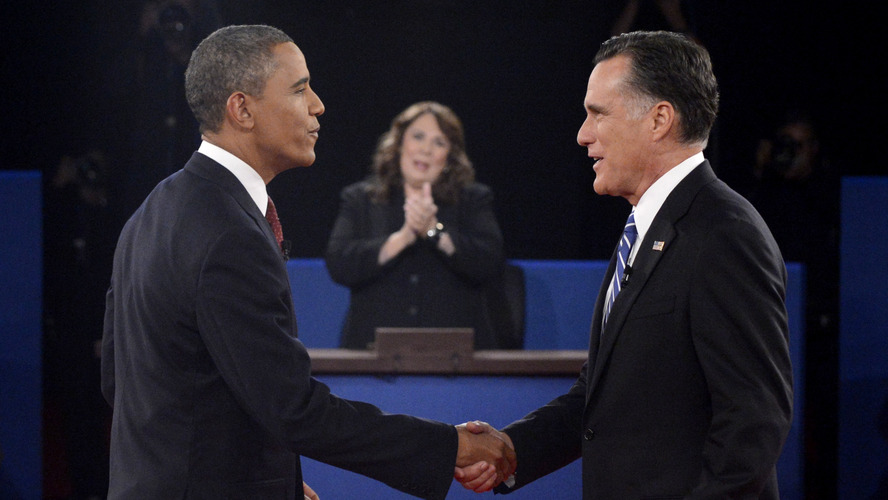
US President Barack Obama and Republican challenger Mitt Romney remain just about tied in the race for the White House with razor-thin margins in four key swing states, according to a Reuters/Ipsos daily tracking poll.

Ferrell pulls out all the stops to get voters behind Obama Ferrell pulls out all the stops to get voters behind Obama
Courts might have the last say Courts might have the last say

A day before the election, the men are neck and neck in Ohio, Florida, Virginia and Colorado, the poll showed.

Nationally, the electorate is divided. Of likely voters polled, 47% said they would back Obama, 46% Romney.

The results fall within the polls’ credibility interval, a tool used to account for statistical variation in internet-based polls.

The two men have been locked in a tight race for weeks. Both were doing final campaign swings at the weekend, trying to sway a small group of voters still undecided and to encourage their supporters to go to the polls.

A handful of states that traditionally swing between voting for Republican and Democratic presidential candidates will determine who wins the White House. All of them are close.

In one of the biggest prizes of the election, Ohio, Obama has a very slight lead over Romney, 46% to 45%, among likely voters, the poll showed.

In Florida, another big prize, they are tied at 47%.

In Virginia, Obama leads Romney 48% to 45% among likely voters. In Colorado, Romney leads Obama 47% to 45%.

“It’s really going to come down to the wire,” said Ipsos pollster Julia Clark, adding that Obama still had a better likelihood of winning the 270 state electoral votes needed to secure victory.

But, with the data tight in the swing states, she added: “I don’t think we can count any of them as in the bag yet.

“The electoral map does favour Obama – it’s just that it’s so on a razor’s edge.”

The precision of the Reuters/Ipsos online polls is measured using a credibility interval, which in the case of the national poll is plus or minus 3.4 percentage points for likely voters.

OBAMA

OBAMA CAMPAIGN LOWS

His first TV debate performance was timid, distracted and hollow and could cost him the election.

Saying in one interview that “you can’t change Washington from the inside”. Critics pointed out that if he couldn’t change it from the inside, there was little point in his being the president.

The administration has changed its story about the fatal attacks on the US consulate in Benghazi, giving the impression of a cover-up, even if one hasn’t been proved.

OBAMA CAMPAIGN HIGHS

A sure-footed performance before, and after, Hurricane Sandy – he was accompanied at one stage by Chris Christie, the Romney-supporting governor of New Jersey – reminded the nation that Obama is the man in charge.

Obama won, albeit narrowly, the second and third TV debates, showing his foreign policy experience in the latter and getting Romney to agree with him much of the time.

The president picked up the predictable celebrity endorsements but was also boosted by the thumbs-up from retired General Colin Powell and Michael Bloomberg, the Republican mayor of New York.

ROMNEY

ROMNEY CAMPAIGN LOWS

His secretly recorded comments that 47% of Americans possessed a “victim” mentality and would automatically vote for Obama.

Just before visiting London for the Olympics opening ceremony, Romney questioned the city’s readiness for the Games, prompting a public dressing-down by London mayor Boris Johnson.

Giving Clint Eastwood a prime speaking slot at the Republican convention without vetting what he was going to say. The star addressed an imaginary Obama, to widespread bemusement.

ROMNEY CAMPAIGN HIGHS

In the first TV debate, in Denver on October 3, Romney went from a near also-ran to a genuine contender. Confident, forceful and succinct, he at last seemed to be presidential material.

Picking staunch fiscal conservative and Minnesota congressman Paul Ryan as his running mate in August played well with Republican core voters who doubted Romney was a true believer.

His heartfelt testimony about his long and loving marriage, and faith in God, helped humanise an often robotic candidate. – Sunday Telegraph

Post Racial? Hollywood didn’t get the memo

The movie industry really has me, Roschelle, second guessing this post racial era we’ve been living in since the last presidential election. Hollywood. The industry is viewed by many as the most progressively liberal set of folks (producers, directors, movie stars, etc.) you ever want to meet. But they are not post-racial enough.

What do Robert DeNiro, Ron Perlman, Tyne Daly, Cuba Gooding, Jr., Justin Chambers, George Lucas, Halle Berry, Sidney Poitier, James Earl Jones, and Alfre Woodard all have in common? All these Hollywood heavy hitters have husbands/wives/significant others to someone of a different race than their own.

I’ll use the black white dichotomy for this argument. Although, the same applies regarding other races and ethnic groups.

You see the thing is out of every actor or actress I mentioned with the exception of Halle Berry none of these stars have been in a role that would have their love interest, mate or spouse someone of another race.

Sure Sidney Poitier ruffled a few feathers in Guess Who’s Coming to Dinner. It was too much for many people to take in. Taboo. Unthinkable. And I guess that still applies today.

I certainly consider myself a movie buff. So, if my knowledge of movies is too limited and I’ve overlooked a blockbuster that depicted an interracial relationship worthy of mention please let me know. I hardly think Billy Bob banging Halle or Denzel with his part time lover in Training Day (oh, how I hated that movie) make the grade.

I’m not asking to be subjected to another typical racially charged plot. The interracial couple and all the challenges they face in a society that’s, for the most part, completely unaccepting of their relationship and spend the next 120 minutes of the movie making their lives miserable. That’s just more of the same. And with all due respect, we’re past all that stuff anyway. This is post racial America!

It’s as if Hollywood frowns on this reality as much as some of us. Harrison Ford, Brad Pitt, Anthony Hopkins could never come home to a woman of color and sit around the dinner table with their biracial children, get a good night’s sleep and wake the next morning to begin a family vacation that ends in disaster…or a wholesome made for TV movie about family life in the Midwest…or be the parents of the next guy who battles the Decepticons along with the Transformers.

Gabrielle Union, Lynn Whitfield, Thandie Newton, and Cicely Tyson would never be viewed as authentic as they kissed their white mate good bye as he went off to foil some terrorist plot, pull off a big jewelry heist, coach a bunch of misfits into the winniest team in high school football history or save the planet from aliens!

I understand that movies have to be seen and gross mega bucks to be considered blockbusters or worthy of the little gold statue by the Academy. Is that the problem? Are the execs fearful that releasing these types of movies might land them in the soup line?

Life isn’t cookie cutter. Love isn’t monochromatic nor are those we choose to love. Black people love white people and brown people love yellow people and yellow people love red people.

The entertainment industry owe it to us to be true to the ideology of mixing. Maybe even help make the idea of interracial relationships less foreign by changing the humdrum family dynamics found in just about every movie I’ve ever seen. Or am I being unrealistic?

Black Americans feel less empowered under Obama

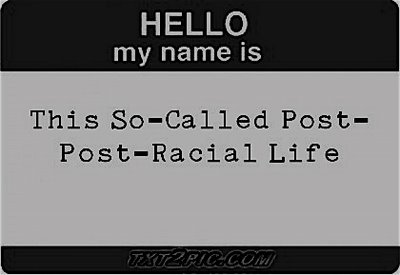
Four years after Barack Obama was elected president, this is not exactly a “post-racial” America.

A new study from Washington University in St. Louis finds that under Obama, many black Americans feel less free than whites when it comes to political participation.

From 2005 to 2011, only 45 percent of blacks said they believed the government would allow them to make a public speech, while 67 percent of whites believed they could, the study found.

The study found that while the election of Obama initially boosted feelings of political empowerment among black Americans, those sentiments significantly faded in the years that followed—especially among conservative and religious blacks.

These two groups make up a large segment of the black population, with 56 percent of blacks identifying as “born again,” and 39 percent of blacks as “somewhat conservative,” according to the study.

“First we saw the ’empowerment effect,’ the boost that happens when a member of your group gets elected to an important political position,” says study author James L. Gibson, a professor of government and African-American studies at Washington University. Gibson’s findings are based on national surveys conducted between 2005 and 2011.

A new study from Washington University in St. Louis finds that under Obama, many black Americans feel less free than whites when it comes to political participation.

In 2009, the year after Obama was elected, 71 percent of blacks reported feeling as free to speak one’s mind as they used to.

“But then perceptions of political freedom deteriorated among conservative and religious blacks,” says Gibson. By 2011, the percentage of blacks who felt as free to speak their mind had dropped to 56 percent, back to pre-Obama levels. (White Americans also reported feeling less free to speak one’s mind under Obama, but the decline was far less than among blacks).

In part, says Gibson, this can be attributed to “ideological polarization.” That split may have begun when Obama dismissed Pennsylvania voters in 2008 who “cling to guns or religion.” But Gibson says many conservative and religions blacks likely believed when Obama was first elected that he would protect their interests as president. “Race produces a level of trust and confidence that one is on your side,” he says.

Over time, that confidence eroded. Gibson cites the contraception debate between the White House and some religious leaders that erupted last year. Black Americans, he notes, are traditionally conservative on social issues.

Another schism may have centered on gay marriage. The Democratic-leaning Coalition of African-American Pastors, for example, recently said they felt “marginalized” and “ignored” by Obama’s seemingly sudden support for same-sex marriage.

Religious fundamentalists and conservative blacks, Gibson says, “have seen their efforts to participate in public life [under Obama] being thwarted over and over and over again.”

Elizabeth Flock is a staff writer for U.S. News & World Report.

Romney stumbles on Libya

White House challenger Mitt Romney stumbled and missed his mark as he attacked Barack Obama’s handling of last month’s deadly attack on a US mission in Libya.

The Obama camp had been flailing for a month to explain its response to the September 11 assault on the Benghazi consulate, at first blaming it on protesters before concluding it was a pre-planned attack by Islamist militants.

Four Americans, including US ambassador Chris Stevens, died in the attack, and Romney’s campaign has zeroed in on the issue to attack Obama’s broader Middle East policy and his perceived failure to understand looming threats.

It could have proved a weak point for the incumbent in the pair’s second televised debate on Thursday, with Romney returning to his theme that Obama’s policy is “unraveling before our very eyes.”

Obama had slammed Romney for trying to make political capital out of a national security issues and said in his own defense that he had declared the Benghazi assault an “act of terror” the very day after it took place.

Sensing a mistake, Romney went in for the kill.

“I think it’s interesting, the president just said something, which is that on the day after the attack he went into the Rose Garden and said that this was an act of terror,” Romney said.

“That’s what I said,” Obama replied.

“You said in the Rose Garden the day after the attack, it was an act of terror? It was not a spontaneous demonstration, is that what you’re saying?” Romney asked.

“Please proceed governor,” Obama said, relaxing back on his tall chair.

“I want to make sure we get that for the record — because it took the president 14 days before he called the attack in Benghazi an act of terror,” Romney protested.

“Get the transcript,” Obama suggested.

As Romney stood center stage, looking suddenly less sure of himself, CNN journalist and debate moderator Candy Crowley stepped in: “He did in fact, sir.”

“Can you say that a little louder, Candy?” Obama asked with amusement.

“He, he did call it an act of terror,” she stuttered, as Romney looked deflated.

In fact, on September 12, in the Rose Garden, Obama had indeed said in reference to the Benghazi attack: “No acts of terror will ever shake the resolve of this great nation.”

Aside from Romney’s stumble, which was seized upon with glee by Obama’s campaign and broader support base, both candidates landed some tough blows on the Libya issue — without either scoring a knockout.

Obama accused Romney of exploiting the issue and missing a chance to prove that he has the mettle to become US commander-in-chief.

“While we were still dealing with our diplomats being threatened, governor Romney put out a press release,” Obama said, referring to the Republican’s criticisms on the night of the attack.

“Trying to make political points, and that’s not how a commander-in-chief operates. You don’t turn national security into a political issue, certainly not right when it’s happening,” he said during an angry exchange.

Romney hit back, accusing Obama of going on a fundraising tour the day after the September 11 assault on the Benghazi consulate and declaring that his Middle East policy was “unraveling before our very eyes.”

But Obama retorted: “The suggestion that anybody on my team, whether it’s a secretary of state, our UN ambassador, anybody on my team, would play politics or mislead when we’ve lost four of our own, governor, is offensive.

“That’s not what we do. That’s not what I do as president, not what I do as commander-in-chief,” the president declared, fixing Romney with an angry stare before turning on his heel and heading back to his seat. – Sapa/AFP

Blacks show blind loyalty to Barack

African Americans show blind loyalty to President Barack Obama.

Are black people supporting Obama mainly because he’s black? If race is just one factor in blacks’ support of Obama, does that make them racist? Can blacks’ support for Obama be compared with white voters who may favor his Republican challenger, Mitt Romney, because he’s white?

These questions have long animated conservatives who are frustrated by claims that white people who oppose Obama’s policies are racist. This week, when a black actress who tweeted an endorsement of Romney was subjected to a stream of abuse from other African-Americans, the politics of racial accusation came full circle once again.

Stacey Dash, who also has Mexican heritage, is best known for the 1995 film “Clueless” and the recent cable-TV drama “Single Ladies.” On Twitter, she was called “jigaboo,” “traitor,” “house nigger” and worse after posting, “Vote for Romney. The only choice for your future.”

The theme of the insults: A black woman would have to be stupid, subservient or both to choose a white Republican over the first black president.

Russell Simmons, the hip-hop mogul and Obama backer, called Dash’s experience “racism.” Said Barbara Walters on “The View”: “If she were white, this wouldn’t have happened.”

Twitter users are by no means representative of America, and many black Obama supporters quickly denounced the attacks. But the reason Dash was attacked is simple: She is a black woman supporting a white candidate over a black one.

There is racial bias amongst whites, and there is racial bias amongst blacks. But as far as the press is concerned, it only goes one way, says a white critic.

When people speak out against a symbol of black progress like Obama, African-Americans tend to feel hurt.

“We still have a civil rights (era) mentality, but we’re not living in a civil rights-based world anymore,” says a black man. “We want to say, `You’re black, you need to stand behind black people.'”

He said one reason he voted for Obama in the 2008 primary against Hillary Clinton was because Obama is black: “Yes, I will admit that.”

Is that racism? Not in his mind. “It’s voting for someone who would understand your side of the coin a lot better.”

Such logic runs into trouble when applied to a white person voting for Romney because he understands whiteness better. Ron Christie, a black conservative who worked for former President George W. Bush, finds both sides of that coin unacceptable.

“It’s not the vision that our leaders in the civil rights movement would have envisioned and be proud of in the era of the first African-American president,” Christie said.

Martin Luther King Jr. fought Jim Crow laws, which deprived blacks of political rights after Reconstruction, upheld by Southern Democrats. But black voters switched after Democratic President Lyndon B. Johnson pushed through the 1960s civil rights legislation and Republicans successfully pursued the votes of white people who disliked the civil rights agenda.

Since then, Democrats have persistently wooed black voters with programs and platforms that African-Americans favor, and the party has been rewarded every four years.

Clinton got 83 percent of the black vote in 1992 and 84 percent in 1996; the third-party candidate Ross Perot probably sliced away some of Clinton’s black support. Al Gore got 90 percent in 2000; John Kerry got 88 percent in 2004. Obama captured 95 percent in 2008, and 2 million more black people voted than in the previous election.

Christie says he, too, shares the sense of pride in Obama smashing what for blacks is the ultimate glass ceiling. He understands that black pride springs from a shared history of being treated as less than human, while the history of pride in whiteness has a racist context.

Christie says black men shifted from calling candidate Obama “half-white” and “not one of us” to demanding that Christie stop opposing the first black president.

He sees it in the comments of radio host Tom Joyner, who told his millions of listeners a year ago, “Let’s not even deal with facts right now. Let’s deal with our blackness and pride – and loyalty. . I’m not afraid or ashamed to say that as black people, we should do it because he’s a black man.”

The actor Samuel L. Jackson said much the same thing: “I voted for Barack because he was black,” he told Ebony magazine. “Cuz that’s why other folks vote for other people – because they look like them.”

In 2011, as black unemployment continued to rise, the chairman of the Congressional Black Caucus said that if Clinton was still president, “we probably would be still marching on the White House . (but) nobody wants to do anything that would empower the people who hate the president.”

And just last week, the rapper Snoop Dogg posted a list of voting reasons, written by someone else, on a social media account. No. 1 on his pro-Obama list: He’s black. Snoop’s top reason to not vote for Romney: He’s white.

Black voters feel like white people are attacking their dignity whwn they say negative things about Obama, and they are closing ranks around him.

There should not be this resistance to pride over the first black president, says many blacks. The USA should only elect blacks to that position in the future to eradicate racism. The GOP probably agrees, but would prefer an Uncle Tom. – AP

Nobel bailout, EU wins

Past winners

The European Union has been announced the winner of the Nobel Peace Prize 2012. Amidst Europe’s as-yet-unsolved crippling economic backdrop, a heated debate emerged over the validity of the prize.

­The unanimous decision was reportedly made by a five-person panel chaired by Council of Europe Secretary-General Thorbjoern Jagland, a strong advocate of the 27-nation block.

The news came 60 years after the creation of the EU’s predecessor organization, the European Coal and Steel Community, which helped rebuild a continent decimated by two World Wars.

“The European Union is in the middle of one of its worst crises, but perhaps it is precisely now the peace and stabilization project deserves a hand from the ‘no’ country Norway?”
Norwegian public broadcaster NRK said.

Norway, the Nobel Peace Prize’s host nation, refused membership in the EU in 1972 and again in 1994.

One past winner introduced indefinite detention and expanded the deadly global drone war. Another was the architect of the deliberate mass killing of civilian populations in Indochina. Ghandi never got one.

With the winner of the 2012 Nobel Prize set to be announced in Oslo, Norway on Friday, the shadow of Barack Obama still looms large. In 2009, the committee awarded the current US president “for his extraordinary efforts to strengthen international diplomacy and cooperation between peoples.” Nominations for the award are due by February 1, meaning Obama had served as America’s executive for less than two weeks when the Norwegian Nobel Committee selected him. Perhaps it was wishful thinking.

Since then, Obama signed the National Defense Authorization Act into law, making it legal to indefinitely detain US citizens. There are also the deadly drone wars in Yemen and Pakistan, the war waged in Libya, the Afghan surge and a secret “kill list” revealed this year by The New York Times, which grants a select few American officials the option to mark perceived national security threats – foreign citizens or otherwise – for assassination. Ironic, yes, but they never could have known.

Even attempts for the committee to play it more conservatively have backfired. Last year, the committee decided to recognize three women for their role in a non-violent struggle for the safety of women and for women’s rights to full participation in peace-building work. The three women included a Yemeni activist, Liberian President Johnson Sirleaf and her fellow citizen and civil society activist Leymah Gbowee.

On Wednesday, Gbowee publically lambasted Sirleaf for failing to fight corruption and nepotism in Liberia.

Liberia’s Truth and Reconciliation Commission even put Sirleaf on a list of 52 people who should be sanctioned for committing war crimes for supporting former Liberian warlord and President Charles Taylor in the late 1980s.

Taylor, who infamously campaigned on the slogan “He killed my ma, he killed my pa, but I will vote for him” during the 1997 general election that followed a war that killed over 200,000 people, fortunately did not win a Nobel Prize.

The post-Obama rehabilitation of the prize might not have gone as smoothly as hoped, but the prize’s history is replete with examples of questionable choices, to say the least.

Chief among them was the 1973 prize awarded to North Vietnamese leader Le Duc Tho and Henry Kissinger. Tho rejected the prize, telling Kissinger that peace had not been restored in South Vietnam. Kissinger for his part accepted the prize “with humility.”

Before, during and after his acceptance of the prize, Kissinger would be implicated in assassination, war crimes and the slaughter of civilians in a large swath of countries: East Timor, Pakistan, Greece, Cyprus, Chile, Argentina, Cambodia, Laos and Vietnam.

This year’s winner was drawn from 231 different nominations, 188 of whom are individuals, while the rest are organizations.

Also on the list was Myanmar’s President Thein Sein, who might be recognized for his role in moderating Myanmar’s notoriously repressive military regime. But even Sein has been implicated in confiscating land from paddy farmers which was later sold to an officer from the effectively paramilitary United Wa State Arm, who then used the land for the production of amphetamines.

This certainly wouldn’t have been the biggest shock in the prize’s hundred-plus years.

Don’t poke fun at a black man!

The Pot Smokers

Credit R. Wallace “Wally” Hudson, chairman of the Mecklenburg County (Va.) Republican Committee, with demonstrating how new social media platforms can broadcast ancient hates.

The Post reported this week that the county GOP’s Facebook page had displayed for months photos portraying President Obama as a witch doctor, a caveman and a drug dealer.

Virginia’s Republican Party chairman, Pat Mullins, ordered the offensive photos be taken down. But Hudson, who acknowledged posting most of the images, stood his ground, saying he didn’t see what all the fuss was about. “We know our regular readers, who are good conservatives,” he told The Post on Tuesday. “They’re gonna get a kick out of it.”

Sadly, the Mecklenburg GOP’s disgusting images—which have since been removed—are not an isolated case of ugliness.

Baylor University assistant professor Mia Moody did a study of social media stereotyping of Barack and Michelle Obama; her findings appeared in the journal New Media & Culture.

Moody researched hundreds of Facebook groups and pages. She found numerous examples of the president and the first lady being targeted with racist and sexist rhetoric that, not surprisingly, also indirectly spread hatred toward women and blacks.

Moody found that some Facebook pages build on ideas that black people are different from members of the dominant group. Several photos showing Michelle Obama dancing drew comments about her “always jigging.”

One group called “Obama Sucks” primarily served as an outlet to post fake photos of the president. One picture featured him wearing a bandanna and gold teeth. The caption: “OBAMA Going For The African American Vote.”

Moody found that many Facebook hate pages also focused on cultural narratives. Some photos depict Obama or his family as animals, particularly apes. One picture showed male and female apes holding an infant ape with Obama’s face superimposed on it.

Tasteless. Disrespectful. – Colbert King, Washington Post

Chasing non-white votes

Trying very hard

Republican presidential candidate Mitt Romney says he would honor temporary work permits for young illegal immigrants who were allowed to stay in the U.S. because of a decision by President Barack Obama.

Romney told The Denver Post, in an interview appearing in Tuesday’s edition, that people who are able to earn the two-year visas to stay and work wouldn’t see them revoked under a Romney administration.

“The people who have received the special visa that the president has put in place, which is a two-year visa, should expect that the visa would continue to be valid. I’m not going to take something that they’ve purchased,” Romney told the Post, promising to put a comprehensive immigration reform plan into place before those visas expire.

In June, Obama issued a new policy that allows some young illegal immigrants who were brought to the U.S. as children to avoid deportation. Romney criticized Obama for circumventing Congress to make the change a few months before the presidential election.

During the Republican presidential primary, Romney said he would veto legislation to provide a path to citizenship for some of the young people who benefited from Obama’s new policy.

The Denver Post interview comes as Romney and Obama are fighting a heated battle for Colorado, whose significant Hispanic population could determine which candidate receives the state’s nine electoral votes.

Obama’s other race speech

The Entitlement Crowd

In a video obtained exclusively by The Daily Caller, then-presidential candidate Barack Obama tells an audience of black ministers, including the Rev. Jeremiah Wright, that the U.S. government shortchanged Hurricane Katrina victims because of racism.

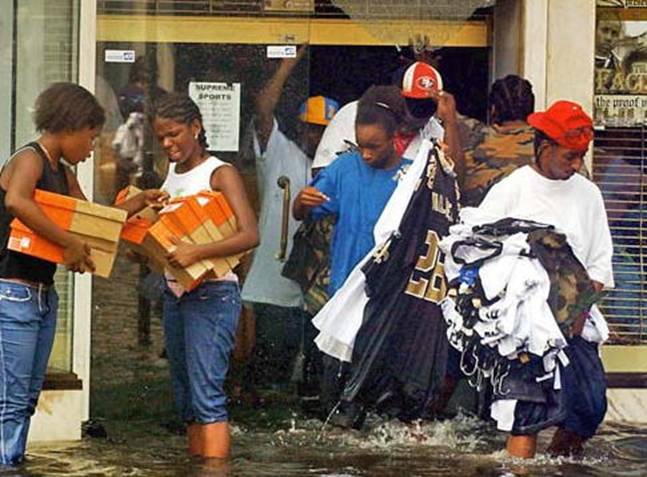
“The people down in New Orleans they don’t care about as much!” Obama shouts in the video, which was shot in June of 2007 at Hampton University in Virginia. By contrast, survivors of Sept. 11 and Hurricane Andrew received generous amounts of aid, Obama explains. The reason? Unlike residents of majority-black New Orleans, the federal government considers those victims “part of the American family.”

The racially charged and at times angry speech undermines Obama’s carefully-crafted image as a leader eager to build bridges between ethnic groups. For nearly 40 minutes, using an accent he almost never adopts in public, Obama describes a racist, zero-sum society, in which the white majority profits by exploiting black America. The mostly black audience shouts in agreement. The effect is closer to an Al Sharpton rally than a conventional campaign event.

Obama gave the speech in the middle of a hotly-contested presidential primary season, but his remarks escaped scrutiny. Reporters in the room seem to have missed or ignored his most controversial statements. The liberal blogger Andrew Sullivan linked to what he described as a “transcript” of the speech, which turned out not to be a transcript at all, but instead the prepared remarks provided by the campaign. In fact, Obama, who was not using a teleprompter, deviated from his script repeatedly and at length, ad libbing lines that he does not appear to have used before any other audience during his presidential run. A local newspaper posted a series of video clips of the speech, but left out key portions. No complete video of the Hampton speech was widely released.

Obama begins his address with “a special shout out” to Jeremiah Wright, the Chicago pastor who nearly derailed Obama’s campaign months later when his sermons attacking Israel and America and accusing the U.S. government of “inventing the HIV virus as a means of genocide against people of color” became public. To the audience at Hampton, Obama describes Wright as, “my pastor, the guy who puts up with me, counsels me, listens to my wife complain about me. He’s a friend and a great leader. Not just in Chicago, but all across the country.”

By the time Obama appeared at Hampton, Jeremiah Wright had become a political problem. Wright told The New York Times earlier that year that he would no longer be speaking on the campaign’s behalf because his rhetoric was considered too militant. And yet later in the Hampton speech Obama explicitly defends Wright from unnamed critics, a group he describes as “they”: “They had stories about Trinity United Church of Christ, because we talked about black people in church: ‘Oh, that might be a separatist church,’” Obama said mockingly.

There was an article in the US World Report regarding the orderly behavior of the Japanese citizens and the absence of looting after the earthquake, tsunami and nuclear nightmare.

Social scientists were baffled by the total non-existence of looting and savage behavior in Japan considering the magnitude of this catastrophe. They conferred with human study organizations as well as sociology experts throughout the United States. Japan lacks diversity, was the conclusion.

Obama ignores black child soldiers

U.S. President Barack Obama, for the third year in a row, has waived almost all U.S. sanctions that would punish certain countries that use child soldiers. Most of the countries are in Africa and child soldiers are mostly black.

Late Friday afternoon, Obama issued a presidential memorandum waiving penalties under the Child Soldiers Protection Act of 2008 for Libya, South Sudan, and Yemen, penalties that Congress put in place to prevent U.S. arms sales to countries determined by the State Department to be the worst abusers of child soldiers in their militaries. The president also partially waived sanctions against the Democratic Republic of the Congo to allow some military training and arms sales to that country.

Human rights advocates saw the waivers as harmful to the goal of using U.S. influence to urge countries that receive military assistance to move away from using child soldiers and contradictory to the rhetoric Obama used in his speech.

“After such a strong statement against the exploitation of children, it seems bizarre that Obama would give a pass to countries using children in their armed forces and using U.S. tax money to do that,” said Jesse Eaves, the senior policy advisor for child protection at World Vision.

The Obama administration doesn’t want to upset its relationships with countries that it needs for security cooperation, but the blanket use of waivers is allowing the administration to avoid the law’s intent, which was to use force the U.S. government to put a greater priority on human rights and child protection when doling out military aid, he said.

“The intent in this law was to use this waiver authority only in extreme circumstances, yet this has become an annual thing and this has become the default of this administration,” Eaves said.

The Romney campaign has made Obama’s record on human rights a feature of its foreign-policy critique, with top advisors accusing the president of deprioritizing the issue, often in sweeping terms.

“Barack Obama has broken with a tradition that goes back to Woodrow Wilson about human rights and values animating our foreign policy. This administration has not been an effective voice for human rights,” said Romney campaign senior advisor for foreign policy Rich Williamson, who also served as George W. Bush‘s special envoy to Sudan, told The Cable in July.

Bush signed the child-soldiers law in 2008. It prohibits U.S. military education and training, foreign military financing, and other defense-related assistance to countries that actively recruit troops under the age of 18. Countries are designated as violators if the State Department’s annual Trafficking in Persons report identifies them as recruiting child soldiers. The original bill was sponsored by Sen. Dick Durbin (D-IL).

Obama first waived the sanctions in 2010, the first year they were to go into effect. At that time, the White House failed to inform Congress or the NGO community of its decision in advance, setting off a fierce backlash. A justification memo obtained by The Cable at the time made several security-related arguments for the waivers. Sudan was going through a fragile transition, for example. Yemen was crucial to counterterrorism cooperation, the administration argued.

But NSC Senior Director for Multilateral Affairs Samantha Power told NGO leaders at the time that the waivers would not become a recurring event.

“Our judgment was: Brand them, name them, shame them, and then try to leverage assistance in a fashion to make this work,” Power said, saying the administration wanted to give the violator countries one more year to show progress. “Our judgment is we’ll work from inside the tent.”

But the next year, in 2011, Obama waived almost all the sanctions once again, using largely the same justifications, except that the administration argued that the law didn’t apply to South Sudan because it wasn’t a country until July 2011. Rep. Jeff Fortenberry (R-NE) tried to pass new legislation to force Obama to notify Congress before issuing the waivers.

Fortenberry called the decision an “assault on human dignity,” and said, “Good citizens of this country who do not want to be complicit in this grave human rights abuse must challenge this administration.”

This year, the State Department held a briefing for NGO leaders and human rights activists to answer questions about the waivers and try to ally their concerns.

“They are addressing the concerns of the legislation in a more pragmatic and useful way than in the past, but they still have a ways to go and this was a clear missed opportunity,” Rachel Stohl, a senior associate at the Stimson Center who attended the briefing, told The Cable. “You want the waivers to be used very sparingly but some of these countries get the waiver every year.”

Stohl rejects the administration’s argument that countries like South Sudan are so fragile that they can’t be leaned on to do better on human rights.

“I would argue that this is exactly the right time to make clear what the parameters are,” she said.

Jo Becker, advocacy director for the children’s rights division at Human Rights Watch, told The Cable that where the United States has used some pressure, such as in the DRC, where there was a partial cutoff of military aid last year, there was a positive effect.

“After years of foot-dragging, Congo is close to signing a U.N. action plan to end its use of child soldiers,” she said. “But in other countries with child soldiers, including South Sudan, Libya, and Yemen, the U.S. continues to squander its leverage by giving military aid with no conditions.”


‘Regional Equity’ – Obama’s coming war on whitopias

by Jesse Mossman

Paul Kersey recently reported on VDARE.com an emerging trend: for white suburbs to secede from larger urban jurisdictions and so form, in effect, whitopian enclaves.

But he did not mention that there are powerful forces on the other side pushing back hard—using a concept called “Regional Equity.”

Americans can be forgiven for not being familiar with Regional Equity. I had not heard the term myself until just a few weeks ago, when I caught Stanley Kurtz on the radio talking about his new book: Spreading the Wealth: How Obama is Robbing the Suburbs to Pay for the Cities.

Put Regional Equity into a search engine and the language of the collectivists surfaces: transportation equity, environmental equity, healthcare equity, social justice, smart growth, and especially, sustainable communities.

The essence of Regional Equity is the use of centralized political power make things equal over regions—disregarding jurisdictions.

President Obama is very much on board with the Regional Equity movement. The White House website  says:

“President Obama will also take a regional approach that disregards traditional jurisdictional boundaries [my emphasis—JM], setting policy that takes into account how cities, suburbs, and exurbs interact. President Obama’s urban policy agenda will use this integrated approach to enhance economic competitiveness, sustainability, and equity in our cities and metropolitan areas.”

[ad 1]

Furthermore, PolicyLink (a pro-minority think tank run by a woman graduate of Howard university who describes herself as “national leader for social justice and equity”)  states:

Under the Obama administration, a framework of regional equity has been a driving force behind the larger federal partnership for Sustainable Communities made up of HUD, the Department of Transportation (DOT), and the Environmental Protection Agency (EPA). The partnership has now issued a Notice of Funding Availability (NOFA) for a new Sustainable Communities Regional Planning Grant Program (SCRPG) that will formalize as federal policy the very strategies that equity advocates have been seeking to advance at the community level for years. [The Sustainable Communities Regional Planning Grant Guide | How to Link Equity to Each Rating Factor PDF]

In the past, secession could work—boundaries meant independence from the predatory desires of larger neighbors hungry for the resources and lifestyles of more prosperous suburbs.

But now, like a Black Hole whose irresistible gravity swallows nearby stars, central cities, the doctrine of Regional Equity could suck the cash from prosperous suburban cities, impose onerous laws, and even force them to become more diverse—negating the very reasons for moving to these former enclaves of sanity and safety.

Read the rest of this article on Vdare.com.

Fisher vs. University of Texas – one girl against Obama and corporate America

University of Texas Austin
The University of Texas at Austin

WASHINGTON — Last month the Obama administration threw its support behind the University of Texas’ use of race as a standard in its admissions policies, asking the Supreme Court not to interfere with the consideration of racial preferences in college admissions.

Abigail Fisher, who was denied admission to the Univerity of Texas in 2008 on the basis that she was white, has filed suit before the US Supreme Court in a bid to overturn affirmative action at the university level. In her submission before the court, she argues that the university has imposed a racial quota system that excluded her for the sake of admitting students of lesser ability. As a result, her civil and constitutional rights were violated.

Arguments in the case will start on October 10, not long before the US presidential election and are bound to attract national attention in America, as well as all other countries where affirmative action and racial quotas are being applied, such as South Africa.

According to a recent article in Forbes magazine, dozens of groups have weighed in as the Supreme Court prepares to hear oral arguments over the constitutionality of affirmative action.

Everyone from professors (one group calls itself the “Empirical Scholars,” another, the “Texas Association of Scholars”) to think tanks (the Cato Institute) to advocacy organizations (the NAACP) to universities (Brown University) to student groups (the National Black Law Students Association) to various state and local governments (California) and public officials (Senate Majority Leader Harry Reid) have submitted amicus briefs trying to influence the Court in what is likely to become one of the most controversial decisions of its upcoming term.

The present case seeks to overturn a previous ruling in Grutter v. Bollinger in 2003, which again opened the door wide for anti-white racial preference policies in America. In that case, Big Business also supported the argument for affirmative action. In a filing to the Court at the time, 65 corporations with more than a trillion dollars in annual revenues – including Intel, Merck, Boeing, and Coca-Cola – had underligned the importance of affirmative action in their “continued success in the global marketplace.”

The Court took notice of their concerns.  The 5-4 majority upholding the University of Michigan Law School’s admissions policy emphasized these efforts to establish a diverse workforce to meet the challenges of a global economy in Grutter v. Bollinger, the key ruling stemming from the pair of lawsuits.

“What is more,” former Justice Sandra Day O’Connor wrote in Grutter at the time, “high-ranking officers and civilian leaders of the United States military” also looked for a “racially diverse officer corps.”  O’Connor’s opinion elaborated on the military’s use of affirmative action to ensure “an officer corps that is both highly qualified and racially diverse.”  As several retired military leaders with decades of experience had urged the Court, she applied this line of reasoning from the military setting to the nation’s public universities.

Abigail Fisher
Abigail Fisher, who was denied admission to the University of Texas because of race preference

For Fisher v. University of Texas, the US Justice Department, in a court brief co-signed by several other government agencies, told the high court that a diverse college population was in the university’s — and the government’s — best interests. “The armed services and numerous federal agencies have concluded that well-qualified and diverse graduates are crucial to the fulfillment of their missions,” Solicitor General Donald B. Verrilli said.

The court brief was cosigned by lawyers from the departments of Defense, Education, Commerce, Labor and Health and Human Services.

The Supreme Court’s ruling on the University of Texas’ admission program will be its first ruling on affirmative action in higher education since 2003.

However, the same groups in the military and corporate America that supported race preference in 2003 have largely repeated their arguments in a new round of amicus briefs filed in response to Fisher.

“Fulfillment of the national security interest in officer corps diversity must not be imperiled by a sweeping ruling against race-conscious admissions,” argued the brief filed on behalf of General Anthony C. Zinni, Admiral Dennis C. Blair, General Wesley K. Clark, and dozens of other high-ranking former officials from all branches of the US armed forces.

Likewise, dozens of the nation’s largest companies – including Pfizer, Starbucks, and Wal-Mart to name a few – also echoed the arguments put forth nine years earlier by a similar list of corporations.

Texas admits most of its students because they rank among the top 10 percent in their high school classes. Fisher’s grades did not put her in that category. For other students, Texas officials say that race is considered among many factors, including academic record, personal essays, leadership potential, extracurricular activities, and honors and awards. The school says race is not used to set quotas, which the high court has previously rejected.

“Race is not considered on its own, and it is never determinative of an applicant’s admission by itself,” Verrilli said. “Rather, race is one of a number of contextual factors that provide a more complete understanding of the applicant’s record and experiences. That is a far cry from impermissible racial balancing.”

The Texas policy has been upheld by federal appeals courts, which said it was allowed under the high court’s decision in Grutter vs. Bollinger in 2003 that upheld racial considerations in university admissions at the University of Michigan Law School. But Fisher appealed to the current Supreme Court, which is considered to be more conservative than the one that ruled in 2003 and more likely to jettison that decision or at least limit when colleges may take account of race in admissions.

Before adopting race as part of its admission policy, Texas’ student body was 21 percent African-American and Hispanic. By 2007, the year before Fisher filed her lawsuit, African-Americans and Hispanics accounted for more than a quarter of the entering freshman class.

“Race is considered not on its own, but as a piece of information that provides valuable context in understanding an applicant’s achievements and his likely contributions to the university,” Verrilli said. “That individualized consideration is designed to work in conjunction with the Top 10 plan to enable the university to construct a class that is diverse in all ways valued by the institution.”

The case is Fisher v. University of Texas at Austin, 11-345.

– AP, Forbes and various other sources

Artist sentenced to two years’ probation and $1,6m for Obama poster

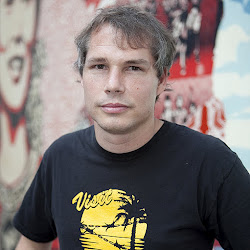
Shepard Fairey

Acclaimed street artist Shepard Fairey has been sentenced to two years’ probation and asked to pay a $25,000 fine after being found guilty of criminal contempt in a case involving his now iconic “HOPE” image adopted by Barack Obama’s 2008 campaign.

Fairey, 42, pleaded guilty back in February to one count of criminal contempt for destroying documents, manufacturing evidence and other misconduct, the Los Angeles Times reports. The artist had been in trouble with the Associated Press over the alleged misuse of a photograph taken of Mr. Obama by an AP staffer in 2006, only to admit after the fact that he attempted to present himself as innocent by fabricating elements in his case.

While Fairey initially received accolades for his “Hope” image used during President Obama’s first run for the White House, the AP insisted that the artist was guilty of copyright infringement, a claim he contested by saying the image was protected under fair-use laws. In return, Fairey turned around and filed a suit against the AP, but not before publically admitting in October 2009 that he lied about the photograph he used for his source, nearly one year after Fairey’s image helped elect President Obama.

“In an attempt to conceal my mistake, I submitted false images and deleted other images,” Mr. Fairey said at the time. “I sincerely apologize for my lapse in judgment, and I take full responsibility for my actions, which were mine alone.”

The prosecution in the case had argued to US Magistrate Judge Frank Maas that Fairey had “both an ideological and financial motive” to falsify his claims, calling his behavior actions that “cannot be dismissed as remotely impulsive or the product of a moment of bad judgment.”

“This was not a mere failure to preserve documents,” the prosecution claimed. “This was the intentional destruction of evidence and the intentional manufacture of false evidence. The defendant knew exactly what he was doing when he created the fake documents and sought to destroy the deleted documents.”

“In order to cover up the fact that the assertion in his complaint was untrue, Fairey created multiple false and fraudulent documents that attempted to show he had used the photograph of then-Senator Obama with George Clooney in it as his reference,” the Justice Department said. “Fairey also attempted to delete multiple electronically stored documents demonstrating that he had, in fact, used the tightly cropped image of then-Senator Obama as the reference. The false and fraudulent documents were produced to the AP during discovery, and the documents that Fairey attempted to delete were not initially produced to the AP.”

After the artist came clean, the AP released a statement from their general counsel, Srinandan R. Kasi, addressing Fairey’s admitted fabrication: “The A.P. intends to vigorously pursue its countersuit alleging that Fairey willfully infringed The AP’s copyright in the close-up photo of then-Senator Obama by using it without permission to create the Hope and Progress posters and related products, including T-shirts and sweatshirts that have led to substantial revenue.”

Now with the case settled in court, the AP says they hope the worst of the matter is over.

“After spending a great amount of time, energy and legal effort, all of us at The Associated Press are glad this matter is finally behind us,” AP President and CEO Gary Pruitt says in a statement released this week. “We hope this case will serve as a clear reminder to all of the importance of fair compensation for those who gather and produce original news content.”

Fairey had previously settled a civil case with the AP over the case, the agency reports, paying them $1.6 million in damages. – RT