Good fences

One of the less heralded, but more successful, projects that have been undertaken recently in Israel is the security fence on the country’s southern border. In October, only 54 illegal African refugees entered Israel—one of the lowest numbers in many years, and a far cry from the 1,000 to 2,000 and more that entered the country each month over the past few years.

Last October, for example, 2,100 illegals were estimated to have entered Israel. Only a few were caught as they crossed the then-wide open border. Since then, the security fence on the border with Sinai has rapidly been built, and currently some 80% of the border is protected. In areas where construction is going on, the IDF has sharply increased patrols. At this point, the vast majority of illegals are caught before they enter Israel, and are immediately taken into custody for deportation to their homelands. Word that Israel’s gates are closing tight has apparently seeped back to Sudan, Eritrea, and other African countries, and now there are far fewer attempts to cross the border.

In addition to the increased protection, the Interior Ministry, led by Eli Yishai, has conducted a strong campaign to deport illegals, or at least persuade them to go home voluntarily. Using a mixture of carrots and sticks, with payments to illegals who leave for good and months-long detention at camps in the Negev, the illegal alien population has been slowly but surely dwindling. Yishai has been quoted as saying that if the current pace of enforcement is kept up, Israel could be free of illegal African aliens within just a few years. However, that could take some time—as the Population Registry estimates that there are still over 10,000 illegal Africans in the country.

Besides holding back the tide of illegals, the security fence has helped limit smuggling of drugs and other illegal items by Bedouin. In August, a terror cell killed 16 Egyptian soldiers as they attempted to blow up a portion of the security fence and enter Israel. IDF forces destroyed a jeep that managed to get through, on its way to carry out a terror attack at a border area community. – Israel National News

Max Keiser: The end of Britain

A serf in the days of King John, Max Keiser argues, was in many ways better off than some US voters in 2012.

“Because in the age of Robin Hood,” Keiser says, “at least the process of theft was transparent. The barons came to your house. They whacked you over the head then they took all your money.” Even if the poor didn’t exactly empathise with their oppressors, Keiser adds, they could at least comprehend their methods. “And the serfs,” he continues, “did enjoy a modicum of stability. They got something in return for their enslavement. A small plot of land. Shelter. A relationship with the lord of the manor.” In the modern age of “financial tyranny” orchestrated by what Keiser refers to as “the banksters” in charge of the major financial institutions in the US and Europe, he believes, “We have reverted to a more pernicious kind of neo-feudalism. The instruments of larceny have changed; that’s all.”

What better time, you might ask, to have the opportunity to vote in a presidential election? But the real forces which shape the destiny of his homeland, Keiser says, have long been impervious to democratic pressure.

“Barack Obama,” he maintains, “has been a huge disappointment. He reneged on every one of his campaign promises except one: he did buy his kids a dog. Of course he could be replaced in this election, but if that happens we will simply inherit a different version of the same thing, just as we have done in the US for the past 30 years. The guy in the White House,” he believes, “is really taking his orders from finance.”

You may never have heard the name Max Keiser, even though, once he begins to broadcast across China in the New Year, he will have confirmed his status as the most widely watched news commentator on the planet. Assisted by his producer, co-presenter and fiancée Stacy Herbert, Keiser, 52, mercilessly castigates rogue financiers and the politicians notionally required to oversee them, on programmes already transmitted by international networks including France 24, Al Jazeera and Iran’s Press TV. No channel in the United States will carry his broadcasts, which go well beyond the benign impudence of The Daily Show.

His most popular outlet is The Keiser Report, on Russia Today (RT), and its international viewing figures, as Keiser (not a man plagued by self-doubt) isn’t slow to point out, are huge. What has fascinated me, I tell him, when we meet in his London television studio, is that in Britain, in recent months, I’ve begun to hear his mischievously seditious RT show mentioned, with admiration, by taxi drivers, patrons in the Haringey Arms, and my window cleaner. This may not, I admit, constitute a statistically significant sample, but Keiser is clearly attracting people you wouldn’t necessarily expect to view a rolling news channel on a foreign network.

The presenter isn’t surprised. “There is a fury against this global banking fraud that is building every day,” he says. “People from all kinds of backgrounds, all over the world, have had enough.”

The Keiser Report, first aired in September 2009, is produced here three times a week. One episode, shown in September 2011, contained the interview with Roseanne Barr during which she famously observed that her solution to banking malpractice would be to “bring back the guillotine”.

While his sardonic, quick-fire delivery would allow him to shine in a debate at the Oxford Union or a Hampstead dinner party just as effectively as, say, David Dimbleby, Keiser’s utterings on the less laudable activities of Morgan Stanley, Goldman Sachs and other financial institutions also manage (unlike Dimbleby’s) to resonate with the kind of people who might fantasise about fire-bombing their local branch of NatWest. To illustrate a point, he will occasionally produce a plastic chicken, a stuffed rat, or a small explosive device. On one recent show, he advised David Cameron to, “Go back to Eton and get some of that back-stall shower pleasure.”

I tell Keiser how, the first time I saw him presenting the show with Stacy Herbert (his partner’s name, somewhat unfortunately, may be familiar from her appearance in 2002 red-top headlines concerning the “three in a bed sex sessions” whose pivot was Angus Deayton), I’d assumed his performance to be fuelled by amphetamines.

“I wave my arms,” he says. “I shout. Of course I do. Because this is a global insurrection. Against banker occupation.”

He folded balloon animals on one show.

“Well, you have to make an impression quickly. Most people first see The Keiser Report at an airport or hotel. RT has 450 million viewers. It goes into more hotel rooms than the BBC and it has more YouTube views. Everywhere I go, people stop me in the street. And remember I’m broadcasting about global financial corruption; not so long ago, everyone used to say, who could be interested in that?”

is histrionic style, combined with the forthright nature of his views (Keiser recently derided the Eurozone as an entity “which poses as this prestigious club, but is actually a leper colony where everyone is checking who still has the most fingers left”) have led some to dismiss him as a marginal, whacked-out conspiracy theorist.

This perception is some way removed from the truth. Raised in an affluent New York suburb, Keiser was a highly successful Wall Street stockbroker and the creator and former chief executive of HSX Holdings, a company which, using his own software system, allowed traders to deal in virtual securities. Put simply, this allowed you to gamble on the success – and, more disturbingly to the studios, on the failure – of a Hollywood film before its release. The practice was halted by the industry, but not before Keiser had sold his shares at the top of the market, adding to his already substantial fortune.

He founded the hedge fund Karmabanque, which has sought (with limited success) to profit from any decline in the equity value of companies criticised by environmental groups, such as Coca-Cola and McDonald’s. And in 2007, in an Al Jazeera film called Extraordinary Antics, he travelled to Milan to examine how CIA agent Robert Seldon Lady and others had illegally abducted then deported an Egyptian imam, Hassan Mustafa Osama Nasr, who later faced torture in Cairo. (In 2009 Lady, also known as “Mister Bob”, was sentenced to eight years in absentia by an Italian court, though the US refuses to extradite him to Italy.)

“I imagine,” I tell Keiser, “that some Americans, seeing your work carried by RT, Arabic and Iranian stations, view you as a modern-day Lord Haw-Haw.” (William Joyce, the Irish-American who broadcast Nazi propaganda to the UK during the Second World War, and was hanged in London in 1946.)

“Some might. But all around the world, working people love the show. We make The Keiser Report at Associated Press. That, as you know, is an American company. The people who feel challenged are the banksters. What I’m saying is that you can fight back: by fighting fire with fire.”

Keiser is among the most outspoken of a group of American commentators (Texas-based broadcaster Alex Jones being another) who argue that national sovereignty and democracy in the US and elsewhere have been eroded by the power of global corporations. Keiser maintains that the most effective form of resistance is through individual financial activism. “If the Karmabanque hasn’t worked,” Keiser says, “it’s because there isn’t yet a critical mass of people who are prepared to fight back, and who instead prefer to be victims.”

The presenter lived in France for a decade, toying with screenplays including one near-miss based on the life of Houdini, which would have starred his close friend Alec Baldwin. (He currently runs a highly successful crowdfunding site, piratemyfilm.com.) Keiser was based in Villefranche-sur-Mer, near Nice, when he met Herbert, who is eight years his junior, in 2003.

Herbert’s apparently subordinate role as co-presenter of The Keiser Report, in which her main task is to prompt, and then revel in her partner’s hyperbole, belies her acute instincts as a producer and editor. Before collaborating with Keiser, Herbert, the daughter of a NYPD officer who died in tragic circumstances when she was six, began her career working with Michael Phillips (who co-produced Taxi Driver and The Sting). She was later associate producer on the acclaimed but highly controversial animated 2005 series Popetown. A cartoon sitcom featuring the voices of Mackenzie Crook, Ruby Wax, Matt Lucas, Jerry Hall and Ben Miller, it was once described as Father Ted meets South Park. Originally commissioned for BBC Three, Popetown was dropped from its schedule after protests from the Catholic Church, though it is available on DVD.

Herbert and Keiser moved to London a year ago. “Because this is the world capital of banking fraud. Pretty much every financial scandal of the past 20 years has had its main component in London, because it has the least regulated banking environment. This is very important for the US, because America outsources its own fraud to London, just as it outsources its labour to China.” The JP Morgan and UBS traders who lost billions, he points out, were both London-based. “And Lehman Brothers went through the UK. As did AIG.” (The latter, a multinational insurance corporation, has been troubled by many controversies including its 2008 government bailout, subsequent executive bonus payments estimated at between $165m and $450m – some say more – and charges relating to accounting fraud, settled out of court in 2006.)

Tony Blair, Keiser adds, “was the first prime minister in this country’s history who knew that going into Downing Street would act more as a resumé builder than a way of serving the public. He has become fabulously wealthy with the contacts he made as prime minister.” Blair, he continues, “personifies the move, in the UK and the US, away from representational democracy and towards control by bankers. It is since New Labour that you have the rise of these incredible scandals: so you have HSBC involved in multimillion-dollar Mexican drug-laundering. [In July of this year, the bank publicly apologised for its “lapses”.] And Barclays involved in rigging Libor [the estimated interest rate for inter-bank loans].”

I tell Keiser I can feel many readers wondering exactly what relevance such activities might have to their lives. “Well, the policy of the banks has been to keep interest rates as low as possible, so as to fuel financial speculation, no matter how oppressive the effect of that would be. Low interest rates wipe out savers and devastate middle-class workers. The banksters have orchestrated this wealth transference of trillions, from the poor to the very wealthy. At the expense of everybody who isn’t at the top.”

In a recent televised discussion chaired by Andrew Neil, Keiser recalls, “We agreed that the country suffers from economic and financial illiteracy. Which makes it amazing that George Osborne has a programme whereby people will exchange their rights as workers for shares. Why is he proposing this, if not to exploit that knowledge gap? Shouldn’t the Chancellor be ashamed of himself?”

“But hang on – you’re not an anti-capitalist.”

“No. I am pro-capitalism and I am pro-free market. But what you have now is not capitalism. It is a state- controlled, command and control, centralised politburo. Both in Britain and the United States. The States is run by the Federal Reserve, an institution that answers only to itself and to a few large banks. It’s modelled on the Bank of England. Ben Franklin said that one of the main reasons America revolted was to get away from the Bank of England, the mother of all central banks; the most pernicious and insidious of all.”

“You said you were disappointed by Obama. What should he have done?”

“When Franklin D Roosevelt came into office, he started putting bankers in jail. The foremost reason that America got out of the Depression was not World War Two, or because of the Keynesian stimulus. It was because of the legislation introduced to regulate markets [many such clauses in FDR’s Emergency Banking Act of 1933 were dismantled under Clinton] and the banksters that Roosevelt sent to jail.”

“Don’t you think Obama came in with the best of intentions? Surely he’s not just another avaricious politician?”

“Barack Obama had to face up to people like Larry Summers [Clinton’s former Treasury Secretary, and director of the US National Economic Council until two years ago, Summers had a key role in lifting safeguards in the derivatives market, a move generally considered to have precipitated the 2007/8 crash]. There were others he failed to remove from office, who were guilty of orchestrating this economic collapse.”

“Are you accusing Obama of malicious complicity?”

“I think that Obama is, like many people, financially and economically illiterate. He is a lawyer. But in Wall Street there is no law.”

Is the implication that the situation will change if Obama is defeated? “It’s not difficult to envision what a Romney presidency would be like. He’s already made it clear that he believes Wall Street to be over-regulated, which of course is the opposite of the truth.”

Romney’s background, Keiser adds, is in private equity, “which is the crystallisation of the worst elements of capitalism”. (Private-equity firms tend to specialise in leveraged buyouts: a practice whose potential consequences have become familiar to many non-economists in Britain, not least to supporters of Manchester United since the club’s purchase by the Glazer family in 2005.) “So then you would have a pure cacistocracy: rule by the worst, the most ignorant, and the most corrupt.”

On Mitt Romney’s first day in office, Keiser adds, “I would imagine that, rather as Emperor Caligula appointed his horse to the senate, he will issue proclamations and edicts that will shock people. But if he does release the genie of even more deregulation, bankrupting the country, he would do so in the full knowledge of the crime he was committing. I believe that Obama was less consciously aware of the stupidity he was engaged in.”

ax Keiser grew up in Westchester County, a New York suburb so steeped in Ivy League privilege that Loudon Wainwright III wrote a song about it (“We were richer than most/ I don’t mean to boast/ But I swam in the country club pool”). It’s not hard to imagine his robust intelligence being applied in other fields, such as teaching or law. While his name may evoke images of some prosperous chancer in a James Bond film, he doesn’t come across as your average money man. So how did he wind up prospering on Wall Street?

“I’d been to New York University,” Keiser recalls, “where I studied theatre. That’s where I first met Alec Baldwin. I did a lot of radio, and stand-up comedy. I spent my time watching punk and rap bands at CBGB and Max’s Kansas City. My biggest fear in 1983 was that the party would end. I’d done various jobs.” These included working as a street magician on Broadway.

“Then I got a part-time job at Paine Webber, a brokerage firm on Wall Street, just to support myself. I remember walking in and seeing the brokers all looking up at the ticker tape on the wall. They were in very expensive suits and smoking cigars. I could see that, by this means, the party could continue. So I became a stockbroker. And the party not only continued, but intensified.”

“It must have been a bit of a culture shock.”

“Not so much as you might imagine, because stockbroking had sort of a punk aesthetic. It was a DIY revolution. I had no background in it whatsoever. But in the early 1980s suddenly there was the start of this bull market: a tsunami of cash was arriving every day on Wall Street. It required no talent whatsoever to make gobsmacking amounts of money. A rhesus monkey could have done it.”

“And socially?” “We took the party into the office. We’re making calls to customers during the day. At the same time we’re getting calls from hookers and drug dealers. I remember I woke up on a plane one day; k I was coming out of a blackout. I asked my buddy, who I’d started the outing with, who knows when, ‘Where are we going?’ He said, [the Caribbean island of] ‘St Thomas.’ I don’t remember a whole lot after that. Anyhow, we ended up back in the office. Then I heard my friend, shouting: ‘Shit… Oh my God, shit…’ I asked what happened. He said, ‘Max… when we were down there in St Thomas… did I buy a house?’ He had done, and he had absolutely no memory of it. After the crash in 1987 the party ended.”

“What were people taking: drink and cocaine?”

“Yes. There was cocaine on everyone’s desk, more or less. At that time you could take a shoeshine guy – and they did – and with the systems they had, which allowed swift calls, and using sales scripts, he could make hundreds of thousands of dollars in months.”

Of the many themes that Keiser returns to in his shows, one of the most interesting and incendiary is the relationship between big business and Congress. He has openly accused senior politicians of using investigations into financial malpractice as a way of acquiring market information so as to benefit themselves.

“Democracy is not well served by the current political configuration in America,” he maintains. “The entire political establishment is designed around enriching a minority of people who have access to both information and capital. Take the CIA. They have recently opened up their services to hedge funds. Hedge-fund managers can now hire CIA agents to do research on pharmaceutical companies, defence contractors, or oil contracts.”

I can imagine some of his compatriots regarding such talk, especially his accusations of endemic insider trading in Congress, as treasonable. “Treason is a strong word. My family arrived in America in the 1700s and was active in the constitutional process that led to the Declaration of Independence. I would answer that charge by saying, as they do down south, ‘That dog don’t hunt.’

“Nobody has a greater affinity for the founding principles of America than I do. But what the people with power are doing now is not remotely connected to the ideals of the founding fathers.”

Any talk about treason, Keiser argues, would be more suitably aimed in the direction of men such as his principal bête noir, Hank Paulson, a former CEO of Goldman Sachs who served as the US Treasury Secretary from 2006 to 2009. “There is a revolving door for Goldman Sachs guys into and out of US government. And they are working against the sovereign interest of the United States. What’s happening is that all these bankers in Europe are consolidating into one major bank that’s going to be running Europe, from Brussels. All of that debt will be re-priced in some new European-wide currency. And that bad debt will be joined with all the American bad debt, in some new global reserve bank. And every single step of the way guys like Hank Paulson – who really is a traitor – will put a gun to the head of the American people and say, either you accept this new banking deal or we are going to crash this market.”

Among Keiser’s fans, Paulson more than anybody has come to personify the culture of greed and flagrant conflict of interest that the broadcaster satirises.

“You don’t like Hank Paulson very much, do you?”

“The fact that that man is even breathing and walking… the last time I was on Al Jazeera live,” Keiser adds, “was when I declared a fatwa against Hank Paulson.”

“Fatwa defined in what way?”

“The word has certain resonances, after the Salman Rushdie affair. That’s not what I was saying. Under Bush and Obama, the office of president has acquired enormous power: to pretty much arrest anybody in the world. With no due process. No habeas corpus. If you have the ability to arrest a man on a mere suspicion, and detain them without reference to judge or jury, then that man’s name is Hank Paulson. Go after the really bad guys.”

Fear, Keiser believes, is what stops such opinions being transmitted in his homeland. “Look at these clowns who present shows. Like [arch-conservatives] Rush Limbaugh and Bill O’Reilly. These people are not Americans. They are the subversives. They are the ones tearing American society apart by belittling everything that, at its heart, could be construed as the lifeblood of democracy.

“Those guys,” Keiser adds, warming to his subject, “are shameless. They are despicable. My merely pointing out where crimes are being committed is not treason against the country. It is an act in support of reform to get the country back from the clutches of these foreign bankers.”

“So who would you like to see elected?” “The only politician that I like is [former independent presidential candidate] Ralph Nader. Because he talks about corporations. And corpocracy. He isn’t running. So I won’t be voting.”

Listening to Keiser, I tell him, I’m left with feelings of little else but imminent doom. He has few words of comfort. “The global derivatives market, which is a quadrillion or more in size, is a very complicated, highly unstable system which is becoming more unstable with every hour,” he says. “It is similar to the side of a mountain before the last snowflake arrives to trigger the avalanche. Or, like Mr Creosote [who explodes at the dinner table in the Monty Python film The Meaning of Life] is just waiting for that final after-dinner mint.”

Any hope of recovery, he argues, will come not through the ballot box but financial initiatives on the part of individuals; notably a mass campaign to ignore governmental advice to trust in bonds and paper money – investments in which, Keiser insists, confidence has rightly evaporated.

“People have to take action for themselves. That means buying not bonds or dollars or euros, but gold and silver. Gordon Brown sold Britain’s gold at the historic low of $250 an ounce. Gold is now $1,700 an ounce. My argument – I can categorically state – is winning the global propaganda war. China is aggressively buying gold. Russia is buying gold like a maniac. Iran has been buying as much as it can. All of these countries, where my show is popular, are buying gold and silver, and God bless them for it.”

Purchasing such commodities, he believes, will offer the owner true security and accelerate the demise of “the banksters”, who speculate only in notional wealth, and paper money.

renetic and controversial as he may be, Keiser has a decent record on prediction. He was in Reykjavik, issuing bleak warnings, months before Iceland’s catastrophic economic collapse. He was talking about Athens years ago, predicting civil unrest and what now appears to be an inevitable Greek default.

“I came to London,” he says, “because being here gives you a front-row seat on the imminent collapse of an entire city. I think that the Eurozone is over-rated as a disaster area. They are not yet in as bad shape as Britain. The UK pound,” he continues, “is about to collapse. And the collapse of the British economy will be one of the biggest in modern economic history. Of course you will take the American dollar and the euro down with you, for sure. But this place – London – is about to go belly up. It’s … how can I put this?” Keiser pauses. “If you see me walking the streets of your town,” he adds, “then you’re probably fucked.” – The Independent

Britain, the global bully

The global reach by Britain is astounding. A new study has found that at various times the British have invaded almost 90 per cent of the countries around the globe.

The analysis of the histories of the almost 200 countries in the world found only 22 which have never experienced an invasion by the British.

Among this select group of nations are far-off destinations such as Guatemala, Tajikistan and the Marshall Islands, as well some slightly closer to home, such as Luxembourg.

The analysis is contained in a new book, All the Countries We’ve Ever Invaded: And the Few We Never Got Round To.

Stuart Laycock, the author, has worked his way around the globe, through each country alphabetically, researching its history to establish whether, at any point, they have experienced an incursion by Britain.

Only a comparatively small proportion of the total in Mr Laycock’s list of invaded states actually formed an official part of the empire.

The remainder have been included because the British were found to have achieved some sort of military presence in the territory – however transitory – either through force, the threat of force, negotiation or payment.

Incursions by British pirates, privateers or armed explorers have also been included, provided they were operating with the approval of their government.

So, many countries which once formed part of the Spanish empire and seem to have little historical connection with the UK, such as Costa Rica, Ecuador and El Salvador, make the list because of the repeated raids they suffered from state-sanctioned British sailors.

Among some of the perhaps surprising entries on the list are:

* Cuba, where in 1741, a force under Admiral Edward Vernon stormed ashore at Guantánamo Bay. He renamed it Cumberland Bay, before being forced to withdraw in the face of hostile locals and an outbreak of disease among his men. Twenty one years later, Havana and a large part of the island fell to the British after a bloody siege, only to be handed back to the Spanish in 1763, along with another unlikely British possession, the Philippines, in exchange for Florida and Minorca.

*Iceland, invaded in 1940 by the British after the neutral nation refused to enter the war on the Allies side. The invasion force, of 745 marines, met with strong protest from the Iceland government, but no resistance.

* Vietnam, which has experienced repeated incursions by the British since the seventeenth century. The most recent – from 1945 to 1946 – saw the British fight a campaign for control of the country against communists, in a war that has been overshadowed by later conflicts involving first the French and then Americans.

It is thought to be the first time such a list has been compiled.

Mr Laycock, who has previously published books on Roman history, began the unusual quest after being asked by his 11-year-old son, Frederick, how many countries the British had invaded.

After almost two years of research he said he was shocked by the answer. “I was absolutely staggered when I reached the total. I like to think I have a relatively good general knowledge. But there are places where it hadn’t occurred to me that these things had ever happened. It shocked me.

“Other countries could write similar books – but they would be much shorter. I don’t think anyone could match this, although the Americans had a later start and have been working hard on it in the twentieth century.”

The only other nation which has achieved anything approaching the British total, Mr Laycock said, is France – which also holds the unfortunate record for having endured the most British invasions. “I realise people may argue with some of my reasons, but it is intended to prompt debate,” he added.

He believes the actual figure may well be higher and is inviting the public to get in touch to provide evidence of other invasions.

In the case of Mongolia, for instance – one of the 22 nations “not invaded”, according to the book – he believes it possible that there could have been a British invasion, but could find no direct proof.

The country was caught up in the turmoil following the Russian Revolution, in which the British and other powers intervened. Mr Laycock found evidence of a British military mission in Russia approximately 50 miles from the Mongolian border, but could not establish whether it got any closer.

The research lists countries based on their current national boundaries and names. Many of the invasions took place when these did not apply.

The research covered the 192 other UN member states as well as the Vatican City and Kosovo, which are not member states, but are recognised by the UK government as independent states.

The earliest invasion launched from these islands was an incursion into Gaul – now France – at the end of the second century. Clodius Albinus led an army, thought to include many Britons, across the Channel in an attempt to seize the imperial throne. The force was defeated in 197 at Lyon.

Mr Laycock added: “One one level, for the British, it is quite amazing and quite humbling, that this is all part of our history, but clearly there are parts of our history that we are less proud of. The book is not intended as any kind of moral judgment on our history or our empire. It is meant as a light-hearted bit of fun.”

The British invented concentration camps in South Africa where they killed 27 000 white Afrikaner women and children.

The countries never invaded by the British:

Andorra

Belarus

Bolivia

Burundi

Central African Republic

Chad

Congo, Republic of

Guatemala

Ivory Coast

Kyrgyzstan

Liechtenstein

Luxembourg

Mali

Marshall Islands

Monaco

Mongolia

Paraguay

Sao Tome and Principe

Sweden

Tajikistan

Uzbekistan

Vatican City

– Daily Telegraph

School knew of rape

Barbara Creecy, in charge of Gauteng schools

Eleven-year-old Sam (not his real name) went to school on Wednesday, as on any other day. But he returned home scarred for life.

The Grade 6 pupil at Refilwe Primary School, in Winterveldt, north of Pretoria, was allegedly raped by a Grade 7 pupil.

The school allegedly tried to cover up the assault.

According to the school governing body, 12 complaints, including the groping of female pupils, have been made against the teenager who allegedly assaulted Sam – but the governing body learned of this only on Wednesday.

Sam’s mother said her son was traumatised. “He screams at night and does not want to be touched. Now he sleeps in my bed and he jumps every time I try to cuddle him.”

The mother of three is furious that the principal wanted the matter to be settled internally, saying she would not have known about the incident if a concerned teacher had not alerted her. She had arrived at the school to find police officers talking to the principal and the father of the alleged assailant.

“My son has been violated and when I demanded answers the principal just grinned and walked away,” she said.

The woman said she had had to walk, with her 11-year-old son strapped to her back, to the local clinic 10km away, only to be referred to another clinic.

“At Block BB clinic I was told to open a case first before he could be examined but it was already late and I went home.”

School governing body deputy chairman Ace Choko said four boys aged between 15 and 17 had been suspended pending disciplinary proceedings.

“We are shocked by the incident but we are more concerned with the fact that one of the boys had a string of complaints against him but we were not told. He should not be at the school,” he said.

Gauteng education department spokesman Charles Phahlane said the police had visited the school but Loate police spokesman Captain Llifi Ramatlo said the police could not investigate because a case had not been opened.

Earlier charges against two boys who allegedly drugged and raped a Johannesburg schoolgirl have been dropped due to a lack of evidence, the National Prosecuting Authority said on Tuesday.

“As much as we appreciate the sensitivity of the matter there is just not enough evidence hence the decision not to proceed with the matter at this stage,” spokesperson Mthunzi
Mhaga told Sapa.

“Due to the sensitivity and age of the complainant we cannot discuss the details in respect of the nature of evidence which is in police possession.”

Three boys allegedly gave “date rape” drugs to two girls on Thursday and then gang-raped one of them, aged 15, while filming it on their cell phones.

The alleged attack occurred on the premises of Jules High School in Jeppestown, during school hours. The girl only identified two of the boys and they were arrested on Monday.

Both boys are grade nine pupils. One of them is a pupil at the school where the alleged attack occurred and the other is a pupil at New Nation School near Auckland Park.

The NPA has requested that the police continue to conduct a thorough investigation and obtain more statements.

Once the investigation had been completed the NPA would decide whether to reconsider its decision or not, Mhaga said. – M&G/timeslive.com

Obama inches ahead

US President Barack Obama and Republican challenger Mitt Romney remain just about tied in the race for the White House with razor-thin margins in four key swing states, according to a Reuters/Ipsos daily tracking poll.

Ferrell pulls out all the stops to get voters behind Obama Ferrell pulls out all the stops to get voters behind Obama
Courts might have the last say Courts might have the last say

A day before the election, the men are neck and neck in Ohio, Florida, Virginia and Colorado, the poll showed.

Nationally, the electorate is divided. Of likely voters polled, 47% said they would back Obama, 46% Romney.

The results fall within the polls’ credibility interval, a tool used to account for statistical variation in internet-based polls.

The two men have been locked in a tight race for weeks. Both were doing final campaign swings at the weekend, trying to sway a small group of voters still undecided and to encourage their supporters to go to the polls.

A handful of states that traditionally swing between voting for Republican and Democratic presidential candidates will determine who wins the White House. All of them are close.

In one of the biggest prizes of the election, Ohio, Obama has a very slight lead over Romney, 46% to 45%, among likely voters, the poll showed.

In Florida, another big prize, they are tied at 47%.

In Virginia, Obama leads Romney 48% to 45% among likely voters. In Colorado, Romney leads Obama 47% to 45%.

“It’s really going to come down to the wire,” said Ipsos pollster Julia Clark, adding that Obama still had a better likelihood of winning the 270 state electoral votes needed to secure victory.

But, with the data tight in the swing states, she added: “I don’t think we can count any of them as in the bag yet.

“The electoral map does favour Obama – it’s just that it’s so on a razor’s edge.”

The precision of the Reuters/Ipsos online polls is measured using a credibility interval, which in the case of the national poll is plus or minus 3.4 percentage points for likely voters.

OBAMA

OBAMA CAMPAIGN LOWS

His first TV debate performance was timid, distracted and hollow and could cost him the election.

Saying in one interview that “you can’t change Washington from the inside”. Critics pointed out that if he couldn’t change it from the inside, there was little point in his being the president.

The administration has changed its story about the fatal attacks on the US consulate in Benghazi, giving the impression of a cover-up, even if one hasn’t been proved.

OBAMA CAMPAIGN HIGHS

A sure-footed performance before, and after, Hurricane Sandy – he was accompanied at one stage by Chris Christie, the Romney-supporting governor of New Jersey – reminded the nation that Obama is the man in charge.

Obama won, albeit narrowly, the second and third TV debates, showing his foreign policy experience in the latter and getting Romney to agree with him much of the time.

The president picked up the predictable celebrity endorsements but was also boosted by the thumbs-up from retired General Colin Powell and Michael Bloomberg, the Republican mayor of New York.

ROMNEY

ROMNEY CAMPAIGN LOWS

His secretly recorded comments that 47% of Americans possessed a “victim” mentality and would automatically vote for Obama.

Just before visiting London for the Olympics opening ceremony, Romney questioned the city’s readiness for the Games, prompting a public dressing-down by London mayor Boris Johnson.

Giving Clint Eastwood a prime speaking slot at the Republican convention without vetting what he was going to say. The star addressed an imaginary Obama, to widespread bemusement.

ROMNEY CAMPAIGN HIGHS

In the first TV debate, in Denver on October 3, Romney went from a near also-ran to a genuine contender. Confident, forceful and succinct, he at last seemed to be presidential material.

Picking staunch fiscal conservative and Minnesota congressman Paul Ryan as his running mate in August played well with Republican core voters who doubted Romney was a true believer.

His heartfelt testimony about his long and loving marriage, and faith in God, helped humanise an often robotic candidate. – Sunday Telegraph

Zille on anti-nationalist crusade againts Nkandla

South African police prevented the country’s anti-nationalist opposition leader from using a public road leading to President Jacob Zuma’s house in his home village on Sunday, citing valid safety concerns.

DA invasion bore a strong resemblance to its youth subsidy march to Cosatu House in Johannesburg earlier this year. Their campaign, in May, resulted in a bruising street battle when Cosatu members attacked DA supporters and ended in injuries.

South African media have reported the government plans to spend some 250 million rand ($28.61 million) on President Jacob Zuma’s home village, angering the opposition Democratic Alliance (DA) which had wanted to deliver letters from school children who lack textbooks, to illustrate where money should be spent.

Police in riot gear turned back DA leader Helen Zille and a small group of supporters on their way to inspect Zuma’s residence in the village of Nkandla, in KwaZulu-Natal province.

“We will not allow the ANC to declare certain areas “no-go zones” in our country,” Zille said in a statement after filing a complaint against Zuma’s ruling African National Congress for blocking a public road.

Zille, however has said nothing about the mismanagement of funds by Nelson Mandela and former president Thabo Mbeki, as both were sympathetic to British concerns. Mbeki has alledgedly helped himself to billions of Rands of taxpayers money.

The ruling ANC, which has been in power since the end of white minority rule in 1994, is often accused of corruption with funds from the national budget not always reaching the intended millions who continue to live in poverty 18 years after the advent of democracy, but the DA has singled out nationalist leaders for criticism, like Zuma.

But Nelson Mandela’s 100 year-old party continues to enjoy mass support, securing more than 60 percent of the vote in all four national elections since 1994.

Police said they could not allow Zille to pass on Sunday due to concerns for her own safety as there were angry ANC members waiting for her next to Zuma’s home.

Zille’s DA has its origins in the old apartheid structures of whites before 1994, and has made no inroads with the black electorate.

The DA said it would give Zuma’s administration 72 hours to release information on the funding of the projects in Nkandla before going to court. The president’s spokesman responded by saying Zille was “just looking for publicity.”

Obama puts security in Africa first

Michelle holding the carrot

Four years ago Africa greeted Barack Obama’s election with rapture, predicting America’s first black president would smother the continent with attention. But instead of warm hand-holding, Africa got hard-headed, security-first policies.

Africa’s response to Obama’s election in November 2008 was nothing short of ecstatic. A Nigerian foreign minister wept, Nelson Mandela hailed it as proof that people should “dare to dream,” and Kenya declared a national holiday.

The fawning was quickly reciprocated, with Obama visiting Ghana just five months after his inauguration.

“I have the blood of Africa within me,” he emotively told the Ghanaian parliament and rapt television viewers across the continent. Africa, the new president declared, was now “a fundamental part of our interconnected world.”

But as America’s Great Recession deepened, wars in Iraq and Afghanistan trundled on and the Arab Spring exploded, sub-Saharan Africa found itself in a familiar spot; on the back-burner.

“There was an expectation that he was going to be the US President for Africa,” said long-time South African diplomat Thomas Wheeler, now of the South African Institute of International Affairs. “It was just an unrealistic expectation.”

“The fact that he had an African father did not mean that he was going to devote a lot more time to Africa.”

Symbolically, Obama’s visit to Ghana was to be his only trip to the region. Equally symbolically, it took until June this year for his White House to come up with a nine-page “US strategy toward sub-Saharan Africa”.

Yet the continent was far from ignored.

Air Force One has been conspicuous in its absence, but the US Air Force and other branches of the US security services have not.

Quietly, US policy toward Africa has started to look a lot more hard-headed and a lot more like policy toward the rest of the world.

“Obama to my mind is more engaged in Africa, but the nature of how the United States is engaging has changed. It is mostly security related,” said Jason Warner, a Harvard-based expert on African security.

According to Warner, Obama has helped “normalise” Africa policy. “There is no other region in the world that the US engages on simply humanitarian grounds.”

Since Obama took office it has been widely reported that the administration has expanded a network of air bases across Africa, training its might on al Qaeda affiliated militants and other groups.

Clandestine bases in Burkina Faso, Mauritania and Uganda are said to have been used variously to spy on al Qaeda in the Islamic Maghreb and track elements of the Lord’s Resistance Army, led by Joseph Kony.

Unconfirmed US drone strikes are reported with some frequency in Somalia.

According to the London-based Bureau of Investigative Journalism, between 58 and 170 people have been killed in 10 to 23 strikes on Somalia, although some took place during George W. Bush’s administration.

“The nature of what he is doing is definitely more covert. But you do get these glimpses every few months that the US is really deeply embedded in Africa,” said Warner.

A year ago Obama deployed 100 US special forces to help Ugandan troops scour thick African jungles of the Central African Republic for Kony – an indicted war criminal – backed up by surveillance planes.

The linchpin for this newly securitised policy toward Africa is the United States Africa Command, or Africom, which operates as a nerve centre for US military operations and military-to-military contacts in the region.

The command became operational barely one month before Obama was elected and now boasts 2,000 designated staff. By one count that is more Africa staff than the foreign aid department USAID.

But much like Obama’s security policy in Africa, Africom has remained largely low-key. It is based in Stuttgart, Germany, rather than in the region, in part to allay accusations of neo-colonial ambitions.

Officials are keen to talk up military training programmes and not so willing to discuss covert operations.

That lack of bombast has been welcomed by many on the continent.

According to Chidi Odinkalu, head of Nigeria’s National Human Rights Commission and a respected activist, Obama’s policy toward one crisis – Nigeria’s Boko Haram Islamist insurgency – has struck a balance.

“It would’ve been easy to overreach… and take Nigeria into the realm of the global war on terror. But I think the US has recognised the particularities of the situation.”

Still, there is little doubt that Obama has missed an opportunity to create goodwill through more high-profile appearances in African capitals, but according to John Campbell, a former US ambassador to Nigeria, the impact of the loss is limited.

“I don’t doubt that for many people on the street it is somehow or other disappointing,” he said. “But you keep looking for concrete examples of where it has damaged relations, and I don’t really see any.”

Regardless of the perceived neglect, Obama’s power to grasp the African imagination remains undimmed, according to Nigerian rights activist Odinkalu.

“I think the success of the Obama presidency goes beyond whatever he’s done for Africa.” – Sapa/AFP

Megaupload founder unveils file-sharing sequel

Kim Dotcom

Like a good Hollywood sequel, Megaupload is back.

Kim Dotcom, the founder of the shuttered file-sharing site that housed everything from family photos to blockbuster films, on Thursday announced a new online storage service called Mega that will give users direct control – and responsibility – over their files.

Mega will launch in January 2013, just before the internet entrepreneur is scheduled to face an extradition hearing to the United States where he and other Megaupload operators face charges of online piracy, fraud and money laundering.

In a snub to U.S. prosecutors, the site will not utilize U.S.-based hosting companies as partners in order to avoid being shut down by U.S. authorities.

The U.S. government alleges that Megaupload, once one of the world’s most popular websites, was directly responsible for illegally uploaded content on the site and that it netted $175 million from unlawful activities.

“The new Mega will not be threatened by U.S. prosecutors,” Dotcom told Reuters in an interview, adding that he was confident Mega would avoid violating U.S. law.

“The new Mega avoids any dealings with U.S. hosters, U.S. domains and U.S. backbone providers and has changed the way it operates to avoid another takedown,” he said.

ENCRYPTION KEYS

Mega is the follow-up to Megaupload, which was shut down in January this year when New Zealand police helicopters swooped into the flamboyant Dotcom’s mansion outside Auckland to seize computers and other evidence at the request of U.S. authorities.

Users of the new cloud-based service will be able to upload, store and share photos, text files, music and films, encrypt those files and grant access using unique decryption keys.

“You hold the keys to what you store in the cloud, not us,” a statement on the Mega website said.

While the new site will operate faster and boast a bigger storage capacity, the encryption technology marks a major change from Megaupload as Mega operators will not have access to files and will therefore be immune to content liability.

Ensuring that files are not pirated will be the job of content owners, a major change from Megaupload, which the U.S. film industry says was directly responsible for taking down illegally uploaded content.

“Content owners can still remove infringing material and they will even get direct delete access if they agree not to make us responsible for actions of users,” Dotcom said.

Dotcom’s announcement comes just weeks after a U.S. federal judge ruled that Washington’s criminal case against Megaupload will go forward for now.

Dotcom, a German national who holds New Zealand residency, faces an extradition hearing in March even though a New Zealand court ruled that the January raid and seizure were unlawful, while the nation’s spy agency was found to have illegally spied on Dotcom.

Thursday’s announcement was delayed for about one hour after the website was overloaded by users. According to Dotcom, much of the traffic was driven by U.S. authorities.

“FBI agents pressing reload…We see their IP addresses,” he said on his Twitter feed. – Reuters

A racist application form

White, English and racist

CAPE BAR COUNCIL

 NOTICE TO ALL MEMBERS AND APPLICANTS FOR PUPILLAGE IN 2013

TRANSFORMATION BURSARIES

SCHOLARSHIPS FOR AFRICAN WOMEN

2013

Applications are hereby invited for the Cape Bar’s transformation bursaries and scholarships for African women for 2013.

Transformation bursaries

The persons who are eligible for the transformation bursaries are financially needy black or female persons (a) who have been accepted for pupillage at the Cape Bar in 2013, (b) who are currently pupils and will be commencing practice at the Cape Bar in late 2012 or early 2013 or (c) who are juniors at the Cape Bar and will have less than 2 years’ standing on 1 January 2013.  The value of each bursary will be determined by the Cape Bar Council.  It will be up to R7 500 per month for twelve months depending on the person’s financial needs.

Scholarships for African women

The persons who are eligible for the scholarships for African women are suitably qualified African women who have been accepted for pupillage at the Cape Bar in 2013, who are committed to practising as advocates at the Cape Bar and who require financial assistance during the term of pupillage and during their first year of practice.  The value of each scholarship is R7 500 per month during 2013.  Thereafter, each scholarship holder who has successfully completed the National Bar Examination and taken up chambers at the Cape Bar, receives a contribution, determined by the Cape Bar Council, towards the running expenses for the first year of practice. It will be up to R7 500 per month for twelve months depending on the person’s financial needs.

Application form

All applications must be made using the accompanying application form.

Applications must be made by 30 November 2012.  They must be sent to:

Andrew Breitenbach SC

16th Floor Huguenot Chambers

40 Queen Victoria Street

CAPE TOWN 8001

Email: breitenb@law.co.za

Fax: 021 424 4919

If you have any queries, please contact Adv. Breitenbach on 021 424 3906.

SHELLEY WITTEN

Secretary

Cape Bar Council


The other side of Sandy

Haiti was hit hardest

Jamaica, Cuba and the Bahamas took direct hits as Sandy approached them as a Category 1 and 2 storm.

Hurricane Sandy’s toll in the Caribbean amounts to at least 69 dead, thousands homeless and few funds available to rebuild. Yet, the Caribbean carnage remains largely behind the scenes as media spotlight focuses on the US.

Sandy took the lives of 52 people in Haiti, 11 in Cuba, two in the Bahamas, two in the Dominican Republic, one in Jamaica and one in Puerto Rico.

In light of the difficulty to rebuild in some of the impoverished areas of the Caribbean, especially Haiti, the United Nations will be appealing for emergency aid.

“Haiti is trying to get its house in order, but each time disaster strikes, the progress is interrupted,” head of the UN’s office for the co-ordination of humanitarian affairs Johan Peleman told The Guardian. “This country is exposed to devastating consequences by each storm. With every burst of rain, entire mountains are washed away.”

The majority of deaths and the most extensive damage fell upon Haiti, already devastated by the 2010 earthquake. The storm passed to the west of the country, but dumped more than 20 inches (51cm) of rain in 24 hours, causing rivers to overflow.

The damage is especially significant there because the country already had about 400,000 homeless since the deadly earthquake. Now 200,000 more had been added to the list because of Sandy.

During the storm nearly 17,800 people had to move to 131 temporary shelters.

Haitian Ministry of Agriculture official Jean Debalio Jean-Jacques announced that Hurricane Sandy destroyed 70 per cent of the crops in southern Haiti and caused widespread deaths of livestock.

“We are facing a major crisis,” stated Prime Minister Laurent Lamothe.

On top of all that, Haiti was also emerging from the aftermath of Tropical Strom Isaac, which hit the country in August, and a cholera epidemic that killed thousands and afflicted more than half a million people.

The Haitian government fears that the post-Sandy devastation may increase the number of cholera cases. Eighty-six new cases of cholera have already been reported in the last month and more are expected. The cholera outbreak began in October 2010 and many of the victims were from refugee camps established to host those who lost their houses in the quake.

Sandy reached Jamaica last Wednesday as a Category 1 storm, killing one person, leaving dozens of families homeless and causing at least $16.5 million in damage, according to the country’s Prime Minister Portia Simpson Miller.

“Even before the hurricane we faced serious economic challenges. This has been made worse by the passage of Hurricane Sandy,” Simpson Miller said.

The storm then hit Cuba early Thursday as a Category 2 hurricane, killing 11 in Santiago and Guantanamo provinces, causing 5,000 buildings to at least partially collapse and 30,000 others to lose their roofs. In addition, Sandy damaged essential crops including banana, coffee, bean and sugar.

Public buildings such as schools and hospitals were also damaged.

Then as the storm turned to the Bahamas, it killed two people, toppled power poles and flooded streets.

In Puerto Rico the storm killed one person on Friday and forced 100 families to evacuate from their homes to seek shelter elsewhere.

In the Dominican Republic more than 18,100 people had to be evacuated as the storm destroyed bridges and isolated at least 130 communities. Flooding and heavy rains had damaged about 3,500 homes.

Difficulty repairing damage

Former secretary general of the Association of Caribbean States Norman Girvan strongly believes that other parties should pitch in to make the reconstruction possible.

“We should look at the Caribbean, because the hurricane has had an impact on Jamaica and Cuba and Haiti. One would like to see some form of Caricom [Caribbean Community] response to the severe infrastructural damage and human damage done in these countries, which unfortunately does not attract as much media attention as that in the US,” he told The Guardian.

It will be very difficult for Haiti to rebuild on its own.

“We’ll have famine in the coming days,” Kechner Toussaint, mayor of Abricots, a hard-hit community on Haiti’s Southwestern tip, told BET. “It’s an agricultural disaster.”

Also, John Chaloner at the charity Plan International told The Independent that in recent months there had been “demonstrations sparked by rising food prices”.

Faced with food shortages and a wider cholera outbreak, Haiti is at risk of not only failing to restore itself, but falling deeper into destruction and even civil unrest unless help arrives. – RT

Looters love Sandy

Water that had risen six feet high hadn’t completely drained away from the streets of Coney Island in Brooklyn, N.Y., yet looters had already rifled through the remains of vulnerable shops on Mermaid Avenue.

At about 8 a.m. on Tuesday, workers arrived at Mega Aid Pharmacy to find that not only had Hurricane Sandy obliterated the building’s interior the night before, but thieves had broken in and gone through more than 10,000 pharmaceutical items. Most of the stolen goods were prescription meds.

“The water went away and these people started walking down the streets and just robbed stores,” a frustrated worker at the pharmacy, who wished to remain anonymous, told HuffPost Crime.

He and the pharmacy’s manager, 27-year-old Stan Gutkin, looked at their shop in disbelief that afternoon as workers carried out salvageable supplies.

“I don’t even know what it’s going to take until we’re operational,” Gutkin said. “This breaks the business. I don’t even know where to start.”

Their story was just one of many on Mermaid Avenue, one of only a few streets in Coney Island on Tuesday teeming with people — and officers. Locals said that the police presence in the neighborhood came after looters stole from banks, pharmacies and other shops with valuables.

It’s a crime that can almost be expected after a disaster. As Hurricane Irene pummeled the Atlantic Coast last year, looting was so prevalent that truTV put together a security footage slideshow of the crime. Shortly after Hurricane Katrina, New Orleans was plagued with looting and violent attacks, The New York Times reported.

Solid numbers aren’t yet available for New York City crimes connected to the superstorm. The 60th Precinct, which covers Coney Island, was evacuated and subsequently flooded on Monday night. Though several officers couldn’t say definitively whether there had been reports of looting or other crimes in the area, many were quick to tell onlookers to go home.

“It’s getting dark, and it’s real dangerous out here — that’s why there’s a cop on every block,” one NYPD officer told HuffPost Crime. “You could get your stuff stolen.”

Nearby, at a city housing project called Ocean Towers, a fight broke out in front of reporters and cops. Two women threw haymakers at one another as residents — all still without power — stared and yelled from their windows. Other people threw unidentified objects from their windows at officers, who swarmed in to break up the fistfight.

Dena Wells, 39, a resident of Ocean Towers, had had enough after watching the melee.

“People are turning on each other — they’re attacking each other,” she said, shaking her head. “Even when there’s no disaster, this building is disastrous. But after the hurricane, it just got crazy.

“We have to get out of here.” – Huffington Post

Profiling racial profiling

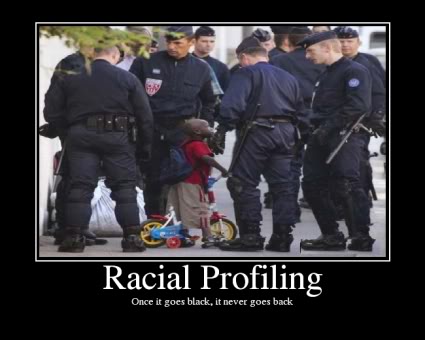
At Toronto police headquarters, the response to evidence of racial profiling has changed dramatically. The angry denials of eight years ago have evolved into a clear recognition of the problem and a firm determination to fix it.

Unfortunately, that attitude hasn’t always percolated down to the street level, where visible minorities – especially blacks – are still being disproportionately singled out for special attention by police.

That’s the upshot of a recent investigative series done by a team of Star journalists led by reporter Jim Rankin. And it is a finding that should trouble anyone wanting more fair and effective policing in Canada’s largest city.

Through a freedom of information request that took almost seven years to yield results, the Star obtained data from 1.7 million “contact cards” filled out by Toronto police officers from 2003 to 2008. Kept for information purposes, these index cards, known as 208s, document the identity, age, gender, race, physical features and address of an individual, as well as known friends and associates.

It isn’t the same as a criminal record. But the filing of a 208 signals that the individual in question has, for one reason or another, caught the attention of police.

The Star’s investigation found that blacks were three times more likely to be stopped and documented in this way than whites. That holds true for all age levels and neighbourhoods. A higher rate of “carding” blacks was especially noticeable in more affluent, predominantly white sections of the city.

Reporters also updated statistics on arrests and charges that had formed the basis of the Star’s landmark 2002 series on race and policing. They found that blacks facing drug charges were still being detained for bail hearings more often than whites, and black motorists remained more likely to be ticketed than white drivers in the same circumstances.

When presented with these findings, and results from examining 208s, Chief Bill Blair didn’t dispute the analysis and accepted that racial bias is a likely factor in these patterns. That’s a major departure from eight years ago when the chief of the day (Julian Fantino) erupted with rage and denial of any systemic problem. The police force is now acting on a variety of fronts, including dramatically increased minority hiring. But more needs to be done.

Civil libertarians object to the entire contact card approach on grounds that tracking innocent people represents excessive monitoring by the state. That is a reasonable concern, and this practice needs re-evaluation.

As long as it continues, however, results from 208s and other police data should be analyzed for racial bias.

The police force isn’t allowed to do that now, under a 1989 policy that bans the department from crunching its numbers on the basis of race. That is outdated. A wide range of authorities, including the Ontario Human Rights Commission, have called for official analysis of such data with an eye toward tracing evidence of racial profiling.

Exporting unemployment

No prospects

Under a scheme organised by the local authorities in the town of Soderhamn and by Sweden’s national employment office, anyone aged between 18 and 28 can volunteer to take a “Job Journey” to Oslo and attempt track down gainful employment.

Those who sign up get a ticket to the Norwegian capital and are put up in an Oslo youth hostel for a month, with Soderhamn council picking up the £20 a night bill. The package also includes on-the-spot guidance on how to get a job in Sweden’s northern neighbour.

“We had an unemployment rate of over 25 per cent, so we had to find solutions,” Magus Nilsen, the man in charge of the project at Soderhamn council, told the Daily Telegraph. “Going to Norway to find work has always been quite popular with young people, but sometimes they want to go but don’t know how to find a job or accommodation so we thought we’d give them a bit of help with both.”

So far around 100 people have decided to leave Soderhamn, a town of 12,000, 250 kilometres due north of Stockholm, to try their luck in the bright lights of Oslo, and some, at least, have struck gold.

After two years on the doll in his hometown Andreas Larsson opted for a “Job Journey” to Norway and now works as a lorry driver in Oslo.

“I came here on a Thursday and on Monday morning I had a job, so it was fast,” he told Swedish Radio. “It almost felt a bit unreal, as if you have come to the promised land.”

Soderhamn and Port Shepstone in South Africa have a twinning partnership as part of the Sweden South Africa Formal Partnership.

Freedom for Swaziland!

It's about to change...

The ANC has called for Swaziland to be “liberated” as part of the outcomes of an International Solidarity Conference the party hosted last week.

“Everyone must have freedom in their lifetime,” ANC chairperson Baleka Mbete told reporters in Johannesburg.

The conference was held under a banner of “strengthening the international solidarity movement” and was attended by the ANC’s alliance partners, solidarity groups, NGOs, and intergovernmental organisations drawn from across the world.

The Swaziland resolution formed part of the Tshwane declaration which, along with the liberation of Swaziland, called for:

  • The total emancipation of the people of West Sahara,
  • the release of the Cuban Five from US custody; and
  • the cessation of Israeli occupation in Palestinian territories, as well as economic sanctions to be imposed on Israel.

“We need to assist all progressive forces in Swaziland to ensure that Swaziland is liberated as all of us in our lifetime,” read the resolution pertaining to the landlocked kingdom.

But Mbete said this would not necessarily translate into the ANC leading any initiative to execute any of the resolutions contained in the declaration – especially bringing about political change in Swaziland.

“The ANC has a task to form a committee from those who attended the conference, which will decide what action to take regarding Swaziland,” she added.

Swailand has been in the international spotlight as of late following the suppression of opposition parties and pro-democracy groups by the country’s government since early 2011.

The call for political change comes as South Africa’s treasury is due to provide the first tranche of a R2.4-billion loan to the cash-strapped kingdom.

The decision to grant the credit came underharsh criticismas it was suggested King Mswati III – famous for his high living and 13 shopaholic wives – could receive a “personal commission” for securing the loan.

But it is understood that the first tranche of the loan, announced on August 3, has yet to be transferred and negotiations over the exact terms and conditions are on-going.

When approached for comment on the matter, the department of international relations and cooperation discounted the call for Swaziland liberation and said it was a “non-issue”.

“That conference was a gathering of political parties, so that is strictly a political matter and has nothing to do with our department,” department spokesperson Clayson Monyela told the Mail & Guardian.

Monyela said that while the ANC was entitled to their views and aspirations, the department only ever engaged the Swaziland government diplomatically.

“South Africa will always be on hand to share our experience in resolving conflict in an advisory role,” he said. – M&G