‘We don’t need a race box’

Abigail Fisher

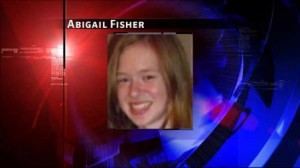
Abigail Fisher is a slight young woman with strawberry blond hair, a smile that needs little prompting, a determined manner and a good academic record. She played soccer in high school, and she is an accomplished cellist.

But the university she had her heart set on, the one her father and sister had attended, rejected her. “I was devastated,” she said, in her first news interview since she was turned down by the University of Texas at Austin four years ago.

Ms. Fisher, 22, who is white and recently graduated from Louisiana State University, says that her race was held against her, and the Supreme Court is to hear her case on Wednesday, bringing new attention to the combustible issue of the constitutionality of racial preferences in admissions decisions by public universities.

“I’m hoping,” she said, “that they’ll completely take race out of the issue in terms of admissions and that everyone will be able to get into any school that they want no matter what race they are but solely based on their merit and if they work hard for it.”

The university said Ms. Fisher would not have been admitted even if race had played no role in the process, and it questioned whether she has suffered the sort of injury that gives her standing to sue. But the university’s larger defense is that it must be free to assemble a varied student body as part of its academic and societal mission. The Supreme Court endorsed that view by a 5-to-4 vote in 2003 in Grutter v. Bollinger.

University officials said that the school’s affirmative action program was needed to build a student body diverse enough to include minority students with a broad range of backgrounds and for the campus to have a “critical mass” of minority students in most classrooms. Interaction among students in class and around campus, said Kedra Ishop, the university’s director of admissions, helps students overcome biases and make contributions to a diverse society. “The role of U.T. Austin,” Dr. Ishop said, “is to provide leadership to the state.”

The majority opinion in the Grutter case, written by Justice Sandra Day O’Connor, rejected the use of racial quotas in admissions decisions but said that race could be used as one factor among many, as part of a “holistic review.” Justice O’Connor retired in 2006, and her replacement by Justice Samuel A. Alito Jr. may open the way for a ruling cutting back on such race-conscious admissions policies, or eliminating them.

The Constitution does not permit the government to sort people by race, no matter how worthy its goal. “While racial diversity on college campuses is beneficial, it cannot be attained by racial discrimination,” said Edward Blum, an adviser to Ms. Fisher and a driving force behind the Fisher case.

Three-quarters of applicants from Texas are admitted under a program that guarantees admission to the top students in every high school in the state. The remaining Texas students and those from elsewhere are considered under standards that take account of academic achievement and other factors, including race and ethnicity.

In the fall of last year, freshmen who enrolled under the program were 26 percent Hispanic and 6 percent black. Texas is 38 percent Hispanic and 12 percent black.

The university said the Top Ten program was a blunt instrument and that classes in many subjects have few or no minority students. It adds that the diversity generated by the Top Ten program is “mostly a product of the fact that Texas high schools remain highly segregated in regions of the state,” which “limits the diversity that can be achieved within racial groups.”

Among the kind of student excluded by the Top Ten program, the university said is “the African-American or Hispanic child of successful professionals in Dallas who has strong SAT scores and has demonstrated leadership ability in extracurricular activities but falls in the second decile of his or her high school class (or attends an elite private school that does not rank).”

Ms. Fisher’s lawyers called that “a newly minted interest in elitism dressed up as ‘intra-racial’ diversity.” They added that the university is making the unseemly pitch for “its preferred kind of minorities” at the expense of white students like Ms. Fisher with similar qualifications.

Talking in the hallway after the seminar, Joao Eloy, who was admitted outside the Top Ten program, said he had mixed feelings about the university’s approach. “My only concern is if diversity becomes a priority above merit,” he said, adding that he was wary of any system that “punishes Asians and poor whites, to name a few.”

Nosa Aimuyo, whose parents are Nigerian immigrants and who was also admitted outside the Top Ten program, said race-conscious admissions were needed to address “disparities in opportunity between high schools, which disproportionately affect minorities.”

In an interview in his office in Austin, William C. Powers Jr, the university’s president, said the attributes that the university seeks have many dimensions. “We want diversity in terms of economic background, first generation, geography, inner city, suburban middle class,” he said.

Asked what he would say to Ms. Fisher, whose own background is middle class, about her disappointment at being rejected, Mr. Powers paused for a moment.

“We look at everyone’s holistic characteristics,” he said.

Last month, Ms. Fisher spent a morning chatting with a reporter at a private club in Washington and then took an impromptu tour of the Supreme Court, where the grandeur of the surroundings seemed to bring home to her the gravity of the question she had presented to the justices.

She is working in Austin, where she had wanted to be in the first place, as a financial analyst. She said her college years at Louisiana State had been fine and that she had enjoyed the camaraderie of the bowling team.

But she added that she had lost a benefit that her state’s government had decided to distribute on a basis other than merit.

“The only thing I missed out on was my post-graduation years,” she said. “Just being in a network of U.T. graduates would have been a really nice thing to be in. And I probably would have gotten a better job offer had I gone to U.T.” She said she was trying to come to terms with her role in a case that could reshape American higher education. Asked if she found it interesting or exciting or scary, she said, “All of the above.”

But she did not hesitate to say how she would run an admission system. “I don’t think,” she said, “that we even need to have a race box on the application.”

What happened to race-neutral admissions?

The Supremes

Nine years after the Supreme Court said colleges and universities can use race in their quest for diverse student bodies, the justices have put this divisive social issue back on their agenda in the middle of a presidential election campaign.

Nine years is a blink of the eye on a court where justices can look back two centuries for legal precedents. But with an ascendant conservative majority, the high court in arguments Wednesday will weigh whether to limit or even rule out taking race into account in college admissions.

The justices will be looking at the University of Texas program that is used to help fill the last quarter or so of its incoming freshman classes. Race is one of many factors considered by admissions officers. The rest of the roughly 7,100 freshman spots automatically go to Texans who graduated in the top 8 percent of their high school classes.

A white Texan, Abigail Fisher, sued the university after she was denied a spot in 2008.

The simplest explanation for why affirmative action is back on the court’s calendar so soon after its 2003 decision in Grutter v. Bollinger is that the author of that opinion, Sandra Day O’Connor, has retired. Her successor, Justice Samuel Alito, has been highly skeptical of any use of racial preference.

Justice Anthony Kennedy, a dissenter in the 2003 decision, probably holds the deciding vote, and he, too, has never voted in favor of racial preference.

As a result, said Supreme Court lawyer Thomas Goldstein, “No matter what the court does, it is quite likely that the UT program is going to be in big trouble.”

The challenge to the Texas plan has gained traction in part because the university has produced significant diversity by automatically offering about three-quarters of its spots to graduates in the top 10 percent of their Texas high schools, under a 1990s state law signed by then-Gov. George W. Bush. The admissions program has been changed so that now only the top 8 percent gain automatic admission.

More than eight in ten African-American and Latino students who enrolled at the flagship campus in Austin last year were automatically admitted, according to university statistics. Both sides acknowledge that the use of race is present.

In all, black and Hispanic students made up more than a quarter of the incoming freshmen class. White students constituted less than half the entering class when students with Asian backgrounds and other minorites were added in.

“For decades, the defense of racial preferences was, `We’d love to find a way to get diversity without using race, but it’s just not possible. There’s just no other way.’ And Texas found another way,” said Richard Kahlenburg, a senior fellow at the Century Foundation and prominent advocate of class-based affirmative action.

The university says the extra measure of diversity it gets from the slots outside automatic admission is crucial because too many of its classrooms have only token minority representation, at best. At the same time, Texas argues that race is one of many factors considered and that it “is impossible to tell whether an applicant’s race was a tipping factor.”

The Obama administration, 57 of the Fortune 100 companies and large numbers of public and private colleges that could be affected by the outcome are backing the Texas program. Among the benefits of affirmative action, the administration argues, is that it creates a pipeline for a diverse officer corps that it called “essential to the military’s operational readiness.” In 2003, the court cited the importance of a similar message from military leaders.

But lawyers for Fisher, of Sugar Land, Texas, said the race-blind method under which the university automatically admits most of its students has been successful. They say Fisher, who has since graduated from Louisiana State University, was excluded because of her race, and they point to a handful of African-American and Latino students who were admitted with lower scores than hers.

“If any state action should respect racial equality, it is university admission,” Fisher’s lawyers said in their written submission to the court.

The university says that a fuller picture of the process shows that white students with lower scores also were admitted, while many more minority students with higher scores than Fisher also were not offered admission.

The case also raises several contentious side issues, including whether affirmative-action programs hurt the very people they are supposed to be helping. A new book by law professor Richard Sander and journalist Stuart Taylor argues that “large preferences often place students in environments where they can neither learn nor compete effectively, even though these same students would thrive had they gone to less competitive but still quite good schools.”

Their book, “Mismatch,” says these students are set up to fail, getting lower grades and dropping out more often than white students with similar backgrounds.

Taylor and Sander, a law professor at the University of California at Los Angeles, point to statistics in California to support their argument. After voters changed the state constitution to outlaw racial preferences, UCLA saw significant declines in enrollment by black and Hispanic students.

But the number of African-American and Latino graduates was unchanged for the five classes after the ban when compared to the five years before the change in state law, they said.

The dozens of legal briefs in the Texas case also highlight a debate over whether racial preference programs actually limit the number of students from Asian backgrounds, who are disproportionately represented in student bodies relative to their share of the population.

The university says Asian-American enrollment has increased under the policy that is being challenged. The numbers would be even higher if Texas stopped factoring in race, Fisher and others say. – AP

African economies to grow rapidly, says IMF

Sub-Saharan Africa is poised to enjoy the type of high growth rates not seen outside Asia in the next few years, the International Monetary Fund said Monday, as the region’s unbridled economic rise continues.

The IMF predicted the region’s economy would grow at 5.0 percent in 2012 and 5.7 in 2013, a little slower than expected this year, but faster than expected next year.

“Sub-Saharan Africa is expected to continue growing strongly in the near term,” the Fund said in its regular economic outlook.

Ghana and the Ivory Coast are expected to top the region’s growth this year, with growth of over eight percent.

Oil producers Nigeria, Angola and Gabon will also see strong growth.

The outlook for the rest of the region is also rosy, raising hopes that Africa may be on the verge of experiencing the type of growth that has transformed Latin America and South East Asia in recent decades.

“Economic activity in sub-Saharan Africa has expanded by more than five percent in each of the past three years — continuing a decade-long run of strong performance that was only briefly interrupted by the global downturn in 2009,” the IMF said.

But there were a flew blots on an otherwise positive landscape.

Africa’s leading economy South Africa is likely to experience weak growth of around 2.6 percent this year, thanks in part to spillovers from Europe’s debt crisis.

The IMF predicted South Africa’s economy would grow 3.0 percent next year.

The IMF also warned that African nations must use the prolonged boom to help create a nest-egg for any trouble ahead.

And Sub-Saharan Africa still has a long way to reach its potential. Today it accounts for just 2.5 percent of world GDP — or 1.3 percent excluding South Africa and Nigeria. – AFP

Breivik’s mother ‘sexualised’ him at four

Breivik with half-sister and mother

“The mother and Anders sleep in the same bed at night with very close bodily contact,” psychologists from Norway’s centre for child and youth psychiatry (SSBU), reported after Breivik and his mother spent several weeks there in 1983.

The reports also show that when Breivik was just four-years-old, his mother became preoccupied with fears that her son would violently assault someone. By the time he was four years old, she “sexualised” the young Breivik, hit him, and frequently told him that she wished that he were dead.

“She saw him as an adult violent person, even though he was only a small boy,” said Aage Borchgrevink, author of A Norwegian tragedy. “She was afraid that he would assault people.”

The psychologist reports show that Wenche Behring already felt her son was “aggressive, hyperactive and clingy,” when she was breastfeeding him.

The family’s neighbours at the time became worried about her inappropriate sexual behaviour.

“During the police investigation, the neighbours also said that they had been shocked by the mother’s sexualised language,” Borchgrevink writes. “There was a lot of fighting in the apartment and they remembered sexual activity taking place while the children were in there.”

The SSBU report described Ms Behring as “a woman with an extremely difficult upbringing, borderline personality structure and an all-encompassing if only partially visible depression” who “projects her primitive aggressive and sexual fantasies onto him [Breivik]”.

The psychologists reported that she would frequently tell her son that she wished he would die.

“She shifts very quickly between speaking to him with a sugary voice and openly expressing a death wish,” they wrote.

When she smacked him in an attempt to exert control, the four-year-old would taunt her that the blows did not hurt, smiling in a way she found “condescending, inappropriate and derisive”.

Borchgrevink, a novelist, has faced criticism in Norway for his decision to publish excerpts from the reports, with some accusing him of violating the privacy of Ms Behring, who was admitted to a psychiatric ward the day after her son killed 77 people in his bomb and gun rampage in July 2011.

Ms Behring was excused from testifying in the trial this summer on health grounds, and refused to give permission for the psychologist who examined the family in 1983 and 1984 to give evidence, preventing the information published last week from being heard in court.

After Breivik’s father Jens Breivik lost a child custody case with Ms Behring, social workers recommended that the boy nonetheless be removed from his mother to prevent “more severe psychopathology” from developing, a request that was ignored.

Borchgrevink said it was this that had convinced him that he was right to publish.

“I’ve given more weight to the public interest. The fact is that he was actually caught by the system before the action, not by the security police, but in his childhood. He was within the system, but the system let him go.”

Breivik was sentenced to 21 years in jail for his attack in August, which he claimed was “necessary” to alert Norway to the threat posed by Islamic immigration. – Richard Orange

Phoenix sends only non-white police to Washington

Downtown Phoenix, Arizona

They’re supposed to be the cream of the crop, going to Washington to protect the newly elected American president and represent Phoenix, Arizona.

But the police association said the Phoenix Police Department used race to determine who’s going – and that’s not all CBS 5 News, a local TV channel has learned.

One of the officers who’s set to pack up and head to Washington when we elect a new president is on the Brady List – a compilation of officers whose honesty and integrity is in question.

“I couldn’t believe it, because we sent officers back four years ago and that was done on seniority,” said William Buividas with the Phoenix Law Enforcement Association, or PLEA.

The Phoenix Police Department hand-picked a group of 40 or so officers to go, but the way they did so has PLEA up in arms.

“In this case the department decided to use ethnic and gender as a basis for selection,” Buividas said.

He showed CBS 5 News a group of officers from one division who were chosen. Buividas said several officers were passed up despite their seniority.

“The two alternates have seniority, are senior to every person who’s going on the list,” Buividas said.

He also showed CBS 5 News a string of emails with the department in which they admitted to using race, gender and ethnicity in their selection process, saying it was the expressed desire of the police chief.

“Why somebody with very little seniority gets to go but somebody with 20, 25 years on gets passed over because they’re the wrong color,” Buividas said.

But that’s not all. In this sample we found one officer, Diana Pineda, is on the Brady List. The Brady List is a group of officers within each department whose integrity has been called into question. CBS 5 News paid a visit to Pineda and asked her why she thought she was chosen to go to the capital.

“Oh, I have no idea,” Pineda told us.

Pineda is on the list stemming from an incident back in 2007. We asked her what happened.

“You know what? I can’t really talk right now, but why don’t you guys come back,” she said.

But when we returned, no one answered the door.

PLEA has filed a grievance but so far no changes have been made. We reached out to police for an interview, but they declined saying because they’re in the grievance process it would be inappropriate for them to comment.

Rugby player parts with testicle

Ouch!

British rugby league player Paul Wood has lost a testicle after a collision during the English sport’s showpiece final at Manchester’s Old Trafford stadium on Saturday.

Wood was playing for the Warrington Wolves against Leeds Rhinos in the Super League Grand Final.

The prop sustained the injury one minute into the second half, but managed to play the rest of the match before seeking treatment.

Despite Wood’s determined effort, Warrington lost the match 26-18 to 2011 champions Leeds.

Just coming out the hospital to go home… Seriously feel like I’ve left something?
Paul Wood

“Ruptured my right testicle, got a knee one minute into the second half, had to have it removed,” tweeted the 30-year-old father of two. – CNN

Showing his sense of humor remained intact, he later tweeted: “Just coming out the hospital to go home… Seriously feel like I’ve left something?

“Tony Smith (Warrington coach) did say in his pre-match team talk last night ‘your balls are on the line here guys!’ I didn’t think he meant literally.”

Rugby League is similar to Rugby Union, although each team has 13 players rather than 15.

In addition to being played in Britain, the sport is also popular is Australia and New Zealand.

Hugo Chavez wins another 6-year term

Hugo Chavez

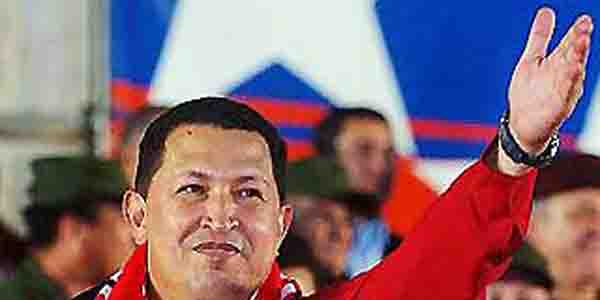
President Hugo Chavez put to rest any doubts about his masterful political touch in winning a third consecutive six-year term after a bitterly fought race against a youthful rival who has galvanized Venezuela’s opposition.

The state governor who lost Sunday’s presidential vote, Henrique Capriles, had accused the flamboyant incumbent of unfairly using Venezuela’s oil wealth to finance his campaign as well as flaunting his near-total control of state institutions.

Still, he accepted defeat as Chavez swept to a 10-point victory margin, the smallest yet for him a presidential race. This time, the former army paratroop commander won 55 percent of the vote against 45 percent for Capriles with more than 90 percent of the vote counted.

Chavez will now have a freer hand to push for an even bigger state role in the economy, as he pledged during the campaign, and to continue populist programs. He’s also likely to further limit dissent and deepen friendships with U.S. rivals.

Chavez spent heavily in the months before the vote, building public housing and bankrolling expanded social programs.

“I think he just cranked up the patronage machine and unleashed a spending orgy,” said Michael Shifter, president of the Washington-based Inter-American Dialogue think tank.

But Shifter also noted the affinity and gratefulness Venezuela’s poor feel for Chavez. “Despite his illness, I still think he retains a strong emotional connection with a lot of Venezuelans that I think were not prepared to vote against him.”

“They still think that he’s trying hard even if he’s not delivering what he promised, that he still has their best interests at heart,” Shifter said. “That’s the political skill that he has. He hasn’t lost that touch.”

Chavez spoke little during the campaign about his fight with cancer, which since June 2011 has included surgery to remove tumors from his pelvic region as well as chemotherapy and radiation treatment. He has said his most recent tests showed no sign of illness.

Tensions were high Sunday night as announcement of the results were delayed.

Finally, fireworks exploded over downtown Caracas amid a cacophony of horn-honking by elated Chavez supporters waving flags and jumping for joy outside the presidential palace.

“I can’t describe the relief and happiness I feel right now,” said Edgar Gonzalez, a 38-year-old construction worker.

He ran through crowds of Chavez supporters packing the streets around the presidential palace wearing a Venezuelan flag as a cape and yelling: “Oh, no! Chavez won’t go!”

“It’s time now to sweep away the squalid ones,” said another elated supporter, Ignacio Gonzalez, using a description of the opposition Chavez employed during campaigning.

“It’s time to get them out of governor’s and mayor’s offices. The next battle is in December,” when state and municipal elections will be held, added the 25-year-old student, who wore a red shirt that wedded the images of Chavez, Jesus Christ and South American independence hero Simon Bolivar.

Capriles posed the strongest challenge yet to Chavez, who won by a 27-point margin in 2006 and by 16 points when he was first elected in 1998.

“I will continue working to build one country,” said the wiry, 40-year-old grandson of Holocaust survivors who unified and energized the opposition while barnstorming across the country.

He said in his concession speech that he rejects the idea of two Venezuelas divided by ideology and class.

Capriles had vowed to address violent crime that has spun out of control, streamline a patronage-bloated bureaucracy and end rampant corruption, but his promises proved inadequate against Chavez’s charisma, well-oiled political machine and legacy of putting Venezuela’s poor first with generous social welfare programs.

Yet with a turnout of 81 percent, Chavez only got 551,902 more votes this time around than he did six years ago, while the opposition boosted its tally by 2.09 million. Chavez appeared to acknowledge the opposition’s growing clout.

“I extend from here my recognition of all who voted against us, recognition of their democratic weight,” he told thousands of cheering supporters from the balcony of the Miraflores presidential palace.

A Capriles victory would have brought a radical foreign policy shift including a halt to preferential oil deals with allies such as Cuba, along with a loosening of state economic controls and an increase in private investment.

Washington, which has often feuded with Chavez, declined to congratulate the president directly, but acknowledged the result.

“We congratulate the Venezuelan people for the high turnout and generally peaceful manner in which this election was carried out,” said State Department spokesman William Ostick.

“We believe that the views of the more than 6 million people who voted for the opposition should be taken into account going forward,” he added.

President Raul Castro of Cuba, which could have been badly hurt by a Chavez loss, was among Latin American leaders sending warm congratulations to the former paratrooper on his victory after nearly 14 years in office.

Chavez paid close attention to his military-like get-out-the-vote organization at the grass roots, stressing its importance at campaign rallies. The opposition said he unfairly plowed millions in state funds into the effort.

One pro-Chavez voter, private bodyguard Carlos Julio Silva, said that whatever his faults, Chavez deserved to win for spreading the nation’s oil wealth to the poor with free medical care, public housing and other government programs. The country has the world’s largest proven oil reserves.

“There is corruption, there’s plenty of bureaucracy, but the people have never had a leader who cared about this country,” Silva said after voting for Chavez in the Caracas slum of Petare. His daughter received an apartment from the state while the free medical care he gets included a recent operation to remove tissue that was clouding his vision.

First-time voter Brenda Aguirre, who is about to embark on cost-free legal studies at the Bolivarian University of Venezuela, was also willing to forgive “el comandante” for his shortcomings.

“Chavez isn’t to blame for the people who surround him,” she said.

Across town, where people from Aguirre’s neighborhood wait tables and sweep floors, Capriles told supporters not to feel defeated.

“We have planted many seeds across Venezuela and I know that these seeds are going to produce many trees,” he told them at his campaign headquarters.

At many polling places, voters began lining up hours before polls opened at dawn, some snaking for blocks in the baking Caribbean sun. Some shaded themselves with umbrellas. Vendors grilled meat and some people drank beer.

Chavez’s critics accused the president of inflaming divisions by labeling his opponents “fascists,” “Yankees” and “neo-Nazis,” and it’s likely hard for many of his opponents to stomach another six years of the loquacious and conflictive leader.

Some said before the vote that they’d consider leaving the country if Chavez won.

Gino Caso, an auto mechanic, said Chavez is power-hungry and out of touch with problems such as crime. He said his son had been robbed, as had neighboring shops.

“I don’t know what planet he lives on,” Caso said, gesturing with hands blackened with grease. “He wants to be like Fidel Castro – end up with everything, take control of the country.” – AP

How Britain plundered the globe for 300 years

by George Monbiot of The Guardian

Opium, famine and banks all played their part in Britain’s plundering of the globe.

Why now? It’s not as if this is the first time Britain’s representatives have been caught out. The history of governments in all countries is the history of scandal, as those who rise to the top are generally the most ambitious, ruthless and unscrupulous people politics can produce. Pushing their own interests to the limit, they teeter perennially on the brink of disgrace, except when they fly clean over the edge. So why does the current ballyhoo threaten to destroy not only the government but also our antediluvian political system?

The past 15 years have produced the cash-for-questions racket, the Hinduja and Ecclestone affairs, the lies and fabrications that led to the invasion of Iraq, the forced abandonment of the BAE corruption probe, the cash-for-honours caper and the cash-for-amendments scandal. By comparison to the outright subversion of the functions of government in some of these cases, the is small beer. Any one of them should have prompted the sweeping political reforms we are now debating. But they didn’t.

For the past 300 years, the revolutions and reforms experienced by almost all other developed countries have been averted in Britain by foreign remittances.

The social unrest that might have transformed our politics was instead outsourced to our colonies and unwilling trading partners. The rebellions in Ireland, India, China, the Caribbean, Egypt, South Africa, Malaya, Kenya, Iran and other places we subjugated were the price of political peace in Britain. After decolonisation, our plunder of other nations was sustained by the banks. Now, for the first time in three centuries, they can no longer deliver, and we must at last confront our problems.

There will probably never be a full account of the robbery this country organised, but there are a few snapshots. In his book Capitalism and Colonial Production, Hamza Alavi estimates that the resource flow from India to Britain between 1793 and 1803 was in the order of £2m a year, the equivalent of many billions today. The economic drain from India, he notes, “has not only been a major factor in India’s impoverishment … it has also been a very significant factor in the industrial revolution in Britain”. As Ralph Davis observes in The Industrial Revolution and British Overseas Trade, from the 1760s onwards India’s wealth “bought the national debt back from the Dutch and others … leaving Britain nearly free from overseas indebtedness when it came to face the great French wars from 1793”.

In France by contrast, as Eric Hobsbawm notes in The Age of Revolution, “the financial troubles of the monarchy brought matters to a head”. In 1788 half of France’s national expenditure was used to service its debt: the “American War and its debt broke the back of the monarchy”.

Even as the French were overthrowing the ancien regime, Britain’s landed classes were able to strengthen their economic power, seizing common property from the country’s poor by means of enclosure. Partly as a result of remittances from India and the Caribbean, the economy was booming and the state had the funds to ride out political crises. Later, after smashing India’s own industrial capacity, Britain forced that country to become a major export market for our manufactured goods, sustaining industrial employment here (and avoiding social unrest) long after our products and processes became uncompetitive.

Colonial plunder permitted the British state to balance its resource deficits as well. For some 200 years a river of food flowed into this country from such places as Ireland, India and the Caribbean. In The Blood Never Dried, John Newsinger reveals that in 1748 Jamaica alone sent 17,400 tons of sugar to Britain; by 1815 this had risen to 73,800. It was all produced by stolen labour.

Just as grain was sucked out of Ireland at the height of its great famine, so Britain continued to drain India of food during its catastrophic hungers. In Late Victorian Holocausts, Mike Davis shows that between 1876 and 1877 wheat exports to the UK from India doubled as subsistence there collapsed, and several million died of starvation. In the North-Western provinces famine was wholly engineered by British policy, as good harvests were exported to offset poor English production in 1876 and 1877.

Britain, in other words, outsourced famine as well as social unrest. There was terrible poverty in this country in the second half of the 19th century, but not mass starvation. The bad harvest of 1788 helped precipitate the French revolution, but the British state avoided such hazards. Others died on our behalf.

In the late 19th century, Davis shows, Britain’s vast deficits with the United States, Germany and its white dominions were balanced by huge annual surpluses with India and (as a result of the opium trade) China. For a generation “the starving Indian and Chinese peasantries … braced the entire system of international settlements, allowing England’s continued financial supremacy to temporarily co-exist with its relative industrial decline”. Britain’s trade surpluses with India allowed the City to become the world’s financial capital.

Its role in British colonisation was not a passive one. The bankruptcy, and subsequent British takeover, of Egypt in 1882 was hastened by a loan from Roths­child’s bank whose execution, Newsinger records, amounted to “fraud on a massive scale”. ­Jardine Matheson, once the biggest narco-trafficking outfit in history (it dominated the Chinese opium trade), later formed a major investment bank, Jardine Fleming. It was taken over by JP Morgan Chase in 2000.

We lost our colonies, but the plunder has continued by other means. As Joseph Stiglitz shows in Globalisation and its Discontents, the capital liberalisation forced on Asian economies by the IMF permitted northern traders to loot hundreds of billions of dollars, precipitating the Asian financial crisis of 1997-98. Poorer nations have also been strong-armed into a series of amazingly one-sided treaties and commitments, such as trade-related investment measures, bilateral investment agreements and the EU’s economic partnership agreements. If you have ever wondered how a small, densely populated country which produces very little supports itself, I would urge you to study these asymmetric arrangements.

But now, as John Lanchester demonstrates in a fascinating essay in the London Review of Books, the City could be fatally wounded. The nation that relied on financial services may take generations to recover from their collapse. The great British adventure – three centuries spent pillaging the labour, wealth and resources of other countries – is over. We cannot accept this, and seek gleeful revenge on a government that can no longer insulate us from reality.

Read the original article here.


ATM bombers arrested in Limpopo

Scene of an ATM bombing

Seven men believed to be members of ATM bombing gang were arrested in Louis Trichardt (Makhado), Limpopo police said on Sunday.

“Initial investigations has revealed that the gang was allegedly responsible for more than case 17 cases of safe and ATM bombings, a

series of armed robberies as well a murder case of security guard in

September this year,” said Brigadier Hangwani Mulaudzi.

He said one of the men was a well a known high flyer from Makhado, while the others were from Rustenburg, Seshego and Mara.

He said the gang was arrested following a car chase in the R101 road after information was received that the gang were planning an attack in Makhado in the early hours of Saturday morning.

He said other police stations were alerted and a roadblock was set up resulting in the arrest of the gang

Three firearms with their serial numbers filed off as well as two vehicles — a Toyota Tazz and Mazda Laser allegedly used during the crime spree were recovered. Safe and ATM breaking implements and explosives were also recovered.

“The suspects are expected to appear at the Makhado Magistrate’s Court on

Monday facing charges of murder, possession of unlicensed firearms and

explosives.”

He said they were still being profiled as it was suspected that they form part of a gang responsible for violent crimes in Limpopo and possibly other provinces. – Sapa

When does affirmative action reach ‘critical mass’?

University of Texas Austin
The University of Texas at Austin

AUSTIN, Texas — Walking across the South Mall, or scanning the football stadium’s 100,000 seats on game day, University of Texas admissions Director Kedra Ishop sees how much has changed since the 1990s, when she was a black student at what was an inordinately white school.

This giant flagship campus — once so slow to integrate — is now awash in color, among the most diverse in the country. The student body, like Texas, is majority-minority.

At the dining hall, minority students no longer cluster together. Actually, it’s more a high-end food court now, and many tables are racial mosaics — white, black, Latino, Asian.

So is this the “critical mass” of minority students that the U.S. Supreme Court narrowly endorsed in 2003 as an educational goal important enough to allow colleges to factor the race of applicants into admissions decisions?

That question will be front and center Wednesday when a more conservative Supreme Court revisits affirmative action for the first time since that landmark case nine years ago involving the University of Michigan.

Abigail Fisher
Abigail Fisher, who was denied admission to the University of Texas because of race preference

This time, it’s Texas defending the use of race in admissions, fighting a discrimination lawsuit from Abigail Fisher, a rejected white applicant. As it happens, the court’s decision will affect relatively few students at Texas, which admits most students through a system that doesn’t factor in race.

But a broad ruling rolling back affirmative action could be an earthquake at other campuses across the country that make more use of race, potentially changing the educational trajectories of millions of students.

For all the wrenching debates about opportunity and fairness the affirmative action debate evokes, the outcome will likely come down to how the current justices fill out the answer to questions they began to answer in 2003: What is critical mass, and how far can a university go to achieve it?

Generally, it’s the point where there’s enough diversity on campus to provide a rich educational environment. But beyond that, it’s a concept critics call maddeningly vague and supporters necessarily so. Is it enough for the student body to be diverse overall, or must all groups be well represented? What if there’s diversity in the student body, but not in most individual classrooms?

Texas will swallow its pride and argue that for all its progress, it’s still short of critical mass. Under state law, most UT students are admitted automatically based on their high school GPA, with race playing no role. But for the smaller remainder of its class where it enjoys more leeway, Texas argues it should be able to use race as a factor.

The reason: Some groups, especially blacks, remain underrepresented compared to Texas’ population. And minority students clump together academically, leaving most classes with no more than a single black or Latino voice.

But the university won’t give a target number, something the court would likely call an unconstitutional quota.

“There’s never been a discussion of ‘this is the target, this is what it looks like, this is where we’re trying to go,'” Ishop said. “We know what it doesn’t look like. And we know without the ability to examine students in their completeness that we can get back there very quickly.”

Such arguments sound mushy to UT’s opponents, who call the school’s goals for critical mass a quota in disguise. They say the university has gone too far using race in admissions, abusing the discretion the court granted colleges to define critical mass for themselves.

“It is a squishy concept that’s being manipulated,” said Terence Pell, president of the Center for Individual Rights, which argued against affirmative action in the Michigan case and has filed a brief against Texas in the current one. “It’s just sort of diversity for its own sake,” he added, “with no end and no limit.”

History’s role

History isn’t central to the legal issues in the affirmative action debate, but it’s an issue at UT-Austin. The football team didn’t integrate until 1970, and even as minority enrollment expanded, UT little resembled increasingly diverse Texas, leaving minority students feeling isolated.

“It was very seldom three or more were gathered,” said Machree Gibson, who arrived on campus in 1978, earned two degrees and later became the first black female president of the Texas Exes, the university’s powerful alumni group. “We used to joke, ‘Three in a room, we’re a gang.'”

Today, even a short drive through campus leaves Gibson amazed how things have changed.

But UT still doesn’t look like Texas. Of its 52,000 students, 5 percent are black (compared to 12 percent of the state population). Latinos make up 18 percent at UT (38 percent statewide) and Asians 15 percent (4 percent statewide).

Greek life and off-campus housing for upperclassmen remain mostly segregated — the West Campus neighborhood is mostly white, Riverside more black and Latino, and the Far West neighborhood Asian, limiting interactions. Academically, many departments have few non-white faces. Senior Kristin Thompson says she’s one of just two black female civil engineers in her class, despite aggressive recruiting. She’s found her community outside class, but her academic experience has been lonely.

“At UT we talk about what starts here changes the world, but I think we’re doing a disservice to students by not preparing them for a world that doesn’t have these demographics,” she said.

In the Michigan case nine years ago, psychologists, educators and, most influentially, the military flooded the court with briefs arguing a diverse learning environment helped prepare students —- whites and minorities —- for jobs and citizenship. Many also argued it takes a critical mass of minorities

How many? There was no magic number. But enough for minorities not to feel isolated in the classroom, and non-minorities to realize minorities’ views weren’t one-size-fits-all.

Those arguments persuaded Justice Sandra Day O’Connor, the court’s key swing vote. In her majority opinion in the 5-4 case, she gave Michigan and other universities leeway to define critical mass in terms of their own educational goals, and to use race as a plus-factor in admissions to get there (O’Connor has since been replaced by Justice Samuel Alito, a strong affirmative action skeptic).

In Texas, a 1996 federal appeals court ruling had prohibited UT from using race in admissions, and black enrollment had plummeted. A year later, the Texas Legislature passed a “Top 10 percent” law, guaranteeing UT admission to any student at the top of his or her Texas high school.

The law was race-neutral, but it boosted the number of minorities — by some measures, close to current figures. To UT’s opponents, that proves UT can reach ample diversity — even “critical mass” — without resorting to racial preferences.

But UT says the diversity produced by the 10 percent law was stilted. Ninety percent of smaller classes had one or zero blacks, and 43 percent no more than one Latino. A student survey found minorities felt isolated, and a majority of all students felt there weren’t enough minorities for “the full benefits of diversity to occur.”

The university wanted leeway to recruit more minorities with different interests, to ensure fields such as geosciences, architecture and Thompson’s civil engineering had a critical mass, not just the campus overall.

So for the relatively small portion of its class — currently about one-quarter — not admitted automatically by their high school performance, UT designed a system to mimic what the court had allowed in the Michigan case. In that second system UT emphasizes race is a small factor, among many “special circumstances” that may be considered. It’s also not automatic, and could benefit any applicant, even a white one in some cases.

Both sides acknowledge the effect of race in UT’s system is modest (Fisher contends race is decisive for just 33 additional minority enrollees per year). To UT, that shows race is used along the limited lines the court has allowed. To Fisher, it shows that UT doesn’t need to use race at all.

On campus, critical mass evokes a range of responses. Jesse Hernandez, a senior who attended a virtually all-Latino high school in the Rio Grande Valley, says its benefits include generating a vibrant multicultural social life. Latino cultural groups, and fraternities and sororities, help minorities find a community at a huge school, but also benefit the broader student body by sharing their culture on campus.

Thompson, the civil engineering student, says she’ll recognize critical mass “when there are less racial incidents on campus, when students feel like they can go anywhere on campus and feel welcome, can go anywhere and speak their mind and not feel like they’re going to be chastised for it, ridiculed for it, looked at crazy,” she said. She loves UT, but says it’s not there yet.

“To me that’s the end goal: a welcoming campus, not a quantity of students.”

Senior Jordan Grenadier’s experience has been different.

“I don’t ever feel like I walk on campus or walk into a classroom and only see one particular type of people,” said Grenadier, who leads the campus chapter of the group Young Conservatives of Texas. On West Mall, where student groups set up tables, “it’s so diverse whenever you walk down there, it’s almost hard to imagine the university saying ‘that’s not good enough.'”

The question isn’t “whether or not (diversity) is important,” she said. “It’s, ‘Is it justified? Can someone who is qualified to attend the university not get accepted because someone who is maybe not as qualified gets in because of racial preferences?'”

UT-Austin’s president, Bill Powers, who agrees critical mass is the “central question” in the case, says UT isn’t just saying “we’ll know it when we see it.” He says “analytics,” such as classroom diversity surveys, will show UT if it’s successfully preparing students to live and work in a diverse world.

“Right now, African-Americans and Hispanics are underrepresented,” Powers said in an interview in his library-like office on campus. “We’ll reach a critical mass when you can (see it) both in the campus atmosphere and the milieu in individual classes. Not 100 percent, but where a sufficient number of individual classes bring this cross-cultural environment.”

“It really is going to hinge on what lens the court looks at the campus through,” said Gerald Torres, who says diversity is key to meaningful conversations about environmental justice in his law school courses. “Is it the lens of the classroom or is it the lens of the campus? If it’s the lens of the campus, then (the court) is likely to say the percentage increase of students of color under the 10 percent plan is sufficient. If they look at the classroom, I think they’ll say it’s not.”

Attorneys for Fisher, who sued Texas after she was denied admission to UT-Austin in 2008, contend that by even referencing the state’s demographics in its critical mass goals, UT is acknowledging a quota. They also argue the Supreme Court never intended to make diversity in every classroom the benchmark for critical mass.

“As long as you have a critical mass in the school as a whole, you’re going to bump into people in the dorms, in the all-night bull sessions,” Pell said. “That’s what’s going to give you the benefits of diversity. Now Texas says that’s not good enough, you have to have diversity in every corner of the university, in every classroom, every major.” – Associated Press

ANC promised in 2004 not to change Pretoria’s name

At a meeting in the Ou Raadzaal on Chuch Square, Pretoria, Lekota promised that Pretoria's name will not be changed

During 2004 at a meeting organised by PRAAG, the then minister of defence, Mosiuoa Lekota, promised that there would be nou name change in Pretoria. The following Monday a report of the meeting appeared in the Pretoria News:

It’s official: Pretoria keeps its name

February 2 2004 at 03:04am
By Bruce Venter


Pretoria will always be Pretoria.

So says the Defence Minister and chairman of the African National Congress(ANC), Mosiuoa Lekota.

Lekota made his statement at the weekend when he paid a surprise visit to a Confederate Afrikaner Forum meeting held at the Ou Raadsaal.

The forum is a platform for people of Afrikaans heritage to address issues relating to their culture and position in South African society.

Lekota added that the ANC appreciates Afrikaans and Afrikaans place names, and sees them as part of South Africa’s heritage.

Lekota said Tshwane was the name for the Metro district and did not apply to the city of Pretoria itself.

“Pretoria will stay Pretoria and is part of a greater area called Tshwane in which Pretoria is a city,” he said.

Dr Dan Roodt of the Pro-Afrikaans Action Group (PRAAG) said the announcement came as a surprise.

“Relations between government and Afrikaners were becoming increasingly strained and Pretoria’s proposed name change has further polarised our society,” he said.

He added that the Afrikaans community must grasp the olive branch offered by the ANC.

“PRAAG thanks Minister Lekota for his contribution to the discussion on the role of the opposition… this speaks volumes on the importance government puts on meetings held by influential Afrikaners,” Roodt said.

Tshwane executive mayor Father Smangaliso Mkhatshwa said he could not comment on Minister Lekota’s statement, as he was not present at the meeting.

“As far as I am concerned, the process to investigate the name change and its implications for the city’s residents is still on course,” he said.

PRAAG has called for the committee of academics set up by the mayor to investigate the proposal to be disbanded and its remaining funds returned to the Tshwane municipality.

William Baloyi, spokesperson for the mayor’s office said: “The City Council has not yet reached a decision on the matter and the study into what impact a name change will have on residents is still under way.”

He added that it was difficult to comment on Lekota’s statement as it was not known in what context the statement was made.

Philip de Wet of the Democratic Alliance (DA) said Lekota’s statement was good news for Pretoria residents.

“This statement is in contrast to the position held by the mayoral committee and has been made by a senior member of the ANC,” he said.

De Wet added that the statement can be seen as being made on behalf of the ANC and that residents will welcome the news.

Pieter de Necker of the African Christian Democratic Party, (ACDP) said it was a positive step, but warned that only time will tell if Lekota’s statement can be taken seriously.

“The government has heard the cries of the people of Pretoria and that of opposition parties,” he said.

De Necker added that the ACDP was in the process of submitting another proposal regarding the city’s possible name change.

The proposed name change has resulted in residents drawing up petitions and boycotting the payment of rates and taxes.

In a media statement by PRAAG, it has called on all residents who support the boycott to withdraw the boycott with immediate effect.

Louis van der Schyff of the Herstigte Nationale Party (HNP) was more hesitant in commenting on Lekota’s statement.

“Although he (Lekota) promised the name of Pretoria will not change, there was insufficient time to discuss the matter fully with the minister,” he said.

Van der Schyff added that the minister refused to be drawn into a debate regarding name changes that have already occurred in Limpopo.

Who gets the Nobel?

FW De Klerk enjoys the spotlight

This year’s Nobel prize season kicks off Monday with rumours suggesting the peace prize could go to Egypt’s Maggie Gobran for helping Cairo’s poor, Afghan burka opponent Sima Samar or US scholar Gene Sharp.

The first Nobel to be announced this year will be the medicine prize on Monday, when the jury in Stockholm reveals the winner or winners around 11:30 am (0930 GMT.)

Like every year, most of the speculation in the run-up to the announcements focuses on who will take home the prestigious peace and literature prizes.

Nobel Peace Laureates former Polish President Lech Walesa, former Russian President Mikhail Gorbachev, former South African President Frederik Willem de Klerk, and former U.S. President Jimmy Carter held a panel discussion at the University of Illinois at Chicago as part of the World Summit of Nobel Peace Laureates on April 23, 2012 in Chicago, Illinois. The 12th World Summit of Nobel Peace Laureates convenes in Chicago.

Betting sites have become a popular feature of the guessing game in recent years, with gamers sometimes curiously accurate amid suspicions of leaks from within the award committees.

This year, Coptic Christian Gobran, dubbed the “Mother Teresa” of Cairo’s slums, tops the list of one betting site for the peace prize, with 6.5-to-one odds ahead of the October 12 announcement.

But that race looks wide open this year with no clear frontrunner among the 231 nominees.

Although the peace prize committee never discloses the nominees’ names, former US president Bill Clinton, ex-German chancellor Helmut Kohl, the EU and WikiLeaks suspect Bradley Manning are known to be on the list.

The head of the Peace Research Institute of Oslo, Kristian Berg Harpviken, follows the work of the committee and each year publishes his own shortlist of possible winners.

His list includes Sharp, an American political theorist and expert on non-violent revolution; Russian rights group Memorial and its founder Svetlana Gannushkina; and independent Russian media outlet Echo of Moscow and its chief editor Alexei Venediktov.

A Nigerian duo campaigning against the misuse of religion, Archbishop John Onaiyekan and Mohamed Sa’ad Abubakar, Sultan of Sokoto, are also on it, as is Myanmar President Thein Sein.

Afghan human rights activist, ex-minister and burka opponent Sima Samar is meanwhile also seen as a possible winner, as is Cuban human rights activist Oscar Elias Biscet.

For the literature prize, Chinese author Mo Yan and Japan’s Haruki Murakami share the top two spots on one betting site.

Literature experts in Stockholm have suggested it could be time for the Academy to pick a woman or a North American.

Names being whispered in literary circles include Canadian short story writer Alice Munro — though the Swedish Academy has never given the prize to a short story writer — as well as US author Don DeLillo and Somali novelist Nuruddin Farah.

“One could imagine that it would be an author from North America, a man maybe, like Don DeLillo or Philip Roth,” said Elisabeth Grate, who runs her own publishing house.

“But it would be nice with a woman,” she added.

In line with tradition, and unlike the other prizes, the date of the literature prize announcement is revealed only a couple of days before. But it is traditionally announced on a Thursday, and could therefore come on October 11.

For the medicine prize, Swedish media have mentioned Japan’s Shinya Yamanaka and Britain’s John Gurdon as possible recipients for their research in nuclear reprogramming, a process that instructs adult cells to form early stem cells which can then be used to form any tissue type.

Public broadcaster Swedish Radio also suggested that the nod could go to researchers in the field of epigenetics, which studies nature versus nurture and how genes respond to their environment.

The physics prize, to be announced on Tuesday, has also created some buzz this year.

The discovery in July of a new fundamental particle believed to be the Higgs boson is one of the biggest breakthroughs in the field of physics in the past half-century, and is widely considered Nobel prize-worthy research.

The names of the chemistry prize laureates will be revealed on Wednesday, with Swedish Radio suggesting Svante Paeaebo of Sweden could win for his groundbreaking analysis of ancient DNA.

The economics prize, which has been dominated by Americans over the years, is the last to be announced, on October 15.

Because of the economic crisis, the Nobel Foundation has slashed the prize sum to eight million Swedish kronor ($1.2 million, 930,940 euros) per award, down from the 10 million kronor awarded since 2001. – AFP

Tutu, TRC, not the model to be followed, says IFP

Buthelezi

IFP leader says Archbishop Desmond Tutu’s Commission is not a model to be followed.

Delivering the second annual Desmond Tutu International Peace Lecture at the University of the Western Cape this week, Mrs Graca Machel spoke of the TRC as a moment for victims and perpetrators to look each other in the eye, and face the painful truth. Perhaps, she said, we need a similar institution again to deal with the great hurt we are inflicting on one another through rape and violence.

The premise that such initiative would bring healing in our society is predicated on the assumption that the first TRC brought reconciliation to South Africa. Unfortunately, that is not the case. Mrs Machel pointed out how many of our people still carry the wounds and scars of Apartheid and “We are harming one another because we can’t control our pain.”

I would like to believe that if a rapist were forced to look his victim in the eye, he would be inescapably struck by the intrinsic right to human dignity and security, and feel the overwhelming burden of remorse. But we know that, more often than not, rapists and abusers do look their victims in the eye, for in most cases they are not strangers, but family members or family friends.

Thus there is something lacking in the formula of bringing victims and perpetrators together in a formal environment. Perhaps we need to consider why the first TRC failed to establish reconciliation in our nation.

There is a popular misconception that the IFP refused to participate in the TRC process. On the contrary, we made a comprehensive submission, detailing the murders of some 400 IFP leaders and office bearers who were killed in a systematic plan of assassination during the internecine low intensity civil war waged by the ANC against other components of the liberation struggle. To date, none of those 400 murders has been solved.

I also appeared before the TRC, but I was not prepared to ask for amnesty, for I had done nothing wrong. I publicly stated that if I had committed any crime or had orchestrated any criminal acts, the State should charge me. When it comes to those political leaders who did seek amnesty, the TRC process ensured that we will never know the details of the criminal acts for which amnesty was sought.

The family of Mr Steve Biko described the TRC as “a vehicle for political expediency”. I was a Minister in President Mandela’s Cabinet when he informed us of his decision to appoint Archbishop Desmond Tutu as Chairperson of the TRC. Cabinet records will show that I objected even then, for the success and the credibility of the TRC depended on non-partisan leadership. Archbishop Tutu was aligned with the ANC and was a former patron of the UDF. How could the IFP expect fairness in the TRC process?

In the end, the TRC could not find one shred of evidence to link me, personally, to human rights’ violations. That is because I never once committed, ordered, ratified, sanctioned or condoned any violation of human rights. Nevertheless, the TRC sought to implicate me regardless, and I was forced to bring a lawsuit to rectify the preposterous findings in the TRC Report.

The TRC was not a definitive moment separating us from our past and allowing us to walk into democracy with a clean slate. It was valuable in exposing the horrors of Apartheid, but failed the far greater issue of black-on-black violence which had claimed some 20 000 lives. Thus we walk, still crippled by the lack of full reconciliation in our nation. There was somehow a lack of honesty behind the TRC process.

Similarly, a second TRC process to deal with the violence of the past eighteen years cannot be a definitive moment, separating us from this societal plague and allowing us to walk forward with a clean slate. The deeper issue, the missing part to the formula, still needs to be addressed.

I suspect that the rapist and the abuser fail to respect the intrinsic right to human dignity of their victim, because their own dignity has been compromised. It is difficult to respect a universal principle when that principle doesn’t seem to apply to your own life. This doesn’t excuse criminality, but it does explain why our country is locked in a perpetual cycle of violence.

As much as we tout the Constitution and the unassailable human rights of all our people, the fact remains that both poverty and corruption create daily infringements on our rights that tell us in a much louder voice â” the voice of experience â” that we don’t have an intrinsic, unassailable right to dignity, security, education, housing and healthcare.

If you were to tell someone who has been on the waiting-list for an RDP house for sixteen years that they have a fundamental and constitutionally protected human right to decent housing, would they be more inclined to listen to the words or the reality?

Our people are frustrated. They are not simply wounded by the scars of Apartheid. They are battered by the facts of life in a democratic South Africa; facts like poverty, a failing education system, high levels of crime, high unemployment, pervasive corruption, a struggling healthcare system. Need I continue?

Frustration exploded in widespread service delivery protests, and now it is exploding in strikes and the threat of strikes. But, all along, frustration has been the undercurrent to violence and crime. We must deal with the wounds of the present.

The results of the South African Social Attitudes Survey of the Human Sciences Research Council are revealing when it comes to understanding the frustration that separates our people.

Sixty-four percent of respondents feel that “people of different racial groups do not really trust or like each other”. Fifty-eight percent believe that people of other race groups are trying to get ahead economically at the expense of their own group. More than half feel that other race groups exclude their group from positions of power and responsibility, and almost half feel that their traditions and values are under threat because of the influence of other races.

This should challenge some conventional thinking. While many black South Africans feel deliberately excluded from the economy, so do many white South Africans. While many white South Africans feel their values are under threat, so do many black South Africans.

Somehow this is less about race than it is about opportunity, empowerment, inclusion and equality. For as long as our people are frustrated and see their human rights trampled by poverty and corruption, they will struggle to respect the human rights of their neighbour.

A process like the TRC presupposes a clear distinction between victim and perpetrator. I wonder how a second TRC process, to deal with the wounds of the present, would distinguish between the two.

Mangosuthu Buthelezi

07 October 2012

‘African Dream about to explode’

Thabo Mbeki

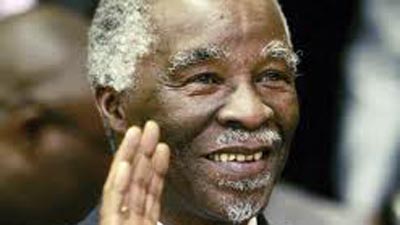
Former President Thabo Mbeki has warned of more Arab spring uprisings on the continent if African leaders continued to be “preoccupied” with enriching themselves and not being concerned about “the lives of the people”.

In an interview with The Sunday Independent, Mbeki said the patience of the youth and ordinary Africans was waning, and that their frustrations could explode.

He wrote in The Thinker magazine in September, quoting poet Langston Hughes, that if the African dream is deferred for much longer it will explode.

Asked this week if the explosion could amount to uprisings such as the Arab spring, Mbeki said: “If the African population continues to experience similar conditions as happened in Tunisia and Egypt, similar conditions of standards of living not improving, facing crises all the time, and a small elite which lives well and eats better every day, and flaunts its wealth… in the end these ordinary African people, like the ordinary African people of Tunisia, surely will say enough is enough, I think it is imperative of all our governments to clearly focus on this matter.”

Mbeki said he sensed some exasperation among African youth when he interacted with them throughout the continent.

“There is a level of impatience. And the determination to see things change for the better… It is the responsibility of government to respond to that voice and for the youth to understand their role, not rebellion, but to reconstruct the continent,” he said.

Mbeki wrote in The Thinker earlier that there were some African leaders, including some in SA, who came to power to accumulate wealth.

“You will see it in many parts of the continent where people assume positions of leadership… as an opportunity for self-enrichment.

“We’ve seen the same phenomenon here in South Africa, we are not immune… and somebody who is preoccupied with that is not about to be concerned about ‘what did I do wrong yesterday which has impacted negatively on the lives of the people’. [They are] not interested in that.”

He said this was partly why the AU failed to reflect on its successes and failures on its 10th anniversary this year. He told The Sunday Independent he hoped the 50th anniversary of the Organisation of African Unity, the AU’s predecessor, would provide an opportunity to review progress on continental issues.

“I think it is important not just to make speeches and say we celebrate. But say what has been our experience in the last 50 years, what has gone right and what has gone wrong.”

In The Thinker, he blasted the AU for being “consumed by the eminently subsidiary matter of who should chair the AU Commission, reflecting the malaise that is poisoning the African body politic”.