Ohio set to execute Donald Palmer for double murder 23 years ago

Donald Palmer

An Ohio death-row inmate set to be executed is sorry for killing two strangers 23 years ago and wants to give their families justice, according to the inmate’s attorney.

Donald Palmer, 43, was in the state’s single-cell death house in Lucasville in southern Ohio as officials prepared to execute him by lethal injection at 10 a.m. (1400 GMT) Thursday.

His lawyer, David Stebbins said Wednesday that he doesn’t plan to file any other appeals on Palmer’s behalf and expects the execution to proceed.

“He has always accepted responsibility for this and wants the families of his victims to have justice,” said Stebbins, who plans to be among the witnesses to the execution.

Palmer was convicted of aggravated murder in the May 8, 1989, shooting deaths of Charles Sponhaltz and Steven Vargo along a Belmont County road in eastern Ohio. The married fathers both were shot in the head.

Stebbins said that Palmer has wanted to apologize to his victims’ families but that he didn’t have the means to do so.

Both Sponhaltz’s and Vargo’s widows planned to attend the execution, as well as Sponholtz’s two daughters and his brother.

Palmer will be given an opportunity to say his last words before receiving a lethal dose of pentobarbital.

Palmer had decided not to request mercy from the Ohio Parole Board, which can recommend clemency for a condemned inmate to the governor.

Belmont County prosecutor Christopher Berhalter told the board the execution should proceed because Palmer’s guilt is undisputed and because of the brutality of the crimes.

According to court records, Palmer told police that he and co-defendant Edward Hill were driving from Columbus to the Belmont County home of a man who had dated Palmer’s ex-wife and Hill’s sister.

As they were driving back and forth in front of the home, Sponhaltz – who was keeping an eye on the house – lightly hit the back of their pickup with his own truck and yelled at them: “What in the hell are you trying to prove?” according to the records.

Palmer then shot Sponhaltz twice in the head.

Vargo, a passing motorist, stopped and asked “What the hell did you guys do,” Palmer told police, according to the records. Palmer then shot Vargo twice in the head.

Sponhaltz’s body was dumped in a field; Vargo’s was left on the road.

Hill, 46, was convicted for his role in the crimes and sentenced to 35 years to life in prison.

Valerie Vargo Jolliffee, 51, Vargo’s widow, told The Associated Press that she plans to attend Palmer’s execution because he ruined her life.

She said that she and Vargo fell in love at first sight and had been married just two months when he was killed.

“I was looking forward to growing old with him,” she said. “I just can’t wait until it’s over. And it won’t be over until they put him to death.”

Corrections officials say Palmer asked that his last meal include a chipped ham and Velveeta cheese sandwich, Doritos, peanut M&Ms, hazelnut ice cream, cheese cake and soda.

Ten Ohio inmates, including Palmer, are scheduled for execution through March 2014. Palmer will be the second this year if the execution goes forward.  – AFP

South African government claims crime is decreasing

South Africa’s murder rate has dropped by 3.1 percent in the past financial year, Police Minister Nathi Mthethwa announced on Thursday.

Releasing the 2011/12 annual crime statistics at Parliament, Mthethwa said in 2004/5 more than 18,000 people were murdered — now down to less than 16,000.

There had been a 27.6 percent reduction over an eight year period –2004/5 to 2011/12, he said.

Sexual offences had dropped by 3.7 percent.

“We need to emphasise that, as government, we are, however, still concerned about the scourge of rape in our country.

“Rape decreased [by] 1.9 percent, but is [still] unacceptably high,” Mthethwa said.

On organised crime, Mthethwa said this category was showing a downward trend.

“The most highly organised forms of aggravated robberies — namely carjacking, cash-in-transit heists, and bank robbery — have experienced decreases,” he said.

Breaking down the figures, Mthethwa said carjacking decreased by 23.6 percent in 2010/11. A further decrease of 11.9 percent followed in 2011/12.

Cash-in-transit robberies were down by 37.5 percent, and bank robberies by 10.3 percent in 2011/12.

House robberies decrease by 1.9 percent, but business robberies continued to show an upward trend, jumping 7.5 percent.

Mthethwa noted an increase in small business robberies.

“We have now finalised a strategy to combat and reduce robberies at small business… we will be engaging relevant parties to ensure implementation of the strategy within next few weeks,” he said.

Emphasis on affirmative action must shift to education

The Freedom Front has in reaction to research undertaken by the South African Institute of Race Relations (SAIRR), which indicates that there is a correlation between the employment of an individual and the individual’s level of education, regardless of race, that there are an increasing amount of proof that affirmative action’s time has been served. According to the SAIRR research, 41% of black people have a degree and 36% of these people are employed in professional positions. Similarly, there were 45% white people with degrees and 42% of them are in professional positions. According to Adv. Anton Alberts, FF Plus parliamentary spokesperson in Labour, the research indicates that race no longer plays a role on a professional level and that the labour market offers opportunities to graduates, regardless of their race. That means that the emphasis has to shift away from affirmative action and should rather be placed on proper training. “In addition, South Africa has a serious shortage of skilled labour and it would be to the government’s advantage to rather fix the problems with the education system so that quality education can take place. The mere continued implementation of affirmative action on the other hand, denies the country effectiveness and optimal functioning of the economy. That is why the FF Plus will continue to oppose affirmative action,” Alberts explained.

“The rationale of affirmative action is busy falling away and any continued implementation will make it objectionable on the basis of the implementation of an irrational policy which is merely being maintained for the easy advantages which it disperses on the basis of race to a segment of the population. The ANC government should not be surprised if the policy in its entirety is eventually challenged in the Constitutional Court,” Alberts warned.

South African crime statistics to be released today

Police Minister Nathi Mthethwa will release South Africa’s crime statistics for the 2011/2012 financial year in Parliament on Thursday.

Mthethwa will be joined by national police commissioner Riah Phiyega.

Last year’s crime statistics showed the country’s murder rate had dropped by 6.5 percent to 15,940 murders.

Attempted murder decreased by 12.2 percent, and sexual offences by three percent.

The number of rape cases reported rose from 55,097 to 56,272.

During the period under review, 94 police officers were killed in the line of duty. This was down from the previous year’s figure of 110 police officers killed.

Assault with intent to inflict grievous bodily harm dropped by 4.5 percent, while robbery with aggravating circumstances was down by 12 percent.

House robberies declined 10 percent to 16,889 cases during the 2010/11 financial year — the first decrease since 2004.

Car hijackings dropped by 23.6 percent to 10,700 cases, while truck hijackings decreased 29.2 percent with 413 reported cases.

Cash-in-transit crimes were down 18.7 percent and bank robberies declined by 58 percent.

The number of burglaries at residential premises dropped to 4.8 percent but there was an increase in non-residential robberies of 0.9 percent, particularly among small businesses like spaza shops, supermarkets and schools.

Cases of drunken driving or driving under the influence of drugs were up by 4.5 percent.

Commercial crime rose 2.8 percent. This was increasingly dominated by cyber-crime. – Sapa

Fracking will pollute water, causing cancer

Artist's impression of the fracking process

KwaZulu-Natal – SA’s top water research body has warned the government to think carefully about the serious risk of water pollution from cancer-causing chemicals and radioactive compounds from future underground “fracking” operations across huge swathes of the country.

A new report by the state-funded Water Research Commission says shale gas rock-fracturing (fracking) will not only happen in remote sections of the Karoo. In fact, the government had already issued fracking exploration permits in six of the nine provinces, including a massive chunk of southern KwaZulu-Natal stretching almost as far north as Pietermaritzburg.

The scientists note that future fracking, at depths 4km below the earth’s surface, could be over a much wider area of the country – including most of the high-lying areas south of latitude 29°C in KZN (a line which starts at Mtunzini in the east and stretches inland past Estcourt towards Bloemfontein and Kimberley).

The report also identifies a number of risks to human health, water and the natural environment from fracking wells. These risks included:

– Widespread pollution of groundwater, rivers and lakes with dozens of cancer-causing fracking compounds and other “highly toxic” pollutants such as benzene, hydrochloric acid and isopropanol.

– Accidental release of underground uranium and other radioactive elements into the water and soil.

– Underground mini-earthquakes, cave-ins and land subsidence.

– Privatisation of parks and other state land where the public is excluded from fracking land and gas fields for safety reasons.

– Above-ground air pollution from methane and other shale gas wells.

– Lower property values.

However, water pollution is the main emphasis of the 84-page Water Research Commission report by Gideon Steyl (University of the Free State chemistry department), Gerrit van Tonder (University of the Free State Institute for Groundwater Studies) and Luc Chevallier (Council for Geoscience).

The scientists note that gas-drilling companies in the US have been trying to hide the toxic nature of many fracking chemicals.

However, the commission cites a report from the US House of Representatives last year which identified at least 29 commonly used fracking chemicals that were known or probable cancer-causing agents, or were regulated as hazardous to drinking water and air.

These chemicals are mixed with water and pumped underground at very high pressure to fracture and crack the rock formations to release buried pockets of methane and other gas formed millions of years ago from rotting mounds of mud, vegetation, algae and other organic matter.

Some chemicals included benzene (a known cancer-causing chemical) along with a variety of acids and petroleum products.

A study by the University of Buffalo in the US last year also raised concern about the possible release of underground uranium and other radioactive compounds when rocks are cracked up with hydrochloric acid.

Another US study published last year showed that the methane gas level in underground drinking water was generally 17 times higher in fracking areas compared with well water where no fracking took place.

However, Steyl and his colleagues voiced dismay over the difficulty in tracking down truly unbiased international studies on the impacts of fracking, since most were done by industry and private interests.

Even official US government reports claiming no damage to public health or the environment stood in contradiction to numerous adverse reports by US citizens and the US Environmental Protection Agency.

The commission researchers note that a single fracking event in a single well used the same amount of water needed to irrigate eight to 10ha of maize during a growing season.

Every time a well was fracked, large volumes of chemicals were added to the water-pressure mixture. Although chemicals only made up between 0.5 and 2 percent of the mixture, the volume of hazardous chemicals in a single fracking event could total between 34 000 and 136 000 litres.

Even if just 1 percent of dangerous fracking chemicals leaked out of the concrete well drillings during a single fracking, Steyl estimated that 490 litres of hazardous chemicals could contaminate underground water. This could pose “serious hazards” to the environment and to underground water drunk by people and livestock.

Despite these concerns, the scientists appear to recognise that fracking is a fait accompli and they have listed a set of 10 recommendations to limit harm. They include compulsory “full disclosure” of every chemical used. Any fracking well should be at least 10km away from residential areas to reduce chemical exposure risks.

All drilling records should be freely available to the public, and a thorough baseline study should be done to measure pre-fracking quality of water, soil and air by an “unbiased” body such as a university.

Legal action should also be taken against any drilling company after a first offence. They should be forced to clean up damage, and be banned from future fracking in SA. However, even in the US, there were fewer than 10 inspectors to monitor more than 3 500 fracking wells in Pennsylvania. – The Mercury

Marikana is a dangerous precedent, says Vavi

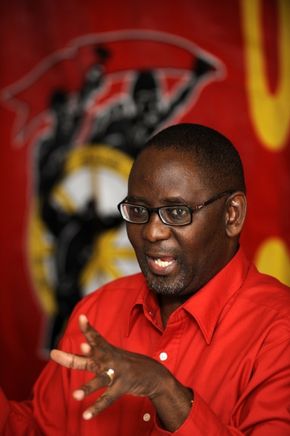
Zwelinzima Vavi

by Genevieve Quintal and Gillian Jones

The Marikana wage deal set a dangerous precedent, the Congress of SA Trade Unions (Cosatu) general secretary Zwelinzima Vavi said on Wednesday.

“If those workers forced the hand of the company in that fashion through an unprotected strike, what stops Driefontein in doing the same,” Vavi asked delegates at Cosatu’s national congress in Midrand, Johannesburg.

Earlier on Wednesday Vavi had to leave the congress to deal with a strike at Gold Fields Driefontein mine in Carletonville where 15,000 workers have been on an illegal strike for the past 10 days.

Leaders of the National Union of Mineworkers (NUM) accompanied him.

On his return from the mine Vavi said the mineworkers were demanding a salary of R12,500. This was the same demand made by workers at Lonmin’s Platinum mine in Marikana, North West.

On Tuesday Lonmin workers accepted a final offer of a 22 percent increase giving some workers R11,000 a month.

Vavi warned that other workers would think that they too could get substantial increases by going on illegal strikes.

“We are not saying that workers do not deserve their money, but if we are not careful this may mean an end of the central bargaining system in the country.

“Workers will just embark on wildcat strikes and steam ahead and force us to follow them.”

He called for the congress to come up with a radical commitment to putting workers interests first.

He said the Driefontein workers were having problems with their NUM branch leaders. “[However] they all remain loyal members of NUM.”

The workers said they would not abandon the union just because of their problems with the branch leaders.

Vavi said the workers were demanding that the leaders be dismissed and would not listen to argument that according to Cosatu’s constitution there were processes to follow.

The NUM would hold a special national executive committee meeting on Wednesday night to discuss the issue. – Sapa

HTC unveils two new Windows phones

The new HTC 8X, powered by Windows

(Reuters) – HTC Corp on Wednesday unveiled two smartphones running Microsoft Corp’s Windows Phone 8 software and said the devices would be available in November with several operators around the world.

The two brightly colored devices — the Windows Phone 8X and the Windows Phone 8S — will pitch HTC directly against Microsoft’s main partner Nokia, which also unveiled two phones based on the Windows software earlier this month.

However, while Nokia did not name any customers for its devices, HTC said theirs would go on sale at three of the top four U.S. mobile operators – Verizon Wireless, AT&T Inc and T-Mobile USA. It also said that several operators in Europe and Asia agreed to sell the devices.

HTC is under a lot of pressure to generate strong sales from its next round of smartphones as it has been losing ground to Samsung Electronics and Apple Inc.

Until now, HTC has been betting on its One series of phones but so far this year sales of those phones have failed to keep pace with the Apple’s iPhone and Samsung’s Galaxy range.

Until the second half of 2011, when it suffered a sharp decline in its fortunes, former contract smartphone maker HTC had build a strong brand around the world with phones based on Android software.

‘Occupy white land,’ urges Contralesa president

Contralesa president Chief Phathekile Holomisa has called on South Africans to stand up and reclaim land from the white minority by next year, reports the SABC. Chief Holomisa says the ANC-led government has failed people by adopting the land redistribution policy.

He says land was not bought from the blacks it was forcibly taken by whites. He was speaking at the memorial lecture of struggle hero, McGregor Mgolombana at Dikishe outside Mthatha in the Eastern Cape. Mgolombana was exiled because he resisted forced removal for his community.

Holomisa says: “We need to prepare ourselves next year for a struggle for the restoration of land so that we no longer have a situation where 87% of land is in white hands and the 13% is occupied by blacks. It is unsustainable what you find in the constitution which requires that the state must buy land from the whites in order to be able to give it to the landless South Africans, it is unsustainable because it is unaffordable because the money is not there, so a way must be found therefore to ensure that redistribution of land takes place without any obstacles being put, be it in terms of the constitution or in terms of the requirement that the land must be bought . The people who took it from the majority of South Africa did not buy it.”

Meanwhile Deputy Minister of Defence, Thabang Makwetla has admitted that there have been challenges in the restitution of land. “We will see what happens at the ruling party’s national conference in looking at the matter because there are clear suggestions that we need to look at other ways of expediting this programme. The challenge in the recent years has been the availability of sufficient budget to make sure that land that is under claim is bought back by the government and handed back to the communities.”

French magazine risks Muslim ire with cartoons of Prophet Mohammed

French magazine is set to increase Muslim ire by printing cartoons of the Prophet Mohammed Wednesday a day after 12 died in an Afghan suicide bombing, the deadliest attack linked to an anti-Islamic film.

A female suicide bomber killed 12 people in Afghanistan on Tuesday in the deadliest single attack attributed to the controversial film which has sparked furious protests across the Muslim world.

The deaths raised to over 30 the toll from incidents linked to the trailer for “Innocence of Muslims,” a film produced by extremist Christians in the United States that depicts the Prophet Mohammed as a thuggish womaniser.

After a week that has seen protests in at least 20 countries, there were fears that the wave of anger in the Islamic world could hit harder in Europe as it emerged that French satirical weekly Charlie Hebdo was planning to publish cartoons caricaturing the Prophet Mohammed in its Wednesday edition.

Charlie Hebdo is no stranger to controversy over its handling of the issues relating to Islam.

Last year it published an edition “guest-edited” by the Prophet Mohammed that it called Sharia Hebdo. The magazine’s offices in Paris were subsequently fire-bombed.

Charlie Hebdo’s latest move was greeted with immediate calls from political and religious leaders to avoid inflaming the situation.

French Prime Minister Jean-Marc Ayrault issued a statement expressing his “disapproval of all excesses”.

The magazine’s editor, originally a cartoonist who uses the name Charb, said the images would “shock those who will want to be shocked”.

Dalil Boubakeur, the senior cleric at Paris’s biggest mosque, appealed for France’s Muslims to remain calm.

President Barack Obama said Tuesday he expected governments in the Muslim world to protect American diplomats, despite their revulsion at a film made on US soil deemed offensive to their faith.

“The message we have to send to the Muslim world is that we expect you to work with us, to keep our people safe,” Obama said during a taping of the “Late Show with David Letterman” on CBS TV.

US Secretary of State Hillary Clinton, meanwhile, said “we are taking aggressive steps to protect” diplomatic missions worldwide.

Among those killed so far have been four US diplomatic staff in Libya, including ambassador Chris Stevens, who died when militants laid siege to the US mission in Benghazi a week ago on September 11 in a four-hour attack.

Clinton said the FBI had launched an investigation inside Libya, and she vowed that “we will not rest until the people who orchestrated this attack are found and punished.”

In Afghanistan, Hezb-i-Islami, the second largest insurgent group after the Taliban, said the suicide bomb attack was to avenge the “insult” of the film.

“The bombing was in retaliation for the insult to our Prophet,” spokesman Zubair Sidiqi told AFP by phone from an undisclosed location.

Security officials said nine foreigners including South Africans were among those killed on a highway leading to Kabul airport when the bomber blew up her station wagon alongside a minivan carrying foreign workers.

Taliban fighters last week stormed a British-run airfield, killing two US Marines and destroying six US fighter jets in another act of vengeance.

In Lebanon, the head of the Shiite Muslim movement Hezbollah, listed in the United States as a terrorist organisation, made a rare public appearance to warn of “very dangerous” repercussions if the entire film is released, rather than the 14-minute trailer that has already sparked outrage.

Al-Qaeda’s franchise in North Africa urged Muslims to storm US embassies and kill American envoys in Muslim countries, monitoring group IntelCenter said.

The film-maker Nakoula Basseley Nakoula, a 55-year-old Egyptian Copt and fraudster who was sentenced to 21 months in prison in the United States in June 2010, has not been seen since Saturday when he was questioned.

The risks now facing those involved in the film’s production were underlined when a Salafist cleric in Egypt called Monday for the deaths of all those involved in its making.

Before dawn on Monday, officers from the Los Angeles County sheriff’s department escorted four members of Nakoula’s family to join him in hiding.

Egypt’s public prosecutor has ordered that seven US-based Egyptian Copts be tried over their role in the film, accusing them of “insulting the Islamic religion, insulting the Prophet and inciting sectarian strife.”

However Interpol in a statement said it was not aware of any request from Egypt for the arrest of people related to the film but stressed that its charter “forbids it from undertaking any matter of a predominantly political, military, religious or racial nature.”

In Pakistan, two protesters died after demonstrating against the film close to the Afghan border and outside the US consulate in Karachi.

Police used tear gas to disperse more than 2,000 protesters trying to reach the US consulate in the city of Peshawar, chanting anti-US slogans and burning the Stars and Stripes flag.

Afghanistan, Bangladesh and Pakistan blocked access to YouTube, following the video-sharing website’s failure to take down the clip of the film. Saudi Arabia and Russia indicated they may follow suit.

In east Jerusalem hundreds of Palestinians clashed with Israeli border police, hurling stones and firebombs at a checkpoint.

South African rugby ‘too white’, says former Springbok coach

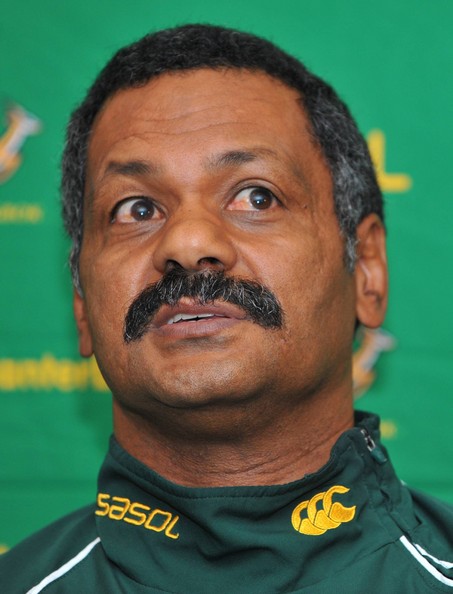
Peter de Villiers

By making the Springbok team too white, black South Africans were being alienated from the sport and the team, which was divisive for the country, former Springbok coach Peter de Villiers said in an internet radio interview.

“We have to know what country we’re living in, and at the moment we’re turning a lot of black people against us by making the team white,” he told Ballz Radio earlier this week.

De Villiers did not want to comment on the Springbok team’s recent performance, as he said he had not watched the team lose their match against the All Blacks 21-11 in Dunedin, New Zealand last week, Beeld reported.

“People don’t want to talk [about race], but I have to… we’re breaking up the country, and damaging a sport that we all love,” De Villiers said.

He did not want to comment on current Springbok coach Heyneke Meyer’s selections for the team, but said that the best players should be sent onto the field.

“I don’t want to comment on his team selections, but I do know that you can’t keep doing the same thing and expect different results.” – Sapa

South Africa detaining refugees and migrants ‘unlawfully’

The department of home affairs (DHA) is unlawfully detaining refugees and migrants and forcing costly court actions to fight for their release, Lawyers for Human Rights (LHR) said on Wednesday.

“The detention of refugees and migrants is carried out in an unlawful manner,” said LHR refugee and migrant rights programme head Kaajal Ramjathan-Keogh.

“Despite repeated engagement with [DHA] we’ve encountered a lot of difficulty in releasing people without resorting to the courts,” said Ramjathan-Keogh.

She was speaking at the release in Johannesburg of an LHR report, “Monitoring Detention in South Africa”.

LHR attorney Thandeka Duma said Home Affairs “seemed to have dysfunctional internal systems”.

Home Affairs spokesman Ronnie Mamoepa declined to comment on the report as the department had not yet read it.

“We’ve not had sight of that report to enable us to comment intelligently,” Mamoepa said.

“However, the department remains committed to discharging its mandate within the framework of the law, the Constitution and the framework of international obligations.”

Duma said that under the Refugees Act, asylum seekers were allowed to move freely while their applications were being considered. They were allowed to remain in the country until the entire application process, including appeals, was exhausted.

However, the DHA in many cases was only using the Immigration Act, which allowed for the detainment of undocumented migrant, in contravention of previous court rulings.

“Courts ruled [DHA] will not read the Immigration Act in isolation,” Duma said.

She said DHA maintained that it is following the law.

“However, this claim is totally contradicted by the evidence in this report and elsewhere,” Duma said.

She said attempts to intervene for the release of improperly detained migrants and refugees with the department had been unsuccessful, forcing LHR to seek recourse in the courts.

In the year covered by the report, LHR won 18 of its cases and secured the release of 41 improperly detained people, a win rate of about 95 percent.

LHR was also awarded costs — although less than it believed was owed –and this was a significant cost to the state.

“We are of the view that such costs are a waste of taxpayer money,” Duma said.

“The court should hold home affairs’ officials personally responsible for court orders that are not followed,” Duma said.

She said LHR, along with many other NGOs, had been denied access to immigration facilities such as the Lindela repatriation centre in Krugersdorp and was only able to meet clients outside it.

“We are also concerned by the continued lack of independent monitoring in immigration detention facilities.”

She said the SA Human Rights Commission was the only body allowed in and had not released a report on conditions inside Lindela since 2000.

SAHRC legal consultant Sugne Niemann said the organisation did inspect Lindela earlier this year and made regular visits.

She could not comment on whether the SAHRC would release a report on conditions inside the repatriation facility, referring questions to the SAHRC’s provincial office.

The SAHRC provincial office could not immediately provide comment on their visits to Lindela. – Sapa

Education, not race determines employment in South Africa – SAIRR

Educational achievement is a more important indicator of why people are employed rather than race, the SA Institute of Race Relations (Sairr) said on Wednesday.

“The proportion of people by race in professional positions closely mirrors the proportion of people by race with professional qualifications,” said research manager Lucy Holborn in a statement.

The data challenged the view that South African employers were resisting racial transformation in the workplace.

According to the data, there were about 41 percent of black people with degrees and there were 36 percent of blacks in professional positions.

There were 45 percent of white people with degrees or higher qualifications and there were 42 percent of them in professional positions.

“While a degree of racial prejudice exists in all societies, the data suggests that educational achievement will determine the pace of future employment equity progress in South Africa,” she said.

Sairr sourced information from Statistics SA and the Commission for Employment Equity.

Malema renews call for nationalisation

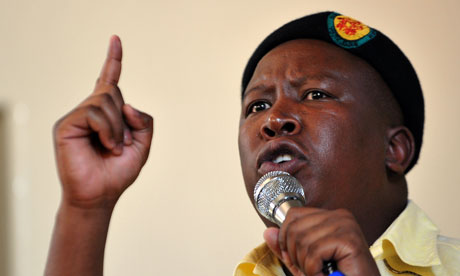
Julius Malema

Expelled ANC Youth League president Julius Malema has likened critics of the nationalisation of mines to those who opposed the end of apartheid.

Malema was asked by Talk Radio 702 host John Robbie on Wednesday how the nationalisation of mines could take place and whether it was plausible.

“You sound like people who opposed our struggle for freedom,” answered Malema.

“You are arguing exactly like they argued, that we cannot run the economy… I am telling you that it can sound difficult until it is done.”

Malema said the government should “not necessarily” expropriate mines, but should instead use Botswana as a model, where the state owned 51 percent of mine shareholding.

“Why are you not having a problem with Botswana? [Mine companies] are more than willing to work with government in Botswana, but when they come here they are refusing,” Malema said.

“I’m not calling for wholesale, blanket nationalisation. We still encourage the involvement of the private sector. We’re talking about greater control and participation of the state in the economy.”

Malema also responded to questions about reports that the Hawks had concluded their corruption probe and he would soon be arrested.

He said he was not aware of any intention to arrest him.

“I hear that from you at the start of the programme. I hear that from papers,” Malema said.

“I’ve been ‘getting arrested’ since 2009,” he said.

Malema said that if the police wanted to arrest him, they would not have to “create an unnecessary scene”.

“Those that are looking for me, they don’t have to create an unnecessary scene, they just have to call me, ‘Mr. Malema, report to Polokwane police station at 9am’, and I’ll be there,” he said.

Malema also told Robbie that he would return to the ANC, regardless of the outcome of the party’s national elective conference in Mangaung.

Malema said he was expelled from the party because a “faction” in the ANC, which was led by President Jacob Zuma, was determined to be re-elected to positions.

“I was booted out by those who felt threatened by my presence in the organisation,” Malema said. “They thought my presence threatened their re-election at Mangaung.”

He said that once the pressure of the election contest was over, he would be welcomed back into the ANC.

“Once they get re-elected or not re-elected, we will still be welcomed back into the organisation, because they will be cool-headed and they will no longer be afraid of the unknown,” Malema said.

He said that as an expelled member, no administrative rules prevented him from rejoining the party.

“Being expelled from the ANC means that you can wake up tomorrow and apply to be a member of the ANC,” Malema said.

“I’m not rejoining the ANC, I’m joining as a new member of the ANC.”

Malema said he still had a good relationship with his branch and participated in its meetings.

“It’s my branch. I’ve never had bad blood in my mind. I’ve got a bad blood with those ones who have an ambition to be elected,” Malema said.

Robbie asked Malema about his continued commitment to the ANC and whether that commitment was reasonable following his expulsion.

“But you’re living in cuckoo land. You say you’ll die for the ANC, all that wonderful stuff, but the ANC has kicked you out, aren’t you living a dream?” asked Robbie.

“No, no, no,” answered Malema. “I would have walked away if I was an opportunist.” – Sapa

Police fire rubber bullets at Amplats miners

Police used rubber bullets and teargas to disperse a group of people gathered near Anglo American Platinum (Amplats) in Rustenburg on Wednesday, said a spokesman.

“Police dispersed people trying to gather illegally. As we have said, we are not tolerating any illegal gatherings,” said Captain Dennis Adriao.

“Police utilised teargas and stun grenades, and rubber bullets were used at the [nearby] squatter camp.”

Amplats spokeswoman Mpumi Sithole said: “I can confirm that [the police have] dispersed a group of people gathering illegally at Sondela informal settlement.

“We do not know why the people were gathered and cannot confirm if they are our employees. As reported yesterday [Tuesday], our mines are operational…”

Last week, government ministers in Cabinet’s security cluster said the government would no longer tolerate violence, threats and intimidation taking place in the mining sector, as massive strikes sprang up along Rustenburg’s platinum belt, with another one near Carletonville.

The measures included a crackdown on illegal gatherings, the carrying of dangerous weapons, incitement, and threats of violence against anyone in the affected areas.

Adriao said that for large groups of people to gather, in terms of the Regulation of Gatherings Act, they had to give notice to the local municipality for the gathering to take place.

Section four set out certain conditions for the gathering.

“Police need to be present, emergency services need to be on standby, marshalls present the whole day. Water points need to be established,” said Adriao.

The relevant municipality in this case was Rustenburg.

Further details were not immediately available, but SAFM reported that mineworkers near Jabula and Thembelani mine had been arrested and that the gathering was related to an unprotected pay strike.

After suspending operations last week, citing employee safety due to the situation in the region, Amplats resumed operations on Tuesday.

Workers were paid over the suspension period, and praised the company for this.

On Friday, during the operations suspension, they marched to the company’s Bleskop stadium and decided that they also wanted a salary increase.

Unlike their mining colleagues at other operations, who were seeking R12,500, they said they wanted R16,070 and other modifications to their fringe benefits.

On Tuesday night a lengthy strike at nearby Lonmin ended with a wage agreement.