Race for Arctic could become uncivilized

Russian icebreaker
Russian icebreaker

The discovery of large hydrocarbon deposits in the Arctic has sparked international competition over resources in frozen waters. Regional powers are quickly filing claims for the sea shelf, with Russia preparing to bring in the biggest bid to the UN.

Ahead of Moscow preparing to file a 1.2 million square kilometer Arctic waters bid to the UN later this year, President Vladimir Putin commissioned Russian ministries to get ready to take the new territories in the Sea of Okhotsk under full control and protection.

The Russian president ordered maintenance of border patrols of the extended sea shelf be in place by July 1, 2014.

Russia’s Defense Ministry has been instructed to ensure maritime authorities extend the Russian shelf in the Sea of Okhotsk beyond the generally recognized 200 nautical miles zone by December 1, 2015.

The Foreign Ministry is obliged to bring all the necessary documents, including new maps of the Sea of Okhotsk and scientific data serving as proof of Russia’s bid, to the UN by March 1, 2015.

Experts say the future of the world economy, to some extent, is dependent on the Arctic.

Last year, Russian energy giants, Gazprom and Rosneft, were granted rights to develop large hydrocarbon deposits recently discovered in the Pechora and Kara seas. The find could be a pot of gold for Russia’s gas industry.

The melting Arctic ice cap has made way for shipping routes and the exploration of resources at the bottom of the world’s smallest ocean. The North Pole icecap has decreased by 40 percent since 1979, opening up two shipping routes, the North Sea route and the Northwest Passage, with extremely high economic potential.

Approximately 30 percent of the world’s undiscovered natural gas and 15 percent of its oil lie in the Arctic. But the majority, 84 percent, of the estimated 90 billion barrels of oil and 47.3 trillion cubic meters of gas remain off shore.

According to the UN’s sea convention, any country has sovereign rights to resources within 200 nautical miles of its territorial waterways. There are five countries with territories in the Arctic: Canada, Denmark, Norway, Russia and the US.

As the icecaps are melting, a military race is also building up in the region.

The US Navy recently debuted a revised roadmap focused on expanding America’s muscle in the world’s coldest ocean over the next decade, increasing the number of personnel trained in Arctic operations, advancing technical equipment and surveillance needs.

The ultimate goal appears to be establishing international order under US leadership.

Earlier this year, NATO countries participated in a Norwegian-led Cold Response exercise in the Arctic, rehearsing high intensity operations with 16,000 troops deployed in extreme conditions. Non-NATO participants, Sweden and Switzerland, also took part.

“The United States is anxious to militarize the Arctic Ocean. It has to do it via its relations with Canada and it is also seeking to do it via NATO, through the participation of Norway and Denmark in NATO. And now it is calling upon Sweden and Finland to essentially join NATO with a view to establishing a NATO agenda in the Arctic,” Michel Chossudovsky, from the Centre for Research on Globalization in Montreal, revealed.

Meanwhile, Canada has been staging its own independent drills with hundreds of soldiers participating in cold-weather winter warfare exercises.

Not to be left out, last year Russia announced the resumption of a constant armed presence in the Arctic, which was abandoned by the military after the fall of the USSR.

Back in 2012, Russia’s former envoy to NATO and current Vice Prime Minister, Dmitry Rogozin, said that by the middle of the 21st century the fight for resources between various states will become “uncivilized.”

In about 40 years, Russia may lose its sovereignty if it fails to clearly set out its national interests in the Arctic, Rogozin said.

“It’s crucially important for us to set goals for our national interests in this region. If we don’t do that, we will lose the battle for resources which means we’ll also lose in a big battle for the right to have sovereignty and independence,” Rogozin stated at a Marine Board meeting in Moscow.

Source: RT

Quebec separatists stand to gain

quebecCanada is bracing for another fight with Quebec separatists.

Premier Pauline Marois today called an election for April 7 as she met Lieutenant-Governor Pierre Duchesne to ask him to dissolve the provincial legislature. Polls show Marois’ separatist Parti Quebecois may have enough support to form its first majority government in more than a decade.

“Today, I have summoned my ministers and we have taken the necessary steps to dissolve the National Assembly and call an election,” Marois said in televised remarks in Quebec City. “It’s now up to you, Quebeckers, to decide.”

A majority would set the stage in the French-speaking province for a possible referendum on secession from the rest of Canada, roiling credit markets and threatening to push the Canadian dollar lower.

“If they get a majority, I fully expect they will hold a referendum during their next mandate,” said Harold Chorney, a political science professor at Concordia University in Montreal. “Marois isn’t going to give up sovereignty.”

A majority victory for the Parti Quebecois would mark the third time since the mid-1970s the party has taken sole control of the province’s legislature, propelling Quebec into another confrontation with the rest of Canada that a former premier once likened to a never-ending visit to the dentist.

Quebec has held two plebiscites on splitting from Canada — in 1980 and 1995 — under previous Parti Quebecois majority governments. The party will hold a third vote if a victory is in sight, Jean-François Lisée, Quebec’s international relations minister, told ICI Radio-Canada television March 1. The separatists came within 0.6 of a percentage point of gaining majority support in the 1995 referendum, but support for the cause has been stalled in the 30 percent range in recent years.

One advantage the separatists may seek to exploit is the federal Conservatives’ lack of representation and low support in the province, where the party holds five of 75 districts. The Conservatives are in fourth place in support in Quebec, polling about 9.4 percent support in the province, according to a four- week rolling survey by Nanos Research of 208 Quebeckers that ended Feb. 15.

It’s a vulnerability for Harper that the opposition Liberal and New Democratic Party, both led by Quebeckers, will try to exploit ahead of federal elections in 2015.

Source: BNN

Defeated by the Taliban, Washington decides to take on Russia,China

pcrby Paul Craig Roberts

The several days of organized protests in Ukraine are notable for the relative lack of police violence. Unlike in the US, Canada, Thailand, Greece, and Spain, peaceful protesters have not been beaten, tear gassed, water cannoned, and tasered by Ukrainian police. Unlike in Egypt, Palestine, and Bahrain, Ukrainian protesters have not been fired upon with live ammunition. The restraint of the Ukrainian government and police in the face of provocations has been remarkable. Apparently, Ukrainian police have not been militarized by US Homeland Security.

What are the Ukrainian protests about? On the surface, the protests don’t make sense. The Ukrainian government made the correct decision to stay out of the EU. Ukraine’s economic interests lie with Russia, not with the EU. This is completely obvious.

The EU wants Ukraine to join so that Ukraine can be looted, like Latvia, Greece, Spain, Italy, Ireland, and Portugal. The situation is so bad in Greece, for example, that the World Health Organization reports that some Greeks are infecting themselves with HIV in order to receive the 700 euro monthly benefit for the HIV-infected.

The US wants Ukraine to join so it can become a location for more of Washington’s missile bases against Russia.

Why would Ukrainians want to be looted?

Why would Ukrainians want to become targets for Russia’s Iskander Missiles as a host country for Washington’s aggression against Russia?

Why would Ukrainians having gained their sovereignty from Russia want to lose it to the EU?

Obviously, an intelligent, aware, Ukrainian population would not accept these costs of joining the EU.

So, why the protests?

Part of the answer is Ukrainian nationalists’ hatred of Russia. With the Soviet collapse, Ukraine became a country independent of Russia. When empires break up, other interests can seize power. Various secessions occurred producing a collection of small states such as Georgia, Azerbaijan, the former central Asian Soviet Republics, Ukraine, the Baltics, and the pieces into which Czechoslovakia and Yugoslavia were broken by “nationalism.” The governments of these weak states were easy for Washington to purchase. The governments of these powerless states are more responsive to Washington than to their own people. Much of the former Soviet Empire is now part of Washington’s Empire. Georgia, the birthplace of Joseph Stalin, now sends its sons to die for Washington in Afghanistan, just as Georgia did for the Soviet Union,

These former constituent elements of the Russian/Soviet Empire are being incorporated into Washington’s Empire. The gullible nationalists, naifs really, in these American colonies might think that they are free, but they simply have exchanged one master for another.

They are blind to their subservience, because they remember their subservience to Russia/Soviet Union and have not yet realized their subservience to Washington, which they see as a liberator with a checkbook. When these weak and powerless new countries, which have no protector, realize that their fate is not in their own hands, but in Washington’s hands, it will be too late for them.

With the collapse of the Soviet Union, Washington quickly stepped into the place of Russia. The new countries were all broke, as was Russia at the time and, thus, helpless. Washington used NGOs funded by Washington and its EU puppets to create anti-Russian, pro-American, pro-EU movements in the former constituent parts of Soviet Russia. The gullible peoples were so happy to have escaped the Soviet thumb that they did not realize that they now had new masters.

It is a good bet that the Ukrainian protests are a CIA organized event, using the Washington and EU funded NGOs and manipulating the hatred of Ukrainian nationalists for Russia. The protests are directed against Russia. If Ukraine can be realigned and brought into the fold of Washington’s Empire, Russia is further diminished as a world power.

To this effect NATO conducted war games against Russia last month in operation Steadfast Jazz 2013. http://www.strategic-culture.org/news/2013/10/17/nato-steadfast-jazz-exercise-chill-of-cold-war.html Finland, Ukraine, Georgia, and neutral Sweden have offered their military participation in the next iteration of NATO war games close to Russia’s borders despite the fact that they are not NATO members.

The diminishment of Russia as a powerful state is critical to Washington’s agenda for world hegemony. If Russia can be rendered impotent, Washington’s only concern is China.

The Obama regime’s “Pivot to Asia” announced Washington’s plan to surround China with naval and air bases and to interject Washington into every dispute that China has with Asian neighbors. China has responded to Washington’s provocation by expanding its air space, an action that Washington calls destabilizing when in fact it is Washington that is destabilizing the region.

China is unlikely to be intimidated, but could undermine itself if its economic reform opens China’s economy to western manipulation. Once China frees its currency and embraces “free markets,” Washington can manipulate China’s currency and drive China’s currency into volatility that discourages its use as a rival to the dollar. China is disadvantaged by having so many university graduates from US universities, where they have been indoctrinated with Washington’s view of the world. When these American-programmed graduates return to China, some tend to become a fifth column whose influence will ally with Washington’s war on China.

So where does this leave us? Washington will prevail until the US dollar collapses.

Many support mechanisms are in place for the dollar. The Federal Reserve and its dependent bullion banks have driven down the price of gold and silver by short-selling in the paper futures market, allowing bullion to flow into Asia at bargain prices, but removing the pressure of a rising gold price on the exchange value of the US dollar.

Washington has prevailed on Japan and, apparently, the European Central Bank, to print money in order to prevent the rise of the yen and euro to the dollar.

The Trans-Pacific and Trans-Atlantic Partnerships are designed to keep countries in the US dollar payments system, thus supporting the dollar’s value in currency markets.

Eastern European members of the EU that still have their own currencies have been told that they must print their own currencies in order to prevent a rise in their currency’s value relative to the US dollar that would curtail their exports.

The financial world is under Washington’s thumb. And Washington is printing money for the sake of 4 or 5 mega-banks.

That should tell the protestors in Ukraine all they need to know.

Paul Craig Roberts was Assistant Secretary of the Treasury for Economic Policy and associate editor of the Wall Street Journal. He was columnist for Business Week, Scripps Howard News Service, and Creators Syndicate. He has had many university appointments. His internet columns have attracted a worldwide following. His latest book, The Failure of Laissez Faire Capitalism and Economic Dissolution of the West is now available.

Why does Toronto hate Rob Ford so much?

Marion Barry caught red-handed

There are no doubt dozens of mayors and other local officials in the US and Canada who are awash in wrong-doing and very bad habits.

Take the infamous black DC mayor Marion Barry who was elected to the city council in 1992 and ultimately returned to the mayoralty in 1994, serving from 1995 to 1999 after he was caught smoking crack.

In January 1990 Barry was videotaped smoking crack cocaine and arrested by FBI officials on drug charges. Barry made a comeback after he served six months in a federal prison.

But why no wall-to-wall coverage of other foibles? The revelations must be serving some purpose to rid the city of Ford.

Since the 1970s, Toronto has been home to the largest Jewish population in Canada and a centre of Jewish Canadian culture. Why do Toronto’s elites, and by extention the media, really hate Rob Ford so much? CNN gives a clue:

Part of that building has been a heavy emphasis on being accessible to constituents: Mayor Ford even gives out his cell phone number to voters, to call him any time about problems with city services or taxes.

He eschews a chauffeur and other city perks, all in the name of keeping spending down for the average taxpayer. He’s even been photographed reading work documents while driving on an expressway.

“I don’t believe in wasting taxpayer’s money,” he later said about the controversial photo.
…
Upon winning his first election, Rob Ford immediately garnered a reputation for keeping taxes and city expenses down. In 2001, he advocated cutting limousines as a city perk and slashing each councilor’s $200,000 budget, used for travel and club memberships. “If we wiped out the perks for council members, we’d save $100 million easy,” he said, according to the Toronto Globe and Mail.
…
In 2006, then-Councilor Ford offended the gay community when he questioned $1.5 million for an anti-AIDS program: “It is very preventable,” Ford said about the disease, according to City News Toronto. “If you are not doing needles and you are not gay, you wouldn’t get AIDS probably, that’s bottom line.”

Toronto mayor Rob Ford admits to buying illegal drugs

Rob Ford
Rob Ford

by Rob Gillies and Charmaine Noronha

Toronto Mayor Rob Ford admitted during a heated City Council debate Wednesday that he had bought illegal drugs in the past two years, but he firmly refused to step down even after nearly every councilor stood up to ask him to take a leave of absence.

The mayor made the confession under direct questioning by a former ally, Councilor Denzil Minnan-Wong. Ford publicly admitted last week that he smoked crack cocaine last year in a “drunken stupor,” but his comments Wednesday marked the first time he acknowledged having bought illegal drugs.

Ford paused for a long time after Minnan-Wong asked him if he had bought illicit narcotics in the past two years.

Then Ford replied, “Yes I have.”

“I understand the embarrassment that I have caused. I am humiliated by it,” Ford said.

But he then turned defiant, saying he was not an addict of any sort and rebuffing suggestions from council members that he should seek help. He insisted he is a “positive role model for kids who are down and out.”

“I’m most definitely keeping this job,” he said. “I am not leaving here. I’m going to sit here and going to attend every meeting.”

Moments earlier, all but two of the 43 councilors present for the debate voted to accept an open letter asking Ford to step aside.

Although it was a stark demonstration of his political isolation, the vote was symbolic because the City Council does not have the authority to force the mayor from office unless he is convicted of a crime.

“Together we stand to ask you to step aside and take a leave of absence,” Councilor Jaye Robinson said, reading the open letter.

The packed council chamber erupted with applause when Robinson ended her speech, saying “Let’s get on with city business.”

Outside City Hall, hundreds of protesters changed “resign!” And organizers of Toronto’s Santa Claus Parade asked that Ford not walk in the procession this year.

Ford’s refusal to resign has confounded the City Council, where many members agree that his erratic behavior – from public drunkenness to threatening to kill someone in a videotaped tirade – has consumed Toronto’s politics and undermined efforts to tackle other challenges.

But with no clear legal path to force him out, the Council is grasping for ways to shunt the larger-than-life leader aside and govern without him until next year’s municipal elections.

The open letter was separate from a non-binding motion, also being debated Wednesday, that would formally call on Ford to take a leave of absence, apologize to Toronto residents for misleading them and cooperate with police.

Deputy Mayor Norm Kelly, a Ford ally, announced shortly before the debate that he would support the motion, introduced by Minnan-Wong.

“I’m publicly advising the mayor to take some time,” Kelly said.

Minnan-Wong said he would drop another proposal to ask the province of Ontario to pass legislation to remove the mayor from office if he refuses to take a leave. Other councilors had expressed concern that asking the provincial government to intervene would set a dangerous precedent.

Councilor Doug Ford, the mayor’s brother, heckled Minnan-Wong throughout the debate.

One Ford ally, Councilor Giorgio Mammoliti, called the motion a waste of time. “We can’t tell him what to do. Only the electorate can tell him what to do,” he said.

Toronto police said last month they had obtained a long-sought video of Ford apparently smoking from a crack pipe but that it does not constitute evidence to charge him. Toronto Police spokesman Mark Pugash said Ford’s acknowledgement Wednesday that he bought illegal drugs would be passed on to investigators.

News reports of the crack video’s existence first surfaced in May, but it has not been released publicly.

Another proposed motion would curtail Ford’s powers, suspending his authority to appoint and dismiss the deputy mayor and his executive committee, which runs the budget process. It likely won’t be debated until Friday.

Toronto’s mayor already has limited powers compared to the mayors of many large cities in the United States. He is just one voting member in the council and his power stems mostly from his ability, as the only councilor elected by citywide vote, to build consensus and set the agenda. That authority, many council members say, has evaporated in the crack scandal.

Ford, 44, was elected three years ago, riding a backlash from suburbanites who felt alienated by what they deemed Toronto’s downtown-centric, liberal-dominated politics.

Despite his eroding political leverage, Ford promises to seek re-election. He maintains a hardcore of supporters he refers to as “Ford Nation,” who applaud him for abolishing an annual $60 vehicle registration tax, squeezing valuable concessions out of the labor unions and other cost-saving measures.

Councilors have expressed concern that more revelations about the mayor’s will surface and plague city politics.

On Tuesday, a judge agreed to release more documents from a drug case against a friend and occasional driver of the mayor, Alexander Lisi. Previously released documents revealed the mayor’s ties and covert meetings with Lisi.

Police said they obtained the crack video in the course of the investigation against Lisi and a gang. They say they cannot release the video because it is evidence before the court.

Ford was grilled by councilors about his links to a Toronto home where he was photographed with three suspected gang members. A police informant has described the residence as a “crack house” and police have said it relates to the crack video.

“That is not a crack house,” Ford said. “Have you been in that house?”

Councilor Michael Thompson retorted: “I have no interest in being in that house. I am not a crack user.” – AP

Will Canada extradite terror accused to France 33 years after the act?

Hassan Diab
Hassan Diab

Canadian Crown attorneys on Tuesday defended key handwriting evidence that led to a decision to extradite a Canadian university professor accused of a deadly 1980 bombing of a Paris synagogue.

Hassan Diab is appealing the 2011 court decision and the Canadian government’s order to extradite the former University of Ottawa sociologist to France, despite the court’s concerns that the case was “weak.”

Diab denies any involvement in the first fatal attack against the French Jewish community since the Nazi occupation in World War II, which left four dead and many wounded.

A dozen or so Diab supporters returned for the second day of the hearing, where the Crown defended Justice Robert Maranger’s decision to allow the handwriting analysis report by Anne Bisotti in the original extradition hearing.

On Monday, defense lawyers worked to discredit Bisotti’s findings — that Diab likely signed a Paris hotel slip under a false identity (Alexander Panadriyu), which was also used to purchase a motorcycle used in the bombing — by saying she failed to use the proper methodology.

But Crown lawyer Janet Henchey said that it is not the job of the extradition judge to establish reliability of the evidence, and that French courts should be relied upon to do the due diligence on the report at a formal trial.

“It may not feel right at first, but that’s because you’re looking at it from the perspective of a Canadian trial. This is not a Canadian trial,” she said.

“There may be safeguards that do not look like ours, but… it’s arrogant for us as a country to think that only our trial process can provide safeguards that are required for due process.”

Henchey also said that the defense never questioned the samples of writing themselves, but rather focused only on whether the methodology was applied correctly, and added that in part, “expense and convenience” are considerations in an extradition case.

Crown attorney Jeffrey Johnston also defended then-justice minister’s Rob Nicholson’s decision not to seek assurances with regards to the origins of the unsourced foreign intelligence that helped link Diab to the bombing.

Johnston said that second-guessing the foreign intelligence would make it appear that Canada was defying the “reciprocity upon which extradition depends.”

Johnston compared Diab’s case to other much-publicized extradition cases, including that of Julian Assange, the founder of WikiLeaks, on allegations of sexual assault in Sweden.

Assange, who was living in Britain at the time, had to make a first appearance in court before any charges could be laid or a trial could be set, but Britain eventually ordered his extradition, deciding it was “consistent with the commencement of criminal prosecution,” said Johnston.

The Crown also targeted the defense’s suggestion that the unsourced intelligence was attained through torture and information-sharing deals with Syria. Johnston referred to it as “speculation” and said there were no “reasonable grounds” to suspect it.

At the close of the hearing, Diab lawyer Marlys Edwardh reiterated that there were inconsistencies with witness descriptions of the suspect –hair colour and height among them. She also reinforced the view that Nicholson had shirked his duty in not seeking out more information about the source of France’s intelligence.

“When the minister realizes that… (Diab) is going to be sent to stand trial on evidence from foreign intelligence agencies that will remain untouchable, and its sources will remain unknowable, we know that violates the principles of justice.” – AFP

Toronto storm causes chaos throughout city

Flood scenes in Toronto

A severe thunderstorm caused flash flooding in Toronto during the Monday evening rush hour, cutting power to at least 300,000 in Canada’s largest city, shutting down subways, and leaving about 1,000 passengers stranded for hours on a commuter train filled with gushing water.

Environment Canada said some parts of the city had been drenched with more than 3.9 inches (10 centimeters) of rain in the evening storm, easily beating the previous one-day rainfall record of 1.4 inches (3.6 centimeters) in 2008.

Scores of Toronto police and firefighters used boats to rescue commuters from a 10-car, double-decker train that stalled in floodwaters that reached up to the lower windows. Murky brown water spilled through the bottom floor of the carriages, sending passengers fleeing to the upper decks. Power was shut off and the windows were opened to provide ventilation.

“There’s a full-on river on either side of us… We. Are. Stuck. Hard,” passenger Jonah Cait wrote on Twitter.

A Metrolinx spokeswoman told the broadcast news network CP24 that about 1,000 passengers were aboard the train. Rescue workers were pulling weary passengers through the windows about 3 ½ hours after the train got stuck.

Another passenger told CP24 that she could see people clinging to trees after abandoning their cars on a flooded highway alongside the tracks.

All of Toronto’s subway service was temporarily halted due to power and signal issues. Some stations were also flooded. Partial service later resumed but large parts of the system were still shut down.

The storm left the downtown core dotted with abandoned vehicles, some sitting in water up to their windows. One woman, in a T-shirt and shorts, dove head-first through the window of her marooned car before wading away in the thigh-deep currents.

Porter Airlines canceled all flights out of the downtown airport due to power outages in the terminal Monday evening. It was not clear how many flights were affected.

As many as 300,000 Toronto Hydro customers lost power. Hydro spokeswoman Tanya Bruckmueller said efforts to restore power to customers might be slowed as night fell.

Another utility, Enersource, said power was cut to about 80 percent of Mississauga, a suburb of 700,000 west of Toronto. By around 10 p.m., only about 50,000 were without power.

Toronto’s flash flooding comes two weeks after extensive flooding in Calgary turned parts of the western Canadian city into a lake and forced up to 100,000 Albertans from their homes. Three bodies were recovered during the floods. – AP

Canadian court acquits man of genocide charges

The Ontaria Superior Court of Justice

A Rwandan man who came to Canada in 2001 as a refugee after the 1994 genocide in Rwanda has been acquitted on charges that he participated in the very genocide that he fled.

Jacques Mungwarere was acquitted Friday on one count of genocide by murder and on one count of crimes against humanity by murder.

He was arrested in 2009 in Windsor, Ontario, and accused of participating in a massacre of Tutsis in the region of Kibuye.

He claimed the accusations against him were fabricated. His lawyer argued that Mungwarere was fingered as a potential murderer after he agreed to testify for the defense at the trial of another Rwandan in the United States.

Ontario Superior Court Judge Michel Charbonneau ruled Friday that the defense raised a reasonable doubt. – AP

Queers Against Israeli Apartheid ‘do not violate hate laws in Toronto’

The Toronto city council has no legal grounds to deny grant money to Pride over the gay festival’s refusal to ban the group Queers Against Israeli Apartheid, Toronto’s chief lawyer has told Mayor Rob Ford’s executive committee.

In a confidential and frank April report obtained by the Star, city solicitor Anna Kinastowski says she “cannot recommend” that council require Pride to ban the phrase “Israeli apartheid” as a condition of receiving taxpayer funds.

Kinastowski writes: “The term ‘Israeli Apartheid’ does not violate the city’s human rights policy, does not appear to violate the Ontario Human Rights Code, and does not appear to constitute ‘hate’ as the (Supreme) Court has interpreted it and would therefore appear to fall within the realm of potentially ‘offensive’ yet protected speech.”

The committee will again discuss Queers Against Israeli Apartheid (QuAIA) on Tuesday during a debate on the city’s anti-discrimination policy for grant recipients. Pride’s annual grant — about $124,000 last year — will be debated by council in June, only 10 days before the festival begins.

Pro-Israel councillors have repeatedly and unsuccessfully sought to find a way to tweak city rules in a way that might prevent the activist group from marching in the annual Pride parade. Councillor James Pasternak, who does not sit on the executive, has even floated the idea of offering Pride a “diversity bonus” for excluding QuAIA.

Citing a February Supreme Court decision, Kinastowski also warns against a 2012 suggestion from the executive to change the anti-discrimination policy to prohibit “anything which shows a lack of respect for all persons.”

Kinastowski, cautioning against imposing “an overbroad standard for ‘discrimination,’ ” says such a policy would be “unlikely to withstand a court challenge” on freedom-of-speech grounds.

“That’s what we know. I mean, it’s not a secret. Every single report that comes out says we don’t violate any hate laws or anything like that,” said QuAIA member Tony Souza. “We’re not breaking any laws, and we certainly don’t ‘hate’ anybody. We just want justice in Palestine.”

“I don’t think the question is a legal question — I think the question is one of morality and divisiveness,” said Avi Benlolo, chief executive of the pro-Israel Friends of Simon Wiesenthal Center for Holocaust Studies. “And if we want to live in a pluralistic society where we demonstrate respect for one another, then there’s just morality. . . . We’re just saying to the city we don’t think this is socially acceptable.” – Toronto Star

Toronto mayor facing allegations of smoking crack

Rob Ford

The mayor of Canada’s largest city, facing allegations that he smoked crack cocaine, and made racial and homophobic slurs on video, must either refute the accusations or step down, fellow city politicians say.

“If the allegations are false, then the mayor is owed some apologies,” said Councillor Josh Matlow, who has clashed with Ford on transit issues, but who usually takes a centrist line in a polarized city council.

“If the allegations are proven true beyond a reasonable doubt, then the mayor should resign.”

An editor from U.S. media outlet Gawker and two reporters from the Toronto Star said separately they saw a cellphone video that appeared to show Mayor Rob Ford smoking crack cocaine.

Ford, who is no stranger to controversy, was elected mayor of Toronto more than two years ago after serving as a councillor for 10 years. He called the allegations “ridiculous” on Friday and suggested they were part of a broader campaign against him by the left-leaning Toronto Star newspaper.

Dennis Morris, Ford’s lawyer, told Reuters on Monday that it was still too early to consider legal action over the allegations and that if there is a video, it needs to be made public so that Canadians can judge the content for themselves.

“We’re all waiting to see whether there’s anything within this video and whether or not it’s been doctored, edited, altered, that type of thing,” he said.

Reuters was unable to independently verify the existence of the video or its contents.

Ford’s brother, Doug, his closest ally on City Council, broke a brief and uncharacteristic silence on Saturday, telling local radio station Newstalk 1010, “I have never seen my brother involved with anything like coke.”

The brothers canceled their regular Sunday appearance on a radio show at the same station.

The controversy made headlines across Canada and around the world, although some focused as much on Ford’s crude remarks as the allegations of crack use.

“The allegations that have been leveled at Mayor Ford are not just serious, but they are also criminal,” Councillor Kristyn Wong-Tam told CBC News. “I would encourage the mayor to resign and to seek help as soon as possible should this be true.”

The Toronto Star reporters who watched the video said Ford calls Liberal leader Justin Trudeau a “fag” and derisively refers to players on the high school football team he coaches as “minorities”.

“If the mayor the of world’s most diverse city is proven to have uttered racial and homophobic slurs, then he’s not fit for the office,” Councillor Matlow told Reuters.

Toronto City Council contains both left-leaning councilors, mostly from the city’s core, and right-leaning candidates like Ford, who are mostly from suburban areas like Etobicoke.

The two groups tend to take different approaches on issues from transit to unionized labor, with often comical policy flip flops. In one example, City Council imposed a 5-cent fee on plastic grocery bags, then ignored Ford’s plea to remove the fee and voted to ban the bags completely.

They then reversed that decision, leaving the issue exactly where it was before the whole debate started.

Elected on a platform to stop the gravy train at City Hall, Ford has courted controversy on many occasions; the Toronto Star on Friday published a list of 42 “extraordinary moments” in his political career.

(http://www.thestar.com/news/city_hall/2013/05/17/rob_ford_42_remarkable_moments_from_toronto_mayors_career.html)

The list includes accusations that Ford skipped City Council meetings to coach high-school football and engaged in a confrontation outside his home with a reporter.

He was briefly ordered out of office in 2012 after he was found guilty of conflict of interest, but won an appeal and was allowed to finish his four-year term as mayor.

In 2008, assault charges brought against Ford by his wife Renata were withdrawn by the Crown because of inconsistencies in Renata’s story. The couple later reconciled.

The rumblings of scandal have eroded Ford’s popularity, although polls conducted before the reports of the video still enjoyed support from some 50 percent of the population, most of them from in Toronto’s suburbs.

Both Gawker and the Star say the video is being shopped around by people with connections to the drug trade.

In an effort buy the video and post it online, Gawker launched a “Crackstarter” campaign last week to raise $200,000. It has so far raised more than $76,000. – Reuters

Are Westerners behind terror in Africa?

Canada is investigating an allegation by the Algerian Prime Minister that one of its citizens co-ordinated the terror raid at the Saharan gas plant in which dozens of hostages were killed.

Westerners, including a man with blond hair and blue eyes, are believed to have been among the Islamist militants who launched last week’s attack on the Tigantourine complex near Algeria’s border with Libya.

A French jihadist, previously unknown to authorities, and two Canadians are suspected to have been involved in the hostage-taking, and reports also claim that a man with a Western accent was among the extremists who lured terrified gas workers from their rooms during the hostage crisis.

Prime Minister Abdelmalek Sellal told reporters that a man, judged “by his English accent” to have been Canadian, was among the 32 Islamists whose raid on the Algerian refinery prompted a global crisis. One of the Canadians, identified only as “Shaddad”, is alleged to have played a leading role in the attack which left 58 hostages – including 37 Westerners – dead after a four-day battle with Algerian forces. Five further Western workers are still unaccounted for. “A Canadian was among the militants,” Mr Sellal said. “He was co-ordinating the attack.”

The militant group also included men from Tunisia, Egypt, Mauritania and Niger, Mr Sellal said. At least 29 Islamists from eight nationalities were killed in the operation to end the siege, with the remaining three captured alive. The make up of the attacking group – an al-Qa’ida splinter brigade who call themselves “Those Who Signed in Blood” – will be carefully examined as security experts try to assess the scale of the terror threat across North and West Africa.

Concern at the international composition of the Algerian kidnap brigade will be compounded by reports from residents in Diabaly, Mali, that Islamists who overran the town last week contained English-speakers and militants of European appearance. Speaking to The Independent yesterday after French and Malian forces had retaken the town, student Amadu Dumbia said: “I definitely heard them and there’s no chance that I made a mistake with another language. They spoke like they were from England, but had darker skins.”

Mokhtar Belmokhtar, the leader of the group who is suspected of masterminding the gas plant attack from outside Algeria, yesterday warned that there would be more attacks on those participating in the military campaign in neighbouring Mali. In a statement to a radio station in Mauritania, which received regular communications from the militants during the In Amenas plant siege, the Algerian-born militant said: “We warn all the states who took part in the Crusader campaign against the Azwad region [northern Mali] that if they do not retreat from their decision there will be more operations.”

He also insisted that the brigade which undertook the attack was not local, saying “only five Algerians” took part in the attack and “none of them were locals from the city”.

Prime Minister David Cameron today told the Commons that the West faced a “generational struggle” in combating the “poisonous ideology” of Islamic extremists in the Sahel. Mr Cameron said that Britain would join the manhunt for Belmokhtar and promised extra support for the French campaign in Mali. Echoing the language used by Tony Blair in the aftermath of the September 11 attacks on the World Trade Centre, he said: “This is the work our generation faces and we must demonstrate the same resolve and sense of purpose as previous generations have with the challenges that they faced in this House and in this country.”

A spokeswoman for Canada’s Foreign Affairs Ministry yesterday said that they were still seeking clarity on a possible Canadian connection to the raid. “We are in close contact with Algerian authorities, but nothing [has been] confirmed yet,” Chrystiane Roy told Canada’s Globe and Mail newspaper.

The Algerian authorities have declined to confirm whether the alleged Canadian co-ordinator was among the 29 militants who died.

One of the hostage takers was a North American who took part in the killing of numerous Japanese workers, the AFP agency reported. An Algerian employee of a Japanese engineering firm working at the site, identified as Riad said the Islamist attackers shot three Japanese who were in a bus, then went straight to the rooms occupied by the Japanese.

“One terrorist shouted ‘Open the door’ with a North American accent, then fired,” he told AFP. “Two other Japanese died and we found four other Japanese bodies inside the base.”

One of the kidnappers was tall, blond with blue or green eyes and spoke English, an Algerian military source told the Norwegian daily Aftenposten. Norway’s Statoil energy company was one of the two foreign firms operating at the gas complex. – The Independent

US and Canada lock up blacks, Indians

Canadian prison

By Matt Moir, The Tyee

Idle No More is forcing many Canadians to be Willfully Blind No More.

Ostensibly, the movement spearheaded by Attawapiskat Chief Theresa Spence is about the protection of First Nations’ treaty rights. At its core, though, might be something more profound, perhaps best described as a demand for all of us in this country to re-think the relationship between Aboriginal and non-Aboriginal Canadians. The relationship is, of course, an uneven one, though it might be far more uneven than most of us in this country care to acknowledge.

Against this backdrop, policy makers and average Canadians alike would be well advised to ring in the New Year by considering the lessons Michelle Alexander highlights in her important book, The New Jim Crow: Mass Incarceration in the Age of Colorblindedness. The context is American, but the lessons may hit closer to home. In the book, Alexander writes the following in regards to African-Americans and the United States’ criminal justice system:

“It is fair to say that we have witnessed an evolution in the United States from a racial caste system based entirely on exploitation (slavery), to one based largely on subordination (Jim Crow), to one defined by marginalization (mass incarceration). While marginalization may sound far preferable to exploitation, it may prove to be even more dangerous. Extreme marginalization, as we have seen throughout world history, poses the risk of extermination.”

It’s a narrative equally provocative and compelling. Alexander argues that Americans’ obsession with ‘law and order’ began as a conservative attempt to breed white opposition to the burgeoning civil rights movement. Politicians on the right labeled civil disobedience a precursor to criminality, and branded supporters of civil rights legislation as promoters of lawlessness. Exploiting the fears of poor and rural whites, Republican politicians invented and propagated the ‘War on Crime’ and, more specifically, the ‘War on Drugs’ as a means to incarcerate, and thus control, the black population.

The scheme was so successful that any politician that questioned the effectiveness or morality behind the supposedly colour-blind ‘War on Drugs’ was accused of being ‘soft on crime’ — the death knell for one seeking public office. In 1992, Bill Clinton recognized that Democrats could peel off right leaning white voters by outflanking the Republicans on issues like crime and welfare reform, and promptly advocated for a number of policies that resulted in the largest increases in federal and state prison inmates of any president in the history of the United States, the overwhelming majority of which were people of colour. The normalization of racial marginalization, according to Alexander, was finally, quietly complete.

The book is more than a lament; it’s a warning. Alexander paints a bleak portrait of a future in which the majority of African Americans — increasingly economically vulnerable in a nation of skyrocketing inequality — being under the control of the criminal justice system is not entirely inconceivable. It’s an ugly commentary on contemporary American society. Canadians should pay attention.

One in five Canadian prisoners are Aboriginal

Troublingly, there are significant parallels between the plight of African Americans in the United States, and the Aboriginal population in Canada.

As American history is steeped in institutional savagery toward African Americans, Canada’s history, too, is pockmarked by the white majority’s mistreatment of Indigenous peoples. Most notable among a litany of gross violations of justice are the permanent occupation of ancestral lands beginning in the 18th century, the noxious attempt to ‘civilize’ Aboriginal people in residential schools in the early 1900s, and the refusal to recognize Aboriginal Canadians as legal ‘persons’ until the middle of the 20th century. And the similarities, unfortunately, are not only historical.

Though Canada doesn’t yet lock up the same percentage of its citizenry as its southern neighbor — the most heavily incarcerated society in the world — measures passed by Prime Minister Harper’s Conservative government have resulted in a steady increase in the number of Canadians behind bars. Canadians of Aboriginal ancestries have borne the brunt of the surge of prisoners.

The proportion of African Americans and Aboriginal Canadians in prison far exceed their representation in the U.S. and Canada, respectively. In the U.S., black Americans account for 12 per cent of the total population, but represent nearly 40 per cent of the prison population. In Canada, Aboriginal peoples make up four per cent of the total population, but 20 per cent of the prison population.

These significant discrepancies are not shrinking. In the U.S., over 40 per cent of new offenders to state and federal prisons are African American. In Canada, more than one in five new admissions to men’s prisons are of Aboriginal descent. Among women offenders, over one in three are Aboriginal. In the U.S., one in three black men can expect to be incarcerated at some point in their lives. In Canada, young Aboriginal men are more likely to go to prison than complete a high school diploma. And once in custody, a significantly larger proportion of African American and Aboriginal Canadian prisoners are recommended for maximum levels of security than white prisoners charged with similar crimes.

Structural discrimination

While it might be unfair to claim that Canadian politicians and the Canadian criminal justice system have joined forces to consciously ensure that our Aboriginal communities remain repressed and disenfranchised, it cannot be denied that Aboriginals across the country suffer from poverty, injustice and lack of opportunity more than other type of Canadian. One in four Aboriginal children live in poverty.

The life expectancy for Indigenous people in Canada is eight to 20 years less than non-Aboriginal Canadians. On First Nations reserves, 60 per cent of children do not graduate high school, and the lack of suitable housing and access to clean water is endemic. To be Aboriginal in Canada today is to be a second-class citizen.

As a new year begins, we should take this opportunity to look closely at the society that we have created, and address the appalling inequalities of our criminal justice system. There is still time to prevent the prison state of our southern neighbors, but only if we hurry.

No Canadian should be idle.

Why Canada is richer than the US

On July 1, Canada Day, this year, Canadians awoke to a startling, if pleasant, piece of news: For the first time in recent history, the average Canadian is richer than the average American.

According to data from Environics Analytics WealthScapes published in the Globe and Mail, the net worth of the average Canadian household in 2011 was $363,202, while the average American household’s net worth was $319,970.

A few days later, Canada and the U.S. both released the latest job figures. Canada’s unemployment rate fell, again, to 7.2 percent, and America’s was a stagnant 8.2 percent. Canada continues to thrive while the U.S. struggles to find its way out of an intractable economic crisis and a political sine curve of hope and despair.

The difference grows starker by the month: The Canadian system is working; the American system is not. And it’s not just Canadians who are noticing. As Iceland considers switching to a currency other than the krona, its leaders’ primary focus of interest is the loonie — the Canadian dollar.

As a study recently published in the New York University Law Review pointed out, national constitutions based on the American model are quickly disappearing. Justice Ruth Bader Ginsburg, in an interview on Egyptian television, admitted, “I would not look to the United States Constitution if I were drafting a constitution in the year 2012.” The natural replacement? The Canadian Charter of Rights and Freedoms, achieving the status of legal superstar as it reaches its 30th birthday.

Good politics do not account entirely for recent economic triumphs. Luck has played a major part. The Alberta tar sands — an environmental catastrophe in waiting — are the third-largest oil reserves in the world, and if America is too squeamish to buy our filthy energy, there’s always China. We also have softwood lumber, potash and other natural resources in abundance.

Policy has played a significant part as well, though. Both liberals and conservatives in the U.S. have tried to use the Canadian example to promote their arguments: The left says Canada shows the rewards of financial regulation and socialism, while the right likes to vaunt the brutal cuts made to Canadian social programs in the 1990s, which set the stage for economic recovery.

The truth is that both sides are right. Since the 1990s, Canada has pursued a hardheaded (even ruthless), fiscally conservative form of socialism. Its originator was Paul Martin, who was finance minister for most of the ’90s, and served a stint as prime minister from 2003 to 2006. Alone among finance ministers in the Group of Eight nations, he “resisted the siren call of deregulation,” in his words, and insisted that the banks tighten their loan-loss and reserve requirements. He also made a courageous decision not to allow Canadian banks to merge, even though their chief executives claimed they would never be globally competitive unless they did. The stability of Canadian banks and the concomitant stability in the housing market provide the clearest explanation for why Canadians are richer than Americans today.

Martin also slashed funding to social programs. He foresaw that crippling deficits imperiled Canada’s education and health- care systems, which even his Conservative predecessor, Brian Mulroney, described as a “sacred trust.” He cut corporate taxes, too. Growth is required to pay for social programs, and social programs that increase opportunity and social integration are the best way to ensure growth over the long term. Social programs and robust capitalism are not, as so many would have you believe, inherently opposed propositions. Both are required for meaningful national prosperity.

Martin’s balanced policies emerged organically out of Canadian culture, which is fair-minded and rule-following to a fault. The Canadian obsession with order can make for strange politics, at least in an American context. For example, of all the world’s societies, Canada’s is one of the most open to immigrants, as anyone who has been to Toronto or Vancouver will have seen. Yet Canada also imposes a mandatory one-year prison sentence on illegal immigrants, and the majority of Canadians favor deportation. Canadians insist that their compassion be orderly, too.

This immigration policy is neither “liberal” nor “conservative” in the American political sense. It just works. You could say exactly the same thing about Canada’s economic policies.

Canada has been, and always will be, overshadowed by its neighbor, by America’s vastness and its incredible versatility and capacity for reinvention. But occasionally, at key moments, the northern wasteland can surprise. Two hundred years ago last month, the War of 1812 began. Thomas Jefferson declared, “The acquisition of Canada, this year, as far as the neighborhood of Quebec, will be a mere matter of marching.” The U.S. was comparatively enormous — with almost 8 million people, compared with Canada’s 300,000. The Canadians nonetheless turned back the assault.

Through good luck, excellent policy and even some heroism, Canada survived the war. But it has taken 200 years for Canada to become winners.

(Stephen Marche is a novelist and columnist for Esquire Magazine. His most recent book is “How Shakespeare Changed Everything.” The opinions expressed are his own.)

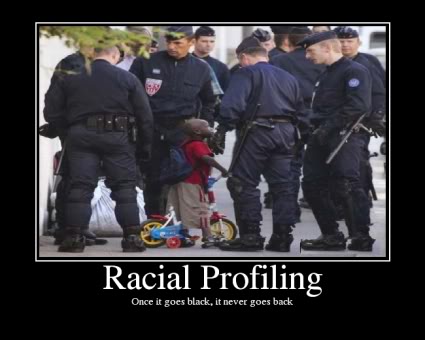
Profiling racial profiling

At Toronto police headquarters, the response to evidence of racial profiling has changed dramatically. The angry denials of eight years ago have evolved into a clear recognition of the problem and a firm determination to fix it.

Unfortunately, that attitude hasn’t always percolated down to the street level, where visible minorities – especially blacks – are still being disproportionately singled out for special attention by police.

That’s the upshot of a recent investigative series done by a team of Star journalists led by reporter Jim Rankin. And it is a finding that should trouble anyone wanting more fair and effective policing in Canada’s largest city.

Through a freedom of information request that took almost seven years to yield results, the Star obtained data from 1.7 million “contact cards” filled out by Toronto police officers from 2003 to 2008. Kept for information purposes, these index cards, known as 208s, document the identity, age, gender, race, physical features and address of an individual, as well as known friends and associates.

It isn’t the same as a criminal record. But the filing of a 208 signals that the individual in question has, for one reason or another, caught the attention of police.

The Star’s investigation found that blacks were three times more likely to be stopped and documented in this way than whites. That holds true for all age levels and neighbourhoods. A higher rate of “carding” blacks was especially noticeable in more affluent, predominantly white sections of the city.

Reporters also updated statistics on arrests and charges that had formed the basis of the Star’s landmark 2002 series on race and policing. They found that blacks facing drug charges were still being detained for bail hearings more often than whites, and black motorists remained more likely to be ticketed than white drivers in the same circumstances.

When presented with these findings, and results from examining 208s, Chief Bill Blair didn’t dispute the analysis and accepted that racial bias is a likely factor in these patterns. That’s a major departure from eight years ago when the chief of the day (Julian Fantino) erupted with rage and denial of any systemic problem. The police force is now acting on a variety of fronts, including dramatically increased minority hiring. But more needs to be done.

Civil libertarians object to the entire contact card approach on grounds that tracking innocent people represents excessive monitoring by the state. That is a reasonable concern, and this practice needs re-evaluation.

As long as it continues, however, results from 208s and other police data should be analyzed for racial bias.

The police force isn’t allowed to do that now, under a 1989 policy that bans the department from crunching its numbers on the basis of race. That is outdated. A wide range of authorities, including the Ontario Human Rights Commission, have called for official analysis of such data with an eye toward tracing evidence of racial profiling.