When it comes to President Vladimir Putin, who enjoys an approval rate of 65 percent among Russians, the motto of the menagerie of morons that is the American media is ignorance über alles.
The energetic and reflexive demonization of a Russian leader – unparalleled during communism – against the backdrop of the Sochi Olympic Games and the conflagration in the Ukraine, is the handiwork of a conga-line of cretins, stateside, whose bombast comports with the boorishness of their pronouncements.
The “Shangri-La of Socratic disinterest,” one wag’s delicious description of broadcaster Bill O’Reilly, is not delimited by ideology. Instead, “wanton Putin bashing,” as scholar of Russian history Stephen Cohen attests, is the order of the day at the New York Times, Washington Post, Wall Street Journal, The New Republic, CNN, Fox News, MSNBC, on and on.
As to “traditional journalistic standards”: In the service of their anti-Putin monomania, the U.S. Pussy Riot press and its approved phalanx of “experts” routinely omit “facts and context,” conflate “reporting with analysis,” and court conformity and unanimity at the cost of veracity and impartiality.
(Revered in the U.S., Pussy Riot is a punk rock Russian band of feminists, whose forté is breast-baring, defiling places of worship, punching the air while shrieking, “F–k you Putin,” and participating in public-orgy protests and other criminal acts.)
The “Shangri-La of Socratic disinterest,” fortunately, is not a feature of the nuanced and informed analysis available on the John Batchelor Show, where the scholarly host and his guest, professor Cohen, delve deeply into the region’s geopolitical dynamics.
Cohen, who tackled O’Reilly’s out-and-proud ignorance with aplomb, was slightly more flummoxed by that of MSNBC’s Andrea Mitchell. She blamed Putin for Ukraine having “spun into politician chaos.” To wit, Europe had offered Ukraine $800 million in aid. The Kremlin “outbid the West” to the tune of billions, but held back on the last installment because it wanted to see to which government Russian funds would ultimately be going. Although Putin has since released the remaining funds to Ukraine, Mitchell surmised that Putin had orchestrated recent events so as to compel Kiev to sell-out to the Kremlin.
Nonsense on stilts. If anything, Putin’s impetus would be to avert trouble in Ukraine during the Sochi Olympics. Add Putin to the list of people who do not control what unfolds in Kiev, belabors Cohen.
Contrary to America’s Democracy Alinskyites – media, academia, members of the Stupid and Evil Parties, State Department floozy Victoria Nuland (taped plotting to “midwife a new, anti-Russian Ukrainian government”), John McMussolini – the Ukrainian People, not unlike the “American People,” are not one people. The country is riven – divided into Western and Eastern regions, respectively. The West has been seduced by EU membership; the East is culturally and historically enmeshed in Russia.
What we’re witnessing is a tale of two Ukraines.
As it stands, explains Cohen, Kiev has lost control over Western Ukraine. Moderate voices are being silenced. Armed provocateurs are inciting matters and undermining moderate leadership. Revolution is being fomented.
Ukraine is not a dictatorship, it is an anarchy.
As to the demands issued by Vice President Joe Biden that the democratically elected Ukrainian President Viktor Yanukovych withdraw forces from the Maidan, the site of the protests: “preposterous,” avers Cohen. The “occupation of government buildings in Kiev and in Western Ukraine, the hurling of firebombs at police and other violent assaults on law enforcement officers … all documented and even televised”: these would not be tolerated in any Western democracy.
Equally outrageous is the Obama administration’s improvised and impromptu demands that the same democratically elected president step down before elections are held next year. The rational solution to the chaos in Ukraine is to allow the parties to “chill out” and resolve to wait until the February elections, next year, whereupon a referendum question can be tagged to the ballot to help decide whether Ukraine should sign up with Europe or Russia. (Cohen advocates an either/or “democratic” decision; I say secession.)
Should cool heads fail to prevail in the negotiation of a political solution, the division of Ukraine is impending, with part of the country cleaving to Europe, the other to Russia.
The “struggle for Ukraine” is a chapter in a series of U.S.-orchestrated provocations, which began with the expansion of NATO (North Atlantic Treaty Organization) eastward to abut Russia’s borders – an expansion pursued by Clinton, Bush and Obama alike. It gathered momentum with the U.S.-backed attempts to incorporate Georgia and Ukraine into the North Atlantic alliance.
The next stage in goading the Russian Bear consisted in American-funded NGO political-action groups – many of them backed by George Soros – flooding Russia proper. (“Purple” in Iraq, Blue in Kuwait, Cotton in Uzbekistan, Grape in Moldova, “Orange” in the Ukraine, “Rose” in Georgia, “Tulip” in Kyrgizstan, “Cedar” in Lebanon, Jasmine in Tunisia, Green in Iran, still un-christened in Russia and Syria: Dig around and you’ll find American activists à la Alinsky behind these “color-coded,” plant-based revolutions, blessed and backed by Foggy Bottom.)
“A U.S.-NATO military outpost in Georgia and missile-defense installations near Russia” completed the provocation. “Whether this longstanding Washington-Brussels policy is wise or reckless, it – not Putin’s December financial offer to save Ukraine’s collapsing economy – is deceitful,” inveighs Cohen.
Also upon us is a second Cold War between the U.S. and Russia, which will see a close, bilateral collaboration between Berlin and Moscow – Putin and Angela Merkel enjoy a cozy and copacetic relationship and will likely work together to dominate Eurasia.
Having flouted America’s national interests and squandered Russian goodwill – the ignoramuses of the Beltway will have no place in this grand geopolitical realignment.
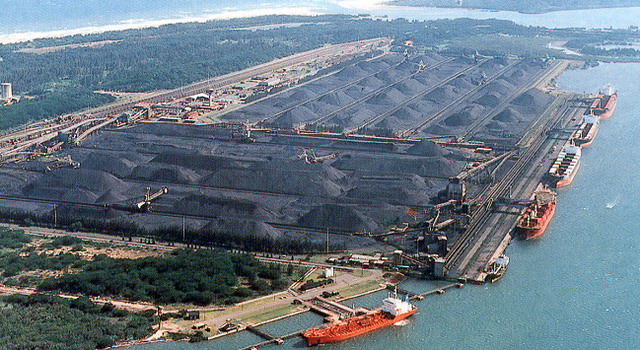
Bloomberg reports that China’s Long March Capital Ltd., which partners with Citic Group Corp., is considering buying South African platinum assets after their value was depressed by strikes, the company’s Managing Partner Clement Kwong said.
The company is now reviewing a decision to hold off on purchasing South African platinum assets because of the labor issues, Kwong said in a Feb. 19 interview in Johannesburg. Long March last year partnered with Citic unit Baiyin Non-Ferrous Metal Group Co. Ltd. and China-Africa Development Fund to complete their buy-out of Perth-based Gold One International Ltd. and indirectly acquired a stake in Westonaria, South Africa-based Sibanye Gold Ltd.. (SGL)
“If the industry survives and makes a profit then that would be a good signal to look at investing,” said Kwong, who founded Long March Capital with a partner in 2008. “This last round has repriced these assets down so I think it would be as cheap as it gets.”
Anglo American Platinum Ltd. (AMS), Impala Platinum Holdings Ltd. (IMP) and Lonmin Plc (LMI) say they have lost 4.4 billion rand ($399 million) of revenue because of a four-week strike by about 70,000 workers. The companies, which together produce about three quarters of the world’s platinum, suffered losses from weeks of walk-outs in 2012 and 34 protesting miners were killed by police at Lonmin’s Marikana mine on Aug. 16 that year.
The platinum workers are demanding that monthly wages for the lowest-paid underground laborers be more than doubled to 12,500 rand a month. The Association of Mineworkers and Construction Union, which represents the employees, rejected a pay-increase offer of as much as 9 percent. South Africa’s annual inflation rate is 5.8 percent.
Share Decline
Anglo American Platinum declined 0.6 percent in Johannesburg yesterday to 450.37 rand, giving it a market value of 121.5 billion rand, a third of its value when it reached a record in 2008. Lonmin has declined by three quarters since its 2008 record while Impala has fallen 64 percent.
“There is a current situation that has not been resolved,” Kwong said. “But we think we are scraping the bottom now. I don’t see how much worse the demands can be.”
Long March Capital advises and manages the group of investors, which in December completed their purchase of Gold One. The mining company acquired a 17 percent stake in Sibanye in August.
Long March Capital remains “very positive” on the “phenomenal number” of investment opportunities in South Africa, although it’s wary of labor issues and discussion by the ruling African National Congress of additional taxes and nationalizing the nation’s mines, Kwong said.
‘Huge Opportunity’
The ANC in 2012 backed higher taxes for mines and rejected proposals to nationalize mines, an idea that the party’s youth wing had promoted for two years.
“Some of the challenges like organized labor, the somewhat unclear regulatory environment, these are discouraging to further investment,” Kwong said. “But the underlying economics, the underlying resources, still present huge opportunity for further investment.”
South Africa is the continent’s largest coal and gold producer and holds the world’s biggest reserves of platinum and chrome. Jinchuan Group Ltd. and the China Development Bank in 2011 bought a 45 percent stake in Wesizwe Platinum Ltd. (WEZ) State-owned China National Arts & Crafts Corp. Last month bought Aquarius Platinum Ltd.’s (AQP) Blue Ridge and Sheba Ridge mines for $37 million. Glencore Xstrata Plc (GLEN) said in November it would like to sell its 24.5 percent stake in Lonmin.
Congo, Zimbabwe
As Long March Capital seeks to expand into Africa, it is also doing due diligence on mine projects in Democratic Republic of Congo and will look at assets in Zimbabwe next week, Kwong said.
“The more de-risked a project, the easier it is to get funded today so something without even a pre-feasibility report is a little difficult to swallow,” Kwong said. “But if it is near production, but requires a substantial amount of capex to take it into production in order to unlock value, that is probably our favorite type of profile. We do have access to a reasonably priced source of capital in order to provide the capex to unlock the projects.” – Franz Wild, Bloomberg.com
Ivan Hoffman is an American lawyer that laments the emerging disrespect for law on his website. He says that people may be compliant, but do not show respect. Respect indicates (to him) that people would feel a higher sense of societal value-added by acting affirmatively in support of the law.
The ICRC (International Committee of the Red Cross) also finds it useful to “train” people to adhere and respect international human-rights law while they tend to the injured and homeless.
Then some Islamic blogger in Iran requests his readers to adhere to and respect the law – as long as it benefits the people i.e. Islamic law does, while Western law does not.
And as applicable to all United Nations countries, the UN itself supports the rule of law i.e. “Promoting the rule of law at the national and international levels is at the heart of the United Nations’ mission. Establishing respect for the rule of law is fundamental to achieving a durable peace in the aftermath of conflict, to the effective protection of human rights, and to sustained economic progress and development.”
In South Africa a certain JY Mokgoro (1997) tried in vain to equate Ubuntu to the highly acclaimed Constitution, as follows:
“Firstly, I would like to take this opportunity and (attempt to) demonstrate the irony that the absence of the values of ubuntu in society that people often lament about and attribute to the existence of the Constitution with its demands for respect for human rights when crime becomes rife, are the very same values that the Constitution in general and the Bill of Rights in particular aim to inculcate in our society.”
One summary at this point would be to acknowledge that a “higher” value is added by a lawful person and not just benefits to the individual such as “rights”. Perhaps the “rights” of the entire country including minorities and approved foreigners and religions are the value that society adds to individuals. All this higher value requires is respect and not just compliance.
It appears that disrespect for the law is a common phenomenon. In South Africa this is evinced by people complying with the law, but embracing Ubuntu. Take the President of the country as an example, who has many wives and lots of children – legitimate or illegitimate is of no consequence – accommodated by the Ubuntu tribal thinking, while negating the Western values of the constitution. That taxpayers foot the bill is seen as neither corrupt nor wrong. That the minority adding extra value to the country are ignored and trampled upon and subjected to extreme discrimination and even exclusion from public society is of no consequence.
There is simply no way that I (for one) can respect the rule of law in South Africa because there is no value added for me and my children. In fact I would turn down an invitation to tea (like the Iranian blogger with the Shah), with this president because he does not respect me.
Empangeni Regional Court convicted and sentenced Sabelo Sibiya (35) to 20 years imprisonment for raping a seven-year-old victim. He was sentenced on 18 February 2014 after the magistrate heard how he had raped the victim.
On 10 July 2012 a seven-year-old victim was playing with other children at sugarcane plantation at Dover area, Empangeni when she was approached by the accused. The suspect took the girl to a nearby veld where she was raped. Other children who witness the incident reported the matter to her grandmother. A case was opened at Empangeni Police station for further investigation. Empangeni Family Violence, Child Protection and Sexual Offences Unit investigated the case that led to the arrest of the accused on the same day. The accused who was the neighbor of the victim, was charged with rape and appeared in court several times, and was denied bail.
We pride ourselves for the dedication and exceptional investigative skills shown by Empangeni FCS, in putting the rapist behind the bars. The SAPS in KwaZulu-Natal Family Violence, Child Protection and Sexual Offences Unit has capacity to effectively investigate sexual-related crimes and such convictions and sentences bear testimony that sexual offenders will be traced, arrested and successfully prosecuted.- SAPS media service
Most of us are aware of the ongoing saga of the Waterkloof 4 (Tiedt, van Schalkwyk, Becker & Du Preez), four underage white boys convicted of having assaulted and killed a homeless black man. Apart from the Oscar Pistorius murder, the trial has elicited more publicity than any other in recent South African history and has led to endless denunciations of “white racism” and psycho-babble about “Afrikaner brutality”.
I have been lucky enough to read through the witness and accuseds’ testimonies, crime-scene photos and specialist statements and found all of the evidence to be extremely interesting. Unlike the Oscar Pistorius case, where many details were disclosed in the media, journalists never gave much away when reporting on the Waterkloof 4 case. Maybe it was because it appeared to be open and shut, especially judging by the public and the mainstream media who presumed them guilty before proven innocent. Nevertheless, a guilty verdict was handed down to four of the boys. I’ve decided to lay out the facts about this case by sharing my findings, which come directly from court evidence.
The so-called ‘Waterkloof 4’, from L to R: Gert van Schalkwyk, Christoff Becker, Reinach Tiedt and Frikkie du Preez
Background
August 2003: three boys who had knowledge of the crime decided to come clean regarding the incidents which took place in December 2001. These three identify the “Waterkloof 4”, aged 15 and 16 at the time of the crime, who are subsequently arrested.
July 2004: they plead not guilty
June 2005: they are found guilty
January 2007: they are sentenced to 12 years imprisonment each
April 2008: they appeal to the High Court
May 2008: their appeal is denied
June 2008: they take their case to the Supreme Court of Appeal
August 2008: their application to the Supreme Court of Appeal is turned down and they start their 12 year sentences
December 2011: two of the four have their sentences converted to correctional supervision after a successful parole hearing
June 2013: the two return to jail after their parole is appealed by Correctional Services
February 2014: the four are released on parole but two are rearrested days later after a video shows them violating prison regulations a day before their release.
The trial
In summary, the State’s case was based mostly on witness testimony that the Waterkloof 4 had assaulted an unknown black man in Constantia Park and later that night brutally assaulted and killed another unknown black man in Moreleta Park. The Waterkloof 4 denied the first assault but admitted to the second assault, with exception that they killed the man or intended to kill him. The only evidence other than witness testimony was the second victim’s body.
Constantia Park assault (alleged first assault according to witness testimony)
The accused vehemently denied this assault took place and thus the State had to prove this event occurred. As mentioned, the only evidence was that of the State’s witnesses as there was no case of assault reported to police and the unknown man was never seen or heard from again.
The Defence accused the witnesses of fabricating the story and this accusation is given some credibility when the State’s witnesses left gaps in their testimony. The judge dismissed these gaps and other anomalies due to “traumatic memory issues on behalf of the witnesses” and accepted their testimony as fact. The defence also brought up the possibility of collusion which the judge dismissed, even though the State’s witnesses had more than a year to collude.
Nevertheless, the Defence had to counter the State’s witnesses’ testimony and did so by looking at phone calls which were used to identify a time line and locations of individuals, with the help of cellular phone towers. Although the calls placed the accused in the vicinity of the second assault (Moreleta Park), they placed significant doubt on whether the Constantia Park assault was possible as it gave the accused (and witnesses which drove with the accused) a maximum of 14 minutes to drive in a fully loaded small Toyota Tazz from Hatfield, look for a shop to buy milk, assault the unknown man in Constantia, wait “5 minutes” for the other accused to meet up with them and then get to Moreleta Park. To make the State’s case worse, the State’s witnesses testified that they were not speeding but the judge corrected this and stated that they were probably speeding, overriding State’s witness testimony and again raising doubts over the credibility of their testimony. The Defence also questioned why the accused had driven through Constantia Park, as this was a longer route to where they were heading.
Although the accuseds’ testimony represented a more reasonable and logical explanation of events as it more reasonably fits the timing of the calls and the logical route to their destination, their testimony was dismissed as lies as it contradicted the testimony of the State’s witnesses. In the end there was no reliable evidence to put the accused at this crime scene other than the State’s witnesses’ testimony which was accepted as reliable.
Near the end of the examination of the Constantia Park assault, the State prosecutor went on to say that the witnesses might have mistaken this event with something that happened on another day:
“Edelagbare, oor hulle getuienis daar op kan hulle verwar het met ‘n ander dag. Dit is hoekom ek nie hard wil betoog oor hierdie klagte nie”
This was ignored by the judge.
Moreleta Park assault
The accused admitted to brutally assaulting an unknown man in Moreleta Park, who they claim was a burglar who had just robbed a residence. This was backed up by the State’s main witness. The Defence however questioned whether the man found in the park was actually the man they assaulted, an outrageous claim, but appears to be supported by the physical evidence (see below). Again the State relied heavily on the State’s witness testimony that the man found in the park was the man the accused assaulted as the man was found in “exactly” the same place the next day after the assault. It must be noted that the main State’s witness, who is not one of the Waterkloof 4, was also involved in the assault but was given immunity for turning State’s witness.
One of the State’s witnesses had disclosed to a teacher that the motive for the attack was purely racial while the accused say that they had gone after a man who had run across the road with a television. They suspected the man of being involved in a burglary. On the day of discovering the victim in the park, a car radio was found next to the victim and this was later found to be stolen as a case of robbery had been reported to the SAPS. The victim was also found with a wallet (money inside), watch, and a ring and was well dressed with new shoes, smart cap and had four tattoos, which appears contrary to the claims that this man was homeless. The State’s witness confession to the teacher prior to the arrests was that the accused never knew of the stolen goods during the attack and only used this as an excuse to do commit their foul deed. Contradicting stories meant that it was up to the State to prove murder.
Besides the State’s witness testimony, the State had very little evidence:
No physical evidence linking the accused to the victim (no DNA, no trace evidence)
No murder weapon (no knives, no hammer)
No time of death (due to “refrigeration”)
By all accounts the assault was described as brutal. Besides the melee of punching and kicking, one of the accused had demonstrated his “Naas Botha” kicks on the victim. A State’s witness testified that this accused had kicked the victim twice in the face with steel tipped shoes, one of which was later found to be dented in. This was confirmed by the aforementioned accused. The entire group had jumped with full weight on the victim like in a “loose rugby scrum”. Another of the accused had hit the victim twice on the crane of the head with a hammer, the first blow bringing the victim to his knees while the second blow floored the victim completely. All of this was admitted by the accused and agrees with State witness testimony. The State’s witness also testified that the accused had made stabbing motions towards the victim (admitted by the accused) but cannot confirm whether the accused had stabbed the victim.
The post mortem indicated that the unknown man had died of severe blood loss cause by one deep cut in his thigh. Besides this cut, the medical experts made the following findings:
There were no bruises or fractures to the skull
There was minor subdural hematoma but no swelling on the brain or any other change to structure of the brain. The fact of whether the hematoma was caused by the assault could not be determined.
Three small scars on the head, two of which had scabbed before the assault, the other one showed no signs of significant bleeding
Face, nose, tongue, throat showed no bruising, discolouration, bleeding, lacerations or scarring
There were no broken teeth
There was no bruising or trauma to the neck
There was no bruising or trauma to the chest and diaphragm
There was no bruising or trauma to the abdomen
Internal organs showed no trauma but some were bleak due to blood loss
No bruises or fracturing on the back
No noticeable bruising, fractures or trauma to the rest of the body
With regards to the cut in the thigh (cause of death), the medical experts made the following conclusions:
The victim had lost between 4 – 5 litres of blood, which meant he would have bled to death over a 24 – 48 hour period as no major arteries were penetrated.
With regards to the object that made the stab wound, the medical specialist found that: “Hierdie gat kon nie veroorsaak gewees het deur ‘n mes, of selfs ‘n dun yesterstaaf nie” or in English, this could not have been made by a knife or even a thin iron rod. The object appeared similar to a spike on a palisade fence which backs up the Defence’s claims that the victim had cut himself on a palisade fence while fleeing from a residence he had burgled.
As you can see this posed serious questions against the State’s argument that the victim found in the park was the man that the accused claim they assaulted. Some of these questions raised by the Defence were:
Physical evidence on the victim shows no correlation to the assault as described by the accused and the witnesses. There is no evidence that suggests a knife or hammer was used in the attack even though a State’s witness had testified that he had seen blood on the hammer after the attack. There was also no evidence that the boys had jumped on the victim or kicked the victim in the face. When the pathologist was asked by the Defence whether it was obvious that the body brought before her was not the body of the man as described in the assault, she answered: “Yes that is correct.” A second pathologist replied with the same answer.
The crime scene inspector found no evidence of blood on the ground near or beneath the victim, or anywhere else in the park for that matter. Where did 4 – 5 litres of blood go? The State contested that the light rain that night may have washed away any evidence of blood or that the victim’s clothing had absorbed all of the blood but this was disputed by the Defence.
The flow of blood on the victim suggests the possibility the body was moved after death and moved to the spot where the body was eventually found.
If the only injury the victim sustained was the cut to the thigh and the victim took between 24 and 48 hours to bleed to death, why did the man remain in the same spot for this lengthy period of time? Why didn’t he seek medical treatment or at least crawl/limp away from the scene?
The victim’s shoes were removed while there had been no mention of this by the accused or State’s witnesses.
In the end however the judge ruled, after quoting a previous case “the State vs. Bernardus 1965”, that the body is full of anomalies and that sometimes death can be caused by the slightest of assaults. Although this judgement contradicts all witness accounts and the physical evidence, this ultimately leads to the guilty verdict for the Waterkloof 4.
Sentencing
The Waterkloof 4 were sentenced to 12 years imprisonment each, five years after the crime was committed (13 years ago). Because of the extreme brutality of the assault, there was much public and media outcry for a harsh sentence. However the law differentiates between adults and minors for sentencing purposes. Taking into account that the perpetrators were juvenile (also first-time offenders), different sentencing laws had to be followed.
Quoting an article by Zita Hansungule, who works at UP’s Centre for Child Law: “In 2009 the Centre for Child Law had challenged the constitutionality of the Criminal Law (Sentencing) Amendment Act which provided that minimum sentences should apply to 16 and 17 year-old offenders.
The High Court found that applying minimum sentences to these offenders was not in line with the Constitution which provides that children have the right not to be detained except as a measure of last resort, and then, if detention is unavoidable, only for the shortest appropriate period of time. The High Court held that in cases pertaining to minors, the courts must consider all available sentencing options, especially non-custodial sentences, before considering detention.
The Constitutional Court was approached to confirm the decision of the High Court. It confirmed the decision and held that the Constitution envisages that detention of young offenders may be possible, but it mitigates the circumstances of detention. It confirmed that for minors, detention is not a first or intermediate resort but a last resort. The Court held that each individual case needs to be examined on an individualised basis so that an appropriate sentence can be found. It stated that ‘legislation cannot take away the right of 16 and 17–year olds to be detained only as a last resort, and for the shortest appropriate period of time, without reasons being provided that specifically relate to this group and explain the need to change the constitutional disposition applying to them’.
These judgements confirmed that children should be treated differently to adults in sentencing, no matter how old they are. Both courts were of the view that children are less physically and psychologically mature than adults, more susceptible to pressure from others and more receptive to rehabilitation than adults.”
Taking this into account the Waterkloof 4 appeared to be sentenced fairly as this is about the maximum that a juvenile will face for a single murder charge.
Parole
As with the case of sentencing, parole is also a thorny issue. In accordance with the law, the Waterkloof 4 were released on parole last week. The law allows for this if the offenders have served 50% of their sentences and have completed internal correctional programmes and have been well-behaved. According to parole documents the four were all but exemplary during their stay. I’ve looked through parole documents and found that they interacted well with other inmates and also took part in social activities. Study courses were also completed during this time. It is thus reasonable to concede that their release on parole is in accordance with the law. Subsequently however, two members of the Waterkloof 4 have been ordered to return to prison after a video showed them “living it up” in their cell a day before release.
Conclusion
It has been more than 10 years of trials, appeals, paroles and controversy, a kind of soap opera that will be remembered by most of us for many decades to come. As I’ve described, there are many questions left unanswered regarding the crimes committed in 2001, those which surfaced during trial. There are also questions we need to ask regarding our criminal justice system. I’d like others’ thoughts on this matter…
Kevin King is a professional DJ and freelance columnist
Rape is a serious problem in South Africa. South Africa is known as the rape capital of the world. At least 55,000 rapes occur annually, including shockingly brutal incidents like the rape and disembowelment of Anene Booysen in 2013. Most rapes however go unreported, due to the stigma and humiliation involved in the legal process.
According to the South African Medical Research Council, rape may be under-reported by a factor of 25:1 in South Africa, meaning that the real number of rapes committed in the country is probably as high as 1,3 million! Even in countries at war, rape does not occur as frequently as it does in South Africa.
But, of course, this being the professional victimhood capital of the world, there are those that make a living by pretending they’ve been wronged or raped too. I call them professional victims, because they cynically make a living from others’ pain and suffering. They don’t build, invent, work hard or innovate. They especially do not take personal responsibility for their own actions. Instead, they externalize blame. It’s never their own fault, but always somebody else’s. Often they tend to be self-styled activists, and of course, journalist hacks desperately seeking some kind of inspiration.
Let’s take a case study. One of these professional victims gets involved with the ex-boyfriend of an acquaintance. She admits he’s got a reputation for being a known womanizer, but like a moth drawn to a candle, she can’t stay away from him. One night, by her own admission, she gets horrendously drunk in his company and invites him to her home, to “meet her dogs”. (No, really, this is her own story. )The inevitable happens. They have sex. Four years later, on social media, she alleges the sex was, in fact, rape, after reading some random piece of feminazi propaganda. “Strangely”, however, she did not report the alleged rape to the authorities, and her alleged rapist departed the next morning without incident. She remembers her vagina and thighs hurting the next morning (as did her head from her hangover, I would hazard). How convenient. No DNA tests, no possible defence or rebuttal from the alleged assailant, just her wild allegations, four years after the fact. The allegations predictably contain no whiff of personal responsibility for her own actions.
A lack of evidence or proof has, however, never interested the professional victims, feminazis and libtards. The alleged rapist, who has had no opportunity to defend himself, is declared guilty by the Feminazi Inquisition. Immediately a whole industry of professional victims and seventeenth-rate journalist hags, mostly feminazis and professional gay victims in the employ of News24, springs to life. They sniff blood in the water. David Bullard, a semi-retired newspaper columnist, aids her cause immensely by making the mistake of calling the professional victim’s version of the events into question. Voila! A dream situation for a ragged assortment of News24 hacks, feminazis and libtards, who vent their hysterical anger by screaming on Twitter.
Bullard is roundly condemned for daring to question the professional victim’s behaviour. Feminazis waste no time in screaming hysterical abuse at Bullard and all men who dare to question the activist’s version of events. Acres of trashy condemnation, cheap sensationalism and generalizations of all men being potential rapists appear in the already-nauseating pages of Women24. The professional victim, obviously and cynically not missing out on a commercial opportunity, publishes absurd stories on her blog, like this one, in which another so-called victim is convinced by a so-called therapist that she is also a rape victim. Again this happens three days after the event, after voluntarily sharing a bed with a man in a hotel room, and admitting to experiencing an orgasm in his car the next day, after the alleged rape. Again no charges are laid.
But what have these professional victims and feminazis really achieved? They’ve made it more difficult for real victims to come forward. They have done huge damage to real rape victims by crying wolf, because their unlikely stories and cynical exploitation of public sympathy have led many to wonder how many other alleged rapes are really what they purport to be.
Of course, professional victimhood, the externalization of blame for one’s own lack of initiative, a lack of a work ethic and a lack of morals, is endemic to South Africa, and not limited to feminazi hacks. Julius Malema is another professional victim, forever whingeing about how whites “stole” blacks’ land. To a professional victim like Malema, the facts, such as that the land was mostly obtained in a perfectly legal fashion by means of treaties and agreements, don’t matter at all. Malema doesn’t want to hear that Botswana, an entire country, as well as Lesotho and Swaziland, were given to blacks as part of a land settlement. No, it is a lot easier to pretend to be a victim, and to blame external parties for your own backwardness.
I can carry on quoting examples of professional victimhood. Affirmative-action beneficiaries are prime examples of professional victims. Jan van Riebeeck didn’t find schools, platinum mines, the wheel or commercial enterprises in South Africa in 1652, so it is impossible to logically blame colonizers for the lack of jobs, education or commercial opportunities among the then indigenous population. However, today all blacks are viewed as victims, and therefore Patrice Motsepe’s children will enjoy preference over poor white kids from a white squatter camp when both apply for a job. Another example of professional victims are those who loot and burn down the shops of Somali or Pakistani shopkeepers in townships. It never occurs to the looters that there is nothing preventing them from establishing the same kind of shops that the Somalis do. It is much easier to pretend to be a victim and to allege that the Somalis are stealing their livelihoods.
It’s easy to offend professional victims. It is easy to bring down a torrent of abuse and screams of “male chauvinism” or “racism” on your own head. All you have to do is to use terms like the following against these professional victims:
Take personal responsibility for your actions.
Work hard.
Stop blaming others.
All yours, professional victims. I look forward to the stream of filthy invective, outrage, abuse and hate that will now inevitably issue forth from your insignificant little poison pens.
After more than 60 years, is the end of the road near for affirmative action in college admissions?
The idea of using race to help determine who gets a seat in public colleges has been under fire for decades. Eight states have essentially banned the practice, and a Michigan case pending before the U.S. Supreme Court could prompt others to do the same.
College officials nationwide got a wake-up call last June from the high court, which set a high bar for using race as part of a complex admissions program in Texas. Many observers say the combined weight of the two cases could finally push state universities to find another way to promote diversity.
“All the trends are pointing against the continued use of race in admissions,” says Richard Kahlenberg of the Washington, D.C.-based Century Foundation, a liberal think tank. Kahlenberg has for years advocated using family income,not race, as a way to ensure that public K-12 schools and colleges have a diverse student body.
A year after hearing Fisher, the justices last October heard arguments in a case from Michigan, where a 2006 state constitutional amendment banned racial preferences in public university admissions. Seven other states — California, Florida, Washington, Arizona, Nebraska, Oklahoma and New Hampshire — do the same, and about 29% of students live in states where affirmative action is banned, Kahlenberg estimates.
Michigan Attorney General Bill Schuette says the state’s position was summed up well by Chief Justice John Roberts, who said the best way to stop racial discrimination “is to stop discriminating on the basis of race.”
“Our constitution requires equal treatment in college admissions, which is an expression by 58% of Michigan voters in 2006 that says it is fundamentally wrong to treat people differently based on race or the color of their skin,” Schuette says. “It’s just wrong.”
A July 2013 study by Georgetown University scholars Anthony Carnevale and Jeff Strohl found that in 2009, white students were more “over-represented” among the USA’s 468 most selective colleges than they had been in 1995. From 1995 to 2009, the nationwide share of young people ages 18-24 who were white dropped 6 percentage points, from 68% to 62%. But whites’ share of freshman slots at the USA’s most elite colleges dropped just 2 points during that same period, from 77% to 75%.
Another study, by Orfield’s Civil Rights Project, found that 15 years after California’s ban on racial preferences went into effect, increased competition has dropped the share of black in-state high school graduates admitted to UCLA from 47.6% of applicants to 13.7%; the percentage of Latino students admitted dropped from 54.9% of applicants to 14.8%. The percentage of white students admitted also dropped, but not as sharply.
Kahlenberg says the string of affirmative action cases has pushed universities to find alternative ways to create diverse freshman classes. He notes that Texas’ 10% rule has resulted in higher levels of black and Latino representation. Other state systems have gotten similar results by eliminating preferences for children of alumni and bolstering financial aid, among other measures. These strategies have led to more racially and economically diverse classes “in a way the Supreme Court can’t touch,” he says. “I think that’s the future of affirmative action.”
Recent surveys have found that Americans don’t like using race in admissions, Kahlenberg says, “but on the other hand, Americans don’t want to see universities and American higher education re-segregated.”
A decision in the Michigan case, Schuette v. Coalition to Defend Affirmative Action, is expected this spring. If a majority of eight justices rule in Michigan’s favor (Elena Kagan, a former solicitor general, recused herself), it could prompt opponents of affirmative action in other states to push for similar bans.
But if the ban is overturned, states such as California again could weigh race in college admissions — and not a moment too soon, Orfield says. Admissions pressures there have become “very intense.” He notes that UCLA alone last year received nearly 100,000 applications. “It’s a big state, it’s growing … and we haven’t been growing the higher education system.” – USA Today
Switzerland has voted 50.3 percent in favor of limiting annual migration from the EU, thus ending the policy of free movement within the bloc that was established in 2002.
Swiss voters narrowly decided that immigration quotas would be reintroduced, thereby overturning the free movement policy introduced in the European Union 12 years ago. Early results showed the country to be very divided in opinion over the ‘Stop mass immigration’ initiative.
‘Stop mass immigration’ was introduced by the nationalist Swiss People’s Party (SVP). Its goal is to introduce annual quotas on the number of foreign workers entering the country. The result will likely vex multinational companies based there; Roche, Novartis, UBS, and other industry giants frequently utilize foreign labor.
Before Sunday’s results were fully confirmed, it appeared that Swiss voters were completely divided over the issue, with early projections gauged from partial results and estimates showing a 50-50 split (with a three percent margin of error). Ten out of 26 cantons – state districts – and half-cantons had voted in favor of the initiative.
Public opinion institute Gfs.bern stated at first that the outcome seemed too close to call. However, it emerged by Sunday evening that more than half of Swiss cantons supported the move, according to Reuters.
Many in Switzerland – which is surrounded by the EU but is not a member – believe that rising immigration levels are putting pressure on infrastructure, rent prices, the social security system, and unemployment rates.
The SVP party has been campaigning for the amendment, saying that immigrants are destroying the nation’s Alpine identity and taking away skilled jobs.
“Many people feel this is challenging their identity, even if there isn’t any concrete economic impact on a personal level,” Georg Lutz, professor of political science at the University of Lausanne Georg, told Reuters.
“I don’t want to live like a sardine in a tin can,” independent politician Thomas Minder, who supports the initiative, told tabloid newspaper Blick.
According to the latest data, 23 percent of the country’s eight million inhabitants are foreigners – the second largest proportion in Europe after Luxembourg.
Many fear the initiative would have a negative impact on the economy, which relies on foreign workers for progress and a competitive edge.
Italians and Germans reportedly comprise the largest contingent of immigrants to Switzerland, most of whom seek work in IT, healthcare, and financial sectors.
Severin Schwan, Austrian CEO of Roche Pharmaceuticals, said about half of the employees at the research and development site in Basel, Switzerland are foreigners.
Hans Hess, head of Swissmem – a leader in electrical and mechanical engineering – believes that Switzerland’s economy is successful because of innovation, which requires a steady stream of qualified immigrants.
“Innovation is the driver of the Swiss economy. That’s why we need highly qualified workers inside Switzerland and from abroad,” Hess said.
Indeed, four in every ten new companies were founded by foreigners, according to Orell Fuessli Wirtschaftsinformationen AG. Those new companies also created 30,000 jobs in 2013.
Other than a skilled workforce, immigrants benefit the economy through consumer spending. Credit Suisse reported that about 25 percent of private consumption growth since 2008 was thanks to foreigners.
The constitutional amendment could potentially erode Switzerland’s relationship with the EU, which views the freedom of movement policy as a fundamental right. – RT.COM
Speech by Dr HF Verwoerd, Prime Minister of the Republic of South Africa, on the Occasion of the First Quinquennial Celebration of the Republic of South Africa at Monument Hill, Pretoria, on May 31, 1966
Dear countrymen and fellow citizens,
The light of the sun of freedom was extinguished years ago, but not forever. In this Republic of South Africa we are once again abiding in the full strength of its light, in the warmth which it spreads; we are a free, happy and prosperous nation.
We shall not have the privilege of gathering in this wonderful place every five years. Every fifth year we shall, however, celebrate the birth of the Republic. We shall do it because as a nation it binds us closer together in the unity we want, the unity which we must have in the face of the attacks surrounding us. But every fifth year we shall have the main celebrations in another part of the country. You are thus again tonight attending a unique event which the next generation will live to see here in perhaps twenty or twenty-five years’ time.
Where we are tonight so united in spirit and in our numbers, I want to point out to you the strength of an ideal, the strength of the human mind which precedes the deed. A nation without bearings, that does not know whither it wants to go, will not get anywhere; similarly so with a human being in his personal life. It is the choice of an ideal, an aim set clearly, which leads to victory in the end. And it is since the day that we, as a nation, set the Republic as an ideal, that we have been inspired with strength and progressed day after day in all spheres of life. The power of inspiration of the Republican ideal was not limited to the achievement of political freedom. On the contrary, it was the inspiration of all our deeds, it was the inspiration of our growth as a nation. It led to our unity, it led to our economic prosperity, and it was based on our faith in God. We placed our future in His hands and received the gift from His hands five years ago. My friends, the strength of an ideal is inexhaustible and it will inspire us still further onwards, but when we consider it we must glance back and think of those who laid the foundations.
Now I want to put you a question, and in order to prevent it from being too much confused by the emotions of our time, I want to put it as follows: If in future years one looks back on the history of the last sixty years, what will one see? My answer is quite clear that this observer of the past will see a heroic nation; a nation which could lift itself up out of defeat and rise to victory; a nation which did not remain defeated but which in spite of all the human weaknesses which it inherited like other nations, could yet rise out of its defeat and grow to greatness in all spheres of life. Greatness only exists when you can use your defeat as the foundation on which to build a future.
When the past is surveyed not only a heroic nation will be seen, but also how a clear future was unravelled out of an apparently inextricable crow’s nest. The two great streams of the history of the first sixty years of this century will be seen as two opposite streams; one which sought independence but an independence enclosed in a greater whole; a pursuit of an independent South Africa as part, firstly of the British Empire, and later of a Commonwealth. Independence, but within limits; the desire of a share in a greater unity.
Beside that was the second stream; that of a nation which wanted to become independent, altogether free of all ties, but at the same time on friendly terms with those to whom it was tied before. It was the stream of the birth of a nation; the stream of a republican form of freedom. On looking back one will see that the two clear, separate, even opposing streams, are symbolized by two groups of men. On the one side Generals Botha and Smuts and on the other side General Hertzog, Dr. Malan and Advocate Strijdom. Those who represented the first course, who also inspired to a form of unity for the nation, sought it in the rise of that unity; in accepting the fact that the weaker and smaller would find its salvation in what appeared to be an everlasting world power. On the other hand, in the second stream, there was also an aspiration to national unity, but a unity of the people alone, of those who belong together; those who are loyal to each other, loyal to their country and nation and after that loyal to everybody outside.
On looking back, the first road will be seen as the cul-de-sac and the second as the road which led to fulfilment – the republican road. But let me state clearly now that history will judge that the courses and events which were included in that first political trend – although the road led to a dead-end – were linked up with the main road. It was the smaller stream, the stream which also helped to frame the Union; a stream which originally included the idea of separating the races; a stream which within limits also sought independence. That stream, as a tributary, flowed into the main stream and helped to fill and give it capacity. In that sense I can acknowledge the contribution of that stream, with which I personally never could identify myself, to the events which are taking place today; as a tributary which flowed into the main stream and in the fullness of time helped to make possible the greatness and magnitude which we are experiencing today.
But my actual tribute must be paid to the main stream and its leaders; the leaders and the followers, the leaders and the nation. General Hertzog who started it; laid the foundation of the Republican ideal with his point of view, his aims and his endeavours. Although he later felt satisfied with the length of the road on which he was able to walk, he will remain – when in the future a survey is made of the past – the great and powerful architect of what has been achieved. After him came Dr. Malan, the prolonged leader of the republican aim and idea. In the Cape where the republican ideal was not so obvious as in the northern provinces, it was he who clinched the ideal so that when the time came we could stand side by side and make sure that what had to come, did come. Cautiously and calmly, according to his nature, he moved onwards. And then again at the right time that which was also necessary, was added – the ardour and the driving force of Advocate Strijdom, the fighting prophet who had to work to overcome obstacles, who had to work to so engrave this ideal on the heart of the nation that it could remain there indelibly; that it could not disappear but had to come to fulfilment.
My friends, we have much to thank these leaders for, but together with them we have undeniably much for which we have to thank the followers, who stood behind them right through the past six decades and were prepared to carry this burden until the day of fulfilment. The time of preparation lasted for sixty years, six decades. And then, like a flash of lightning, the Republic was there within two years! The preparation took a long time, essential details were settled, inspiration was given; but the right time had to come and when it came the nation and its leaders had to seize the hand immediately which history offered them. And it is the fame of this generation, we who are sitting together here tonight celebrating, because we did not fail; because we were ready at the right moment, ready at heart, united in our decision and courage to attempt the future.
I said that in the future we would be judged as a heroic nation. We proved that in those days in those two years of decision. In the five years of the Republic’s existence, we have proved that we can continue working onwards, but it was especially in those fateful months that we had to be prepared to act and did act!
Now I want to give expression to the often unexpressed longing of our people, that writers and poets may come into existence who can and will sing the praises of their own generation such as those of other nations in their hour of wonder. Oh, if it could also be granted to us as it was granted in the past to great nations in their hour of fame that those would come forward who do not ask hesitatingly. “what is a nation”, but who will cry out; “This is my nation, my nation is like this, thus it can do wonders, thus it can create its own future”. The writer and poet who can sing the praises of what is happening now will be quoted as long as the people of the Republic of South Africa remain. If out of our midst someone would come forward to sing the praises of the life of a nation, without hesitating to pay homage to patriotism, love of country, without following modern patterns which are the fashion elsewhere with nations who are already old, someone who in accordance with the fixed pattern of paying homage to his own people, could push aside what is carnal and ugly and see the spiritual, the beauty and the greatness in modern history and sing their praises! If only we could find such writers and poets of our time, how rich would we not feel? How rich would our people of the future be if they were told by such interpreters whom the heart of the nation feels today – five years after this miraculous event, this great milestone in the history of our people.
My friends, the Republic was once the one-sided ideal of many, but it has become the fulfilment for most. I dare say with great assurance that through these eventful five years many who were not prepared for this constitutional development in 1961, are now happy that it actually did come to pass. We have learned much in these five years. We have learned that we are, even if young, a nation in South Africa; that we all belong to that nation, that with pride we may say; this is our country, the country of all of us. Five years is an extremely short time for so strong a feeling to grow after the differences we had before. The amazing fact of life today is not that there are some who cannot yet accommodate themselves to this new era, but that so many can.
To the few who cannot yet accept this Republic as the best for South Africa and their own, there is so little to look back to, to hanker for. After all, in the past there was the link with the Commonwealth, which could be looked upon as a club of kindred spirits. It has become quite different, a conglomeration of nations, who do not understand one another in most respects. What is there to desire in that context? Let all who still cannot find it in their hearts to be wholly at one with us, realize this one fact of today’s history, and align themselves in future, whatever political objectives they may have, with us all as one nation, loving one country, prepared to defend her with all that we have.
There may be another group for whom I have no appeal and no comfort: those who would only accept the Republic if it were a multi-racial or even a Black or a “majority” Republic, as they would call it. Tonight I am not dealing with the wreckers, but with the builders. Those few who cannot see South Africa as it has grown and with all the grand ideals it also has for the others entrusted to its care, but seek to change all this into something wholly new, which would bring us to disaster and chaos as elsewhere in Africa – for them I have no word to say and with them I have no patience.
Let those of us who wish to be builders – and they are nearly the whole of this South African nation – for those of us who wish to be the builders let us continue to face the future with confidence and with hope. Let us be assured of success in the face of difficulties which we know are there. Briefly I wish to answer the question: What then is this Republic of ours, the Republic of the builders of this new nation? I can say at the outset that this Republic is part of the White man’s domain in the world. When viewed in terms of space, the White man’s domain in the world is fairly small; a tip of the great Asian-European Continent, Australia, New Zealand, great parts of the Americas, and this tip of the continent of Africa which is the anchor too of Western civilization. The White man and all that he has created for humanity through the past ages, is of incalculable importance for civilization and for history, and not only for history that has passed. He, and the spirit with which he is endowed, the characteristics which led him to this day and will in the future provide his inspiration, will always be needed where order and peace and progress are desired.
But, while we see this Republic as part of the White man’s domain, we are not unresponsive to the ideals of others. We see Africa, for example, as it is, a continent of many nations, each with its own degree of development, each with the form of government acceptable to itself, each with its own pace of progress – a continent of many nations, Black nations, and in the southern portion, White. If the world could only realize that this continent is no different from Europe with its many states and nations, and from Asia with its many states and nations! If it only could realize that in this Africa to which we belong, the differences are there and will remain there and must lead to the existence and co-existence of many widely different peoples and states. If only they could realize this, what great opportunities for better co-operation and better solution for all our problems we would then find! We are not insensitive to the ambitions of others. On the contrary we, who as a nation had to fight for what we have and who have achieved this freedom, cannot but understand similar ambitions in the breasts of others. Those who believe in their own nation and its separate existence are best capable of understanding the desires of others to achieve the same.
We understand the nationalism of each of the separate states of Africa. We understand the similar ambitions of the various nations and national groups at present within our own boundaries. And because of our own experience, we not only understand their ambitions, but would also wish to help lead them to fulfilment in the right way so that it can be an achievement not only for the selected few, a dictator or two, but for the masses, for their progress and their happiness.
This is a White republic, ruled by the white man, part of the white domain of the world, but with full understanding for the ambitions and objectives of the Black man of Africa within our own midst, our closest neighbours and those farther afield.
But this Republic is also a Republic of goodwill and friendship. We desire the well-being of all. We have no ambitions, in spite of what some say, to exploit others. Our nearest neighbours, the High Commission Territories, need have no fear. Those further away – states like Zambia, Malawi, many others farther north – need be neither jealous nor filled with fear that we have any intentions of attacking or exploiting them. The one principle we have laid down for ourselves is that we desire nobody to interfere with us, and that precept by which we wish to live, we intend to apply to others. We will not interfere in the development of Basutoland or Swaziland or Bechuanaland or Malawi or any other state of Africa. We offer goodwill, but we expect to receive goodwill in return. We will not interfere, but we will not be interfered with. And so this republic is a republic which is prepared to aid all those who need us but, since our hand of friendship has been struck aside so often, the initiative to obtain aid rests with those who need it. They must ask and we can give. We can give of our knowledge, that knowledge grown from the earth of Africa itself. We can give of our prosperity, plucked from the hard earth of Africa. Al that we possess we worked for. We are not prepared to provide handouts to buy friendship, but are prepared to aid those who wish to work for themselves. Who can keep their eyes off the possessions of others, who can keep their hands to the plough rather than outspread like beggars. We wish to help the process of self-development because no respect and no continued independence can be achieved without working hard and developing your own country yourself.
To the outside world we must also say that when the morality of our Republic is called in question, when it is said that we are not prepared to accept equality or assimilation with all who are in our midst, to them we must say that morality does not exist on the principle in which they believe, which they have experienced alone. Nations, various kinds of people who live close together, can solve that problem so easily called multi-racialism when there is a multi-national existence. I question the morality of forced assimilation or absorption of peoples.
It might be the way for some of the mighty nations of the world; it can be true that in the United States of America, its huge majority of White people can assimilate, in the course of time, the non-Whites in their midst. If that is their policy, if that is their way of life, who are we to question it? It is their problem, it is their country, those are their peoples and it is their future which they must seek themselves in their own way. Perhaps that may be the best solution there and in the United Kingdom, which has created a similar problem for itself, it may also be the right way to absorb and to assimilate, but is it the right way for a country like the Republic of South Africa? If we were to apply that principle of assimilation as if it were the only moral solution for our problems, what would happen to the White man whose heritage this South Africa is, settled by his forefathers, built by them throughout three centuries and more, a home for its people, drenched with their sweat and blood of these three centuries? Must the white population be assimilated and lost; must all that they possess and have gained be lost? Would this be right for them? Would this be right for the Coloured and the Indian minorities who would also have to be absorbed in spite of their differences, their own ambitions, partially their own religions? Must they be assimilated and lost? And for the Bantu, would it be right for them to become the dominating group, but in the course of that process to lose their various national identities and perhaps languages and customs and to suffer by being unable, as we know is the case, to direct and run and develop the degree of Western civilization this country has reached in the form of industrialization and more? Would this be right to their masses? The few who might attain power, may be satisfactory and may be wasters for all we know. The masses would become to great extent unemployed and the land desolated, as we have seen elsewhere in Africa. Would it be just to them? Would it be moral to create the semblance of freedom, but in fact allow living conditions of slavery?
True morality seeks another solution and that is the solution which this Republic is attempting today. It is the solution of doing right to all in the same way, by following the way that the nations of other continents have sought, namely of each going his separate road. To that we wish to add that we judge it our duty to help those, still far behind in civilization, along the road which for them will be long and difficult. We, the Republic of South Africa, would wish the major nations to have sufficient confidence in our honesty of purpose; in our deep desire to retain for ourselves what is justly ours, but to give to others even more than is justly theirs.
This is a Republic of peace. We seek peace, co-operation and friendship; we seek peace within our own country, and it is there. The extent of the co-operation from the various non-White groups has again come to the fore during these celebrations because they know what we wish for them.
We seek peace with our neighbours. If we are invited to the Day of Independence of Bechuanaland or Basutoland or whichever territory might wish our presence, we will be there. We seek peace and friendship with the great nations of the world. We will, however, not sacrifice this Republic and its independence and our way of life. If we are forced to by aggression, we will defend it with all that we have at our disposal. We will bring to the altar our lives, our wealth and all our possessions. This Republic is not simply to be taken away from this new nation which has come so far and is so proud of what it does possess.
We offer to our immediate neighbours co-operation and goodwill. We do not wish to exploit their interests in the form of any type of economic colonialism. We would rather see them develop on their own and in full control of what is theirs, and must remain theirs in our view, just as what is ours must remain ours according to the same policy. We offer to all the other states the same goodwill and the same co-operation. We offer to the Western nations, big and small, that friendship which we believe should accompany the kinship which we feel with all of them. If this hand of friendship is not welcome, it is not the fault of this Republic, which is built on the high values, the high moral values, which Western Civilization has created through centuries and centuries of endeavour.
And now my friends, what about the future? It is easy to foretell the future in the material field. Economic development can be vast. The conditions are there; the raw materials exist, the people are there. Concerning this I have no doubt. I do not want to elaborate on that tonight. I have equally little doubt about the solution of our racial problems, if given the time. If meddlesome people keep their hands off us, we shall in a just way, such as behoves a Christian nation, work out solutions in the finest detail and carry them out. We shall provide all our races with happiness and prosperity.
The problem of the future, however, lies in the international field, because it is not in our hands. We have a road on which we have to walk ourselves. If we can make the nations of the world understand that we are honest and sensible in our aims, then here also I have no doubt. If, however, they should want to sacrifice us and break us down because of their own selfishness in order to get support for their own purposes – not in fairness or with any moral considerations but as the victim of their ambition – then the future for us in the international field would be dark. But I cannot believe it. I cannot believe that in the end the common sense of the human race will not triumph over self-interest. Therefore, I hope that our voices, wherein we bear witness to our good intentions towards all states and people, will extend to all the world so that it will come to its senses and protect us from international pressure and attack.
If that should be the case then a golden age lies in store for South Africa, this Republic. Then we may ask the question: What do we intend making of that golden age? Only strong legs are able to carry a heavy burden. Are our legs as a nation strong? Shall we be able to build up great spiritual values out of our prosperity if we are safeguarded against attack and adversity? Shall we become contributors to art and science? Shall we keep our faith or shall we become spineless like some other nations in their prosperity? This depends on the character of our people.
If we as parents and educators use correctly the opportunity which we have, then we can build a great and mighty nation out of this young one. We will: that is my hope and my belief. I believe in our nation. I believe in our inner strength. There have been weaknesses of discord, and others – so often pushed to the fore – which are perhaps still there. But in spite of that we have grown, built, developed and conquered. Why will those characteristics not stay with us and lead us to further growth and victories? I believe that we will do it, and therefore I have an unshakeable faith in the future of our nation.
This Republic did not come into being easily or quickly. Anything built in a hurry is easily broken down. New states that are continually disintegrating have come into being. Anything that grows slowly is not destroyed easily.
Our republic has grown slowly; there were sixty years of preparation and now there have been five years of building up. Signs exist which show that the work can be continued in this way. Our slowly developing state has developed an inner strength; but more still, our state is built on self-sacrifice. The blood of brave men and women has drenched our earth. Those sacrifices burn in the life of a nation like a fire, a fire which is never quenched. Whenever difficulties arise the flame flares again, although it may burn low in the times between.
The fire that steels the hearts of people, will make us stand our ground. We shall continue to dedicate ourselves wholeheartedly to our people and our fatherland. The Republic of South Africa has all our devotion, whether it be in times of fame or grief, in difficult or prosperous times. We dedicate our strength and our lives to this Republic of South Africa.
Few outsiders understand the ethnic dynamics of South Africa. Foreign journalists come here and imagine that we are some kind of remake of the USA, transposing American ethnic categories (and Hollywood movies) onto us. Of course, many people in Johannesburg and Cape Town imagine that they are living in America too, especially the mediocre crowd who have taken over our universities, describing the world in terms of “racism”, “whiteness”, “white privilege” and so on.
Race is undeniably a driving force in South African history, but not in the way that most people think. More fundamentally, one cannot understand our past and present upheavals without appreciating what Boerehaat, or “hatred of the Boers” is.
A week ago, an associate director of the South African Jewish Board of Deputies, David Saks, casually mentioned on the News24 website in a comment that there had been an underlying current of Boerehaat in the ranks of the anti-apartheid movement. When I was at university, many people in Johannesburg and at the University of the Witwatersrand were proud of their Boerehaat and of hating Afrikaners. It could even be seen as a sign of distinction.
In the early 1970s a cartoonist for the Wits campus newspaper, Franco Frescura, went out of his way to portray Afrikaners as oafish, unintelligent and ugly. He later became a lecturer in architecture. Although Frescura was of Italian origin, he has publicly denounced his “racist parents” and he was apparently strongly influenced by his English-speaking Johannesburg peers. Call this the “uitlander culture” of Johannesburg which goes right back to the discovery of gold in 1886 when hordes of British and Eastern European thugs had descended upon Johannesburg. The uitlanders’ visceral hatred of Kruger and the Transvaal Boers soon led to the outbreak of the Second Anglo-Boer War of 1899-1902.
Franco Frescura actually has a website of his own where he describes his upbringing thus:
In Johannesburg Franco attended Houghton Primary and King Edward VII High School (KES) where, unbeknown to him, a number of the families with whom he came into contact had deep-seated links with the Communist and Liberal Parties.
He also proudly states in the same website biography:
Although Franco has gone down in student folk lore as the author of a well-known lampoon published on the cover of Wits Student in 1972 which featured a child looking into a lavatory asking the question “Excuse me, are you the prime minister?”, this is incorrect for the real author was a fellow student and co-activist who has since preferred to remain anonymous.
The South African prime minister at the time was B.J. Vorster, possibly the most popular white South African politician ever as he had managed to garner 65% of the vote and 80% of the seats during the 1977 elections. A golfer and reputedly a heavy drinker, with such tastes Vorster could almost have been described as an Englishman except that he spoke the language with a pronounced Afrikaans accent. However he did pander to English public opinion and famously discouraged Afrikaans language activists from pushing for more language equality by saying “it might upset our English-speaking voters”.
Why would Franco Frescura and so many others have held Vorster in such contempt, given his popularity with most English-speakers? The answer, of course, is to be found in David Saks’s statement: the anti-apartheid movement, as well as the South African Communist Party and ultra-liberals such as Mrs. Helen Suzman who represented the ultra-rich suburb of Houghton, were saturated with Boerehaat.
I would go much further than David Saks and state that South African communists were hardly ever motivated by love for blacks or black human rights. Instead, the driving force of the whole movement was ethnic hatred of gigantic proportions, directed against the Afrikaner people of South Africa. The current near-genocidal levels of violence as encountered in sadistic farm murders, suburban attacks, as wel as the country’s rape epidemic (more than a million women are raped every year, or about three thousand every day) have their roots in the Boerehaat movement. What unites both the gangs of anomic black killers torturing farmers to death and the more genteel haters sniffing out “Afrikaner racism” in mainstream media columns? Boerehaat pure and simple.
Except Boerehaat is not simple. Sure, most Afrikaners in this country have been exposed to English invective such as “rockspider”, “dumb Dutchman”, “bonehead”, “crunchie”, ‘white trash” and the like. But underlying it is a whole worldview, a psychosis well worth a Ph.D. thesis. Or several.
Jews are very touchy about anti-Semitism and most criticism of Jews is usually deflected as anti-Semtism. Even aspects of US foreign policy that could be construed as being detrimental to Israel are described as “anti-Semitic΅. For example, American senator Ron Paul has recently been accused of anti-Semitism by Ben Stein for criticising US bellicosity in the Middle East and the American occupation of Afghanistan.
Any cartoon or verbal caricature of Jews as being rich, greedy, devious people with hooked noses would immediately be denounced as anti-Semitic and in South Africa charges would no doubt be laid with the so-called Human Rights Commission. The Dieudonné affair in France is another case in point where the French government clamped down on the comedian and banned some of his shows for their anti-Semitic jokes.
Buy Dan Roodt’s book through Amazon.com
Caricaturing, stereotyping and even inciting hatred or genocide against Afrikaners do not carry the same weight, however. Communist Party members Nelson Mandela and Ronnie Kasrils sang their version of the “Kill the Boer” song which is all over YouTube, and it hardly dented the exemplary reputation that these two men, as well as their “comrade” Joe Slovo, enjoy in England, France, the USA and other Western countries.
Apart from Franco Frescura and his fellow cartoonist Zapiro, the list of proud Boerehaters in South Africa would be very long indeed. It would include author Nadine Gordimer, former editor of the Rand Daily Mail, Allister Sparks, as well as the newsrooms of many newspapers and radio stations, not to mention academic departments at universities where political correctness, Marxist ideology and Boerehaat are Siamese triplets. Probably the website The Daily Maverick is currently the flagbearer of Boerehaat ideas and attracts a particularly shrill kind of ultraliberal or left-wing inquisitor out to drive the final few nails in the Afrikaner coffin, sometimes literally when sadistic murders against Afrikaners are defended or minimised.
The German concentration camps of the Second World War are usually held up to be the prime example of genocide. We forget that the British – in order to further uitlander political and economic objectives – had introduced the concentration camp into South Africa where 30 000 Boer women and children died. But to understand contemporary Boerehaat and the excesses it might lead to, we have to look at the more left-wing instances of genocide that occurred during the twentieth century. There is the example of the Russian revolution during which Trotsky, Stalin and Beria killed millions of people or worked them to death in the gulags.
More recently, there is the case of the fanatical Khmer Rouge movement in Cambodia during the late seventies which blended ethnic hatred and communism to produce a particularly lethal cocktail. Just like in South Africa, there was a left-wing revolution in Cambodia with the ideal of constructing a millennarian society free of classes and races in a great “transformation”. Up to four million people were killed, many of whom were ethnic Chinese and Vietnamese.
When I lived in Paris, I had a Cambodian-Chinese neighbour whose mother was shot outside their house by the Khmer Rouge. That contributed to my increasingly critical sense when it came to left-wing revolutionary ideology. However, very much later I realised that he was telling me that his family had been victimised because they had been Chinese and not Khmer! When the race enemy and the class enemy coincide, that is when you get a particularly powerful incentive to genocide. In Cambodia the entire population was driven out of the cities, in order to effect the revolution and build “a new society”.
In an article entitled “Racial Communism: Cambodia under the Khmer Rouge”, Eric D. Weitz writes:
“Someth May was a young Cambodian… [who] recalls… when a party cadre addressed a crowd [amidst deportation]: “As you all know, during the Lon Nol regime the Chinese were parasites on our nation. They cheated the government. They made money out of Cambodian farmers…. Now the High Revolutionary Committee wants to separate Chinese infiltrators from Cambodians, to watch the kind of tricks they get up to. The population of each village will be divided into a Chinese, a Vietnamese and a Cambodian section. So, if you are not Cambodian, stand up and leave the group. Remember that Chinese and Vietnamese look completely different from Cambodians.”…. Under the new regime, the Khmer Rouge declared, “there are to be no Chams or Chinese or Vietnamese. Everybody is to join the same, single, Khmer nationality…. [There is] only one religion – Khmer religion. Similarly, a survivor recalls a cadre saying: “Now we are making revolution. Everyone becomes a Khmer.””
Does that not sound familiar to us today, here in South Africa?
“Now we are making revolution. Everyone becomes a Khmer.”
Since 1994 we have seen equally fanatical attempts at so-called “nation-building” in South Africa whereby people have to adopt a new identity and “dissolve ethnically” into “the majority nation”. Those who refuse, or prove to be unassimilable or simply “different”, are then targeted, vilified and even killed.
I have previously remarked that in South Africa, “apartheid” is a simple metonym for “Afrikaner”. The racial, ethnic, linguistic, geographical and historical complexities of this society could hardly be subsumed under the globalised myth of “apartheid” as an evil neo-Nazi system of oppression. In that sense “apartheid” is meaningless, semantically empty. But to be anti-apartheid far more concretely means hating Afrikaners. Like Helen Suzman, the MP for Houghton, once said:
“I hate the Afrikaner. I hate his ways, his language and of course his politics.”
The fires of Boerehaat have not been extinguished by the Afrikaner leadership’s abject abdication from South African politics in 1994. On the contrary, Afrikaner powerlessness and seemingly masochistic obsequiousness in suffering vituperation on a daily basis have just added fuel to the fire. It has also led to pathological manifestations and internecine conflicts within the ranks of Afrikaners themselves. The phenomenon of the “self-hating Jew” has been replicated in South Africa with the self-hating Afrikaner, ever ready to heap opprobium on his own and to serve the cause of Afrikanerdom’s enemies. Many homosexual and lesbian Afrikaners, filled with rancour against the majority heterosexual members of their own tribe, have rallied to the cause of the anti-Afrikaner propaganda war that is raging to this day.
Up to 40% of journalists writing in Afrikaans today are apparently “gay”. Whatever their private lives, their opinions are far to the left of what ordinary people are thinking, so they are fast destroying what is left of Afrikaans journalism and newspapers by alienating their readers. In fact, the entire Naspers media group seems to have lurched into a “self-hating” orgy of white guilt and a kind of cultural death or ethnocide perpetrated against the very nation that had nurtured them financially for so long. Naspers represents nothing but a gigantic “psyops” operation aimed at the ultimate destruction of the Afrikaner people, their sense of identity, belonging and togetherness. Distributing Boerehaat invective, together with exalting nihilism, rancour and guilt feelings, all in Afrikaans, may be deemed more effective than simply overwhelming Afrikaners with propaganda in English.
According to the Boerehaat stereotype, Afrikaners are:
Of low intelligence
Ugly as sin
Rough, coarse and lacking in manners
Racist and anti-black
Women are fat and men have beer bellies
Ignorant and uncultivated
Given to incest and “in-breeding”
Afrikaans sounds ugly and “guttural”
In some respects, the Boerehaat caricature of Afrikaners corresponds to the Appalachian stereotypes in the USA. Combing through the production of South African English novels and films for such caricatures would be an easy, if tedious, task. Often in such publications, incest is presented as a metaphor for racial exclusivity, as in the supreme Boerehaat novel of the 1990s, Triomf, first written in Afrikaans by an Afrikaner lesbian, Marlene van Niekerk. Often Afrikaners who spend a lot of time on neo-Marxist, English campuses in South Africa would either have an identity crisis and commit suicide or they would actually become Boerehaters themselves, despising their own family, language and traditions to varying degrees. Although Van Niekerk apparently still writes poetry in Afrikaans, she has publicly called for violence against Afrikaners and abjured any sense of an Afrikaner identity.
The main character in her book is mentally retarded, the quintessential “dumb Dutchman”; both he and his brother sleep with their mother. In one scene he voyeuristically gazes thtough the hedge at the lesbian neighbours having sex and from the narrator’s point of view it represents a kind of higher world that he may only watch from a distance, being mired in mental retardation and ethnic exclusivity, which one supposes to be mutually linked in some way.
Although horribly vulgar, tedious and badly written, Triomf was immediately hailed as a masterpiece and translated into English. It was also made into a movie which was a complete box office flop but was again feted as a work of genius by the liberal press of Johannesburg, being “a true depiction of the Afrikaner psyche”.
During the Oscar Pistorius murder trial, the global media had a feeding frenzy, extolling on the natural propensity of Afrikaner men to abuse women and possibly even kill them. One of the ANC ministers, Lulu Xingwana, immediately diagnosed the Pistorius murder as a natural outcome of Afrikaner male chauvinism, saying to the Australian Broadcasting Corporation:
“Young Afrikaner men are brought up in the Calvinist religion believing that they own a woman, they own a child, they own everything and therefore they can take that life because they own it,” she said during the interview aired on Monday.”
Pistorius, despite his surname, was not even an Afrikaner and had been educated in English schools. But it was Boerehaat on a global scale in which the local uitlander journalists, or journalists infused with the Afrikaner-hating uitlander spirit, gleefully participated. To such an extent that even a self-hating Afrikaner “useful idiot” such as Max du Preez, to my great surprise, identified it correctly in his blog entry, Fifty Shades of Boerehaat:
“I can write a book about the downside of Afrikaner Calvinism, but hating or disrespecting women and children would not feature. The women in my family were and are strong, independent human beings whom all the men in the family love and respect deeply.” (See the whole blog comment underneath.)
Many Afrikaners have often wondered: Why do the people in Johannesburg and Cape Town, especially in the media, hate us so much that we are consistently misrepresented? In this cartoon by Zapiro, Afrikaans singer Steve Hofmeyr and author Annelie Botes are represented as dinosaurs from a bygone age (which, by definition, should already be dead or extinct). Note also the emphasis on their “small brains” or low intelligence.
Cartoon by Zapiro, alias Jonathan Shapiro
I hope the reader has by now formed an image in his mind as to what Boerehaat is. In most parts of the world, there are to be found what Freud called the “narcissicism of small differences”: Belgian jokes in Holland or in France, and so on. When such minor ethnic chauvinism degenerates into a social and political ideology, and is married to Marxist-revolutionary doctrine, we may well see the genesis of a Khmer Rouge movement or the potential for genocide.
Afrikaners are already the scapegoats for everything that goes wrong in South Africa. The lack of performance of other groups, even their corruption and profligacy in government, is routinely blamed on the Afrikaner.
Could Boerehaat discourse and societal breakdown as a result of social anarchy, crime and corruption lead to a bloodbath in South Africa, with Afrikaners being held responsible for every kind of failure, even while completely out of power?
And what causes Boerehaat? Why is it so persistent? These are questions I want to address in a second part of this column.
To be continued.
Max du Preez writes: Fifty Shades of Boerehaat?
The killing of Reeva Steenkamp by Oscar Pistorius has brought out the worst in people, from journalists to politicians to ordinary people. We read on the weekend (Mail & Guardian) that the problem with violence against women has a relationship to the macho rugby culture among white men; that Pistorius got treated differently because he was white and rich – what an insult to Magistrate Nair, one of the best in the country.
Now we have cabinet minister Lulu Xingwana saying to (of all places) Australian radio that the problem starts with Afrikaner men and their Calvinist upbringing who think all things, including women and children, belong to them to treat as they want.
I am a product of a Calvinist Christian-National Afrikaner upbringing of the extreme Free State platteland kind and not only am I a rugby fanatic, I played the game (not very well, though) from the age of six to well into my twenties.
I can write a book about the downside of Afrikaner Calvinism, but hating or disrespecting women and children would not feature. The women in my family were and are strong, independent human beings whom all the men in the family love and respect deeply. Whenever my father or uncles acted as if they were “the head of the family”, we all chuckled behind our hinds and said Ag shame.
Minister Xingwana should read the story (in my books Of Tricksters, Tyrants and Turncoats and Oor Krygers, Korrelkoppe en Konkelaars) of the wife of General Koos de la Rey, one of the most prominent patriarchs and Calvinist fundamentalists in Afrikaner history. Her name was Nonnie. She was not only the head of the rather big De la Rey family in every sense, her husband made very few decisions without her, even when he was a general in the Anglo Boer War. More than that: she stood up to the British generals who not only respected her, but actually feared her as much as they feared her husband’s military prowess. They knew: don’t mess with a stoere Boervrou.
(By the way, I wonder if Lulu realises that one of her own struggle icons, dominee Beyers Naude, was also a staunch Afrikaner Calvinist right to the end?)
In a joint statement yesterday, Transnet Freight Rail (TFR) and the Richards Bay Coal Terminal (RBCT) announced that a power failure had caused an interruption in South Africa’s coal exports from the harbour.
The RBCT came to a complete halt on Friday.
“The failure was caused when uMhlatuze Municipality experienced faults on both cables that feed the Hydra Substation which in turn feeds RBCT,” said the statement.
“Although the export coal service has been suspended, the general freight business still continues unhindered.”
The TFR, RBCT, Eskom and the municipality were hard at work effecting repairs.
The system will probably be restarted in about 3 days and should be up to full capacity by the week ending on 9 February.
South Africa is the rape capital of the world, but also the capital of anti-white hatred, stoked by unreconstructed (white and Indian) communists, ultraliberals, pan-Africanists and black nationalists of all kinds. Writing in the tradition of Marxist intellectuals Ruth First and Joe Slovo who endorsed the Soviet invastion of Czecho-Slovakia, the left-wing e-rag The Daily Maverick has now published yet another diatribe against the white race under the title Help me understand the white psyche.
We reproduce it here in its entirety as a document of our times, inviting comments and reactions from our readers.
Help me understand the white psyche
by Mlilo Mpondo
What do slavery, colonialism, the Jim Crow laws and Apartheid (to mention but a few), tell us about white folk? They are a) afflicted and b) have serious control issues. Much attention is paid to black history; unfortunately our only marketable history begins in the early 1800s, when we (black folk) were officially introduced to white folk. Anything prior to this epoch doesn’t seem to get the sales going.
Black kingdoms, science and academia are never mentioned. I guess the black narrative without the stroke of struggle isn’t as romantic, doesn’t quite pull at heartstrings the way anguish seems to.
But that isn’t my point today. My point, in case I have been too vague in making it, is this: much mind is paid gazing at the black condition, but not enough of that mind is lent to its white counterpart.
I am yet to stumble upon any documentary or film that engages the psyche of white people. We know much about the effects of civil rights violations on black masses, not only do examples of it impose on our daily lives, it’s also a Hollywood favourite. But what I would like to know is this: what are the effects of civil rights violations on its architects and beneficiaries?
Mlilo Mpondo
I don’t know much about white people but I have noted some tendencies. They are either one of four things, firstly: apologetic or empathetic (the latter being a lost cause). Second: not guilty, because “it wasn’t their fault”. Third: very eager to hold hands and sing Khumbaya around campfires with black chommies in a rainbow nation they are proud to be a part of. (This group is the keenest to forget, and don’t quite understand why people continue to lament about the past, especially now that blacks can shop at Woolworths). Lastly: indifferent, those who are of the notion that they saved us from ourselves. This category has a superiority complex; although they may not be hanging niggers from trees or raping maids in maize fields, they condescend with ease. They are the ones who keep a pocket book of nicknames in case a vernacular name should be too “difficult” to pronounce, are incensed when they meet a black person who cannot speak Afrikaans, and reprimand their staff for being too sensitive when said staff fails to laugh at racial jokes.
Recently I watched the cinematic genius of Steven McQueen’s, 12 Years A Slave, an extraordinary film which I implore anyone reading this to watch. Do not misunderstand me; there was nothing revealing about this film, at least nothing that Amistad, Sarafina, Mississippi Burning and a host of other films of this genre, alongside my brief module on slavery, had not already taught me. While watching the expectantly redundant, but ghastly condition, of slavery, I was not moved by the brutality exerted upon entire generations of black people; I was instead compelled to consider the psyche of white people. I could not for the life of me help but think that white people are seriously fanatical, bollocks, psychopaths, crazy, JUST PURE NUTS.
I kept wondering, what on God’s green earth had happened to these people to make them so insatiable, brutal, malevolent and just downright hateful? Again, do not misunderstand me, no race is without faults or atrocity. But none in history compares to the mayhem caused by white folk across the equator, most sorely felt in Africa.
Granted, colonialism is an experience familiar to all races, an undertaking assumed mostly by Europeans (again white folk). However, when it comes to Africa, no continent has suffered comparably. Whereas in other nations colonialism was mostly concerned with economics by way of appropriating resources to sustain a continent that had fucked up its own, when it came to Africa the mission had more depth. The colonisation of Africa was concerned with more than land conquests. Its ethos was “take the mind but keep the body”, a theory advocated by a pronounced slave owner named Willy Lynch. It emphasised the appropriating of the mind and identity.
Exhibit A: The institutionalisation of the Christian religion, followed by the disappearance of African names, then African pride and its encompassed identity. Exhibit B: Hut and Poll taxes, forcibly removing black men from their homes and placing them in mines, thereby disintegrating a family unit which to this day has been a struggle to rebuild.
Now you (white folk) may assert that this history 411 is a stifling rhetoric which serves only to continuously divide us. My response to this would be that you (white folk) continue to exist in a condition of nonchalance. For some reason unbeknown to me, you (white folk) assume that just because your daughter’s best friend is Naledi, all is well. You may be the type that has a handful of black friends, you may have even felt sorrow at the passing of Mandela, or might sponsor an NGO for black babies with HIV and may have even adopted a few, you may even pay for the school fees of your maid’s children. Yet still, perhaps unknowingly, you contribute to the dehumanised condition in which black people exist. Poverty of every dimension (mostly of the psyche) is still a black condition.
What you don’t understand is that it is perpetuated by you who remain apathetic. It is made constant by white folk who, although liberal, can casually blame the depreciation of the rand on ignorant miners, farmers, and all labourers alike that strike for better wages. Obscene bonuses of mining CEOs don’t perplex you as much as they frustrate the rest of us. You, who complain that higher wages would affect profit and dismiss Malema’s calls for nationalisation and land redistribution as foolish, ignoring the fact that a majority of black folk continue to live in squalor in shacks or derelict RDP houses. You, who complain that higher wages would affect profit and ultimately GDP. Instead you are more concerned with the negative image caused by all the toyi-toying and how blacks just don’t understand economics. Is it that you are delusional or just divorced from reality? Either way, we are asking questions.
These disregards for black people could possibly explain why in the past decade students at the University of the Free State made cleaners drink urine; why two black men on their way home from work were tied up to the back of a bakkie and had the life dragged out of them by two white men, or why that white farmer threw his black worker into a lion enclosure. It could even shed light on why two young white boys, barely out of puberty, found themselves beating the life out of a homeless black man.
How do you, on the one hand, through your passivity and continued comfort, annihilate black masses, whilst, on the other, insist that we all just get along? I just want to know what it’s like to be, in history and at present, the greatest violators of human rights, what made you this way? Unknowingly or otherwise, how are you this afflicted and so darn crazy?
I know plenty about being all kinds of black, literature has favoured us kindly. But today I would like to know what it means to be white.
Lebowakgomo Hospital in Limpopo where services are said to have “collapsed”, according to newspaper reports
Only one out 394 South African state hospitals was found to adhere to the required standards of “cleanliness, infection control and drug stock; as well as acceptable staff attitudes, patient safety standards and reasonable waiting times”, it was reported by a Sunday newspaper yesterday.
This finding came to light during an official audit. The lone hospital adhering to the laid-down norms was Witrand Psychiatric Hospital in Potchefstroom, a rural city 100 km west of Johannesburg which may have been less blighted by affirmative action, racial quotas and corruption than the rest.
On the other side of the spectrum, the Zebediela Hospital in Limpopo province received only 7 percent for cleanliness and the Standerton TB Hospital registered an equally shocking 8 percent for staff attitudes.
The results recenlty published came from an audit held from May 2011 to may 2012 at 3880 hospitals and clinics throughout South Africa.
Up to 93 percent of hospital wards did not have “adequate and functional equipment needed to ensure the safety of mothers and children” while a mere 32 percent were seen “to have sufficient infection control procedures”.
In only two of the hospitals were conditions such that patients might feel safe and overall three quarters of staff were found to be “not caring about patients”.
The healthiest and most intuitive response to deep-seated, irreconcilable unhappiness—political or personal—is not to hold a constitutional convention, Mark Levin, but to leave; to exit the abusive relationship.
It is indeed inexplicable how the famous broadcaster trashes secession but, at the same time, looks to the states for salvation.
To reclaim the republic, Levin and his listeners hold out hope for the atrophied states and their unexercised role in the amendment process, as stipulated in Article V of the Constitution.
Never mind that the states, contrary to the mistaken predictions and hopes of the Constitution makers, have never initiated a constitutional amendment; and never mind that even in the event that the states demand a constitutional convention, there is no mechanism to compel Congress to act.
The great constitutional scholar James McClellan was no “neo-confederate.” Yet even an ardent defender of the Constitution as was McClellan conceded that, sadly, “the Framers relied on the good faith of Congress for the observance of the requirement” and that, when it came to a constitutional convention, “there was no way to force Congress to act.” (“Liberty, Order, And Justice: An Introduction to the Constitutional Principles of American Government,” p. 310.)
Ultimately, the legislatures of two-thirds of the states have to unite to call on Congress to hold a national constitutional convention for the purpose of amending the dead-letter Constitution. Levin and his listeners are deluded if they think that the states, which are hardly bastions of freedom, will unite for this purpose; salvation is more likely to come from dissolving dysfunctional political bonds.
Still, what a force for liberty Levin would be were he a libertarian.
Alas, in one of his magnificent rants against the regime the radio mouth wanted to know why no Democrat had protested Obama’s overweening ways.
This is not quite true. As this column has pointed out, the late, great, Democratic Senator Robert Byrd was driven to distraction by Big Man Obama and said as much. Byrd, RIP, was “a stern constitutional scholar who always stood up for the legislative branch in its role in checking the power of the White House.”
This old Southern gentleman, whom Republicans continually berated for his past indiscretions, warned about Obama’s executive-branch power grab and the extra-constitutional creation of a number of new White-House fiefdoms: on health reform, urban affairs policy, energy and climate change, on and on.
In 2009, “Sen. Byrd issued this warning regarding the procedural shenanigans the Democrats tried to deploy to pass the healthscare bill”:
“I oppose using the budget reconciliation process to pass health care reform and climate change legislation…. As one of the authors of the reconciliation process, I can tell you that the ironclad parliamentary procedures it authorizes were never intended for this purpose.”
The frail senator had taken to the floor of the United States Senate on October 14, 2009, “to discuss the situation in Afghanistan and voice his concerns over the possibility of a major increase in U.S. forces into Afghanistan”:
“General McChrystal, our current military commander in Afghanistan, has requested 30,000-40,000 additional American troops to bolster the more than 65,000 American troops already there. I am not clear as to his reasons and I have many, many questions. What does General McChrystal actually aim to achieve?” “So I am compelled to ask: does it really, really take 100,000 U.S. troops to find Osama bin Laden?”
Magnificent too has been liberal constitutional scholar Jonathan Turley, who has protested the emergence of the Über-Presidency in the person of Barack Obama.
Then there is WND columnist Nat Hentoff. I know not whether he is a Democrat, but Hentoff has long been considered liberal and now labels himself a libertarian. He has accused Obama of “an unprecedented abuse of powers,” calling him the “most un-American president in the nation’s history.”
… The journalist said he doesn’t think any other president has acted so lawlessly as a matter of habit.
“So, if this isn’t a reason for at least the start of an independent investigation that would lead to impeachment, what is?”
Hentoff is baffled that Obama should escape such scrutiny when former President Bill Clinton faced impeachment just for being “a lousy liar.”
A big part of the problem, the journalist believes, is what he calls the utter ignorance of a huge portion of the population, which is not outraged at losing its basic right to be self-governing.
Obama “doesn’t give a damn, because he can get away with whatever he wants.”
And that’s why Hentoff surmised—and Levin would indubitably agree—that this was the worst state the country has ever been in: “Even worse than Woodrow Wilson’s regime, when people could be arrested for speaking German.”
This website uses cookies to improve your experience. We'll assume you're ok with this, but you can opt-out if you wish. Cookie settingsACCEPT
Privacy & Cookies Policy
Privacy Overview
This website uses cookies to improve your experience while you navigate through the website. Out of these cookies, the cookies that are categorized as necessary are stored on your browser as they are essential for the working of basic functionalities of the website. We also use third-party cookies that help us analyze and understand how you use this website. These cookies will be stored in your browser only with your consent. You also have the option to opt-out of these cookies. But opting out of some of these cookies may have an effect on your browsing experience.
Necessary cookies are absolutely essential for the website to function properly. This category only includes cookies that ensures basic functionalities and security features of the website. These cookies do not store any personal information.
Any cookies that may not be particularly necessary for the website to function and is used specifically to collect user personal data via analytics, ads, other embedded contents are termed as non-necessary cookies. It is mandatory to procure user consent prior to running these cookies on your website.


 by Ilana Mercer