Zim state broadcaster fires hundreds

Zimbabwe’s state broadcaster said on Thursday it has laid off nearly 300 workers as it battles financial woes.

The Zimbabwe Broadcasting Corporation (ZBC) board of directors has “so far terminated the contracts of some 282 staff members on three months’ notice”, chairman Fidelis Munyoro said in a statement.

It said the ZBC had decided to streamline certain operations to try to steer the national broadcaster towards “viable business-focused and results-based activities”.

A journalist at the broadcaster, which has been failing to pay staff salaries, confirmed the layoffs.

“We have been told it is ongoing so even those who have not received the letters are not sure whether their jobs are secure or not,” the journalist told AFP, requesting anonymity.

The ZBC joins several companies that have laid off workers after a Supreme Court ruling last month that allowed employers to dismiss workers after giving three months’ notice.

The Zimbabwe Congress of Trade Unions staged protests in the capital Harare last week over the dismissals.

Zimbabwe’s economy has been in a downward spiral for more than a decade following President Robert Mugabe’s land reforms, which broke the country’s agricultural backbone.

Source: AFP

China probes two large Tianjin blasts

Investigators searched for clues on Friday to identify what caused two huge explosions at a warehouse storing volatile chemicals at a busy port in north-east China, as foreign and local companies assessed the damage to their operations.

The blasts in the city of Tianjin on Wednesday night killed at least 50 people, including a dozen firefighters, state media said.

About 700 people were injured, 71 seriously.

Rescuers pulled one survivor from the wreckage on Friday, a city official told reporters.

Columns of smoke from fires still burning rose from the blast site amid the devastation of crumpled shipping containers, thousands of torched cars and port buildings reduced to burnt-out shells.

The warehouse, designed to house dangerous and toxic chemicals, was storing mainly ammonium nitrate, potassium nitrate and calcium carbide at the time of the blasts, according to police.

Chemical safety experts said calcium carbide reacts with water to create acetylene, a highly explosive gas.

The explosion could have been caused when firefighters sprayed the calcium carbide with water, they said.

The official Xinhua news agency has said several containers in the warehouse had caught fire before the blasts.

Source: AFP

Can Africa accommodate 3 billion more people?

The world’s population will increase from today’s 7.3 billion people to 9.7 billion in 2050 and 11.2 billion at century’s end, John R. Wilmoth, the director of the United Nations (UN) Population Division, told a session focused on demographic forecasting at the 2015 Joint Statistical Meetings (JSM 2015) today in Seattle.

The UN projection suggests there will not be an end to world population growth this century unless there are unprecedented fertility declines in those parts of sub-Saharan Africa that are still experiencing rapid population growth. The UN estimated the probability that world population growth will end within this century to be 23%.

Wilmoth’s presentation–“Populations Projections by the United Nations”–was made as part of an invited session titled “Better Demographic Forecasts, Better Policy Decisions” held here today.

Wilmoth told the audience that according to models of demographic change derived from historical experience, it is estimated the global population will be between 9.5 and 13.3 billion people in 2100. In the United States, the population is projected to add 1.5 million people per year on average until the end of the century, pushing the current count of 322 million people to 450 million, he said.

The primary driver of global population growth is a projected increase in the population of Africa. The continent’s current population of 1.2 billion people is expected to rise to between 3.4 billion and 5.6 billion people by the end of this century. The continent’s population growth is due to persistent high levels of fertility and the recent slowdown in the rate of fertility decline. The total fertility rate (TFR) has been declining in Africa over the past decade, but has been doing so at roughly one-quarter of the rate at which it declined in Asia, Latin America and the Caribbean in the 1970s.

In some African countries, the TFR decline appears to have stalled. For instance, in Nigeria–the continent’s most-populous country–the high fertility rate would result in a more than fourfold projected increase in total population by 2100–from 182 million to 752 million people. Wilmoth said although there is considerable uncertainty about these future trends, there is a 90% chance Nigeria’s population will exceed 439 million people in 2100, which is nearly 2.5 times its current size.

Looking more closely at the global projections, Wilmoth said Asia, with a current population of 4.4 billion, is likely to remain the most populous continent, with its population expected to peak around the middle of the century at 5.3 billion, and then to decline to around 4.9 billion people by the end of the century.

The UN report also examines the level of population aging in different countries, noted Wilmoth. One such measure is the potential support ratio (PSR), which is equal to the number of people aged 20 to 64 divided by the number of people aged 65 or over and is frequently considered the number of workers per retiree. Japan currently has the lowest PSR at 2.1, followed by Italy at 2.6.

In the United States, where the median age of the population is expected to increase from today’s 38.0 years to 44.7 years in 2100, the PSR is projected to decline from 4.0 to 1.9. Other countries that will experience sharp declines in their PSR by the end of the century are the following:

Germany, current 2.9 to projected 1.4
China, current 7.1 to projected 1.4
Mexico, current 8.7 to projected 1.4
Bangladesh, current 11.2 to 1.6
Only five countries are projected to have a PSR above 5.0 in 2100: Niger, Somalia, Nigeria, Gambia and Angola. Niger is expected to have the highest PSR by the end of the century at 6.5.

These results have important policy implications for national governments. Rapid population growth in high-fertility countries can exacerbate a range of existing problems–environmental (resource scarcity and pollution), health (maternal and child mortality), economic (unemployment, low wages and poverty), governmental (lagging investments in health, education and infrastructure), and social (political unrest and crime), explained Wilmoth.

Developing countries with young populations but lower fertility–such as China, Brazil and India–face the prospect of substantial population aging before the end of the century. The new projection suggests these countries need to invest some of the benefits of their demographic dividend in the coming decades toward provisions for the older population of the future such as social security, pensions and health care.

Source: Reprinted from materials provided by American Statistical Association.

Japan allows eleven asylum seekers

Last year Japan granted nearly twice as many people asylum as in 2013. The increase was not by any means spectacular.

In 2013 the country approved six applications for asylum, and in 2014 the number rose to eleven.

Japan, the third largest economy in the world, has long been known for its strict asylum policy.

But the country is becoming more popular. Early last year, a record number of 5,000 people applied for asylum. Only eleven applications, about 0.2 percent, were approved.

Worldwide, an average of 32 percent is accepted as asylum seekers.

Lawyers and activists complain about the low numbers in Japan. The country does not do enough to protect them as refugees. There are hardly any facilities for housing and the system for applying for a residence permit is no good, they say.

A spokesman for the Japanese authorities that many asylum seekers are not political, but economic refugees. “In countries such as Nepal and Sri Lanka, many people think they can find a job in Japan.”

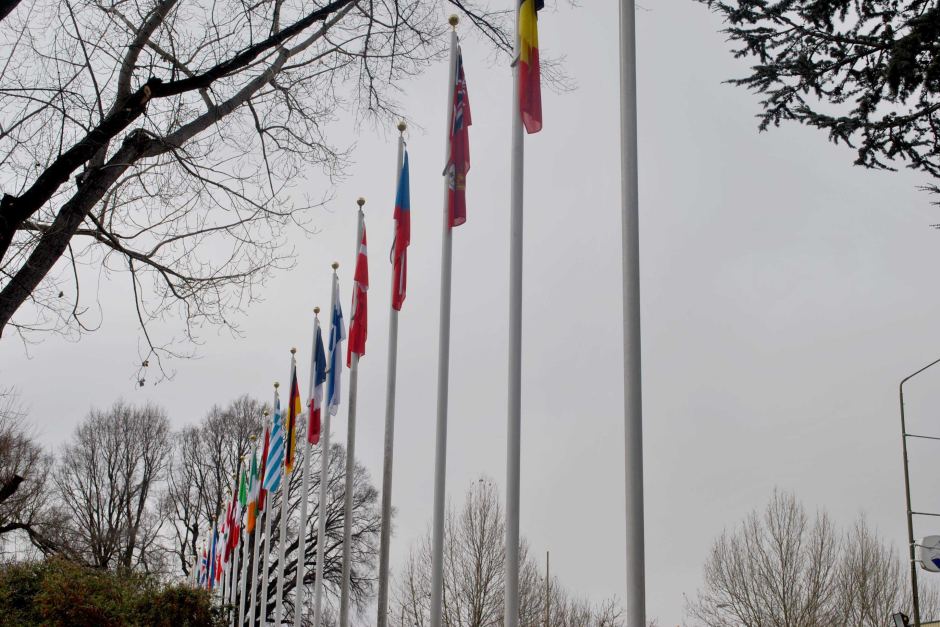
ANC ambassador in Australia tries to have old SA flag removed from Cooma

The Cooma-Monaro Shire Mayor has defended a decision to continue flying the former South African flag at Cooma in south east New South Wales.

The flag is part of the historic Avenue of Flags along the town’s main street, which was put up to represent the nationalities of workers involved in building the Snowy Mountains Scheme.

The flag’s presence has been the subject of controversy in recent years, with some ex-pats calling for the old flag to be replaced with the current one.

The South African High Commission has been in discussions with the Cooma-Monaro Shire Council over the issue, and the council has now decided to fly South Africa’s present day flag in a separate location near the town’s Centennial Park.

But Mayor Dean Lynch said there was still no need to take down the former South African flag.

“They’re historic flags; this is nothing about politics,” he said.

“They’re the flags that people lived, worked and died under while the Snowy scheme was being built.”

South African High Commissioner Sibusiso Ndebele said he raised concerns with the council after seeing a report online that referred to “some sort of honouring of the apartheid flag” in the town.

“We wanted to check up [with the council] because the Australian Government had taken a position that … they supported the creation of a democracy, so Australia can’t be seen to be supporting the old,” Mr Ndebele said.

“That’s how I understood it until we had discussions with Mayor Dean Lynch last Friday.

“He took us to lunch and explained they have got this historical flag avenue that represents the countries that built the hydro electric power in the late 50s.

“We are arranging now on our national day to put up a flag which will take pride of place there at Cooma of the South African flag as it exists now alongside with other flags.”

Cr Lynch said the old South African flag was not the only one in the town that had “negative” political associations.

“We fly a number of historic flags, one of them being Yugoslav flag which of course was another oppressive regime,” he said.

“But also there’s other old flags there – the old Canadian flag, the old American flag minus the star.

“Those flags are the flags of the day and that’s just history.” – Australian Broadcasting Corporation

Palestinian toddler dies in arson attack

A suspected “price tag,” or retaliation, arson attack by Jewish settlers killed an 18-month-old Palestinian child in a house in the occupied West Bank and injured several other people, according to Israeli police.

The toddler died in a house fire which broke out in a village of Kafr Duma near the West Bank city of Nablus, Reuters reports.

The victim’s four-year-old brother and both parents were also injured and have been brought to the hospital. The attack took place in the early hours of the morning when the family was fast asleep and could not react immediately.

The house was reportedly destroyed by fire at the time the family was sleeping inside, RT reported.

The infamous “price tag” tactic, typically used by radical Jewish settlers attacking Palestinian homes, Christian churches, mosques and government buildings, in response to Palestinian attacks on Jewish settlements, was daubed on the walls of the family’s home.

The death of a child will inevitably aggravate Israeli-Palestinian tensions at the time when the government of Prime Minister Benjamin Netanyahu pursues the controversial settlement expansion policy in the occupied territories.

Just this Wednesday, Netanyahu approved the construction of 300 new homes in the central West Bank Jewish settlement of Beit El despite international condemnation. US State Department responded by a statement criticizing the “illegitimate” construction.

However, Israeli authorities have, at the same time, disgruntled some of the Jewish settlers in Beit El, as the Supreme Court has ordered that two blocks of houses illegally built on the Palestinian-owned land in the same area be torn down. The demolition sparked fierce resistance, with settlers protesting and clashing with police on Tuesday.

Africa’s population explosion over next 35 years

A United Nations report has projected the world’s population to reach 11.2 billion by the end of the century. Africa alone will account for half of the population growth over the next 35 years.

The world’s population is expected to grow from its current level of 7.3 billion to 11.2 billion people by end of the century, according to a UN report released Wednesday, with the earth expected to add more than a billion people in the next 15 years alone.

India is expected to surpass China as the world’s must populous country in less than a decade, with fast-growing Nigeria on course to overtake the United States as the third most populous nation by 2050, the UN predicted.

Most of the growth will happen in developing regions, especially Africa, which will account for more than half the world’s population growth in the next 35 years.

“The large number of young people (in Africa) who will reach adulthood in the coming years and have children of their own, ensures that the region will play a central role in shaping the size and distribution of the world’s population over the coming decades,” the report said.

The demographic predictions are essential for creating and implementing the new global development goals being put into place later this year in place the UN Millenium Development Goals.

“While the global projections should not be cause for alarm, we must recognize that the concentration of population growth in the poorest countries presents a distinct set of challenges,” said John Wilmoth, head of the UN population division.

Rapid population growth, Wilmoth said, will make it “more difficult to eradicate poverty and inequality, to combat hunger and malnutrition, and to expand educational enrollment and health systems.”

According to the UN, nine countries will account for half of the world’s population growth between now and 2050: India, Nigeria, Pakistan, Congo, Ethiopia, Tanzania, the US, Indonesia and Ghana.

The report also takes note of global ageing, projecting the number of people age 60 and above should more than double by 2050. In Europe, more than 34 percent of the population will be over 60 years old by 2050.

Source: Reuters/dpa/AP

China to give up one-child policy

All Chinese couples will be allowed to have a second child within six months, ​ say ​reports, amid concerns over shrinking labour force​ and ageing population.

A decades-old policy restricting many Chinese families to a single child will soon be relaxed.

The further relaxation of China’s family planning policy would allow all Chinese couples to have two children.

It could be implemented “as soon as the end of the year if everything goes well,” a government source told China Business Review on Wednesday.

China’s one child-policy, introduced in 1979 by leader Deng Xiaoping to limit the nation’s rapid population growth, has been responsible for millions of brutal forced abortions and mandatory sterilisations over the past three and a half decades.

Source: The Telegraph

Ottowa, Canada’s capital of cheating liers

Canada’s capital city, Ottawa, is also it’s most potentially adulterous, Reuters reports. Around 1 in 5 of the population is registered on Ashley Madison, a social network aimed at married people that touts “Life is short. Have an affair” as its slogan.

The sleepy city, with a population of around 883,000 boasts 189,810 users, according to Avid Life Media, the Toronto-based company that owns the service.

ALM faced a huge hack this week from a group called the Impact Team, exposing 37 million users’ data in a demand to take down Ashley Madison and sister site EstablishedMen.com. The hackers referred to the site’s clients as “cheating dirtbags who deserve no discretion.”

The site says that it has suspended fees for users who want to delete their accounts.

Meanwhile, it seems like Ottawa’s politicians and civil servants are the ones having the most difficulty staying faithful — the most-registered postal code in the city represented Parliament Hill, the seat of power in the country, Reuters reports.

ALM CEO Noel Biderman thinks “power, fame and opportunity” are the likely causes of infidelity in the city. In a newspaper report published earlier this year, Biderman admitted that capital cities usually top subscription rates for the adulterous service.

Ottawa residents seem to think the reason is much simpler — everyone is just bored out of their minds.

“Why do you think everyone goes to Montreal to have a good time?” Kary, who refused to give her last name, told Reuters. “Ottawa is the city fun forgot.”

Source: Reuters

UN condemns armed attacks on Main Supply Road of CAR

The United Nations peacekeeping operation in the Central African Republic (CAR) today condemned a recent series of armed attacks perpetrated by rebel elements.

“The United Nations Multidimensional Integrated Stabilization Mission in the Central African Republic (MINUSCA) strongly condemns the marked increase of armed attacks on the Main Supply Road 1 (MSR1) attributable to members of the rebel group Front démocratique du peuple centrafricain (FDPC),” said a press release issued today.

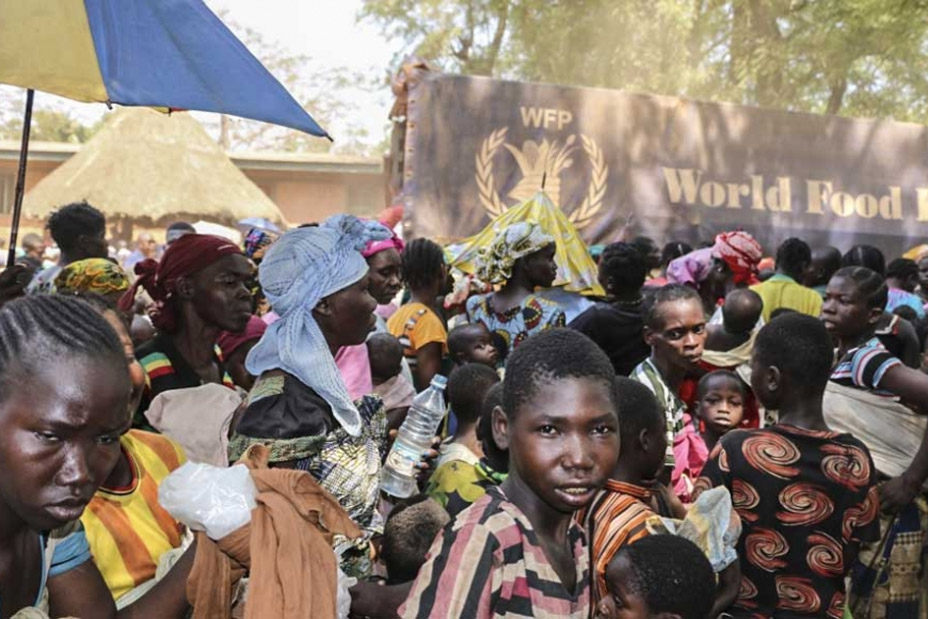
The latest incident took place over the weekend when gun shots were fired against a convoy with World Food Programme (WFP) supplies, escorted by MINUSCA peacekeepers, in the North-Western part of the country.

The driver was fatally wounded after being shot by three times in the chest and his truck shoved on the side, causing serious injuries to other passengers.

“This violence goes against the current momentum aimed at peace and national reconciliation following the conclusions and recommendations of the Bangui Forum and of the agreement signed between the government and armed groups on the cessation of hostilities and on disarmament,” underlines the Mission.

MINUSCA added that it will reinforce the “robust measures” aimed at raising the level of security on this vital route that supplies the Central African Republic.

More than two years of civil war and sectarian violence have displaced thousands of people in CAR amid ongoing clashes between the mainly Muslim Séléka alliance and anti-Balaka militia, which are mostly Christian. The UN estimates that some 450,000 people remain displaced inside the country while thousands of others have sought asylum across the borders. – UN News Centre

US says Burundi elections not credible

The United States said Burundi’s elections Tuesday lacked credibility and by pressing ahead, the government “risks its legitimacy.”

The voting “will further discredit the government,” State Department spokesman John Kirby said, after polling went ahead despite opposition protests that President Pierre Nkurunziza’s candidacy was unconstitutional.

Burundians went to the polls amid gunfire and grenade blasts, and at least two people were reported killed.

Opposition and civil society groups have denounced Nkurunziza’s candidacy as a breach of the constitution and of a 2006 peace deal that ended a 12 year of civil war.

“The government’s insistence on going forward with Presidential elections on Tuesday risks its legitimacy in the eyes of its citizens and of the international community,” Kirby said.

“More serious is the risk of unraveling the fragile progress made through the implementation of the Arusha Agreement, which states clearly that no Burundi president shall serve more than two terms in office,” he added.

Source: AFP

Sydney’s ‘Reclaim Australia’ rally against Islam

Five people have been arrested over sporadic violence in Sydney, where right-wing activists from the ‘Reclaim Australia’ movement held a protest with police trying to keep them separated from a counter-rally by pro-tolerance protesters.

Some 150 Reclaim Australia activists gathered in Sydney’s Martin Place to protest against what they called the Islamization of the country, some of them wearing Spartan outfits and carrying Eureka flags, controversial symbols of rebellion in Australia.

Separated by a police-enforced buffer zone, a counter-protest standing for multiculturalism and against Islamophobia gathered.

The five were arrested over violent clashes between the two rallies, AAP reported. Police said at least two of the arrests may lead to charges.

“We respect your right to protest and police will facilitate that and work to support peaceful demonstration on every occasion. But those who wish to come and commit offences, intimidate or be offensive will be arrested,” NSW Assistant Commissioner Alan Clarke told SBS News.

Similar pro and counter-rallies were held in other Australian cities on Sunday, including Brisbane, Perth, Hobart and Canberra, with no major incidents reported. In Mackay, Federal Coalition MP George Christensen addressed a Reclaim Australia rally, calling for action to defend the nation’s values.

“Our voice says we will not surrender, we will not sit idly by and watch the Australian culture and the Australian lifestyle that we love, and that is envied around the world … we are not going to see that surrendered and handed over to those who hate us for who we are and what we stand for,” he said.

Police said the Sunday rallies demonstrated a “good level of compliance” by the protesters, an improvement compared to the altercations of Saturday’s rally in Melbourne, when police had to use pepper spray to maintain order.

Reclaim Australia says it stands for maintaining Australia’s national identity and is against the spread of Islam in the country. Their critics consider them racist and accuse of neo-Nazi leanings.

“Claiming to be a patriot is one thing and being too patriot[ic] is another. We [Muslims] are a 2 percent minority here, so to say that radical Islam is taking over Australia is completely false, there’s no reality to it,” Waseem Razvi, president of Australia’s Islamic Research and Education Academy, told RT.

“A real patriot would not stand against minorities, but stand alongside the minorities, respecting the constitution and respecting the multicultural spirit of Australia,” he said.

The weekend protests come during this year’s Eid al-fitr festivities, when Muslims celebrate the end of the holy month of Ramadan.

Historic nuclear deal reached with Iran

Iran and six leading world powers signed a comprehensive plan for ending international sanctions against Iran in exchange for putting restrictions on its controversial nuclear program. RT takes a look at the groundbreaking document.

The deal signed in Vienna on Tuesday is meant to break a 12-year standoff over Iran’s nuclear activities, which some nations claimed involved military research. The Joint Comprehensive Plan of Action (JCPOA) acknowledges Iran’s right for peaceful nuclear development on par with any other signatory to the nuclear Non-Proliferation Treaty.

The agreement provides for a joint commission to be established to monitor the implementation of the action plan and handle dispute situations. The International Atomic Energy Agency (IAEA) is tasked with verifying voluntary nuclear-related measures by Iran. Iran and the six nations – China, France, Germany, Russia, the UK and the US, are to hold ministerial-level meetings at least once every two years to monitor the progress.

For 15 years Iran will carry out enrichment only at the Natanz facility and will only enrich uranium up to 3.67 percent. The stockpile would not exceed 300kg of uranium hexafluoride or equivalent chemical forms. The stockpile limit does not include fuel assemblies used in Iran’s nuclear reactors. Excesses are to be sold or exchanged for raw uranium.

The Fordow facility is to be converted into an internationally-supported technological center. Some of the centrifuges currently placed there would be allowed to continue spinning, but they would only produce stable isotopes and not enrich uranium. Some of the equipment will be removed completely.

Iran will start phasing out its older IR-1 centrifuges in 10 years, will not develop new models, will not increase the number of more advanced centrifuges currently in its possession, and will observe certain restrictions on testing them.

Iran will modify the Arak nuclear reactor with the help of the international community. It will be used for peaceful research and isotope production. It will not produce plutonium. Spent fuel will be shipped out of Iran for entire lifetime of the reactor. Iran keeps a leadership role in the Arak partnership.

No heavy water will be produced or accumulated for 15 years and Tehran will seek to use reactor designs not requiring heavy water.

Iran is to leave spent fuel re-processing to other nations.

Iran will adopt several additional safeguards and allow the IAEA to verify those voluntary measures. The nuclear watchdog is to monitor uranium stockpiles and centrifuges in Iran, including with modern surveillance measures like online enrichment measurement and electronic seals.

Tehran pledges not to conduct research that could conduct development of a nuclear explosive device, as specified in a technical annex to the agreement.

China believes hostile short-sellers caused panic

A recent sell-off in China’s stock markets is the first major challenge facing the country since the introduction of margin trading, and is believed to have been caused by hostile short-sellers.

In a report on the Chinese news site ifeng.com, an analyst said the sell-off was similar to what took place in Hong Kong in 1997, when the territory’s benchmark Hang Seng Index plunged 60% after peaking at 16,673 points.

The steep drop in share prices in Hong Kong in 1997 was caused by financier George Soros, who shorted both the Hong Kong dollar and the Hang Seng Index futures, the analyst said, adding that similar practices were observed in the last two trading sessions in China.

According to the analyst, massive funds entered the futures market, building a short position and leading to declines in the stock markets. The size of the funds and the sophisticated trading methods are beyond the ability of Chinese institutional investors, the analyst said.

In fact, Bill Gross of Janus Capital, a co-founder of global investment firm PIMCO, said in early June that the Shenzhen Stock Exchange’s Component Index presented perfect short-selling opportunities.

At the time, the index was at a seven-year high but plummeted 30% on Gross’s comments. Morgan Stanley and Credit Suisse have also been bearish on Chinese shares recently.

Several measures introduced or announced by the Chinese government, such as lower interest rates, required reserve ratio cuts, and a plan to allow the investment of pension funds in equities, have failed to prop up the Chinese stock markets.

The Chinese government is expected to introduce new policies to rescue the market, since further a decline will hurt companies’ ability to borrow money and will put pressure on the economy.

The China Securities Regulatory Commission reportedly was soliciting proposals from institutions to rescue the market.

There have also been reports of brokerages promising not to force liquidation of shares held by investors facing margin calls.

Source: China Times