Nazi chants at Dutch soccer game

“Hamas, Hamas, Jews to the gas,” sang a section of the home supporters of FC Utrecht towards the fans visiting from Amsterdam, a city historic in part for its Jewish community. “My father was in the commandos, my mother was in the SS, together they burned Jews, because Jews burn the best!”

The chant was caught on video and quickly circulated among Dutch media. FC Utrecht issued an apology as Jewish organizations demanded action by soccer authorities.

Anti-Semitism in European soccer appears to be getting worse. According to Kick It Out, a British organization originally devoted to combating racism, anti-Semitic incidents are up in the English Premier League. A Kick It Out study released last month revealed that there were 59 reported instances of anti-Semitism during the first half of this season. That was more than during the entire previous season. Anti-Semitism made up a third of the total instances of abuse, and was second in frequency only to racism.

One of this season’s worst episodes came when fans of the London club West Ham were caught on camera chanting “I’ve got a foreskin, how about you? F—— Jew” on their way to play Tottenham Hotspur, a team with a historically strong Jewish following.

Other recent incidents have included fans — and in several instances players — making Nazi-like salutes.

In a recent game between Bosnia and Austria. Bosnian fans took to the streets of Vienna in what was originally a pro-Palestine demonstration, but eventually disintegrated into chants of “Kill, kill the Jews” — also caught on video.

But Ronny Naftaniel, Chairman of the Dutch Jewish Humanitarian Fund, sought to draw a line between the chants — as insulting as they are — and anti-Semitism. Whether it’s West Ham vs. Tottenham or Utrecht vs. Ajax Amsterdam, he said such insults have more to do with local rivalries than true bigotry.

“It’s indeed very shocking what happened at the game between FC Utrecht and Ajax,” he said. “It’s something that happens twice or three times a year during games. And it looks as if no one is able to fight it. Of course, it has some deeper roots which go back to the fact that Ajax supporters, they expose themselves as Jews. They walk with flags with the Star of David and they call themselves ‘The Jews.’ So the problem is that then their adversaries act as if Ajax are the Jews and come up with the most insulting slogans.”

“For us Jews, we are disgusted,” he said. “But those people who do those slogans are not Nazis. They are not most of them fundamentalists whatsoever. They are supporters, hard core supporters, of those clubs.

“If these were hard core anti-Semites, it would be easier to combat it,” he said. “But it’s part of the football culture, and that is very tough to fight against.”

Supporters of the local team, ADO Den Haag, used to chant “Hamas, Hamas, Jews to the gas” whenever Ajax came to town, Naftaniel said. They even made a sickening sound, as if gas were slowly leaking into the stadium.

Source: Washington Post

Germany sells fifth nuclear submarine to Israel

Germany’s Federal Security Council has approved the export of a fifth submarine to Israel.

It’s the penultimate submarine promised to Israel by German Chancellor Angela Merkel and will be handed over by the company Thyssen Krupp.

Süddeutsche Zeitung newspaper revealed the approval, citing the Federal Security Council’s report to the parliamentary Economics Committee.

Germany’s Howaldtswerke-Deutsche Werft (HDW) builds the new Air Independent Propulsion Dolphins and the decision to sell them has been criticized for two reasons. One, in that German taxpayers are shouldering a third of the cost.

Secondly, the vessels are reportedly capable of being equipped with nuclear weapons.

Peter Roberts is an expert in sea power and naval weapons systems at the Royal United Services Institute in London and told Sputnik News that Israel will want to produce and develop nuclear capability on the new submarines.

“That’s the long term aspiration”, says Roberts. “But does it have it right now? No.

“These are new batch of submarines that Israel is receiving which have a markedly increased capability on what they’d had previously in terms of range, covertness and ability to reach different parts of the world then they had previously been able to do.”

Roberts adds that the submarines have the capability to become nuclear armed, “but probably not right now.”

“Several hurdles have to be overcome before it can be armed with a nuclear warhead.”

He explains that the key to being able to arm the submarines with nuclear weapons is down to the delivery mechanism.

“The Israelis rely on the fact they could fire the Popeye submarine missile — a system that the Americans successfully launched in 2002. But traditionally the Israelis only keep the Harpoon anti-ship missile.”

“These are the first submarines that will be able to fire this missile, the size of the torpedo tubes allow it to be fired, they have a bigger tubes for bigger missiles.

“The submarines would have the ability to launch them [missiles] — it’s the weapon itself that is the critical part and developing that weapon and navigation system for the guidance from within a submerged submarine is a further challenge.”

Peter Roberts says it’s difficult to say whether the submarines are distinctly designed for nuclear weapons.

“The Israelis will want to add this to their golf bag of capability which will give them huge resilience in their nuclear forces — but they’re not there yet.”

According to an article written by Anthony Bellchambers for Global Research, the Dolphin Class nuclear powered submarines “that have already been converted by the Israeli navy to being armed with ICB nuclear missiles…has given the Israeli state ‘deep sea dominance’ that is now virtually irreversible.”

Adding that German Chancellor Merkel agreed to supply Israel with the vessels “without any prior consultation with the EU.”

US, UK and NATO up the infowar

Documents posted on the web reveal a high-level anti-Russian propaganda war being waged in south and eastern Ukraine by the US, the UK and NATO on behalf of the Kiev Government, using non-governmental organisations (NGOs) as agents.

According to the Drakula blog, the West is raising its game in its campaign against Russian President Vladimir Putin. While it is — on the one hand — pumping up the military volume by moving NATO and US hardware nearer to the Ukraine and Russian borders, it is also playing a hybrid war by pumping funds into an anti-Russian propaganda war.

NATO documents show that a “co-ordination meeting on StratCom training for Ukraine” was held in Riga, Latvia on February 19, 2015 as part of its “on-going capacity building programme”.

StratCom stands for Strategic Communication, which means dealing with the “inability of Ukrainian media to provide sufficient reach for the south/east of the country; vast reach of media originating from Russia; lack of strong Public Broadcaster; lack of success stories; [and] lack of trust of the population of the south/eastern regions in the central government”.

The NATO document reveals the Kiev Government has a “weak Public Affairs capacity” and sets out proposals to counter Russian influence and tackling what it describes as a lack of cross-government work and co-ordination as well as a lack of understanding of the importance of “national narrative”.

Further documents reveal a project run by the UK Foreign Office, the Department for International Development and the Ministry of Defence worth $360,500 with the purpose of: “National reconciliation in Ukraine through effective communication for restoring public trust and empowering of the participatory democracy mechanisms using regional media coverage, counteraction to Russian information influence”.

It outlines a pro-Kiev propaganda battle using Ukrainian agencies including the Ukrainian Institute for International Politics (UIIP); the Analytical Center for Geopolitical Studies ‘Borysfen Intel’ (BI); and the Department of the civil-military cooperation, HQ of the armed forces.

The program involves “resuming the communication and community dialog in Eastern and Southern regions of Ukraine using international experience shared by UIIP and BI foreign partners; informational support of national reconciliation ideas through broadcasting and media coverage of Eastern and Southern Ukraine regions by new alternative regional mass-media and Internet resources; and decreasing the Russian information influence in Ukraine, discredit of the Russian political and military leaders.”

The revelations will embarrass the US, NATO and UK who have been at pains to denounce Russia for promoting what they call a ‘hybrid war’ in Ukraine.

Source: Sputniknews

Pressure builds on UK’s surveillance

A group of leading human rights NGOs in Britain are taking the UK government to the European Court of Human Rights over invasive mass surveillance practices they warn violate Britons’ right to privacy and freedom of expression.

The court appeal, filed by Privacy International, Bytes for All, Amnesty International, Liberty and other civil liberties groups, is a direct response to a ruling last December by Britain’s surveillance court, the Investigatory Powers Tribunal (IPT).

The case, brought before the IPT, examined whether Britain and America’s industrial surveillance programs uncovered by ex-NSA analyst Edward Snowden breach citizens’ right to privacy.

The IPT ruling found that Tempora, a program set up to monitor web traffic flowing in and out of Britain via fiber optic cables, is entirely lawful. It also said Britain and America’s intelligence sharing system known as Prism is legal.

During the court proceedings, fragments of previously clandestine government surveillance policies were made known to the public, which influenced the tribunal’s final decision. Because these policies had been made transparent, the IPT resolved industrial spying was compliant with international human rights law.

The appeal filed at the ECHR challenges the IPT’s December ruling that industrial spying under Britain’s controversial Regulation of Investigatory Powers Act 2000 (RIPA) complies with the UK’s duty to protect its citizens’ human rights. RIPA regulates public bodies’ deployment of and access to surveillance.

The European Court of Human Rights will also consider whether certain provisions inherent to RIPA violate Article 14 of the Convention, which bans illegal discrimination.

On shaky legal ground

The court appeal comes at a time when legal arguments justifying the government’s surveillance policies are beginning to unravel. On February 6, Britain’s surveillance court ruled that British intelligence services breached the law by accessing millions of individuals’ personal data.

This landmark ruling signaled the first occasion that the IPT found UK security and intelligence services had acted unlawfully.

Several weeks later, during a separate IPT case involving Reprieve and Amnesty International, the UK government admitted that its program governing the interception, collection and use of material privileged under law breaches the Human Rights Act.

The most recent appeal filed at the ECHR follows 18 months of litigation between human rights NGOs and the British government. It uncovered multiple legal issues with the UK government’s mass surveillance techniques.

Throughout the course of this legal wrangling, it emerged the UK government deems it justifiable to engage in mass surveillance of every Facebook, Twitter, YouTube and Google user in Britain, even if there is no suspicion that the user has broken the law.

In a bid to legitimize this, the government has secretly redefined Britons’ use of these messaging platforms as “external communications,” according to Privacy International.

Carly Nyst, legal director of Privacy International, said mass surveillance tramples upon citizens’ basic rights.

“Intercepting millions of communications every day, and secretly receiving millions more from the NSA by the back door is neither necessary nor proportionate,” she said.

Nyst argued that the IPT revealed a pro-government stance by siding with UK spy base GCHQ. However, she noted the ECHR has a “strong history of ensuring intelligence agencies are compliant with human rights law.”

“We hope that the court continues this tradition and GCHQ is finally held accountable for its unfettered spying on the world’s communications,” she said.

James Welch, Legal Director for Liberty, said the IPT maintains there are reasonable safeguards to protect Britons from industrial-scale privacy rights violations.

“We disagree, and hope the European Court will finally make clear to our security services that they cannot operate in near complete secrecy,” he said.

“It is thanks only to Edward Snowden’s revelations, and the scant disclosures we and the other claimants have been able to prise from the government, that we know anything whatsoever about what the intelligence services are up to.”

Amnesty International lawyer Nick Williams said no individual is “above the law” and the European Court of Human Rights now has an opportunity to “make this clear.”

“The UK government’s surveillance practices have been allowed to continue unabated and on an unprecedented scale, with major consequences for people’s privacy and freedom of expression,” he said.

“It is critical that we are able to seek and receive information of public interest from our confidential sources, free from government intrusion.”

Russians plan to ‘Eat at Home’

Russian renowned film directors and brothers, Nikita Mikhalkov and Andrey Konchalovsky, are willing to create in Russia a chain of fast food restaurants, alternative to Western ones, and have asked the government to allocate one billion rubles ($18.65 million) for the purpose, the Kommersant daily wrote on Thursday citing the brothers’ letter to the Russian government.

“Andrey Konchalovsky and Nikita Mikhalkov ask the government to help in establishing a nationwide chain of public catering, alternative to the Western chains of fast food,” the newspaper writes. “But to launch a pilot project of cafes branded ‘Let’s Eat at Home’ the partners need 971.8 million rubles ($18.13 million).”

The Kommersant says that “today the topic will be on the table of Deputy Prime Minister Arkady Dvorkovich.”

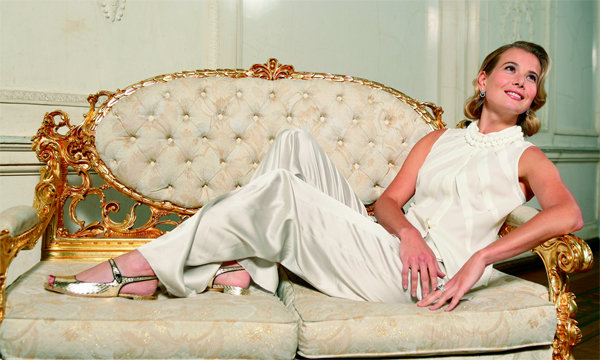
A nationwide chain of cafes branded “Let’s Eat at home” is supposed to be set up, the daily says, and Konchalovsky’s wife Yulia Vysotskaya, actress and TV hostess, who is the brand owner, is expected to become the face for new chain.

“The project aims to substitute imported foods and to create an alternative to Western chains of fast food restaurants,” the film directors say promising to gain profit in a span of 4.8 years.

“Let’s Eat at Home” eateries are planned to combine small shops and cafes, with regional foodstuffs making up 30-40% of the menu.

Also, the eateries are expected to provide dishes to social facilities, in particular to children’s homes.

Yulia Vysotskaya
Yulia Vysotskaya

Marine furious about Le Pen’s gas chamber remarks

France’s right-wing was plunged into disarray Wednesday as National Front leader Marine Le Pen openly split with her father and party founder after gas chamber comments she described as “political suicide”.

Jean-Marie Le Pen, the outspoken 86-year-old founder of the FN party, has dominated headlines in recent days, repeating his view that the Nazi gas chambers were a “detail of history” and defending war-time French leader Petain, who collaborated with Hitler’s regime.

In an interview with the far-Right review Rivarol, Mr Le Pen stood by his gas chamber remarks, saying: “I am not the type of man who changes his mind or crawls.”

Then, when asked to comment on the presence of Pétain supporters within the party, he replied: “I have never considered Marshal Pétain a traitor. They were very severe with him after the Liberation. I never considered as bad French people or pariahs those who still hold the Marshal in esteem.”

He then attacked Mr Valls, France’s Spanish-born prime minister, who became a French national aged 20, saying: “Valls has been French for 30 years. I’ve been French for a thousand years. What are Valls’s real ties to France? Has this immigrant changed dramatically?”

His latest sorties appear to have been the last straw for daughter Marine, who has been trying to clean up the party’s anti-Semitic and racist image since she took over in 2011, a move that has seen it soar in opinion polls as it attracts more mainstream voters.

And some analysts say that while splitting from her father will be painful, it could end up making the FN more electable.

Jean-Marie Le Pen is veering between “political suicide” and “a scorched earth strategy”, said Marine, 46.

“His status of honorary president does not allow him to take the National Front hostage, to make such crass provocations that appear aimed at harming me but which unfortunately hit the entire movement, its officials, candidates, members and voters very hard,” she added.

Political scientist and FN specialist Virginie Martin told AFP that Marine’s latest move could benefit the party’s standing in the polls.

Jean-Marie Le Pen is “a historic figure who always amuses the crowd and… appeals to the historic, hard-line wing of the FN,” she noted.

“But at the same time, they’re never going to lose that part of the electorate. What’s the risk of cutting off Le Pen? You might lose one or two percent but you might gain five or six.”

“Think of the section of the (centre-right) opposition UMP that are disenchanted by traditional political parties… for them, the barrier presented by Le Pen has disappeared.”

Belgians ignore EU sanctions against Moscow

Belgian companies continue expanding their businesses in Russia despite the sanctions imposed by the West against Moscow over its alleged involvement in the Ukrainian conflict, Russian Foreign Ministry spokesman Alexander Lukashevich told RIA Novosti in an interview.

“Despite the unfavorable conjuncture, Belgian companies haven’t frozen their projects in Russia, and even continue to develop their businesses,” Lukashevich said.

Both, Russian and Belgian companies express unflagging interest in future cooperation, Lukashevich said.“Even given the counterproductive European Union policy of maintaining sanctions against Russia, the business circles of the two countries continue expressing unflagging mutual interest in increasing bilateral cooperation,” he stated.

The Foreign Ministry’s representative said that some 35 Belgian companies are currently implementing their projects in Russia.

Lukashevich cited an example when in March 2014, Belgian Fluxys and Russia’s Yamaltrade signed a 20-year agreement to organize the transit of up to 8.8 billion tons of Yamal liquefied natural gas per year through the Port of Zeebruge.

Since 2014, the United States, the European Union, and their allies have imposed several rounds of economic sanctions against Moscow, citing the Kremlin’s alleged involvement in Ukraine’s internal affairs. Russia has repeatedly denied the accusations, adding that the sanctions policy is ineffective and counterproductive.

Several European companies that have been successful in the Russian market have also expressed their disappointment with the anti-Russia sanctions, saying that the measures hinder their businesses.

Moscow and Athens forge new alliance

The Greek prime minister’s visit to Moscow aimed at improving relations with Russia angers many in Europe – this is what reports in Greek media, covering the visit, boil down to.

Greek Prime Minister Alexis Tsipras is on a two-day visit to Moscow, making headlines in Greek media.”Alexis Tsipras’ upcoming visit to Moscow and meeting with Putin has generated much talk, analysis and warnings,” iefimerida.gr wrote in a piece titled Tsipras-Putin: Smiles in Moscow, Annoyance in Brussels. “Both sides underline that Moscow and Athens will discuss many issues and there is no shortage of speculations on what Tsipras will ask and what Putin will offer.

“The visit could help return Greek produce to the Russian market, according to the media outlet. “Exports are worth 125 million Euros and are of primary importance to the agriculture in northern Greece,” iefimerida.gr said.

EU sanctions and the Russian food ban, investments, privatization, energy cooperation and the Turkish Stream gas pipeline, tourism, the Ukrainian crisis and Greece-Turkey relations are the main topics on the agenda.

“Putin is preparing a ‘gift’ for Tsipras,” newsit.gr said, adding that it is the first visit of a Greek prime minister to Moscow in five years. According to the media outlet, Tsipras’ visit “caused outrage in Brussels” that “thinks the Russian president is trying to undermine the European stance on sanctions against Moscow.”

The visit sent partners and creditors, especially in Berlin, into turmoil. Some “on the other side of the Atlantic Ocean also worry that Greece would throw itself into Russia’s arms to come up with ‘alternative plans’ to solve the Greek problem,” the Crete media outlet pointed out.

“Tsipras and Putin are forging a new alliance,” according to protothema.gr. “All eyes in Europe are on Tsipras and Putin. ‘The spring’ in Greek-Russian relations gets on Europe’s nerves. The visit has created an atmosphere of enthusiasm in Moscow. … It is seen as a breakthrough in the bilateral relations that would revive and strengthen cooperation in a number of areas,” the media outlet said.”

The visit also sends important political signals: both countries are discontent with the West. In this context Tsipras wants to develop a diverse foreign policy and alliances, while Putin wants to show that he has power and influence to attract the attention of European leaders and countries,” protothema.gr said.

Source: Sputniknews

The rise of nationalism in Britain

As the eurozone crisis continues, anti-establishment insurgencies like the Scottish National Party, SNP’s, are surfacing all over Europe: nationalist, populist, separatist, left or right.

As the British empire was gradually dissolved after the second world war and its industrial base attacked by younger, nimbler economies, the cohesion of the British state weakened.

There was an impulse towards supra-nationalism in the shape of membership in the European Union, but Britain joined late, in 1973.

English people – steeped in Britain’s maritime, imperial traditions – felt hostile towards the EU.

At the same time, long-smothered regional nationalism was reviving on Britain’s Celtic fringes. In divided Ireland, it was violent; in Scotland, political, emboldened by newly discovered North Sea oil; in Wales, initially, cultural, based around the preservation of the Welsh language.

That was in the 70s. Forty years on, these rival strands are much stronger, and testing the concept of “Britishness” to destruction.

The Scottish national party has barely paused for breath since losing last September’s referendum on independence for Scotland – immediately declaring itself the moral victor and demanding greater powers for Edinburgh.

Since the referendum result – 55% no, 45% yes – disaffected working-class Labour voters have flocked to the SNP. Polls suggest the Scottish nationalists, now led by Scotland’s new first minister, the formidable Nicola Sturgeon, will slaughter Labour north of the border, winning dozens of Scotland’s 59 seats and perhaps holding the balance of power in London. If she finds herself in that position, Sturgeon promises to block Cameron and prop up a minority Miliband administration.

Britain’s Tory newspapers are busy denouncing Sturgeon as “the most dangerous woman” in the country. Cameron – whose Tories have only one seat in Scotland – warns of a Scottish veto from the people who want to break up Britain. Miliband is embarrassed.

Meanwhile, in England, the populist anti-European right, in the form of the UK independence party (Ukip), has evolved under the skilful leadership of Nigel Farage.

Ukip’s proven ability to win protest votes at four-yearly elections to the 28-nation European parliament is now threatening the status quo at Westminster. It has two MPs (both defectors from the Tories) and hopes to win more on 7 May.

If that sounds familiar, it should. Though Ukip portrays itself as free market and libertarian, it is also deeply nostalgic, socially conservative, and suspicious of immigrants and big-government bureaucracy, especially from the EU’s Brussels headquarters.

Racist, homophobic and authoritarian? Certainly not, says Farage. We just want to be a self-governing sovereign state again. But Ukip’s “little guy” rank-and-file is not always quite so on-message. This is disruptive Tea Party Republicanism with added potency.

Ukip’s threat to the status quo is twofold. It may take enough votes away from Cameron’s Tories to deny the prime minister his slim hopes of a Commons majority on May 7, or even to stop him being the largest party, which would make it hard for him to form another coalition.

In a tight race, with both main parties polling at around 34%, Ukip’s rise may also hurt Miliband’s prospects by peeling off Labour’s equivalent of blue-collar Democrats, working-class voters fed up with stagnant wages and gay marriage, underfunded public services and “unpatriotic” liberals.

Source: The Guardian

Russia offers Greece loans, gas discount

Russia may offer Greece a discount on gas deliveries and new loans when Greek Prime Minister Alexis Tsipras visits Moscow this week, the Kommersant business daily reported on Tuesday, citing one source in the Russian government.

A Kremlin spokesman said last week that Russian President Vladimir Putin and Tsipras planned to discuss economic ties and EU sanctions on Moscow when they meet for talks, which Kommersant said would take place on Thursday.

“We are ready to consider the issue of a gas price discount for Greece,” the newspaper said quoting an unnamed Russian government source.

Russia’s state-controlled producer Gazprom declined to comment. The Energy Ministry also declined to comment.

The source said that in exchange for the discount and some unspecified loans, Russia would want access to Greek assets. The source did not name any specific assets.

In recent weeks, the gas price charged by Gazprom has fallen, tracking lower oil prices. Gazprom said it wanted to acquire DEPA in 2013 but dropped its bid after failing to receive enough guarantees over DEPA’s financial position.

Source: Reuters

Czech president closes the door to American ambassador

Local media said on Sunday that Czech leader Milos Zeman had “closed the door” of Prague Castle to U.S. Ambassador Andrew Schapiro after he made controversial comments about the president’s decision to join celebrations to mark the end of World War II in Russia.

EU leaders are boycotting the ceremony next month over Russia’s role in the Ukraine conflict.

However, Zeman had said he would attend the May 9 commemorations being held in the Russian capital, Moscow.

“I can’t imagine the Czech ambassador in Washington would give advice to the American president where to travel,” Zeman told news portal Parlamentni Listy. “I won’t let any ambassador have a say about my foreign travels.”

“Ambassador (Andrew) Schapiro has the door to the castle closed,” he added.

A presidential spokesman said that Schapiro could still attend social events at Prague Castle, the official residence of the Czech president.

Left out in the cold over comments

Schapiro had told Czech television that it would be “awkward” if Zeman attended the ceremony as the only statesmen from an EU country.

Zeman, a former prime minister, has frequently departed from the EU’s stance on the Ukraine crisis and criticized sanctions against Moscow.

Russia’s victory over Nazi Germany is marked each year in major Russian cities.

Schapiro overlapped with Barack Obama at Harvard Law School and also served on the Harvard Law Review. They remained friends and Schapiro and his wife, Tamar Newberger, were among Obama’s top fundraisers.

The reward for Schapiro, a white-collar defense litigator with absolutely no discernable foreign policy experience, was the posting to Prague.

The ambassador’s 72-room Beaux-Arts residence, built in the late 1920s by a Jewish businessman and once home to the late Shirley Temple Black, ambassador to Czechoslovakia during the 1989 Velvet Revolution, sits on six acres, and comes complete with a uniformed staff.

Obama nominees have a terrible record. The ludicrous ambassador to Norway, George Tsunis, didn’t know that the country, a constitutional monarchy, doesn’t have a president; the ambassador to Argentina, Noah Mamet, a Wall Street Journal op-ed, lamented “seemed not to understand basic facts about Argentina or the serious challenges that would confront our ambassador there,” and had never set foot in that country. And Colleen Bell, former Chicagoan and soap opera producer/writer, Obama’s nominee to take over the embassy in Budapest, could not answer the question, “What are our strategic interests in Hungary?”

Some 15 former presidents of the American Foreign Service Association, a trade union for members of the Foreign Service, wrote to Senate leaders as well as 11 other senators, asking that they reject Tsunis, Bell and Mamet, who, they wrote, have been “subjected to widespread ridicule, not only in the U.S. but also abroad.”

The reason to reject given by the former AFSA presidents is that “[the nominees] appear to have been chosen on the basis of their service in raising money for electoral campaigns.”

Schapiro’s family history worked in his favor too. Schapiro’s mother is said to be a Czech refugee from the Holocaust.

Source: Deutsche Welle/Chicagomag

Rabbi asked to remove kippa at French polling station

A rabbi in the city of Toulouse has filed a complaint for discrimination after a polling clerk told him he would have to remove his kippa, or Jewish skullcap, before voting in local elections.

The incident, indicative of the sometimes complex interpretation of France’s strict secular rules, took place on Sunday during the first round of nationwide polls to elect new local councils.

A polling clerk representing the left-wing Front de Gauche coalition told Toulouse rabbi Avraham Weill to remove his kippa inside the polling station, claiming this was required by French rules on secularism.

French law says it is illegal to wear “ostentatious” religious symbols, including Jewish kippas and Muslim headscarves, inside state schools.

Weill said Sunday’s incident had left him with a “bitter taste”, coming three days after Toulouse hosted commemorations for the victims of Islamist gunman Mohamed Merah, who killed three French soldiers and four members of a Jewish family during a 10-day shooting spree in March 2012.

In a sign of growing tensions, a pregnant Muslim woman was taken to a Toulouse hospital on Tuesday after she was attacked and beaten by an unknown man who insulted her for wearing a veil.

Last month, the Observatory against Islamophobia said more anti-Muslim acts were reported in January than in the whole of 2014.

France, US at odds over Iran

As a March 31 deadline looms in the negotiations over Iran’s nuclear program, the United States and France, two strong allies, have found themselves increasingly at odds, at times quite publicly.

While the White House has been pushing hard for consensus on the framework for a deal ahead of the deadline, Paris has been pushing back. “Repeating that an agreement has to be reached by the end of March is a bad tactic. Pressure on ourselves to conclude at any price,” Gérard Araud, France’s ambassador in Washington, tweeted on March 20. On Tuesday, François Delattre, France’s ambassador to the United Nations, said that Iran’s progress was “insufficient.”

The word from Paris has been equally unsupportive of the U.S. push for a deal. “France wants an agreement, but a robust one that really guarantees that Iran can have access to civilian nuclear power, but not the atomic bomb,” French Foreign Minister Laurent Fabius declared on March 21.

What gives? Is France’s Socialist President François Hollande actually a neoconservative? Has Paris suddenly turned into a hawk among nations?

Not quite. France’s policy is dictated by a set of principles with regard to nonproliferation that have guided administrations on both sides of the political spectrum in the talks with Tehran since 2002. And the tension with Washington is just one expression of a larger disagreement between the two countries over U.S. strategy in the Middle East.

Differences between Washington and Paris have been quietly brewing for months. The French feel that they are being kept out of the loop in critical discussions. The multilateral framework of Iran and the P5+1 (the five permanent U.N. Security Council members plus Germany) has turned into a bilateral discussion between Iran and the United States.

This exclusion has been coupled with increasing pressure from Washington. French diplomats complain (albeit only privately) that their American counterparts are trying to force them to make concessions on issues like the number of centrifuges allowed or sanctions in order to reach an agreement by March 31, a deadline that the French, like many of the White House’s critics back home, see as artificial and counterproductive.

The French do not share the sense of hurry that Washington seems to feel. As France’s ambassador to the United States tweeted on March 3: “We want a deal. They need a deal. The tactics and the result of the negotiation should reflect this asymmetry.”

But the differences between the French and American positions go beyond process and into matters of substance. The lifting of sanctions, the scope of inspections, research and development capacities, the number of centrifuges Iran will be allowed to maintain, and how long the agreement will last are all areas in which Paris and Washington differ. In Lausanne last week, France rejected Iran’s demand to immediately lift United Nations Security Council sanctions linked to proliferation after an agreement, arguing that this can only come progressively, with verifications.

A central concern is “breakout time” (the minimum time needed to make weapons-grade uranium). According to current reports, a deal would ensure that Iranian breakout time would be moved back to one year. French negotiators want to ensure that Iran’s agreed-upon breakout time will last the entire duration of the deal — and after. They also want a deal that lasts as long as possible. “Ten years is short when you talk about nuclear issues,” one diplomat said.“Ten years is short when you talk about nuclear issues,” one diplomat said.

Another diplomat summed it up: “We spent more than 10 years talking, slowly setting an architecture of sanctions, of pressure, defining principles of negotiations. Once we dismantle this, it won’t come back up. So we better get the best possible deal.”

French diplomats insist a political agreement, if reached by March 31, will only be a first step. Tough negotiations will continue. Bruno Tertrais, an expert in nuclear issues who is influential in the French diplomatic community, even suggested recently that a series of temporary deals could be a better alternative to a bad definitive deal.

None of this goes against long-standing French policy, though. France has consistently been the toughest member of the European Union when it comes to Iran, going back to the administration of President Nicolas Sarkozy in 2007. Paris has consistently advocated for firmer sanctions and EU sanctions, beyond the scope of United Nations resolutions. In 2012, France was notably responsible for convincing Europeans to ban the import on oil products, despite the objections of many countries.

Nuclear deterrence has been central to France’s foreign policy ever since Charles de Gaulle’s presidency, a pillar that has been largely bipartisan. And just as nuclear doctrine has stayed remarkably stable through the years, so have the officials in charge of conducting French nuclear strategy and proliferation policy, regardless of who is in the Élysée.

In fact, some of the most preeminent positions in the French diplomatic and defense establishments are occupied by career civil servants trained as nuclear strategists who have worked on Iran for over a decade. This close-knit group of diplomats includes, among others, Araud, as well as Jacques Audibert, Hollande’s diplomatic advisor, both of whom previously served as France’s chief nuclear negotiator with Iran.

These diplomats generally share the conviction that Tehran’s enrichment program is aimed at obtaining a nuclear weapon and that a bad deal that allows the Iranians to keep enriching uranium at dangerous levels will lead to a disastrous game of regional proliferation. Araud, Audibert, and their colleagues know the situation well: They have been engaged in 12 years of talks on these issues and at this point they feel they have little reason to trust the Iranians, or to believe that regional arrangements with Iran would decrease Tehran’s desire to acquire nuclear capabilities.

But policymakers in Paris might not trust the Americans much, either — and not just when it comes to the nuclear negotiations. French officials no longer hide their dismay at many of Washington’s policies in the Middle East.

Numerous French diplomats suspect that the United States, now that it is less dependent on Gulf oil, “pivoting” to Asia, and focused on fighting the Islamic State in Iraq and Syria, is on the verge of profoundly reshaping its traditional alliance system in the Middle East, moving from a system where Iran replaces Saudi Arabia as the central pillar of regional stability. This especially concerns the French because they have built strong political and defense relationships with Saudi Arabia, Qatar, and the United Arab Emirates in recent years.

The nuclear talks, French diplomats suspect, are just one part of a strategic rapprochement with Iran. Washington has practically subcontracted the war against the Islamic State’s forces in Iraq to Iranian special forces and Tehran’s Iraqi militia proxies. The French view this as a potentially counterproductive move, one more part of Washington’s turn away from its Sunni allies and toward Tehran.

French officials are also critical of the American strategy of fighting the Islamic State first in Iraq, then in Syria, disregarding the fact that both theaters are interlinked. Paris would rather see more and better inclusion of Sunnis in both countries, including more concrete support for the moderate Syrian rebel factions.

Meanwhile, the U.S. approach to Syria’s civil war is seen in Paris as hesitant and ambiguous, lacking means and resolve, and indirectly leaving aside the core question of the Assad regime’s fate — thus comforting the dictator in Damascus. This issue has come up publicly recently, such as after Secretary of State John Kerry said on March 15 that negotiating with Assad would be necessary to end the war in Syria. French Prime Minister Manuel Valls said a day later that “There will not be a political solution, there will not be a solution for Syria as long as Bashar al-Assad stays, and John Kerry knows it.” Among the concerns for French policymakers is that the temporary survival of Assad endangers Lebanon, a country that remains dear to France.

Relations between Paris and Washington have been tainted with suspicion ever since Syria used chemical weapons in August 2013 and Obama failed to enforce his “red line.” The sudden American about-face was perceived by Hollande as a sign that Obama was dumping his allies. European countries, and France in particular, were ready to attack Syria in September 2013, after two weeks of stepping up pressure and building up their military presence in the Mediterranean.

Paris is in good company, alongside many of Washington’s traditional allies in the region, including the Gulf states, Israel, and Turkey, which have all felt shunted aside in the interest of reconciliation with Iran. Within the nuclear talks, France, which has strong ties with Gulf countries, has voiced these concerns.

Source: AFP

NATO’s empty promises

A speech given by NATO Secretary General Manfred Wörner on 17 May 1990 is still available on the NATO website here.

And so is its contradiction here.

NATO has to do a better job of pruning its site, I think. Some Winston Smith toiling away in the bowels of NATO’s Minitrue failed to spot Wörner’s unspeech and drop it down the Memory Hole. So, read it now, while it’s still there.

Here’s today’s version:

Claim: NATO leaders promised at the time of German reunification that the Alliance would not expand to the East

Fact: No such promise was ever made, and Russia has never produced any evidence to back up its claim.

Every formal decision which NATO takes is adopted by consensus and recorded in writing. There is no written record of any such decision having been taken by the Alliance.

Moreover, at the time of the alleged promise, the Warsaw Pact still existed. Its members did not agree on its dissolution until 1991. Therefore, it is not plausible to suggest that the idea of their accession to NATO was on the agenda in 1989.

So let’s see what Wörner, still I should imagine considered a “NATO leader” even in the new NATO of today, had to say in those far-off days of 1990.

The primary task of the next decade will be to build a new European security structure, to include the Soviet Union and the Warsaw Pact nations. The Soviet Union will have an important role to play in the construction of such a system. If you consider the current predicament of the Soviet Union, which has practically no allies left, then you can understand its justified wish not to be forced out of Europe.

We have to find solutions that respect the legitimate security interests of all the participants – including the Soviet Union. I emphasize: all participants; in other words not only the Soviet Union. That nation has a right to expect that German unification and Germany’s membership of the Atlantic Alliance will not prejudice its security.

But it is also clear that it cannot expect us to put NATO’s existence on the line and thus give it something that it never succeeded in obtaining in the past, even at the height of its power. The West cannot respond to the erosion of the Warsaw Pact with the weakening or even dissolution of the Atlantic Alliance; the only response is to establish a security framework that embraces both alliances : in other words one that draws the Soviet Union into a cooperative Europe.

This will also be true of a united Germany in NATO. The very fact that we are ready not to deploy NATO troops beyond the territory of the Federal Republic gives the Soviet Union firm security guarantees. Moreover we could conceive of a transitional period during which a reduced number of Soviet forces could remain stationed in the present-day GDR. This will meet Soviet concerns about not changing the overall East-West strategic balance. Soviet politicians are wrong to claim that German membership of NATO will lead to instability. The opposite is true. Europe including the Soviet Union would gain stability. It would also gain a genuine partner in the West ready to cooperate.

We have left behind us the old friend/foe mind-set and the confrontational outlook. We do not need enemies nor threat perceptions. We do not look upon the Soviet Union as the enemy. We want that nation to become our partner in ensuring security.

And finally,

At the same time, our Alliance is changing with the new times and through time. Already during the last two years it has begun to adjust to changed circumstances in the definition of its tasks, substance and policies. This adjustment will continue for some time yet. The centre of gravity of our Alliance is shifting

from confrontation to cooperation,
from a military to a political Alliance,
from deterrence to protection against risks and the guarantee of stability,
from peace-keeping to peace-building,
from a US-led Alliance to a genuine partnership with the Europeans now playing an equal leadership role.

The forthcoming NATO Summit will consecrate this new sharing of leadership roles within the Alliance, and it will produce a broad-ranging strategy for the changing Europe of the nineties.

Europe’s Alternatives

Europe has a basic choice: either it lapses back into the old power politics and balance of power diplomacy of past centuries or it moves ahead along the road leading to a new order of peace and freedom, whether this be based on multinational or supranational cooperation. Our choice is clear: we are going forward. Our Alliance together with the European Community is the most successful model of such multinational cooperation. It is and will remain our best guarantee for a future of security and freedom.

So, what do you say, folks? Is that a “promise by a NATO leader” or what? Certainly talking about something a lot different than what we got once NATO expansion started, wasn’t he?

However, we may be sure that the people in NATO won’t see fit to answer the question.

My next observation is that NATO, in its countering of Putin’s so-called propaganda war with things like NATO-Russia relations: the facts, they ought to do a better job of getting their facts right.

Source: FortRuss