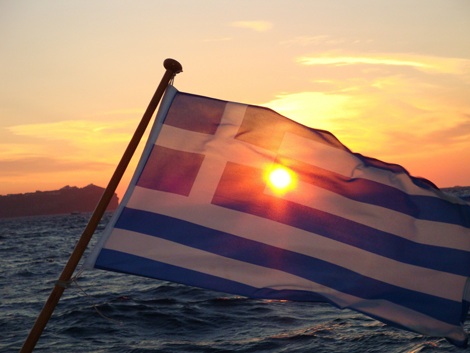
Greece: Faint hopes for a last-minute deal over the weekend

BRUSSELS  — The latest developments involving Greece and its bailout negotiations:

___

5:35 p.m./ 1535GMT/ 11:35 a.m. EDT

The eurozone’s top official, Jeroen Dijsselbloem, says new proposals from Greece came in too late for a proper assessment during the European Union summit, which will end on Friday. That has forced the negotiations to stretch into the weekend.

He says the international creditors “will have a last look at the last Greek proposals which came in very late.”

A eurozone finance ministers’ meeting broke up Thursday without a deal for Greece. It will resume Saturday.

Dijsselbloem says the issues are so technical it is pointless to keep the ministers in Brussels while technical experts assess the new proposals’ validity. “The door is still open for the Greek side to come with new proposals or to accept what is on the table.”

He insists it would not be easy: “We are very — on a number of issues — quite far apart. So it is going to be difficult.”

___

5:30 p.m./ 1530GMT/ 11:30 a.m. EDT

The head of the International Monetary Fund, Christine Lagarde, says Greece’s creditors need more time to examine new offers Athens has made.

She said Thursday after a meeting on Greece broke up without a deal: “We were given a proposal by the Greek parties at the last hour. We need to so some more work to examine their proposals, to see how it can be reconciled.”

She added: “We really want to show flexibility and we want to be as growth friendly as possible and we want to work. But it has to be balanced.”

___

4:50 p.m./ 1450GMT/ 10:50 a.m. EDT

Finnish Finance Ministrer Alexander Stubb says that the eurozone meeting on Greece has wrapped for the day without an agreement on new bailout loans for the country.

Stubb wrote on his official Twitter account: “Eurogroup back later, but not today.”

The decision is a big setback since there had been hopes to wrap up the bailout negotiations in time for European leaders to approve a deal later in the day.

Greece needs new loans by June 30, when it has a debt repayment it cannot otherwise afford.

___

10:45 a.m. EDT/ 1445GMT

The International Monetary Fund says Greece will not get any extra time to make a debt repayment it owes the organization on June 30.

Greece owes the IMF 1.6 billion euros on June 30 but does not have the money to pay it. It is in talks with creditors, including the IMF, on getting more loans before then.

IMF spokesman Gerry Rice says “We’re expecting the payment to be made June 30,” adding that Greece will be granted no extensions.

He says creditors are “on the same page” about the need for Athens to introduce deeper reforms. The creditors say a Greek proposal this week didn’t go far enough and needs to make deeper cuts in the costly pension system, while sparing the poor.

Despite the impasse in talks, the IMF says it would be flexible. “The IMF doesn’t do take it or leave it,” Rice said. “That’s not how we work. It’s always give and take.”

___

4:15 p.m./ 1415GMT/ 10:15 a.m. EDT

French President Francois Hollande is exhorting Greece and its international creditors to speed up talks on new loans for the country, as a default would affect the entire continent.

With decisive talks between dragging on for days, Hollande says that “when Greece, Europe, the eurozone is at stake, we have to know how to finish negotiations.”

He said Thursday as he entered a summit of European Union leaders: “There is nothing to gain by letting time go by. I think Greece has none left.”

The leaders were meant to rubberstamp any deal on Greece, but an agreement remains elusive.

___

4:00 p.m./ 1400GMT/ 10:00 a.m. EDT

German Chancellor Angela Merkel says officials have “not yet made the necessary progress” in the talks to get Greece more financial aid.

As she arrived for a summit of European Union leaders Thursday, she told reporters that “in some places we even have the impression that we are falling back a bit.”

She said the negotiating was a matter for the eurozone finance ministers and technical experts. The talks are about what reforms Greece should adopt in exchange for loans.

Creditors, which include eurozone states like Germany as well as the International Monetary Fund, have made their reform proposals and Greece has submitted its own. Differences remain, however.

___

2:40 p.m./ 1240 GMT/ 8:40 a.m. EDT

The head of Germany’s national central bank is warning that the lifeline keeping Greece’s banks afloat may run afoul of European rules.

Jens Weidmann, who sits on the governing council of the European Central Bank, says the long-term provision of emergency credit to Greek banks “has become the banks’ only source of funding.”

He said lending to banks that can’t borrow elsewhere so they can lend to a government in similar straights “raises serious monetary financing concerns.” That means Weidmann questions whether the practice violates the European Union’s legal prohibition on using central bank powers to finance governments.

The ECB must decide at regular intervals whether to continue to permit Greece banks to draw such emergency credit. Turning off the credit could deepen financial turmoil. Weidmann has only one vote on the 25-member ECB board but a significant one since represents Germany, the eurozone’s largest member.

___

1:55 p.m./ 1155 GMT/ 7:55 a.m. EDT

German Finance Minister Wolfgang Schaeuble says he’s not hopeful about the prospects for Thursday’s meeting of finance ministers because Greece’s negotiating stance appears to have gone backward.

Greece and its creditors are in talks on what reforms the country should make to get more loans it needs to avoid default next week.

Schaeuble says the Greek government so far has “not moved, rather moved backward, and so I am not very confident for our meeting today.”

He says there is nothing new on the table and added that “there is a bigger difference rather than a coming together.”

Schaeuble insists “the decision lies exclusively with those responsible in Greece.”

___

1:50 p.m./ 1150 GMT/ 7:50 a.m. EDT

The eurozone’s top official says creditors are presenting Greece today with a new proposal on reforms it should make in return for loans.

Jeroen Dijsselbloem, the Dutchman who heads the eurozone finance ministers’ meetings, held talks with Greek Prime Minister Alexis Tsipras earlier in the day to seek a breakthrough.

He said the creditors have made proposals, but says that “we don’t have an agreement on the Greeks from that.”

He says eurozone finance ministers will hear “from the Greek side what their ideas are, what they could agree to, what they could not agree to.”

___

1:00 p.m./ 1100 GMT/ 7:00 a.m. EDT

Austrian Finance Minister Hans Joerg Schelling is amazed at the apparent lack of urgency in Greece’s negotiations over a bailout deal.

With the clock clicking down to Tuesday, when Greece has a debt repayment it cannot afford, Schelling says “it is really surprising how carefree Greece deals with its business and constantly comes up with new requests.”

After days of talks, Greek Prime Minister Alexis Tsipras has made changes to proposed reforms his country would make in exchange for loans.

Tsipras, meanwhile, has complained that the International Monetary Fund came up with last-minute conditions on how the Greek reform program should work.

___

12:45 p.m./ 1045 GMT/ 6:45 a.m. EDT

Greek Prime Minister Alexis Tsipras has wrapped up the latest round of talks in Brussels with the leaders of the International Monetary Fund and European Central Bank.

Tsipras gave a thumbs-up as he left, but participants and other senior officials have otherwise declined to speak about the state of the negotiations.

Greece and the creditors are in talks on what reforms it should make to get more bailout loans.

Meanwhile, eurozone finance ministers begin arriving for their meeting. They will assess what technical experts have made of reform proposals made by Greece.

___

12:30 p.m./ 0930 GMT/ 5:30 a.m. EDT

A Greek banking official says the European Central Bank has approved a request from Athens to increase the amount of emergency liquidity Greek lenders can tap from the country’s central bank.

The ECB approved the request Thursday, as it has done every day since Friday as Greece headed into the final stretch of tough bailout negotiations with no clear solution in sight. The banking official, who spoke on condition of anonymity because the decision was not publicly released, said the ECB would meet again within the next 24 hours if necessary.

Worried Greeks have been withdrawing their money from their country’s banks, fearing the imposition of restrictions on banking transactions. An estimated more than 4 billion euros ($4.5 billion) left Greek banks last week. – AP
Le Pen – US no ‘ally or friend’ to France

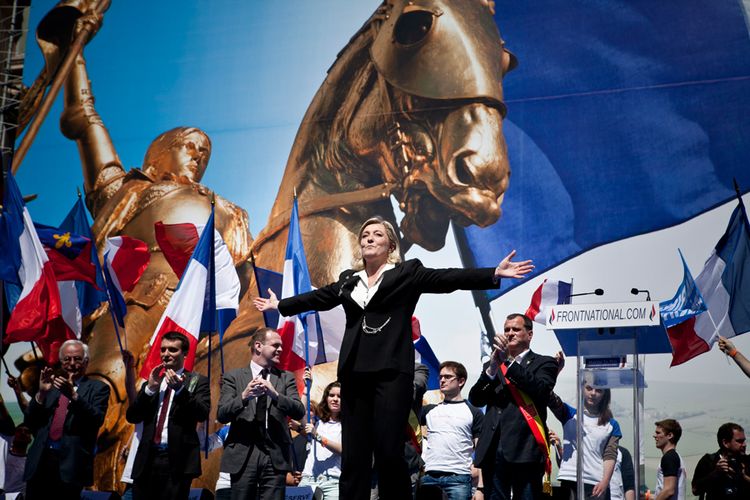
The leader of France’s far right Front National party, Marine Le Pen, has declared that the United States is not “an ally or a friend” to the French, in light of Wikileaks reports that the National Security Agency (NSA) spied on three French presidents.

“France should react with firmness and send out a strong signal today by pulling out of discussions over the Transatlantic Trade and Investment Partnership (TTIP) treaty,” Le Pen wrote in a statement, referring to the deal being discussed by the European Parliament to revise corporate rights in dealings with governments. She and other eurosceptics have opposed the TTIP plan.

“The US are a hegemonic power, prepared to do anything in order to increase its grip on our country” Le Pen said. “The French must recognize that the United States, which is to say its government that we clearly distinguish from its people, are not a country that is an ally or a friend.”…

Le Pen also dismissed Sarkozy’s decision to restore France to Nato’s integrated military command in 2009 as a “strategic mistake”. Former leader Charles de Gaulle removed France from the role in 1966, fearing it harmed France’s sovereignty.

In the conversation the two negotiate the possibility of Le Pen endorsing the Russian annexation of Crimea and visiting the peninsula as “an observer”.

Source: Newsweek

Racial violence errupts in Swedish city

Sweden’s third largest city, Malmö, has descended into chaos as police respond to a huge rise in racism and tensions between ethnic groups, involving bombs, hand grenades and guns.

It follows a spate of clashes between different ethnic groups in Malmö, in what police describe as a worrying rise in racial tensions dating back over a decade. It highlights tensions within Sweden due to the rise in migrants from many different ethnic groups coming in from Europe and elsewhere.

The city also has a long history of anti-Semitic abuse.

Police were called to the troubled suburb of Kroksbäck in Malmö after residents reported hearing explosions on Wednesday night.

Emergency services discovered arrived to find several cars and a community center on fire. Two hand grenades were discovered near the fires. Seven people were arrested Thursday morning for criminal damage.

Two hand grenades were thrown towards an apartment block on the same road on June 20, but none of them exploded.

One person was taken to hospital with non-life threatening injuries after a shooting in the Söderkulla square in Malmö. Police are also investigating a separate shooting on Ramel’s street in the Rosengård area of Malmö on Monday morning.

Malmö has experienced growing violence in recent years. Some of its inner-city areas and suburbs have a reputation for gun and gang-related crimes as well as race-related violence between different immigrant groups.

Since the early 1970s, immigration to Sweden has been mostly due to refugee migration and family reunification from countries in the Middle East and Latin America.

In 2009, immigration reached its highest level since records began, with 102,280 people migrating to Sweden while the total population grew by 84,335. In Malmö, the ten largest groups of immigrants have arrived from: Iraq, Denmark, Serbia, Bosnia and Herzegovina, Lebanon, Iran, Poland, Turkey, Hungary and Romania.

Daniel Vesterhav, interim departmental head of Sweden’s crime statistics agency Brottsförebyggande Rådet, said public shoot-outs between criminal gangs have become increasingly common in the past decade. “We’re talking about easily offended individuals who, when they perceive themselves to be offended, take action to protect their honour.

“It could be a car deal that has gone awry, unpaid narcotics debts or something really trivial like someone spending too long talking to someone else’s girlfriend,” Vesterhav told TT newswire.

According to the National Council for Crime Prevention in 2012, 66 anti-Jewish hate crimes were reported in Malmö compared with just 31 in Stockholm, and figures showed an increase in anti-Semitic incidents over the last years with a total of 44 reports over 2010 and 2011 combined.

Source: Sputnik News

Wilders broadcasts Mohammed cartoons

Dutch television has aired a slideshow of Prophet Mohammad cartoons, a month after the series was presented at a caricature competition in Texas that was attacked by two gunmen. Anti-Islam politician Geert Wilders is at the helm of the new scandal.

During a three minute broadcast slot allocated to Wilder’s Freedom Party, the politician promoted the “freedom of speech” action by presenting a slideshow of Mohammad cartoons accompanied by piano music.

According to the right-wing politician, he assumed the responsibility for revealing to the world the taboo nature of Islam after visiting the exhibition in May in the USA. The broadcast coincided with the Muslim holy month of Ramadan.

“The only way to show terrorists that they are not going to win is to do exactly what they do not want us to do,” Wilders said. “I do not broadcast the cartoons to provoke; I do it because we have to show that we stand for freedom of speech and that we will never surrender to violence. Freedom is our birthright. Freedom of speech must always prevail over violence and terror.”

The populist politician also explained that he was “forced” to air the provocative caricatures after the Dutch Parliament refused to host the exhibition.

Prior to broadcast, the Dutch government took precautionary steps, sending out 140 diplomatic cables worldwide preparing their embassies for the potential ramifications. In their brief, the Dutch government emphasized that the broadcast was Wilder’s private initiative.

Migrants exploiting Calais ferry strike

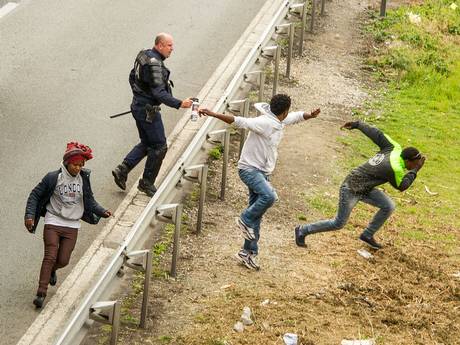
A strike has closed the port of Calais and the Channel Tunnel. Striking French ferry workers blockaded the French port with a wall of flaming tyres, before forcing the closure of the Channel Tunnel by getting on to the tracks.

Some of the 3,000 migrants camped at Calais are reportedly trying to exploit the strike by jumping on to slow-going lorries.

African migrants waited near the A16 highway as they tried to access the Channel Tunnel in Calais. Police officers sprayed them with teargas to keep them away.

Drivers have been told to avoid Calais altogether, as striking workers set the road on fire and a queue of 500-600 vehicles waiting to use the Eurotunnel to get to the British side of the channel.

All ferries between Dover and Calais have been suspended thanks to the wildcat action by MyFerryLink workers, which started at 3.50am on Tuesday.

They forced the closure of the Channel Tunnel, invading the tracks. Eurostar services were subject to delays and cancellations because trains are stuck outside the tunnel, while Eurotunnel services are operating with disruptions of up to 2.5 hours following earlier closures, Sky News has reported.

Eurostar tweeted that services will resume tomorrow after engineers repair fire-damaged tracks overnight.

Traffic jams built up on both sides of the channel, with delays on other cross-channel ferry routes such as Dover to Dunkirk.

Source: The Independent

Hungary refuses more immigrants

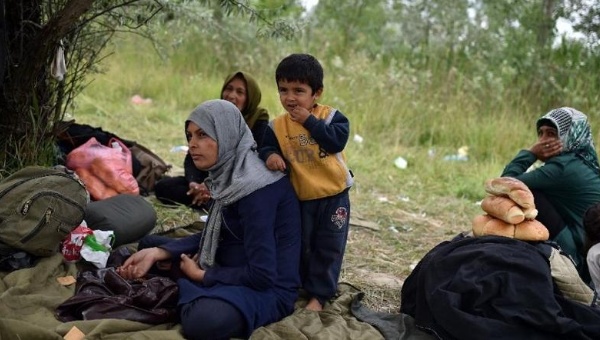
Hungary’s plans to build a wall that will prevent immigrants from entering the country.

The wall will run the entire length of the 109-mile border between the two countries, but Aleksandar Vucic, the Serbian prime minister, has said the four-metre (13ft) fence is “not the solution” to migrants entering Hungary from Serbia.

“Building walls is not the solution,” Vucic said today. “Serbia can’t be responsible for the situation created by the migrants, we are just a transit country. Is Serbia responsible for the crisis in Syria?”

Hungary, a landlocked country in central Europe, is also in the EU’s visa-free Schengen zone. It is therefore an attractive destination for migrants entering Europe through the Balkans from the Middle East and Africa, but Hungary has taken an increasingly hard-line approach to the issue of immigration in recent months.

The Hungarian Office of Immigration and Nationality says 57,000 irregular migrants have crossed into the country so far this year, a huge increase from the 43,000 that entered in the whole 2014.

Hungarian Prime Minister Viktor Orban’s government is under pressure from the far-right Jobbik party, which has been described by its critics as a neo-nazi movement and describes itself as a “principled, conservative and radically patriotic Christian party”. The party won its first ever individual constituency seat in parliament earlier this year.

“We should not look at economic immigration as if it had any use, because it only brings trouble and threats to European people,” he told state television in January, shortly after the Charlie Hebdo terror attacks in Paris. “Therefore, immigration must be stopped. That’s the Hungarian stance.”

The Hungarian government’s anti-immigration poster campaign earlier this month prompted fierce national debate. The posters displayed captions such as: “If you come to Hungary you mustn’t take away the work of Hungarians”, and were part of a national consultation on “immigration and terrorism” which included a survey sent to eight million Hungarian voters which appeared to link the two and drew widespread condemnation.

Several activists were arrested earlier this month for defacing the billboards, and others have begun a crowdfunding counter-campaign, designing their own posters to make fun of the government’s anti-immigration stance.

Earlier this year, there were reports that Bulgaria was building a wall along its Turkish border with the similar aim of keeping migrants out, as fears emerge that Bulgaria, Europe’s poorest country, will become the next frontier in Europe’s migrant crisis.

Source: Newsweek

French Muslim grocery store open for gender-specific days

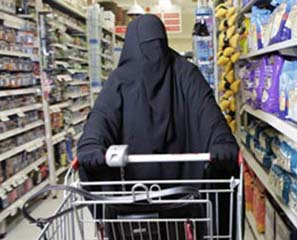
A grocery store in Bordeaux has caused a furor among local residents after the store’s owners, who are newly converted to Islam, reserved gender-specific days for its customers to make sure that men’s and women’s paths never cross.

The “De L’Orient à L’Occidental” grocery in Bordeaux has put a sign on its front door saying that “sisters” can only shop during the weekend, while “brothers” are welcome at the store twice as often – on Monday, Tuesday, Wednesday and Friday. Bordeaux Mayor Alain Juppé has condemned the initiative, calling it “unacceptable,” and saying it “totally contradicts the republic’s rules of equality and diversity.”

The mayor has called on the authorities to “address this issue in order to stop such discriminatory practices and implement measures, which the law provides in such circumstances,” LePoint.fr reported. Discrimination cases can see penalties of up to three years in prison and fines of up to €45,000.

The head of French equality group ACSE, Naima Charai, wrote on Twitter that gender-related opening hours are “unimaginable and unacceptable,” adding that “respect for the republic” is supposed to be 24/7.

The grand imam of Bordeaux, Tareq Oubrou, appeared to be among those who slammed gender-related opening hours at the “De L’Orient à L’Occidental” grocery store.

“We never saw that at the time of the Prophet! The markets were mixed,” Oubrou told France 3 Aquitaine, adding that the practice of gender-specific days for customers “seemed a bit odd in a world where diversity is an established culture.”

According to the imam, it was more like the owners’ “psychological than theological choice.”

The owner of the business, Jean-Baptiste Michalon, has defended his move, telling French newspaper Sud Ouest that he “didn’t know it was forbidden” by law. “It was for a savvy public that knows that our practice of [Muslim] religion does not allow the mix.”

“It’s not an obligation, everyone does what he wants,” said Michalon, a recent convert Islam who has taken the name Yahya.

Huge rally in Rome against gay unions

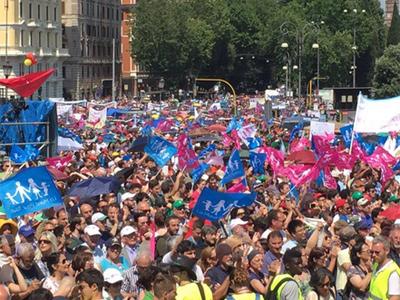
Hundreds of thousands of Italians gathered in Rome on Saturday to demonstrate against gay unions and the teaching of gender theories in schools, as Prime Minister Matteo Renzi tries to push a civil union bill through parliament.

Holding aloft banners reading “The family will save the world” and “Let’s defend our children”, a sea of people crammed into the San Giovanni square near the Italian capital’s historic centre to support family values.

The square, which can hold an estimated 300,000 people, was overflowing with the young, elderly and parents with toddlers, an AFP photographer said, with many more demonstrators spilling into nearby streets. Organisers for their part said one million people were taking part. Italian police never provide figures for demos.

“In my children’s schools they are talking about families made up of two fathers or two mothers, without asking parents’ permission,” said 41-year old doctor Giuseppe Ripa, adding: “It’s dangerous and wrong.”

Fellow protester Piero Uroda, a 78-year-old pharmacist, said it was “not honest to say these things to the very young, it’s not like they are students who can debate these ideas.”

“I don’t want gay marriage or gay adoption, the natural family is like ours,” he said, pointing to his relatives gathered around.

‘Defending children’s future’

The protest comes as the Italian senate examines a civil union bill, which Renzi wants to see go to a vote in the coming weeks, with the aim of legislation being enacted before the end of July.

The call for Italy to keep pace with its western European neighbours on the issue has grown stronger since Ireland voted overwhelmingly in favour of gay marriage last month.

But rights activists warn it will be no mean feat for the leader of the centre-left Democratic Party to find allies across the political spectrum, blaming an excessive influence of the Catholic clergy on the political class.

While a survey published by Italian daily La Stampa at the end of May found that 51 percent of voters would support gay marriage, protesters in Rome said the state should stop trying to interfere in sexual or gender education.

“We are asking for families based on marriage be respected, and stressing the central role parents play. We forcefully reject the attempt to sneak into the curriculum projects which aim to destroy children’s sexual identities,” said Massimo Gandolfini, spokesman for the “Defend our children!” committee.

There were both cries of support and derision from the political sphere. Matteo Salvini, rising star on the far right and head of the Northern League party, sent a Facebook “hug for all the mummies and daddies protesting peacefully in Rome to defend their children’s future.”

Vincenzo Brana, head of the long-standing Arcigay gay rights association in Bologna, was quick to point out that “today is World Refugee Day”, with hundreds of thousands of migrants in Italy facing an uncertain future.

Their problems “are an urgent issue which concerns us all. Those who take to the streets to talk of other things show they are living on another planet, and I would recommend leaving them on that planet alone.”

Source: AFP

IMF coached Greek journalists on spin

The Greek authorities want to investigate alleged misconduct by a number of journalists who attended seminars organized by the IMF and were allegedly instructed to promote the organization’s advice to Greece.

The accusations were voiced by Greece’s former representative to the International Monetary Fund Panagiotis Roumeliotis, who testified Tuesday in front of a special parliamentary committee on the country’s debt. Newspaper Proto Thema published excerpts from the testimony on its website.

Roumeliotis was cited as saying that he accidentally bumped into Greek journalists during a visit to Washington DC, who told him that they were attending a seminar organized by the IMF. The fund held a number of similar events in the US and in Greece with the goal of explaining its operations and apparently was spinning its work positively, he said.

The former Greek official endorsed criticism by committee member Leonidas Vatikiotis, who said that the seminars were held in an opaque manner and that the journalists afterward became “mouthpieces of the IMF, preachers of austerity, opponents of strikes and public workers.”

The committee said the Greek parliament should demand to know from the IMF who exactly attended the seminars and what they were told there. It also said the Greek journalists’ union ESIEA should be asked to comment on a possible breach of professional ethics.

Right wins Danish elections

The right-wing block in Denmark has just won the elections.

Dansk Folkeparti (DF) is a political party in Denmark which is described as right-wing populist by academics but “far-right” by the international Anglo-American media.

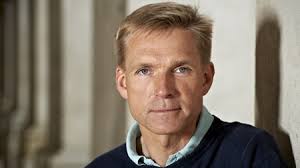
The real surprise is the 21% for the populist right DF under Kristian Thulesen Dahl. The DF no longer wants to take in any migrants at all.

The party was founded in 1995 by Pia Kjærsgaard, who led the party until 2012, when she passed the leadership on to Thulesen Dahl.

The DPP lent its support to the Liberal-Conservative government from the general election of 2001 until the 2011 election defeat. While not part of the cabinet, DPP cooperated closely with the governing coalition on most issues and received support for key political stances in return.

The party’s expressed goals are to protect the freedom and cultural heritage of the Danish people, including the family, the Monarchy and the Evangelical Lutheran Church of Denmark, to enforce a strict rule of law, to work against Denmark becoming a multi-ethnic society by limiting immigration and promoting cultural assimilation of admitted immigrants, to maintain a strong welfare system for those in need, and to promote entrepreneurship and economic growth by strengthening education and encouraging people to work, and to protect the environment and natural resources.

Africans are not refugees

We’re supposed to believe that everybody scrambling to get into Europe is a refugee from some kind of war. But the Wall Street Journal sends reporter Drew Hinshaw to look at the flow of migrants out of Senegal, a country that is currently peaceful and (relatively) prosperous:

Allure of Wealth Drives Deadly Trek
Young Men in Senegal Join Migrant Wave Despite Growing Prosperity at Home
BY DREW HINSHAW

… Mr. Ba represents a puzzling segment of the migrant population: Unlike those fleeing war, famine or economic desperation, this group is risking rising living standards to brave banditry, starvation and stormy seas to make a better life in Europe.

Officials here say five men from this village of several thousand—which in recent years has welcomed smartphones, laptops and satellite television—are known to have perished this year. More are missing, their fate unknown. Another man leaves every week, officials say.

Senegal is a stable West African democracy, and Kothiary has profited from the currents of globalization transforming rural Africa’s more prosperous areas. Flat screen TVs and, increasingly, cars—mostly purchased with money wired home by villagers working in Europe—have reshaped what was once a settlement of mud huts. The wealth has plugged this isolated landscape of peanut farms and baobab trees into the global economy and won respect for the men who sent it.

But it has also put European living standards on real-time display, and handed young farm hands the cash to buy a ticket out.

They leave behind a proud democracy whose steady economic growth has brought American-style fast food chains, cineplexes and shopping malls to this nation of 15 million, but hasn’t kept pace with the skyrocketing aspirations of the youthful population. Dusty and remote villages like Kothiary have become an unlikely ground zero for this exodus.

The number of Senegalese jumped 123% from the first four months of last year, which also saw record emigration. West Africa houses several of the world’s faster-growing economies but is also sending some of the most migrants out.

Students there, Mr. Sidibé included, have cashed out their scholarships to pay traffickers for a ride to Tripoli. Even their professors have traded in paychecks to journey north, joining policemen, civil servants and teachers, said Souleymane Jules Diop, the country’s minister for emigrants.

“People don’t go because they have nothing, they go because they want better and more,” said Mr. Diop. “It’s aspiration.”

An aide walked into his office to list the countries that had seen spiking numbers of Senegalese showing up without papers—places the minister would have to visit in the next two weeks: Cuba, Brazil, Venezuela, Turkey, Morocco, France and the U.S.

“What is happening now is not that different from the time of slavery,” Mr. Diop said. “We are losing the arms we need to build this country.”

For policy makers on the world’s poorest continent, the experience of Kothiary highlights a predicament. Senegal has followed almost every Western prescription on how to push Africa out of poverty: holding free and fair elections for four decades, liberalizing trade, building some of Africa’s better infrastructure.

And yet many of its best and brightest young people are leaving. Almost 75% of people here surveyed in a 2013 Oxford University study said they wanted to emigrate in the next five years. Last year, the ministry of emigration nearly tripled the number of passports it printed from the previous year.

Legal entry to most nations for a Senegalese citizen would require a visa—and, to obtain that, steady salaried work of a sort rare in Senegal.

The exodus is spurred by Senegal’s youthfulness. Half the population of Senegal, and of Africa, is under 19.

These African youth are coming of age in a bleak job market. Just 11% of Senegalese adults were employed full time during a 2012 Gallup poll, a rate the poll showed was typical for the continent. For many young men who acquire extra cash, the best place they see to invest it is on a ticket out.

The result is a cycle that is making Senegal’s expanding economy hooked on remittances. … More than half the houses in Senegal have at least one family member abroad. In Kothiary, they are the homes with satellite TV. …

More than half the houses in Senegal have at least one family member abroad. In Kothiary, they are the homes with satellite TV.

Four cellphone towers climb over the settlement. Constant electricity and treated tap water, their bills paid for with remittances, flow into its homes. Outside, some children still chase tires together down the dusty roads. More and more, however, hang by themselves, thumbing soccer games on their new smartphones.

In the home of 72-year-old Amadou Kanté, four satellite TV dishes poke out from the walls of a two-story compound. There are TVs in several of his living rooms. Four Lenovo laptops are scattered on the furniture. Asked how many members of this family have a smartphone, his daughter Oumou Kanté replied, “everyone.”

Mr. Kanté lavishes praise on the son—a nurse in France—who sends him home the €225, or about $250, each month that buys these gadgets.

And yet this year, a younger son sneaked out, calling his father to say he was a few days from the Libyan border and needed $600 to get to Tripoli. The old man wired the cash.

It’s not mentioned, but I’m guessing that this 72 year old patriarch who owns a compound with several living rooms is a polygamist:

A ‘polygamy belt’ stretches across Africa, from Senegal through to Tanzania, in which it is not uncommon for a third of married women to share their husbands (Jacoby 1995). In the present day, this prevalence is almost unique to Africa. All Demographic and Health Survey (DHS) data sets report that at least 92% of married women are monogamous – except for those from Haiti and sub-Saharan Africa.

Le Pen and Wilders announce new EU parliamentary group

Marine Le Pen, the leader of France’s National Front, announced the creation of Europe of Nations and Freedoms, a new far-right European Parliament group that will qualify for up to €17.5 million of EU money over the next four years.

Le Pen failed to form a group after the European elections last year, despite a surge in support for far-right parties. Her party topped the French vote, returning 24 MEPs.

At least 25 MEPs from seven different countries are needed to form a political group.The new group will include Geert Wilders’ Dutch Party for Freedom, the Freedom Party of Austria, Italy’s Lega Nord, and Belgium’s Vlaams Belang.

Le Pen did not reveal which MEPs from which countries have joined that core but that news is expected later today. At least two MEPs from two different countries not already linked to the alliance are needed to form the faction.

Parliament sources told EurActiv that at least one of the MEPs are thought to be from Poland’s Congress of the New Right. EurActiv understands that Hungary’s Jobbik party will not be joining because they are too extreme. Some press reports claimed a UK Independence Party member could be joining.

Le Pen announced last night that she would hold a press conference to unveil the faction. Wilders also hinted at an important announcement, according to Dutch media reports.

J’annoncerai demain à Bruxelles la constitution de notre groupe “Europe des Nations et des Libertés”. MLP

— Marine Le Pen (@MLP_officiel) June 15, 2015

She said on Twitter, “Tomorrow in Brussels, I will announce the creation of our group, Europe of Nations and Freedom.”

According to research by think tank Open Europe, based on 38 MEPs, the new group could apply for:

an annual grant of €2,974,718.39 to set up and run the new group;
a grant for a linked pan-European political party;
a grant for a linked political foundation or think tank;
amounting to €4,442,759.83 every year;
or about €17.5 million over the remaining four years of Parliament’s term.

Source: euractive.com

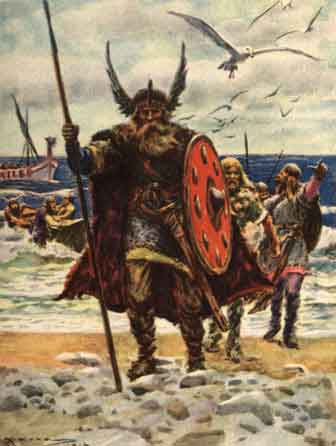
British search for Viking genes in France rankles anti-racist groups

British researchers on Monday began collecting the DNA of residents from Normandy in northern France in search of Viking heritage, but the project has raised concerns amongst some local anti-racism activists.

Around a hundred volunteers from the Cotentin peninsula area are giving DNA samples to academics at the University of Leicester, who are trying to find descendants of the Vikings who invaded what is now Normandy in the 9th century.

The aim is to learn more about “the intensity of the Scandinavian colonisation” in the 9th and 10th centuries in the Cotentin Peninsula, said Richard Jones, a senior history lecturer at the University of Leicester.

That includes trying to find out whether the colonisers kept to themselves or married amongst the locals, he added.

The French volunteers have been chosen because they have surnames that are of Scandinavian origin or that have been present in France since at least the 11th century. They also qualify if all four of their grandparents lived within a 50-kilometre radius of their current home.

French data protection authorities gave their green light to the study, which will be published in 2016, but the DNA testing has raised eyebrows in some quarters.

“We’re worried this will build on the idea that there are real Normans and fake Normans,” said Jacques Declosmenil, head of the local wing of the Movement Against Racism (MRAP) group.

“In the current context of xenophobia, it’s very dangerous. Racists could use this to say: ‘I’ve got proof that I haven’t got any Arab blood,’ for instance.”

But Jones dismissed such concerns, saying the scientists were only studying 2% of a person’s DNA in order to potentially establish Scandinavian ancestry dating back more than 10 centuries. “Anything is possible” for the other 98%, he added.

The team are searching for Viking roots amongst residents in three areas of Britain as well as in Normandy.

But at the nearby University of Caen, medieval history professor Pierre Bauduin said he had warned the Leicester academics that racial origins are “an extremely sensitive topic in France”.

“It’s important that the results of this are not misrepresented by anyone,” he said. – theguardian.com

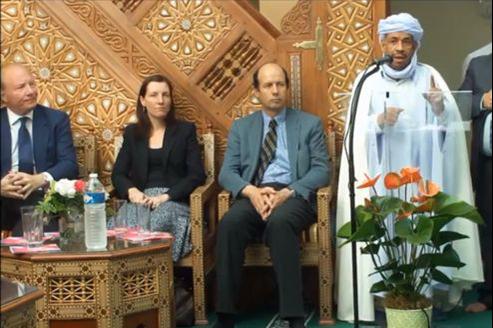
French Muslim leader asks for 5000 churches to be turned into mosques

France’s top Muslim official has suggested turning empty or abandoned Catholic churches into mosques, saying as many as 5,000 are needed for the country’s Muslim population – the largest in Europe.

“It’s a delicate issue, but why not?” Dalil Boubakeur, rector of the Grand Mosque in Paris and the president of the French Council of Muslim Faith, told Europe 1 radio on Monday.

There are currently about 2,500 mosques in France with another 300 under construction, but the number falls short of what is needed, he said. With roughly 5 million Muslims in France, at least 5,000 mosques are needed, Boubakeur said.

During the interview with French radio he gave an example of the transition of a church into a mosque in Clermont-Ferrand, which was welcomed by the local religious community. The church had been abandoned for more than 30 years and the building was given to the Muslim community in 2012.

“It’s the same God, these are neighboring rites, fraternal, and I think that Muslims and Christians can coexist and live together,” he said.

It’s not the first time the lack of places of worship for millions of Muslims has been brought up in France. In April, Boubakeur called for doubling the number of mosques.

His remarks were welcomed by the Christian community as a “legitimate” demand.

“Muslims should, like Christians and Jews, be able to practice their religion,” Monseigneur Ribadeau-Dumas, spokesperson for the Bishops’ Conference of France, told French radio station Europe 1.

However, this suggestion has been criticized by the National Front party. In April, Florian Philippot, its vice-president, argued France doesn’t need more, because “100 percent of places of radicalization are mosques.”

The party’s leader Marine Le Pen called to stop the construction of new mosques in March.

“We must today freeze the construction of new mosques while we verify the origin of their financing,” she said in an interview to France 24.

The question of building closer ties with the Muslim community was discussed at the talks between the French government and about 150 Muslim leaders in Paris on Monday.

French Prime Minister Manuel Valls stressed there was no link between extremism and Islam.

“We must say all of this is not Islam,” he said. “The hate speech, anti-Semitism that hides behind anti-Zionism and hate for Israel… the self-proclaimed imams in our neighborhoods and our prisons who are promoting violence and terrorism…

“Islam still provokes misunderstandings, prejudices, and is rejected by some citizens,” he added. “Yet Islam is here to stay in France. It’s the second largest religious group in our country.”

The first conference between the government and Muslim community leaders comes five months after the Charlie Hebdo and kosher store jihadist attacks in Paris that killed 17 people.

The terrorists responsible for the attacks “belong to a different world than we do,” said Boubakeur, speaking at the conference. – RT.COM