Migrant flood breaks new record in June

A record 107,500 migrants crossed the European Union’s borders last month, according to new figures, showing they are arriving in dramatically increasing numbers and creating a humanitarian crisis for the 28-nation bloc.

EU border agency Frontex reported that its latest figures far outstripped the previous monthly record in June of 70,000.

During the first seven months of the year, there were nearly 340,000 migrants, up from 123,500 during the same period last year, Frontex said.

“This is an emergency situation for Europe that requires all EU member states to step in to support the national authorities who are taking on a massive number of migrants at its borders,” Frontex director Fabrice Leggeri said in a statement.

Germany alone expects as many as 750,000 refugees to seek asylum there this year, according to media reports.

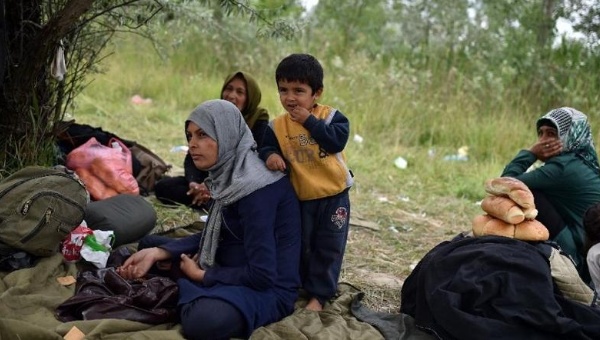
The UN refugee agency said in the last week alone, 20,843 migrants — virtually all of them fleeing war and persecution in Syria, Afghanistan and Iraq — arrived in Greece, which has seen around 160,000 migrants land on its shores since January, according to the UN refugee agency.

Germany, as Europe’s economic powerhouse, has become the refugees’ top destination, with one in three who arrived in the EU last year seeking asylum there.

According to a report in the Handelsblatt newspaper, Berlin expects up to three-quarters of a million to apply for asylum in 2015.

UN refugee chief Antonio Guterres called Tuesday for more solidarity among European countries in taking in asylum seekers, insisting it was “unsustainable” for Germany, along with Sweden, to take in the majority of refugees.

France and Britain meanwhile were preparing to sign a deal this week to try to alleviate the migrant crisis in the northern French port of Calais, where thousands of people desperate to get to Britain through the Channel tunnel have gathered.

There is no sign the flood of migrants into Europe will subside.

Some 250,000 migrants have already crossed the Mediterranean this year to Italy and Greece, and the International Organization for Migration said Tuesday it expected that number to pass 300,000 by the end of the year.

The ones who make it to shore are the lucky ones, with 2,440 people having died trying so far this year, according to the UNHCR.

The vast majority of migrants will travel on towards northern Europe.

Putin on rise of right-wing in Europe

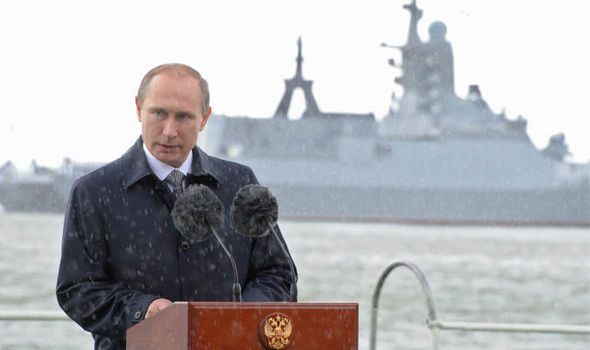
President Vladimir Putin said it was not Russia’s business to analyze the foreign policy of European countries, but discussing inter-European affairs with European partners in Washington “is not very interesting”.

The Russian president spoke to the Swiss RTS TV channel.

Asked to comment on the “ironic” turn in European politics, which has seen right-wing political parties gain public support, and seemingly speak out in favor of Putin’s statements as opposed to politicians on the left, the President said the underlying reason was Washington’s troublesome interference into the domestic affairs of other nations.

Putin has received support from Marine Le Pen of France’s National Front or Swiss Democratic Union of the Centre (UDC). He described it as a “tectonic shift in Europeans’ public conscience” in the direction of protecting national interests, including from foreign political interventions.

According to Putin, a number of issues Europe is facing now, including the influx of migrants from places such as war-torn Libya, have to do with “decisions taken over the [Atlantic] ocean.” In fact, Europe is now paying for decisions it did not make, he stressed.

He also mentioned that the US has been “pursuing an imperial policy for a long time.” In addition, he cited the opinion of some American political analysts who “believe that this imperial angle hurts the US.”

After several questions from Swiss media on the FIFA corruption scandal, Putin said he doesn’t believe it had anything to do with actions of the organization’s head, President Sepp Blatter, hinting that he views the allegations as politically motivated.

He questioned whether the efforts to pursue the investigation stemmed from failed attempts of the US and its key ally, the UK, to secure bids to host the 2022 and 2018 World Cups: “The way this fight against corruption looks makes me wonder if it isn’t a continuation of the bids for 2018 and 2022.”

He said European countries should be less beholden to military blocks and the US when considering issues concerning their own national interests.

“It would be great to see Europe show more independence and sovereignty, and the ability to stand up for its national interests – the interests of its peoples and countries,” Putin said in an interview with RTS published on Monday.

He added that he “hopes” another war in Europe is not in the cards.

The Russian leader added that a certain level of sovereignty is undoubtedly lost when joining any “any military-political organization [or] military-political bloc.” Putin noted that “France withdrew from NATO in order to preserve its sovereignty to a greater extent than would have been possible had it been part of the organization,” referring to the French withdrawal from NATO in the 1960s. France fully returned to the military bloc only in 2009.

Putin explained that Russia’s stance on US foreign policy “has nothing to do with anti-Americanism,” adding that Russians “have respect and great love for the USA, and especially for the American people.”

When answering a question about Russia’s earlier efforts to fight terrorism and the lack of Western support at the time, Putin said that European governments had ignored abundant evidence of terrorist activity, such as Al-Qaeda affiliates fighting in the Russian North Caucasus.

“When I asked my colleagues, including Europeans: ‘You see what is happening?’ they used to respond: ‘Yes, we do, but due to various domestic, international circumstances, we cannot support you.’ I would tell them then: ‘If you cannot support us – at least don’t hinder our efforts.’”

Putin criticized the US government’s self-perceived right to pressure other countries around the world, acting from a policy of “who is not with us, is against us.” Still, with enough patience it is possible and necessary to work with the American side on solving global issues, Putin said, praising international efforts that have led to a recent deal on Iran’s nuclear program.

US missiles stay in Poland despite Iran deal

US anti-missile systems will be placed in Poland despite world powers reaching an agreement on Iran’s nuclear program, John A. Heffern, US Deputy Secretary of State for Europe and Eurasia, said.

“The deal with Tehran doesn’t include missiles, therefore the threat remains,” Heffern told Polish Rzeczpospolita newspaper Tuesday, adding that he was speaking about Iranian rockets without nuclear warheads.

According to the US diplomat, the construction of AMD components in the village of Redzikowo near the northern Polish town of Slupsk starts next year – as scheduled – and will be completed in 2018.

Washington’s plans to install anti-missile systems in Eastern Europe have been one of the biggest stumbling blocks in US-Russia relations.

Moscow refused to believe American explanations that the shield is needed to counter a possible attack from nuclear-capable Iran, considering it a threat to Russia’s national security.

After Tehran agreed to curb its controversial nuclear program in exchange of easing of international sanction, Russia’s foreign minister, Sergey Lavrov, said that Washington’s AMD plans had no justification anymore.

“We all probably remember that in April 2009 in Prague [US] President [Barack] Obama said that if the Iran nuclear program issue is sorted out, then the task of creating the European segment of the missile defense system would disappear,” Lavrov stated at a press conference in Vienna.

Meanwhile rearmament of Russia’s Strategic Missile Forces (RVSN) with the newest Yars mobile missile system is planned to be completed by 2021. Russian Defense Ministry’s spokesman for RVSN Dmitry Andreyev told TASS on Thursday that a division of the Yoshkar-Ola RVSN formation will be transferred to the Yars system in 2016.

In the next few years, the Topol mobile missile systems will remain at the heart of Russia’s “nuclear shield.”

About a hundred mobile missile carriers are now on combat duty across the country. The Topol mobile missile system, which has no analogues in the foreign missile industry, is designed to engage all types of strategic targets. Ove the past 30 years, about 100 missile launches have been carried out without a single abortive launch.

Yars is the result of modernization of the Topol system to destroy enemy’s stationary strategic targets with the RS-24 missile. It has increased total power of multiple warheads, equivalent to 45 US atomic bombs dropped on Hiroshima.

Hungary joins Silk Road

Hungary has become the first European country to sign a memorandum of understanding with China on promoting the Silk Road Economic Belt and Maritime Silk Road, China media report. The MoU was signed on Sunday, during Chinese Foreign Minister Wang Yi’s visit to Budapest, where he met with Prime Minister Viktor Orban. In a statement on the occasion, Wang said he hopes more European countries will join in.

Hungary may be the first country in Europe to officially sign an MoU relating to China’s “One Belt, One Road” strategy, but the subject has cropped up repeatedly during Chinese interactions with Europe. When Xi Jinping toured Europe in April 2014, with stops in The Netherlands, France, Germany, and Belgium, he urged the EU and China to work together to combine EU policies with China’s Belt and Road. When Li Keqiang attended the China-Central and Eastern European (CEE) Leaders’ Meeting in Serbia in December 2014, he also highlighted the role Europe has to play in the Belt and Road – and the role China can play in completing infrastructure and energy projects in Central and Eastern Europe under the aegis of that initiative.

More recently, during Xi’s visits to Russia and Belarus this May, both countries agreed to work with China on the Silk Road Economic Belt. Belarus agreed to the project hoping to win Chinese infrastructure investments, while Russia promised to link its new Eurasia Economic Union with China’s Belt and Road.

While the Belt and Road are often discussed primarily in the context of China’s near neighbors – particularly Southeast and Central Asia – Beijing has long been clear about the importance of Europe, particularly Central and Eastern Europe, to the project. A few months after Xi Jinping first unveiled the twin Belt and Road concepts in speeches in Kazakhstan (September 2013) and Indonesia (October 2013), Li extended the Belt and Road all the way to Europe during a November 2013 visit to Romania.

Likewise, the official action plan for the Belt and Road, issues by Chinese government agencies in March 2015, described the Silk Road as “a new Eurasian Land Bridge” that “focuses on bringing together China, Central Asia, Russia, and Europe.” That means the Belt and Road, by China’s own definition, will be incomplete without buy-in from European countries. And Central and Eastern European countries in particular have a special role to play. As Xinhua put it on Monday, “CEE nations will be essential links in the Belt and Road Initiative.”

European countries, like many of the Asian supporters of the Belt and Road, are primarily focused on the economics. “Chinese firms have invested more than 5 billion U.S. dollars in CEE countries in sectors such as energy, infrastructure and machinery,” Xinhua reports. In coming years, China will build a high-speed railway connecting Hungary and Serbia and construct two nuclear reactors at a Romanian nuclear power plant. According to U.S. law firm Baker and McKenzie, Chinese investment in Europe doubled from 2013 to 2014, reaching $18 billion.

In other words, the Silk Road in Europe was alive and well before Hungary signed the MoU – and it will only continue to grow as more government agreements officially tie existing investments and initiatives to China’s Belt and Road strategy.

Source: The Diplomat

Greece rejects austerity

Nearly 150 protesters rallied in the streets of Athens Monday just hours after the Greeks voted resoundingly to reject more austerity measures in exchange for another bailout from the country’s international lenders.

The triumph of the No camp in the Greek referendum means Athens will possibly default on its debt and run out of money because the European Central Bank will not lend the country any more cash. It will leave the EU, re-adopt its old currency, the drachma, according to a Barclays analysis.

Police said between 100 and 150 anarchist protesters had started throwing firebombs at riot police and setting trash cans on fire in the central Athens neighborhood of Exarcheia.

This is far from the place where celebrations are taking place by supporters of the “no” vote in Sunday’s referendum.

There was no indication that the violence was connected to the political campaigns involved in the vote.

The results of Sunday’s referendum — 61 percent voted “no,” compared with 39 percent for “yes” — left the country’s future in the European Union and its euro currency in tatters.

A total of 6.16 million Greeks voted in Sunday’s referendum, or 62.5 percent of eligible voters. The poll needed a minimum 40 percent turnout to be valid.

According to analysts, if Greece adopted national currency, it would automatically abandon the euro area.

The ECB is scheduled to meet tomorrow morning to decide on emergency liquidity assistance (ELA) policy. An outright suspension would effectively put the banking system into immediate resolution and would be a step closer to Eurozone exit.

All outstanding Greek bank ELA liquidity (and hence deposits) would become immediately due and payable to the Bank of Greece.

The maintenance of ELA at the existing level is the most likely outcome, at least until the European political reaction has materialized. This will in any case materially increase the pressure on the economy in coming days.

Greek crisis ignites

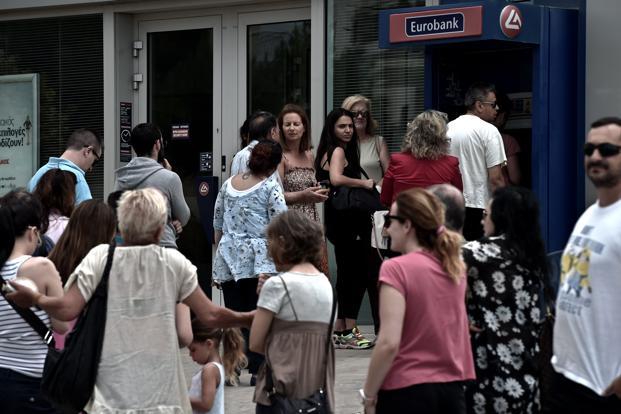
Banks in Greece and the country’s stock exchange will be shut all week in a sign of the deepening financial crisis.

The drastic move comes after people rushed to withdraw their cash amid panic ahead of the referendum on bailout terms.

Under the controls, there will be a daily €60 limit on withdrawals from cash machines, which will reopen on Tuesday.

The Foreign Office has warned British tourists to take enough cash to cover emergencies in case cash machines are emptied.

It said: “Visitors to Greece should be aware of the possibility that banking services – including credit card processing and servicing of ATMs – throughout Greece could potentially become limited at short notice.”

The euro fell sharply against the dollar amid investor jitters of a Greek debt default and exit from the eurozone.

Speaking in a televised address, Prime Minister Alexis Tsipras urged calm and insisted bank deposits were safe.

He blamed European partners and the European Central Bank for forcing Greece’s hand.

And he said the latest developments would not halt the planned referendum next Sunday.

But queues at petrol stations and the declining number of bank machines still dispensing cash underlined the scale of the country’s economic plight.

European creditors have refused a request to extend Greece’s international bailout beyond Tuesday, until after the referendum.

Source: Skynews

Queen warns EU against split with Britain

Queen Elizabeth II again made political comments when she cautioned British and German politicians over the ‘dangers of division’ at a state banquet in Berlin. Buckingham Palace has denied the statement was political.

The British monarch espoused the benefits of cooperation between European nations as she remembered the “worst” events of the continent’s history during her speech on Wednesday night.

Her comments have been interpreted as endorsing the UK’s membership of the EU, but also as a warning to Germany not to entertain Russia. However, Palace officials denied that the Queen was expressing a political stance.

The Queen’s unusual intervention into European politics coincided with the publication of a report suggesting a British exit from the EU could take a decade to negotiate and be fraught with economics risk.

The monarch was hosted by 75-year-old German President Joachim Gauck, who was once an anti-communist civil rights activist in East Germany.

From the UK, Prime Minister David Cameron and the Euroskeptic Foreign Minister Philip Hammond were in attendance at the banquet.

Speaking directly to Gauck, the Queen said: “In our lives, Mr. President, we have seen the worst, but also the best of our continent. We have witnessed how quickly things can change for the better. But we know that we must work hard to maintain the benefits of the post-war world.

“We know that division in Europe is dangerous and that we must guard against it in the west as well as in the east of our continent.”

In a show of agreement, German Chancellor Angela Merkel is reported to have nodded vigorously during the Queen’s speech.

The monarch’s comments in Berlin follow a carefully scripted intervention in British politics in the run up to the Scottish independence referendum, in which she asked voters to “think very carefully.”

Gauck emphasized the importance of Britain’s role in building democracy in Germany after the war, expressing his country’s enduring gratitude.

Research by former UK Foreign Office chief economist Gregor Irwin indicates a ‘Brexit’ would damage business in the UK and further afield, impacting on the Netherlands, Ireland and Cyprus particularly hard.

Irwin’s report concludes a Brexit would damage Britain’s regulatory influence, dampen the attractiveness of the City of London, deter inward investment and hobble business activity through protracted uncertainty.

The UK stands to lose the most from Brexit in economic terms, he added.

Hungary refuses more immigrants

Hungary’s plans to build a wall that will prevent immigrants from entering the country.

The wall will run the entire length of the 109-mile border between the two countries, but Aleksandar Vucic, the Serbian prime minister, has said the four-metre (13ft) fence is “not the solution” to migrants entering Hungary from Serbia.

“Building walls is not the solution,” Vucic said today. “Serbia can’t be responsible for the situation created by the migrants, we are just a transit country. Is Serbia responsible for the crisis in Syria?”

Hungary, a landlocked country in central Europe, is also in the EU’s visa-free Schengen zone. It is therefore an attractive destination for migrants entering Europe through the Balkans from the Middle East and Africa, but Hungary has taken an increasingly hard-line approach to the issue of immigration in recent months.

The Hungarian Office of Immigration and Nationality says 57,000 irregular migrants have crossed into the country so far this year, a huge increase from the 43,000 that entered in the whole 2014.

Hungarian Prime Minister Viktor Orban’s government is under pressure from the far-right Jobbik party, which has been described by its critics as a neo-nazi movement and describes itself as a “principled, conservative and radically patriotic Christian party”. The party won its first ever individual constituency seat in parliament earlier this year.

“We should not look at economic immigration as if it had any use, because it only brings trouble and threats to European people,” he told state television in January, shortly after the Charlie Hebdo terror attacks in Paris. “Therefore, immigration must be stopped. That’s the Hungarian stance.”

The Hungarian government’s anti-immigration poster campaign earlier this month prompted fierce national debate. The posters displayed captions such as: “If you come to Hungary you mustn’t take away the work of Hungarians”, and were part of a national consultation on “immigration and terrorism” which included a survey sent to eight million Hungarian voters which appeared to link the two and drew widespread condemnation.

Several activists were arrested earlier this month for defacing the billboards, and others have begun a crowdfunding counter-campaign, designing their own posters to make fun of the government’s anti-immigration stance.

Earlier this year, there were reports that Bulgaria was building a wall along its Turkish border with the similar aim of keeping migrants out, as fears emerge that Bulgaria, Europe’s poorest country, will become the next frontier in Europe’s migrant crisis.

Source: Newsweek

Belgium to revoke passports of ISIS fighters

The Belgian government proposed a law on Friday which will invalidate passports and identity cards of people authorities believe plan to go and fight for militant Islamist organisations in the Middle East.

The measure, which has to be approved by parliament, is a response to Belgium’s position as the source of many foreigners fighting in Syria and Iraq.

Some 300 mostly young men are estimated to have left the country of 11 million inhabitants over the past few years to fight for organisations such as Islamic State, one of the largest per capita contributors in western Europe.

“The new law allows us to make leaving Belgian territory with the intention of engaging in terrorist acts a criminal offence,” Justice Minister Koen Geens said.

Authorities could invalidate identity cards or refuse to issue passports to somebody suspected of wanting to leave for Syria or Iraq to fight, he added.

Similar provisions also exist in other European countries such as Britain and Denmark.

Source: Reuters

Bilderberg follows ANC in jamming signals

Cellphone signals were being jammed at South Africa’s Parliament ahead of the State of the Nation address, journalists and MPs reported. Now Bilderberg seems to have followed the move.

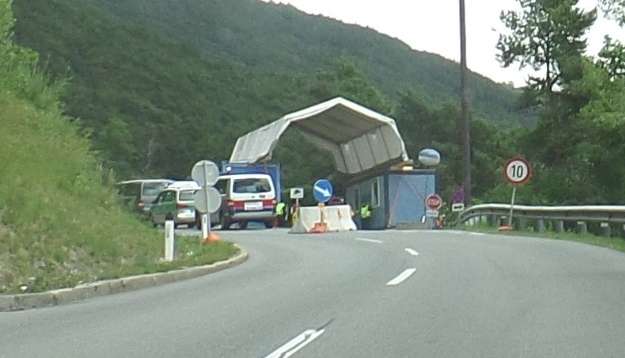
After visiting one of the closest spots to the InterAlpen hotel that is still accessible, Infowars filmed a communications truck owned by the Austrian Federal Ministry for Transport and Technology.

Large antennas are also visible on top of the hotel, as well as a giant newly erected mast in the forest near the hotel.

Infowars spoke to an informed local in the immediate vicinity who confirmed that cellphone coverage in the area around the hotel had died since the tower was erected. The individual had also met with police and security near the hotel.

Cellphone jammers work by preventing cellular phones from receiving signals from base stations. The jammers are technically illegal in European Union countries.

This triangulated jamming system would explain why Infowars reporters Rob Dew and Josh Owens have been unable to broadcast live via Skype anywhere near the InterAlpen hotel.

Apparently, Bilderberg is so afraid of media coverage, that police checkpoints miles away from the hotel are not enough, now they have resorted to installing expensive devices which shut down communications, presumably at taxpayer expense.

Media attending the State of the Nation address (SONA) at Parliament in Cape Town on 12 February 2015 reported that cellular phone signals (including mobile data) in the National Assembly had been jammed.

“Shocking: Parliament has scrambled all 3G and cell reception in the House,” tweeted Report editor Waldimar Pelser.

“Please help us Sanef, FXI, Right2Know. There’s a jamming device in the parly chamber next to media bay. We can’t work at SONA 2015,” an online editor posted to Twitter.

State Security Minister David Mahlobo said a ruling in the Western Cape High Court yesterday had clarified that the State Security Agency can own and operate cellphone jamming devices and use them at major events.

No fewer than three serving European prime ministers will be attending, from the Netherlands, Finland and Belgium. They will be discussing “European strategy” with the head of Nato, Jens Stoltenberg, and the president of Austria, Heinz Fischer. Two European finance ministers are on the list: one Dutch, the other from Britain.

Bilderberg 2015 has an extremely high-powered participant list, featuring a large number of senior politicians and public figures. With participants this powerful, and an agenda containing this many hot topics.

Bilderberg is actually where the big guns go, not the G7. They will be covering issues from Europe to terrorism and IT the policy conference.

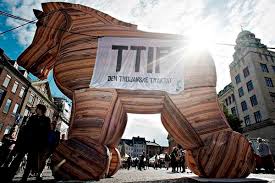
EU in chaos on TTIP vote

An historic vote on the biggest trade deal ever negotiated between the EU and the US has had to be postponed after the European Parliament descended into chaos.

European MPs were due to vote on the Transatlantic Trade and Investment Partnership on Wednesday. But the vote had to be delayed because there were too many proposed amendments.

“It’s panic in parliament,” Yannick Jadot, a Green MEP from France, told AFP.

David Cameron has claimed that signing the deal would add £2 billion to the UK economy every year.

But the plan has been violently opposed by campaign groups across Europe that fear it would be at the expense of national services and social and environmental welfare.

Source: The Independent

Failure of the US coup d’État in Macedonia

Macedonia has just neutralised an armed group whose sponsors had been under surveillance for at least eight months writes Thierry Meyssan.

By doing so, it has prevented a new attempt at a coup d’État, planned by Washington for the 17th of May. The aim was to spread the chaos already infecting Ukraine into Macedonia in order to stall the passage of a Russian gas pipeline to the European Union.

On the 9th of May, 2015, the Macedonian police launched a dawn operation to arrest an armed group which had infiltrated the country and which was suspected of preparing a number of attacks.

The police evacuated the civilian population before launching the assault.

The suspects opened fire, which led to a bitter firefight, leaving 14 terrorists and 8 members of the police forces dead. 30 people were taken prisoner. There were a large number of wounded

The Macedonian police were clearly well-informed before they launched their operation. According to the Minister for the Interior, Ivo Kotevski, the group was preparing a very important operation for the 17th May, the date of the demonstration organised by the Albanophone opposition in Skopje.

The identification of the suspects has made it possible to determine that they were almost all ex-members of the Kosovo Liberation Army).

The principal leaders of this operation, including Fadil Fejzullahu killed during the assault, are all close to the United States ambassador in Skopje, Paul Wohlers.

Paul Wohlers is the son of US diplomat Lester Wohlers, who played an important part in Atlantist propaganda, and directed the cinematographic service of the U.S. Information Agency. Paul’s brother, Laurence Wohlers, is presently an ambassador in the Central African Republic.

Paul Wohlers himself is a specialist in counter-espionage. He was the assistant director of the United States Department of State Operations Center, in other words, the service for the surveillance and protection of diplomats.

Although Macedonia is not a member of NATO, Jens Stoltenberg was « following » the police operation in Kumanovo.

To eliminate any doubt about the identity of the operation’s sponsors, the General Secretary of NATO Stoltenberg, intervened even before the assault was over – not to declare his condemnation of terrorism and his support for the constitutional government of Macedonia, but to paint a picture of the terrorist group as a legitimate ethnic opposition.

In January 2015, Macedonia foiled an attempted coup d’état organised for the head of the opposition, the social-democrat Zoran Zaev. Four peole were arrested, and Mr. Zaev had his passport confiscated, while the Atlantist press began its denunciation of an “authoritarian drift by the régime”.

Zoran Zaev is publicly supported by the embassies of the United States, the United Kingdom, Germany and Holland. But the only trace left of this attempted coup d’état indicates the responsibility of the US because this coup was coordinated by Mile Zechevich, an employee of one of George Soros’ foundations.

In order to understand Washington’s urgency to overthrow the Macedonian government, we have to go back and look at the gas pipeline war. Because international politics is a huge chess-board on which every move by any piece causes consequences for all the others.

The gas pipieline Turkish Stream was intended to pass through Turkey, Greece, Macedonia and Serbia in order to supply the European Union with Russian gas. On the initiative of Hungarian President Viktor Orbán, the Ministers for Foreign Affairs of each of the countries concerned met on the 7th April in Budapest to coordinate their position facing the United States and the European Union.

The United States have been attempting to sever communications between Russia and the European Union since 2007.

They managed to sabotage the projet South Stream by obliging Bulgaria to cancel its participation, but on the 1st December 2014, to everyone’s surprise, Russian President Vladimir Putin launched a new project when he succeeded in convincing his Turkish opposite number, Recep Tayyip Erdoğan, to sign an agreement with him, despite the fact that Turkey is a member of NATO.

It was agreed that Moscow would deliver gas to Ankara, and that in return, Ankara would deliver gas to the European Union, thus bypassing the anti-Russian embargo by Brussels. On the 18th of April 2015, the new Greek Prime Minister, Alexis Tsípras, gave his agreement that the pipeline could cross his country.

As for Macedonian Prime Minister Nikola Gruevski, he had already conluded discrete negotiations last March.

Finally, Serbia, which had been a partner in the South Stream project, indicated to the Russian Minister for Energy Aleksandar Novak, during his reception in Belgrade in April, that Serbia was ready to switch to the Turkish Stream project.

To halt the Russian project, Washington has multiplied its initiatives in Turkey, Greece, Macedonia and Serbia.

Last comment, but not the least: Turkish Stream will also supply Hungary and Austria, thus ending the alternative project negotiated by the United States with President Hassan Rohani – against the advice of the Revolutionary Guards – for supplying them with Iranian gas.

Thierry Meyssan French intellectual, founder and chairman of Voltaire Network. His columns specializing in international relations feature in daily newspapers and weekly magazines in Arabic, Spanish and Russian. His last two books published in English : 9/11 the Big Lie and Pentagate.

Cannes: Immigrants 1, Lesbians 0

The debate around the world about what to do with growing waves of desperate migrants will be spurred by a Cannes Film Festival triumph for a movie that looks at the plight of a refugee hero.

“Dheepan”, a French movie about a Sri Lankan former soldier’s struggles in a Paris ghetto in the grip of narco-gangs, didn’t set out to tackle that wider thorny issue.

But the fact that the film’s win comes as refugee boats set off across Asian waters and the Mediterranean — the same sea lapping at glittering Cannes and its super-yachts — inevitably means it will figure in that context.

“It’s important to reflect on the situation,” the movie’s director, Jacques Audiard, admitted to reporters insistently raising the question.

But he stressed, “I started writing the screenplay four or five years ago and the situation wasn’t as critical as it is now”.

Nevertheless, “if it helps the situation, then so much the better”.

The movie won’t begin its release in cinemas for another three months. Its Cannes win will no doubt take it to countries that might otherwise have not seen it.

Some of those countries are ones grappling with the problem of immigrants.

A Hungarian movie taking viewers inside Auschwitz, “Son of Saul”, picked up the runner-up Grand Prize for its narrow but powerful look at the Holocaust.

The best actress award was something of an upset, confounding critics who had thought Australian star Cate Blanchett was untouchable for her turn in an American period lesbian drama, “Carol”.

Instead Blanchett’s co-star, Rooney Mara, and an actress in a French relationship drama called “Mon Roi”, Emmanuelle Bercot, ended up sharing the trophy.

Events in Macedonia orchestrated from outside

Moscow believes the events in Macedonia are being orchestrated from outside, Russian Foreign Minister Sergei Lavrov said Wednesday.

Lavrov said that outside pressure is being put on current Macedonian Prime Minister Nikola Gruevski for not agreeing to follow Western-backed sanctions against Russia and is being blamed for incompetency.

Moscow is concerned over the situation in Macedonia, Lavrov said during a speech before the Russian upper house of parliament.

Late in April, a group of some 40 Albanian-speaking gunmen briefly seized a police station in the northern Macedonian village of Gosince calling for the establishment of an Albanian state.

Less than three weeks after the incident, on May 9, Macedonia witnessed deadly clashes between police and an armed group of Albanians in Kumanovo, a city bordering Serbia and Kosovo.

Following the deadly clashes, the country was hit by a wave of protests staged by the Social Democratic Union of Macedonia (SDSM) that accuses the country’s government of corruption and demands its resignation.

Gruevski said that the opposition is trying to exploit the tragedy in Kumanovo to gain power.

Source: Sputnik News