Oz misled by fake evidence about MH-17?

Pointing the finger of blame at Russian President Putin for the Malaysia Airlines shoot-down last July, an Australian news show claims to have found the spot where the Russian BUK missile battery made its getaway, but the images don’t match, raising questions of journalistic fakery, writes Robert Parry.

An Australian television show claims to have solved the Malaysia Airlines Flight 17 shoot-down mystery – the Russians did it! – but the program appears to have faked a key piece of evidence and there remain many of the same doubts as before, along with the dog-not-barking question of why the U.S. government has withheld its intelligence data.

The basic point of the Australian “60 Minutes” program was that photographs on social media show what some believe to be a BUK anti-aircraft launcher aboard a truck traveling eastward on July 17, 2014, the day of the shoot-down, into what was generally considered rebel-controlled territory of eastern Ukraine, south and east of Donetsk, the capital of one of the ethnic Russian rebellious provinces.

Citing one image, the program’s narrator says the “launcher is heading east further into rebel territory,” south and east of Donetsk.

However, in mid-July, the ethnic Russian rebels were reeling under a Ukrainian military offensive to the north of Donetsk. Despite shifting their forces into the battle zone, they had lost Sloviansk, Druzhkivka, Kostyantynivka and Kramatorsk. In other words, the lines of control were fluid and chaotic in mid-July 2014 with the possibility that an unmarked Ukrainian government truck, maybe carrying a concealed anti-aircraft battery, could have moved into the titular rebel zone, especially in the lightly defended south.

Another problem with the Australian TV account is that the video and photographic images show the truck heading eastward toward Russia, but there are no earlier images of the truck moving westward from Russia into eastern Ukraine. If the mysterious truck was supposedly so obvious on the day of the shoot-down, why wasn’t it obvious earlier?

For the Australian TV account to be true – blaming the Russians – the launcher would have to have crossed from Russia into Ukraine, traveled somewhere west of Donetsk, before turning around and heading eastward back toward Russia, yet the trail seems to begin only with photos on July 17 showing the truck headed east.

Indeed, I was told shortly after the MH-17 crash, which killed 298 people including Australians, that one of the problems that U.S. intelligence analysts were having in pinning the blame on the Russians was that they could not find evidence that the Russians had delivered a BUK missile system to the rebels who – until then – were known only to have short-range Manpads incapable of reaching MH-17 flying at around 33,000 feet.

Another part of the Australian TV narrative stretched credulity. If the Russians had somehow snuck a BUK missile system into eastern Ukraine without U.S. intelligence knowing and were moving it back toward Russia, why would the crew stop en route to shoot down a civilian airliner before continuing on the way? There was no military value in destroying a civilian airliner and it was obvious – in the Western media hysteria then surrounding Ukraine – that Russia and its president, Vladimir Putin, would be blamed.

What I was told by a source briefed by U.S. intelligence analysts was that at least some of them – after reviewing electronic intercepts, overhead satellite images and other intelligence – had reached the conclusion that the shoot-down was a provocation, or a false-flag operation, carried out by a rogue element of the Ukrainian military operating under one of the hard-line oligarchs.

However, it was not clear to me whether that was the opinion of just a few U.S. analysts or whether that had become the consensus. When I sought an updated briefing from the Office of the Director of National Intelligence in March, I was told that the U.S. intelligence community had not updated or refined its analysis of the shoot-down since five days after the event, a claim that was not credible given the significance of the MH-17 case to tensions between nuclear powers, United States and Russia.

In reality, Western intelligence services have been hard at work trying to determine who was responsible for the shoot-down. Last October, Der Spiegel reported that the German intelligence service, the BND, had concluded that Russia was not the source of the missile battery – that it had been captured from a Ukrainian military base – but the BND still blamed the rebels for firing it. The BND also concluded that photos supplied by the Ukrainian government about the MH-17 tragedy “have been manipulated,” Der Spiegel reported.

And, the BND disputed Russian government claims that a Ukrainian fighter jet had been flying close to MH-17, the magazine said, reporting on the BND’s briefing to a parliamentary committee on Oct. 8, 2014. But none of the BND’s evidence was made public — and I was subsequently told by a European official that the evidence was not as conclusive as the magazine article depicted. [See Consortiumnews.com’s “Germans Clear Russia in MH-17 Case.”]

Possible TV Fakery

There also appears to have been some fakery involved in the Australian documentary. In several instances, as the film crew traveled to eastern Ukraine to seek out scenes from July 17 video showing the truck possibly carrying BUK missiles, images of those sites – then and now – were overlaid to show how closely the scenes matched.

However, for one crucial scene – the image of an alleged “getaway” BUK launcher lacking one missile and supposedly heading back to Russia after the shoot-down – the documentary broke with that pattern. The program showed the earlier video of the truck moving past a billboard and then claiming – based on information from blogger Eliot Higgins – that the TV crew had located the same billboard in Luhansk, a rebel-held city near the Russian border.

This was the documentary’s slam-dunk moment, the final proof that the Russians and particular Vladimir Putin were guilty in the deaths of 298 innocent people. However, in this case, there was no overlay of the two scenes, just Australian correspondent Michael Usher pointing to a billboard and saying it was the same one as in the video.

But the scenes look nothing at all alike if you put them side by side. While Usher is standing in an open field, the earlier video shows an overgrown area. Indeed, almost nothing looks the same, which might explain why the film crew didn’t try to do an overlay this time.

A screen shot of the roadway where the suspected BUK missile battery passes after the shoot-down of Malaysia Airlines Flight 17 on July 17, 2014. (Image from Australian “60 Minutes” program)

A screen shot of the roadway where the suspected BUK missile battery passes after the shoot-down of Malaysia Airlines Flight 17 on July 17, 2014. (Image from Australian “60 Minutes” program)

Correspondent Michael Unger of Australia’s “60 Minutes” claims to have found the billboard visible in a video of a BUK missile launcher after the shoot-down of Malaysia Airlines Flight 17 on July 17, 2014. (Screen shot from Australia’s “60 Minutes”)

Correspondent Michael Usher of Australia’s “60 Minutes” claims to have found the billboard visible in a video of a BUK missile launcher after the shoot-down of Malaysia Airlines Flight 17 on July 17, 2014. (Screen shot from Australia’s “60 Minutes”)

This discrepancy is important because the Russian government placed the scene of the “getaway” BUK launcher in the town of Krasnoarmiis’k, northwest of Donetsk and then under Ukrainian government control. Usher dismissed that Russian claim as a lie before asserting that his team had located the scene with the billboard in Luhansk.

The significance of the Australian news show’s sleight of hand is that if the BUK launcher was making its “getaway” through government-controlled territory, not through Luhansk on its way back to Russia, much of the Russia-did-it scenario collapses. It also means the Australian audience was grossly misled.

Source: Consortium News
Events in Macedonia orchestrated from outside

Moscow believes the events in Macedonia are being orchestrated from outside, Russian Foreign Minister Sergei Lavrov said Wednesday.

Lavrov said that outside pressure is being put on current Macedonian Prime Minister Nikola Gruevski for not agreeing to follow Western-backed sanctions against Russia and is being blamed for incompetency.

Moscow is concerned over the situation in Macedonia, Lavrov said during a speech before the Russian upper house of parliament.

Late in April, a group of some 40 Albanian-speaking gunmen briefly seized a police station in the northern Macedonian village of Gosince calling for the establishment of an Albanian state.

Less than three weeks after the incident, on May 9, Macedonia witnessed deadly clashes between police and an armed group of Albanians in Kumanovo, a city bordering Serbia and Kosovo.

Following the deadly clashes, the country was hit by a wave of protests staged by the Social Democratic Union of Macedonia (SDSM) that accuses the country’s government of corruption and demands its resignation.

Gruevski said that the opposition is trying to exploit the tragedy in Kumanovo to gain power.

Source: Sputnik News

New Russian tank’s steering tested by millions of gamers

It is one of Russia’s newest military vehicles, designed to take soldiers into battle, while having the firepower of a tank.

Yet for many in Russia’s military, controlling the Kurganets-25 will be easy.

Rather than a traditional steering wheel, it uses a controller based on Sony’s Playstation gamepad.

Scroll down for video The Kurganets-25 is an infantry fighting vehicle, which is a category of machine halfway between an armored truck and a full-size battle tank.

The vehicle is controlled using a gamepad.

On May 9th, the Kurganets-25 made its public debut as part of a parade commemorating the 70th anniversary of Russia’s victory in World War II.

The new Russian armoured vehicle platform uses a device similar to a Playstation controller, the manufacturer’s vice-president told Russian media.

The new Kurganets-25 infantry fighting vehicle uses a ‘console similar to a Sony Playstation gamepad,’ Tractor Plants vice-president Albert Bakov told state owned outlet Sputnik.

‘I spent two years on convincing the designers to make the console similar to a Sony Playstation gamepad, to make it easier for a young soldier to familiarize himself with it,’ Bakov said.

Source: Daily Mail

Autonomy proposed for Russians in Ukraine

The self-proclaimed Donetsk People’s Republic and Luhansk People’s Republic have proposed amendments to the Ukrainian constitution to vest individual districts in eastern Ukraine with vast autonomy, including authority to regulate cross-border cooperation and the use of the Russian language.

What are termed as districts with “a special status” would also be authorized to control law courts and prosecution services on their territory, those the district prosecution services would be parts of the Ukrainian national prosecution service.

The consent of the government bodies of “special status” districts would be necessary for the appointment and dismissal of the districts’ chief prosecutors, but other regulations on their prosecution services would be established by Ukrainian law.

The DPR and LPR also proposed a formal non-bloc status for Ukraine by “making an amendment to the Constitution of Ukraine, for instance supplementing Article17 or 18 with the following words: ‘Ukraine shall not be a member of any military bloc or alliance, maintain neutrality and refrain from participation in hostilities outside its territory,’ and/or bringing out a law of Ukraine to enshrine the non-bloc, neutral status for Ukraine.”

Such districts would be authorized to call local referendums and elections, draft and adopt their own budgets, and participate in drafting the Ukrainian budget in order to make sure that their interests are taken into account and to “guarantee their financial independence.”

“Special status” districts would be empowered to permit the use of Russian and other languages on their territory and to sign economic agreements with foreign states or individual regions of foreign states.

They would be authorized to set rates for local taxes and fees for local administrative services.

The DPR and LPR also proposed a constitutional amendment to prescribe that the Ukrainian government sign economic or cultural agreements with “special status” districts or associations of such districts and to help them step up cross-border cooperation.

Source: Interfax

Russia asks Greece to join BRICS bank

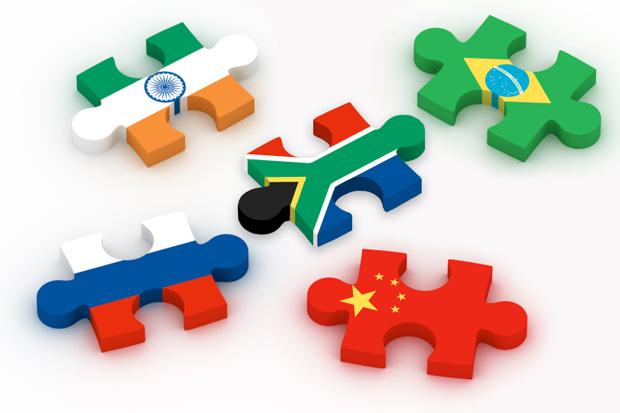
Russian Deputy Finance Minister Sergei Storchak spoke with Greek PM Alexis Tsipras today, proposed that Greece become 6th member of New Development Bank set up by Brazil, Russia, India, China, South Africa, a Greek govt official says in e-mail to reporters.

Meanwhile the $100 billion BRICS development bank will be based in Shanghai, according to its founding agreement, and will be headed by an Indian for the first five years, followed by a Brazilian and then a Russian.

Kundapur Vaman Kamath, a 67-year-old, is the non-executive chairman of India’s second largest bank by asset size, ICICI Bank, and India’s third largest IT firm, Infosys.

Now, Kamath will have another position to tend to: The first head of the BRICS bank.

The bank’s $100 billion capital—with an initial subscribed capital of $50 billion that will be equally shared by all BRICS members—will be used for infrastructure financing and sustainable development project funding within the BRICS nations. Other low- and middle-income countries will be able to access loans.

In February this year, India’s cabinet, headed by prime minister Narendra Modi, approved the establishment of the bank, after founding members sorted out several contentious issues. “The New Development Bank will mobilise resources for infrastructure and sustainable development projects in BRICS and other emerging economies and developing countries, to supplement existing efforts of multilateral and regional financial institutions for global growth and development,” the Indian government said in a statement.

The bank, according to the Russian finance ministry, is expected to be fully functional by the end of 2015.

EU paymaster Germany suggested on Monday that Greece might need a referendum to approve painful economic reforms on which its creditors are insisting, but Athens said it had no such plan for now and others warned a vote could delay vital aid.

Greece calmed immediate fears of a default by making a crucial 750 million euro payment to the International Monetary Fund a day early. But Finance Minister Yanis Varoufakis said the liquidity situation was “terribly urgent” and a deal to release further funds was needed in the next couple of weeks.

Euro zone finance ministers welcomed some progress in slow-moving talks on a cash-for-reform deal between Athens and the IMF, the European Commission and the European Central Bank but said more work was needed to each a deal.

“We acknowledged that more time and effort are needed to bridge the gaps on the remaining open issues,” they said in a short statement after spending barely an hour on a progress review on the negotiations behind held among senior officials.

Source: Bloomberg/Reuters

‘EU could lift Russian sanctions by end of 2015’

The EU sanctions against Russia could be lifted by the end of the year, Czech President Milos Zeman said.

“I will also add that it may be possible to lift the sanctions fully, maybe even before the end of this year. The

European Council will discuss this in June, I think,” Zeman said in an interview with the Kommersant newspaper published Tuesday.

According to the Czech president, economic sanctions are “completely pointless”, while the political restrictions were introduced to prevent Russia from invading eastern Ukraine.

“I believe that all official moves by the Russian politicians prove that there will be no intervention in eastern Ukraine,” Zeman said, adding that he believed that the internal conflict in the region was dying down.

Russia’s relationship with the European Union deteriorated greatly amid the Ukrainian crisis, with the bloc introducing several rounds of sanctions against Moscow, accusing it of meddling in Ukraine’s internal affairs.

Source: Sputniknews

Merkel, Zuma in Moscow for V-day celebrations

Ukraine’s settlement and possibilities for the restoration of cooperation between Russia and Germany will be high on the agenda of talks in the Kremlin on Sunday between Russian President Vladimir Putin and German Chancellor Angela Merkel, who is arriving in Moscow to attend celebrations in honour of the 70th anniversary of the World War II Victory.

Before the talks, the two leaders together will lay wreaths at the Tomb of the Unknown Soldier near the Kremlin wall.

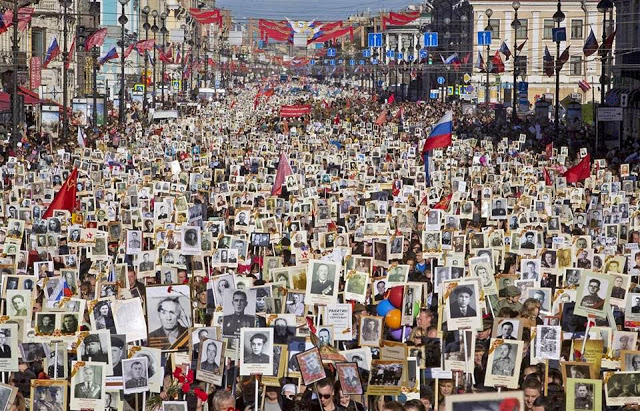
Putin also spoke of the ‘Immortal Regiment‘ initiative’s importance earlier, while marching with over 300,000 people in Moscow’s Red Square, Saturday. “It was born not in cabinets, nor in administrative structures, but in the hearts of our people,” Putin told the interviewer.

“The sides will discuss, in particular, measures to boost trade and economic relations,” he said. In 2014, for the first time in recent years, a 6.5% decline in the Russian-German trade turnover volume was recorded, to $70.1 billion, compared to the previous year.

At the same time, the Russian economy has accumulated more than $21 billion of German investment. There are more than 6,000 companies with German participation operating in Russia, including about 800 – with 100% German capital. The volume of Russian investment in Germany is about $850 million.

The Kremlin also says the two countries have the traditionally intense cultural and humanitarian contacts and inter-regional cooperation.

The meeting with Merkel will complete the four-day “marathon” of international meetings that Putin has held on the sidelines of the Victory Day celebrations.

Since May 7, he has held talks with the leaders of the CIS (Commonwealth of Independent States) countries and the Eurasian Economic Union (EAEU), as well as with the leaders of Cuba, Mongolia, China, India, Vietnam, the Czech Republic, South Africa, as well as with the UN Secretary-General.

The South African president arrived in Moscow on Friday to join in commemorations of the 70th anniversary of the Allied victory.

Zuma urged on Saturday to endorse a “meaningful” reform of the United Nations to build a more just world order, the presidency said in a statement.

Meanwhile Martin Charmoy, head of Prosperity Capital Management fund in London, predicted that trade between Russia and China will reach $200 billion in the next several years.

Russia and China are quickly becoming close friends, a growing threat to European markets, Martin Charmoy, head of Prosperity Capital Management fund in London, said.

The analyst also predicted that trade between Russia and China will reach $200 billion in the next several years.
“Russia and China are becoming best friends,” Charmoy concluded.

Meanwhile, the analysts said European companies that once were very successful in the Russian market are losing their positions due to sanctions and the geopolitical situation.

This week during the Chinese President Xi Jinping’s visit to Moscow, a wide range of agreements in the trade, economic and energy fields were inked. The main issue on the agenda was an agreement to couple the Eurasian Economic Union and the Silk Road projects.

Last year, Russia’s gas-producing giant Gazprom and Chinese CNPC signed a deal to supply China with 38 billion cubic meters of gas per year over the next 30 years.

The total sum of the contract is estimated to be $400 billion, the largest Gazprom contract ever. The gas price is attached to the oil price. The supplies are planned to start in four to six years.

Source: Sputnik News/Itar-TASS

Russian, Chinese warships enter Black Sea

For the first time in history, Chinese and Russian navies will begin a significant joint naval exercise in The Mediterranean Sea in mid-May.

Citied by RT, Chinese Defense Ministry spokesman Geng Yansheng said that “The aim is to deepen both countries’ friendly and practical cooperation, and increase our navies’ ability to jointly deal with maritime security threats,” but diplomatically added “these exercises are not aimed at any third party and have nothing to do with the regional situation.”

Against a background of this week’s “upgraded Japan-American military relationship” following Abe’s visit to Obama, as one analyst notes, “the geopolitical significance of its exercising alongside Russia will not be lost on the U.S. and NATO.”

While it was unclear if directly related to the upcoming “historic” drill, the Bosphorus Navy Blog reports that in what is a comparable “first” yesterday two warships from Peoples Republic of China were seen passing through the Bosphorus, and entering the Black Sea.

NATO promptly responded and hours ago AP reported that a top NATO commander said the alliance will briefly move its allied joint force command from Italy to Romania – which has a historic Black Sea port in the town of Constanta – as NATO continues to react to Russia’s moves in Ukraine.

Admiral Mark Ferguson, Commander of Allied Joint Force Command based in Naples, Italy, said the command will be based in Cincu, central Romania, for 12 days in June, to support a NATO exercise involving 1,000 troops from 21 NATO states.

Cincu is Romania’s largest military shooting range, some 180 kilometers (112 miles) northwest of Bucharest.

Source: Zerohedge

Iran urges Israel to give up nuclear weapons

Iran has demanded that Israel give up its nuclear weapons, as it spoke on behalf of the 120-nation Non-Aligned Movement. Iran’s Foreign Minister, Mohammad Javad Zarif said the bloc also wants a nuclear free-zone in the Middle East.

Mohammad Javad Zarif was speaking at the United Nations for the non-aligned group of countries. Israel has never admitted or denied the widespread assumption it has nuclear weapons. However, Zarif says Israel’s assumed nuclear arsenal was a threat to regional security.

The Iranian Foreign Minister said the non-aligned movement regards Israel’s nuclear program as, “a serious and continuing threat to the security of neighboring and other states, and condemned Israel for continuing to develop and stockpile nuclear arsenals,” according to Reuters.

Israel has not signed up to the nuclear Non-Proliferation Treaty (NPT), though it has sent an observer to the month long conference for the first time in 20 years.

Zarif added that the non-aligned bloc are looking to create a nuclear free-zone in the Middle East “as a matter of high priority,” which will only be possible, if Israel abandons its nuclear stockpile.

“Israel, [is] the only one in the region that has neither joined the NPT nor declared its intention to do so, (…) renounce possession of nuclear weapons,” AFP cited Zarif as saying.

China inks huge arms deal with Russia

China and Russia, as part of closer strategic ties, have finalized a long-awaited deal for very long range S-400 surface to air missile (SAM) system. The deal is not only the largest Sino-Russian arms deal in over a decade, but S-400 missile defense capabilities would provide China with a quick missile defense upgrade at the moment neighboring states like North Korea acquire more ballistic missiles, and the U.S. and Japan look to buy stealthy anti-ship missiles.

In April 2015, both Anatoly Isaikin, CEO of Russia’s arms sales Rosoboronexport agency, and Du Wenlong, a senior member of the PLA Academy of Military Science, have stated that China will take delivery of the S-400 SAM. The Moscow Times reports that the deal was negotiated for $3 billion, to deliver 6 S-400 battalions. With each battalion consisting of 6 transport erector launch (TEL) vehicles, China would have 36 launch vehicles.

The S-400 is the longest range SAM system in the world. It first entered into Russian service in 2007, and has capability to intercept ballistic missiles and high speed aircraft, while its 91N6E can locate and track stealth aircraft at standoff (100km+) distances. The most infamous of the S-400’s three missiles is the 40N6, which has an astounding range of 400km. The 40N6’s extreme range would allow S-400 TELs on China’s coast to shoot down aircraft anywhere over Taiwan. The smaller 250km-ranged 48N6 and 120km-range 9M96E2 missiles are also equally lethal against fighters, bombers, early warning and electronic warfare aircraft, as well as cruise and ballistic missiles.

The S-400 will supplement China’s Russian-made S-300 and domestic HQ-9 long-range SAMs, while its 30K6E command system can even interlink with other Russian made SAMs, like the S-400 and TOR-M1, both of which China already fields. The S-400s would likely be operated by the PLA Air Force (PLAAF), which has historically operated China’s land based long-range air defense systems. While the 40N6’s long range could theoretically cover all of Taiwan’s air space, they would most likely protect major bases like the Hainan submarine pens, important cities such as Beijing and Shanghai, or hide within the inland mountains of Fujian and Guangdong Provinces.

The deal is significant to regional security as well as geopolitics. China’s improved air defense capabilities will greatly complicate any efforts to conduct aerial operations or missile attacks against the Chinese mainland, even with stealthy drones, longer-ranged cruise missiles, or new bombers, all part of the new US “third offset” plan. In wartime, the S-400 could even support Chinese airstrikes by knocking out enemy fighters flying above their own bases and cities. On the strategic level, the S-400 sale would facilitate Sino-Russian cooperation, as well as facilitate other sales and joint projects like submarines and space operations.

Source: Popular Science

Germany puts pressure on Kiev

The Financial Times has disclosed the first attempt by Germany to put pressure on Kiev to implement the Minsk 2.0 peace agreement for East Ukraine.

Germany, in a bid to remain neutral amid rising trans-Atlantic tensions, may have warned the Ukrainians that unless they fulfill the Minsk Memorandum, something the Ukrainians have no intention of doing, there may be renewed aggression.

Kiev has welcomed military training missions from Canada and the US to Ukraine adding to what might become a US -Russian proxy war.

Atlanticist neocons entertain maximalist ambitions and have shown but intransigence to the bloodshed.

It seems as though Germany will exert some pressure on Kiev to back down from further escalating the conflict that have cost thousands of lives and seen the rise of modern Nazis.

From the Financial Times:

Germany and key European partners are pressing Ukraine to speed up implementing the Minsk ceasefire agreement — for fear of giving Russia excuses for renewed aggression.

The warnings from Berlin, Paris and London come as EU officials led by Jean-Claude Juncker, European Commission president, are due on Monday to start their first EU-Ukraine summit in Kiev since the Ukraine crisis broke out a year ago.

They coincide with renewed tensions between Russia and the US over Ukraine, with Washington and Moscow trading allegations of increased military involvement in conflict zones.

The latest European comments highlight EU desires to ease tensions with Russia’s President Vladimir Putin, even at the cost of irritating Kiev.

EU diplomats readily admit the separatists violate the Minsk ceasefire far more often than Kiev. But they urge president Petro Poroshenko to stick to the accord and implement its political clauses.

The word among German diplomats is that Kiev needs to be “more co-operative”. Stefan Meister, of Berlin’s DGAP foreign policy think-tank, said: “German officials are talking to both sides, but especially to the Ukrainians because if they don’t do what’s necessary, the Russians will always have the possibility of renewing the conflict.”

In France, President François Hollande said during a visit by Mr Poroshenko last week: “The only line of conduct is the full implementation of the Minsk accord.”

In the UK, which has followed the US in taking a tougher line against Moscow, an official said Ukraine should fulfil its side of the Minsk deal and “not give Russia the space to criticise them”.

The latest Minsk accord, agreed in February under pressure from Germany and France, has reduced fighting and led to the withdrawal of some heavy weapons from front lines, though soldiers and civilians still die almost daily.

But Berlin is worried that Kiev is dragging its feet over other parts of the fragile deal, notably in trying to postpone political decentralisation until after local elections are staged in separatist-held territory.

For Ukraine this is critical because it does not want to hand over power to separatist leaders in the Donbas region, who are not recognised by the international community. EU diplomats say, however, that while local elections are indeed envisaged under Minsk, the accord does not insist that they take place before decentralisation.

Dmytro Kuleba, a senior Ukrainian foreign ministry official, dismissed charges of delaying tactics as “perfect hypocrisy”, saying Russia was encouraging this perception while continuing its aggression.

Kiev has, however, acted on another EU concern. Last week, lawmakers softened recent legislation banning Soviet and Nazi symbols. The planned law had raised fears in Russia of a campaign to remove monuments and rename streets dating from the Soviet era. Now such decisions are planned to be devolved to regional authorities.

But Russia is maintaining the pressure. The foreign ministry on Friday accused Kiev of having “no political will” to implement the Minsk agreement.

Meanwhile, Berlin is also pressing EU officials to be conciliatory with Moscow. Foreign minister Frank-Walter Steinmeier wrote this month to Mr Juncker urging the EU to ease “Russian concerns” over a deep free-trade agreement with Ukraine.

The planned deal helped trigger the initial crisis when it fuelled Russian fears of losing influence in Kiev. Implementation was postponed last year in the face of Russian resistance, with the hope of discussing the matter at trilateral talks between Moscow, Kiev and Brussels.

But Kiev is loath to involve Russia in what it sees as a bilateral accord — and Moscow has warned Ukraine against unilateral implementation. Mr Steinmeier has urged a start to the three-way talks, asking Mr Juncker to “use the considerable flexibility that the agreement offers”.

Senior rabbi warns against Putin’s ouster

A senior Russian rabbi warned of grave danger to Jews if Russian President Vladimir Putin is swept from power.

Alexander Boroda, head of the Chabad-affiliated Federation of Jewish Communities of Russia, made the warning Friday during a talk at Moscow’s 9th annual Jewish learning event organized by Limmud FSU.

“The Jews of Russia must realize the dangers inherent in the possible collapse of the Putin government, understand the rules of the game and be aware of the limitations,” Boroda said at a sessions, according to a translation provided by Limmud FSU.

The Moscow conference, which drew 1,400 participants, opened Friday at the state-owned Klyasma resort just outside the Russian capital.

Boroda’s Federation is among several Russian Jewish organizations that credit Putin for facilitating efforts to re-consolidate Russia’s Jewish community of 350,000 after decades of communist repression.

Under Putin, dozens of synagogues have been renovated with government support and a massive Jewish museum was opened in Moscow with state funding.

“In Russia, there is virtually unlimited freedom of religion and the Jewish community must ensure this situation continues,” Boroda said. “The support for religious institutions is wider than in the United States and defense of Jews against manifestations of anti-Semitism is greater than in other European countries. We do not have the privilege of losing what we have achieved and the support of the government for the community.”

All Russian Jews and especially those considering action against the Putin administration, Boroda said, “must understand the grave dangers that they take upon themselves and the potential consequences.”

Source: Haaretz

Russian court jails dancers for twerking near monument

A Russian court has jailed three women for performing a twerking dance in front of a World War Two memorial.

The court in Novorossiysk gave two of the dancers 10 days in jail each, a third 15 days and two others received fines on charges of petty hooliganism.

Prosecutors had said their “erotic and sexual twerk dance” was disrespectful to historic memory and unacceptable.

Earlier this month, Russian officials closed a dance school after a similar dance video emerged on the internet.

The latest incident involves six dancers – one of them a minor who was not convicted – who had posted a video on YouTube.

“This incident of disrespect for the memory of war history is unacceptable and any attempts to desecrate sites of military glory will be stopped immediately,” prosecutors said.

The sentences come as Russia prepares to mark the 70th anniversary of the World War Two victory.

They also follow the incident early in April when a video clip from the Orenburg dance school on YouTube was viewed millions of times.

The video clip, entitled Winnie the Pooh and the Bees, showed a group of teenage girls dancing on stage in striped leotards, long socks and mini-skirts,

They perform hip-thrusting moves characteristic of twerking.

A committee is investigating whether the performance amounts to negligence or even “debauched action”, which is punishable by a range of sanctions from community service to three years behind bars. – bbc.com

Russia, Argentina sign energy deals worth billions

Russia and Argentina signed agreements which amounted to an “all-encompassing strategic partnership” during Argentine President Cristina Fernandez de Kirchner’s visit to Moscow.

Russia and Argentina signed a number of deals on developing hydroelectric, nuclear and fossil-based energy and announced intentions to use each other’s currencies in trade.

The memorandums are a massive breakthrough for economic relations between Russia and Argentina. Russian President Putin called the negotiations rich and fruitful.

“There were important long-term deals made in economic and political spheres. Russia and Argentina are entering a new stage of cooperation,” the head of Argentina’s Foreign Ministry Timerman Hector told Sputnik.

Argentine President Cristina Fernandez de Kirchner said the two sides agreed to conduct thorough consultations on using national currencies in trade calculations instead of US dollars.

Argentina’s New Power Sources

A $2 billion memorandum was signed to build a new hydroelectric dam and will consider switching to national currencies for mutual deals. Russia’s VEB bank will provide $1.2 billion of the total investments needed, 35 percent of which will be used to pay Argentine subcontractors.

In addition, Russia will provide Argentina with access to Russian nuclear power technology. The deal will be prepared by the end of the year. The head of Russian nuclear power plant company Rosatom declined to give an estimate to the deals, saying that one bloc costs “billions of dollars.”

“Rosatom has joined the project to build the sixth bloc of the Atucha nuclear power plant,” Putin said.

Russian energy giant Gazprom signed a memorandum to explore and develop gas fields with Argentine state gas company YPF. The deal may amount to $1 billion in investments according to Argentina’s Minister of Industry.

Russian company Uralmash will also construct a plant which will manufacture oil extraction equipment, which will amount to an additional $1.9 billion in Russian investments.

Putin also said that Russia and Argentina will cooperate in the military-technical sphere and pledged to accelerate the construction of GLONASS satellite navigation systems in Argentina.

In the mutual statement, Kirchner and Putin agreed that the situation in Ukraine can only be solved by peaceful means. Putin added that Russia supports Argentina in the Malvinas (Falkland) Islands dispute.

“Russia supports Argentina’s striving for direct talks with Britain to achieve prompt resolution to the Malvinas Islands dispute,” Putin added.

The Eurasian Economic Union and the Latin American MERCOSUR bloc also plan to sign a cooperation memorandum.

Source: Sputnik News