China slams US Human Rights Report

China has bashed the US with its own “Human Rights Record of the United States in 2014”, argumentatively advising Washington that it should take a look in the mirror before pointing fingers.

Beijing has answered the US with its own annual Human Rights Record of the United States in 2014, which was released by the country’s State Council Information Office on Friday, a day after Washington published its Report on Human Rights Practices for 2014.

It brought into focus the grave human rights violations both inside the US and those it has exercised all over the world.

“While its own human rights situation was increasingly grave, the US violated human rights in other countries in a more brazen manner, and was given more ‘red cards’ in the international human rights field.”

“In the field of international human rights, the US has long refused to approve some core human rights conventions of the United Nations and voted against some important UN human rights resolutions.”

The report also stressed that the US National Security Agency had spied on world leaders and civilians all over the world.

The report pointed at the problems of racial discrimination within US, especially stressing how Washington treats its minority groups and indigenous people, which are “subject to unfairness in environment, election, health care, housing, education and other fields.”

American women and children’s rights were also not fully protected within their own country.“Money is a deciding factor in the US politics, and the US citizens’ political rights were not properly protected,” the report concluded.

Source: Sputnik News

Chief Justice wants white males out

South Africa’s black Chief Justice berated the government and corporations for hiring white males to defend them in courts.

Speaking at a Durban Chamber of Commerce and Industry luncheon, Mogoeng Mogoeng said: “There’s still a lot to be done to empower women, especially black women [in the judiciary].

“But the big challenge is that whenever big business has a matter before our court they brief white male lawyers.

“The same goes for the government: It briefs white males,” he said.

Mogoeng urged businesses to support young black student lawyers at universities and called on white male lawyers, to stop paying lip service to transformation in the legal sector.

Mogoeng, without irony, called on South Africa to follow the example of countries like South Korea and Singapore. They had succeeded, he said, due to good governance, unified purpose and a strong emphasis on education.

Both countries are listed among the worst in the world for black people.

“I cannot stress this too much, we need to embrace education aggressively,” Mogoeng said.

French media call G7 ‘idiots’

Nicolas Bonnal of Boulevard Voltaire believes Russia is lucky that it wasn’t invited to the G7 summit this year, comparing the group to the company of hypocritical “idiots.”

As the West is reaching new heights of absurdity, Russia should be happy that it didn’t end up in the company of “idiots,” Nicolas Bonnal said in Boulevard Voltaire.

Russia certainly shouldn’t be ashamed of not being invited to the G7 summit this year. The group of the richest Western nations gathered in Germany, without Russia and China, but with “Italy and its crowds of Libyan refugees,” Bonnal said, comparing the summit akin to being in a luxurious hotel up in mountains, but with non-alcoholic beer.

Even Ethiopia was invited to attend the summit, but not Russia. Russia was punished for not dancing to Washington’s tune.

Moscow was put in a corner for the alleged aggression against Ukraine and the lack of respect for human rights, the author said.

Meanwhile, the United States has 2.2 million prisoners, Guantanamo Bay and the Patriot Act, 1,200 victims of police brutality and over a million people killed because of drug-related gang wars.

American neoconservatives started a series of atrocious wars in Libya, Iraq, and Syria in their “irrational and even frightening desire to harm,” Bonnal said.

The contemporary G7, which was originally seen as the collection of the world’s largest economies, lacks not only Russia, but also China, India and Brazil. Currently, the group consists of the United States, Germany, Britain, France, Japan, Canada and Italy. And almost no economic growth.

Source: Sputnik News

Yuan inclusion in SDR basket inevitable

An integrated Eurasian block will dominate the world. The Chinese are acting upon that insight.

The IMF is due to re-examine the composition of its currency basket for Special Drawing Rights, a foreign-exchange reserve asset for fund members, later this year says Zhao Yongsheng.

“Our assessment now is that the substantial real effective appreciation [of the yuan] over the past year has brought the exchange rate to a level that is no longer undervalued,” the IMF said last week after it concluded its 2015 Article IV Consultation Mission to China.

Does this mean that the yuan is about to be included in the SDR currency basket? We can consider a “signal” sent by IMF Managing Director Christine Lagarde during a speech at Fudan University in Shanghai in March: “It’s not a question of if, it’s a question of when.”

Her speech, and the IMF’s announcement, indicate that the yuan is quite likely to be included in the SDR basket when it is reviewed this year.

But merely joining the SDR basket is not the only important step for the yuan, even if it is already a significant development in the currency’s internationalization.

Actually, the inclusion of the yuan in the SDR basket is not just a question of “if” or “when,” but a question of “how much.”

Let’s look first at the composition of the SDR basket, which now includes the four strongest currencies in the world: the dollar, euro, yen and British pound.

When the SDR was launched in 1981, the shares for the five currencies in the basket were 42 percent, 19 percent, 13 percent, 13 percent and 13 percent for the dollar, Deutsche mark, French franc, yen and pound, respectively. The basket is adjusted every five years.

Looking at this original composition, we can divide the basket’s basic structure into two blocks: the “Deutsche mark-French franc block” (or the “euro block” after the adoption of the European single currency in 2001) and the “dollar-pound-yen block.”

This division is based on differences in culture, historical links and even military relationships.

It is true that Germany and France are not the same, as one is a Germanic culture and the other is a French or half-Latin culture.

Nevertheless, these countries had no choice but to work together to establish and expand the European Union. Especially since the birth of the euro, monetary and financial relations between Germany and France have become closer. They are both countries of Europe’s continental culture.

For their part, the UK and US share an “Anglo-Saxon” culture, and their relationship is that of siblings. With regard to Japan, it has close links to the US due to its post-WWII occupation and rebuilding by the US. That’s why we put these three countries and their currencies together.

Originally, the combined share of the mark and franc was 32 percent.

Even if we assume this European continental culture block increased to 37.4 percent for 2011-15, it would still lag far behind the dollar-pound-yen block, which stands at 62.6 percent for the same period.

How can we maintain balance in the SDR basket?

Balance is essential for any game with multiple players, and that is also true of currency baskets.

In the case of the above division, obviously the gap of 25.2 percentage points between two blocks is too huge to be good for stability.

If we assume a share of 10 percent for the yuan in the SDR basket, the euro plus the yuan will make up 47.4 percent of the basket, against a new share for the dollar-pound-yen block of 52.6 percent. Now, the gap is not so large.

Why do we put the euro and yuan together? This implies the necessity for Europe to find another force to implicitly provide balance against the “American hegemony.”

The increasing closeness of Europe and China will be gradually reinforced with the adoption of China’s “One Belt, One Road” initiative and the operation of the China-initiated Asian Infrastructure Investment Bank.

This solution can also be a moderate and acceptable reform for the current players in the SDR basket, whatever their position, because even with the new composition, the dollar-pound-yen block will retain a dominant position with 5.2 percentage points more than the euro-yuan block.

Finally, in China’s pursuit of inclusion, France will play a major role – and not only because the IMF’s president is usually a French national.

It is also because France needs China, probably much more than do other countries, to recover from the lingering effects of the financial crisis and keep its economy growing.

Source:Global Times

The author is a Paris-based economist and vice-president of the Paris-based China-France Association of Lawyers and Economists. bizopinion@globaltimes.com.cn


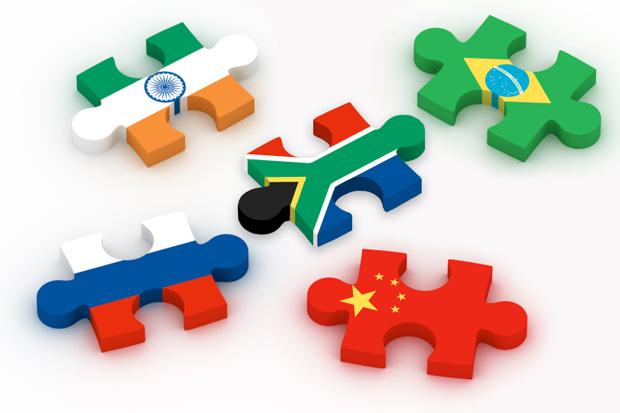
BRICS face huge security issues says Putin

Security issues are an important sphere in the activity of BRICS member states (Brazil, Russia, India, China and South Africa) and they are related to the challenges the world community is currently facing, Russian President Vladimir Putin said on Tuesday at a meeting with the Security Council secretaries of the BRICS countries.

“Obviously, for our organization, for BRICS, it’s an important sphere of activity, considering the challenges the entire international community and our countries have to face at present. It’s obvious that the fight against organized crime, terrorism, financial crime is certainly on the agenda of the international community,” Putin said.

According to the president, it is also obvious that BRICS member countries are facing major threats. “It is also clear that our countries are facing considerable threats in connection with violation of international law norms, in connection with violation of sovereignty of different states, their activity spheres,” Putin said.

Source: Itar-TASS

China warns US surveillance plane

The Chinese navy issued warnings eight times as a U.S. surveillance plane on Wednesday swooped over islands that Beijing is using to extend its zone of influence.

The series of man-made islands and the massive Chinese military build-up on them have alarmed the Pentagon, which is carrying out the surveillance flights in order to make clear the U.S. does not recognize China’s territorial claims. The militarized islands have also alarmed America’s regional allies.

Former CIA Deputy Director Michael Morell told CNN’s Erin Burnett Wednesday night that the confrontation indicates there is “absolutely” a risk of the U.S. and China going to war sometime in the future.

A CNN team was given exclusive access to join in the surveillance flights over the contested waters, which the Pentagon allowed for the first time in order to raise awareness about the challenge posed by the islands and the growing U.S. response.

CNN was aboard the P8-A Poseidon, America’s most advanced surveillance and submarine-hunting aircraft, and quickly learned that the Chinese are themselves displeased by the U.S. pushback.

“This is the Chinese navy … This is the Chinese navy … Please go away … to avoid misunderstanding,” a voice in English crackled through the radio of the aircraft in which CNN was present.

This is the first time the Pentagon has declassified video of China’s building activity and audio of Chinese challenges of a U.S. aircraft.

Source: CNN

Russia asks Greece to join BRICS bank

Russian Deputy Finance Minister Sergei Storchak spoke with Greek PM Alexis Tsipras today, proposed that Greece become 6th member of New Development Bank set up by Brazil, Russia, India, China, South Africa, a Greek govt official says in e-mail to reporters.

Meanwhile the $100 billion BRICS development bank will be based in Shanghai, according to its founding agreement, and will be headed by an Indian for the first five years, followed by a Brazilian and then a Russian.

Kundapur Vaman Kamath, a 67-year-old, is the non-executive chairman of India’s second largest bank by asset size, ICICI Bank, and India’s third largest IT firm, Infosys.

Now, Kamath will have another position to tend to: The first head of the BRICS bank.

The bank’s $100 billion capital—with an initial subscribed capital of $50 billion that will be equally shared by all BRICS members—will be used for infrastructure financing and sustainable development project funding within the BRICS nations. Other low- and middle-income countries will be able to access loans.

In February this year, India’s cabinet, headed by prime minister Narendra Modi, approved the establishment of the bank, after founding members sorted out several contentious issues. “The New Development Bank will mobilise resources for infrastructure and sustainable development projects in BRICS and other emerging economies and developing countries, to supplement existing efforts of multilateral and regional financial institutions for global growth and development,” the Indian government said in a statement.

The bank, according to the Russian finance ministry, is expected to be fully functional by the end of 2015.

EU paymaster Germany suggested on Monday that Greece might need a referendum to approve painful economic reforms on which its creditors are insisting, but Athens said it had no such plan for now and others warned a vote could delay vital aid.

Greece calmed immediate fears of a default by making a crucial 750 million euro payment to the International Monetary Fund a day early. But Finance Minister Yanis Varoufakis said the liquidity situation was “terribly urgent” and a deal to release further funds was needed in the next couple of weeks.

Euro zone finance ministers welcomed some progress in slow-moving talks on a cash-for-reform deal between Athens and the IMF, the European Commission and the European Central Bank but said more work was needed to each a deal.

“We acknowledged that more time and effort are needed to bridge the gaps on the remaining open issues,” they said in a short statement after spending barely an hour on a progress review on the negotiations behind held among senior officials.

Source: Bloomberg/Reuters

‘West still treats Africa as former vassals’

Western “colonial” states are not interested in South Africa’s development, but rather want to take its natural resources and never give anything back, pres. Jacob Zuma, told RT. It’s China’s investment that Zuma sees as a way to prosperity.

“The Western world or the European countries, in particular, came to Africa [in the 19th century] to colonize and they had been taking the resources of Africa,” Zuma said.

But even after the continent decolonized itself in the mid-20th century, its relationship with the US, UK, France and other Western countries “remained the same,” he stressed.

“They still regard us as the Third World, as a kind of people, who must be related to as the former subject [state], etc. That talks also to the economics… Their intention has never been to make the former colonial countries develop,” the president explained.

Zuma believes things “would never be the same” with China, which has been heavily investing in Africa since the early 2000s, as it came to the continent “as equals.”

“The Chinese come differently. They come to do business with us. They are ready to help… The results would be that African countries will be empowered,” he said.

China is educating African students and building highways in many countries, while the Western states “only built roads from mining areas to harbors,” the president added.

China is currently South Africa’s top trading partner, and Zuma expressed confidence that recent attacks on foreigners, in which Chinese citizens were affected, won’t lead to a cool down in relations between Pretoria and Beijing.

“The issue of xenophobia was exaggerated in South Africa,” he said, adding that the true reasons for the attacks lay outside racial issues.

The South African leader pointed out that thousands across the country had taken to the streets to protest xenophobia after five people died in violence in Durban in mid-April.

Despite “some things here and there,” South Africa was one of only two African nations approved as one of the 57 founding members of the Chinese-led Asian Infrastructure Investment Bank (AIIB).

Beijing and Pretoria will also join efforts to establish the BRICS bank (New Development Bank), with South Africa set to host the new financial institution’s regional center. The countries comprising the BRICS group are Brazil, Russia, India, China and South Africa.

Zuma criticized existing international financial institutions, such as the International Monetary Fund and the International Bank for Reconstruction and Development, saying that “it’s very difficult to pinpoint the real exemplary kind of delivery by these institutions,” and that African countries “got into more difficulties” by relying on their assistance.

The idea of the New Development Bank has “brought the fresh breath in the system,” he said.

“BRICS has brought the bank, which is a developer; which is going to operate differently… It’s focusing on the Third World, not just on the Third World, but whomever else. And it’s actually aimed at helping to uplift countries that need help,” the president said.

Meeting with Zuma, Russian President Vladimir Putin advocated BRICS development as a vehicle for improving the economies of Russia and South Africa.

Zuma arrived in Moscow on Vladimir Putin’s invitation as guest at the May 9 military parade dedicated to the 70th anniversary of Victory over Nazi Germany.

He stressed the importance of the occasion as “at times, people have got short memories. They might be forgetting that we came from a very serious situation, which led to many deaths.”

The South African president observed that the Soviet Union had “suffered a great deal” during World War II, noting that “the turning point of the defeat of fascism was done by the Russians.”

Source: RT

Merkel, Zuma in Moscow for V-day celebrations

Ukraine’s settlement and possibilities for the restoration of cooperation between Russia and Germany will be high on the agenda of talks in the Kremlin on Sunday between Russian President Vladimir Putin and German Chancellor Angela Merkel, who is arriving in Moscow to attend celebrations in honour of the 70th anniversary of the World War II Victory.

Before the talks, the two leaders together will lay wreaths at the Tomb of the Unknown Soldier near the Kremlin wall.

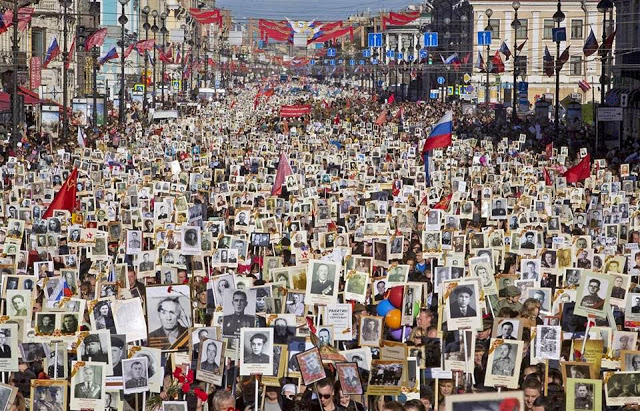
Putin also spoke of the ‘Immortal Regiment‘ initiative’s importance earlier, while marching with over 300,000 people in Moscow’s Red Square, Saturday. “It was born not in cabinets, nor in administrative structures, but in the hearts of our people,” Putin told the interviewer.

“The sides will discuss, in particular, measures to boost trade and economic relations,” he said. In 2014, for the first time in recent years, a 6.5% decline in the Russian-German trade turnover volume was recorded, to $70.1 billion, compared to the previous year.

At the same time, the Russian economy has accumulated more than $21 billion of German investment. There are more than 6,000 companies with German participation operating in Russia, including about 800 – with 100% German capital. The volume of Russian investment in Germany is about $850 million.

The Kremlin also says the two countries have the traditionally intense cultural and humanitarian contacts and inter-regional cooperation.

The meeting with Merkel will complete the four-day “marathon” of international meetings that Putin has held on the sidelines of the Victory Day celebrations.

Since May 7, he has held talks with the leaders of the CIS (Commonwealth of Independent States) countries and the Eurasian Economic Union (EAEU), as well as with the leaders of Cuba, Mongolia, China, India, Vietnam, the Czech Republic, South Africa, as well as with the UN Secretary-General.

The South African president arrived in Moscow on Friday to join in commemorations of the 70th anniversary of the Allied victory.

Zuma urged on Saturday to endorse a “meaningful” reform of the United Nations to build a more just world order, the presidency said in a statement.

Meanwhile Martin Charmoy, head of Prosperity Capital Management fund in London, predicted that trade between Russia and China will reach $200 billion in the next several years.

Russia and China are quickly becoming close friends, a growing threat to European markets, Martin Charmoy, head of Prosperity Capital Management fund in London, said.

The analyst also predicted that trade between Russia and China will reach $200 billion in the next several years.
“Russia and China are becoming best friends,” Charmoy concluded.

Meanwhile, the analysts said European companies that once were very successful in the Russian market are losing their positions due to sanctions and the geopolitical situation.

This week during the Chinese President Xi Jinping’s visit to Moscow, a wide range of agreements in the trade, economic and energy fields were inked. The main issue on the agenda was an agreement to couple the Eurasian Economic Union and the Silk Road projects.

Last year, Russia’s gas-producing giant Gazprom and Chinese CNPC signed a deal to supply China with 38 billion cubic meters of gas per year over the next 30 years.

The total sum of the contract is estimated to be $400 billion, the largest Gazprom contract ever. The gas price is attached to the oil price. The supplies are planned to start in four to six years.

Source: Sputnik News/Itar-TASS

Russian, Chinese warships enter Black Sea

For the first time in history, Chinese and Russian navies will begin a significant joint naval exercise in The Mediterranean Sea in mid-May.

Citied by RT, Chinese Defense Ministry spokesman Geng Yansheng said that “The aim is to deepen both countries’ friendly and practical cooperation, and increase our navies’ ability to jointly deal with maritime security threats,” but diplomatically added “these exercises are not aimed at any third party and have nothing to do with the regional situation.”

Against a background of this week’s “upgraded Japan-American military relationship” following Abe’s visit to Obama, as one analyst notes, “the geopolitical significance of its exercising alongside Russia will not be lost on the U.S. and NATO.”

While it was unclear if directly related to the upcoming “historic” drill, the Bosphorus Navy Blog reports that in what is a comparable “first” yesterday two warships from Peoples Republic of China were seen passing through the Bosphorus, and entering the Black Sea.

NATO promptly responded and hours ago AP reported that a top NATO commander said the alliance will briefly move its allied joint force command from Italy to Romania – which has a historic Black Sea port in the town of Constanta – as NATO continues to react to Russia’s moves in Ukraine.

Admiral Mark Ferguson, Commander of Allied Joint Force Command based in Naples, Italy, said the command will be based in Cincu, central Romania, for 12 days in June, to support a NATO exercise involving 1,000 troops from 21 NATO states.

Cincu is Romania’s largest military shooting range, some 180 kilometers (112 miles) northwest of Bucharest.

Source: Zerohedge

Iran urges Israel to give up nuclear weapons

Iran has demanded that Israel give up its nuclear weapons, as it spoke on behalf of the 120-nation Non-Aligned Movement. Iran’s Foreign Minister, Mohammad Javad Zarif said the bloc also wants a nuclear free-zone in the Middle East.

Mohammad Javad Zarif was speaking at the United Nations for the non-aligned group of countries. Israel has never admitted or denied the widespread assumption it has nuclear weapons. However, Zarif says Israel’s assumed nuclear arsenal was a threat to regional security.

The Iranian Foreign Minister said the non-aligned movement regards Israel’s nuclear program as, “a serious and continuing threat to the security of neighboring and other states, and condemned Israel for continuing to develop and stockpile nuclear arsenals,” according to Reuters.

Israel has not signed up to the nuclear Non-Proliferation Treaty (NPT), though it has sent an observer to the month long conference for the first time in 20 years.

Zarif added that the non-aligned bloc are looking to create a nuclear free-zone in the Middle East “as a matter of high priority,” which will only be possible, if Israel abandons its nuclear stockpile.

“Israel, [is] the only one in the region that has neither joined the NPT nor declared its intention to do so, (…) renounce possession of nuclear weapons,” AFP cited Zarif as saying.

China inks huge arms deal with Russia

China and Russia, as part of closer strategic ties, have finalized a long-awaited deal for very long range S-400 surface to air missile (SAM) system. The deal is not only the largest Sino-Russian arms deal in over a decade, but S-400 missile defense capabilities would provide China with a quick missile defense upgrade at the moment neighboring states like North Korea acquire more ballistic missiles, and the U.S. and Japan look to buy stealthy anti-ship missiles.

In April 2015, both Anatoly Isaikin, CEO of Russia’s arms sales Rosoboronexport agency, and Du Wenlong, a senior member of the PLA Academy of Military Science, have stated that China will take delivery of the S-400 SAM. The Moscow Times reports that the deal was negotiated for $3 billion, to deliver 6 S-400 battalions. With each battalion consisting of 6 transport erector launch (TEL) vehicles, China would have 36 launch vehicles.

The S-400 is the longest range SAM system in the world. It first entered into Russian service in 2007, and has capability to intercept ballistic missiles and high speed aircraft, while its 91N6E can locate and track stealth aircraft at standoff (100km+) distances. The most infamous of the S-400’s three missiles is the 40N6, which has an astounding range of 400km. The 40N6’s extreme range would allow S-400 TELs on China’s coast to shoot down aircraft anywhere over Taiwan. The smaller 250km-ranged 48N6 and 120km-range 9M96E2 missiles are also equally lethal against fighters, bombers, early warning and electronic warfare aircraft, as well as cruise and ballistic missiles.

The S-400 will supplement China’s Russian-made S-300 and domestic HQ-9 long-range SAMs, while its 30K6E command system can even interlink with other Russian made SAMs, like the S-400 and TOR-M1, both of which China already fields. The S-400s would likely be operated by the PLA Air Force (PLAAF), which has historically operated China’s land based long-range air defense systems. While the 40N6’s long range could theoretically cover all of Taiwan’s air space, they would most likely protect major bases like the Hainan submarine pens, important cities such as Beijing and Shanghai, or hide within the inland mountains of Fujian and Guangdong Provinces.

The deal is significant to regional security as well as geopolitics. China’s improved air defense capabilities will greatly complicate any efforts to conduct aerial operations or missile attacks against the Chinese mainland, even with stealthy drones, longer-ranged cruise missiles, or new bombers, all part of the new US “third offset” plan. In wartime, the S-400 could even support Chinese airstrikes by knocking out enemy fighters flying above their own bases and cities. On the strategic level, the S-400 sale would facilitate Sino-Russian cooperation, as well as facilitate other sales and joint projects like submarines and space operations.

Source: Popular Science

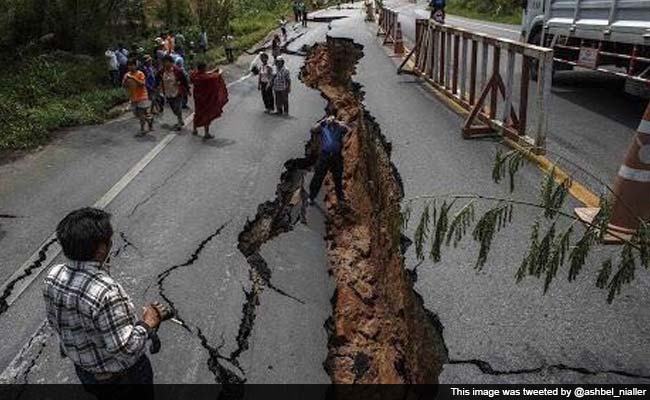
Nepal quake death toll rises

Some 3218 people have been killed in the 7.9 magnitude quake, which hit Nepal on Saturday.

It is Nepal’s worst quake since 1934 when 8 500 people died.

Nepal’s record of earthquakes dates to at least the 13th century, with significant temblors striking every 75 years.

The quake struck the heavily populated Katmandu Valley, near the capital and it was felt as far as Tibet, Bangladesh and India.

Five South Africans who had been reported missing in the quake have meanwhile been found.

It is also been reported that a group of eight Pretoria schoolgirls visiting the country, were unharmed and accounted for.

Nuclear trainees head for China

Fifty South African trainees are heading for China for a a 4-month nuclear power plant operations training.

Department of Energy spokesperson Johannes Mokobane told Fin 24 the first group comprises employees from the SA energy industry including the Nuclear Energy Corporation of South Africa (Necsa), Eskom nuclear energy supplier Koeberg, Eskom and the Department of Trade and Industry (dti).

“The programme represents the first phase of an extensive programme which hopes to draw students from South Africa’s tertiary institutions in the near future.

“In the next phase we plan to send 250 participants to China to be trained at various levels,” he said.

The training will take place at the Shanghai Jiao Tong and Tsinghua Universities following a skills development co-operation agreement signed in support of SA’s nuclear new build programme between Necsa and Chinese State Nuclear Power Technology Company.

According to the Department of Energy the training will be in the form of lectures as well as tours to some of China’s nuclear facilities.

Trainees will receive lectures in a variety of topics including nuclear safety regulatory system, nuclear island system equipment, codes and safety oversight, steam power conversion system, material science, conventional island system equipment, thermodynamics and basis of reactor thermal hydraulics, radiation protection, instrumentation and control theories, water chemistry, operation theories, and nuclear safety culture.

In September 2014 Energy Minister Tina Joemat-Pettersson reportedly signed a deal for SA to get up to eight nuclear reactors from Russia.

The power cooperation deal with Russia, through the state nuclear firm Rosatom, would pave the way for the building of nuclear power plants providing up to 9.6GW (8 NPP units) of nuclear power based on Russian technology by 2030.

Reuters reported at the time that China Guangdong Nuclear Power Holding was also among the companies showing interest in securing the nuclear deal.

Mokobane declined to comment when asked whether the training agreement is an indication that China will have a role in supplying SA with nuclear power.

South Africa has already signed agreements on nuclear issues with Russia, China, South Korea and France. Agreements with the United States, Canada and Japan were also under consideration.