Marine le Pen: We must resist corporations

Leader of France’s National Front party, Marine Le Pen, has launched a month-long blitz against the Transatlantic Trade and Investment Partnership (TTIP) – a proposed EU-US treaty, which has been criticized for secretiveness and lack of accountability.

“It is vital that the French people know about TTIP’s content and its motivations in order to be able to fight it. Because our fellow countrymen must have the choice of their future, because they should impose a model for society that suits them, and not forced by multinational companies eager for profits, Brussels technocrats sold to the lobbies, politicians from the UMP [party of former president Nicolas Sarkozy], who are subservient to these technocrats,” Le Pen said during a press conference in Paris.

Since 2013, open-ended negotiations between Washington and Brussels have drawn up the framework for the agreement, intended to standardize legislation and bring down trade barriers between them.

As per US practice, the contents of all economic treaties are classified. The EU has recently set up reading rooms throughout Europe for officials with clearance – but only a few thousand people have had access to the working documents.

Le Pen hit out at the secrecy of the negotiations, which have featured mostly bureaucrats from the European Commission, the EU’s executive body, and nebulous “stakeholders” from businesses and public organizations. As a member of the European parliament, she forwarded a motion for greater transparency in negotiations last year. Le Pen’s motion was defeated.

She is now hoping for grassroots support.

“I am convinced that we can push back the TTIP if the peoples are informed of its content, and if they decide themselves to join us in order to express their disagreement concerning this treaty,” Le Pen told journalists.

Both of France’s leading parties have endorsed the treaty, but Le Pen is relying on strong the anti-European sentiment that propelled her party to first place in last year’s elections for the European parliament.

While TTIP’s authors promise that the treaty will bring an extra 0.5 percent GDP to Europe and the US, figures across the political spectrum have expressed concern.

US President Barack Obama, who is also negotiating a similar treaty with Asia, was defeated by his own party in the Senate last week when he asked for fast-track approval to handle negotiations. Additional votes will be required if the proposed legislation is not to be bogged down in the US chambers of Congress.

Meanwhile, European legislators have raised a host of issues, in particular concerning the investor-state dispute settlement (ISDS) mechanism outlined in the treaty. The controversy centers on the proposed special economic tribunal, which would operate outside the traditional legal system and allow corporations to challenge governments.

In April, thousands took to the streets of Brussels, Madrid, Berlin and Helsinki to protest against the secretive deal.
German cop probed for ‘immigrant abuse’

German prosecutors are investigating a police officer who allegedly abused two immigrants, strangling an Afghan man and forcing a Moroccan to eat pork off the floor.

The police officer has been accused of bragging about the brutal assaults in text messages and photos he sent via instant messaging service WhatsApp to his colleagues in the western city of Hanover.

Human rights group Pro Asyl condemned the alleged incidents, first reported by public broadcaster NDR, for their “appalling level of racism and inhumanity” and demanded a probe into how many “accomplices in police uniform” knew of the violence.

Prosecutors are investigating the officer, who has been suspended, on charges of physical assault and illegal weapons possession and have searched his home and work place.

In the first alleged case, in March last year, the officer had bragged in a text message about beating, strangling and sticking his fingers up the nose of a 29-year-old Afghan man whose feet were cuffed after he was detained for not carrying ID papers.

“It was funny … squealed like a pig,” the officer allegedly wrote on WhatsApp. “It was a present from Allah.”

In the second case, months later, the officer allegedly targeted a 19-year-old Moroccan man, who had been detained for travelling on a train without a ticket, carrying a small amount of marijuana.

NDR reported that the policeman bragged about how he assaulted and then humiliated the young man by forcing him to eat minced pork off the floor.

A photo allegedly sent by the officer shows a handcuffed man lying on the floor, wincing in pain, and apparently restrained by at least two officers.

Germany has become Europe’s top destination for people fleeing war and poverty. Last year, asylum requests rose 60 percent to more than 200,000, and the government expects that number to more than double this year.

Source: AFP

Turkish president wants focus on Jerusalem

Nothing in the western media covered what the Turkish Anadulu Agency released, when Turkish President Recep Tayyip Erdogan gave a speech this Friday.

Erdogan called on all Turks to refocus on the Ottoman goal to re-conquer Jerusalem for Islam:

“Unfortunately we the Muslims lost our aim to head towards Jerusalem. The water of our eyes froze making us blind, and our hearts that was destined to beat for Jerusalem is now instead conditioned for rivalry being in a state of war with each other.”

Erdogan’s desire to end strife and unite Sunnis and Shiites to aim towards Jerusalem was made in the state of Erzincan, central Turkey.

Turkish president called on citizens to “raise their hands in supplication for this blessed night towards Allah to restore the Al-Aqsa Mosque [Jerusalem] to be re-owned by Muslims, and to remove the mist from their eyes, to see Jerusalem in their hands at every moment and at every opportunity”.

Erdogan added: “When you mention the word ascension; the first thing that comes to mind is Jerusalem and Al-Aqsa Mosque,” while he expressed deep regret for the condition of Muslim heedlessness for Al-Aqsa Mosque and Jerusalem.

Such reflections were also made by Turkish Prime Minister Ahmed Davutoglu recently, that “Jerusalem belongs to the Muslims, not to the Jews,” while criticizing the leader of the co-party Peoples Democratic opposition, Salahuddin Dmirattash, in which he said in opposition to the Islamist rhetoric of Davutoglu.

Erdogan also said that he wanted Spain. Tariq Bin Ziad, the conqueror of Spain, the tyrant Alp Arslan, and Saladin are the Muslim leaders who fought Christendom and Saladin was the one who conquered Jerusalem.

Autonomy proposed for Russians in Ukraine

The self-proclaimed Donetsk People’s Republic and Luhansk People’s Republic have proposed amendments to the Ukrainian constitution to vest individual districts in eastern Ukraine with vast autonomy, including authority to regulate cross-border cooperation and the use of the Russian language.

What are termed as districts with “a special status” would also be authorized to control law courts and prosecution services on their territory, those the district prosecution services would be parts of the Ukrainian national prosecution service.

The consent of the government bodies of “special status” districts would be necessary for the appointment and dismissal of the districts’ chief prosecutors, but other regulations on their prosecution services would be established by Ukrainian law.

The DPR and LPR also proposed a formal non-bloc status for Ukraine by “making an amendment to the Constitution of Ukraine, for instance supplementing Article17 or 18 with the following words: ‘Ukraine shall not be a member of any military bloc or alliance, maintain neutrality and refrain from participation in hostilities outside its territory,’ and/or bringing out a law of Ukraine to enshrine the non-bloc, neutral status for Ukraine.”

Such districts would be authorized to call local referendums and elections, draft and adopt their own budgets, and participate in drafting the Ukrainian budget in order to make sure that their interests are taken into account and to “guarantee their financial independence.”

“Special status” districts would be empowered to permit the use of Russian and other languages on their territory and to sign economic agreements with foreign states or individual regions of foreign states.

They would be authorized to set rates for local taxes and fees for local administrative services.

The DPR and LPR also proposed a constitutional amendment to prescribe that the Ukrainian government sign economic or cultural agreements with “special status” districts or associations of such districts and to help them step up cross-border cooperation.

Source: Interfax

Russia asks Greece to join BRICS bank

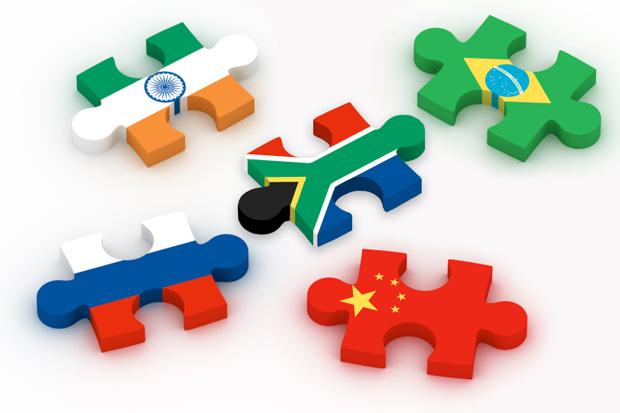
Russian Deputy Finance Minister Sergei Storchak spoke with Greek PM Alexis Tsipras today, proposed that Greece become 6th member of New Development Bank set up by Brazil, Russia, India, China, South Africa, a Greek govt official says in e-mail to reporters.

Meanwhile the $100 billion BRICS development bank will be based in Shanghai, according to its founding agreement, and will be headed by an Indian for the first five years, followed by a Brazilian and then a Russian.

Kundapur Vaman Kamath, a 67-year-old, is the non-executive chairman of India’s second largest bank by asset size, ICICI Bank, and India’s third largest IT firm, Infosys.

Now, Kamath will have another position to tend to: The first head of the BRICS bank.

The bank’s $100 billion capital—with an initial subscribed capital of $50 billion that will be equally shared by all BRICS members—will be used for infrastructure financing and sustainable development project funding within the BRICS nations. Other low- and middle-income countries will be able to access loans.

In February this year, India’s cabinet, headed by prime minister Narendra Modi, approved the establishment of the bank, after founding members sorted out several contentious issues. “The New Development Bank will mobilise resources for infrastructure and sustainable development projects in BRICS and other emerging economies and developing countries, to supplement existing efforts of multilateral and regional financial institutions for global growth and development,” the Indian government said in a statement.

The bank, according to the Russian finance ministry, is expected to be fully functional by the end of 2015.

EU paymaster Germany suggested on Monday that Greece might need a referendum to approve painful economic reforms on which its creditors are insisting, but Athens said it had no such plan for now and others warned a vote could delay vital aid.

Greece calmed immediate fears of a default by making a crucial 750 million euro payment to the International Monetary Fund a day early. But Finance Minister Yanis Varoufakis said the liquidity situation was “terribly urgent” and a deal to release further funds was needed in the next couple of weeks.

Euro zone finance ministers welcomed some progress in slow-moving talks on a cash-for-reform deal between Athens and the IMF, the European Commission and the European Central Bank but said more work was needed to each a deal.

“We acknowledged that more time and effort are needed to bridge the gaps on the remaining open issues,” they said in a short statement after spending barely an hour on a progress review on the negotiations behind held among senior officials.

Source: Bloomberg/Reuters

Tories’ repeal of Human Rights Act could spark constitutional crisis

Newly appointed Justice Secretary Michael Gove will push ahead with Conservative plans to repeal the Human Rights Act – a move experts warn could spark a constitutional crisis and blight Britain’s reputation on human rights worldwide.

Conservative Party sources, fresh from last week’s general election victory, told the Guardian the human rights reforms are imminent.

Civil liberty advocates warn the soon-to-be implemented measures would erode the right to life, the right to privacy, the right to a fair trial, the right to protest and the right to freedom from torture and discrimination.

Although the Tories were keen to push ahead with the legal changes during their last term in government, the move was blocked by the party’s ex-coalition partner the Liberal Democrats. But as a majority government, the Conservatives are now poised to push ahead with the reforms.

Central to the Tories’ election manifesto was a pledge to repeal the Human Rights Act (HRA) and significantly curb the power of the European Court of Human Rights (ECHR) in Britain. The legal reforms are expected to surface in PM David Cameron’s plans for his first 100 days, which will be outlined in the Queen’s Speech on May 27.

Under these changes, the Conservatives would replace the HRA with a Tory-styled British Bill of Rights. Britain’s Supreme Court would no longer be answerable to the ECHR, with the Strasbourg-based court losing the power to order changes to UK law.

The plans were drawn up in 2014 by then-Secretary of State for Justice Chris Grayling. At the time, Grayling proposed Britain withdraw from the ECHR if the Council of Europe rejects the Conservatives’ British Bill of Rights.

Constitutional crisis

Considerable doubt exists among experts that the Council of Europe, a human rights watchdog responsible for ensuring the Convention is upheld, will accept the Tories’ proposals. As a result, it is widely believed Britain will disengage from the European Convention on Human Rights and undermine Europe’s’ civil liberties framework in the process.

Britain’s withdrawal from the ECHR has been strongly opposed by former Secretary of State for Justice Kenneth Clarke and the UK’s ex-Attorney General Dominic Grieve. Grieve has long condemned the proposal, warning its consequences would be devastating.

In December, he said the government’s threat to potentially abandon the Strasbourg court undermines international law and could fray the constitutional fabric that holds the United Kingdom together. Echoing grieve, analysts warn such a withdrawal would spark a constitutional crisis in the UK.

They suggest the move would be flatly rejected by Nicola Sturgeon’s Scottish Nationalist Party (SNP) and would mean the Conservative government has violated Northern Ireland’s 1998 Good Friday Agreement.

EU to share burden of massive influx

The European Union’s executive body is to unveil radical new proposals on immigration, imposing migrant quotas on the 28 countries of the union under a distribution “key” system set by Brussels.

The plan, which is supported by Germany and will be fiercely resisted by Britain’s new Conservative government, will be launched by the European commission on Wednesday in response to migrant boats crisis in the Mediterranean.

The bold move by Brussels comes as the EU draws up plans for military attacks in Libya to try to curb the flow of people across the Mediterranean by targeting the trafficking networks. The EU’s top diplomat is to unveil an attempt on Monday to secure a UN mandate for armed action in Libya’s territorial waters.

Britain is drafting the UN security council resolution that would authorise the mission, senior officials in Brussels said. It would come under Italian command, have the participation of about 10 EU countries – including Britain, France, Spain and Italy – and could also drag in Nato, although there are no plans for the initial involvement of the alliance.

While there is broad support within the EU for the military plans, the proposals for sharing the immigration burden are highly controversial and divisive.

The policy document, obtained by the Guardian, demands new and binding rules establishing a quota system of sharing refugees among the member states.

The migration agenda declares: “The EU needs a permanent system for sharing the responsibility for large numbers of refugees and asylum seekers among member states.”

Source: mg.co.za

EU to set up global court for investor disputes

The EU’s trade chief has unveiled plans to set up a global court to decide on disputes between investors and governments in a bid to defuse one of the main controversies in the ongoing EU-US trade talks.

A “concept paper” published on Tuesday (May 5), drafted for trade commissioner Cecilia Malmstrom, stated that the EU should “pursue the creation of one permanent court,” to rule on so-called investor state dispute settlement (ISDS).

The EU executive is keen to make clear that investor protection rules offer no guarantees to businesses that the legal regime in which they invested will remain the same. It also wants to include an article in the transatlantic trade and investment partnership (TTIP) stating that governments are free to pursue public policy objectives without fear of being sued.

Meanwhile, it also calls on arbitration panels to be more like the traditional court system, with permanent litigators and tenured judges ruling on cases.

The EU proposal is similar to that advocated by Germany’s economy minister Sigmar Gabriel, one of the strongest critics of ISDS.

Gabriel has called for a public trade and investment court to replace the current system of private arbitration, and to enable appeals against arbitration rulings.

Speaking at a hearing with MEPs in March, Malmstrom commented that, in the future, governments should be expected to nominate “a limited list of trustworthy arbiters who would decide on all TTIP investment cases”.

A multilateral court would “be a more efficient use of resources and have more legitimacy,” she added.

In a blog post on Tuesday, Malmstrom described the ‘traditional ISDS system’ as being “not fit for purpose in the 21st century”.

“Our new approach ensures that a state can never be forced to change legislation, only to pay fair compensation in cases where the investor is deemed to have been treated unfairly,” she added.

Malmstrom will present her proposals to MEPs on the International Trade committee on Wednesday and to trade ministers the following day. If approved, they could form the basis of negotiations with the US.

ISDS has become one of the most hotly-disputed elements in the EU-US trade talks, which have now completed their ninth round. Critics of the process say that arbitrations are carried out in secret by trade lawyers, and that it allows companies to sue governments that pass social protection legislation that could harm their investments.

Campaigners frequently point to a ongoing case brought by tobacco giant Philip Morris against the Australian government over new legislation requiring plain packaging for cigarettes sold in the country.

Following rising concern about the regime, the commission opened the three-month online consultation last March and suspended discussions on ISDS with US trade officials.

In January, the commission published a 140-page report from the consultation, to which 97 percent of submissions were opposed to the inclusion of ISDS.

However, EU governments are parties to around 1,400 of the 3,000 international investment agreements that are currently in force across the world, and the commission is under pressure from the US government to include investor protection in any agreement.

Source: EU Observer

Swedish MP wants safer passage for migrants to EU

A Swedish Member of the European Parliament (MEP) has pointed the finger at EU members for their reluctance to resolve the problem of migrants’ safer passage to Europe.

Sweden’s Member of the European Parliament Cecilia Wikström has blamed EU countries for doing little to ensure migrants’ safe passage to Europe, the Swedish news website the Local reported.

According to Wikström, EU member states’ current support on the issue is so scanty that Sweden’s younger generation may liken their actions to “turning a blind eye to the Holocaust”.

Earlier, the MEP, who has repeatedly called for migrants’ “legal and safe routes to Europe”, told the Swedish TV network SVT that the younger generation would compare the EU’s stance on the matter to the policy of appeasement in World War II.

Source: SputnikNews

Greece misses deficit target as bailout deadline looms

Cash-strapped Greece fell well short of its budget deficit reduction targets last year, official figures showed Wednesday in a development that’s likely to add pressure on the radical left-led government during tortuous talks with bailout creditors.

The country’s statistical authority said the 2014 deficit was 3.5 percent of Greece’s annual GDP, considerably higher than the 0.8 percent forecast. And after stripping out the cost of servicing Greece’s crippling public debt, a modest primary surplus of 0.4 percent was recorded — short of the 2 percent target.

The new government elected Jan. 25 had already said the shortfall would be bigger than expected. But the official confirmation comes at a time Greece is negotiating a long-delayed rescue loan installment, without which it will run out of cash.

Greece is unable to tap the international bond market for funds due to sky-high borrowing rates, which reflect a lack of confidence in the country being able to repay its debts. Greek stocks closed 1.9 percent down Wednesday, another sign that investors in the country are jittery.

Greece has been surviving on rescue loans from its European partners and the International Monetary Fund since mid-2010, and the new government won a four-month extension to the main, European part of its bailout in February.

Under the extension agreement, Athens must present a series of economic reform measures that meet the approval of its creditors. Authorities are hoping for a final agreement next week, when all 19 finance ministers from the eurozone countries, including Greece’s Yanis Varoufakis, meet on April 24 in the Latvian capital of Riga.

But several European officials have raised doubts about the possibility of a deal then. Greece has some big repayments coming up over the next few months and without the rest of its bailout cash, the country could be staring at a possible default and an exit from the euro.

Source: eNCA

EU announces antitrust suit against Google

The European Union will accuse Google on Wednesday of abusing its dominant position in Internet searches, opening the US tech company up to a risk of massive fines and enforced changes in its business model, the Financial Times and Wall Street Journal said on Tuesday.

However, two sources familiar with the matter told Reuters that a formal antitrust charge sheet will not be ready for Wednesday and could take several more months to draw up.

The EU can impose fines of up to 10 percent of global turnover, or more than $6 billion in penalties in Google’s case.

An EU official said Competition Commissioner Margrethe Vestager would make an important announcement about Google on Wednesday, after the EU’s executive holds its weekly meeting.

The Commission’s chief spokesman would not confirm the reports, which cited EU officials, but said there would be a news conference around noon (1000 GMT) after the meeting.

Vestager, who had indicated she would not be rushed into a decision on the five-year-old case, is due to fly to the United States later on Wednesday for a high-profile working visit.

Americans, including business leaders and President Barack Obama, have questioned EU efforts to curb the power of U.S. tech companies.

The Danish liberal will accuse Google of breaching competition law by diverting traffic from rivals to favour its own services, said the FT, adding that some fellow commissioners had been concerned Vestager was narrowing the probe.

The possibility of an early announcement of action against Google was made public earlier this week by Guenther Oettinger, the conservative German commissioner for the digital economy, who has been a sharp critic of Google and has spoken up for the interests of European technology and publishing companies.

Separately, Vestager will launch an investigation into Google’s Android mobile software business, the FT said.

The Commission has been laying the groundwork for a case centred on whether Google abuses the dominant market share of Android to promote its own services.

Vestager made the decision to go ahead with charges on Tuesday together with European Commission President Jean-Claude Juncker and will inform her colleagues on Wednesday, the Journal said.

In office since November, Juncker’s executive has put the fostering of Europe’s digital economy and free trade with the United States among its priorities, but some EU officials are concerned U.S. companies are choking European competitors.

Vestager has narrowed the case, which she inherited from her Spanish predecessor, Joaquin Almunia – who rejected three settlement proposals from Google – the FT said.

Google did not immediately respond to requests for comment.

Andreas Schwab, a German conservative member of the European Parliament who has pushed for the EU executive to consider even breaking up Google, told Reuters earlier this week he expected the Commission to bring competition charges against the company.

However, industry and EU sources played down earlier on Tuesday suggestions that Vestager was about to announce charges against the Google.

The EU investigation is one of the highest profile competition cases of recent years, rivalling probes into Microsoft Corp, and comes amid political disquiet in Europe at the perceived dominance of U.S. tech companies.

Almunia launched the probe in 2010 and initially concluded that Google may have hurt competitors by favouring its own products and services in search results and blocking advertisers from moving their campaigns to rival platforms.

Since then, Google has offered three proposals to resolve the case.

Most recently, just over a year ago, it offered to give competing products and services bigger visibility on its website, let content providers decide what material it can use for its own services and make it easier for advertisers to move their campaigns to rivals.

Almunia initially accepted that deal, only to reverse his decision six months later and demand more concessions, leaving the ultimate decision to his successor.

Microsoft has been hit with total EU fines of more than 2.2 billion euros ($2.34 billion) over the past decade. ($1 = 0.9390 euros).

Source: Reuters

Belgians ignore EU sanctions against Moscow

Belgian companies continue expanding their businesses in Russia despite the sanctions imposed by the West against Moscow over its alleged involvement in the Ukrainian conflict, Russian Foreign Ministry spokesman Alexander Lukashevich told RIA Novosti in an interview.

“Despite the unfavorable conjuncture, Belgian companies haven’t frozen their projects in Russia, and even continue to develop their businesses,” Lukashevich said.

Both, Russian and Belgian companies express unflagging interest in future cooperation, Lukashevich said.“Even given the counterproductive European Union policy of maintaining sanctions against Russia, the business circles of the two countries continue expressing unflagging mutual interest in increasing bilateral cooperation,” he stated.

The Foreign Ministry’s representative said that some 35 Belgian companies are currently implementing their projects in Russia.

Lukashevich cited an example when in March 2014, Belgian Fluxys and Russia’s Yamaltrade signed a 20-year agreement to organize the transit of up to 8.8 billion tons of Yamal liquefied natural gas per year through the Port of Zeebruge.

Since 2014, the United States, the European Union, and their allies have imposed several rounds of economic sanctions against Moscow, citing the Kremlin’s alleged involvement in Ukraine’s internal affairs. Russia has repeatedly denied the accusations, adding that the sanctions policy is ineffective and counterproductive.

Several European companies that have been successful in the Russian market have also expressed their disappointment with the anti-Russia sanctions, saying that the measures hinder their businesses.

Moscow and Athens forge new alliance

The Greek prime minister’s visit to Moscow aimed at improving relations with Russia angers many in Europe – this is what reports in Greek media, covering the visit, boil down to.

Greek Prime Minister Alexis Tsipras is on a two-day visit to Moscow, making headlines in Greek media.”Alexis Tsipras’ upcoming visit to Moscow and meeting with Putin has generated much talk, analysis and warnings,” iefimerida.gr wrote in a piece titled Tsipras-Putin: Smiles in Moscow, Annoyance in Brussels. “Both sides underline that Moscow and Athens will discuss many issues and there is no shortage of speculations on what Tsipras will ask and what Putin will offer.

“The visit could help return Greek produce to the Russian market, according to the media outlet. “Exports are worth 125 million Euros and are of primary importance to the agriculture in northern Greece,” iefimerida.gr said.

EU sanctions and the Russian food ban, investments, privatization, energy cooperation and the Turkish Stream gas pipeline, tourism, the Ukrainian crisis and Greece-Turkey relations are the main topics on the agenda.

“Putin is preparing a ‘gift’ for Tsipras,” newsit.gr said, adding that it is the first visit of a Greek prime minister to Moscow in five years. According to the media outlet, Tsipras’ visit “caused outrage in Brussels” that “thinks the Russian president is trying to undermine the European stance on sanctions against Moscow.”

The visit sent partners and creditors, especially in Berlin, into turmoil. Some “on the other side of the Atlantic Ocean also worry that Greece would throw itself into Russia’s arms to come up with ‘alternative plans’ to solve the Greek problem,” the Crete media outlet pointed out.

“Tsipras and Putin are forging a new alliance,” according to protothema.gr. “All eyes in Europe are on Tsipras and Putin. ‘The spring’ in Greek-Russian relations gets on Europe’s nerves. The visit has created an atmosphere of enthusiasm in Moscow. … It is seen as a breakthrough in the bilateral relations that would revive and strengthen cooperation in a number of areas,” the media outlet said.”

The visit also sends important political signals: both countries are discontent with the West. In this context Tsipras wants to develop a diverse foreign policy and alliances, while Putin wants to show that he has power and influence to attract the attention of European leaders and countries,” protothema.gr said.

Source: Sputniknews

The rise of nationalism in Britain

As the eurozone crisis continues, anti-establishment insurgencies like the Scottish National Party, SNP’s, are surfacing all over Europe: nationalist, populist, separatist, left or right.

As the British empire was gradually dissolved after the second world war and its industrial base attacked by younger, nimbler economies, the cohesion of the British state weakened.

There was an impulse towards supra-nationalism in the shape of membership in the European Union, but Britain joined late, in 1973.

English people – steeped in Britain’s maritime, imperial traditions – felt hostile towards the EU.

At the same time, long-smothered regional nationalism was reviving on Britain’s Celtic fringes. In divided Ireland, it was violent; in Scotland, political, emboldened by newly discovered North Sea oil; in Wales, initially, cultural, based around the preservation of the Welsh language.

That was in the 70s. Forty years on, these rival strands are much stronger, and testing the concept of “Britishness” to destruction.

The Scottish national party has barely paused for breath since losing last September’s referendum on independence for Scotland – immediately declaring itself the moral victor and demanding greater powers for Edinburgh.

Since the referendum result – 55% no, 45% yes – disaffected working-class Labour voters have flocked to the SNP. Polls suggest the Scottish nationalists, now led by Scotland’s new first minister, the formidable Nicola Sturgeon, will slaughter Labour north of the border, winning dozens of Scotland’s 59 seats and perhaps holding the balance of power in London. If she finds herself in that position, Sturgeon promises to block Cameron and prop up a minority Miliband administration.

Britain’s Tory newspapers are busy denouncing Sturgeon as “the most dangerous woman” in the country. Cameron – whose Tories have only one seat in Scotland – warns of a Scottish veto from the people who want to break up Britain. Miliband is embarrassed.

Meanwhile, in England, the populist anti-European right, in the form of the UK independence party (Ukip), has evolved under the skilful leadership of Nigel Farage.

Ukip’s proven ability to win protest votes at four-yearly elections to the 28-nation European parliament is now threatening the status quo at Westminster. It has two MPs (both defectors from the Tories) and hopes to win more on 7 May.

If that sounds familiar, it should. Though Ukip portrays itself as free market and libertarian, it is also deeply nostalgic, socially conservative, and suspicious of immigrants and big-government bureaucracy, especially from the EU’s Brussels headquarters.

Racist, homophobic and authoritarian? Certainly not, says Farage. We just want to be a self-governing sovereign state again. But Ukip’s “little guy” rank-and-file is not always quite so on-message. This is disruptive Tea Party Republicanism with added potency.

Ukip’s threat to the status quo is twofold. It may take enough votes away from Cameron’s Tories to deny the prime minister his slim hopes of a Commons majority on May 7, or even to stop him being the largest party, which would make it hard for him to form another coalition.

In a tight race, with both main parties polling at around 34%, Ukip’s rise may also hurt Miliband’s prospects by peeling off Labour’s equivalent of blue-collar Democrats, working-class voters fed up with stagnant wages and gay marriage, underfunded public services and “unpatriotic” liberals.

Source: The Guardian